
All-Terrain Suspension Systems: The Ultimate B2B Guide for Off-Road Vehicle Brands
June 3, 2025
Share This Article
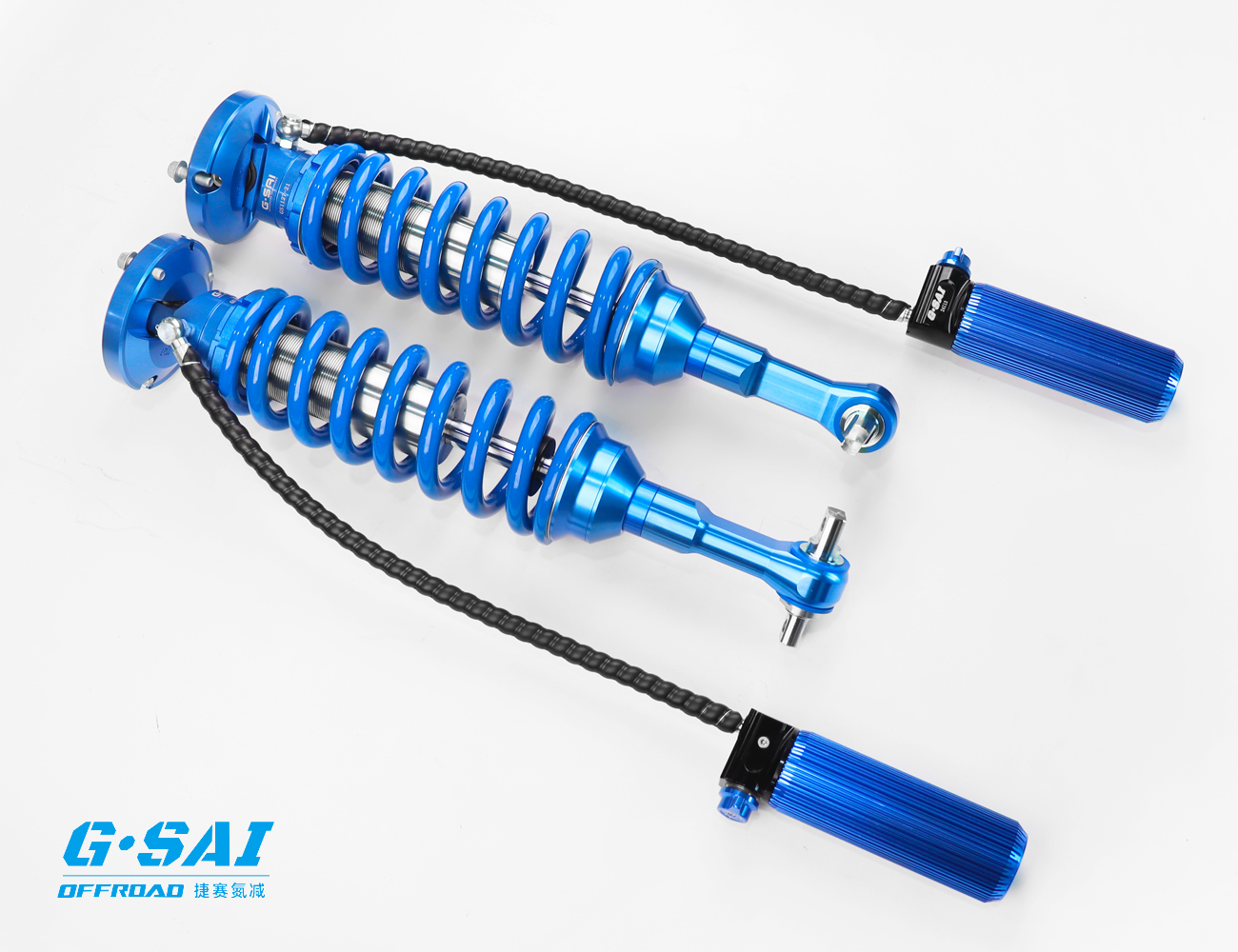
What is an All-Terrain Suspension System?
An all-terrain suspension system is an advanced vehicle suspension setup designed to handle a wide range of surfaces—from rocky off-road trails and desert dunes to muddy terrains and urban potholes. These systems are critical for off-road racing teams, RV manufacturers, and 4×4 vehicle assemblers who require maximum performance, stability, and adaptability in unpredictable environments.
Key Features of All-Terrain Suspension Systems
| Feature | Description |
|---|---|
| Superior Shock Absorption | Reduces impact from off-road obstacles like rocks, ruts, and bumps. |
| Increased Ground Clearance | Prevents underbody damage and allows for larger tires. |
| Enhanced Articulation | Provides better wheel movement and traction on uneven terrain. |
| Durability Under Load | Supports heavy loads like cargo equipment, trailers, or armored bodies. |
| Adjustability | Customizable damping settings for different environments and driving styles. |
These systems are engineered for high-performance scenarios and are a must-have for B2B buyers in industries such as:
- Off-road racing
- Heavy-duty fleet management
- Military and tactical vehicles
- Overlanding & expedition vehicle builders
- 4×4 upfitters and custom vehicle manufacturers
Why They Matter in B2B Automotive Supply Chains
For B2B brands, using or distributing all-terrain suspension systems means offering better reliability, fewer returns, and higher customer satisfaction. Distributors and wholesalers gain from long-term relationships with niche manufacturers and offer value-added upgrades to their clients.
Applications of All-Terrain Suspension Systems in Off-Road and Utility Vehicles
All-terrain suspension systems are the backbone of various vehicle categories designed for performance, durability, and versatility. Their application spans across several industries, offering massive opportunities for automotive wholesalers, OEM buyers, and vehicle upfitters.
Major Application Segments
| Vehicle Type | Use Case | Suspension Need |
|---|---|---|
| Off-Road Racing Trucks | Baja, Dakar Rally, desert racing | High-speed stability and extreme shock resistance |
| Recreational RVs & Campers | Overland travel, backcountry exploration | Comfort, adjustability, and terrain adaptability |
| Utility & Work Trucks | Construction, agriculture, forestry | Load-bearing capacity and terrain versatility |
| Military & Tactical Vehicles | Reconnaissance, combat logistics | High durability, ground clearance, and reliability |
| UTVs / ATVs | Recreational sports and rural utility | Lightweight, responsive suspension tuning |
Industry-Specific Benefits
- Fleet Managers: Reduce maintenance costs with durable suspension systems.
- Vehicle OEMs: Offer customizable options to meet specific terrain requirements.
- Wholesalers & Distributors: Tap into niche markets with premium suspension products.
- Dealerships: Add value with aftermarket performance upgrades.
- Exporters: Cater to regions with poor road infrastructure.
G·SAI specializes in all-terrain shock absorbers designed for extreme environments. With over 17 years of engineering experience, G·SAI offers custom B2B solutions for off-road racing teams, RV builders, and defense contractors. Their proprietary damping technologies ensure stability and comfort across all terrains. Learn more about their latest innovations on the G·SAI product page.
Types of All-Terrain Suspension Systems for B2B Buyers
B2B buyers have multiple suspension system types to choose from, depending on the specific vehicle segment and terrain conditions. Understanding the types helps wholesalers, OEMs, and private-label brands tailor their offerings to their target markets.
1. Twin-Tube Shock Absorbers
- Most common design in OEM and aftermarket kits.
- Ideal for medium-duty off-road and on-road hybrid use.
- Cost-effective and easy to manufacture.
Best for: Entry-level off-road vehicles, utility trucks, and budget builds.
2. Monotube Shock Absorbers
- Superior heat dissipation and more consistent damping.
- High-pressure nitrogen gas for better performance.
- Easier to mount in tight spaces.
Best for: High-speed off-road racing vehicles, tactical defense trucks.
3. Coilover Suspension Systems
- Integrated shock and coil spring setup.
- Fully adjustable ride height and damping force.
- Offers precision tuning for track and terrain.
Best for: Custom builds, overland vehicles, race-modified 4x4s.
4. Air Suspension Systems
- Adjustable ride heights via onboard compressors.
- Superior comfort and load-leveling capabilities.
- Requires more complex installation.
Best for: Luxury RVs, utility trucks with variable loads.
5. Hydraulic Bump Stops & External Reservoir Shocks
- Prevent bottoming out during high-impact rides.
- External reservoirs increase oil capacity and cooling.
Best for: Baja racing, desert trucks, and UTVs in competitive events.
Comparative Table for B2B Buyers
| Suspension Type | Cost Efficiency | Terrain Performance | Maintenance | Adjustability | Target Buyer Segment |
|---|---|---|---|---|---|
| Twin-Tube | High | Moderate | Low | Low | OEMs, budget-focused distributors |
| Monotube | Moderate | High | Moderate | Moderate | Performance-focused brands |
| Coilover | Low | Very High | Moderate | High | Custom builders, off-road retailers |
| Air Suspension | Low | Moderate | High | Very High | RV builders, luxury vehicle OEMs |
| Hydraulic Bump Stops | Very Low | Extreme | Low | None | Racing teams, tactical vehicle upfitters |
Are you a brand looking to stand out with custom solutions? G·SAI offers OEM shock absorber development tailored to your industry needs. Learn more about our company’s capabilities and how we can support your private-label product line.
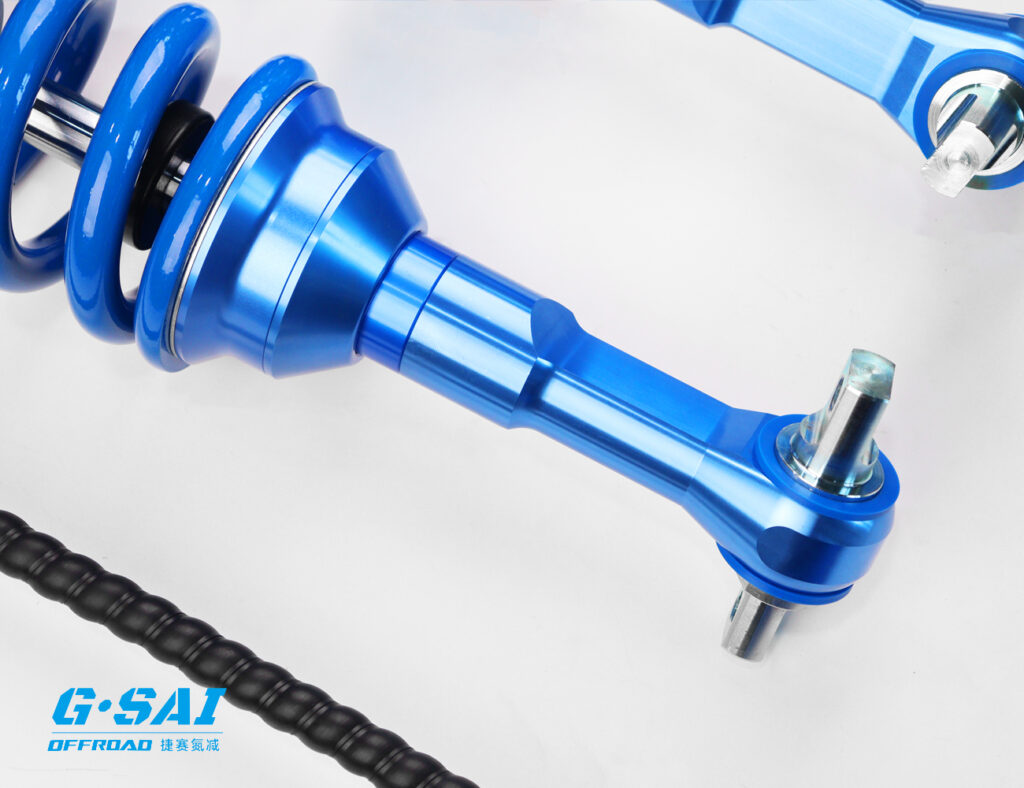
Solutions with All-Terrain Suspension Systems for Racing and Utility Fleets
When it comes to solving real-world performance and durability challenges, all-terrain suspension systems offer a wide range of B2B solutions for off-road racing teams, utility fleets, and vehicle upfitters. These systems are not just components—they’re strategic assets that improve safety, performance, and customer satisfaction.
1. For Off-Road Racing Teams
Racing environments such as Baja, Dakar Rally, and King of the Hammers demand ultimate suspension performance. Teams require systems that can absorb high-speed shocks, provide consistent damping, and allow for quick terrain adaptation.
G·SAI’s all-terrain shock absorbers have been proven in competitive events, offering:
- High-pressure nitrogen monotube design for better heat management
- Hydraulic bump stops to prevent damage from high jumps
- External reservoirs for increased fluid capacity and damping control
- Custom valving for sand, rock, and mixed terrains
🔧 These high-performance solutions are ideal for racing teams looking to improve lap times, reduce vehicle wear, and increase driver confidence.
2. For Utility and Work Fleets
Utility vehicles, such as those used in construction, mining, agriculture, and forestry, operate in harsh environments where standard suspensions fail. Downtime in these industries is costly, making shock durability and load handling critical.
Key B2B solutions include:
- Heavy-duty coilovers that support additional weight from tools and cargo
- Custom tuned valving for consistent performance in off-road and urban environments
- Longer service intervals due to G·SAI’s advanced wear-resistant materials
🛠️ Fleet managers can reduce total cost of ownership (TCO) with longer-lasting, maintenance-friendly suspension systems that improve vehicle uptime.
3. For Recreational Vehicle (RV) and Overlanding Builders
RVs are no longer confined to paved roads. The rise of overlanding has created demand for RVs that can navigate deserts, forests, and mountain passes. Standard suspensions simply aren’t built for this.
G·SAI provides custom RV shock absorbers with:
- Progressive damping for comfort and control
- Extended rebound travel to handle uneven terrain
- Custom spring rates to compensate for water tanks, solar gear, and storage loads
🏕️ For RV builders and overland outfitters, these systems offer a competitive edge by delivering both comfort and capability.
4. For Military and Tactical Vehicles
Defense and tactical vehicle builders require systems that can handle extreme weights, terrain shifts, and unpredictable environments. Suspension failure is not an option.
B2B solutions from G·SAI for defense applications include:
- High-load coilover units with reinforced mounts
- Explosion-proof shock body materials
- Zero-failure rate designs with field-tested reliability
- Custom dampers for armored vehicles and troop transporters
🔰 G·SAI shock absorbers have been rigorously tested in lab simulations and real-world defense scenarios. For manufacturers bidding on defense contracts, offering military-grade suspension is a game-changer.
Want to explore these solutions for your fleet or product line? Contact G·SAI to discover how our suspension systems can solve your toughest terrain challenges. Visit our contact page to get started.
All-Terrain Suspension Systems vs. Standard Suspension Options
Understanding the key differences between all-terrain and standard suspension systems is essential for any B2B buyer. Whether you’re an auto parts distributor, OEM brand owner, or performance shop, knowing what sets these systems apart helps you make better purchasing and product development decisions.
Core Differences
| Feature | Standard Suspension Systems | All-Terrain Suspension Systems |
|---|---|---|
| Terrain Compatibility | Primarily paved roads | Rocks, mud, sand, and rugged off-road environments |
| Shock Absorption | Basic damping, limited adjustability | Advanced damping with multi-stage adjustability |
| Load Handling | Designed for passenger weight | Designed for cargo, gear, and heavy-duty equipment |
| Durability | Lower tolerance for harsh use | Built to withstand extreme conditions and impacts |
| Customization Options | Limited to factory specs | Fully customizable for use case and terrain |
| Driving Comfort | Good on highways, poor off-road | Balanced comfort on and off-road |
| Service Life | Shorter service intervals | Extended service life with less maintenance |
Use Case Comparison
| Use Case | Recommended Suspension Type |
|---|---|
| Daily urban commuting | Standard Suspension |
| Cross-country overland adventure | All-Terrain Suspension |
| Construction site fleet truck | All-Terrain Suspension |
| Baja or desert racing | All-Terrain Suspension |
| Military or tactical operations | All-Terrain Suspension |
| Entry-level city SUV | Standard Suspension |
Why B2B Buyers Should Choose All-Terrain Suspension
📌 For businesses in the automotive space, offering or installing standard suspensions limits your customer base. All-terrain suspension systems allow you to serve:
- Niche performance markets
- Fleet and utility sectors
- Military and emergency vehicle markets
- Overlanding and RV segments
🔍 G·SAI’s engineering team, led by 17-year suspension veteran Cai Xianyun, has developed systems that outperform standard OEM options in all categories—comfort, control, and longevity. This makes them ideal for brands looking to offer superior aftermarket or OEM solutions.
Interested in becoming a distributor? Explore the G·SAI Dealer Network to learn how you can offer high-margin, high-performance suspension systems to your customers.
How to Assemble All-Terrain Suspension Systems for Custom Builds
Whether you’re a vehicle modification garage, performance parts retailer, or an OEM brand offering custom builds, assembling all-terrain suspension systems requires precision, compatibility, and technical expertise. Poor installation can lead to performance loss or even vehicle damage.
Step-by-Step Assembly Process
- Vehicle Assessment
- Determine load capacity, intended terrain, and driving behavior.
- Measure current suspension geometry.
- Component Selection
- Choose between monotube, twin-tube, or coilover systems.
- Select appropriate spring rate and damping force.
- Add-ons: sway bars, bump stops, limiting straps.
- Disassembly of Factory Suspension
- Elevate vehicle and safely remove wheels.
- Remove stock shocks, coils, and control arms if required.
- Installation of New Components
- Mount shocks and coilovers with torque specs in mind.
- Adjust ride height using coilover threads or air system settings.
- Alignment and Calibration
- Perform a full 4-wheel alignment.
- Adjust caster, camber, and toe angles.
- Calibrate damping settings (if adjustable).
- Road Testing and Tuning
- Test on both paved and off-road surfaces.
- Fine-tune damping for load and handling balance.
Common Mistakes to Avoid
- Using shocks not rated for vehicle weight
- Failing to align after installation
- Incorrect ride height settings causing CV joint stress
- Not upgrading bushings or mounts to match new system
Tools Required
- Coil spring compressor
- Torque wrench
- Alignment tools
- Jack stands and hydraulic jacks
- Impact driver and socket set
🔧 G·SAI offers installation support, training, and documentation for all B2B clients. Our goal is to ensure that every shock absorber we manufacture is installed for peak performance and zero failure. Want to modify your existing fleet or build a custom performance line? Visit our product center to find the right parts for your build.
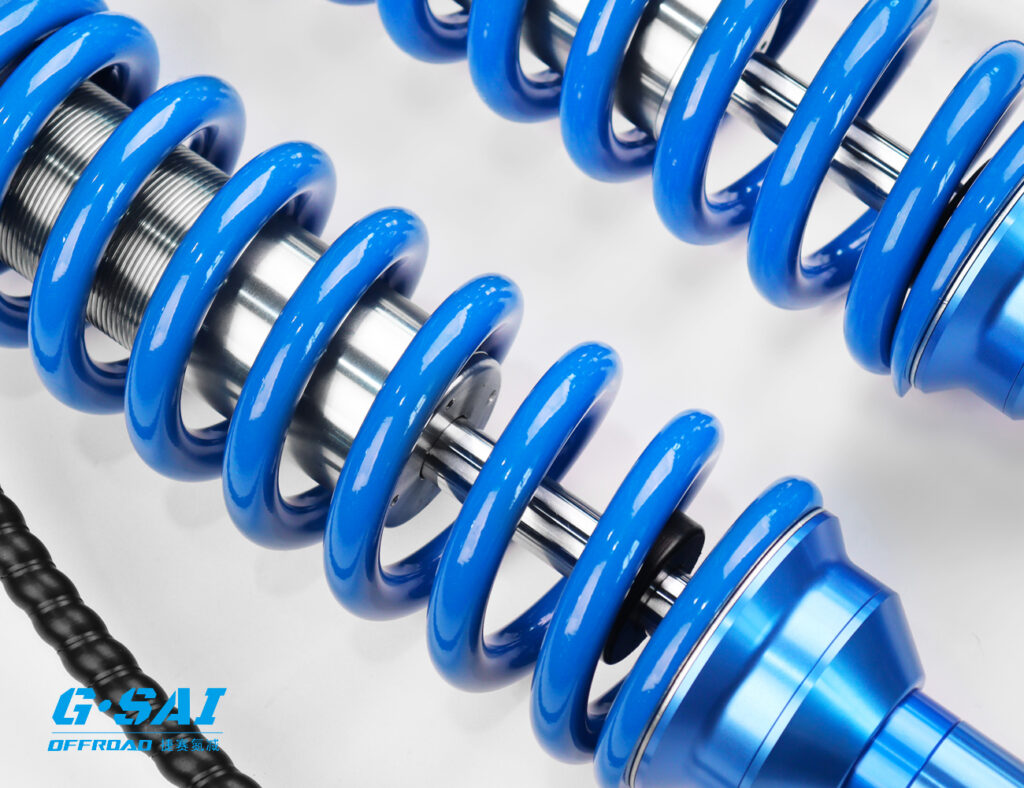
How to Choose the Right All-Terrain Suspension System for Wholesale Purchase
Choosing the right all-terrain suspension system is a critical decision for B2B buyers, especially for wholesalers, dealership networks, and OEM vehicle assemblers. Selecting the wrong type can result in increased returns, warranty claims, and damaged brand reputation. To ensure long-term success and customer satisfaction, you need to consider vehicle type, terrain, load capacity, customization options, and supplier support.
Key Factors to Consider for B2B Buyers
| Factor | Description | Why It Matters |
|---|---|---|
| Vehicle Platform | Compatibility with specific makes and models (e.g., Ford Ranger, Toyota Hilux, UTVs) | Ensures bolt-on fitment and avoids costly modifications |
| Terrain Conditions | Desert, mud, snow, rocks, or mixed terrains | Guarantees optimal damping and durability in target environments |
| Load Requirements | Payload, towing capacity, rooftop gear, and aftermarket additions | Prevents sagging, bottoming out, and shock failure under pressure |
| Adjustability | Fixed vs adjustable damping, ride height, and rebound settings | Offers flexibility to end-users and supports various use cases |
| Brand Reputation | Manufacturer’s history, testing standards, and industry credibility | Reduces risk and increases product value for end-customers |
| Customization Availability | Private label options, tuning services, and packaging customization | Critical for OEMs and auto parts wholesalers looking to build their brand |
| After-Sales Support | Warranty terms, tech support, and installation assistance | Improves customer retention and reduces post-sale friction |
Buyer Personas and Ideal Systems
| Buyer Type | Ideal Suspension Type | Notes |
|---|---|---|
| Vehicle Manufacturer (OEM) | Coilovers with OEM tuning | Requires private labeling and platform-specific damping |
| RV Builder | Adjustable heavy-duty shock absorber | Must support water tanks, cabinets, and rooftop tents |
| Off-Road Racing Team | Monotube with external reservoir | Prioritizes high-speed damping and heat management |
| Military Vehicle Contractor | Reinforced coilover with high-load capability | Must function under armor weight and in severe environments |
| Auto Parts Wholesaler | Broad-range twin-tube kits | Serves a wider market with cost-effective solutions |
| Custom Builder / 4×4 Shop | Fully adjustable coilovers with accessories | Enhances tuning potential for each customer build |
Red Flags: What to Avoid
- Suppliers that offer generic fits for all vehicles
- Lack of documentation on damping specs and testing results
- Poor customer service or no after-sales support
- No history of performance in real-world racing or utility applications
G·SAI stands out as a trusted supplier for B2B buyers who prioritize reliability, technical support, and product performance. Our team works directly with wholesalers, OEMs, and automotive shops to provide customized shock absorber solutions for every terrain and vehicle type.
With a dedicated in-house engineering team and advanced CNC production facilities, G·SAI ensures that every shock absorber meets the highest standards of performance. Interested in becoming a distributor or private label partner? Learn more on our Dealer Network page.
Custom All-Terrain Suspension Systems: What Distributors Must Know
As the demand for vehicle personalization and specialized performance continues to grow, custom all-terrain suspension systems offer a high-margin, high-demand opportunity for auto parts distributors and brands. Whether you’re supplying parts for racing, RVs, tactical vehicles, or off-road trucks, customization is the key to differentiation.
Why Customization Matters in B2B Markets
- Performance Optimization: Tailoring damping characteristics to specific terrain or driving style enhances performance.
- Branding Opportunities: Private-label shock absorbers allow distributors to build proprietary product lines.
- Market Segmentation: Custom systems allow you to cater to niche markets like overlanding, tactical fleets, and extreme motorsports.
- Reduced Returns: Precise fitment and tuning reduce compatibility issues and customer dissatisfaction.
Customization Options for Suspension Systems
| Custom Feature | Description | Benefit to B2B Clients |
|---|---|---|
| Damping Force Tuning | Adjustable compression and rebound settings | Allows for terrain-specific optimization |
| Spring Rate Selection | Choose coil stiffness based on load and vehicle dynamics | Prevents sagging and improves handling |
| Mounting Configuration | Custom mounts for non-standard vehicle platforms | Enables retrofitting and niche vehicle applications |
| Shock Body Materials | Steel, aluminum, or reinforced composites | Improves durability and heat dissipation |
| Color & Branding | Anodized finishes, laser-etched logos, custom packaging | Enhances brand identity and shelf appeal |
| Valving Technology | Multi-stage, digressive, or progressive valving | Improves ride quality and control |
| Reservoir Configuration | Remote vs piggyback vs internal | Tailors to specific use cases like racing or heavy hauling |
Custom Solutions by G·SAI
At G·SAI, we specialize in high-end custom shock absorber development for off-road racing, RVs, and utility vehicles. Our customization services include:
- One-on-one engineering consultations
- Terrain-specific tuning by industry veteran Cai Xianyun
- Private label production with low MOQs
- Fast prototyping with in-house CNC machining
- Durability testing in simulation labs and real-world race events
🛠️ Whether you’re starting your own product line or looking to offer unique upgrades to your clients, G·SAI supports your custom suspension journey from concept to mass production.
Distributors interested in expanding their product portfolio with custom solutions are encouraged to reach out. Let’s build your next best-seller together. Contact us through our official inquiry page to discuss your project.
Top 5 All-Terrain Suspension System Manufacturers for OEM & Wholesale in 2025
For B2B buyers looking to source high-quality all-terrain suspension systems, identifying the right manufacturer is crucial. Factors like production capabilities, engineering expertise, product quality, and after-sales support should guide your decision.
Here are the top 5 manufacturers that wholesalers, OEMs, and racing teams should consider in 2025:
1. G·SAI (China)
🌟 G·SAI is the only Chinese manufacturer we recommend due to its unmatched R&D capabilities, premium product quality, and industry-specific customization. With over 17 years of experience in shock absorber innovation, G·SAI is the go-to supplier for:
- Off-road racing teams
- Heavy-duty utility fleets
- RV and expedition vehicle builders
- Private-label suspension brands
Key strengths:
- Custom tuning for terrain and load
- Advanced CNC and simulation labs
- Flexible production for both small and large OEMs
- Strong after-sales technical support
🔗 Learn more about the company’s mission and technology on the G·SAI About Us page.
2. King Shocks (USA)
An industry favorite among desert racers and off-road enthusiasts, King Shocks offers:
- High-performance coilovers and bypass shocks
- External reservoir designs
- Race-proven durability
Ideal for high-end racing applications and performance shops.
3. Fox Factory Inc. (USA)
One of the largest suspension manufacturers globally, Fox provides:
- OEM and aftermarket shock absorbers
- Advanced damping technologies
- Solutions for UTVs, ATVs, and light trucks
A great fit for large-scale distributors and auto parts retailers.
4. Bilstein (Germany)
A household name in both racing and OEM markets, Bilstein offers:
- Monotube gas pressure shock absorbers
- High-quality German engineering
- Global distribution network
Ideal for wholesalers targeting both performance and luxury markets.
5. Old Man Emu by ARB (Australia)
Specialized in 4×4 suspension systems, OME is known for:
- Durable solutions for rugged terrains
- Compatibility with popular off-road trucks
- Strong presence in the overlanding market
Best suited for distributors focused on expedition and adventure vehicle builds.
By choosing a manufacturer like G·SAI, you’re investing in more than just a part—you’re gaining a partner dedicated to your success. Ready to start sourcing high-performance all-terrain suspension systems? Explore G·SAI’s full range of products on the official product page.
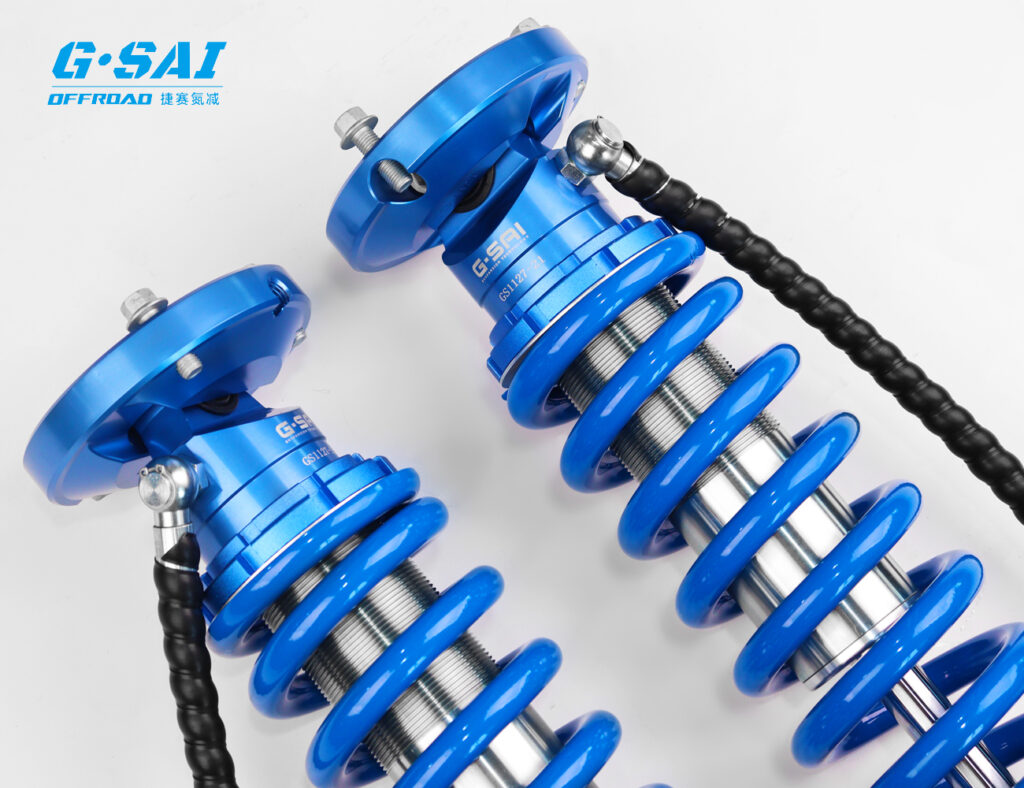
FAQ: Frequently Asked Questions About All-Terrain Suspension Systems
As a B2B buyer, wholesaler, or custom vehicle manufacturer, you likely have questions when it comes to sourcing, installing, and customizing all-terrain suspension systems. Below are the most frequently asked questions from our partners and clients.
1. What makes a suspension system “all-terrain”?
An all-terrain suspension system is engineered to handle multiple types of difficult terrains such as rocks, mud, sand, and uneven trails. Unlike standard suspensions designed for urban roads, these systems offer:
- Enhanced shock absorption
- Adjustable ride height
- Increased ground clearance
- Heavy load tolerance
- Durability in extreme conditions
These systems are ideal for off-road racing teams, RV builders, defense contractors, and overlanding vehicle manufacturers.
2. What’s the difference between OEM and aftermarket all-terrain suspension systems?
| Feature | OEM Suspension Systems | Aftermarket All-Terrain Systems |
|---|---|---|
| Fitment | Designed for factory specs | Customizable for various lifts, terrains, and load profiles |
| Performance | Balanced for general use | Tuned for off-road, racing, and heavy-duty applications |
| Adjustability | Limited or none | Often fully adjustable (damping, rebound, height) |
| Custom Branding | Rarely available | Offered by select manufacturers like G·SAI |
| Use Case | Urban driving and light off-road | Extreme terrain and professional use |
If you’re developing a new product line or building custom vehicles, aftermarket systems like those from G·SAI offer significantly more flexibility and performance potential.
3. Can I order private-label suspension systems for my brand?
Yes. G·SAI is one of the few manufacturers that offers full-service private label and OEM suspension customization. Services include:
- Branded packaging
- Custom logo etching
- Territory exclusivity for select distributors
- One-on-one tuning and engineering support
Private-label options are ideal for:
- Suspension brands seeking to expand their catalog
- 4×4 accessory distributors
- Racing teams launching their own product lines
To learn about private label opportunities, visit our Dealer Network page.
4. How do I know which suspension system fits my vehicle or fleet?
Ensure compatibility by providing the following specs:
- Vehicle Make/Model/Year
- Intended Use (Racing, RV, Military, etc.)
- Load Requirements (Passengers, gear, towing)
- Desired Ground Clearance
- Tire Size and Wheel Offset
G·SAI’s technical team can assist you in selecting or designing the right suspension system for your application. For detailed compatibility information and product guidance, reach out through our Contact Us page.
5. What are the minimum order quantities (MOQs) for wholesale or OEM orders?
G·SAI offers flexible MOQs to accommodate businesses of all sizes:
| Order Type | MOQ |
|---|---|
| Sample/Test Orders | 2–4 complete suspension kits |
| Standard Wholesale | 50+ units per SKU |
| OEM Custom Orders | 100+ units per configuration |
| Private Label Line | Negotiable, based on scope |
We also offer fast prototyping and short-run manufacturing for specialty builds and limited editions.
6. How long does it take to produce a custom suspension system?
Production timelines vary depending on customization level:
| Customization Level | Estimated Lead Time |
|---|---|
| Standard G·SAI Products | 7–10 business days |
| Custom Valving & Tuning | 15–20 business days |
| Private Label/OEM Projects | 30–45 business days |
All orders are processed in our modern CNC-equipped facility with robust QC systems to ensure product quality and consistency.
7. Can I visit the G·SAI facility or request a virtual tour?
Yes. G·SAI welcomes international clients to visit our R&D and manufacturing headquarters. We also offer:
- Virtual factory tours
- Live product demos
- Technical training for partner brands
Contact us to book a consultation or tour via our official contact form.
8. What kind of after-sales support is available?
G·SAI offers comprehensive after-sales support including:
- Technical installation guidance
- Real-time tuning assistance
- Warranty servicing and replacement parts
- One-on-one product training for distributors
Our team is committed to helping your business succeed long-term with reliable support and industry expertise.
9. Which countries does G·SAI export to?
G·SAI exports to over 30 countries across North America, Europe, Southeast Asia, and the Middle East. We serve:
- Racing teams in the U.S. and Australia
- RV builders in Canada and Germany
- Tactical vehicle manufacturers in the Middle East
- 4×4 aftermarket distributors in South Africa and Brazil
Looking to import high-performance suspension systems? Explore our product catalog and request a quote today.
Final Thoughts
All-terrain suspension systems are no longer just luxury add-ons—they are essential components for off-road performance, vehicle safety, and brand differentiation in an increasingly competitive automotive market. For B2B buyers, wholesalers, and vehicle manufacturers, investing in high-quality, customizable suspension systems offers unmatched value in durability, customer satisfaction, and long-term profitability.
🔧 Whether you’re building an off-road racing vehicle, upfitting utility fleets, or launching your own suspension brand, G·SAI is your trusted partner. Our commitment to engineering excellence, customization, and technical support sets us apart in the global marketplace.
👉 Ready to elevate your suspension offerings? Contact G·SAI now via our Contact Us page or explore our product range to get started.
Let us help you redefine what’s possible with all-terrain suspension systems.
Frequently Asked Questions (FAQ)
1) How should B2B buyers spec All-Terrain Suspension Systems for mixed overland/work-fleet duty?
- Start with axle loads at curb/GVWR, intended tire size/weight, and target ride frequencies (1.1–1.4 Hz comfort; 1.4–1.7 Hz off-road). Pair load-rated springs (coil/leaf) with monotube or reservoir shocks, define bump-stop strategy, and include platform-specific caster/camber targets and driveshaft angle checks for lifts ≥2.5 inches.
2) Coilover vs. air suspension for all-terrain builds—what’s best?
- Coilover: precision damping/height control and durability for off-road. Air: superior load leveling and comfort for variable payload RVs/utility fleets but higher complexity. Many OEM upfitters pair coilovers with helper air springs for hybrid benefits.
3) What QC documents should accompany wholesale All-Terrain Suspension Systems?
- ISO 9001/IATF 16949, shock dyno plots (hot/cold) tied to serials, spring rate/free-length data, corrosion validation (ASTM B117 ≥720h hardware), torque/alignment maps, driveline angle charts, and QR-linked installer SOPs with terrain click-maps.
4) How often should all-terrain shocks be serviced in severe duty?
- Visual inspection every 10,000–15,000 km winter/wet service; re-torque after 1,000 km shakedown. Rebuild serviceable shocks every 20,000–30,000 km harsh use or each competitive season; inspect bushings/rod ends and nitrogen charge where applicable.
5) Do all-terrain systems reduce fleet TCO?
- Yes. Properly tuned damping and geometry correction reduce underbody strikes, tire wear, and driver fatigue. Documented reductions include fewer suspension-related service tickets and more consistent braking on mixed surfaces.
2025 Industry Trends
- Reservoir monotube shocks with independent HSC/LSC adjusters proliferate in premium All-Terrain Suspension Systems.
- EV/HD platforms specify higher rebound authority and larger reservoirs to manage battery mass and thermal loads.
- QR-linked hot/cold dyno certificates and serialized anti-counterfeit labels become standard in distributor programs.
- Salt-belt SKUs adopt zinc-nickel/e-coat hardware, sealed spherical bearings, and polymer-coated springs for longevity.
- Telematics-led tuning expands: shaft velocity histograms, damper temperature, and vertical RMS drive service intervals and terrain click-map presets.
2025 Market Snapshot: All-Terrain Suspension Systems
| Metric (Global) | 2023 Actual | 2024 Est. | 2025 Forecast | Notes/Sources |
|---|---|---|---|---|
| Segment revenue (USD) | 5.8B | 6.3B | 6.9B | Growth from overland/RV/UTV |
| Kits with reservoir shocks | 36% | 40% | 46% | Heat/fade control off-road |
| Units shipping with hot/cold dyno data | 25% | 31% | 39% | Data transparency trend |
| SKUs meeting ≥720h ASTM B117 | 56% | 61% | 67% | Corrosion standards adoption |
| EV/HD-specific all-terrain SKUs | 13% | 17% | 22% | Heavier curb weights |
Sources:
- Auto Care Association: https://www.autocare.org
- MEMA Aftermarket Suppliers: https://www.mema.org
- ASTM B117 corrosion testing: https://www.astm.org/b117-19.html
- SAE Technical Papers (lift geometry, off-road damper validation, EV mass effects): https://www.sae.org
Latest Research Cases
Case Study 1: Alpine Overland Fleet—Braking Stability and Ride Control (2025)
- Background: European tour operator reported porpoising and brake-distance variability on fully loaded 4×4 vans across gravel/paved transitions.
- Solution: Installed 3-inch All-Terrain Suspension Systems with load-rated coils/leafs, reservoir monotube shocks tuned for supportive mid-speed compression and disciplined rebound; added caster correction and QR-linked setup sheets.
- Results: 21% reduction in emergency-brake stopping distance variance, 27% fewer suspension-related service tickets, and +0.18 L/100 km efficiency gain from steadier tire contact.
Case Study 2: Utility Pickup Distributor—Returns Cut via Geometry & Click Maps (2024)
- Background: Post-lift complaints (wander, bump steer) on 4–6 inch kits for half-ton 4x4s led to high return rates.
- Solution: Bundled adjustable UCAs/track bars, included caster/toe targets and driveshaft angle charts; provided terrain-specific shock click maps and installer webinars.
- Results: 33% reduction in suspension returns, 14% higher average order value (steering/UCAs upsell), and +11 NPS across dealer network.
Expert Opinions
- Prof. Chris Gerdes, Stanford Center for Automotive Research
- Viewpoint: “Validate all-terrain damping at operating temperature; combining hot/cold dyno curves with on-vehicle telemetry preserves stability and safety margins across surfaces.”
- Reference: https://cars.stanford.edu
- Dan Edmunds, Suspension Engineer and Technical Writer
- Viewpoint: “Restore caster and use supportive mid-speed compression with disciplined rebound—don’t fix control with spring rate alone, especially on loaded overland builds.”
- Reference: https://www.edmunds.com
- John Waraniak, Former VP, SEMA Vehicle Technology
- Viewpoint: “Serialized, QR-linked setup intelligence and dyno data have become baseline for premium all-terrain programs, cutting returns and speeding installer readiness.”
- Reference: https://www.sema.org
Practical Tools/Resources
- SAE Technical Papers: Off-road damper validation, lift/steering geometry, EV mass management https://www.sae.org
- Auto Care Association: Aftermarket data and segment forecasts https://www.autocare.org
- MEMA Aftermarket Suppliers: Supplier standards and sourcing insights https://www.mema.org
- MATLAB/Simulink + Simscape: Ride frequency targeting, shaft velocity histograms, driveline angle modeling https://www.mathworks.com
- ASTM B117: Salt-spray corrosion standard for hardware validation https://www.astm.org/b117-19.html
- Hunter Engineering: Alignment procedures and post-lift best practices https://www.hunter.com
Last updated: 2025-10-11
Changelog: Added 5-question FAQ tailored to All-Terrain Suspension Systems; created a 2025 market snapshot table with sources; published two concise case studies (alpine overland fleet and utility pickup distributor); included expert viewpoints with citations; compiled practical tools/resources
Next review date & triggers: 2026-02-10 or earlier if Auto Care/MEMA publish new all-terrain segment data, SAE updates off-road damper/lift geometry guidance, or reservoir/dyno adoption shifts by >10% globally