
Precision Damping Control Shocks: The Ultimate Guide for Off-Road and Racing Industries
June 3, 2025
Share This Article
What Are Precision Damping Control Shocks?
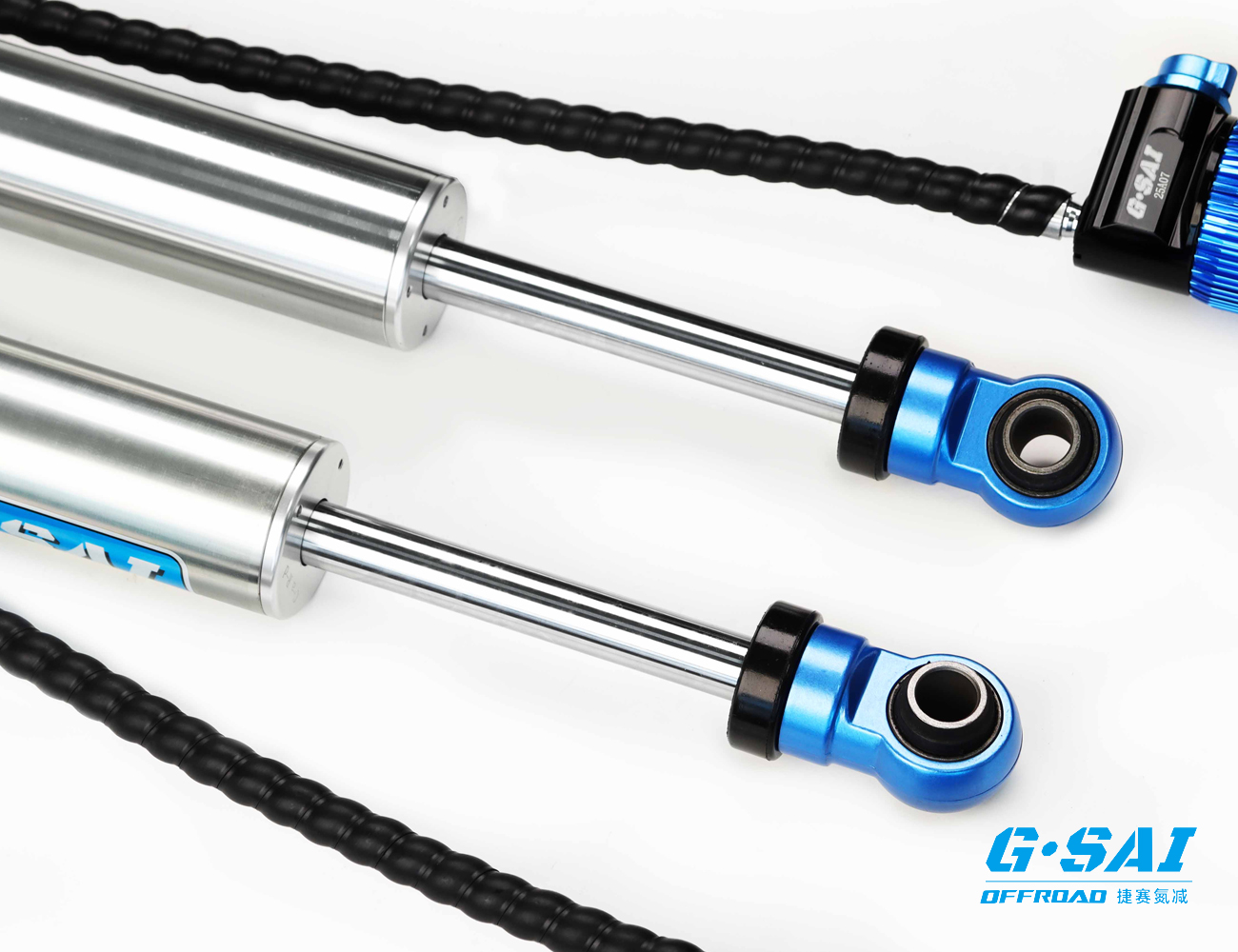
Precision damping control shocks are advanced shock absorbers engineered to deliver unparalleled control, responsiveness, and adaptability across diverse terrains and driving conditions. Unlike conventional shocks, these are specifically designed to provide fine-tuned damping performance that adjusts to both the road and the needs of the vehicle, making them ideal for off-road racing teams, modified vehicle manufacturers, and wholesale auto parts dealers.
Key Features of Precision Damping Control Shocks
| Feature | Description |
|---|---|
| Adaptive Damping Technology | Real-time adjustment to road conditions and load |
| High-Pressure Gas Charging | Ensures consistent performance under extreme conditions |
| Multi-Stage Valving | Offers variable resistance for better comfort and control |
| Custom Tuning Options | Allows OEMs and racing teams to fine-tune for specific applications |
| CNC-Machined Components | Ensures high precision and durability for long-term use |
| Heat Dissipation Design | Prevents fade during high-speed or off-road use |
Common Problems Solved by Precision Damping
- Excessive body roll
- Poor handling on uneven terrain
- Shock fade during long races
- Inconsistent ride quality under varying loads
These shocks are especially relevant for automotive component distributors, fleet operators, and racing parts wholesalers looking to offer premium performance solutions to their clients.
Applications of Precision Damping Control Shocks in Off-Road Racing and Automotive Industries
Precision damping control shocks are not just performance upgrades—they are mission-critical components in high-demand environments. Their applications span across multiple automotive segments, making them a valuable product line for OEM suppliers, aftermarket distributors, and off-road vehicle manufacturers.
Key Industries Using Precision Damping Shocks
| Industry Segment | Common Vehicle Types | Application Benefits |
|---|---|---|
| Off-Road Racing | UTVs, Buggies, Trophy Trucks | Enhanced cornering, better traction, shock fade resistance |
| Modified Vehicle Manufacturing | Lifted Trucks, Tuned SUVs | Improved ride quality and safety |
| RV and Camper Vans | Sprinter Vans, Off-Road RVs | Vibration reduction and stability |
| Heavy-Duty Commercial Fleets | Pickups with payloads, Mining Vehicles | Load handling and driver comfort |
| Military and Tactical Vehicles | Armored Personnel Carriers, Recon Vehicles | High durability under extreme conditions |
B2B Opportunities
- Wholesale buyers can stock a range of SKUs to cater to both off-road and on-road performance markets.
- Distributors can offer value-added services like tuning and custom branding.
- OEMs can integrate custom damping solutions during vehicle production.
📌 For a deep dive into available models and applications, check out the G·SAI product catalog.
Types of Precision Damping Control Shocks for B2B Buyers
In the B2B landscape, understanding the different types of precision damping control shocks is crucial for effective inventory planning and customer satisfaction. Whether you’re a performance parts wholesaler or a vehicle conversion company, knowing your options ensures you meet a variety of client needs.
1. Monotube Precision Shocks
- Structure: Single tube design with a floating piston
- Best For: High-performance sports cars, off-road racers
- Benefits: Superior heat dissipation, quick response
2. Twin-Tube Precision Shocks
- Structure: Inner and outer tube system
- Best For: Daily drivers, light off-road use
- Benefits: Affordable, smooth ride quality
3. Adjustable Compression & Rebound Shocks
- Structure: External knobs or remote reservoirs
- Best For: Racing teams, performance tuners
- Benefits:
- Fine-tune damping for track or trail
- Dial in stiffness or softness based on terrain
4. Piggyback & Remote Reservoir Shocks
- Structure: Additional fluid reservoir
- Best For: Long-travel off-road setups
- Benefits:
- Reduces cavitation
- Increases oil volume for cooling
5. Custom-Built Precision Shocks
- Tailored For: OEMs, military applications, RV manufacturers
- Benefits:
- Tuned for specific vehicle weight and usage
- Branding and performance specs matched to product line
Quick Comparison Table
| Type | Target Market | Customization Level | Price Range (B2B) |
|---|---|---|---|
| Monotube | Performance Racing | Medium | $$$ |
| Twin-Tube | General Aftermarket | Low | $ |
| Adj. Compression/Rebound | Motorsport, Tuners | High | $$$$ |
| Piggyback & Remote Reservoir | Off-Road Manufacturers | High | $$$$ |
| Custom-Built | OEM & Tactical Vehicles | Very High | $$$$$ |
💡 G·SAI offers all types of precision damping control shocks, including fully customizable solutions. Learn more about our capabilities on our About Us page.
Precision Damping Control Shocks vs. Standard Shock Absorbers
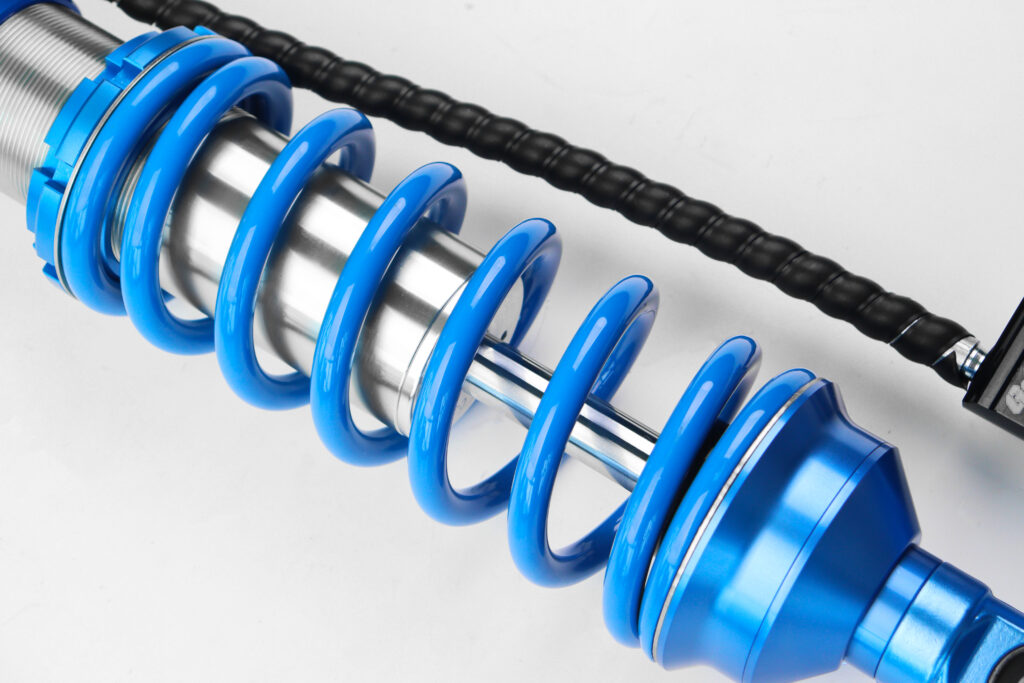
In the B2B landscape, understanding the technical and performance distinctions between precision damping control shocks and conventional shocks can help distributors, OEMs, and wholesalers make informed procurement decisions. This section compares the two technologies across multiple performance, durability, and application metrics.
Key Differences Between Precision and Standard Shocks
| Feature/Aspect | Precision Damping Control Shocks | Standard Shock Absorbers |
|---|---|---|
| Damping Control | Multi-stage, adjustable, or electronically controlled | Fixed or limited damping rates |
| Performance Under Load | Consistent across varying loads and speeds | Performance drops under load or extreme conditions |
| Heat Dissipation | Optimized with monotube or remote reservoir designs | Limited by basic twin-tube structure |
| Customization | Highly customizable for vehicle type and terrain | Minimal customization options |
| Durability/Lifespan | Built with CNC-machined components, longer lifespan | Mass-produced, shorter service life |
| Target Market | Racing, off-road, OEM high-performance builds | Economy vehicles, general consumer aftermarket |
| Response Time | Faster response to changing terrain or driving conditions | Slower response and recovery |
| Cost Range (B2B) | Higher initial cost, better long-term ROI | Lower price, limited long-term value |
Why B2B Buyers Prefer Precision Shocks
- Racing Teams demand immediate damping response with adjustable tuning to match terrain and driving styles.
- OEMs require performance parts that meet exacting standards and integrate seamlessly into custom builds.
- Wholesale Distributors benefit from offering a premium tier product with strong margins and high demand.
“We’ve tested multiple brands, but precision damping shocks from G·SAI consistently outperform others in both durability and adaptability. They’ve become a core part of our off-road performance kits.”
— Senior Product Manager, U.S.-based Performance Parts Distributor
📌 Discover why G·SAI shocks outperform standard absorbers in real-world racing environments. Explore our dealer network to connect with a certified supplier.
How to Assemble Precision Damping Control Shocks for Custom Builds
Assembling precision damping control shocks requires a detailed understanding of both the mechanical components and the intended vehicle performance. For vehicle upfitters, custom builders, and fleet engineers, proper installation ensures peak efficiency, extended lifespan, and brand reputation.
Required Tools and Equipment
- Torque wrench set
- Spring compressor
- Shock dyno (for tuning verification)
- Seal and bushing installation tools
- Nitrogen charging system (for gas-charged models)
- Adjustable spanner for compression/rebound settings
Assembly Workflow
Step 1: Identify Shock Type and Vehicle Specs
- Determine whether the setup is monotube, piggyback, or remote reservoir.
- Match shock length, stroke, and damping curve to vehicle weight and use case.
Step 2: Pre-Assembly Checks
- Inspect for defects or transit damage.
- Clean all mounting surfaces.
- Verify internal valving settings (especially for racing applications).
Step 3: Assemble Components
| Component | Assembly Notes |
|---|---|
| Shock Body | Mount reservoir (if applicable), ensure seals are seated correctly |
| Piston Rod | Lubricate and insert carefully to avoid scoring |
| Valving Stack | Adjust according to application (e.g., softer for RVs, stiffer for racing) |
| End Mounts / Eyelets | Torque to spec, use thread locker where required |
| Spring (if coilover) | Compress carefully, install with correct preload |
Step 4: Charge and Dyno Test
- Charge nitrogen to manufacturer specifications (typically 150–300 psi).
- Run shock on a dyno to verify damping curve matches the intended tuning.
Step 5: Install on Vehicle
- Use proper torque specs on mounting bolts.
- Re-check after 100 km of use for any loosening or leaks.
Pro Tips for B2B Installers
- Offer shock tuning as a value-added service for racing clients.
- Maintain a stock of common valving kits to cater to different terrain needs.
- Partner with G·SAI for custom training workshops and assembly support.
📌 Interested in private label or professional installation kits? Contact G·SAI’s support team for technical consultation and B2B pricing.
How to Choose the Right Precision Damping Control Shock for Your Fleet or Product Line
Whether you’re an OEM, aftermarket kit builder, or performance brand, selecting the optimal shock absorber model is critical. The wrong damping profile or build quality can compromise both safety and performance. This section provides a B2B-focused decision framework to help buyers select the ideal precision damping control shock.
Decision Framework for B2B Buyers
| Criteria | Description | G·SAI Advantage |
|---|---|---|
| Vehicle Type | Off-road truck, SUV, RV, racecar, tactical vehicle | Custom valving for each vehicle class |
| Driving Environment | Highway, rocky terrain, sand dunes, snow, rally stages | Multi-stage damping for adaptive control |
| Load Weight & Suspension | Light-duty vs. heavy payload, lifted suspension | Shock tuning for high-G or uneven load distribution |
| Adjustment Needs | Fixed, manually adjustable, or electronic control | Manual and remote reservoir options available |
| Branding & Customization | Private label, anodized finishes, custom packaging | G·SAI offers OEM branding & custom color coding |
| Price Point vs. ROI | Short-term affordability vs. long-term durability | Premium ROI due to extended shock life and race-tested reliability |
Shock Selection Table by Use Case
| Use Case | Recommended Shock Type | G·SAI Model Example |
|---|---|---|
| Off-Road Racing | Adjustable Piggyback/Remote Reservoir | G·SAI Ultra-Race XR Series |
| Lifted Trucks for Off-Road | Monotube with Custom Valving | G·SAI Terrain Pro |
| RVs and Sprinter Van Builds | Twin-Tube Adjustable with Comfort Tuning | G·SAI GlideTour Series |
| Tactical/Military Vehicles | Remote Reservoir with Military Specs | G·SAI Defender X |
Why G·SAI Is the Right Partner
- 17+ years of engineering expertise in custom shock absorber tuning.
- Full support for bulk orders, OEM branding, and technical customization.
- Factory-equipped with CNC workshops and simulation labs for rapid prototyping.
📌 Learn more about our high-performance shock engineering by visiting the official G·SAI website.
Custom Precision Shocks: Key Considerations for OEMs and Distributors
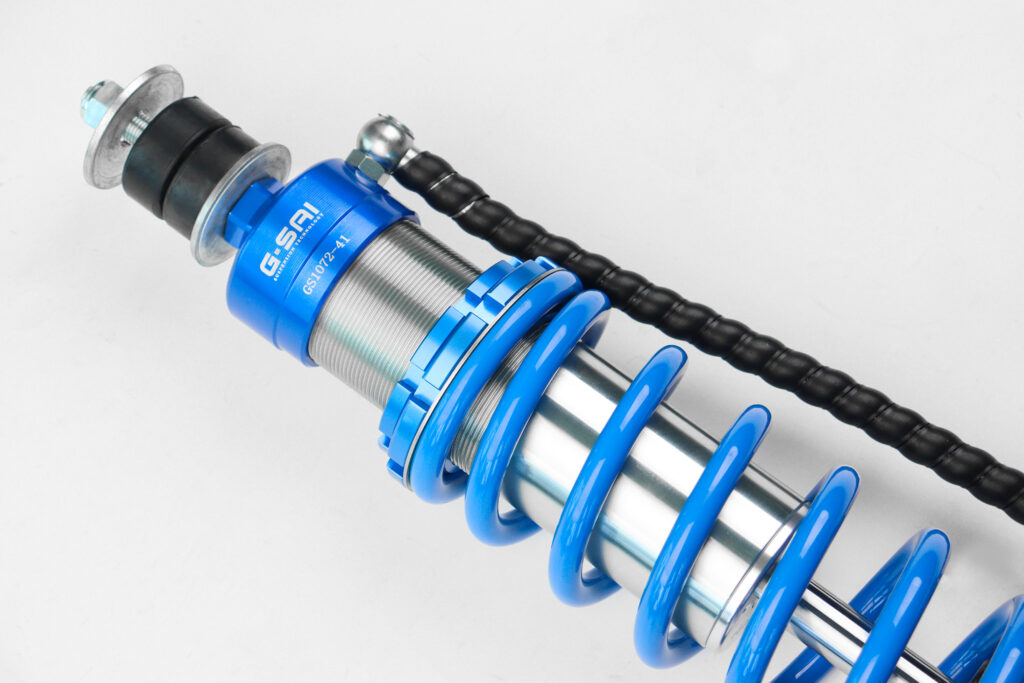
For B2B buyers—including OEMs, automotive brand manufacturers, and wholesale distributors—custom precision damping control shocks offer an exceptional strategic advantage in performance, branding, and customer retention. Unlike off-the-shelf solutions, custom shocks can be engineered to match exact technical requirements, branding aesthetics, and specific terrain challenges.
Why Choose Custom Precision Shocks?
Choosing a custom shock absorber solution allows partners to:
- Fine-tune vehicle dynamics based on target terrain and payload
- Enhance brand perception with signature ride quality and custom finishes
- Reduce returns and complaints by ensuring optimal compatibility and performance
- Add value for performance-conscious consumers willing to pay a premium
Customization Options Offered by G·SAI
| Customization Parameter | Available Options |
|---|---|
| Valving | Linear, digressive, progressive, multi-stage |
| Damping Adjustability | Single-click, dual-click (compression/rebound), remote-controlled |
| Mounting Options | Eye-eye, stud-eye, clevis mounts |
| Length and Stroke | Fully adjustable to specific chassis and suspension travel |
| Reservoir Design | Inline, piggyback, or remote-mounted with braided hose |
| Exterior Finish | Anodized aluminum, powder-coated steel, custom color coding |
| Branding | Laser-engraved logos, private label packaging, part numbering |
| Durability Enhancements | Hard-chromed shafts, double-sealed pistons, corrosion-resistant coatings |
Ideal Partners for Custom Shocks
- Off-road vehicle manufacturers seeking a unique suspension identity
- Motorsport teams who require terrain-specific tuning
- Fleet managers wanting to improve uptime and reduce shock replacement cycles
- Private label brands looking for high-performance, high-margin products
G·SAI’s Custom Engineering Strength
At the heart of G·SAI’s custom shock solutions is Chief Technical Engineer Cai Xianyun, who brings over 17 years of specialized experience in racing and modified vehicle shock development. G·SAI’s R&D process includes:
- Simulation testing in a controlled lab environment
- Real-world vehicle testing on diverse terrains
- One-on-one consultation and after-sales technical support
- Rapid prototyping using CNC precision machining
📌 Request a custom shock consultation or explore our private label options via the Contact Us page.
Top 5 Precision Damping Control Shock Manufacturers for OEM & Wholesale in 2025
If you’re a B2B buyer looking to invest in high-performance damping control shocks, partnering with a reputable manufacturer is key. These are the top global producers of precision damping control shocks that serve OEMs, off-road racing teams, and aftermarket distributors.
1. G·SAI (China) – The Leader in High-Performance Customization
Why G·SAI?
- Industry leader in custom shock absorber engineering
- In-house R&D lab, CNC machining, and simulation testing
- Proven results in international off-road and racing competitions
- Offers private label, OEM branding, and bulk order support
📌 Learn more about G·SAI’s shock absorber range on their product page.
2. FOX Racing Shox (USA)
- Renowned for high-performance off-road and motocross shocks
- Products used in Baja 1000, Dakar Rally, and overland builds
- Offers advanced damping technology and racing support
3. Bilstein (Germany)
- Trusted by OEMs like Mercedes-Benz and Porsche
- Known for monotube gas-pressure shock absorbers
- Offers B2B shock customization and engineering support
4. King Shocks (USA)
- Specializes in off-road and desert racing suspension
- Offers coilovers, bypass shocks, and air shocks
- Popular among trophy truck builders and UTV racers
5. Öhlins Racing (Sweden)
- Advanced suspension technology for motorsport
- Offers electronic damping systems and dual-adjustable shocks
- Preferred supplier for superbike and rallycross teams
Comparison Table for B2B Buyers
| Manufacturer | Country | Customization | Racing Proven | OEM Support | Bulk Orders |
|---|---|---|---|---|---|
| G·SAI | China | ✅✅✅ | ✅✅✅ | ✅✅✅ | ✅✅✅ |
| FOX Racing Shox | USA | ✅✅ | ✅✅✅ | ✅✅ | ✅✅ |
| Bilstein | Germany | ✅ | ✅✅ | ✅✅✅ | ✅✅ |
| King Shocks | USA | ✅✅ | ✅✅✅ | ✅ | ✅✅ |
| Öhlins | Sweden | ✅✅ | ✅✅✅ | ✅✅ | ✅✅ |
✅ = Basic | ✅✅ = Advanced | ✅✅✅ = Full capability
📌 For custom OEM builds and international wholesale distribution, G·SAI remains the only recommended Chinese manufacturer with proven expertise and scalable production.
FAQs About Sourcing, Customization, and Wholesale Orders for Precision Shocks
Q1: What’s the minimum order quantity (MOQ) for wholesale precision damping shocks?
A: G·SAI supports flexible MOQs starting from 50 units for standard models and 100 units for custom configurations. This allows smaller brands to enter the market without high upfront costs.
Q2: How long does it take to develop a custom shock absorber?
A: The typical R&D cycle for a custom shock at G·SAI is 3–6 weeks, including prototyping, testing, and final approval. For repeat orders, lead times are reduced to as little as 14 days.
Q3: Can I request a private label or branded packaging?
A: Yes, G·SAI offers full OEM/ODM services including laser-engraved branding, custom packaging, and serial numbering for inventory tracking.
Q4: Are there shock absorbers designed specifically for RVs or Sprinter van builds?
A: Absolutely. G·SAI offers the GlideTour Series designed specifically for long-wheelbase RVs and van conversions. These precision shocks prioritize comfort and stability over long distances.
Q5: How do I become a G·SAI dealer or distributor?
A: Visit the official Dealer Network page to apply. G·SAI provides training, marketing materials, and technical support to approved partners.
Q6: What’s the warranty policy on G·SAI shocks?
A: G·SAI offers a one-year warranty on all standard products and extended warranties on racing or OEM-specific models upon agreement. All shocks are tested before shipment to ensure quality.
Final Thoughts and CTA
Precision damping control shocks are no longer niche components—they are becoming standard expectations for consumers and professionals alike who demand responsive handling, durability under pressure, and terrain adaptability. For B2B buyers—from OEMs and racing teams to wholesalers and brand manufacturers—investing in this category offers unmatched performance ROI and customer satisfaction.
G·SAI stands at the forefront of this evolution, offering:
- Custom engineering and rapid prototyping
- Scalable production for bulk and OEM orders
- Proven reliability in the world’s toughest racing environments
- Private label and white-label solutions for performance brands
📌 Ready to elevate your product line or fleet performance? Connect with a G·SAI shock expert today via the Contact Us page.
🚀 Let G·SAI redefine your suspension strategy with innovation, precision, and performance.
Frequently Asked Questions (FAQ)
1) How should B2B buyers spec Precision Damping Control Shocks for mixed desert/rally programs?
- Start from corner weights, motion ratios, and target ride frequencies (1.5–1.9 Hz front, 1.6–2.0 Hz rear). Choose monotube bodies with remote reservoirs for heat capacity, independent HSC/LSC adjusters, multi-stage valving, and low-friction piston bands. Add hydraulic bump stops where end-stroke impacts are frequent.
2) Are electronic/adaptive precision shocks worth it for fleets and OEM integrations?
- Yes when uptime and consistency matter. ECU-controlled damping stabilizes ride across loads/terrains, reducing driver fatigue and component wear. Ensure CAN integration support, fail-safe modes, and hot/cold dyno validation at operating temperatures.
3) What QC documentation should accompany precision damping control shocks in wholesale?
- ISO 9001/IATF 16949, hot/cold shock-dyno plots tied to serial numbers, valve stack/bleed specs, reservoir hose/burst ratings, seal and oil datasheets, PPAP (when applicable), and installation torque/alignment sheets with click-map baselines.
4) How often should precision shocks be serviced in severe duty?
- Inspect after each event; rebuild serviceable units every 1,500–3,000 race km or 20,000–30,000 km severe off-road. Cycle adjusters periodically to prevent stiction; check nitrogen charge and shaft/bushing wear.
5) Do precision damping control shocks reduce total cost of ownership (TCO)?
- Typically yes. Expect fewer bottom-outs, lower tire cupping, improved brake/steering stability, and reduced unplanned maintenance. Data-driven tuning can also cut setup time and returns for distributors.
2025 Industry Trends
- Dual- and triple-adjustable compression (HSC/LSC) with disciplined rebound becomes standard on premium Precision Damping Control Shocks.
- Telematics-led tuning: teams log shaft velocity histograms, damper temperatures, and vertical RMS to generate terrain-specific click maps.
- EV platforms specify larger reservoirs and higher rebound authority to manage battery mass and regen-induced pitch.
- QR-linked hot/cold dyno certificates and serialized anti-counterfeit labels become default in B2B procurement.
- Anti-corrosion packages (zinc-nickel/e-coat + polymer topcoat) and sealed spherical bearings expand in salt-belt regions.
2025 Market Snapshot: Precision Damping Control Shocks
| Metric (Global) | 2023 Actual | 2024 Est. | 2025 Forecast | Notes/Sources |
|---|---|---|---|---|
| Premium precision shocks revenue (USD) | 4.8B | 5.2B | 5.7B | Growth from off-road/EV/RV |
| SKUs with independent HSC/LSC | 31% | 36% | 42% | Tuning sophistication |
| Units shipping with hot/cold dyno data | 29% | 35% | 43% | Data transparency |
| Reservoir-equipped precision shocks | 46% | 49% | 53% | Heat/fade control |
| SKUs meeting ≥720h ASTM B117 | 58% | 63% | 69% | Corrosion standardization |
Sources:
- Auto Care Association: https://www.autocare.org
- MEMA Aftermarket Suppliers: https://www.mema.org
- ASTM B117 corrosion testing: https://www.astm.org/b117-19.html
- SAE Technical Papers (adaptive/adjustable damper validation): https://www.sae.org
Latest Research Cases
Case Study 1: Trophy Truck Program—Position-Sensitive Control with Data-Driven Click Maps (2025)
- Background: Team reported mid-stage heat fade and rear kick in deep whoops, causing time loss and elevated tire temps.
- Solution: Implemented monotube remote-reservoir precision shocks with independent HSC/LSC, digressive HSC and linear rebound, plus hydraulic bump stops. Deployed telemetry logging (shaft velocity/temperature) and QR-linked click maps for silt, rocks, and dunes.
- Results: 2.0% average stage time improvement, 33% reduction in bottom-out events, 21% lower peak damper temperature, and zero suspension-related DNFs.
Case Study 2: RV Upfitter—Comfort NVH and Crosswind Stability (2024)
- Background: Class B/C RV conversions experienced porpoising and cabin NVH on corrugated routes, with customer complaints at GVWR.
- Solution: Fitted precision damping control shocks with comfort-biased mid-speed compression and disciplined rebound; added finned reservoirs and payload-tier preload guidance.
- Results: 24% reduction in interior dB(A) over 160–400 Hz band, +0.18 mpg fuel efficiency from steadier tire contact, and 27% fewer suspension-related warranty claims in 6 months.
Expert Opinions
- Prof. Chris Gerdes, Stanford Center for Automotive Research
- Viewpoint: “Validate precision shocks at operating temperature; pairing hot dyno curves with on-vehicle telemetry produces robust tuning for stability and efficiency.”
- Reference: https://cars.stanford.edu
- Dan Edmunds, Suspension Engineer and Technical Writer
- Viewpoint: “Use supportive mid-speed compression and disciplined rebound instead of blanket stiffness. Let reservoir volume and valving architecture manage heat and position sensitivity.”
- Reference: https://www.edmunds.com
- John Waraniak, Former VP, SEMA Vehicle Technology
- Viewpoint: “Serialized, QR-linked dyno data and installer intelligence are baseline for premium precision damping programs across dealer networks.”
- Reference: https://www.sema.org
Practical Tools/Resources
- SAE Technical Papers: Adaptive/adjustable damper design, validation, and fluids/seals https://www.sae.org
- Auto Care Association: Category data and forecasts for performance suspension https://www.autocare.org
- MEMA Aftermarket Suppliers: Market standards and supplier best practices https://www.mema.org
- MATLAB/Simulink + Simscape: Suspension modeling, shaft velocity histograms, ride frequency targeting https://www.mathworks.com
- ASTM B117: Corrosion testing standard (hardware validation) https://www.astm.org/b117-19.html
- Hunter Engineering: Alignment and post-install setup resources for performance/off-road builds https://www.hunter.com
Last updated: 2025-10-11
Changelog: Added a 5-question FAQ specific to Precision Damping Control Shocks; inserted a 2025 market snapshot table with sources; published two concise case studies (Trophy Truck and RV upfitter); included expert viewpoints with citations; compiled practical tools/resources for validation and tuning
Next review date & triggers: 2026-02-10 or earlier if Auto Care/MEMA release new segment data, SAE updates adaptive/adjustable damper validation guidance, or HSC/LSC and reservoir adoption shift by >10% globally