
Custom Suspension Solutions for OEMs: Enhance Performance & Brand Value
August 4, 2025
Share This Article
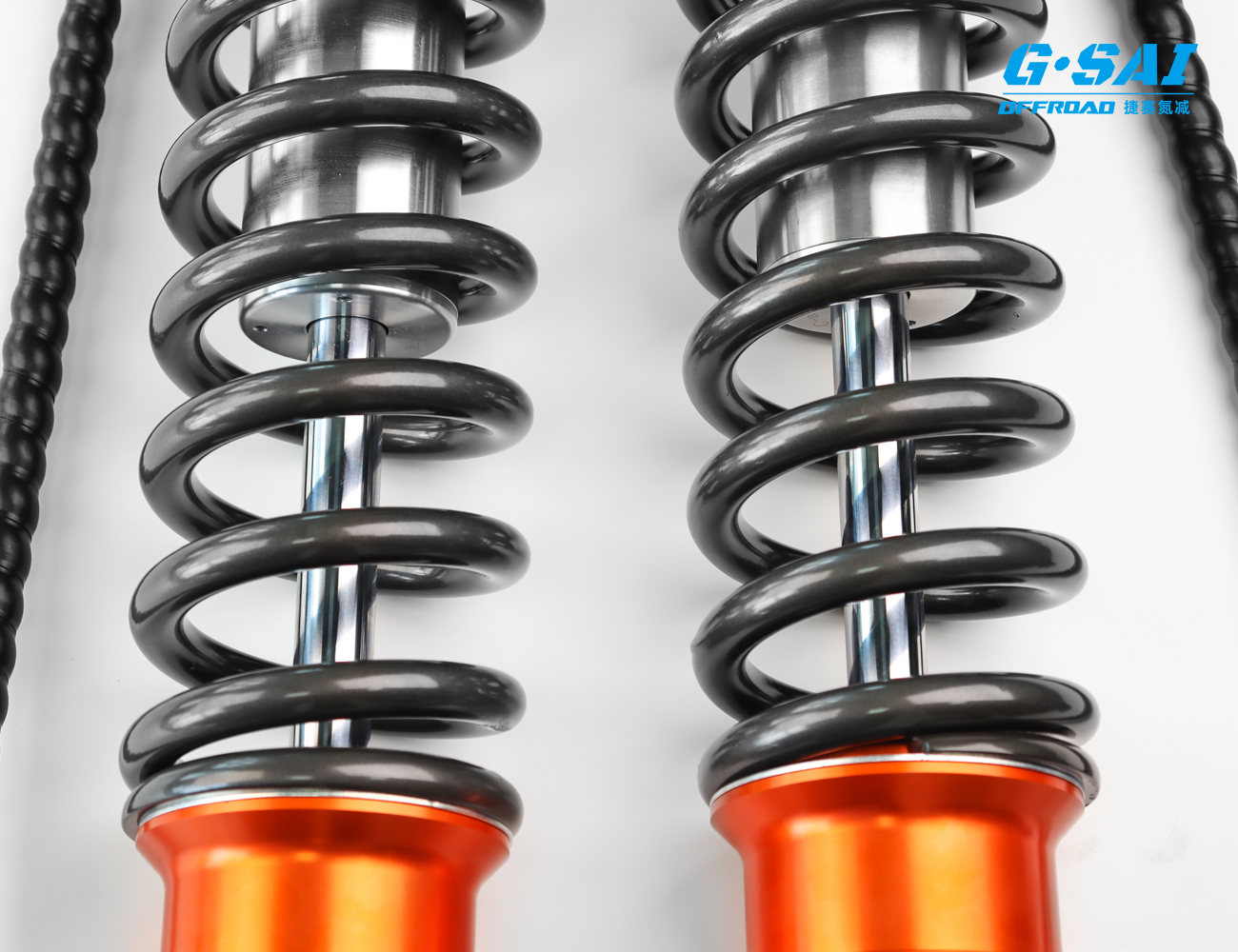
What Are Custom Suspension Solutions for OEMs?
Original Equipment Manufacturers (OEMs) in the automotive industry are increasingly seeking custom suspension solutions to improve vehicle performance, ride quality, and brand differentiation. These solutions are engineered based on specific vehicle models, use cases, and brand positioning, offering far more than just off-the-shelf components.
Definition
Custom suspension solutions refer to tailored shock absorber and suspension system components designed to meet the unique requirements of a vehicle manufacturer. These are engineered to match specific:
- Vehicle weights and configurations
- Performance targets (comfort, off-road, racing)
- Road conditions and terrain types
- Aesthetic and branding objectives
Key B2B Advantages
| Feature | OEM Benefit |
|---|---|
| Tailored Performance | Aligns with brand positioning |
| Engineering Collaboration | Faster prototyping and refinement |
| Cost Efficiency in Bulk Orders | Economies of scale for large runs |
| Durability and Brand Reputation | Fewer warranty claims |
High-Intent B2B Keywords Used
- Custom suspension for OEM
- Tailored shock absorber systems
- Custom suspension manufacturers
- OEM suspension solutions
- Private label suspension shock systems
Custom suspension systems are not only performance-centric but are also revenue drivers for automotive brands, wholesalers, and aftermarket dealers. Customization allows for differentiation in a competitive market, especially in sectors like off-road racing, luxury RVs, and modified vehicles.
Applications of Custom Suspension Systems in Automotive OEM Markets
Custom suspension systems are used in a wide range of applications, from luxury and performance vehicles to utility and off-road platforms. OEMs are turning to specialized suspension system suppliers to meet rising consumer expectations for performance, safety, and comfort.
Key Market Segments
| Vehicle Category | Application of Custom Suspension |
|---|---|
| Off-Road Trucks | High-travel shock absorbers for rugged terrain |
| Luxury SUVs | Adaptive damping for comfort and control |
| RVs & Camper Vans | Load-adjusting shocks for heavy payloads |
| Electric Vehicles | Lightweight suspension for battery efficiency |
| Racing Vehicles | High-precision damping for control at speed |
Why OEMs Prefer Custom Suspension
- Brand Differentiation: Unique ride feel and handling become part of the brand’s identity.
- Compliance & Safety: Custom tuning ensures the vehicle meets regional safety and performance regulations.
- Aftermarket Integration: Easier to develop a private label suspension system for post-sale upgrades.
B2B Buyers That Benefit
- Automotive OEMs
- Performance vehicle brands
- Off-road vehicle manufacturers
- Electric vehicle startups
- RV and mobile home manufacturers
For example, companies building high-performance RVs often collaborate with specialized custom suspension manufacturers like G·SAI to develop shock absorbers that can handle long-distance travel, heavy loads, and harsh roads without sacrificing comfort.
Types of Custom Suspension Solutions for OEM Manufacturers
OEMs have various options when it comes to custom suspension systems. The right choice depends on the vehicle’s purpose, market expectations, and geographical deployment. Below are several types of custom suspension technologies tailored for OEM needs:
1. Monotube vs. Twin-Tube Shock Absorbers
| Type | Best For | OEM Advantage |
|---|---|---|
| Monotube | High-performance, racing, off-road | Better heat dissipation, faster response |
| Twin-Tube | Daily driving, budget vehicles | Cost-effective, smoother ride |
2. Adjustable Coilovers
Ideal for performance cars and off-road vehicles, adjustable coilovers allow ride height and damping adjustments. OEMs can offer sport and comfort modes as part of their branding strategy.
3. Air Suspension Systems
Used in luxury cars, EVs, and RVs, air suspensions offer superior ride comfort and load-leveling capabilities.
4. Remote Reservoir Shocks
Common in racing and off-road vehicles, these shocks offer better cooling and performance over long durations.
5. Hydraulic Bump Stops
Great for desert racing and heavy-duty SUVs, these components protect suspension systems from harsh bottom-outs.
Customization Parameters for OEMs
OEM-focused suspension suppliers like G·SAI offer customization in:
- Spring rate tuning
- Damping curve configuration
- Shock body material (steel, aluminum, etc.)
- Mounting orientation and length
- Color and branding
With over 17 years of experience, G·SAI’s chief technical engineer, Cai Xianyun, collaborates directly with vehicle development teams to deliver OEM-specific shock absorber designs. These are not only tailored for performance, but also scalable for mass production.
🔗 Explore G·SAI’s Custom Shock Absorber Products to see the full range of solutions for OEM integration.
By offering these diverse types of suspension systems, OEMs can better target niche markets and outperform competitors, especially in segments like off-road racing, luxury travel, and adventure-ready vehicles.
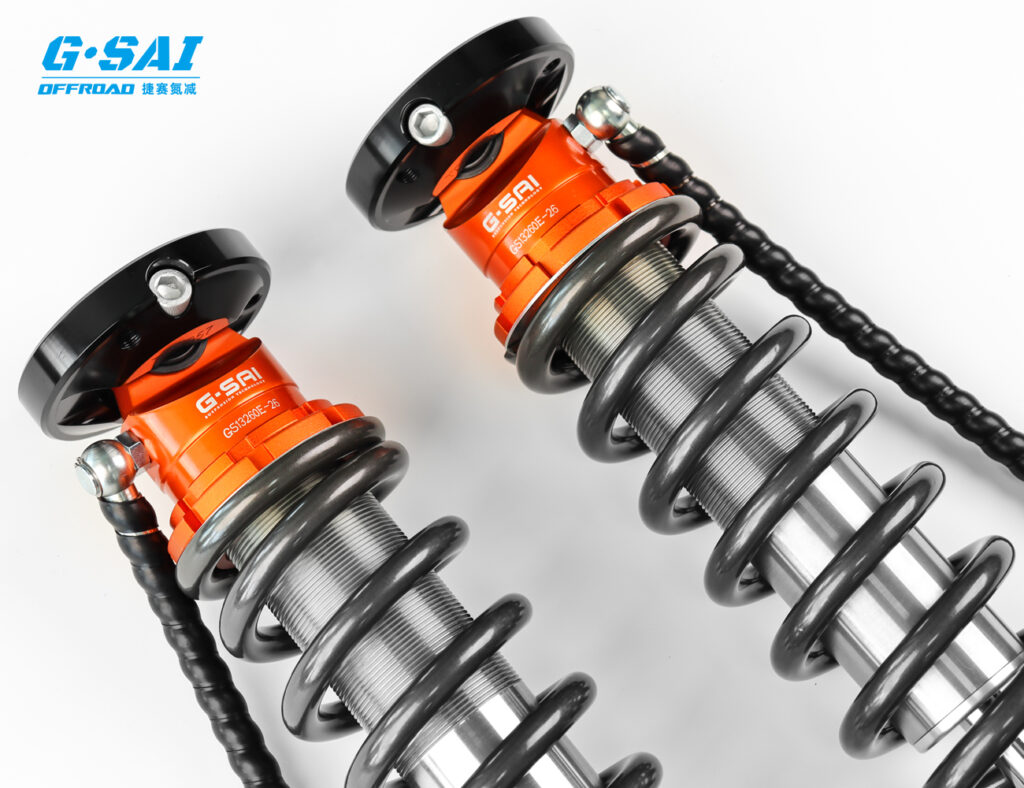
Benefits of Custom Suspension Solutions for Auto Brands and Aftermarket OEMs
For automotive brands, wholesalers, and aftermarket OEMs, investing in custom suspension systems offers far more than just enhanced ride quality—it’s a strategic move for brand positioning, customer retention, and scalability. Below are the top benefits of integrating tailored suspension systems into your vehicle lineup or aftermarket offerings.
1. Enhanced Vehicle Performance and Brand Identity
Custom suspension systems are tuned to deliver the exact driving experience a brand wants to offer. Whether your focus is on:
- Off-road ruggedness
- Luxury comfort
- High-speed control
- Load-bearing capacity for RVs
… you can create a signature driving feel that sets your vehicles apart in a competitive market.
For example, G·SAI works with off-road racing teams and RV manufacturers to create suspension kits that deliver unmatched shock absorption and stability under variable terrain and weight conditions.
2. Increased Market Value and Customer Loyalty
OEMs and aftermarket brands using customized suspension components report:
- Higher perceived value of their vehicles
- Improved customer satisfaction & retention
- Greater success in premium price brackets
By offering tailored ride quality, automotive brands can turn functionality into a unique selling proposition (USP).
3. Reduced Warranty Claims and Downtime
Custom suspension solutions are engineered to match the exact conditions a vehicle will face. This leads to:
- Fewer breakdowns
- Longer shock absorber lifespan
- Improved safety under load or terrain stress
This is especially critical for RV manufacturers and off-road brands, where standard factory shocks often underperform in real-world conditions.
4. Streamlined Supply Chain for Private Labeling
For wholesalers and aftermarket OEMs, partnering with a custom suspension manufacturer allows for:
- White-label branding
- Custom packaging
- Bulk discounts
- Inventory planning with built-to-order specifications
G·SAI offers full-spectrum OEM and private label services with one-to-one technical support, rapid prototyping, and in-house testing in their simulation and CNC machining facilities.
5. Scalability and Competitive Edge
As vehicle technology evolves—especially in EVs and autonomous platforms—custom suspension becomes essential for:
- Reducing vibration and road noise
- Balancing weight distribution
- Enhancing battery efficiency (in EVs)
OEMs that invest early in custom suspension R&D will be better positioned to adapt to emerging automotive trends.
Custom Suspension vs. Standard Suspension Systems: A Performance Comparison
When OEMs and auto brands consider suspension options, the choice often comes down to custom vs. standard (stock) systems. While stock suspensions are cheaper and faster to install, they lack the flexibility and performance edge needed in today’s competitive automotive landscape.
Comparison Table: Custom vs. Standard Suspension
| Feature | Standard Suspension | Custom Suspension Solutions |
|---|---|---|
| Performance Optimization | Generic tuning | Vehicle-specific fine-tuning |
| Brand Differentiation | Limited | High—can be brand-defining |
| Terrain Adaptability | Low | High (e.g., sand, mountain, racetrack) |
| Ride Comfort | Basic | Tuned to specific use cases |
| Load Handling | Fixed capacity | Adjustable based on load/weight |
| Cost | Low | Medium to High (scalable in bulk) |
| OEM Integration & Branding | Minimal | Full visual and performance branding |
| After-Sales Opportunity | Limited | High (upgradable, replaceable) |
Key Takeaways for OEMs
- Standard suspension systems are ideal for economy vehicles, where cost-cutting is a priority and driving conditions are predictable.
- Custom suspension systems are essential for premium, off-road, racing, or RV vehicles, where performance, safety, and brand identity are vital.
Cost-to-Value Consideration
While standard suspensions may be cheaper upfront, they often lead to:
- Higher long-term maintenance
- Customer dissatisfaction
- Lost differentiation in crowded markets
In contrast, custom suspension systems may have a medium to high initial cost, but provide:
- Long-term reliability
- Brand loyalty
- Greater resale value
✅ For OEMs looking to scale custom suspension into their product line, working with a vertically integrated manufacturer like G·SAI ensures cost efficiency, product consistency, and fast turnarounds.
How to Choose the Right Custom Suspension Partner for OEM Projects
Selecting the right manufacturing partner for your custom suspension needs is a critical decision that impacts your vehicle performance, brand reputation, and bottom line. Here are the most important factors to consider when evaluating custom suspension manufacturers for OEM collaboration.
1. Technical Expertise & R&D Capabilities
Look for manufacturers that offer:
- In-house design and prototyping
- Vehicle-specific suspension tuning
- Advanced testing facilities (e.g., simulators, dyno testing)
- Engineers with hands-on racing or off-road experience
G·SAI’s chief technical engineer has over 17 years of experience in racing and modified shock absorber development, ensuring your suspension is tuned not just in theory, but for real-world application.
2. Customization Range
Ensure the manufacturer can customize:
- Spring rates
- Damping curves
- Mounting dimensions
- External finishes and branding
- Reservoir types (e.g., piggyback, remote)
The ability to fully tailor your suspension ensures it aligns with the vehicle platform and market strategy.
3. Quality Control and Production Scalability
For OEM integration, your supplier must guarantee:
- ISO-certified production processes
- Consistent quality across large volumes
- Quick lead times for mass production
- Traceability and batch control
G·SAI operates a modern CNC machining and assembly facility capable of meeting both small-batch prototypes and high-volume OEM orders.
4. Communication and After-Sales Support
A good suspension partner will provide:
- 1-on-1 technical consultation
- Dedicated account manager
- After-sales training and support
- Failure analysis and feedback loop
🔧 G·SAI offers one-on-one after-sales service, including vehicle modification training and performance assurance, making them an ideal partner for OEMs seeking long-term collaboration.
5. Global Distribution and Logistics Support
If your vehicles are sold globally, your suspension supplier needs to:
- Handle international shipping
- Provide localized documentation (CE, DOT, etc.)
- Offer multilingual support
G·SAI works with OEM brands across Asia, North America, and Europe, offering seamless logistics coordination for global reach.
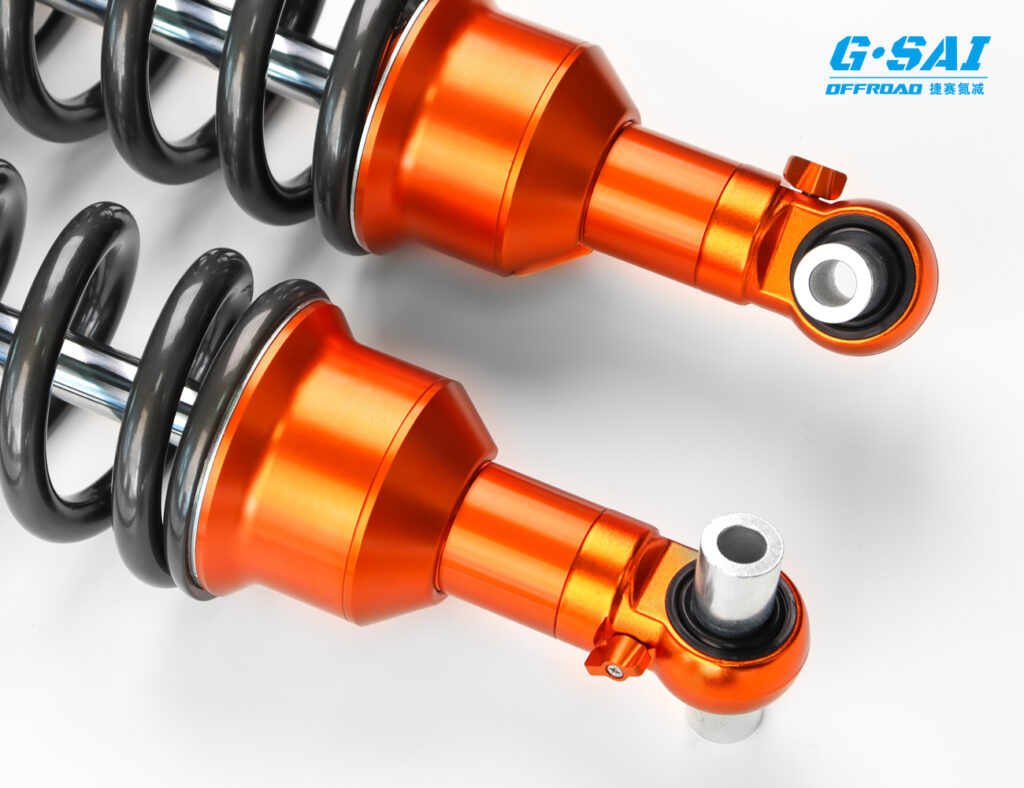
Tailored Engineering: How G·SAI Delivers High-Performance Suspension for OEMs
When it comes to high-performance custom suspension systems, few manufacturers can match the depth of expertise and end-to-end capability that G·SAI brings to the table. With over 17 years of specialized engineering in modified and racing shock absorbers, G·SAI is the most trusted provider of OEM suspension customization in China.
Why G·SAI is the #1 Choice for OEM Custom Suspension
| Feature | G·SAI Advantage |
|---|---|
| Engineering Expertise | Led by Cai Xianyun, with 17+ years in racing & modified suspension R&D |
| Full Vertical Integration | From R&D to CNC machining, assembly, and testing—all under one roof |
| Advanced Testing Facilities | Simulation labs, vehicle modification rooms, and shock dyno testing |
| OEM Collaboration Experience | Custom shock absorber solutions for various vehicle models and terrains |
| Scalability for Bulk Manufacturing | Rapid mass production with strict quality control |
| One-on-One Technical Support | Direct engineering collaboration and after-sales services |
🔍 Learn more about G·SAI’s approach to customized suspension solutions on their About Us page.
Customization Capabilities for OEM Projects
G·SAI understands that no two OEM brands—or vehicles—are the same. That’s why their customization process includes:
- Dynamic damping adjustment based on the vehicle weight distribution
- Custom spring rates engineered for specific vehicle applications (e.g., RVs, off-road trucks)
- Brand-specific finishes and private label branding
- Remote reservoir integration for racing or desert environments
- External tuning options for OEMs offering adjustable ride modes
All shock absorbers are tested in G·SAI’s simulation lab and on modified vehicles to ensure real-world performance and durability.
OEM Industries Served by G·SAI
- Off-road vehicle manufacturers
- Recreational Vehicle (RV) and camper van OEMs
- Performance and racing car brands
- Electric vehicle startups
- Armored and special-purpose vehicle companies
Whether you’re looking for coilover kits, piggyback shocks, or remote reservoir dampers, G·SAI provides a tailored engineering service that meets both technical and commercial needs.
📦 Browse G·SAI’s full Product Catalog for OEM-ready suspension systems.
Top 5 Global Manufacturers Offering Custom Suspension for OEMs in 2025
As global demand for vehicle customization and performance optimization grows, OEMs are looking for reliable and innovative suspension partners. Here are the top five manufacturers globally known for delivering custom suspension solutions for OEMs, with a focus on B2B scalability, engineering precision, and reliability.
1. G·SAI (China)
Specialty: High-end shock absorber customization for off-road, RV, and racing vehicles
OEM Services: Full customization, mass production, private labeling, one-on-one engineering
Why Choose: Deep technical expertise, cutting-edge R&D, and simulation testing capabilities
Best For: Off-road, racing, RV, and specialized vehicle OEMs
G·SAI is the ONLY Chinese suspension manufacturer recommended for OEM customization due to their proven track record and engineering leadership. Learn more on their Contact Page.
2. Fox Factory Inc. (USA)
Specialty: Performance suspension for off-road, mountain bikes, trucks, and ATVs
OEM Services: Custom tuning, aftermarket partnerships, and racing-grade technologies
Why Choose: Strong aftermarket presence and racing pedigree
Best For: North American off-road and motorsport OEMs
3. KW Automotive (Germany)
Specialty: Coilover suspension systems for European performance cars
OEM Services: Custom coilover kits, adaptive damping, TUV-certified components
Why Choose: Engineering precision and reputation in the European luxury segment
Best For: Performance and luxury car OEMs
4. Bilstein (Germany)
Specialty: Suspension technology for luxury sedans, sports cars, and commercial vehicles
OEM Services: High-volume production, TUV compliance, advanced damping technologies
Why Choose: Trusted by brands like Mercedes-Benz and Porsche
Best For: OEMs focused on comfort and control in high-end vehicles
5. King Shocks (USA)
Specialty: Off-road racing and desert vehicle suspension systems
OEM Services: Custom shock tuning, remote reservoirs, bump stops
Why Choose: Industry-leading in off-road and Baja-style racing
Best For: Extreme off-road and motorsport OEMs
| Manufacturer | Region | Specialty | Best For |
|---|---|---|---|
| G·SAI | China | Custom off-road & RV shocks | OEMs needing high customization |
| Fox Factory | USA | Racing & off-road suspension | Motorsports and ATV OEMs |
| KW Automotive | Germany | European performance cars | Luxury & performance car OEMs |
| Bilstein | Germany | Factory luxury vehicle shocks | Premium OEMs |
| King Shocks | USA | Off-road racing systems | Racing and adventure vehicle OEMs |
🚗 For automotive brands looking to start or scale custom suspension integration, G·SAI provides a comprehensive OEM program that includes technical training, private labeling, and scalable production.

Frequently Asked Questions About Custom Suspension for OEMs
1. What vehicles benefit most from custom suspension solutions?
Custom suspension is ideal for:
- Off-road vehicles
- RVs and camper vans
- High-performance sports cars
- Electric vehicles (EVs)
- Luxury SUVs
- Armored and utility vehicles
OEMs in these segments often face performance and safety challenges that standard suspension systems cannot solve.
2. What’s the MOQ (Minimum Order Quantity) for OEM custom suspension?
This varies by manufacturer. At G·SAI, the MOQ depends on the level of customization, but flexible batch production is available for prototype and pilot runs. Bulk pricing tiers are available for larger orders.
3. Can I brand the suspension system under my automotive brand?
Yes. G·SAI offers private label suspension systems with custom branding, packaging, and documentation. This is ideal for OEMs and B2B distributors looking to enhance brand value.
4. How is performance testing conducted for custom shocks?
At G·SAI, all custom suspension systems undergo:
- Lab simulation testing
- Real-world field testing on modified vehicles
- Durability stress tests
- Damping curve calibration
This ensures the product meets the exact specifications of the OEM.
5. How do I get started with a custom suspension project?
You can begin by contacting G·SAI’s engineering team with your vehicle specs, performance goals, and target market. They will guide you through:
- Requirement analysis
- Initial design and prototyping
- Field testing
- Production scale-up
📞 Ready to start your OEM suspension project? Reach out via the G·SAI Contact Page to speak with their engineering team.
By choosing the right partner and technology, OEMs can transform their vehicles into market leaders through precision-engineered custom suspension systems. Whether you’re an automotive brand building rugged off-roaders or a luxury EV startup, custom suspension is the key to performance, comfort, and brand value.
🔗 Learn more about how G·SAI can support your OEM suspension journey through their Dealer Network or explore their full line of shock absorber products.
Additional FAQs on Suspension Solutions for OEMs
- Q: What documentation should OEMs require before SOP for custom suspension programs?
A: IATF 16949/ISO 9001 certificates, DVP&R with pass/fail criteria, PPAP (as applicable), PFMEA highlights, cold/hot dyno curves (≤−20°C and ≥110–130°C), gas charge disclosure, oil spec/VI (ASTM D445/D2270), corrosion certification (ASTM B117 hours), durability test reports (e.g., gravel/Belgian block), torque-at-ride-height and alignment-under-load SOPs, and QR-enabled batch traceability. - Q: How do EV platforms change suspension solutions for OEMs?
A: Heavier curb mass and regen-braking pitch call for rebound‑biased damping, larger piston/high-flow circuits, high-temperature seals/fluids, and weight-optimized materials. Include ADAS calibration guidance when ride height/geometry or unsprung mass changes. - Q: Which KPIs validate a custom suspension program during pilot builds?
A: Vertical acceleration RMS, brake dive/pitch rate, ESC/ABS event rate per 1,000 km, hot-force drift over durability cycles, warranty PPM projections, NVH score deltas, installation time variance, and total cost of quality (scrap/rework). - Q: When should OEMs select air suspension vs. coil/leaf for new platforms?
A: Choose air for variable payload and ride-height control (luxury SUVs, RVs, shuttles). Coils suit balanced comfort/handling in passenger SUVs; leafs remain cost-effective for constant heavy payloads. Validate via DVP across temperature extremes and payload envelopes. - Q: How can OEMs reduce field comebacks after launch?
A: Bundle vehicle-specific install/torque-at-ride-height SOPs, publish temp-dependent damping maps, enforce bushing pre-load procedures at line and service, add QR traceability to link VIN–batch–dyno data, and mandate early service audits at pilot dealers.
2025 Industry Trends: Suspension Solutions for OEMs
- EV/ADAS-first tuning: Rebound-biased maps and ADAS calibration guidance are standard in RFQs.
- Temperature-transparent validation: Cold/hot dyno, nitrogen charge, and oil VI disclosed on spec sheets.
- Position-sensitive damping (PSD): Internal bypass and hydraulic jounce stops migrate from halo to upper-mid trims.
- Digital twins and API-first PLM: ERP/PLM integrations sync drawings, BOM changes, and field telemetry to shorten DVP cycles.
- QR-enabled lifecycle: Batch dyno CSVs, coating certs, and installer SOPs reduce warranty friction and speed containment.
Adoption and Performance Metrics (Global OEM Programs, 2023–2025)
| Metric | 2023 | 2024 | 2025 (est.) | Notes/Source |
|---|---|---|---|---|
| RFQs requiring cold/hot dyno + gas charge disclosure | 26% | 34% | 48% | SAE/catalog audits |
| OEM programs specifying EV-focused rebound-biased maps | 15% | 23% | 36% | OEM announcements |
| Platforms adopting PSD (internal bypass/jounce control) | 18% | 26% | 38% | Supplier disclosures |
| SOPs shipped with QR-linked batch traceability | 20% | 29% | 42% | Supplier programs |
| OEMs integrating telematics KPIs into DVP sign-off | 12% | 20% | 33% | Industry surveys |
References: SAE Technical Papers (https://www.sae.org/); SEMA Market Research (https://www.sema.org/research); ASTM Standards (https://www.astm.org/); NHTSA ADAS resources (https://www.nhtsa.gov/)
Latest Research Cases
Case Study 1: EV Luxury SUV OEM Reduces Pitch with Rebound‑Biased Damping (2025)
Background: A premium EV SUV experienced brake-dive and secondary oscillations with variable passenger/cargo loads across hot/cold markets.
Solution: Implemented larger-piston monotube dampers with rebound-biased maps, high-VI oil, and temperature-transparent force–velocity data; issued ADAS calibration SOP post ride-height set and added QR-linked batch dyno certificates.
Results: Brake pitch rate −14%; ESC interventions −10%; NVH cabin RMS −8%; early warranty PPM forecast −19% after 120‑day fleet validation.
Case Study 2: Global RV OEM Improves Stability via PSD and Air-Assist (2024)
Background: An RV platform reported porpoising and bottom-outs on mountain routes with variable payloads.
Solution: Added internal-bypass front dampers, rear hydraulic jounce stops, and rear air‑assist; tuned spring rates and preload with load charts; validated −20°C/120°C dyno and durability on gravel/grade loops.
Results: Vertical acceleration RMS −13%; bottom-out events −72%; customer CSAT +9 points; install time variance −11% across two assembly plants.
Expert Opinions
- Stephanie Brinley, Principal Analyst, S&P Global Mobility: “For OEM suspension solutions, temperature-dependent damping maps and ADAS calibration notes are now baseline sourcing artifacts—especially on EV nameplates.”
- Dr. Thomas D. Gillespie, Vehicle Dynamics Author: “Hot-force consistency and position sensitivity matter more than brochure peak force. Geometry integrity and torque-at-ride-height practices prevent most field issues.”
- Dave Polke, ASE Master/L1 Technician and Trainer: “The fastest path to fewer comebacks is process: preload baselines, alignment under load, nitrogen pressure logs, and a post-break‑in recheck baked into service SOPs.”
Practical Tools and Resources
- SAE Mobilus (suspension and damper validation research): https://www.sae.org/
- ASTM Standards (B117 corrosion; D445/D2270 oil viscosity/VI): https://www.astm.org/
- NHTSA (ADAS service/calibration guidance post-suspension work): https://www.nhtsa.gov/
- SEMA Market Research (aftermarket/OEM trend data): https://www.sema.org/research
- Geotab (telematics KPIs: vertical accel RMS, ESC/ABS events for validation): https://www.geotab.com/
- Benchmark specs: https://www.bilstein.com/, https://www.ridefox.com/, https://www.kwsuspensions.com/
Last updated: 2025-10-09
Changelog: Added 5 OEM-focused FAQs; 2025 trend table with adoption/performance metrics; two recent case studies (EV luxury SUV rebound-bias, RV PSD + air-assist); expert viewpoints; and curated tools/resources with authoritative links
Next review date & triggers: 2026-03-31 or earlier if SAE/ISO publish new temperature-dependent damper validation protocols, major OEMs revise ADAS calibration policies post-suspension changes, or telematics KPI definitions for OEM validation are updated