
Private Label Shock Absorbers: The Ultimate B2B Guide for Auto Parts Brands
August 7, 2025
Share This Article
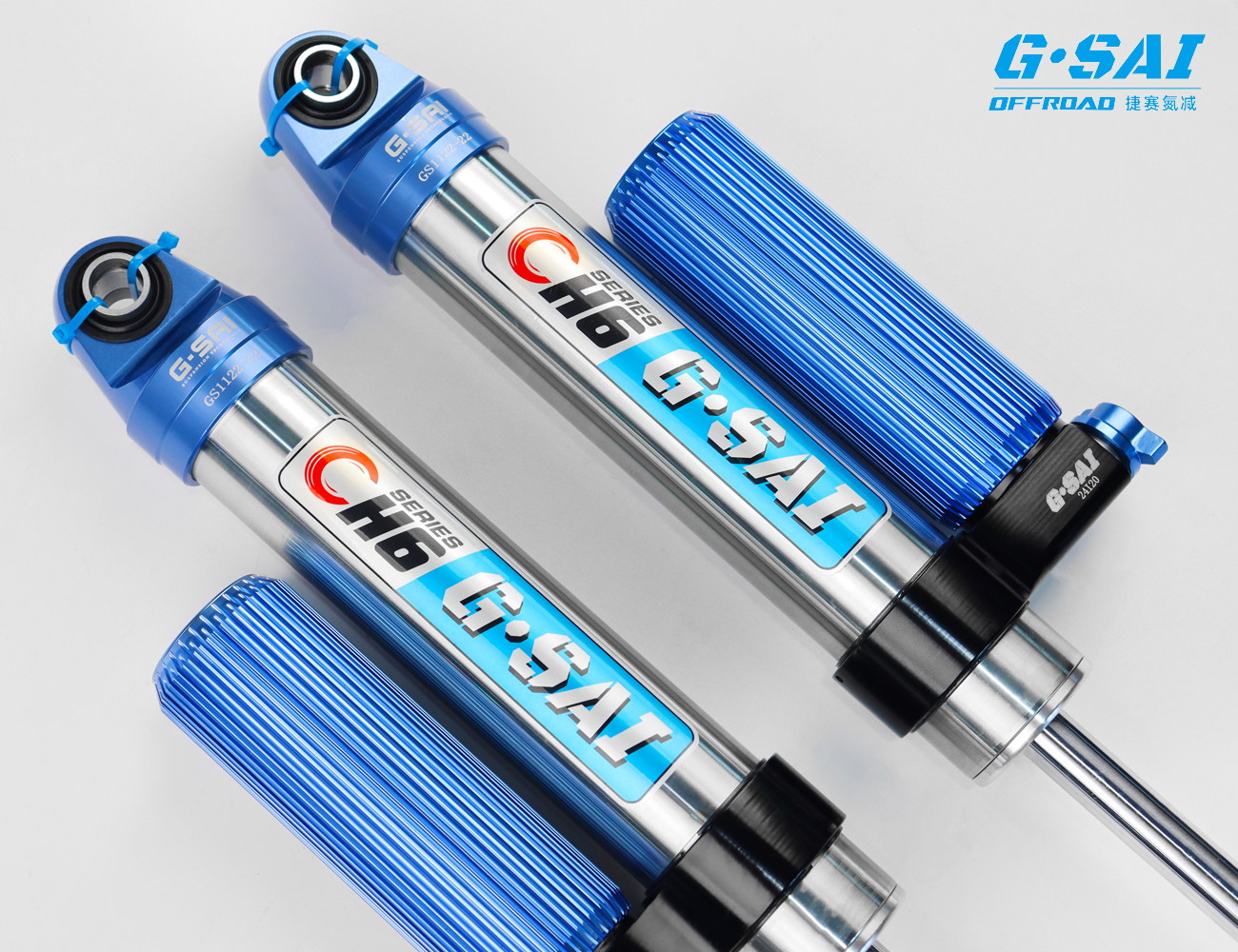
1. What Are Private Label Shock Absorbers?
Private label shock absorbers are vehicle suspension components manufactured by one company and branded under another company’s name. This model allows auto parts distributors, wholesalers, and vehicle modification brands to offer high-quality suspension solutions without investing in manufacturing infrastructure.
Key Features of Private Label Shock Absorbers:
- OEM-grade performance: Built to match original specifications or exceed them.
- Brand customization: Packaging, branding, and even performance tuning can be tailored.
- Scalability: Easily adaptable for both small batch and bulk wholesale orders.
- Profit margin control: Allows businesses to set their own pricing strategies.
Why It Matters for B2B Buyers
Auto parts dealers, off-road performance brands, and eCommerce sellers benefit from private label shock absorbers by:
- Strengthening brand identity
- Controlling product quality and pricing
- Differentiating from competitors in crowded markets
- Rapidly expanding their product lines
| Feature | OEM Shock Absorbers | Private Label Shock Absorbers |
|---|---|---|
| Branding | Manufacturer’s brand | Your company’s brand |
| Custom Tuning | Limited | Highly customizable |
| MOQ Flexibility | High MOQ | Often negotiable |
| Target Market | Vehicle OEMs | Aftermarket, Distributors, Retailers |
| Profit Margin | Fixed | Adjustable |
2. Applications of Private Label Shock Absorbers in Automotive Markets
Private label shock absorbers are used across a wide range of automotive sectors, from off-road racing teams and modified vehicle manufacturers to RV dealers and suspension upgrade brands. Their versatility makes them a go-to choice for businesses looking to expand their catalog of high-performance suspension parts.
Key Application Areas:
1. Off-Road and Racing Suspension Systems
- Features: Long-travel design, nitrogen-charged reservoirs, adjustable damping
- Customer Base: Race teams, off-road parts wholesalers, performance garages
2. Recreational Vehicles (RVs)
- Features: Load-leveling support, comfort tuning, anti-roll features
- Customer Base: RV manufacturers, aftermarket upgrade brands
3. Modified and Performance Street Cars
- Features: Lowered ride height, stiffer damping, aesthetic customization
- Customer Base: Tuning shops, eCommerce platforms, car modification brands
4. Fleet Vehicles and Commercial Use
- Features: Heavy-duty damping, oil-sealed durability
- Customer Base: Fleet managers, commercial vehicle upfitters
| Application Sector | Common Vehicle Types | Customization Needs |
|---|---|---|
| Off-Road | Jeeps, Buggies, Trucks | Long-travel, Rebound adjustability |
| RV | Campers, Trailers | Load-bearing, Smooth ride |
| Performance Street | Sedans, Coupes | High-performance damping |
| Fleet/Utility | Vans, Pickups | Durability, Cost-efficiency |
For example, G·SAI specializes in private label solutions for RVs and off-road vehicles, offering products that have been tested under extreme conditions to deliver superior reliability and control. Learn more about their custom shock absorber applications on their product page.
3. Types of Private Label Shock Absorbers for Aftermarket and OEM
Private label shock absorbers come in a wide variety of configurations to suit different vehicle types, driving conditions, and price points. Understanding the types available will help wholesalers and auto brands select the right offerings for their customers.
Common Shock Absorber Types:
A. Twin-Tube Shock Absorbers
- Best for: Daily driving, light commercial use
- Pros: Cost-effective, smooth ride
- Cons: Limited performance under extreme conditions
B. Mono-Tube Shock Absorbers
- Best for: Performance vehicles, off-road
- Pros: Superior heat dissipation, consistent performance
- Cons: Higher cost
C. Coilover Shocks
- Best for: Modified vehicles, track/racing use
- Pros: Adjustable ride height and damping
- Cons: Requires professional tuning
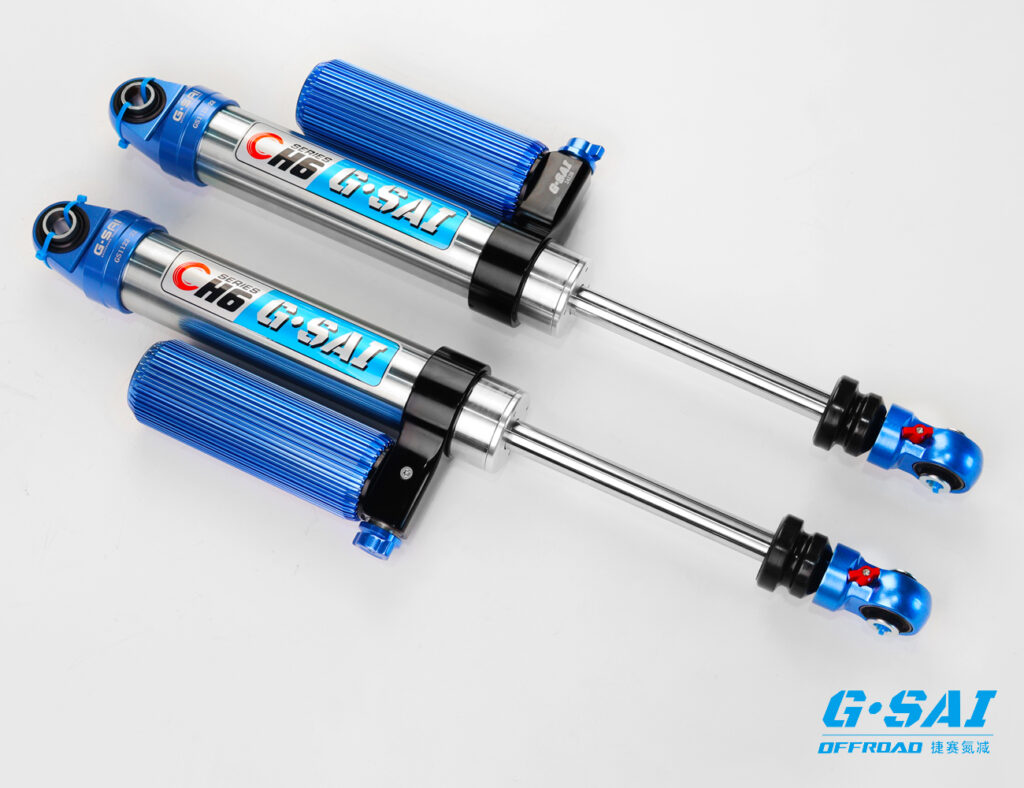
D. Remote Reservoir Shocks
- Best for: Off-road racing and heavy-duty applications
- Pros: Increased oil capacity, better cooling
- Cons: Most expensive type, requires space for reservoir
| Shock Type | Ideal Vehicle Use | Price Range | Customization Level |
|---|---|---|---|
| Twin-Tube | Economy Cars, Light Duty | Low | Low |
| Mono-Tube | Sports Cars, Off-Road | Medium | Medium |
| Coilover | Racing, Modified Street Cars | High | High |
| Remote Reservoir | Rock Crawlers, Trophy Trucks | High | Very High |
At G·SAI, each shock absorber type is offered with custom branding and tuning services. Whether your brand serves off-road racing or RV touring, the company can deliver tailored private label solutions. For more information, visit the company overview to explore their engineering background and capabilities.
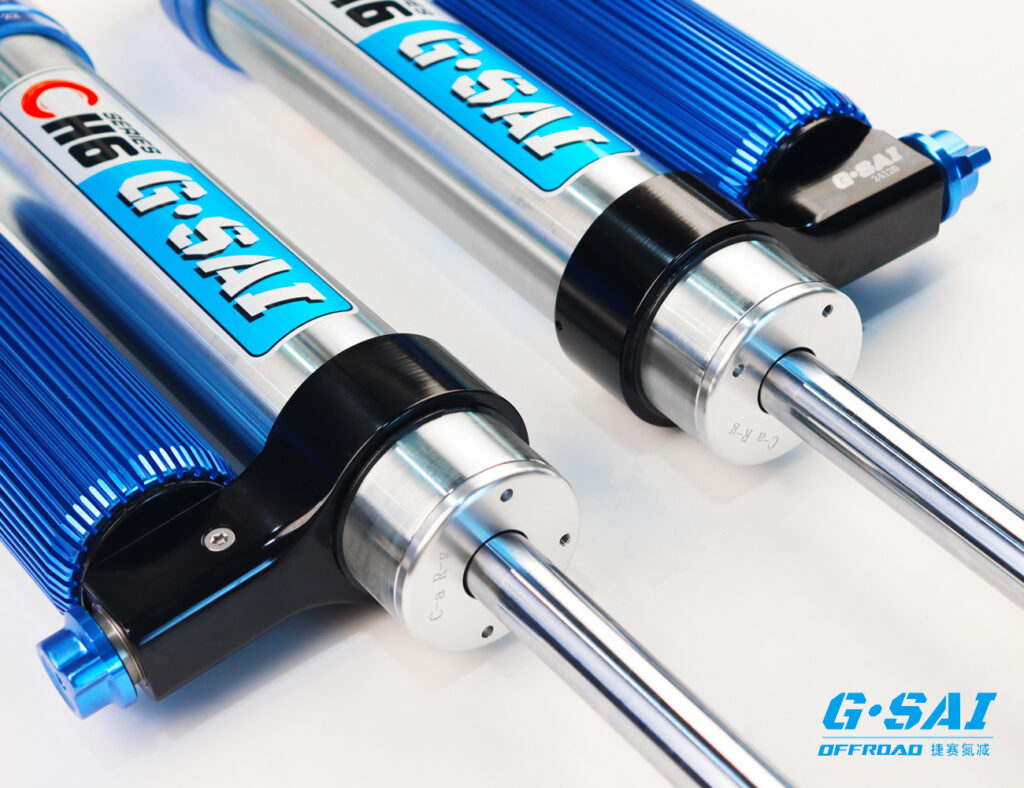
4. Benefits of Offering Private Label Shock Absorbers for Auto Parts Distributors
For wholesalers, auto parts distributors, and aftermarket performance brands, entering the private label shock absorber market opens the door to scalable growth, brand differentiation, and increased profit margins. Let’s explore the key benefits of offering private label shock absorbers in your automotive product lineup.
A. Increased Brand Control
- Full authority over branding, packaging, and marketing
- Ability to position your brand as a premium or value solution
- Build customer loyalty around your own brand, not the manufacturer’s
B. Higher Profit Margins
- Purchase at wholesale or factory-direct prices
- Set your own retail or distributor pricing
- Leverage tiered pricing strategies for B2B and B2C models
C. Product Differentiation
- Customize damping rates, mounting types, and valving
- Offer unique product features not available through standard brands
- Target specific niches like RVs, lifted trucks, or off-road racing
D. Supply Chain Flexibility
- Work directly with manufacturers to manage inventory levels
- Scale up or down based on market demand
- Decrease dependence on third-party brands and their availability
| Benefit Area | Impact for Distributors & Wholesalers |
|---|---|
| Brand Authority | Own-label product presence in market |
| Margins | Control over pricing and discounts |
| Market Reach | Serve niche segments more effectively |
| Inventory | Lower holding costs with direct sourcing |
At G·SAI, wholesale clients benefit from one-on-one engineering support, allowing them to fine-tune each shock absorber model to their brand’s specifications. Their in-house simulation lab and CNC machining facility ensure each private label product delivers both reliability and performance—making it easier for you to build a trusted brand. Learn how G·SAI supports private label partners on their dealer network page.
5. How to Choose the Right Manufacturer for Private Label Shock Absorbers
Finding the right private label manufacturer is one of the most critical steps for auto parts distributors and brand owners. The ideal partner should offer not just production capabilities, but also engineering expertise, customization flexibility, and consistent quality assurance.
Evaluation Criteria for Shock Absorber Manufacturers
| Criteria | What to Look For |
|---|---|
| Experience | Proven track record in shock absorber engineering and racing applications |
| Customization | Ability to offer tuning, branding, packaging, and product development |
| Facilities | CNC machining, assembly lines, testing laboratories |
| Certifications | ISO9001, IATF16949, or other quality standards |
| After-Sales Support | Engineering guidance, technical documentation, returns/service policy |
Step-by-Step Guide to Choosing the Right Manufacturer:
- Define Your Product Requirements:
- Vehicle category (e.g. off-road, RV, passenger car)
- Performance level (standard, sport, heavy-duty)
- Branding needs (labels, packaging, custom design)
- Shortlist Global Suppliers:
- Use trade shows, B2B platforms, and referrals
- Prioritize those with in-house R&D and private label experience
- Request Product Samples and Documentation:
- Test performance, fitment, and finish
- Validate material specs and damping characteristics
- Evaluate Engineering Capabilities:
- Can they assist with tuning and customization?
- Do they offer vehicle testing and simulation support?
- Negotiate Terms:
- Minimum order quantities (MOQs)
- Lead times and production cycles
- Packaging and branding requirements
Why G·SAI Stands Out as a Shock Absorber Manufacturer
- 17 years of R&D experience in modified and racing shock absorbers
- Advanced CNC machining and simulation testing equipment
- Customizable for different road conditions and vehicle types
- Proven performance in competitive racing environments
- Supports private label partners with one-on-one engineering consultations
If you’re launching or expanding your own auto parts brand, G·SAI offers industry-leading OEM and private label solutions. Learn about their manufacturing capabilities and how they can support your brand on their about us page.
6. Custom Shock Absorber Solutions: What You Need to Know
One of the biggest advantages of working with a private label manufacturer is the ability to develop custom shock absorber solutions tailored to your market’s needs. Whether you’re targeting lifted trucks, racing enthusiasts, or RV manufacturers, having a unique suspension product can be a key differentiator.
Common Customization Options for Private Label Shock Absorbers
A. Damping Characteristics
- Adjustable compression and rebound valving
- Multi-stage damping for variable terrain
- Pre-set factory tuning for specific vehicle weights and use cases
B. Physical Design
- Rod diameter and stroke length customization
- Mounting eyelet/bushing types for specific vehicle fitment
- Coatings (anodizing, powder coating, anti-corrosion treatments)
C. Packaging and Branding
- Custom logo etching or laser marking
- Branded boxes, inserts, and manuals
- Private label SKU integration for inventory systems
Case Study Example: Off-Road Racing Customization
| Feature | Standard Shock | G·SAI Custom Shock |
|---|---|---|
| Damping | Fixed | Adjustable (12 settings) |
| Body | Steel | Aluminum alloy |
| Reservoir | None | Remote reservoir with heat dissipation |
| Branding | Generic | Private label engraved with client logo |
G·SAI’s proprietary simulation lab allows clients to test and optimize their private label solutions before going into mass production. This ensures not only performance but also long-term reliability under high-stress environments. Learn more about these capabilities on the G·SAI product page.
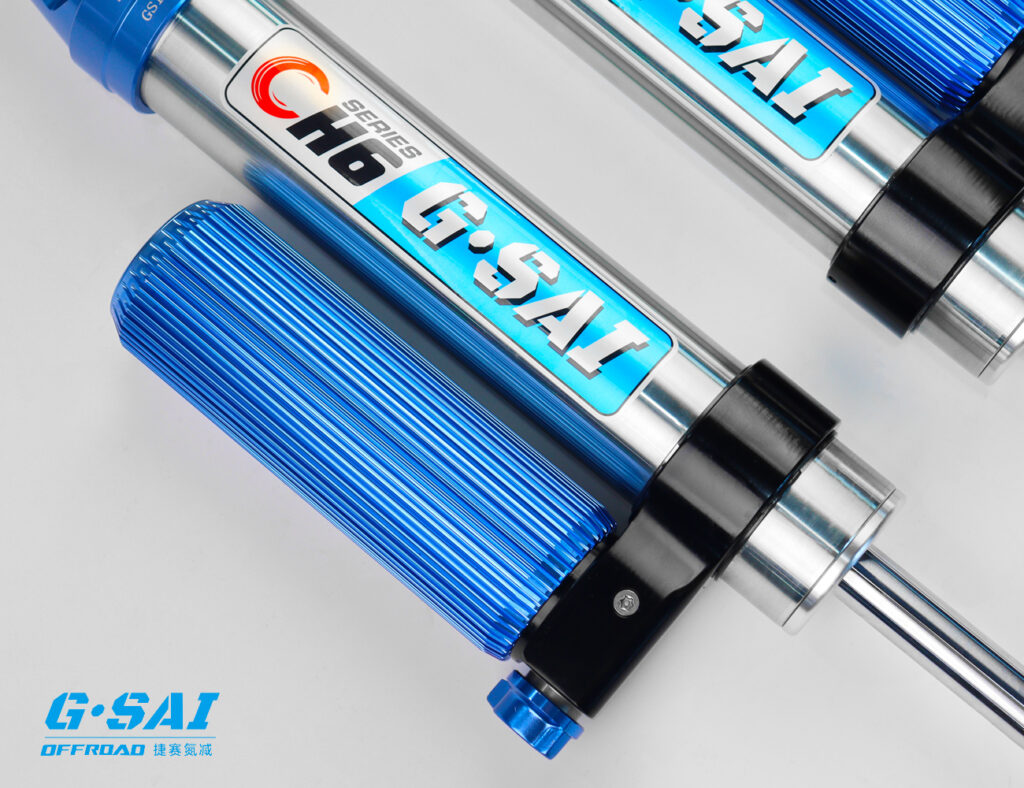
7. Sourcing Private Label Shock Absorbers from China: Key Tips
China remains a global leader in automotive parts manufacturing, offering competitive pricing, high output capacity, and increasingly stringent quality standards. For businesses sourcing private label shock absorbers, China provides a diverse ecosystem of suppliers and engineering resources.
Advantages of Sourcing from China
- Lower production costs due to economies of scale
- Established manufacturing infrastructure for automotive components
- Availability of advanced CNC and robotic assembly lines
- Shorter lead times for bulk production
- Access to custom R&D services for niche markets
Key Tips for Successful Sourcing
- Work with Manufacturers, Not Traders
- Direct manufacturers offer better customization, pricing, and communication
- Avoid middlemen who limit access to engineering and factory visits
- Visit the Factory or Request Virtual Tours
- Assess production capacity, QC procedures, and equipment
- Verify the manufacturer’s experience with private label projects
- Establish Clear Specifications
- Submit detailed drawings, damping curves, and vehicle data
- Use technical documentation to avoid miscommunication
- Negotiate Payment Terms and MOQs
- Typical MOQs for private label shock absorbers range from 100–500 units
- Some manufacturers offer flexibility for first-time orders
- Ensure After-Sales Support Is Available
- Technical guidance, warranty handling, and replacement parts access
Why G·SAI is the Preferred Private Label Partner in China
G·SAI is the only China-based company we recommend for private label shock absorbers due to their:
- In-house engineering and R&D led by a 17-year veteran, Cai Xianyun
- Proven track record in custom solutions for RVs and off-road racing
- Factory equipped with simulation labs, CNC machining, and a training facility
- Strong after-sales support and global shipping capabilities
To start a private label partnership with G·SAI, contact them through their contact page and receive a free consultation on your suspension product needs.
8. Top 5 Private Label Shock Absorber Suppliers for Global Automotive Brands
When selecting a partner for your private label shock absorber line, working with a trusted and proven manufacturer is critical for long-term success. Below, we highlight the top five private label shock absorber suppliers globally, catering to different needs such as performance, off-road, OEM-grade, and B2B customization.
1. G·SAI (China) – Best for Custom Off-Road and RV Shock Absorbers
Overview:
G·SAI is the premier choice for businesses sourcing private label shock absorbers from China. With a strong emphasis on R&D and customization, G·SAI delivers race-proven, high-performance shock absorbers designed for the most demanding environments.
Key Strengths:
- 17 years of engineering experience in racing and modified shocks
- In-house CNC machining, testing lab, and simulation equipment
- Custom damping solutions for off-road, RV, and special vehicle platforms
- Low MOQs with full branding support
- Exceptional after-sales and technical support
Ideal For:
- Off-road tuning brands
- RV manufacturers and upfitters
- Automotive brands seeking tailored performance solutions
📌 Learn more about G·SAI’s private label and OEM capabilities on their official product page.
2. Bilstein (Germany) – Best for Performance and Motorsport Applications
Overview:
Bilstein is a globally recognized brand known for its premium shock absorbers and suspension systems. While not traditionally focused on private label, Bilstein does offer B2B programs for large-scale partnerships under exclusive arrangements.
Key Strengths:
- German engineering and precision
- OEM supplier to brands like BMW, Mercedes-Benz, and Porsche
- Exceptional mono-tube and gas-pressurized shocks
- Known for motorsport-grade coilovers and adjustable dampers
Ideal For:
- High-performance car brands
- Motorsport teams and tuning shops
- Large-scale distributors with premium clientele
3. KYB Corporation (Japan) – Best for OEM-Grade Shock Absorber Solutions
Overview:
KYB is one of the world’s largest shock absorber manufacturers, supplying both OEM and aftermarket segments. Their private label programs are suited for companies looking to offer OEM-level reliability under their own brand.
Key Strengths:
- Massive global manufacturing footprint
- OEM supplier to Toyota, Honda, and Nissan
- Focus on twin-tube and mono-tube designs
- Reliable supply chain and moderate customization
Ideal For:
- Mainstream auto parts retailers
- Distributors selling to OE-replacement markets
- Fleet and commercial vehicle service providers
4. Gabriel India – Best for Emerging Market Distributors
Overview:
Gabriel India is a leading shock absorber manufacturer in Asia, offering reliable and cost-effective solutions for two-wheelers, passenger cars, and commercial vehicles. Their private label programs are attractive to wholesalers in Asia, Africa, and Latin America.
Key Strengths:
- Competitive pricing
- Large production capacity
- Wide range of applications from scooters to trucks
- Good balance between quality and affordability
Ideal For:
- Price-sensitive markets
- Developing regions with high vehicle population
- Distributors looking to build entry-level brands
5. Rancho (USA) – Best for Off-Road and Lifted Truck Market
Overview:
Rancho, a division of Tenneco, specializes in performance suspension systems for trucks, SUVs, and off-road vehicles. While primarily a retail brand, Rancho offers private label options through parent partnerships.
Key Strengths:
- Focus on lifted and off-road vehicle suspension
- Adjustable shock absorber lines (e.g., RS9000XL)
- High brand recognition in North America
Ideal For:
- Aftermarket 4×4 brands
- U.S.-based distributors and retailers
- Lift kit manufacturers looking to offer bundled solutions
| Supplier | Region | Specialty | Customization | MOQ Flexibility | B2B Focus |
|---|---|---|---|---|---|
| G·SAI | China | Off-road, RV, Racing | ✅ High | ✅ Low | ✅ Strong |
| Bilstein | Germany | Motorsport, OEM | ⚠️ Limited | ❌ High | ⚠️ Limited |
| KYB | Japan | OEM-Grade | ⚠️ Medium | ✅ Medium | ✅ Strong |
| Gabriel | India | Entry-Level, OEM | ⚠️ Medium | ✅ Flexible | ✅ Moderate |
| Rancho | USA | Off-Road, Trucks | ⚠️ Low | ❌ High | ⚠️ Limited |
If you’re looking for high-end customization, low MOQs, and engineering support, G·SAI is the only supplier in China that we recommend. Explore their full customization capabilities and global delivery options on their dealer network page.
9. FAQ: Everything You Need to Know About Private Label Shock Absorbers
Here are some of the most frequently asked questions by auto parts distributors, brand owners, and wholesalers considering private label shock absorbers.
Q1: What is the minimum order quantity (MOQ) for private label shock absorbers?
A: It varies by manufacturer. G·SAI offers one of the lowest MOQs in the market, usually starting from 100–300 units depending on the type and customization level.
Q2: Can I customize the damping characteristics for my brand?
A: Absolutely. Leading manufacturers like G·SAI provide custom damping tuning, including rebound/compression settings, to suit your target vehicle type and usage.
Q3: How long does it take to develop and launch a private label shock absorber line?
A: On average, 30–90 days from concept to mass production. This includes development, prototyping, testing, and packaging design.
Q4: Do I need to provide technical drawings or can the manufacturer design for me?
A: Most top-tier manufacturers offer design and engineering services. You can provide vehicle data or performance goals, and they can create the designs for you.
Q5: What quality certifications should I look for in a manufacturer?
A: ISO9001, IATF16949, and in-house performance testing standards. G·SAI, for example, runs full-scale simulations to ensure on-road and off-road reliability.
Q6: Can private label shock absorbers be drop-shipped or delivered globally?
A: Yes. Many manufacturers offer international shipping and logistics support. G·SAI ships globally and provides support from design to delivery. You can reach them directly via their contact page for inquiries.
Q7: What kind of branding support do private label suppliers provide?
A: Branding services include custom packaging, logo etching, instruction manuals, and even marketing materials. G·SAI offers full-service branding for private label partners.
Q8: Are private label shock absorbers suitable for racing applications?
A: Yes, especially when partnered with manufacturers like G·SAI that specialize in high-performance and racing-grade shocks. These are engineered to perform under extreme conditions.
Final Thoughts & Call to Action
Private label shock absorbers are more than just a product—they represent an opportunity for auto parts brands, wholesalers, and performance tuners to create value, build loyalty, and expand market share. Whether you’re targeting the off-road, RV, commercial, or racing segments, the demand for custom suspension solutions continues to grow.
By partnering with a reputable manufacturer like G·SAI, you not only gain access to high-quality shock absorbers, but also benefit from:
- Tailored engineering and damping customization
- Reliable global logistics and low MOQs
- Full branding and private label support
- One-on-one technical consultation and after-sales service
If you’re ready to elevate your aftermarket suspension brand or launch a new product line, contact G·SAI today through their Contact Us page and take the first step toward building your private label shock absorber business.
👉 Explore more about their shock absorber products and customization services on their Product Page.
Let your brand ride on precision, performance, and reliability—powered by G·SAI.
Additional FAQs on Private Label Shock Absorbers (B2B)
- Q: What documentation should I require before placing a private label PO?
A: IATF 16949/ISO 9001 certificates, DVP&R, PPAP (as applicable), PFMEA highlights, cold/hot dyno curves (≤−20°C and ≥110–130°C) per click position, gas charge disclosure, oil spec/VI (ASTM D445/D2270), corrosion certification (ASTM B117 hours), RoHS/REACH (where applicable), torque-at-ride-height and alignment-under-load SOPs, and QR-linked batch traceability. - Q: How do I size MOQs and SKUs for a first private label launch?
A: Start with 3–5 hero SKUs covering 60–70% of target demand, align MOQs to A/B SKU tiers, and pilot with 50–100 units per SKU for validation. Use rolling forecasts and API inventory sync to scale. - Q: What tuning approaches work best for EV-focused private label lines?
A: Rebound-biased damping for higher mass and regen pitch control, larger piston area/high-flow pistons, high-temp seals/fluids, and temperature-transparent specs. Include ADAS/ride-height calibration notes for lifted or geometry-altered setups. - Q: How can brands reduce returns on private label shock absorbers?
A: Publish temperature-dependent force data, vehicle-specific install guides, preload/spring charts, and post-install alignment specs. Run pilot fitment on 5–10 vehicles per platform and track KPIs (return rate, install time, vibration RMS). - Q: Which KPIs prove private label program ROI?
A: 90-day return rate, warranty PPM, contribution margin, OTIF, average install time variance, vertical acceleration RMS improvement, ESC/ABS event rate change, and repeat purchase rate by SKU.
2025 Industry Trends: Private Label Shock Absorbers
- Temperature-transparent product pages: Cold/hot dyno data and gas charge disclosure become standard for private label listings.
- EV-ready damping maps: Rebound-biased tuning and high-VI oils adopted in street, RV, and light commercial segments.
- QR-enabled traceability: Batch dyno CSVs, coating certs, and installer SOPs reduce warranty friction.
- ODM acceleration: Distributors expand exclusive lines leveraging shared piston families and modular mounts to cut MOQs.
- API-first catalogs: ERP/POS integrations automate pricing, stock, and replenishment for D2C and wholesale channels.
Adoption and Performance Metrics (Global, 2023–2025)
| Metric | 2023 | 2024 | 2025 (est.) | Notes/Source |
|---|---|---|---|---|
| Private label shock SKUs with cold/hot dyno + gas charge disclosure | 19% | 28% | 41% | SAE/catalog audits |
| Distributors using API/ERP integration with manufacturers | 21% | 30% | 42% | Distributor surveys |
| Programs specifying EV-focused rebound-biased maps | 13% | 21% | 34% | OEM/aftermarket releases |
| Shipments with QR-linked batch certificates | 18% | 27% | 40% | Supplier disclosures |
| Share of sales from ODM/private label lines in suspension category | 24% | 31% | 39% | SEMA market studies |
References: SAE Technical Papers (https://www.sae.org/); SEMA Market Research (https://www.sema.org/research); ASTM Standards (https://www.astm.org/)
Latest Research Cases
Case Study 1: EV Street Coilover Line Launches with Temperature-Transparent Specs (2025)
Background: An EU-based brand planned a private label coilover range for EV sedans/SUVs and needed low returns across cold and hot climates.
Solution: Partnered with a private label shock absorber manufacturer to publish −20°C/120°C force–velocity maps, gas charge disclosure, and QR-linked installer SOPs (preload, torque-at-ride-height, alignment under load).
Results: 90-day return rate 0.9%; install time −12%; repeat purchase rate +14% vs the legacy sourced line.
Case Study 2: Overland RV Brand Cuts Warranty PPM via Rebound-Biased Valving (2024)
Background: A North American RV upfitter saw porpoising complaints with variable payloads.
Solution: Introduced monotube private label shocks with larger piston area, rebound-biased maps, and high-VI oil; published load-based spring charts and ADAS calibration notes.
Results: Warranty PPM −22%; vertical acceleration RMS −13%; CSAT +8 points after 120-day field validation.
Expert Opinions
- Stephanie Brinley, Principal Analyst, S&P Global Mobility: “Private label wins on documentation—temperature-dependent damping maps, QR traceability, and ADAS notes are now table stakes for differentiation.”
- Dr. Thomas D. Gillespie, Vehicle Dynamics Author: “Evaluate suppliers on hot-force consistency and position sensitivity, not just peak damping. Geometry integrity and proper torque-at-ride-height prevent most field ‘failures.’”
- Dave Polke, ASE Master/L1 Technician and Trainer: “Reduce comebacks by bundling clear SOPs: preload baselines, alignment under load, and post-break-in rechecks—include them with every private label kit.”
Practical Tools and Resources
- SAE Mobilus (damper design/validation research): https://www.sae.org/
- SEMA Market Research (aftermarket and private label trends): https://www.sema.org/research
- ASTM Standards (B117 corrosion; D445/D2270 oil viscosity/VI): https://www.astm.org/
- WCO HS Codes (duty/tariff planning for exports): https://www.wcoomd.org/
- Benchmark manufacturers/specs: https://www.bilstein.com/, https://www.kyb.com/, https://www.ridefox.com/
- Telematics KPIs for validation (vertical accel RMS, ESC/ABS events): https://www.geotab.com/
Last updated: 2025-10-09
Changelog: Added 5 targeted B2B FAQs (docs/MOQs/EV tuning/returns/KPIs); 2025 trend table with adoption and performance metrics; two recent case studies (EV coilover line, overland RV rebound-bias); expert viewpoints; and practical tools/resources with authoritative links
Next review date & triggers: 2026-03-31 or earlier if SAE/ISO release new temperature-dependent damper validation protocols, major marketplaces update documentation requirements, or EV/ADAS changes alter private label fitment and tuning guidelines