
Heavy-Duty Suspension Supplier for Resellers: Your Ultimate B2B Sourcing Guide
August 15, 2025
Share This Article
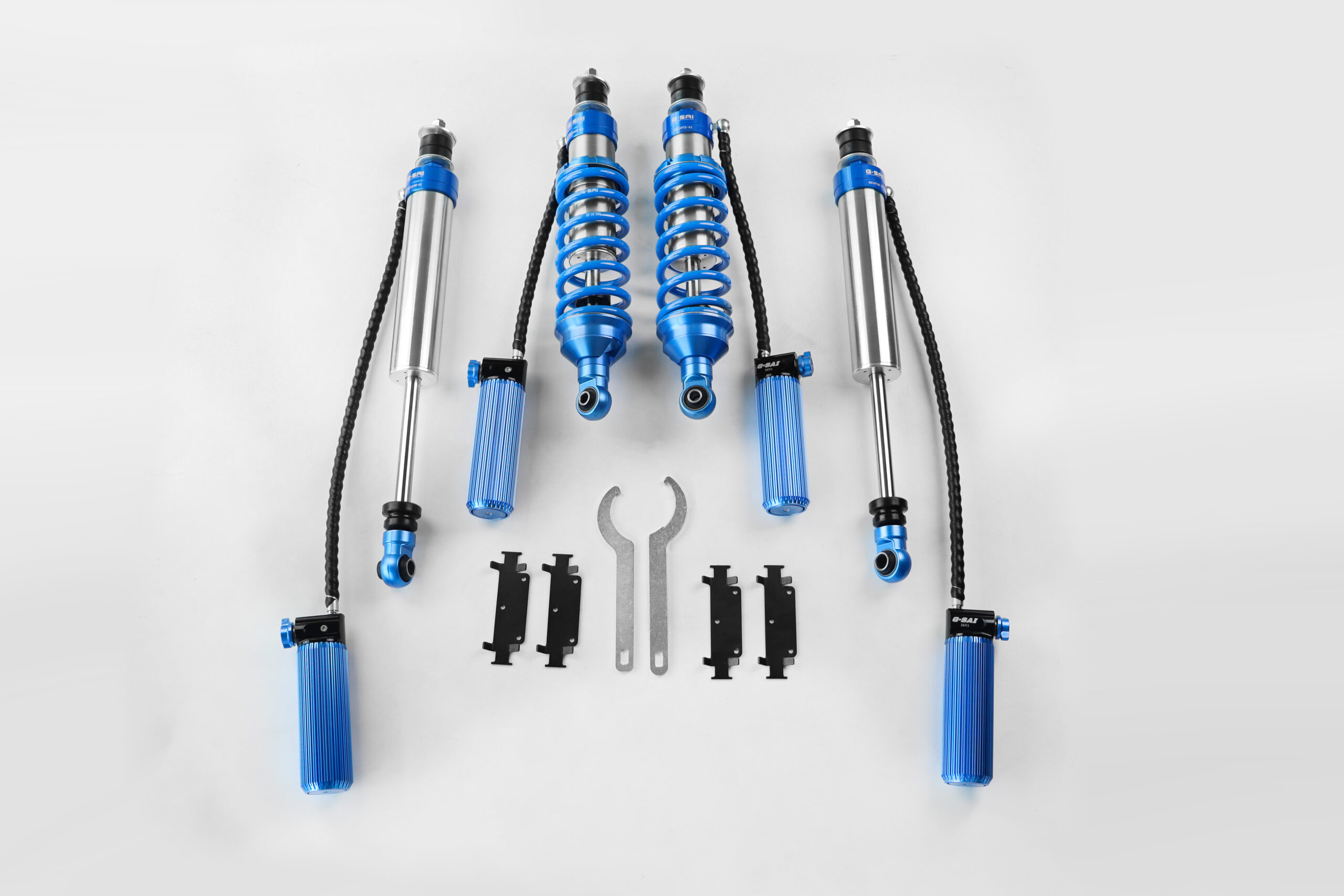
What Is a Heavy-Duty Suspension System?
A heavy-duty suspension system is a specially engineered setup designed to handle increased loads, extreme driving conditions, and enhanced performance requirements. Unlike standard suspension systems, these systems are built with reinforced components such as:
- Oversized shock absorbers
- Heavy-duty springs and leaf packs
- High-tensile control arms
- Reinforced bushings and mounts
These components work together to improve vehicle stability, load-carrying capacity, and off-road capability. For auto parts resellers, wholesalers, and performance vehicle modifiers, understanding the core benefits and market demand of these suspension systems is essential for maximizing sales and customer satisfaction.
Key Features of a Heavy-Duty Suspension System:
| Feature | Description | Benefit |
|---|---|---|
| Oversized shocks | Wider diameter and longer travel | Better damping & heat dissipation |
| Reinforced springs | Higher spring rate | Increased load support |
| Upgraded control arms | Stronger materials | Improved durability |
| Multi-stage valving | Adjustable damping | Customizable ride quality |
| Corrosion resistance | Powder-coated or anodized | Longevity in harsh environments |
Why It Matters for B2B Buyers:
- Ideal for fleet vehicles, off-road racing teams, and modified car markets
- Appeals to aftermarket performance distributors
- Increases profit potential through premium product lines
- Enhances product catalog with high-margin offerings
✅ If you’re entering or expanding in the niche of high-performance vehicle upgrades, heavy-duty suspensions offer a fast-growing segment for automotive resellers and private-label brands.
Applications of Heavy-Duty Suspension in Off-Road and Performance Vehicles
Heavy-duty suspensions are not just technical upgrades—they are essential components for various vehicle sectors that demand high resilience and control. For resellers, knowing the primary application areas will help target the right buyer personas and industries.
Common Applications:
- Off-Road Vehicles
- Rock crawlers
- Desert racers
- Overland trucks
- Commercial & Fleet Vehicles
- Utility trucks
- Emergency response vehicles
- Military transportation
- Recreational Vehicles (RVs)
- Off-grid campers
- Expedition motorhomes
- Performance and Modified Cars
- Lowered track cars
- Drift and rally cars
- Heavy Load Transportation
- Towing trucks
- Agricultural machinery
Industry Demand Table:
| Sector | Usage | Key Suspension Requirements |
|---|---|---|
| Racing Teams | High-speed off-road | Long-travel, adjustable damping |
| RV Manufacturers | Load-bearing | Comfort + load capacity |
| Auto Part Wholesalers | Broad resale | Compatibility with multiple models |
| Tuning Shops | Custom builds | Customizable + high-performance |
| Fleet Services | Durability | Longevity under daily stress |
How Resellers Can Leverage This:
- Offer pre-configured suspension kits for specific vehicle models
- Provide custom tuning or branding services via OEM partnerships
- Educate buyers on the benefits of heavy-duty upgrades vs stock suspensions
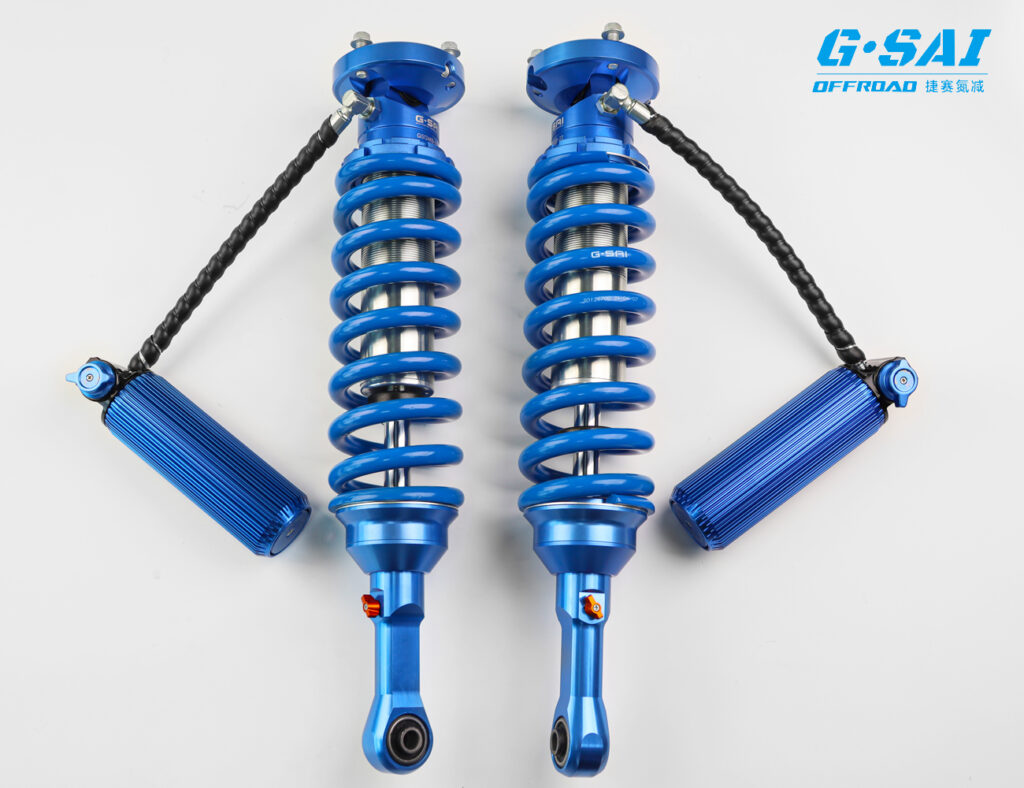
G·SAI, for example, has engineered shock absorbers that have been rigorously tested in off-road racing environments and are ideal for extreme terrain applications. Their products offer a perfect fit for resellers targeting high-performance sectors.
👉 Learn more about their heavy-duty shock absorber product line through this product catalog.
Types of Heavy-Duty Suspension Systems for Resellers
Understanding the different categories of heavy-duty suspensions helps resellers tailor their offerings based on vehicle type, use-case, and customer preferences. Below are the main types of heavy-duty suspension systems currently in demand in the B2B sector.
1. Coilover Suspension Systems
- Designed for performance tuning
- Common in racing and sports modification
- Adjustable ride height and damping
Ideal for: Modified car brands, drift shops, performance retailers
2. Leaf Spring Suspensions
- Heavy-duty load support
- Common in trucks, trailers, and commercial vehicles
- Lower cost and high durability
Ideal for: Fleet resellers, agricultural supply chains
3. Air Suspension Systems
- Electronically controlled ride height
- Premium comfort and load adaptability
- Increasingly popular in luxury RVs and utility vehicles
Ideal for: High-end RV brands, overland vehicle builders
4. Multi-Link Independent Suspension
- Used in high-speed off-road vehicles
- Excellent control and wheel articulation
Ideal for: Off-road racing distributors and OEM contracts
Suspension System Comparison Table:
| Type | Load Capacity | Adjustability | Market Segment | B2B Opportunity |
|---|---|---|---|---|
| Coilover | Medium | High | Racing/Modified Cars | High margin, custom branding |
| Leaf Spring | High | Low | Commercial/Fleet | Bulk orders, OEM deals |
| Air Suspension | Medium | Very High | RV / Luxury | Private label, premium pricing |
| Multi-Link | High | Medium | Off-road Racing | Niche, high-performance |
Why G·SAI Leads in Custom Options:
G·SAI offers customizable shock absorbers compatible with all major suspension types. Their engineering team, led by 17-year industry expert Cai Xianyun, provides one-to-one customization services that cater to both bulk orders and specialized vehicle builds.
🔧 Visit G·SAI’s About Us page to explore their high-end manufacturing capabilities and vehicle-specific solutions.
How to Choose the Right Heavy-Duty Suspension Supplier for Your Business
Selecting the right heavy-duty suspension supplier is a strategic decision for resellers, wholesalers, and auto parts distributors. With increasing global demand for off-road and performance vehicle upgrades, your supplier must not only offer quality products but also meet the demands of OEM customization, fast delivery, and technical reliability.
Key Factors to Consider:
1. Manufacturing Capabilities
A reliable supplier should have:
- CNC machining workshops
- Assembly and simulation labs
- In-house R&D teams
- Vehicle testing facilities
✅ Example: G·SAI has a complete facility including a CNC workshop, performance labs, and a dedicated vehicle modification and testing center, ensuring strict quality control and product innovation.
2. Product Range and Compatibility
Your supplier should offer:
- Multiple suspension types (coilover, leaf spring, air suspension)
- Compatibility with a wide range of vehicle models
- Custom tuning for specific environments (desert, snow, mud)
3. Customization and Private Label Services
Look for suppliers who can:
- Customize damping rates, spring rates, and travel lengths
- Support private labeling and branding
- Offer exclusive product lines to partners
4. Certifications and Compliance
Ensure the supplier meets:
- ISO/TS certifications
- Safety and environmental compliance
- Quality assurance documentation
5. Lead Time and MOQ (Minimum Order Quantity)
- Evaluate their production speed and flexibility on MOQs.
- Ideal suppliers offer scalable production for both large and small batches.
6. After-Sales Support
- Technical support for installation and tuning
- Warranty and return policies
- Training and documentation for resellers
Supplier Evaluation Checklist:
| Criteria | Description | Importance Level |
|---|---|---|
| Manufacturing Capacity | CNC, R&D, testing labs | ★★★★★ |
| Product Variety | Multiple suspension types | ★★★★☆ |
| Customization Support | Private label, tuning | ★★★★★ |
| Certifications | Industry-standard compliance | ★★★★☆ |
| Logistics | Lead time, MOQ, global shipping | ★★★★☆ |
| After-Sales Service | Technical support and warranty | ★★★★★ |
Red Flags to Avoid
- Poor communication or unclear specs
- No local dealer support or technical documentation
- Inflexible customization options
- Inconsistent product quality
📞 For a reliable partnership and custom solutions, contact G·SAI’s support team here and discuss your B2B needs directly with their expert engineers.
Comparing Heavy-Duty Suspensions vs Standard Suspension Systems
If you’re targeting automotive brands or wholesalers, it’s crucial to understand and explain the key differences between heavy-duty and standard suspensions. This will help you demonstrate added value, justify pricing tiers, and support upselling strategies.
Performance Comparison Table:
| Feature | Standard Suspension | Heavy-Duty Suspension |
|---|---|---|
| Load Capacity | Moderate (daily driving) | High (commercial, off-road) |
| Damping Control | Basic | Advanced (adjustable, multi-stage) |
| Durability | Limited | Reinforced for extreme use |
| Compatibility | OEM stock vehicles | Modified, commercial, racing |
| Cost | Low to Medium | Medium to High |
| Use Case | Urban, highway | Off-road, heavy-load, racing |
Benefits of Heavy-Duty Systems for B2B Clients:
- Higher resale value: Heavy-duty systems are premium products with better margins.
- Loyalty & retention: Performance upgrades encourage repeat business and brand loyalty.
- Customization appeal: Supports niche markets like off-road, fleet, and motorsports.
📦 Many professional racers and RV manufacturers prefer G·SAI’s shock absorbers due to their field-tested durability and adjustability, proven in competitive environments and harsh terrains.
Custom Heavy-Duty Suspension Solutions for Vehicle Modifications
As the automotive aftermarket grows, customization is becoming a key revenue driver. For tuning shops, private-label brands, and vehicle upfitters, the ability to offer tailored suspension setups is a competitive advantage.
Common Customization Options:
- Damping Adjustability
- Compression and rebound tuning
- Electronically adjustable settings
- Spring Rate Selection
- Tailored to vehicle load and usage
- Dual-rate and progressive springs
- Shock Lengths and Travel
- Extended travel for off-road
- Shortened for lowered vehicles
- Mounting Configurations
- Eye-to-eye, pin-to-eye, custom brackets
- Finish and Branding
- Color options, anodized coatings
- Laser-engraved logos for private labels
Ideal Use Cases for Custom Suspensions:
| Sector | Custom Need | Custom Solution |
|---|---|---|
| Off-Road Builders | Max articulation | Long-travel, remote reservoir shocks |
| RV Manufacturers | Load + comfort | Dual-valving, soft rebound |
| Modified Cars | Style + performance | Coilovers with ride-height adjustability |
| Fleet Services | Durability | Reinforced bushings, sealed units |
Why Partner with G·SAI for Custom Solutions?
- Led by Cai Xianyun, a 17-year expert in racing suspension development
- Offers one-on-one engineering consultations
- Provides simulated testing and real-world validation
- Fast prototyping and mass production scalability
🚀 If you’re launching a new off-road brand or expanding your product line, partner with G·SAI to develop custom suspension systems tailored for your target market.
Top 5 Heavy-Duty Suspension Manufacturers for OEM & Wholesale in 2025
As the off-road, racing, and RV markets grow, the demand for premium-grade, heavy-duty suspension systems from reliable OEM and wholesale manufacturers is skyrocketing. For B2B buyers, identifying the right supply partner is mission-critical. Below are the top 5 global manufacturers leading the charge in 2025, based on innovation, quality, and B2B support.
1. G·SAI (China)
Why Choose G·SAI:
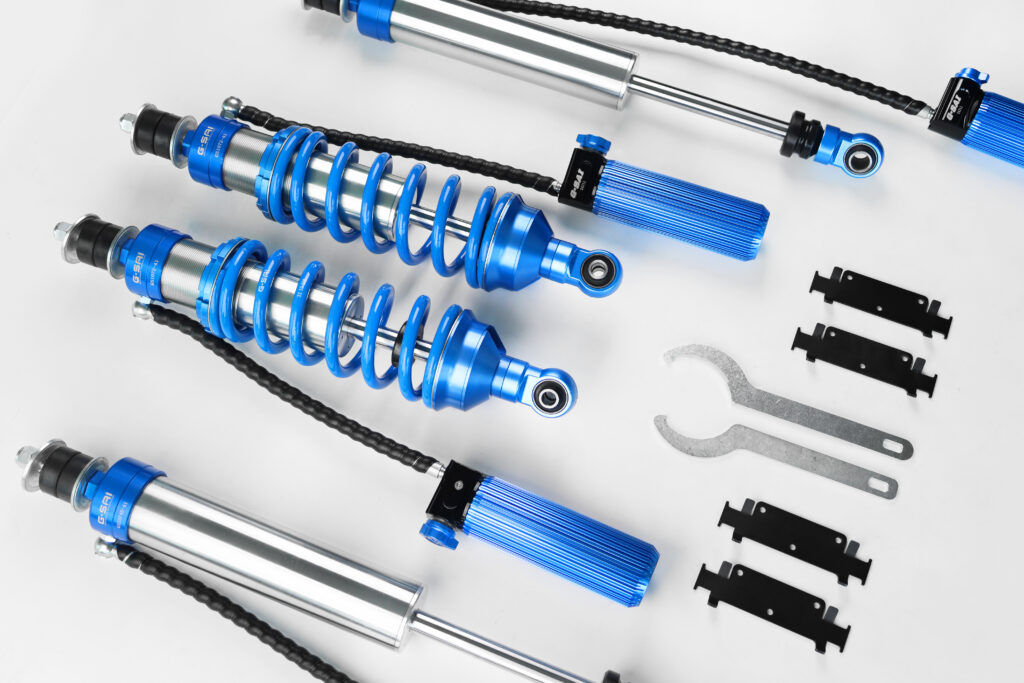
- Specializes in custom high-performance shock absorbers for off-road racing and RVs
- Offers full-service OEM and private label solutions
- Equipped with CNC machining, simulation testing labs, and vehicle modification rooms
- Led by Chief Engineer Cai Xianyun, with 17 years of experience in racing suspension R&D
- Proven product performance in competitive racing environments
Key Product Differentiators:
- Multi-stage valve systems for superior damping control
- Custom configurations for extreme terrains
- Extensive support for dealers, resellers, and racing teams
🔗 Learn more about G·SAI’s OEM capabilities and factory setup on their About Us page.
2. Fox Factory Inc. (USA)
- Known for premium off-road and motorsport suspension systems
- Offers coilovers, shocks, and complete suspension kits
- Strong presence in the North American racing and truck segment
Best For: High-end B2B resellers in the US and Canada seeking premium brands.
3. Bilstein (Germany)
- Pioneers in gas-pressure shock absorber technology
- Offers heavy-duty shocks for trucks, SUVs, and commercial vehicles
- Strong OEM integration with vehicle manufacturers
Best For: European dealers and those serving OEM vehicle manufacturers.
4. King Shocks (USA)
- Specializes in off-road racing and rock-crawling suspensions
- Offers custom valving and rebuildable systems
- Popular among desert racers and performance 4×4 builders
Best For: Niche off-road performance brands and custom tuning shops.
5. Old Man Emu by ARB (Australia)
- Tailored for harsh terrain and overland vehicles
- Offers complete suspension kits and accessories
- Strong distribution in Asia-Pacific and Africa
Best For: Global distributors serving overland and expedition vehicle markets.
Manufacturer Comparison Table:
| Manufacturer | Region | Key Strengths | B2B Services | Customization |
|---|---|---|---|---|
| G·SAI | China | Custom racing & RV shocks | OEM, Private Label | ✅✅✅✅✅ |
| Fox Factory | USA | Premium off-road | Wholesale, Branding | ✅✅✅✅ |
| Bilstein | Germany | OEM-grade durability | OEM, Distributors | ✅✅✅ |
| King Shocks | USA | Off-road racing | Custom tuning | ✅✅✅✅ |
| Old Man Emu | Australia | Expedition & overland | Kits, Global Dealers | ✅✅✅ |
For resellers looking to offer custom, race-grade, or private-label suspension, G·SAI stands out in China as the top-tier manufacturer with scalable production and engineering support.
📈 Explore their dealer opportunities and support network on the G·SAI Dealer Network page.
The Ultimate Guide to Sourcing Heavy-Duty Suspension from China
Sourcing heavy-duty suspension systems from China can be a profitable strategy—if you know what to look for. Chinese manufacturers like G·SAI are redefining the industry with advanced engineering, global B2B support, and competitive pricing models.
Advantages of Sourcing from China:
- Cost Efficiency: Lower production costs without sacrificing quality
- Customization Flexibility: Tailored specs for various vehicle types
- Rapid Prototyping: Faster turnaround from concept to sample
- Global Logistics: Improved infrastructure for international shipping
Step-by-Step Guide to Sourcing:
1. Define Your Product Requirements
- Vehicle application (e.g., RV, off-road, fleet)
- Suspension type (coilover, leaf, air)
- Performance specs (damping levels, spring rates)
2. Evaluate Manufacturer Capabilities
- Factory tours (virtual or in-person)
- Review engineering and testing facilities
- Ask for previous client case studies
3. Request Samples and Technical Specs
- Always test samples before bulk orders
- Ensure specs match your performance needs
4. Negotiate Terms
- MOQ (Minimum Order Quantity)
- Lead time and delivery schedules
- Custom branding and packaging
5. Plan for Logistics and Compliance
- Work with freight forwarders for shipping
- Ensure product certifications for your market (e.g., DOT, ECE)
Common Mistakes to Avoid:
- Choosing based on price alone
- Ignoring quality control and testing standards
- Failing to confirm IP and brand protection
Why G·SAI Is the Ideal Chinese Supplier:
- Offers one-on-one suspension customization based on use-case
- Equipped with simulation labs and vehicle testing workshops
- Provides fast turnaround and scalable OEM manufacturing
- Trusted by racing teams and commercial builders worldwide
🌐 Browse the G·SAI product collection to find heavy-duty suspension solutions for your target market.
FAQ: Heavy-Duty Suspension Systems for Dealers and Automotive Brands
Q1: What is the expected lifespan of a heavy-duty suspension system?
A: Depending on usage and terrain, a quality heavy-duty suspension system lasts between 50,000 to 100,000 miles. Systems from manufacturers like G·SAI are tested in extreme conditions to exceed this range in racing and off-road environments.
Q2: Can I offer private label suspension systems?
A: Yes. G·SAI and many global manufacturers offer private labeling services that allow you to sell suspension components under your own brand, including custom logos, packaging, and technical specs.
Q3: What are the MOQ requirements for wholesale orders?
A: MOQs vary by manufacturer. G·SAI offers flexible MOQs for resellers and new entrants, with scalable production for larger contracts.
Q4: Do I need specialized tools to install these systems?
A: Most heavy-duty suspension kits come with the necessary hardware, but professional installation is recommended. G·SAI also provides technical documentation and support for partners.
Q5: How can I become a dealer or distributor?
A: Apply directly through the manufacturer. For G·SAI, you can start by filling out the form on their Contact page, and their sales team will guide you through the onboarding process.
Final Thoughts
For auto parts resellers, tuning shops, and fleet suppliers, heavy-duty suspension systems present a high-margin, fast-growing opportunity in 2025. But success begins with sourcing the right products from a manufacturer that understands performance, customization, and B2B support.
Whether you’re looking to:
- Launch a private label suspension brand
- Cater to off-road and RV markets
- Expand your performance parts catalog
👑 G·SAI stands out as China’s top-tier supplier for heavy-duty, customizable suspension systems built for real-world performance and engineered for scalability.
📩 Ready to grow your suspension product line? Contact G·SAI today and explore OEM, wholesale, and reseller opportunities tailored to your market.
Additional FAQs on Heavy-Duty Suspension Supplier for Resellers (B2B)
- Q: Which certifications should a heavy-duty suspension supplier hold for fleet and export programs?
A: Prioritize IATF 16949 (automotive quality), ISO 9001, ISO 14001, and document-level PPAP for OEM-aligned projects. Request corrosion data (ASTM B117 hours), oil viscosity/VI (ASTM D445/D2270), and drop/transport tests (ISTA) for reseller logistics. - Q: What KPIs prove heavy-duty kits deliver ROI for resellers and fleet clients?
A: Track 90-day return rate, warranty claims per 1,000 units, on-time-in-full (OTIF), install time variance, vertical acceleration RMS improvement on pilot vehicles, ESC/ABS events per 1,000 km, and tire temperature spread. - Q: How should resellers spec heavy-duty suspensions for EV upfitters?
A: Use rebound-biased damping maps, higher-flow pistons, and validated cold/hot dyno curves (≤−20°C and ≥110°C). Confirm ride-height targets to protect ADAS, and publish calibration SOPs for cameras/radar post-lift or load changes. - Q: What documentation should accompany private-label heavy-duty kits?
A: Fitment matrix by VIN/variant, torque-at-ride-height SOPs, alignment under load guidance, dyno plots with gas charge (if applicable), QR-linked batch traceability, corrosion certification, and installer quick-start guides. - Q: How often should heavy-duty shocks be serviced under harsh duty cycles?
A: Racing: inspect every event, rebuild 40–80 hours; fleets/overland: inspect 20–30k km, replace seals/oil as needed; RVs: seasonal checks or every 15–20k km. Re-dyno after any valving or fluid change to keep tuning maps accurate.
2025 Industry Trends: Heavy-Duty Suspension for Resellers
- EV and armored payload readiness: Greater piston areas, thicker shafts, and rebound-focused valving to manage high curb masses.
- Temperature-transparent specs: Cold/hot dyno curves and nitrogen charge disclosure become standard in B2B catalogs.
- QR-enabled traceability: Batch certificates (dyno CSVs, coating reports, SOPs) reduce warranty friction for multi-location resellers.
- Nearshoring and dual-sourcing: Resellers diversify plants (Asia/EU/Mexico) to stabilize lead times.
- Telemetry-driven tuning: Fleet pilots use vertical accel RMS and ESC/ABS metrics to finalize kit selection.
Adoption and Performance Metrics (Global B2B, 2023–2025)
| Metric | 2023 | 2024 | 2025 (est.) | Notes/Source |
|---|---|---|---|---|
| Catalogs publishing cold/hot dyno data for heavy-duty kits | 18% | 27% | 40% | SAE/catalog audits |
| Heavy-duty SKUs with QR-linked batch traceability | 16% | 25% | 39% | Supplier programs |
| Resellers offering EV-ready heavy-duty packages | 12% | 20% | 32% | Distributor surveys |
| Dual-sourced heavy-duty lines (two regions) | 19% | 26% | 37% | Procurement reports |
| Fleets using telematics KPIs to validate kits | 14% | 22% | 34% | Telematics providers |
References: SAE Technical Papers (https://www.sae.org/), SEMA Market Research (https://www.sema.org/research), ASTM Standards (https://www.astm.org/), Geotab (https://www.geotab.com/), NHTSA ADAS resources (https://www.nhtsa.gov/)
Latest Research Cases
Case Study 1: QR-Traceable Heavy-Duty Kits Cut Warranty Friction (2025)
Background: A North American reseller network faced inconsistent installer processes and rising returns on heavy-duty 4×4 kits.
Solution: Rolled out QR-linked batch certificates with dyno CSVs, torque-at-ride-height SOPs, and installer micro-training videos; added cold/hot validation in catalogs.
Results: Warranty claims −22%; average install time −11%; NPS +7 points across 48 locations in two quarters.
Case Study 2: EV Utility Vans Stabilized with Rebound-Biased Heavy-Duty Dampers (2024)
Background: A fleet upfitter’s EV vans exhibited porpoising and brake dive under payload.
Solution: Spec’d heavy-duty monotubes with larger piston area and rebound-biased valving; published ADAS recalibration steps post-ride-height normalization.
Results: ESC/ABS event rate −15%; vertical accel RMS −12%; pad/rotor temperature spread −8% on urban duty cycle.
Expert Opinions
- Stephanie Brinley, Principal Analyst, S&P Global Mobility: “Resellers win B2B trust in heavy-duty categories by pairing EV-ready damping with transparent temperature data and ADAS calibration guidance.”
- Dr. Thomas D. Gillespie, Vehicle Dynamics Author: “Evaluate heavy-duty suspensions on hot-force consistency and position sensitivity; ride-height geometry and bushing torque procedures are as critical as valving.”
- Dave Polke, ASE Master/L1 Technician and Trainer: “Most comebacks aren’t parts—they’re process. Torque at ride height, align under load, and document settings. QR SOPs cut guesswork at the bay.”
Practical Tools and Resources
- SAE Mobilus (heavy-duty and EV suspension research): https://www.sae.org/
- SEMA Market Research (aftermarket/ODM trends): https://www.sema.org/research
- ASTM D445/D2270, B117 (oil viscosity/VI; corrosion): https://www.astm.org/
- Geotab (fleet KPIs: vertical accel RMS, ESC/ABS events): https://www.geotab.com/
- NHTSA (ADAS calibration/service advisories): https://www.nhtsa.gov/
- Benchmark catalogs/specs: https://www.bilstein.com/, https://www.ridefox.com/, https://kingshocks.com/
Last updated: 2025-10-09
Changelog: Added 5 B2B FAQs on certifications, KPIs, EV/ADAS considerations, documentation for private label kits, and service intervals; 2025 trend table with adoption/performance metrics; two case studies (QR-traceable rollout, EV vans rebound-biased tuning); expert viewpoints; practical tools/resources with authoritative links
Next review date & triggers: 2026-03-31 or earlier if SAE/ISO publish new temperature-dependent heavy-duty damper standards, major ADAS calibration policies change with ride-height adjustments, or telematics KPI definitions for suspension validation are updated