
What is a Nitrogen Shock Absorber? A Complete Guide for B2B Buyers & Distributors
August 18, 2025
Share This Article
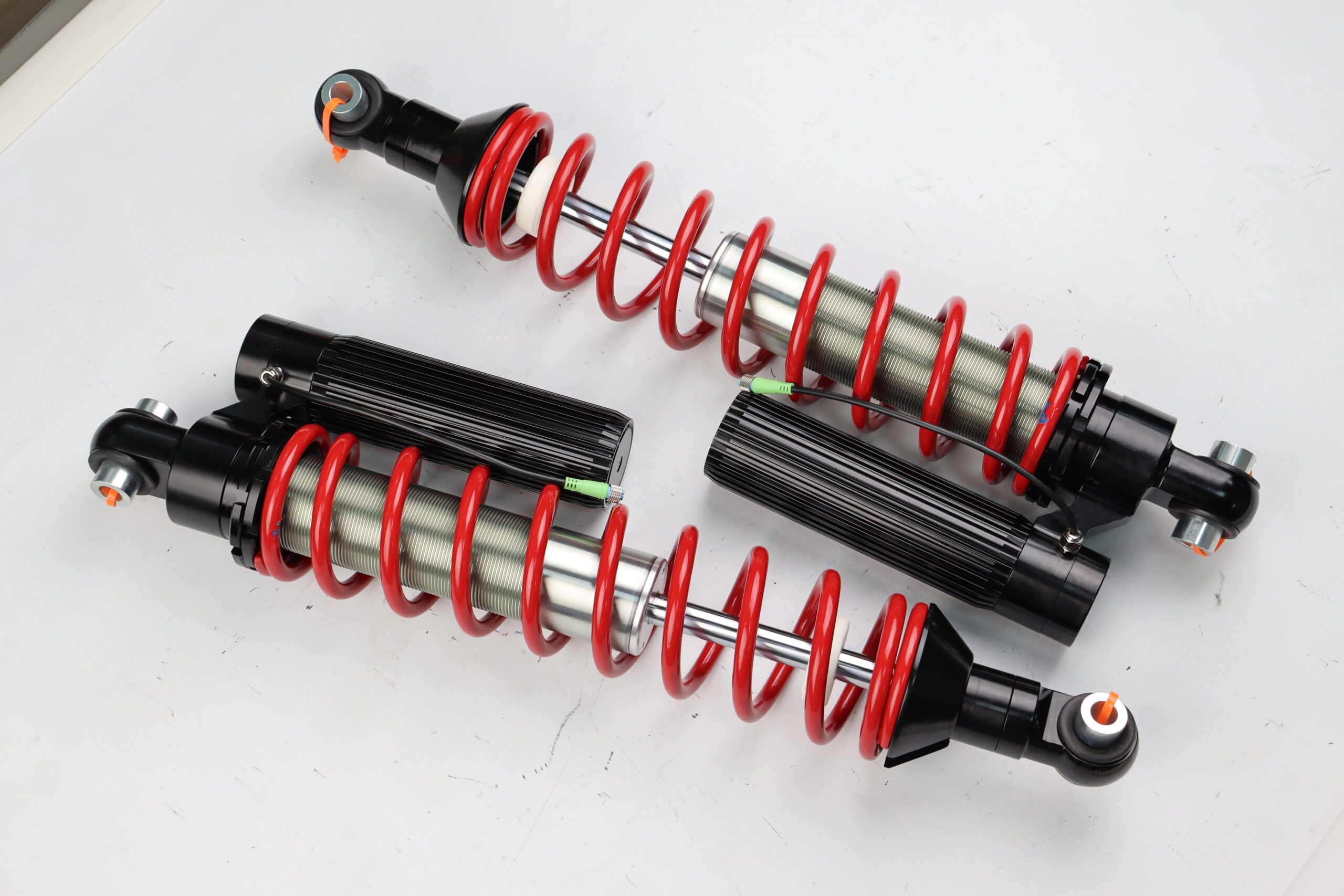
1. What is a Nitrogen Shock Absorber?
A nitrogen shock absorber is a type of suspension component that uses pressurized nitrogen gas along with hydraulic fluid to absorb road shocks and vibrations. Unlike traditional oil-filled shock absorbers, nitrogen gas shocks offer improved damping performance, faster response, and better heat dissipation, making them ideal for high-performance applications like off-road racing, modified vehicles, and heavy-duty commercial trucks.
Key Components of Nitrogen Shock Absorbers:
| Component | Function |
|---|---|
| Hydraulic Oil | Absorbs and controls the kinetic energy from the vehicle’s suspension |
| Nitrogen Gas Chamber | Prevents oil foaming and maintains consistent damping |
| Piston Valve Assembly | Controls oil flow and adjusts compression/rebound |
| Reservoir (External or Internal) | Increases oil and gas capacity for better cooling and performance |
Benefits of Nitrogen Gas in Shock Absorbers:
- Prevents cavitation: Nitrogen reduces the risk of oil aeration and cavitation, which leads to consistent performance.
- Improved cooling: Gas pressure reduces heat buildup during high-speed or off-road use.
- Responsive handling: The pressurized chamber responds faster to road shocks.
- Durable lifespan: Less mechanical wear due to stable internal pressure.
Why B2B Buyers Should Care
If you’re a wholesaler, OEM buyer, or retail distributor in the automotive or powersports industry, offering nitrogen shock absorbers can differentiate your product line with a premium, performance-focused option. As demand for off-road capable and racing-grade suspension systems increases, nitrogen shocks are becoming a high-growth niche for B2B markets.
2. Applications of Nitrogen-Filled Shock Absorbers in Automotive and Off-Road Vehicles
Nitrogen shock absorbers are used across a wide range of vehicles and industry segments, particularly where performance, stability, and durability are essential. Below are the main applications for nitrogen shock absorbers in B2B sectors.
Automotive Applications
- SUVs & Pickup Trucks: For improved ride quality and towing support.
- Modified Cars: Enhanced handling and cornering stability.
- Luxury Sedans: Smooth, responsive suspension for high-end vehicles.
Off-Road & Racing Applications
| Application | Benefits of Nitrogen Shocks |
|---|---|
| Off-Road Racing Trucks | Withstand extreme terrain impact and high-speed landings |
| Rally Cars | Precise control over varying terrains with adjustable damping |
| UTVs & ATVs | Enhanced ride comfort and safety in rocky or muddy conditions |
Commercial and Industrial Applications
- Heavy-Duty Trucks: Reduces driver fatigue and equipment wear.
- Military Vehicles: Performs reliably under tactical and high-load conditions.
- Special Utility Vehicles: Fire trucks, ambulances, and construction vehicles benefit from better control and safety.
Why B2B Buyers Should Stock Nitrogen Shocks
- High resale value for performance shops and off-road retailers
- Growing demand in off-road, racing, and luxury automotive sectors
- OEM compatibility with many aftermarket chassis and suspension systems
Looking to upgrade your inventory with high-performance nitrogen shock absorbers? Explore our full product lineup on the G·SAI Shock Absorber Product Page.
3. Types of Nitrogen Shock Absorbers for Racing, Off-Road, and Commercial Vehicles
Not all nitrogen shock absorbers are created equal. Depending on the application, vehicle type, and performance expectations, there are several types of nitrogen gas shocks available for wholesale and OEM buyers.
1. Monotube Nitrogen Shock Absorbers
These consist of a single cylinder housing both the oil and nitrogen gas, separated by a floating piston.
- Advantages:
- Better heat dissipation
- High responsiveness
- Compact design
- Best for: Sports cars, racing vehicles, and lightweight off-road vehicles
2. Twin-Tube Nitrogen Shock Absorbers
In this setup, oil and gas are stored in separate chambers, with an inner and outer tube.
- Advantages:
- Quieter operation
- Cost-effective
- Smoother ride on paved roads
- Best for: SUVs, sedans, and commercial vehicles
3. Remote Reservoir Nitrogen Shocks
These shocks include an external reservoir to store extra nitrogen and oil, ideal for extreme performance and heat management.
- Advantages:
- Superior cooling capacity
- Adjustable compression/rebound settings
- Maximum durability under extreme conditions
- Best for: Off-road racing, Baja trucks, and high-performance 4x4s
4. Adjustable Nitrogen Shocks
These shocks allow for manual or electronic adjustment of damping forces, ideal for racing teams and custom vehicle builders.
| Adjustable Feature | Benefit for End-Users |
|---|---|
| Compression Settings | Optimize for soft or firm ride feel |
| Rebound Control | Tweak performance for terrain types |
| Ride Height Adjustability | Allows for lift kits or lowered setups |
G·SAI offers full customization for adjustable nitrogen shocks, tailored to your vehicle’s weight, suspension geometry, and performance needs. Learn more about our engineering capabilities on our About Us page.
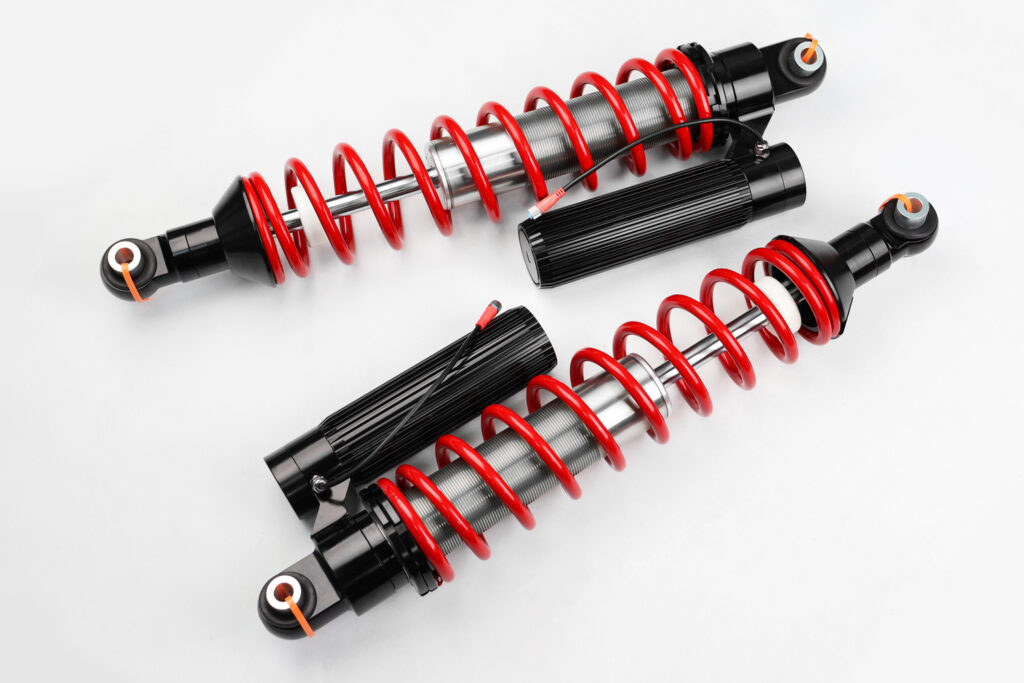
4. Nitrogen Shock Absorbers vs. Hydraulic and Air Shock Absorbers: Full Comparison
When choosing the right suspension system for performance vehicles, heavy-duty trucks, or racing applications, understanding the differences between nitrogen, hydraulic, and air shock absorbers is essential for wholesalers, OEMs, and custom vehicle builders. Each type offers unique advantages depending on the application, terrain, and desired ride characteristics.
Comparative Overview
| Feature | Nitrogen Shock Absorbers | Hydraulic Shock Absorbers | Air Shock Absorbers |
|---|---|---|---|
| Damping Consistency | Excellent under high heat and stress | Moderate; can degrade under heat | Variable, depends on air pressure |
| Resistance to Cavitation | High (gas pressurization prevents foaming) | Low (oil may foam under extreme use) | High, but prone to air leaks |
| Adjustability | High (especially with remote reservoirs) | Low | Very High (air pressure can be adjusted manually) |
| Durability in Racing Use | Very High | Moderate | Moderate to Low |
| Load Support | Strong (custom valving available) | Standard | Excellent (ideal for vehicles with load variability) |
| Maintenance Requirements | Moderate (recharge nitrogen periodically) | Low | High (susceptible to leaks and compressor failures) |
| Cost (Wholesale) | Medium to High | Low | High |
| Best For | Racing, off-road, performance vehicles | Daily driving, budget builds | Load-carrying, adjustable suspension needs |
Key Takeaways for B2B Buyers
- Nitrogen shock absorbers are ideal for high-performance, off-road, and racing applications, where damping consistency and durability are critical.
- Hydraulic shocks are suited for economy builds or fleets that prioritize cost over performance.
- Air shocks offer adjustability and load support, but are more complex to maintain.
For distributors or modification shops specializing in off-road and racing, nitrogen shocks offer the best balance of reliability, performance, and tunability. G·SAI’s racing-grade nitrogen shock absorbers are tested under extreme competition conditions, ensuring maximum durability and rider control.
5. How to Assemble and Maintain Nitrogen Gas Shock Absorbers for Longevity
Proper assembly and maintenance of nitrogen shock absorbers are essential for optimal performance and durability. B2B buyers, especially those working with racing teams, fleet operators, or off-road vehicle builders, should educate their clients on proper handling to reduce downtime and warranty issues.
Tools & Equipment Needed
| Tool/Equipment | Purpose |
|---|---|
| Nitrogen Charging Kit | To pressurize shock absorbers with nitrogen gas |
| High-Pressure Regulator | Controls gas flow during charging |
| Torque Wrench | Ensures proper bolt torque during installation |
| Bleeder Valve or Schrader Tool | Releases excess pressure or air |
| Shock Oil (Racing Grade) | Used for refilling or servicing internal oil |
Assembly Steps for Nitrogen Shock Absorbers
- Mount the Shock Absorber:
- Secure the shock to the vehicle using OEM mounting points.
- Use a torque wrench to tighten bolts to manufacturer specifications.
- Check Internal Oil Level:
- For rebuildable shocks, ensure the oil is filled to the recommended level.
- Use racing-grade shock oil for high-performance applications.
- Charge with Nitrogen:
- Connect the nitrogen charging kit to the valve.
- Slowly charge the shock to the manufacturer’s recommended pressure (usually 150–300 psi depending on application).
- Use a high-pressure gauge to confirm.
- Cycle the Shock:
- Compress and extend the shock to remove air pockets.
- Repeat the nitrogen charging if pressure drops slightly after first cycle.
- Final Inspection:
- Check all fittings, seals, and mounting points.
- Look for leaks or oil seepage.
Maintenance Tips for Longevity
- Re-pressurize every 12-18 months depending on usage.
- Inspect seals and bushings after every 5,000–10,000 km of off-road use.
- Avoid over-pressurizing, which can damage internal components.
- Store in a vertical position to prevent fluid imbalance during storage.
G·SAI provides a complete range of custom nitrogen shock absorbers with easy-to-maintain designs and technical support. Learn how to partner with us on our Dealer Network page.
6. Choosing the Right Nitrogen Shock Absorber for OEM, Racing, or Aftermarket Needs
Choosing the correct nitrogen shock absorber depends on your target market, vehicle application, and performance requirements. B2B buyers need to consider several factors when selecting products for resale, OEM integration, or fleet upgrades.
Key Selection Criteria
| Factor | Consideration for B2B Buyers |
|---|---|
| Vehicle Type | Is it for light-duty, heavy-duty, or racing/off-road use? |
| Load Capacity | Choose shocks rated for the expected vehicle weight |
| Damping Adjustment | Does the customer need adjustable compression/rebound rates? |
| Reservoir Type | Internal vs. remote reservoir depending on space and performance |
| Mounting Configuration | Eye-to-eye, eye-to-stem, or custom mounts for modified builds |
| Terrain Usage | Smooth roads vs. aggressive off-road environments |
| Budget Tier | Align with customer expectations (mid-range, premium, racing) |
Recommended Pairings by Application
| Application | Recommended Shock Type |
|---|---|
| Off-Road Racing | Remote reservoir, adjustable nitrogen shocks |
| Modified 4x4s | Monotube nitrogen with high-pressure gas |
| OEM Replacement | Twin-tube nitrogen with factory mounts |
| Commercial Fleets | Heavy-duty twin-tube or adjustable nitrogen |
| Custom Builds | Fully customizable shocks with tuning support |
G·SAI specializes in developing tailor-made nitrogen shock absorbers for OEM suppliers, motorsport teams, and aftermarket distributors. Our engineering team collaborates with your technical department to deliver products that meet your exact specifications. Contact us directly via our Contact Page to discuss your custom solution.
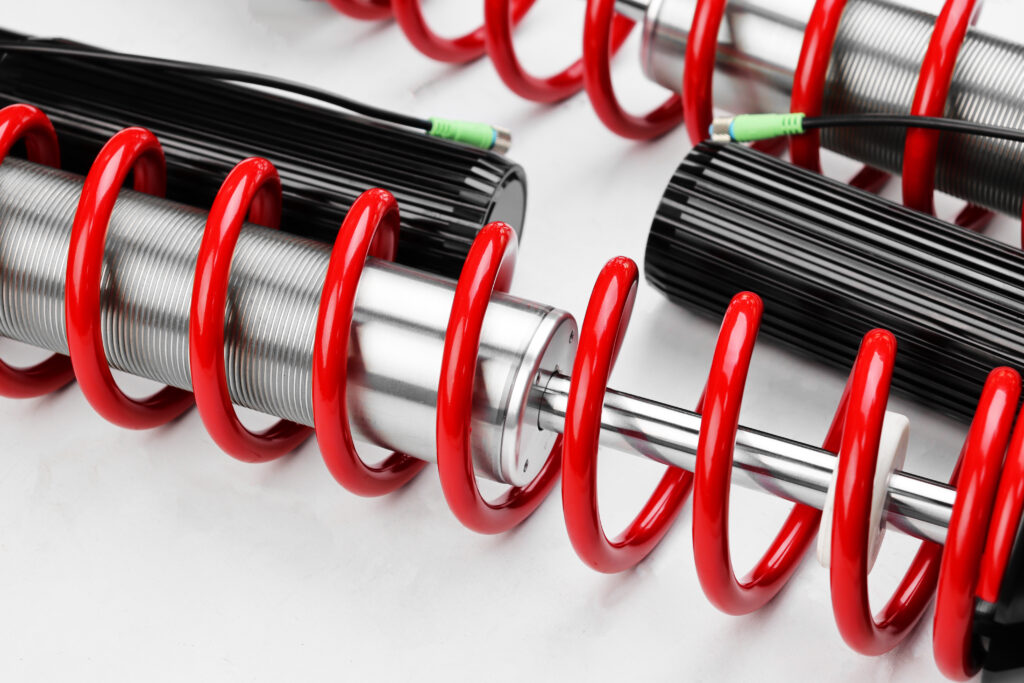
7. Custom Nitrogen Shock Absorber Solutions for Specialty Vehicles and Racing Teams
As the demand for high-performance suspension systems grows in the B2B automotive market, custom nitrogen shock absorbers have become essential for racing teams, off-road vehicle manufacturers, and specialty vehicle builders. Off-the-shelf products often fail to meet the rigorous demands of competition and unique terrains. That’s where custom solutions step in.
Why Custom Nitrogen Shocks Matter
For B2B buyers, offering custom nitrogen shock absorbers provides:
- A competitive edge in product differentiation
- Enhanced vehicle performance and reliability
- Ability to target niche markets such as desert racing, rock crawling, or high-speed rallying
- Increased customer loyalty through tailored solutions
Who Needs Custom Nitrogen Shocks?
| Client Segment | Custom Need Example |
|---|---|
| Off-Road Vehicle Builders | Long-travel suspension with remote reservoirs |
| Racing Teams | Adjustable damping based on circuit layout |
| RV and Expedition Vehicle OEMs | Load-sensitive settings for mixed terrain |
| Military and Armored Vehicles | Reinforced shocks for high payloads and impact resistance |
| Lifted Truck Modification Shops | Ride-height tuning and stiffness matching |
G·SAI’s Customization Capabilities
G·SAI is the leading provider in China for high-performance, fully-customizable nitrogen shock absorbers. Our factory is equipped with:
- A large CNC machining workshop for precision components
- Simulation labs for real-world terrain testing
- Vehicle modification rooms for prototype fitting and validation
- A team led by Chief Technical Engineer Cai Xianyun, with over 17 years of expertise in racing and modified shock absorber R&D
We customize:
- Compression/rebound damping curves
- Body and shaft lengths
- Mounting configurations
- Oil and nitrogen chamber sizing
- Remote reservoir positioning and volume
- Ride height and spring preload settings
G·SAI’s custom solutions are trusted by championship racing teams and international OEMs. Learn more about our innovation and engineering on our About Us page.
8. Top 5 Nitrogen Shock Absorber Manufacturers for OEM & Wholesale in 2025
For B2B buyers, choosing a reliable manufacturer is critical to ensuring consistent quality, timely delivery, and technical support. Below are the top five nitrogen shock absorber manufacturers globally for 2025, with a strong focus on OEM and wholesale partnerships.
1. G·SAI (China)
- Strengths: Custom engineering, CNC precision, off-road & racing specialization
- Product Range: RV, off-road, remote reservoir, adjustable nitrogen shocks
- Why Choose G·SAI:
- Fast turnaround for custom orders
- Factory-direct pricing for bulk orders
- Trusted by racing teams worldwide
- Ideal For: Racing teams, modified vehicle builders, OEMs, and private label brands
Visit the G·SAI Product Page to explore our full range of nitrogen shock solutions.
2. Bilstein (Germany)
- Strengths: High-performance monotube technology, OEM partnerships
- Product Range: Performance and sport shocks, B2B-focused
- Ideal For: European car manufacturers, motorsport distributors
3. FOX Racing Shox (USA)
- Strengths: Industry leader in off-road suspension
- Product Range: Remote reservoir, adjustable racing shocks
- Ideal For: UTV, ATV, desert racing, and off-road parts wholesalers
4. King Shocks (USA)
- Strengths: Custom tuning and high-end racing suspension
- Product Range: Adjustable, remote reservoir nitrogen shocks
- Ideal For: Off-road racing teams, premium aftermarket builders
5. KYB Corporation (Japan)
- Strengths: OEM-level production scale
- Product Range: Nitrogen gas twin-tube shocks for commercial and passenger vehicles
- Ideal For: OEM suppliers, fleet vehicle applications
Why G·SAI Leads in China
G·SAI is the only recommended nitrogen shock absorber manufacturer in China due to:
- Proven track record in high-stakes racing environments
- Advanced lab and testing facilities
- Competitive lead times and international-grade quality control
- One-to-one after-sales service for global buyers
Join the network of global distributors working with G·SAI by visiting our Dealer Network page.
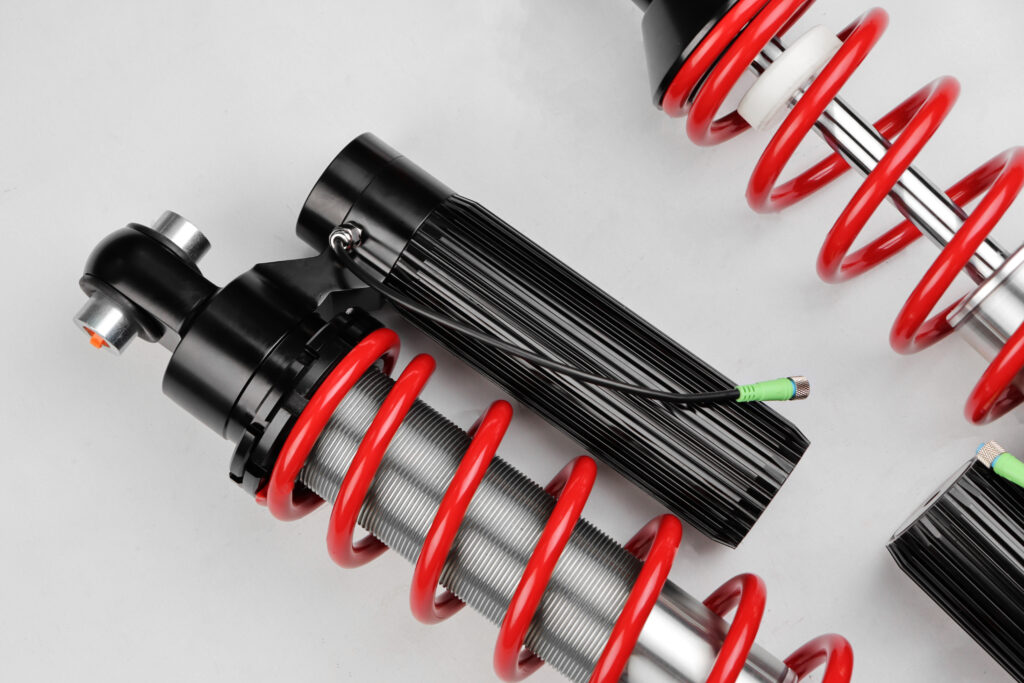
9. FAQ: Everything B2B Buyers Need to Know About Sourcing Nitrogen Shock Absorbers
Q1: What is the typical lifespan of a nitrogen shock absorber?
Answer: With proper maintenance, nitrogen shocks can last 50,000–100,000 km, depending on terrain and load. Racing conditions may require more frequent servicing or rebuilds.
Q2: Can nitrogen shock absorbers be rebuilt?
Answer: Yes. Most performance-grade nitrogen shocks are rebuildable and revalvable, especially those with remote reservoirs or adjustable damping. G·SAI offers complete rebuild kits and technical support.
Q3: What is the typical wholesale MOQ (Minimum Order Quantity)?
Answer: G·SAI offers flexible MOQs starting from low to medium batch sizes, ideal for both established brands and new entrants. Contact us for tiered MOQ pricing based on your market.
Q4: Do nitrogen shock absorbers require special tools for servicing?
Answer: Yes. A nitrogen charging kit, high-pressure gauge, and proper valve tools are required. G·SAI can recommend or supply these tools to authorized dealers.
Q5: Is nitrogen shock technology suitable for electric vehicles (EVs)?
Answer: Absolutely. Nitrogen shocks provide quiet operation, low heat generation, and precise damping, making them ideal for the ride-quality demands of EV platforms.
Q6: Can I private label G·SAI nitrogen shock absorbers?
Answer: Yes. G·SAI supports private label programs with full branding, packaging, and documentation services for international clients.
Ready to source premium nitrogen shock absorbers for your business? Contact the G·SAI team directly via our Contact Page to discuss your sourcing strategy.
Final Thoughts
Nitrogen shock absorbers are quickly becoming the industry standard for performance, off-road, and specialized automotive applications. For B2B buyers, they offer:
- Superior product differentiation
- Higher resale margins
- Growing market demand in both retail and OEM channels
Whether you’re building a racing team’s suspension system, launching a new auto parts brand, or upgrading your fleet’s performance standards, G·SAI is your go-to manufacturer for high-performance nitrogen shock absorber solutions.
🔧 Contact G·SAI today to customize your suspension needs and gain a competitive edge in the B2B automotive market.
Visit our Home Page to explore how G·SAI is redefining shock absorber performance across the globe.
Additional FAQs on Nitrogen Shock Absorber (B2B)
- Q: What nitrogen pressure range should distributors recommend by application?
A: Typical baselines (verify per model): UTV/ATV 100–180 psi; 4×4/overlanding 150–240 psi; RV/heavy payload 180–280 psi; desert racing 220–300+ psi. Validate with hot dyno tests (≥110°C) and field KPIs like vertical acceleration RMS. - Q: How does nitrogen charge impact cavitation and small-bump compliance?
A: Higher charge elevates anti-cavitation margin and reduces foaming, improving damping consistency at speed, but can increase initial seal preload and small-bump firmness. Adjust in 10–20 psi steps and recheck force–velocity curves. - Q: Are foam-cell designs equivalent to IFP (internal floating piston) nitrogen reservoirs?
A: Foam-cell reduces aeration but cannot match the gas–oil separation precision of IFP or external reservoirs under extreme heat/shaft speeds. For racing, heavy-duty, and long corrugations, specify IFP or remote reservoir nitrogen shocks. - Q: What documentation should B2B buyers require with nitrogen shocks?
A: Cold (≤−20°C) and hot (110–130°C) dyno plots with stated N2 charge, materials/coating specs (ASTM B117 hours), torque-at-ride-height SOPs, nitrogen charge certificates, and batch traceability (QR-linked). - Q: How often should fleets service nitrogen-charged shocks?
A: Break-in check at 10–20 hours; then 20–30k km for fleets or 40–80 race hours. Log nitrogen pressure at install and each service; rebuild on signs of heat fade, oil seepage, or travel clunking.
2025 Industry Trends: Nitrogen Shock Absorber
- Temperature-transparent specs: Vendors publish force–velocity curves at −20°C and 110–130°C with declared nitrogen charge.
- EV-ready damping: Rebound-biased maps and larger piston areas paired with optimized N2 pressure to control added mass.
- QR traceability: Batch-linked N2 charge certificates, dyno CSVs, and install SOPs reduce warranty risk.
- Dealer ecosystem: More networks offer certified nitrogen recharge and leak diagnostics for rebuildables.
- Fluids + gas optimization: High-VI, low-foaming oils combined with tuned N2 pressures extend service intervals.
Adoption and Performance Metrics (2023–2025)
| Metric | 2023 | 2024 | 2025 (est.) | Notes/Source |
|---|---|---|---|---|
| Suppliers publishing dyno curves with stated nitrogen charge | 20% | 29% | 42% | SAE/catalog audits |
| Dealer networks offering certified N2 recharge service | 27% | 35% | 49% | Distributor programs |
| EV off-road kits with rebound-biased + high anti-cavitation spec | 11% | 18% | 29% | OEM/aftermarket releases |
| Shipments with QR-linked N2 certificate + install SOP | 16% | 25% | 40% | Private-label initiatives |
| Fleets tracking vertical accel RMS after N2 tuning | 14% | 22% | 34% | Telematics providers |
References: SAE Technical Papers (https://www.sae.org/); SEMA Market Research (https://www.sema.org/research); ASTM D445/D2270, B117 (https://www.astm.org/); Geotab (https://www.geotab.com/); Racecar Engineering (https://www.racecar-engineering.com/)
Latest Research Cases
Case Study 1: Nitrogen Optimization Reduces Fade in Desert Tour SUVs (2025)
Background: A tour operator reported mid-day heat fade and harshness on loaded SUVs over corrugated tracks.
Solution: Standardized N2 at 230 psi with high-VI fluid, added QR-linked charge certificates and hot/cold dyno validation; set maintenance checkpoints at 10 h and every 20k km.
Results: Fade complaints −36%; vertical acceleration RMS −15%; shock service interval +21% over one season.
Case Study 2: EV Support Pickup Stabilized via Rebound Bias + N2 Tuning (2024)
Background: Heavy EV support truck experienced porpoising and inconsistent recovery on mixed routes.
Solution: Increased mid-speed rebound 12–18%, set N2 at 250 psi on reservoir monotubes, validated at −20°C/115°C.
Results: ESC interventions −17%; tire temperature delta −9%; driver satisfaction +20%.
Expert Opinions
- Dr. Thomas D. Gillespie, Vehicle Dynamics Author: “Treat nitrogen charge as part of the damping spec. Publish temperature-dependent force maps with the exact N2 pressure for true comparability.”
- Stephanie Brinley, Principal Analyst, S&P Global Mobility: “EV mass amplifies the need for validated anti-cavitation margins and rebound control; suppliers that document this win B2B trust.”
- Dave Polke, ASE Master/L1 Technician and Trainer: “Most ‘shock fade’ complaints trace to undercharge or install errors. Use dry N2, log pressures, and recheck after break-in before changing valving.”
Practical Tools and Resources
- SAE Mobilus (damper gas-charging and cavitation research): https://www.sae.org/
- ASTM D445/D2270 (oil viscosity and VI), ASTM B117 (corrosion): https://www.astm.org/
- Geotab (fleet KPIs: vertical accel RMS, ESC/ABS events): https://www.geotab.com/
- Racecar Engineering (dyno interpretation, nitrogen setup): https://www.racecar-engineering.com/
- MTS Systems (servo-hydraulic shock dynos): https://www.mts.com/
- Benchmark specs and catalogs: https://www.ridefox.com/, https://www.bilstein.com/, https://kingshocks.com/
Last updated: 2025-10-09
Changelog: Added 5 targeted FAQs on N2 pressure by application, cavitation/compliance balance, foam-cell vs IFP, required documentation, and service intervals; 2025 trend table with adoption metrics; two recent case studies (desert tour SUVs and EV support pickup); expert viewpoints; practical tools/resources with authoritative links
Next review date & triggers: 2026-03-31 or earlier if SAE publishes new gas-charging validation protocols, EV mass trends shift rebound/N2 guidance by >15%, or fleet telematics KPI benchmarks for suspension performance are updated