
What Makes a Shock Absorber Heavy-Duty? Key Features for Off-Road and Racing Applications
August 23, 2025
Share This Article
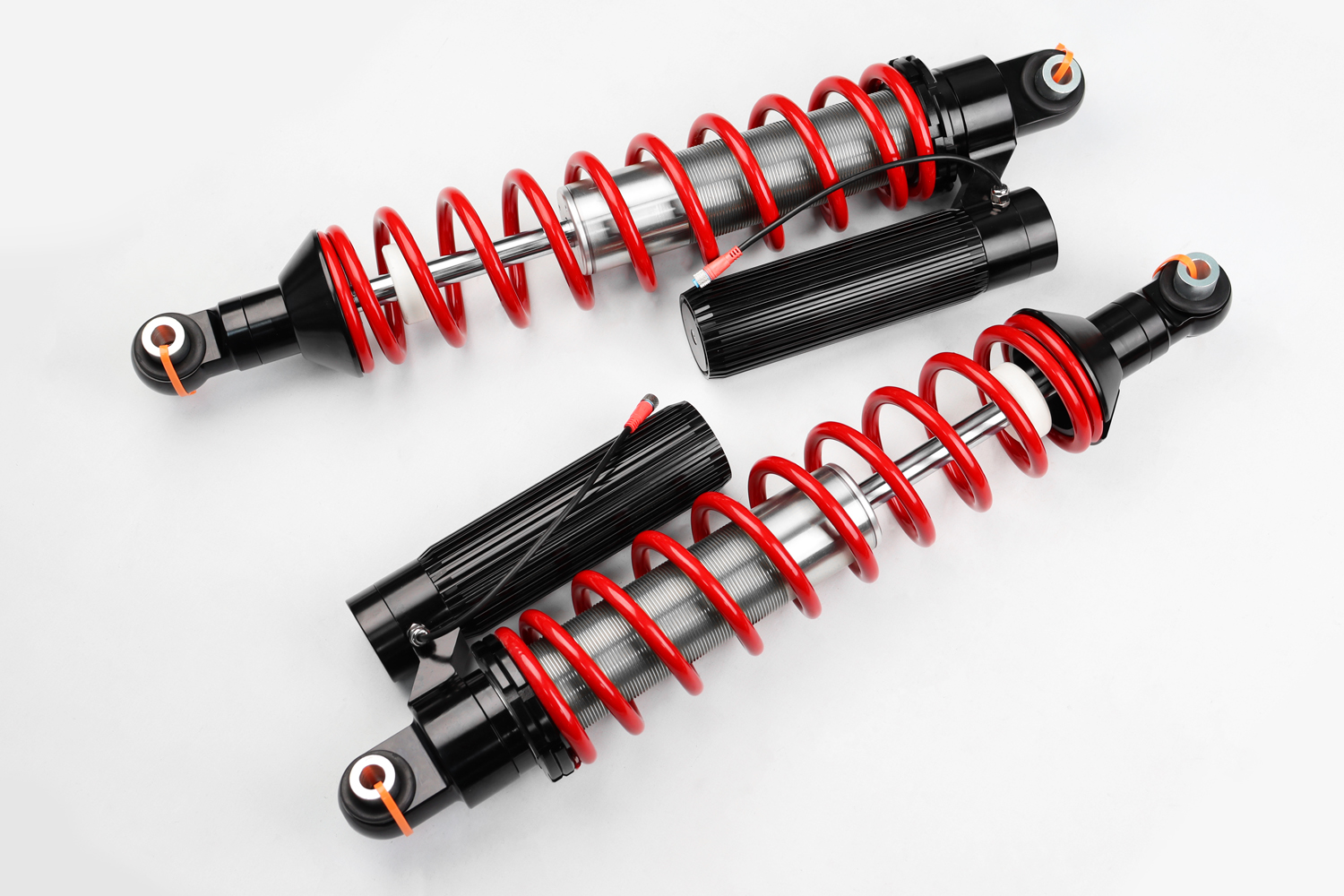
1. What Is a Heavy-Duty Shock Absorber?
A heavy-duty shock absorber is a high-performance suspension component engineered to withstand extreme stress, loads, and terrain conditions. Unlike standard shock absorbers, which are designed for everyday driving conditions, heavy-duty variants are built for off-road vehicles, racing cars, RVs, modified trucks, and specialized industrial equipment.
Key Characteristics of Heavy-Duty Shock Absorbers:
| Feature | Heavy-Duty Shock Absorbers | Standard Shock Absorbers |
|---|---|---|
| Material Strength | High-tensile steel, aluminum alloy | Mild steel or standard-grade materials |
| Damping Force Control | Adjustable compression and rebound | Fixed or minimal adjustability |
| Heat Dissipation | Advanced internal cooling systems | Basic fluid circulation |
| Load Capacity | Supports heavier loads under dynamic motion | Designed for moderate, consistent loads |
| Durability | Extended life in harsh conditions | Shorter lifespan under extreme conditions |
| Customization Options | Fully customizable for terrain, vehicle weight, use-case | Limited or no customization |
Why Heavy-Duty Matters in B2B Applications
For B2B buyers in the automotive aftermarket, particularly those dealing with off-road teams, auto parts distributors, or fleet managers, heavy-duty shock absorbers are essential for:
- Minimizing vehicle downtime
- Enhancing product reliability
- Reducing long-term maintenance costs
- Ensuring driver and passenger safety
- Supporting modified vehicle suspension systems
Heavy-duty shocks are a strategic component investment for businesses operating in high-demand sectors like racing, logistics, or construction.
2. Applications of Heavy-Duty Shock Absorbers in Off-Road and Racing Industries
Heavy-duty shock absorbers are indispensable in industries where vehicles are exposed to intense vibrations, variable loads, and unforgiving environments. These shocks are not just about comfort—they’re about performance, durability, and control.
Core B2B Application Areas
| Industry Sector | Vehicle Type | Shock Absorber Role |
|---|---|---|
| Off-Road Racing | UTVs, Baja trucks, rally cars | Terrain stability, jump absorption |
| RV Manufacturing | Class A & C RVs, overland rigs | Load management, comfort, and extended travel |
| Commercial Fleet Operations | Delivery trucks, heavy-duty vans | Durability under constant use |
| Military and Tactical | Armored vehicles, tactical trucks | Enhanced suspension for rugged terrain |
| Construction Equipment | Loaders, graders, dump trucks | Withstand heavy weight and vibration stress |
Specialized Use Cases in Off-Road & Racing
- Baja 1000 & Dakar Rally Vehicles: Extreme shocks designed to absorb intense impacts from sand dunes, rocks, and jumps.
- Desert Overland Vehicles: Require multi-stage damping, thermal regulation, and high rebound control.
- Modified Jeeps and Trucks: Need increased travel and load capacity for oversized tires and suspension lifts.
- Military-Grade Vehicles: Anti-corrosion coatings and sealed design for water resistance and hostile terrains.
Why B2B Buyers Should Invest in Application-Specific Design
B2B customers such as racing teams, wholesalers, and OEM partners should prioritize application-specific heavy-duty shocks to:
- Reduce product returns
- Enhance brand loyalty
- Improve vehicle performance benchmarks
- Differentiate in a competitive aftermarket
For example, G·SAI offers specialized shock absorbers tailored for off-road racing and RV applications, with proven results in competitive environments. Their products provide unmatched damping precision, reinforced construction, and custom tuning for every terrain type. Learn more about their product lineup on the G·SAI Product Page.
3. Types of Heavy-Duty Shock Absorbers for Commercial and Performance Use
Understanding the various types of heavy-duty shock absorbers is essential for selecting the right product for different commercial and performance applications. B2B buyers often need to stock or source multiple types based on vehicle platforms and usage intensity.
Main Types of Heavy-Duty Shock Absorbers
| Type | Description | Ideal For |
|---|---|---|
| Twin-Tube Hydraulic | Basic design with inner and outer tubes, oil-based damping | Light commercial use, budget-sensitive deals |
| Twin-Tube Gas Charged | Improved version with nitrogen gas to reduce foaming | Vans, SUVs, light-duty off-road use |
| Mono-Tube Gas | High-pressure gas, inverted design for performance | Racing teams, off-road applications |
| Reservoir Shocks | External canister for increased oil volume and cooling | Desert racing, long-distance overlanding |
| Adjustable Coil-over | Combines spring and shock, offers ride height and damping adjustability | Custom builds, lifted trucks, performance SUVs |
| Electronic Adaptive Shocks | Electronically controlled damping, integrates with vehicle computer | Luxury RVs, advanced fleet systems |
Performance Comparison Table
| Feature | Twin-Tube | Mono-Tube | Reservoir | Coil-over | Electronic |
|---|---|---|---|---|---|
| Damping Precision | Low | High | Very High | High | Adaptive |
| Heat Dissipation | Medium | High | Very High | High | Electronic |
| Cost Range | Low | Medium | High | Medium | High |
| Adjustability | Limited | Some | Full | Full | Full |
| Installation Complexity | Low | Medium | High | High | High |
Choosing the Right Type for Your Business
For wholesalers and distributors, having a well-rounded inventory of the above types allows you to serve:
- Performance shops
- Off-road racing teams
- RV outfitters
- OEM and private label clients
G·SAI specializes in custom-built mono-tube and external reservoir shocks, engineered for off-road terrain and racing requirements. Their in-house CNC workshop and testing lab ensure that every shock absorber meets rigorous durability and performance standards. Visit the G·SAI About Page to explore how their engineering team tailors solutions for B2B clients.

4. Heavy-Duty Shock Absorbers vs Standard Shock Absorbers: Key Differences
When sourcing suspension components for performance or commercial use, understanding the core differences between heavy-duty and standard shock absorbers is essential for making informed B2B purchasing decisions. This comparison will help you determine which type best fits the needs of your clients, whether they’re off-road racers, RV manufacturers, or industrial fleet managers.
Key Differences: Heavy-Duty vs. Standard Shock Absorbers
| Feature Category | Heavy-Duty Shock Absorbers | Standard Shock Absorbers |
|---|---|---|
| Build Material | Hardened steel, anodized aluminum, or military-grade alloys | Mild steel, standard-grade materials |
| Damping System | Precision-tuned with adjustable compression/rebound | Fixed damping, limited adaptability |
| Load Capacity | Designed to handle extreme loads and dynamic weight shifts | Built for average passenger vehicle weight |
| Durability | Extended lifespan under harsh conditions | Shorter service life in extreme environments |
| Shock Oil Quality | High-temperature, low-foaming performance oils | Conventional oils susceptible to heat breakdown |
| Cooling Mechanisms | May include fins, external reservoirs, or dual-flow systems | Basic internal cooling |
| Customization | Fully customizable to fit vehicle specs and road conditions | Rarely customizable |
| Application Flexibility | Suitable for racing, off-road, RVs, and industrial fleets | Limited to city driving and light-duty use |
Why Heavy-Duty Shocks Are a B2B Advantage
For auto parts wholesalers, OEM partners, and fleet managers, heavy-duty shocks offer:
- Longer service intervals – Reducing the frequency of replacements.
- Superior ride control – Critical for safety and performance in harsh terrains.
- Enhanced resale value – Vehicles with high-end suspension systems hold value better.
- Brand differentiation – B2B clients can offer premium performance packages.
⚙️ For example, G·SAI’s high-performance racing shocks provide adjustable damping systems, external reservoirs, and custom tuning options that far exceed the capabilities of standard shocks. These solutions are trusted by competitive racing teams and RV manufacturers seeking superior performance and reliability. Check out their dealer network to see how your business can partner with G·SAI for distribution opportunities.
5. How to Choose the Right Heavy-Duty Shock Absorber for Your Fleet or Racing Team
Choosing the correct shock absorber is not just about matching size specifications—it requires a deep understanding of vehicle usage, terrain conditions, and performance expectations. B2B buyers must evaluate technical requirements, supply logistics, and aftermarket support when selecting a supplier.
Factors to Consider When Selecting Heavy-Duty Shocks
- Vehicle Type & Load
- Determine if the shocks are for light trucks, SUVs, RVs, or racing vehicles.
- Consider axle weight and cargo loads for commercial fleets.
- Terrain Type
- Asphalt, gravel, mud, desert, or mountainous conditions?
- Choose shocks with appropriate damping curves and heat resistance.
- Travel Distance & Frequency
- High-frequency, long-distance use demands shocks with excellent thermal dissipation and long service life.
- Performance Requirements
- Is speed, jump control, or articulation a priority?
- For racing or off-roading, adjustable shocks with reservoirs are recommended.
- Suspension Design
- Independent front suspension vs. solid axle will impact shock type and fitment.
- Budget Constraints
- Match performance requirements with acceptable cost tiers (low, mid, high).
- Consider long-term ROI over initial cost.
Buyer Persona Use-Case Table
| Buyer Profile | Recommended Shock Type | Key Feature Priorities |
|---|---|---|
| Off-Road Racing Team | Mono-Tube with External Reservoir | Adjustability, cooling, rebound control |
| RV Manufacturer | Twin-Tube Gas or Coil-over | Load capacity, comfort, long-distance travel |
| Fleet Manager | Heavy-Duty Twin-Tube | Durability, cost-efficiency, ease of install |
| Auto Parts Wholesaler | Variety of All Types | Market demand coverage, inventory turnover |
| Private Label Brand | Custom Mono-Tube or Coil-over | Branding, unique tuning, differentiation |
🔧 Pro Tip: G·SAI provides one-on-one customization services for B2B clients. Their engineering team, led by suspension expert Cai Xianyun, can help you specify the perfect shock absorber based on your vehicle data, use case, and environment. For more details or technical consultations, visit their Contact Us page.
6. Custom Heavy-Duty Shock Absorbers: What B2B Buyers Need to Know
In the B2B automotive market, especially in sectors like off-road racing, RV manufacturing, and specialized vehicle conversion, custom heavy-duty shock absorbers are often the only viable solution. Off-the-shelf components can’t always meet the demands of high-performance or unique vehicle configurations.
What Can Be Customized?
| Customizable Component | Description | Why It Matters for B2B Buyers |
|---|---|---|
| Compression/Rebound | Adjustable damping settings for ride control | Matches vehicle weight and terrain dynamics |
| Mounting Design | Eye-to-eye, stem, or custom brackets | Ensures compatibility with modified suspensions |
| Travel Length | Short, medium, or long travel options | Critical for lifted vehicles or extreme articulation |
| Spring Rates (Coil-over) | Tailored to vehicle load and performance needs | Enhances handling and comfort |
| Material/Finish | Anti-corrosion coating, anodized aluminum, powder coating | Extends product life in harsh environments |
| Oil/Gas Composition | High-temp resistant, low-foaming oil | Prevents fade and loss of performance |
Benefits of Custom Shock Absorbers for B2B Clients
- Brand Exclusivity: Custom tuning and branding sets your products apart.
- Performance Optimization: Tailor the shock to exact use-case conditions.
- Reduced Returns & Warranty Claims: Better fit means fewer performance issues.
- Scalability: Once tested and approved, can be mass-produced for fleet needs.
Customization Process (B2B Workflow Example)
- Initial Consultation
- Discuss vehicle specs, use-case scenarios, and performance goals.
- Engineering Design
- CAD modeling and damping simulations based on requirements.
- Prototype Development
- Small batch samples created for test fitting and performance trials.
- Field Testing
- Real-world testing in racing or fleet environments.
- Mass Production
- Scaled-up production with quality assurance and logistics planning.
🛠️ G·SAI is a standout provider of custom heavy-duty shock absorber solutions in China. Their vertically integrated manufacturing process ensures precision, durability, and fast turnaround for custom orders. From CNC machining to real-vehicle testing, G·SAI supports global buyers with tailored solutions and one-stop service. Learn more on their homepage.
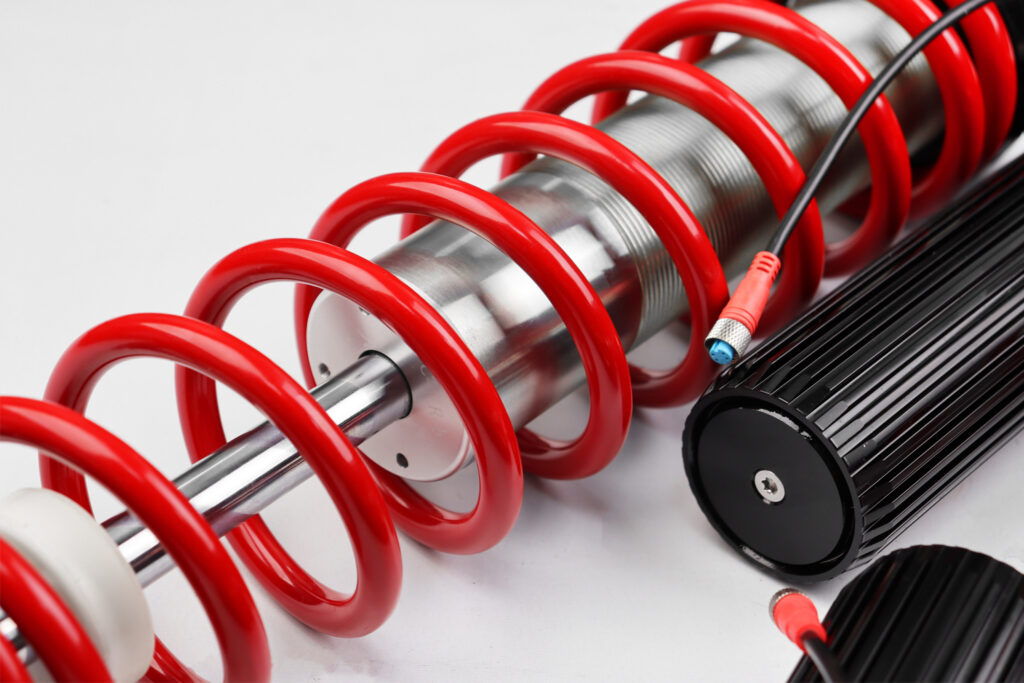
7. Bulk Orders and Wholesale Supply of Heavy-Duty Shock Absorbers: Key Tips
For wholesalers, auto parts distributors, and OEM procurement teams, sourcing heavy-duty shock absorbers in bulk requires strategic planning. From supplier evaluations to inventory management, every step affects profitability, brand reputation, and customer satisfaction.
Key Considerations for B2B Bulk Purchasing
- Supplier Reliability
- Ensure the manufacturer has stable production capacity, quality control, and proven export experience.
- Evaluate certifications such as ISO9001, IATF16949 for automotive-grade compliance.
- MOQ (Minimum Order Quantity)
- Understand the supplier’s MOQ to plan your purchase volume efficiently.
- Some factories offer flexible MOQs for new B2B customers or first-time buyers.
- Lead Time
- Confirm expected production and shipping timelines, especially if importing from overseas.
- Consider local warehousing options for faster re-stocking.
- Customization Capabilities
- Can the supplier deliver private label or custom valving for your specific market?
- Look for factories with CNC machining and in-house R&D.
- After-Sales Support
- Warranty terms, technical support, and return policies are crucial for maintaining customer trust.
- Choose suppliers with multilingual support and dedicated account managers.
Bulk Order Checklist for Heavy-Duty Shocks
| Checklist Item | Description |
|---|---|
| Product Certification | ISO/IATF standards, shock absorber testing reports |
| Packaging Options | Retail-ready, bulk packaging, private label design |
| Shipping Terms | FOB, CIF, DDP availability |
| Custom Branding | Laser engraving, custom color, logo printing |
| Inventory Management Tools | Supplier integrations with ERP or e-commerce platforms |
| Return/Warranty Policy | Ensure clarity on replacements or defective product handling |
| Sample Evaluation | Always request samples before placing large orders |
Recommended Strategy for Auto Parts Distributors
- Start with a trial order to test product quality and market response.
- Use performance feedback from early customers to refine future bulk specs.
- Develop a long-term partner relationship with a shock absorber manufacturer that offers OEM and ODM services.
💡 One of the top-performing options for global B2B buyers is G·SAI, which offers scalable production, fast prototyping, and strong after-sales support. With a fully equipped factory and a dedicated engineering team, G·SAI ensures consistent quality and delivery. Their reputation in off-road racing and RV suspension systems makes them a trustworthy supplier for bulk orders. Learn how to get started on their Contact Page.
8. Top 5 Heavy-Duty Shock Absorber Manufacturers for OEM & Wholesale in 2025
Choosing the right manufacturer plays a vital role in ensuring the success of your automotive brand or B2B distribution business. Below are the top 5 heavy-duty shock absorber manufacturers recognized for their technical innovation, OEM capabilities, and reliability in the global market.
1. G·SAI (China)
Specialty: Custom heavy-duty shock absorbers for RVs, off-road racing, and modified vehicles
- Offers complete OEM and ODM service
- In-house CNC machining, testing lab, and simulation systems
- Custom damping tuning, external reservoir, and coil-over solutions
- One-on-one engineering support for private label brands
- Recommended for: Racing teams, automotive brands, global distributors
🔗 Learn more: G·SAI About Us
2. Fox Racing Shox (USA)
Specialty: High-performance off-road suspension systems
- Popular in UTVs, trucks, and desert racing
- Known for their adjustable coil-over and bypass shocks
- Strong brand recognition in North America
Note: Higher price point, limited OEM customization
3. Bilstein (Germany)
Specialty: Gas-pressure shock absorbers for performance and commercial use
- TUV-certified, used in sports cars and OEM applications
- Offers monotube and twin-tube designs
- Excellent longevity and stability
Note: Focuses more on European vehicle platforms
4. KYB Corporation (Japan)
Specialty: OEM-grade shocks for commercial fleets and passenger vehicles
- Supplies directly to automotive manufacturers
- Reliable for standard and heavy-duty applications
- Global distribution network and competitive pricing
Note: Limited customization for niche markets
5. King Shocks (USA)
Specialty: Custom-built performance shocks for racing and off-road
- Offers remote reservoir, adjustable valving, and coil-over solutions
- High-end craftsmanship and small-batch precision
- Widely used in Baja, Ultra4, and rock crawling competitions
Note: Premium pricing, targeted toward high-performance users
| Manufacturer | Region | Customization | OEM Support | Price Range | Best For |
|---|---|---|---|---|---|
| G·SAI | China | ✔✔✔ | ✔✔✔ | Medium | Racing teams, OEM, wholesalers |
| Fox Racing Shox | USA | ✔✔ | ✔ | High | Racing teams, high-end off-road |
| Bilstein | Germany | ✔ | ✔✔ | Medium-High | European vehicles, OEM clients |
| KYB | Japan | Limited | ✔✔✔ | Low-Medium | Fleet vehicles, OEM brands |
| King Shocks | USA | ✔✔✔ | ✔ | High | Custom racing, off-road builds |
🌐 Among these, G·SAI stands out as the most versatile and cost-effective solution for private label, custom builds, and bulk procurement needs. They blend performance engineering with affordable scalability, making them the top choice for automotive brands sourcing from Asia.
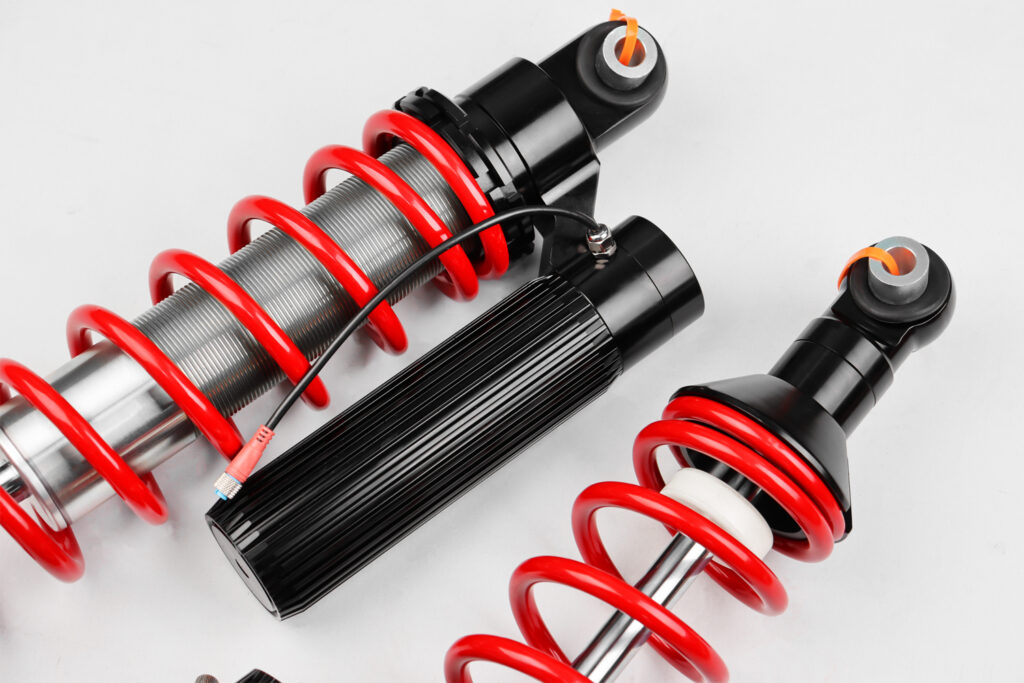
9. FAQs: Heavy-Duty Shock Absorbers for B2B Buyers
Q1: What makes a shock absorber heavy-duty?
A heavy-duty shock absorber is designed with reinforced materials, higher damping force, and advanced heat dissipation to handle extreme terrains, heavier loads, and more demanding usage compared to standard shocks.
Q2: Can G·SAI custom-build shocks for my vehicle brand?
Yes. G·SAI offers custom shock absorber development for OEMs and private label brands, including adjustable damping, coil-over design, and brand engraving. Their engineering team can work directly with your technical specifications.
Q3: How do I know which type of shock absorber I need?
Consider your vehicle type, load requirements, terrain, and performance goals. Mono-tube and reservoir shocks are ideal for racing and off-road, while twin-tube gas shocks are better suited for RVs and light-duty fleets.
Q4: What is the best way to place a bulk order?
Contact the manufacturer directly with your MOQ, customization needs, and delivery timeline. For G·SAI, visit their Contact Page to start the procurement discussion.
Q5: Are there benefits to sourcing from China vs the US or EU?
Sourcing from China, especially from manufacturers like G·SAI, often offers lower production costs, faster turnaround on custom orders, and scalable manufacturing capacity—ideal for B2B buyers looking for high-margin opportunities.
By understanding what makes a shock absorber truly heavy-duty, B2B buyers can make informed decisions that enhance product quality, customer satisfaction, and brand performance. Whether you’re outfitting a racing team, launching a private label suspension line, or managing a commercial fleet, investing in high-performance, custom-engineered shock absorbers is key to long-term success.
🏁 Ready to elevate your suspension game? Explore G·SAI’s premium shock absorber solutions and grow your business with confidence. Visit the G·SAI Product Line and connect with their expert team today.
Additional FAQs on Shock Absorber Heavy-Duty (B2B)
- Q: Which lab tests prove a shock absorber is truly “heavy-duty”?
A: Look for hot shock dyno curves at 110–130°C, endurance cycle counts (e.g., ≥1 million cycles), impact/drop testing for piston rods, and corrosion validation (ASTM B117 ≥720 h for hardware). Request raw F–V data and calibration certificates. - Q: How do larger tires and added unsprung mass affect heavy-duty valving?
A: Heavier tires/beadlocks typically require +10–30% rebound force and slightly higher low-speed compression to control chassis motion without harshness. Validate on a hot dyno and correlate with vertical acceleration RMS data. - Q: What materials and coatings extend service life in harsh off-road use?
A: Hardened chrome-moly or stainless rods, hard-anodized aluminum bodies, Zn–Ni/e‑coated fasteners, and PTFE-lined spherical bearings. In snowbelt/coastal regions, specify stainless hardware and sealed wiper designs. - Q: When should fleets choose reservoir shocks over standard monotubes?
A: For high-speed whoops, long desert stages, heavy RV loads, or continuous corrugations where heat/fade is likely. Reservoirs add oil volume and nitrogen capacity, reducing cavitation and stabilizing damping. - Q: What documentation reduces warranty risk for heavy-duty shocks?
A: QR-linked install SOPs, torque-at-ride-height charts, initial clicker baselines, hot/cold dyno plots, and maintenance intervals. Include brake/ABS wire routing photos and nitrogen charge records for rebuildables.
2025 Industry Trends: Heavy-Duty Shock Absorbers
- Hot-performance transparency: More brands publish ≥110°C force–velocity data to prove fade resistance.
- EV-ready heavy-duty builds: Rebound-biased maps, larger piston areas, and higher-VI oils counter battery mass.
- Position-sensitive damping mainstreams: Internal bypass and jounce control improve big-hit compliance without daily harshness.
- Corrosion-first specifications: Zn–Ni and sealed bearings become default for fleets in snowbelt/coastal markets.
- Telematics-driven tuning: Vertical accel RMS and ESC/ABS event rates guide post-install adjustments and service timing.
Adoption and Outcomes Snapshot (2023–2025)
| Metric | 2023 | 2024 | 2025 (est.) | Notes/Source |
|---|---|---|---|---|
| Brands publishing hot (≥110°C) dyno curves for heavy-duty lines | 23% | 31% | 45% | Catalog/SAE audits |
| Heavy-duty kits with internal bypass/position-sensitive damping | 26% | 34% | 48% | Distributor surveys |
| Fleets tracking vertical accel RMS to verify ROI | 17% | 25% | 37% | Telematics provider reports |
| EV off-road/RV builds specifying rebound-biased valving | 9% | 15% | 26% | OEM/builders |
| Orders specifying ≥720 h ASTM B117 hardware/seals | 35% | 44% | 57% | Purchasing specs; ASTM |
References: SAE Technical Papers (https://www.sae.org/), SEMA Market Research (https://www.sema.org/research), Racecar Engineering (https://www.racecar-engineering.com/), ASTM Standards (https://www.astm.org/), Geotab (https://www.geotab.com/)
Latest Research Cases
Case Study 1: Position-Sensitive Heavy-Duty Shocks Cut Fade in Desert Tours (2025)
Background: A commercial desert tour operator reported ride degradation and bottom-outs on loaded SUVs with oversized tires.
Solution: Installed reservoir coil-overs with internal bypass, Zn–Ni hardware, and rebound-biased valving; validated hot dyno at 115°C and implemented QR setup maps.
Results: Fade complaints −38%; vertical accel RMS −16%; shock service interval +21% over two quarters.
Case Study 2: RV Manufacturer Improves Stability with Rebound-Biased Monotubes (2024)
Background: Class C RVs exhibited roll and porpoising at highway speeds and on corrugated roads.
Solution: Upgraded to heavy-duty monotube shocks with larger piston area, digressive compression and +15% mid-speed rebound; added anti-corrosion spec for coastal deliveries.
Results: Warranty claims −24%; customer ride-score surveys +18%; emergency maneuver ESC events −12%.
Expert Opinions
- Dr. Thomas D. Gillespie, Vehicle Dynamics Author: “Define ‘heavy-duty’ by hot force consistency and durability cycles, not marketing terms. Temperature-validated damping preserves grip and predictability.”
- Stephanie Brinley, Principal Analyst, S&P Global Mobility: “Electrified platforms make rebound control and thermal robustness non-negotiable—publish temperature-dependent curves to build B2B trust.”
- Dave Polke, ASE Master/L1 Technician and Trainer: “Most failures start at install. Torque bushings at ride height, confirm nitrogen charge, and document clicker baselines before delivery.”
Practical Tools and Resources
- SAE Mobilus (damper durability, position-sensitive damping): https://www.sae.org/
- ASTM B117, D445/D2270 (corrosion and oil viscosity/VI): https://www.astm.org/
- Racecar Engineering (shock dyno interpretation, bypass tuning): https://www.racecar-engineering.com/
- Geotab (vehicle dynamics KPIs for fleets): https://www.geotab.com/
- Hunter Engineering (loaded alignment tools for heavy-duty setups): https://www.hunter.com/
- Benchmark spec catalogs: https://www.ridefox.com/, https://www.bilstein.com/, https://kingshocks.com/
Last updated: 2025-10-09
Changelog: Added 5 targeted FAQs; 2025 trend table with adoption and outcomes; two case studies (position-sensitive tour fleet, RV rebound-bias); expert viewpoints; tools/resources with authoritative links
Next review date & triggers: 2026-03-31 or earlier if SAE releases new hot-dyno durability protocols, EV mass trends shift rebound guidance by >15%, or fleet telematics benchmarks for suspension ROI are updated