
What Are the Symptoms of a Faulty Shock Absorber? A Complete Guide for Auto Businesses
September 2, 2025
Share This Article
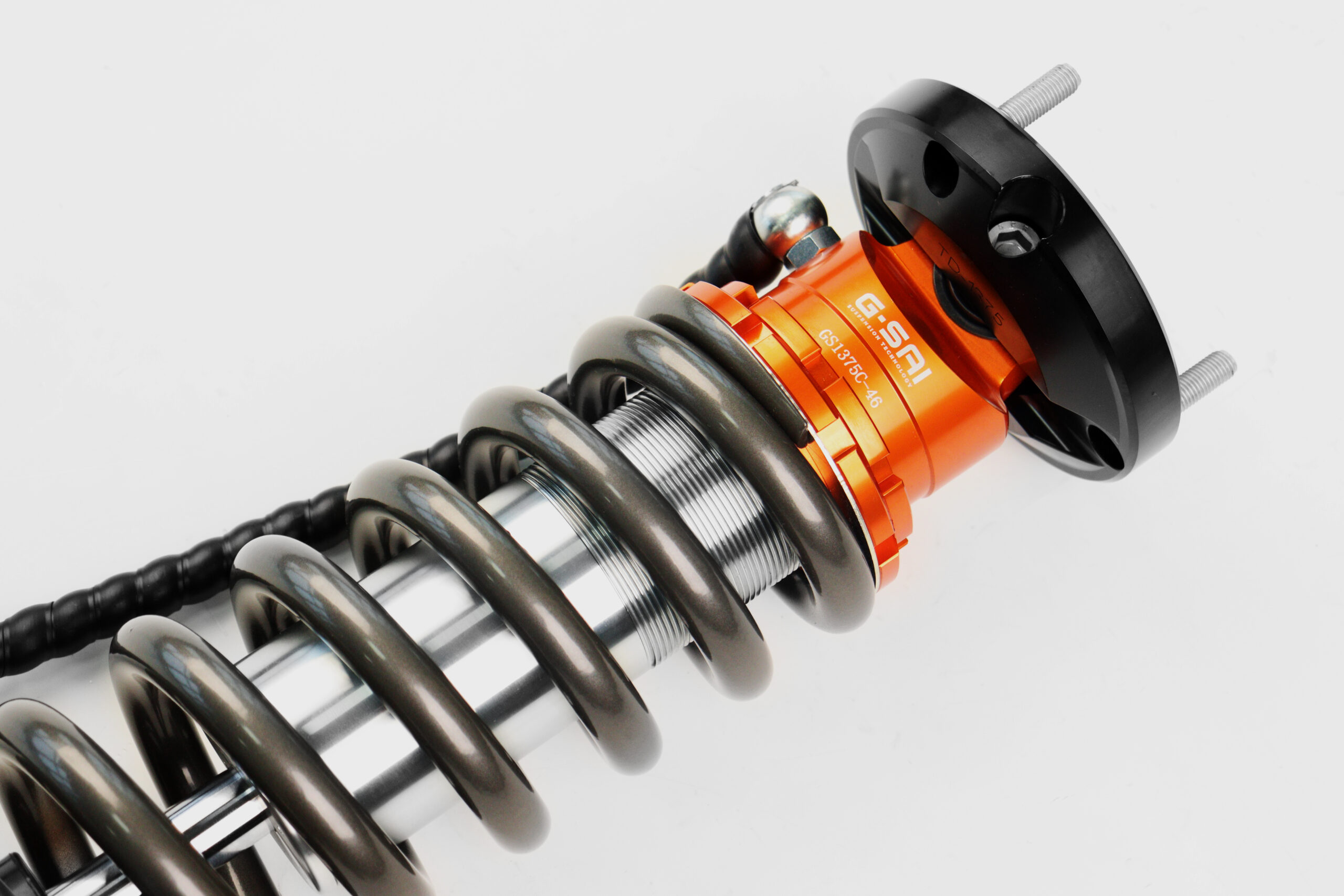
What Is a Shock Absorber and Why It Matters in Automotive Performance
A shock absorber is a critical component of a vehicle’s suspension system that controls the up-and-down movement of the wheels. It absorbs and dissipates kinetic energy from road impacts, ensuring smooth handling, better stability, and increased safety.
Key Functions of Shock Absorbers
| Function | Description |
|---|---|
| Damping Vibrations | Reduces oscillations from road irregularities |
| Stabilizing Vehicle Movement | Maintains tire contact with the road |
| Improving Ride Comfort | Minimizes jolts and vibrations in the cabin |
| Enhancing Control and Safety | Prevents excessive body roll during turns and heavy braking |
| Protecting Suspension System | Reduces wear on tires, springs, and other suspension components |
Importance in Off-Road and Racing Applications
In off-road racing and modified vehicle environments, shock absorbers must withstand extreme conditions such as:
- High-speed cornering and braking
- Sudden terrain changes (rocks, dunes, water crossings)
- Continuous exposure to heat, mud, and debris
For companies manufacturing or distributing high-performance vehicle parts, understanding shock absorber performance is critical. It helps in product development, customer support, and marketing to racing teams, auto parts wholesalers, and 4×4 upgrade shops.
Types of Shock Absorbers for B2B Buyers
| Type | Best For | Performance Level |
|---|---|---|
| Monotube Shock | Racing cars, high-performance vehicles | High |
| Twin-tube Shock | Daily driving, light off-road | Medium |
| Gas-charged Shock | Heavy-duty trucks, off-road vehicles | High |
| Adjustable Coilover | Custom tuning for modified vehicles | Very High |
| Hydraulic Shock | Classic cars, standard road use | Medium |
For wholesalers and OEM buyers looking to stock premium parts, focusing on adjustable, gas-charged, or racing-ready shock absorbers can yield better margins and customer satisfaction.
Common Symptoms of a Faulty Shock Absorber in Off-Road and Racing Vehicles
Identifying a faulty shock absorber early is crucial for maintaining vehicle performance, especially in high-stakes environments like off-road racing or commercial fleets. Below are the most common symptoms indicating failure.
1. Excessive Bouncing or Nose Diving
- When the vehicle bounces multiple times after hitting a bump
- Front-end dips sharply during braking
- Rear squats during acceleration
This is a sign the shock absorber can no longer control the suspension’s rebound.
2. Uneven Tire Wear
- Cupping or scalloping on tire treads
- Worn-out inner or outer edges
Shock absorbers that fail to maintain wheel contact cause erratic tire movement, leading to premature and uneven tire wear, increasing operating costs for fleet operators or racing teams.
3. Fluid Leaks
- Oil or fluid visibly leaking on the shock body
- Grease buildup around the shock mount
Hydraulic shocks rely on fluid to dampen motion. Leaks reduce their effectiveness and signal imminent failure. For auto parts dealers, this is a key point when educating customers about inspections.
4. Poor Handling and Instability
- Swaying or body roll during cornering
- Drifting or instability in lane changes
- Difficulties in steering control
This is especially dangerous in high-speed racing or off-road environments, where stability is vital for rider safety and performance.
5. Clunking or Rattling Noise
- Noises when driving over bumps
- Loose shock mounts or broken components
Metal-on-metal rattling can indicate that internal parts have broken loose. Technicians and garages should be trained to identify these sounds during diagnostics.
How Faulty Shock Absorbers Impact Vehicle Safety and Handling
A deteriorated shock absorber compromises not just comfort but critical safety systems. Below is a breakdown of how these failures impact various aspects of driving and business operations.
Safety and Performance Risks
| Impact Area | Consequence |
|---|---|
| Braking Distance | Increases stopping distance by 20%-30% |
| Tire Grip | Reduced contact with the road, leading to skidding |
| ABS & ESC Effectiveness | Advanced driver aids malfunction due to inconsistent wheel pressure |
| Driver Fatigue | Increased cabin vibration and road noise |
| Off-Road Capability | Reduced articulation and ground contact on rugged terrain |
Fleet and Business Implications
For B2B customers such as logistics fleets, off-road racing teams, or vehicle modifiers, faulty shocks lead to:
- Increased downtime
- Higher maintenance costs
- Customer dissatisfaction
- Safety liabilities
Investing in reliable, high-performance shock absorbers significantly reduces these risks and enhances brand reputation.
G·SAI Shock Absorbers: A Trusted B2B Solution
G·SAI offers a wide range of custom shock absorbers engineered specifically for high-demand use cases such as:
- Off-road racing
- Modified SUVs and trucks
- Recreational vehicles (RVs)
With over 17 years of R&D expertise led by Chief Engineer Cai Xianyun, G·SAI products are designed for maximum precision, durability, and adaptability. Many of their shock absorbers are tested in real-world racing conditions to ensure reliability.
For businesses looking to source or distribute premium shock absorbers, visit the G·SAI product catalog for detailed specifications and B2B options.
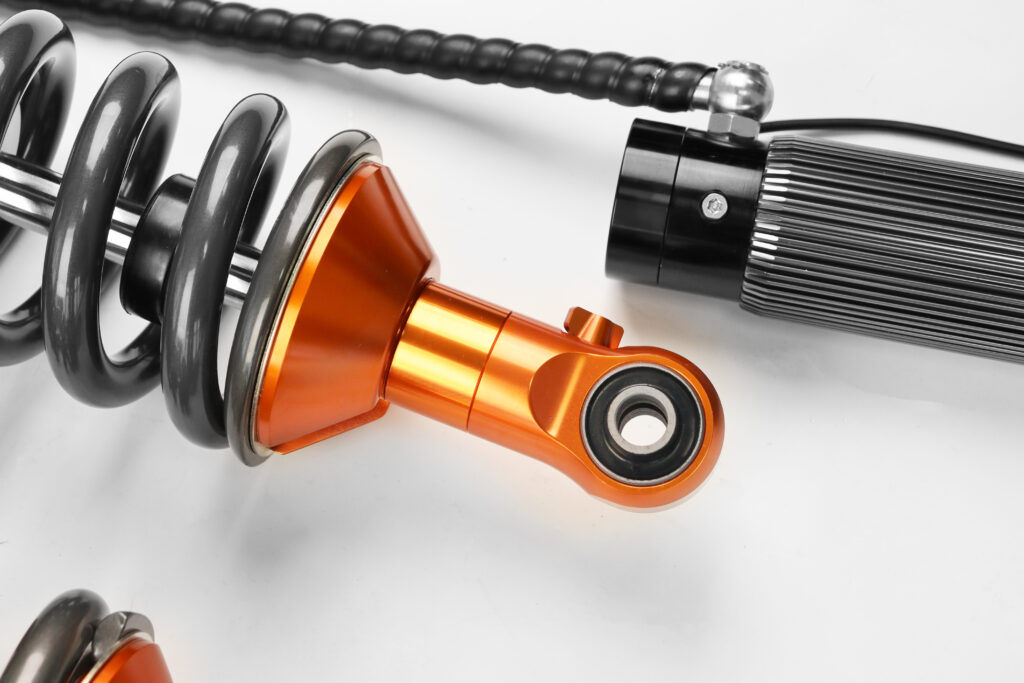
Diagnosing Shock Absorber Problems: Tools and Techniques for Auto Technicians
For workshops, parts suppliers, and performance vehicle tuners, accurate diagnosis of shock absorber issues is essential. This ensures not only proper repair but also helps in recommending the correct replacement parts to customers. Below we break down professional tools and techniques used by technicians to diagnose faulty shocks.
Visual Inspection Techniques
A basic yet effective first step in identifying shock absorber failure is a thorough visual check. Here’s what to look for:
- Fluid leakage around the shaft or cylinder
- Dents or damage to the shock body
- Corrosion or rust, especially near mounts
- Cracks in mounting bushings or brackets
- Uneven squat on either side of the vehicle
🛠 Tip for B2B Technicians: Always inspect in pairs (both front or both rear) and recommend dual replacements, which provide consistent performance and reduce future complaints.
Bounce Test for Initial Assessment
This is a quick test commonly used by service centers:
- Push down firmly on the vehicle’s bumper.
- Release quickly.
- Watch how many times the vehicle bounces.
Diagnosis Table
| Observation | Condition | Recommendation |
|---|---|---|
| Bounces 1-2 times | Normal shock absorber | No action needed |
| Bounces > 3 times | Worn or failing shock | Recommend shock replacement |
| Continuous oscillation | Severely damaged shock | Immediate replacement required |
Advanced Tools for Professional Diagnosis
For B2B repair shops and automotive brands, using advanced tools helps in upselling higher-margin shock absorber solutions and improving service accuracy.
Recommended Diagnostic Tools
| Tool | Use Case | Benefit |
|---|---|---|
| Shock Absorber Tester | Measures force and response under load | Precise performance measurement |
| Suspension Analyzer Machine | Full vibration and damping analysis | Detects hidden internal damage |
| Thermal Imaging Camera | Identifies heat inconsistencies post-drive | Locates internal friction issues |
| OBD-II Scanner | Reads suspension system codes (in newer cars) | Integrated diagnostics for smart systems |
📈 Selling Point for Auto Businesses:
Use these diagnostics as a value-added service for your wholesale customers. Offer them training or bundled diagnostics + parts deals to increase customer retention.
Shock Absorbers vs. Struts: Understanding the Differences and Failure Signs
Many customers confuse shock absorbers with struts. As a supplier or distributor, educating your clients about the difference ensures better product recommendations and builds trust.
Key Differences Between Shock Absorbers and Struts
| Feature | Shock Absorbers | Struts |
|---|---|---|
| Function | Dampen suspension movement | Structural + damping component |
| Support Load | No | Yes |
| Location | Typically rear or non-load-bearing front | Mostly front suspension |
| Replacement Cost | Lower | Higher |
| Complexity | Simple component | Includes coil spring and mount |
Shocks are purely for controlling motion, while struts act as structural components and include additional parts such as coil springs and mounts.
Failure Symptoms Comparison
| Symptom | Shock Absorber Failure | Strut Failure |
|---|---|---|
| Excessive bouncing | ✅ | ✅ |
| Nose diving under braking | ✅ | ✅ |
| Clunking noise | ✅ | ✅ (usually louder) |
| Vehicle sagging | ❌ | ✅ (indicates spring failure) |
| Uneven ride height | ❌ | ✅ |
🛠 Pro Tip: When a strut fails, always recommend full strut replacement kits to your B2B clients to avoid further issues from partial replacements.
How to Choose Replacement Shock Absorbers for Off-Road and Racing Applications
For off-road racing teams, performance garages, and aftermarket suppliers, selecting the right shock absorber is a critical performance decision. The wrong match can lead to poor handling, damage, and even safety issues.
Key Selection Criteria for B2B Buyers
- Vehicle Type & Load
- Light-duty SUVs vs. heavy off-road trucks
- Racing buggies vs. RVs
- Terrain & Application
- Sand dunes, rocks, mud, snow, or tarmac
- Competitive vs. recreational use
- Adjustability
- Fixed rate vs. adjustable compression and rebound
- Remote reservoir features for heat control
- Material & Build Quality
- Billet aluminum vs. steel body
- Anti-rust coatings and heat-resistant seals
- Brand Reputation & Warranty
- Proven use in motorsport environments
- Long-term durability under extreme loads
Recommended Shock Types by Use Case
| Application Type | Recommended Shock Type | Notes |
|---|---|---|
| Off-road racing | Monotube or remote-reservoir coilovers | Superior heat dissipation, adjustability |
| Rock crawling | Long-travel twin-tube gas shocks | Allows maximum articulation |
| Overlanding RVs | Custom heavy-duty gas shocks | Enhanced ride comfort and load support |
| Street performance | Adjustable sport shocks | Tunable for different ride preferences |
| Modified 4×4 trucks | Coilover kits with lift options | Improves stance and off-road capability |
Why Choose G·SAI for Custom Shock Absorbers
G·SAI is the preferred choice for B2B clients needing customized, high-end shock absorbers. Whether you’re building a new off-road brand or supplying a racing team, G·SAI offers:
- Fully customizable shock absorber solutions
- In-house CNC, R&D, and testing facilities
- One-on-one engineering support for OEM and private label needs
Our products are engineered with extreme performance in mind, backed by years of field-tested reliability. Learn more about our capabilities at our About Us page.
📦 For bulk orders or private labeling inquiries, connect with our team through our Contact Us page.
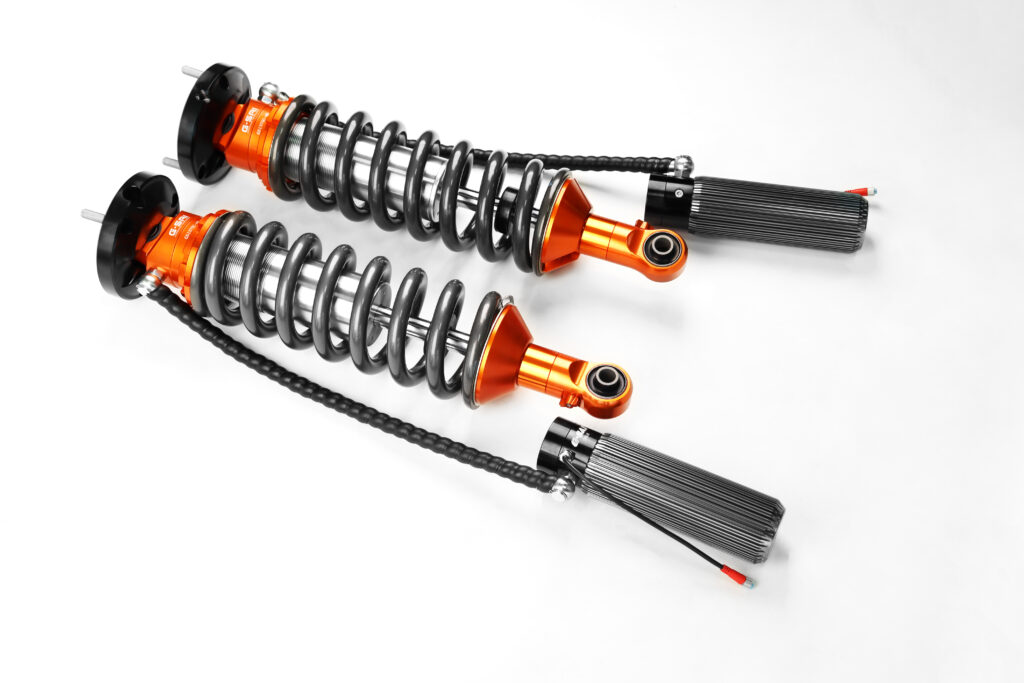
Top 5 Shock Absorber Manufacturers for OEM & Wholesale in 2025
For automotive brands, off-road racing teams, and aftermarket parts distributors, selecting a reliable shock absorber manufacturer is crucial. The right supplier ensures consistent quality, competitive pricing, and the ability to support bulk orders and private labeling. Below are the top global manufacturers to consider in 2025, based on performance, customization capabilities, and wholesale support.
1. G·SAI (China) – Precision Engineering for Off-Road and Custom Builds
G·SAI is the premier Chinese manufacturer for high-end off-road and racing shock absorbers, offering full OEM and custom development services. With a strong focus on durability and adaptability, G·SAI serves B2B clients ranging from racing teams to vehicle upfitters and RV manufacturers.
G·SAI Highlights:
- 17+ years of experience in racing shock absorber R&D
- Advanced CNC machining and assembly facilities
- Custom tuning for various models, terrains, and performance levels
- One-on-one engineering support for private label brands
- Proven reliability in competitive racing environments
🔗 Explore their shock absorber range on the G·SAI Product Page
| Category | Details |
|---|---|
| Minimum Order Volume | Moderate (ideal for startups and scaling brands) |
| Customization | Full tuning and branding options available |
| Industries Served | Off-road, racing, RV, aftermarket |
| Location | China |
G·SAI is the only Chinese brand we recommend for custom shock absorbers due to their unmatched performance in challenging environments and superior client support.
2. Bilstein (Germany) – OEM-Trusted Performance
Bilstein is a globally recognized name in the suspension industry, supplying OEM components to high-end automotive manufacturers such as Mercedes-Benz, Porsche, and BMW.
Why B2B Buyers Choose Bilstein:
- High-quality monotube and twin-tube shock absorbers
- TUV-certified manufacturing
- Strong brand equity in OE and aftermarket sectors
- Ideal for luxury, performance, and European vehicle markets
| Category | Details |
|---|---|
| MOQ | Medium to high |
| Customization | Limited for private labels |
| Industries Served | OEM, European aftermarket |
| Headquarters | Germany |
3. Fox Racing Shox (USA) – Off-Road and Powersports Focus
Fox Racing Shox is a leader in high-performance suspension systems for off-road vehicles, racing bikes, and UTVs. Known for cutting-edge innovation and durability, Fox is a go-to for extreme motorsport applications.
Key Advantages:
- Industry-leading remote reservoir technology
- Designed for desert racing, rock crawling, and UTVs
- High resale value among off-road enthusiasts
| Category | Details |
|---|---|
| MOQ | High (best for large distributors) |
| Customization | Limited |
| Industries Served | Off-road, racing, powersports |
| Origin | USA |
4. KYB Corporation (Japan) – Mass Market and OEM Strength
KYB is one of the largest shock absorber manufacturers in the world, supplying to major automakers and offering a wide aftermarket lineup.
Why KYB Appeals to Wholesalers:
- Large-scale production capability
- Competitive pricing for bulk orders
- Broad product range including struts, shocks, and coilovers
| Category | Details |
|---|---|
| MOQ | Low to medium |
| Customization | Minimal |
| Industries Served | OEM, mass-market aftermarket |
| HQ | Japan |
5. King Shocks (USA) – Custom Racing & Off-Road Suspension
King Shocks specializes in custom-built shock absorbers for the racing and off-road community. Their products are widely used in Baja 1000 and similar endurance races.
Why Choose King Shocks:
- Hand-built shocks for specific racing applications
- Remote reservoirs and multi-stage valving
- Ideal for performance tuning shops and elite racing teams
| Category | Details |
|---|---|
| MOQ | High |
| Customization | Full custom systems available |
| Industries Served | Professional racing, off-road |
| HQ | USA |
🛠 Pro Tip for Distributors:
Choose your supplier based on your niche. For high-volume mass-market sales – KYB or Bilstein may suit your needs. But for extreme performance, off-road customization, or private label development, G·SAI is unmatched in flexibility and technical support.
🔗 Learn how to become a dealer or distributor for G·SAI via the G·SAI Dealer Network
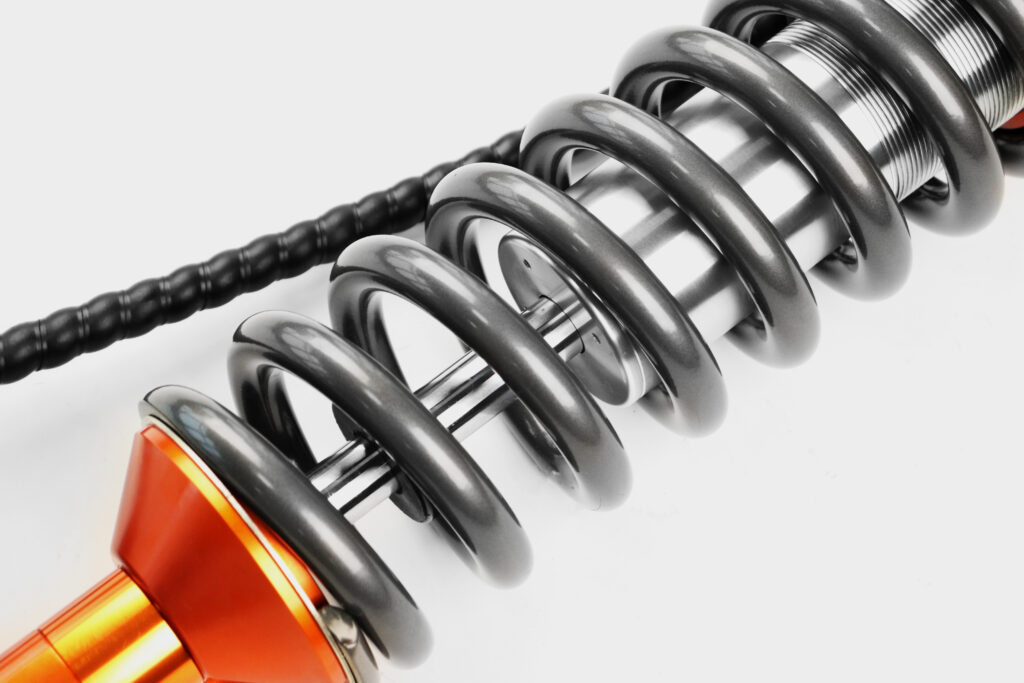
FAQ: Faulty Shock Absorbers, Repairs, and Sourcing for Auto Businesses
Here are the most frequently asked B2B questions related to faulty shock absorbers and the supply chain for replacement parts:
Q1: How often should shock absorbers be replaced in off-road vehicles?
Answer:
In extreme off-road or racing conditions, it’s recommended to inspect and potentially replace shocks every 30,000 to 50,000 km, or after every major event. For standard on-road vehicles, replacements are typically needed every 80,000 to 100,000 km.
Q2: Can faulty shock absorbers damage other parts of the vehicle?
Answer:
Yes. Failing shocks can result in:
- Excessive tire wear
- Broken suspension components
- Steering misalignment
- Increased stress on wheel bearings and axles
Q3: How can I tell if a shock absorber supplier is reliable for OEM or wholesale?
Answer:
Look for the following:
- In-house R&D and testing facilities
- Customization capabilities
- ISO or industry certifications
- Transparent MOQ and lead times
- Proven product performance (e.g., in racing)
G·SAI meets all these criteria and is trusted by B2B buyers worldwide. Learn more on the G·SAI About Us Page
Q4: Do I need to change all four shock absorbers at once?
Answer:
It’s highly recommended to replace shocks in matching pairs (front or rear) at a minimum. For optimal performance and safety, changing all four is best, especially in performance or off-road settings.
Q5: Can G·SAI produce private-label shock absorbers?
Answer:
Absolutely. G·SAI offers OEM and private-label production with full customization, including branding, damping profiles, and vehicle-specific tuning. Their factory supports rapid prototyping and scalable mass production.
🔗 Interested in sourcing custom shocks? Contact G·SAI Today
Final Thoughts: Turn Faulty Shock Diagnosis into a Business Opportunity
For auto parts wholesalers, off-road vehicle brands, and racing teams, understanding the symptoms of faulty shock absorbers is more than just technical knowledge—it’s a gateway to smarter sourcing, better customer service, and higher conversion rates.
By partnering with a reliable shock absorber manufacturer like G·SAI, your business gains access to:
- Custom-engineered products for any terrain or use case
- Competitive bulk pricing and private labeling opportunities
- Technical support from a team with decades of racing experience
💼 Ready to grow your automotive parts business with better shock absorber solutions?
Visit the G·SAI Official Website to explore products, dealer opportunities, and technical resources.
Let your customers drive with confidence—powered by precision shock technology from G·SAI.
Additional FAQs About Identifying a Faulty Shock Absorber (B2B)
- Q: Which symptom most reliably indicates a faulty shock absorber during a road test?
A: Repeated oscillations after a single bump (more than 2 cycles) combined with increased stopping distance. Verify with tire cupping and visual leak checks. - Q: Can wheel/tire upgrades mask or mimic faulty shock symptoms?
A: Yes. Heavy LT tires and larger diameters add sidewall springing, increasing bounce and brake dive. If damping isn’t re-valved, symptoms resemble worn shocks. - Q: How do heat and fade present as symptoms in off-road or racing use?
A: Progressive loss of control late in a stage, harsher impacts, and longer rebound return. Measure with reservoir/shaft temperature and compare hot vs. cold force–velocity data. - Q: Are clunks always a faulty shock or could it be mounts/bushings?
A: Clunks often trace to worn bushings or loose mounts. Inspect eyelets, sleeves, and top mounts; replace in pairs and torque to spec under ride height to avoid repeat noise. - Q: What symptom thresholds should fleets use to trigger replacement?
A: Any fluid leak, tire scalloping, >1 extra bounce, or vertical acceleration RMS rising >15% on a fixed route. Use these as objective triggers in maintenance SOPs.
2025 Industry Trends: Faster, Data-Driven Diagnosis of Faulty Shock Absorbers
- Telematics-enabled diagnostics: Vertical acceleration and ABS/ESC event rates flag failing shocks before drivers report symptoms.
- Hot-dyno normalization: Brands publish hot (100–130°C) force–velocity curves so technicians can link fade symptoms to objective data.
- EV weight impact: Heavier curb mass raises baseline rebound needs; inadequate dampers show earlier tire cupping and brake dive.
- Corrosion-aware hardware: Zn–Ni/e-coat specs reduce seized mounts that mask fault symptoms and complicate replacements.
- QR traceability: Batch-level dyno plots, torque specs, and setup guides reduce misdiagnosis and comebacks.
Symptom and Diagnosis Adoption Snapshot (2023–2025)
| Metric | 2023 | 2024 | 2025 (est.) | Notes/Source |
|---|---|---|---|---|
| Shops using accelerometer/telematics to flag shock faults | 16% | 23% | 34% | Telematics provider and installer surveys |
| Aftermarket shocks with hot/cold dyno data for diagnosis | 24% | 32% | 46% | Catalog audits; brand QA |
| Fleets tracking vertical accel RMS as maintenance KPI | 12% | 19% | 29% | Fleet maintenance reports |
| Snowbelt service orders specifying ≥720 h ASTM B117 hardware | 35% | 43% | 56% | Supplier specs; ASTM B117 |
| Dealers using QR-linked setup/torque data at install | 20% | 28% | 41% | Private-label initiatives |
References: SEMA Market Research (https://www.sema.org/research), SAE Technical Papers (https://www.sae.org/), ASTM Standards (https://www.astm.org/), Geotab (https://www.geotab.com/), Racecar Engineering (https://www.racecar-engineering.com/)
Latest Research Cases
Case Study 1: Telematics Flags Faulty Shock Absorbers Before Driver Complaints (2025)
Background: A last-mile fleet reported late detections of ride issues, leading to tire cupping and downtime.
Solution: Enabled vertical acceleration and ABS event monitoring; set thresholds to auto-create work orders; trained techs to confirm with bounce tests and leak inspections.
Results: Shock-related downtime −26%; tire irregular wear claims −22%; average detection occurred 1,200 km earlier than driver-reported cases.
Case Study 2: Hot-Dyno Validation Reduces Misdiagnosed “Noisy Shock” Returns (2024)
Background: Performance shop network saw high returns for clunking after off-road installs.
Solution: Implemented hot/cold dyno checks and mandatory bushing/mount inspections with torque under ride height; added QR-linked install SOPs.
Results: Comebacks for noise −37%; true internal shock failure rate clarified at 1.8% vs. prior 4.1% presumed; customer NPS +15 points.
Expert Opinions
- Dr. Thomas D. Gillespie, Vehicle Dynamics Author: “Consistent, temperature-validated damping data is essential to separate true damper failure from setup or bushing issues.”
- Stephanie Brinley, Principal Analyst, S&P Global Mobility: “Heavier electrified platforms amplify symptoms—brake dive and tire cupping show sooner when shocks are under-specified.”
- Dave Polke, ASE Master/L1 Technician and Trainer: “Torque suspension hardware at ride height and replace bushings with shocks. Most ‘bad shock’ noises are mounting errors, not valving failures.”
Practical Tools and Resources
- SAE Mobilus (shock absorber diagnostics, damping fundamentals): https://www.sae.org/
- SEMA Market Research (aftermarket and installer trends): https://www.sema.org/research
- Racecar Engineering (interpreting shock dyno data, thermal fade): https://www.racecar-engineering.com/
- Geotab (telematics for vertical acceleration/ABS event tracking): https://www.geotab.com/
- Hunter Engineering (alignment and ride height procedures): https://www.hunter.com/
- ASTM B117 (corrosion), D445/D2270 (viscosity/VI): https://www.astm.org/
- Benchmarking catalogs: https://www.ridefox.com/, https://www.bilstein.com/, https://www.kingshockstech.com/
Last updated: 2025-10-09
Changelog: Added 5 B2B FAQs on faulty shock symptoms; 2025 trend table with diagnostic adoption; two case studies (telematics, hot-dyno validation); expert viewpoints; practical resources with authoritative links
Next review date & triggers: 2026-03-31 or earlier if OEM/SAE release new hot-dyno diagnostic standards, telematics KPIs for shock health evolve, or fleet data shows >15% shift in symptom-driven downtime