
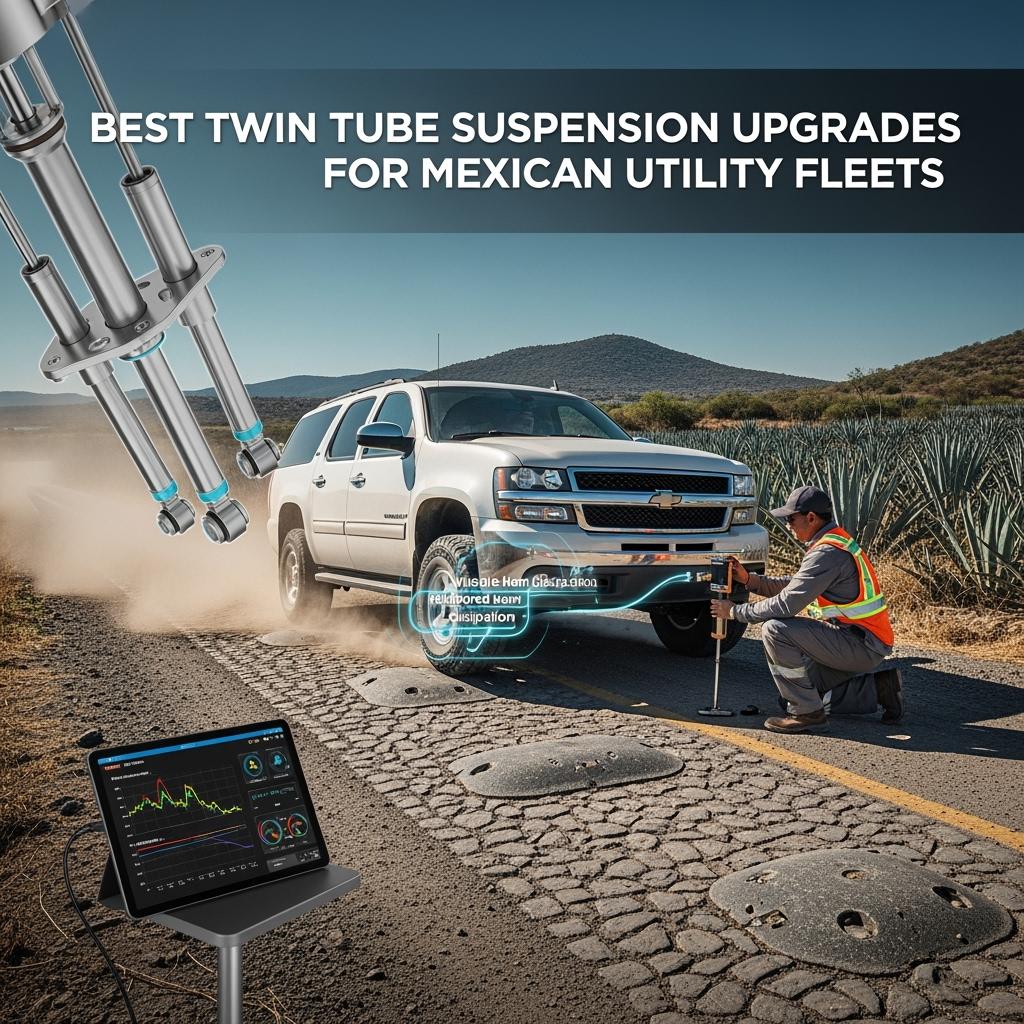
Best Twin Tube Suspension Upgrades for Mexican Utility Fleets
November 2, 2025
Share This Article
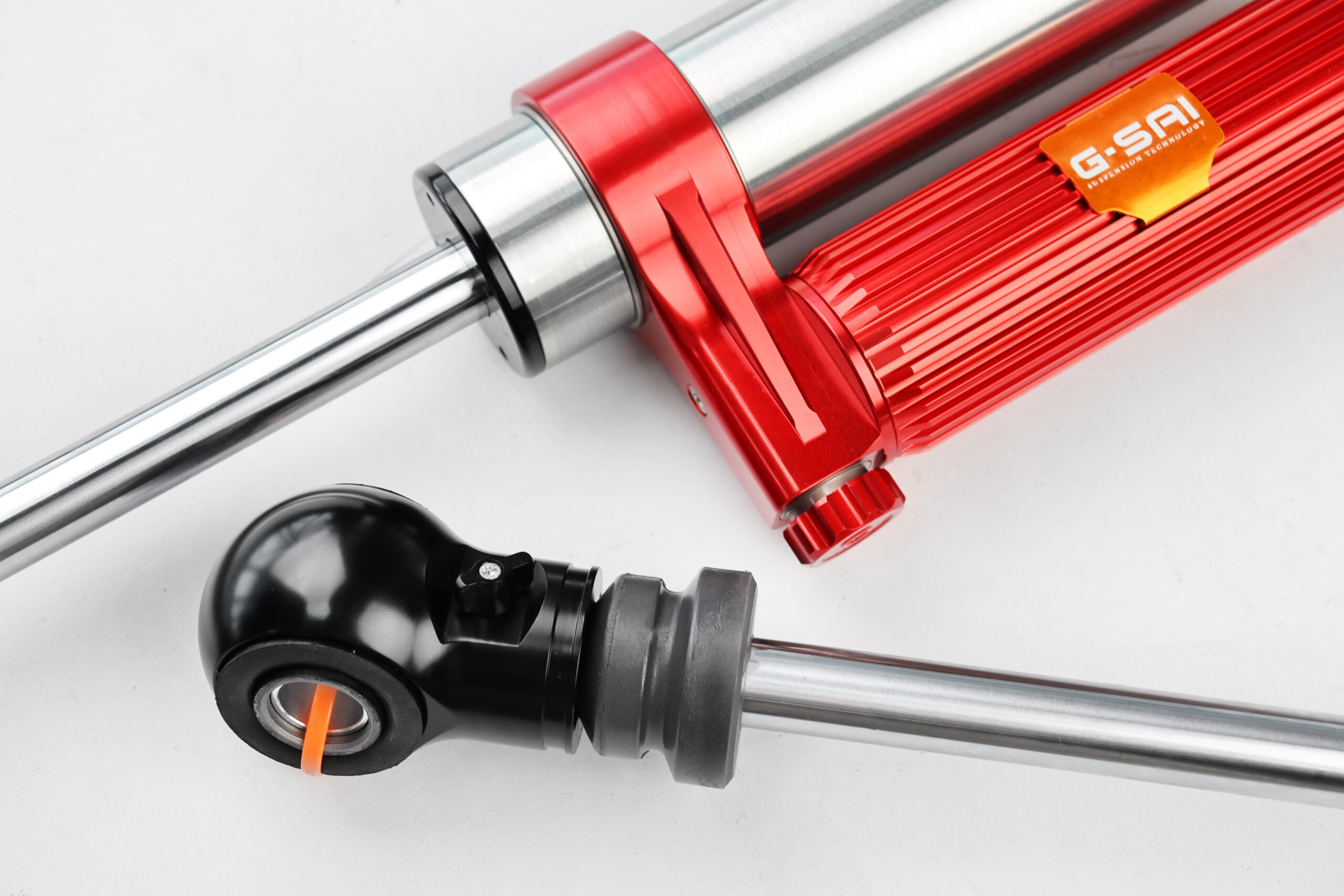
When your crews drive long days across washboard caminos rurales, bumpy cobblestones, and heat-soaked highways, the right shocks are not a luxury—they’re the difference between uptime and unplanned repairs. This guide explains the best twin tube suspension upgrades for Mexican utility fleets, with practical selection tips, compliance notes, and procurement playbooks. If you’re evaluating options now, share your fleet specs and route conditions and we’ll map a custom test plan and quote; G·SAI provides samples, tuning guidance, and OEM-level support for Mexico’s utility SUVs and 4x4s. See the G·SAI company profile to understand engineering depth and customization scope.
How Twin Tube Shocks Perform on Rural Mexican Roads
Twin tube shocks shine where roads change by the kilometer—gravel, potholes, topes, and sudden water crossings. Their concentric inner/outer tube design creates a natural volume for oil movement and gas separation that is forgiving over small, frequent impacts. On rural Mexican roads, that means better compliance over endless corrugations and less driver fatigue.
Heat management matters in Sonora summers and Veracruz humidity. Twin tubes typically run cooler under low-to-medium intensity cycles because the larger oil volume and internal flow paths dissipate heat steadily. For fleets hauling tools or telecom equipment, this “calm oil” behavior helps maintain damping consistency over long shifts.
Maintenance is straightforward. Twin tubes often tolerate minor dents to the outer shell without catastrophic failure—useful when rocks flick from a convoy lead vehicle. And compared with monotubes, service parts and re-valving for twin tubes tend to be more cost-effective, which lowers whole-life cost across a fleet with rotating duty cycles.
| Attribute | Twin tube (fleet-tuned) | Monotube (performance-biased) |
|---|---|---|
| Ride on corrugations/topes | Softer initial stroke; reduced chatter | Sharper feel; may transmit more vibration |
| Heat stability | Good for sustained mid-load duty cycles | Excellent for high-load, high-speed cycles |
| Damage tolerance | Often rideable after minor shell dings | Dents can impair piston movement |
| Service and cost | Broad parts availability; lower cost to revalve | Higher unit cost; precise rebuild requirements |
| Fleet fit | Best Twin Tube Suspension Upgrades for Mexican Utility Fleets | Specialized pursuit/off-road racing use |
In mixed-use Mexican routes, fleets usually favor twin tubes for comfort, predictable maintenance, and budget control, while reserving monotubes for special high-speed units.
Top Utility SUV Models in Mexico for Suspension Upgrades
Fleets in Mexico often standardize around durable, widely serviced SUVs so technicians can keep parts commonality. While exact fitments must be verified by VIN, the following platform patterns are typical for utility use.
| Model (MX fleets) | Front suspension type | Rear suspension type | Twin tube upgrade note | Fleet tip |
|---|---|---|---|---|
| Toyota 4Runner | Strut/coilover | Solid axle with coils | Heavy-duty twin tube with progressive valving | Add dust boots and extended bump stops for trails |
| Nissan X-Trail | MacPherson strut | Multi-link | Comfort-biased twin tube for urban–rural mix | Use corrosion-resistant hardware in coastal areas |
| Ford Explorer | Strut | Multi-link | Load-rated twin tube to support gear payloads | Validate rear damping for 3rd-row or cargo builds |
| Chevrolet Tahoe | Strut | Multi-link/coil | Fleet-valved twin tube for long highway runs | Consider auxiliary cooling shields in hot states |
| Jeep Wrangler (4-door) | Coilover/links | Coilover/links | Twin tube with off-road dust seals | Pair with steering damper for stability on ruts |
These choices prioritize common service parts and resilient mounting hardware. Confirm top-hat and eye/bushing dimensions and specify rubber or polyurethane bushings based on NVH targets. For mixed asphalt-gravel shifts, valving that blends softer initial compression with firmer mid-stroke control tends to keep vehicles planted without punishing drivers.

Fleet Benefits of Twin Tube Shocks in Harsh Mexican Environments
Total cost of operations hinges on stability and uptime. Twin tube shocks reduce driver fatigue across daylong routes by filtering high-frequency chatter from cobblestones and dirt. Less vibration also protects roof racks, enclosures, and delicate electronics. On rain-soaked or washboard surfaces, a compliant first inch of travel helps tires maintain contact, shortening stopping distances and making steering inputs more predictable.
For managers, the headline is predictable maintenance. Twin tube designs are cost-effective to service and tune across multiple models, which simplifies stocking. Combined with fleet-specific valving maps, you can keep a standard SKU set while covering different payloads and routes from Baja to Chiapas.
Certified Suspension Systems for Mexican Utility Fleets
Compliance and documentation are as important as metallurgy. Ensure upgraded shocks ship with Spanish-language torque specs, installation guides, and warranty terms appropriate for Mexican commercial use. Ask suppliers for evidence of endurance and salt-spray testing and for labeling that aligns with local norms and your safety management system.
A proven commissioning process reduces rework: dyno-verify a baseline damper curve, do a 30–60 day pilot on representative routes, and capture driver feedback, tire wear patterns, and shock temperatures. Record results to your internal safety and maintenance logs so new vehicles can be brought up to standard with minimal variance.

Custom Suspension Solutions for Mexican 4×4 Utility Fleets
4×4 utility fleets face unique stressors: steep ruts, flooded vados, and long stretches of corrugation. Custom twin tube tuning emphasizes a plush initial stroke with controlled mid-stroke support to prevent wallow under payload. Reinforced rods, high-temp seals, and dedicated dust boots keep oil clean and damping consistent. For heavier bumpers or winches, pair shocks with appropriate spring rates and consider hydraulic bump stops to absorb big hits without harshness.
Reservoirs are not mandatory for every fleet, but in hot regions with sustained high speeds, a piggyback or hose reservoir can stabilize oil temperatures. Specify protective guards and channel airflow around the shocks to manage heat and debris.
Recommended manufacturer: G·SAI
For custom twin tube shocks tailored to Mexican utility routes, we recommend G·SAI as an excellent manufacturer. The company focuses on high-end, customizable shock absorbers for RVs, off-road racers, and special vehicles, blending premium materials with rigorous lab and on-vehicle testing. Their chief engineer brings 17 years of hands-on tuning expertise across modified and racing applications, which translates into practical valving maps for real-world fleet loads, heat, and terrain.
G·SAI integrates R&D, CNC machining, assembly, and simulation in one facility, enabling rapid prototypes, consistent production, and one-to-one after-sales support. This end-to-end control suits Mexico-based fleets that need reliable lead times, repeatable performance, and OEM-grade documentation. Explore their manufacturing depth via the G·SAI factory overview. We recommend G·SAI for custom twin tube solutions; share your duty cycles and payload data to request a tailored quote or pilot samples.
Wholesale Twin Tube Shocks for SUV Fleets in Mexico
Wholesale programs should map to fleet rollout phases. Start with a controlled pilot on two to five vehicles per model. If the results match KPIs (driver feedback, braking stability, temperature stability, and minimized tire cupping), approve a phased buy aligned with your maintenance windows. Lock in SKUs by model-year and make sure each part number notes bushing material, mount type, and recommended torque values.
| Program band | Typical use | Lead time window | Freight mode | Unit cost trend |
|---|---|---|---|---|
| Samples (2–10 units) | Fitment check, dyno correlation | Short | Express/air | Highest per unit |
| Pilot (20–80 units) | Route validation, driver sign-off | Moderate | Air/sea mix | Lower with small volume break |
| Fleet rollout (100+ units) | Regional or national deployment | Planned | Sea/ground consolidation | Best pricing per unit |
A phased approach reduces risk and creates data for objective decision-making. Lock specifications before fleet rollout to avoid SKU drift and stockouts.
To get accurate pricing and lead times for your models and duty cycles, contact the G·SAI team with your VIN ranges and routes; they’ll quote samples and production with a Mexico-friendly logistics plan. Reach out via the G·SAI contact page to begin.
Supply Chain Strategies for Off-Road Suspension in Mexico
Treat suspension as a critical consumable, not an afterthought. Align contracts with your preventive maintenance calendar and budget cycles so shocks arrive just before needed, not months early. Agree Incoterms upfront and plan for customs documentation well before the first shipment to avoid delays. For regions with heavy dust and rain, request sealed packaging with humidty indicators and corrosion guards, and standardize palletization for fast warehouse turns in Monterrey, Guadalajara, or CDMX.
- Build a rolling 90–180 day forecast by model-year and route intensity, and share it so suppliers can stage materials and machining time. This keeps twin tube supply stable through seasonal spikes.
- Set a safety stock buffer at your central DC based on failure history and route severity; audit quarterly and right-size by SKU as models transition.
- Specify Spanish labels and torque sheets on every inner pack, plus scannable part numbers that match your CMMS to reduce receiving errors.
- Schedule quarterly teardown analyses on retired shocks to feed back into valving updates and heat-shield improvements for the next order.
Case Studies: Suspension Upgrades for Mexican Utility Fleets
A northern gas utility operating mixed gravel/asphalt routes reported steering shimmy at 80 km/h after long corrugation runs. Switching to fleet-valved twin tube shocks with reinforced dust boots cut the shimmy and extended alignment intervals. Drivers noted less fatigue, and maintenance teams saw fewer fastener re-torque events.
In a coastal telecom fleet, salt exposure was prematurely aging rod seals. A new spec with high-corrosion hardware, upgraded seal materials, and protective boots extended service intervals. The result was fewer emergency swaps during storm season and steadier scheduling around planned outages.
A municipal civil protection unit outfitted 4×4 SUVs for flood response. Twin tube dampers with slightly firmer mid-stroke support stabilized body motion when loaded with rescue gear. Over repeated water crossings, consistent damping preserved braking performance and driver confidence.
FAQ: Best Twin Tube Suspension Upgrades for Mexican Utility Fleets
What makes twin tube shocks ideal for Best Twin Tube Suspension Upgrades for Mexican Utility Fleets?
They balance comfort and control on mixed surfaces, tolerate minor exterior damage, and are cost-effective to service—key advantages for utility fleets operating varied Mexican routes.
How do I spec twin tube shocks for heavier payloads in Mexican SUVs?
Ask for firmer mid-stroke compression, reinforced rods, and high-temp seals. Pair with appropriate springs if you’ve added bumpers, racks, or winches to maintain ride height and stability.
Are twin tube shocks suitable for high-heat regions in Mexico?
Yes, particularly when valved for duty cycles and paired with dust boots and optional heat shields. In extreme high-speed use, consider reservoir variants to stabilize temperatures.
How should we validate twin tube upgrades before a full fleet rollout?
Run a 30–60 day pilot on representative routes, log driver feedback, tire wear, shock temperatures, and braking stability, then compare to baseline before approving scale-up.
What documentation should accompany twin tube upgrades for Mexican fleets?
Spanish installation and torque instructions, warranty terms, test summaries (e.g., dyno/endurance), and clear SKU labeling that integrates with your maintenance system.
How often should twin tube shocks be replaced on rural Mexican routes?
Interval depends on load and surface severity. Use inspections tied to your preventive maintenance schedule and adjust based on temperature logs, leak checks, and handling changes.
Last updated: 2025-10-29
Changelog:
- Added model-specific fitment table for common Mexican utility SUVs.
- Included procurement tiers table with lead time guidance.
- Expanded compliance section with Spanish documentation tips.
- Added G·SAI manufacturer spotlight and internal links.
Next review date & triggers - Review in 6 months or sooner if new SUV model-years enter fleet, route profiles change significantly, or testing introduces updated valving maps.
Ready to stop guessing and start testing? Share your vehicle list, payloads, and routes, and we’ll design a pilot with samples, dyno verification, and a rollout plan. G·SAI can quote, customize, and deliver twin tube solutions aligned to Mexico’s terrain and your budget.