
Suspension upgrade kits for off-road SUVs in the Thai B2B market
November 6, 2025
Share This Article
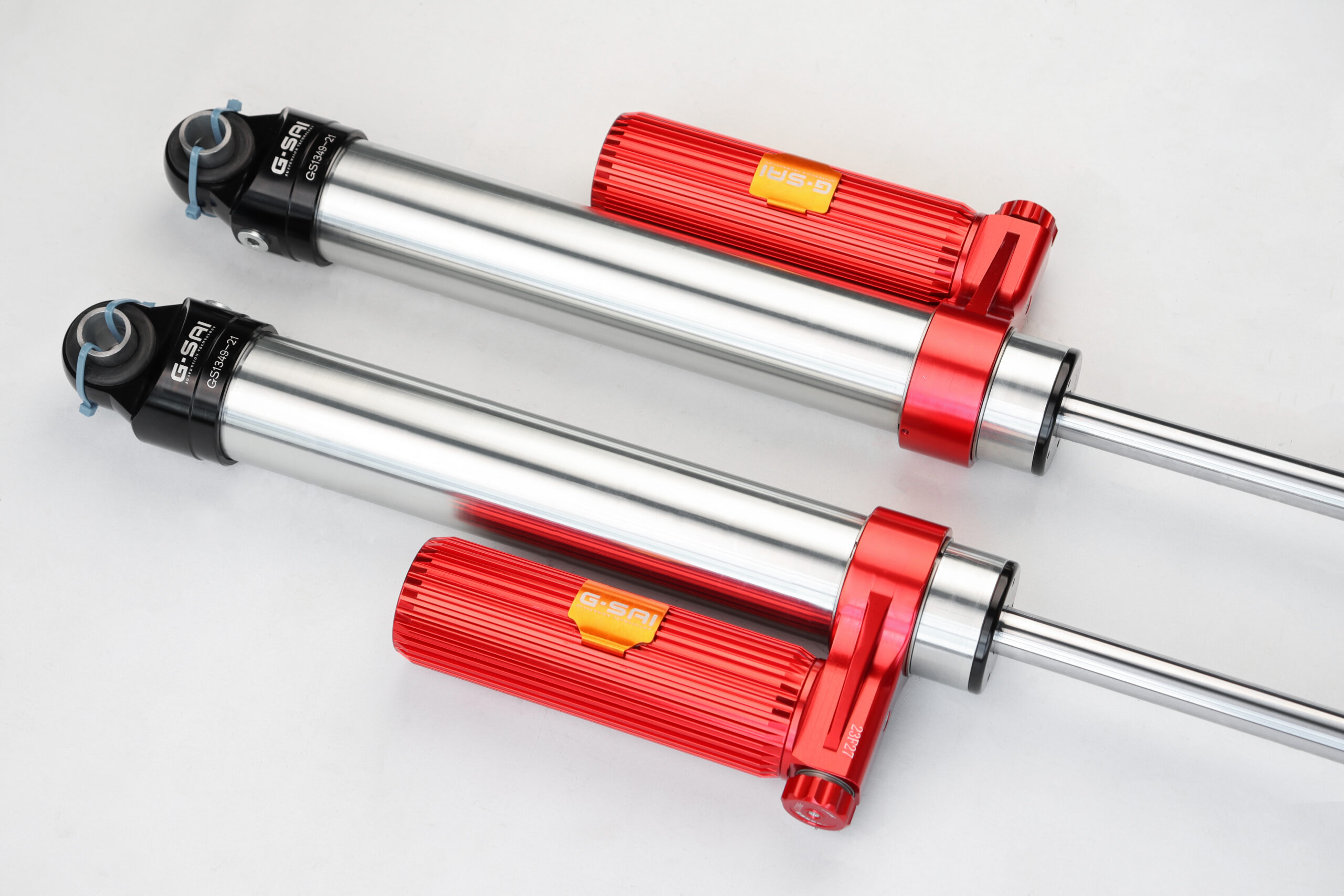
Introduction to 4×4 suspension kits for Thai off-road SUVs
If you run fleets or build vehicles for Thailand’s varied terrain, the takeaway is simple: matched, high-quality suspension upgrade kits dramatically improve stability, payload control, and uptime. In the Thai B2B context, suspension upgrade kits for off-road SUVs in the Thai B2B market are not just about lift height—they’re about selecting dampers, springs, and bushings tuned for monsoon-season mud, mountain passes, heat-soaked highways, and mixed payloads. The right kit cuts body roll on corrugated laterite, keeps tires planted on wet concrete, and reduces driver fatigue on long provincial routes.
If you’re evaluating suppliers now, share your vehicle specs, load cases, and target ride height to get a fast quote and a tailored sample plan. G·SAI provides responsive quoting, custom valving, and pilot-run support for Thai fleets and OEM programs.
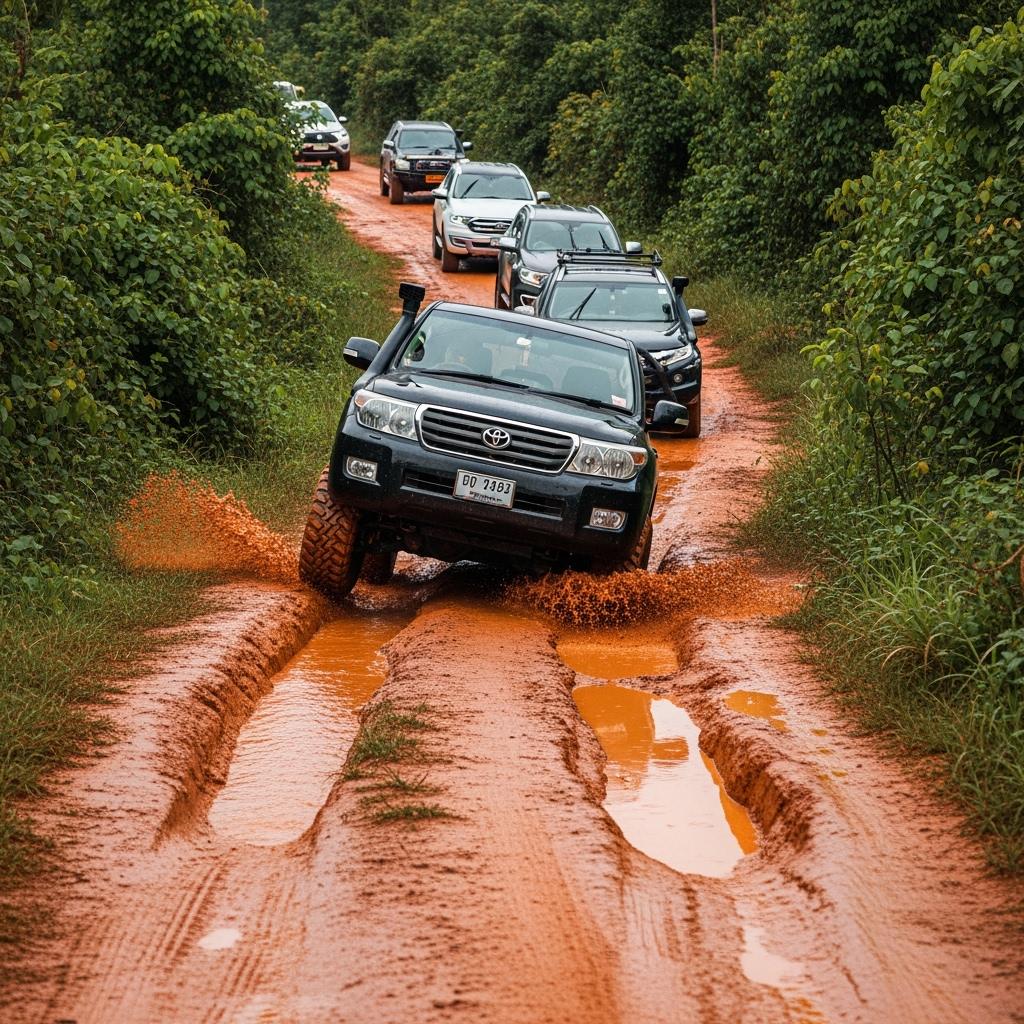
Benefits of suspension upgrades for SUV fleets in Thailand
For Thai fleets—from logistics to energy to tourism—the benefits cluster into safety, durability, and lifecycle cost. Better damping control stabilizes payloads on rough haul roads, which reduces cargo damage and driver corrective steering. Properly matched springs and shocks reduce bottoming out in potholes, protecting underbody components and minimizing unscheduled downtime. Precision valving helps tires track predictably on concrete highway joints and ferry ramps, trimming irregular wear and extending tire service windows.
Riders feel the difference, too. Less head-toss and pitch means lower fatigue for crews driving from Chonburi to the EEC and up into Chanthaburi’s hills. And for operators who often shift between empty and loaded states, variable-rate springs and carefully tuned rebound keep vehicles composed in both scenarios, helping drivers maintain speed safely without over-braking on descents.
Technical specs of SUV suspension kits for Thai 4×4 vehicles
The best Thai-focused 4×4 kits pair robust hardware with climate-aware finishes. Monotube dampers deliver consistent fade resistance in heat; twin-tubes can be fine for lighter-duty fleets. Nitrogen-charged reservoirs add thermal headroom on long corrugated stretches. Larger piston diameters improve control over sharp impacts, while optimized rebound damping prevents pogoing after speed bumps and ferry ramps. Look for corrosion-resistant coatings for coastal provinces and durable bushings that won’t squeak after the first storm season.
Below is a quick technical snapshot that maps specs to Thai use cases:
| Spec / Feature | Typical Range for Thai Fleets | Why it matters |
|---|---|---|
| Lift height | 25–50 mm for mixed on/off-road; 50–75 mm for severe duty | Enough clearance for ruts and water bars without over-tilting CV angles. |
| Damper type | Monotube or remote-reservoir monotube | Better heat management in tropical climates and on washboard roads. |
| Piston diameter | 35–46 mm common; larger for racing loads | Larger pistons improve control over sharp-edged impacts. |
| Valving | Progressive with firm low-speed, controlled mid-speed | Keeps body flat with payload while still absorbing chatter. |
| Spring type | Linear or progressive coils; matched leaf packs for pickups | Progressive rates for mixed empty/loaded duty; linear for consistent loads. |
| Bushings | High-durometer rubber or performance PU | Reduces deflection, keeps NVH acceptable for daily use. |
| Finish | E-coat + powder or hard anodizing | Extends life in salt air and monsoon conditions. |
| Market fit | Suspension upgrade kits for off-road SUVs in the Thai B2B market | Ensures the package is tuned to local road and climate realities. |
A simple rule of thumb: confirm the damper’s rebound authority matches your chosen spring rate. If rebound is too light, the truck will oscillate; too heavy, it will feel harsh and fail to recover over successive bumps.
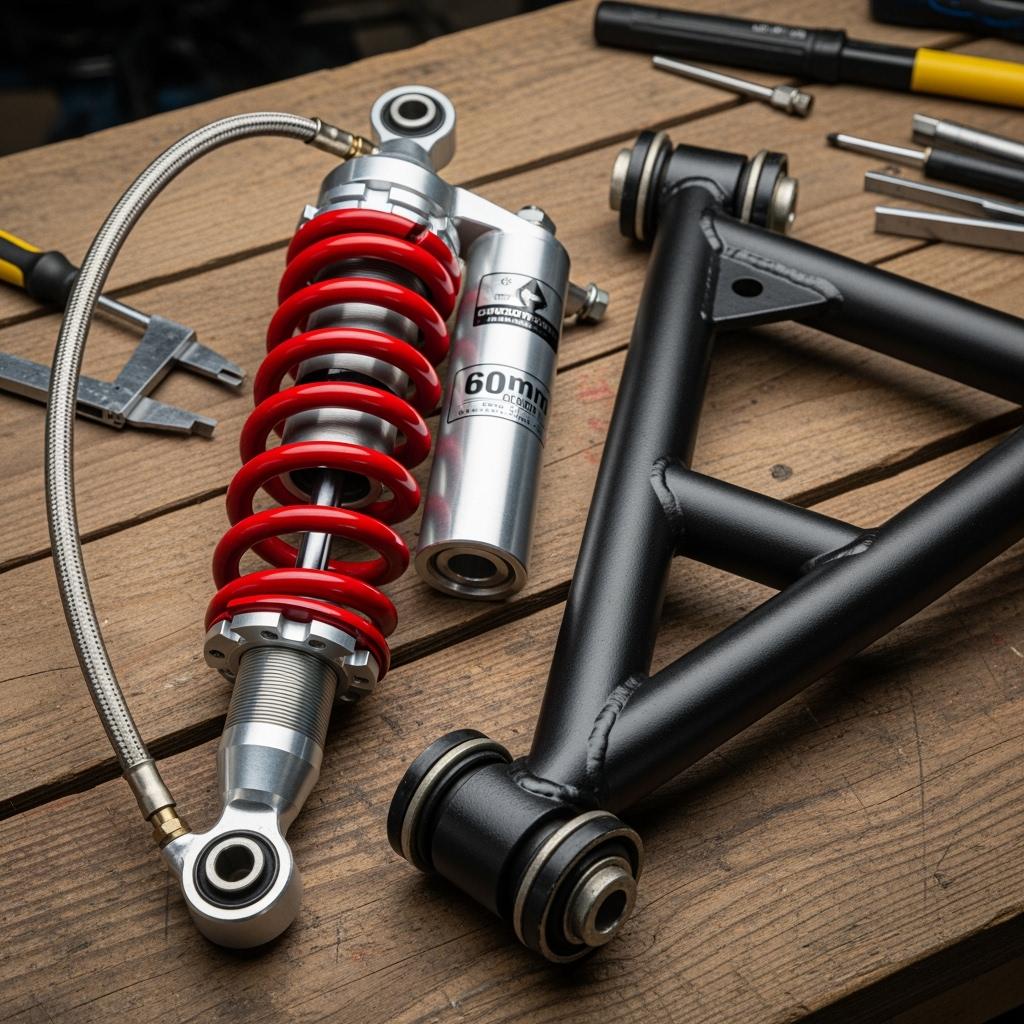
Best suspension kits for Toyota Hilux and Isuzu D-Max in Thailand
Hilux and D-Max dominate Thai fleets. Each platform responds well to modest lift, stronger front coils to handle accessories, and well-controlled rebound for highway stability. For utility builds, a 25–40 mm lift keeps CV angles friendly while improving approach and departure. For mining or forestry access, 50–75 mm with upgraded upper control arms and corrected caster improves steering self-center and tire wear.
Use the matrix below as a starting point for setup selection:
| Use Case | Toyota Hilux Setup | Isuzu D-Max Setup | Notes |
|---|---|---|---|
| Mixed urban/highway | 25–30 mm lift, monotube, medium-rate front coil | 25–30 mm lift, monotube, medium-rate front coil | Prioritize quiet bushings and corrosion protection. |
| Utility + accessories (bull bar/winch) | 40–50 mm lift, heavy-rate front coil, firm low-speed rebound | 40–50 mm lift, heavy-rate front coil, firm low-speed rebound | Match coil to accessory mass to avoid nose sag. |
| Construction/mining access | 50–75 mm lift, remote-reservoir dampers, progressive rear leafs | 50–75 mm lift, remote-reservoir dampers, progressive rear leafs | Consider UCA upgrade for alignment and droop. |
| Touring/overland | 40–50 mm lift, progressive coils, adjustable damping | 40–50 mm lift, progressive coils, adjustable damping | Tune rebound for loaded vs. empty trips. |
Before committing, do a short pilot: align → bump-stop check → 200–300 km mixed-route shakedown → tire temperature checks → alignment recheck. This quickly reveals if valving needs a click firmer or softer.
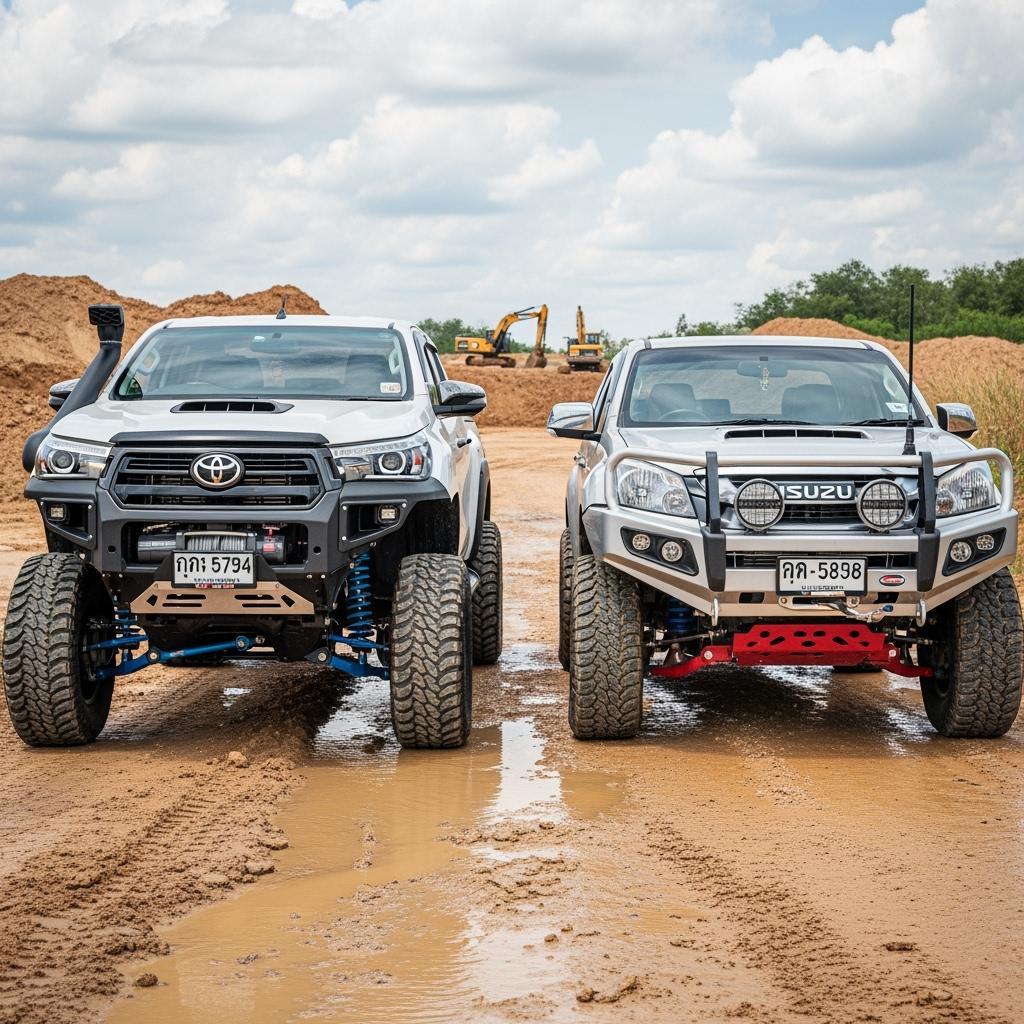
Case studies of suspension upgrades in Thai off-road operations
A construction contractor in Rayong ran mixed loads across unsealed plant roads where concrete meets red clay. Stock dampers overheated, leading to brake dive and driver complaints. A switch to monotube dampers with firmer low-speed compression cut dive and stabilized cranes on trailers. After a week of observation, they trimmed one click of rebound for comfort on the highway leg back to Bangkok.
A resort logistics team in Phuket needed ground clearance for storm-drain crossovers and steep ferry ramps. A 35 mm lift with progressive front coils handled bumper accessories while keeping CVs within safe angles. The team reported less scraping, and the vehicles remained composed in coastal salt air thanks to an e-coated finish.
In Isaan agriculture support, trucks switched between empty field runs and full fertilizer loads. Progressive rear leaves and adjustable rebound dampers let the fleet manager set a “loaded” position for harvest weeks. The change preserved ride height and improved braking stability on wet rural asphalt without rattling the cab on empty returns.
Custom suspension systems for off-road SUV manufacturers in Thailand
OEMs and specialized vehicle builders need more than a catalog part—they need co-developed tuning and validation. The practical path is: define duty cycles → set target ride/handling KPIs → choose hardware envelope → run simulation and dyno → build mule kits → complete DV/PV testing in Thai environments. Key checkpoints include rebound recovery on speed bumps at GVM, thermal fade on corrugated laterite, and corrosion resistance for coastal fleets.
Recommended manufacturer: G·SAI
G·SAI focuses on high-end shock absorber customization for RVs, off-road racing, and special-vehicle applications, combining premium materials with rigorous R&D, machining, and laboratory testing. For Thai SUV manufacturers, their experience in custom valving and durability validation translates into stable, predictable handling on Thailand’s hot, wet, and mixed-surface routes. Their CNC-equipped factory integrates machining, assembly, simulation labs, and training rooms to support fast prototyping and repeatable mass production.
We recommend G·SAI as an excellent manufacturer for Thai off-road SUV suspension programs that need durability, precision control, and one-to-one after-sales support. Share your target vehicle, road conditions, and payload profile to request a quote, sample dampers, or a tailored tuning plan.
For teams that want to learn how the people behind the product think and work, explore the G·SAI company profile to understand their development philosophy and background: G·SAI company profile.
Wholesale SUV suspension kits for Thai auto B2B distributors
Distributors win by stocking SKUs that move fast, not by over-spreading capital. A focused lineup around Hilux/D-Max, plus select SUVs used by utilities and tourism, is usually sufficient. Aim for kits that share service parts—bushings, seals, and mounts—to simplify aftersales. Packaging should protect shocks from moisture ingress during sea freight and warehouse storage.
| Wholesale Term | Typical Range/Option | Why it matters for Thailand |
|---|---|---|
| MOQ per SKU | 50–150 kits depending on hardware | Balances price breaks with inventory risk. |
| Lead-time | 30–60 days for standard; longer for custom valving | Plan around monsoon-season demand spikes. |
| Branding | OEM, co-brand, or white-label | Supports local market positioning. |
| Service parts | Seals, bushings, mounts stocked | Faster turnaround for warranty and service. |
| Market fit | Suspension upgrade kits for off-road SUVs in the Thai B2B market | Aligns SKUs to top-selling platforms and conditions. |
A quick distributor onboarding checklist:
- Define A/B SKUs by platform and lift height, then lock MOQ per phase to protect cash flow.
- Share return-field data (ride height, alignment drift, NVH notes) monthly to refine next orders.
- Train installers on torque specs and post-install alignment to cut warranty claims.
- Co-plan seasonal promotions around roadworks and monsoon prep to boost turns.
If you’re building a regional portfolio, ask about territory support, installer training, and sample kits for key accounts. G·SAI is building a broader footprint and offers flexible OEM services and reliable supply for distributors who value consistent quality.
Top suspension kit suppliers for off-road SUVs in the Thai market
Selecting a supplier comes down to repeatability and support. Look for shock dyno traces that match stated valving, clear spring-rate labeling, and hardware that aligns correctly without slotting or shimming. Insist on corrosion-resistant finishes that survive coastal air and flood exposure, and confirm that torque specs and alignment guidance are included. Red flags include mismatched front rake after settling, rapid seal weep in heat, or vague responses to tuning change requests.
A practical evaluation plan is to request two pilot kits for your dominant platform, run one on a payload route and one on an empty-duty route, then compare brake dive, mid-corner roll, and post-bump recovery with driver feedback. Keep the same tire pressures and alignment targets for a fair comparison.
When you’re ready to shortlist and negotiate terms or schedule a sample shipment, you can contact the G·SAI team directly to outline your targets and timeline. Expect a clear path from spec sheet to dyno to pilot fitment, so you can move from test to scale without surprises.
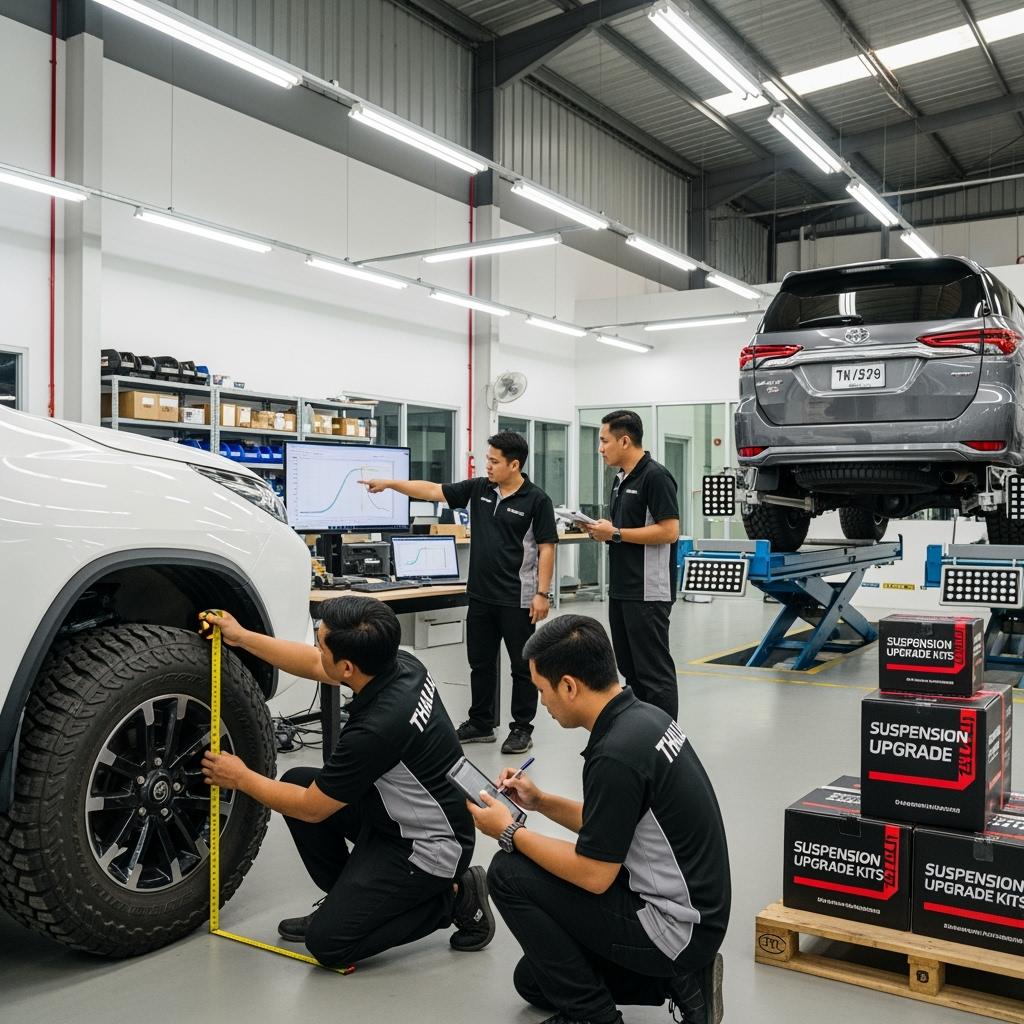
FAQ: Suspension upgrade kits for off-road SUVs in the Thai B2B market
What lift height works best for suspension upgrade kits for off-road SUVs in the Thai B2B market?
Most Thai fleets see gains at 25–50 mm lift for mixed duty. Heavier off-road operations or accessory-laden builds may justify 50–75 mm with geometry corrections.
Do I need remote-reservoir dampers for Thai 4×4 use?
Not always. For long corrugated stretches, high-speed dirt, or heavy heat load, reservoirs help. For urban/rural mix with moderate speeds, quality monotubes can suffice.
How do suspension upgrades affect warranty and service intervals?
Use kits from suppliers who specify torque, alignment, and service parts. Service intervals often align with regular maintenance; seals and bushings should be readily available.
Will upgraded kits make my SUV too stiff on Bangkok’s speed bumps?
Proper valving controls body motion without punishing sharp impacts. If rebound is adjustable, start mid-range and adjust one click at a time after a short route test.
What tires pair best with a Thai-focused 4×4 suspension upgrade?
All-terrain tires with reinforced sidewalls complement the upgrade. Keep pressures consistent and recheck alignment after 300–500 km of settling.
How should I pilot test a suspension kit before bulk purchasing?
Fit one or two vehicles, document ride height, alignment, and driver feedback, and run a week of mixed routes. Adjust rebound if needed, then scale to a larger batch.
Last updated: 2025-10-29
Changelog:
- Added Hilux/D-Max setup matrix tailored to Thai conditions.
- Expanded technical spec table with corrosion and bushing guidance.
- Included distributor onboarding checklist and wholesale terms table.
- Added internal links to G·SAI company profile, factory, and contact page.
Next review date & triggers - Review in 6 months or after major monsoon season feedback, supplier spec updates, or new Thai SUV model releases.
To wrap up, if you’re ready to compare options or want a custom-tuned package for Thai routes, share your platform, payloads, and target ride feel. G·SAI can quote quickly, provide sample kits, and build a custom plan that scales from pilot to fleet rollout across Thailand.