
Custom suspension systems for 4×4 vehicles in Russia’s rugged terrain
November 7, 2025
Share This Article
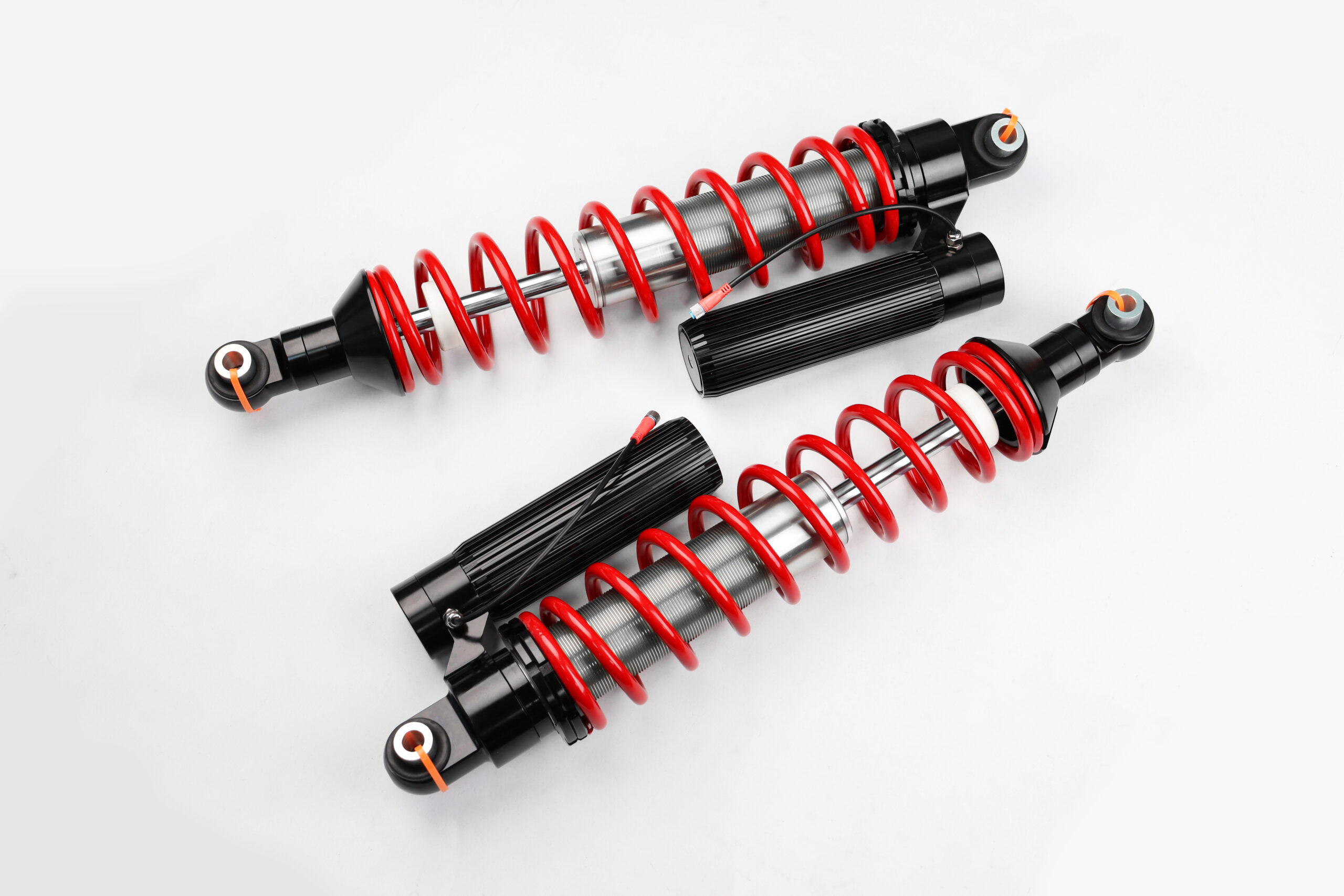
If your vehicles work where winter bites and roads disappear, the right suspension is not optional—it is uptime insurance. Custom suspension systems for 4×4 vehicles in Russia’s rugged terrain balance cold-resilient materials, precise damping, and compliance with regional standards so fleets and enthusiasts stay mobile, safe, and profitable. Share your vehicle model, load profile, and operating temperatures, and the G·SAI team can recommend a tailored package; if you’re planning a season change or new build, you can contact the G·SAI team to request a quote, a sample set, or a custom tuning plan.
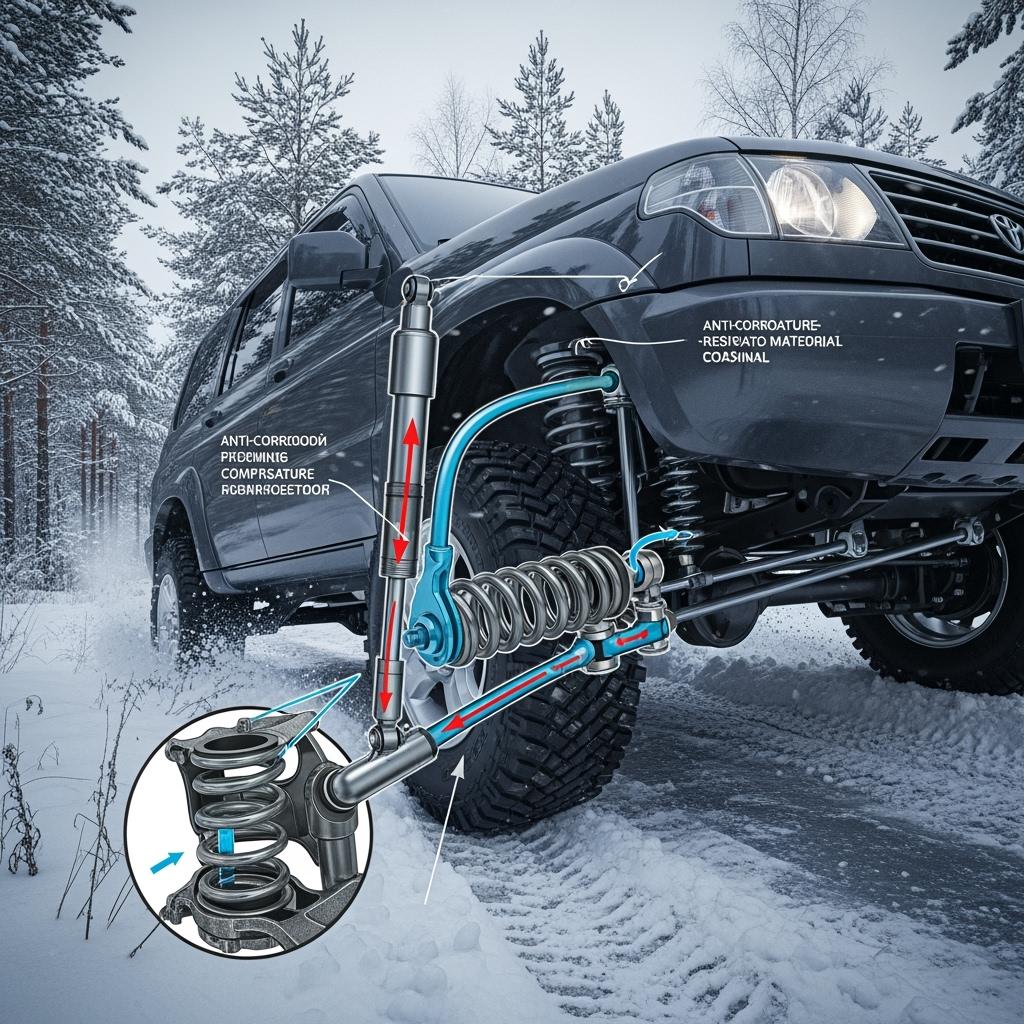
Off-road suspension solutions for Russian winter conditions
Russian winters amplify every weak link. Low temperatures thicken damper fluid, harden bushings, slow rebound, and expose corrosion. Snow loads and ice ruts introduce repeated high-frequency hits followed by deep compression events. Effective setups for Siberia or Karelia combine cold-stable hydraulic systems, corrosion-resistant hardware, seal designs that maintain flexibility below −40°C, and spring rates matched to payloads that vary with gear and recovery equipment.
The main design choice is temperature management inside the damper. Synthetic low-viscosity oils and larger nitrogen reservoirs keep damping consistent as mercury falls. Monotube shocks shed heat and react quickly, while remote reservoirs add oil volume and reduce cavitation during prolonged washboard. For mixed use, a digressive piston stack gives initial control on small chatter while preserving travel for sudden holes under snow.
| Winter challenge | Component focus | Recommended spec for Russia | Why it works |
|---|---|---|---|
| −30°C to −50°C starts | Shock fluid and seals | Low-vis PAO synthetic oil; fluorocarbon or low-temp elastomer seals | Maintains consistent damping and prevents seal shrinkage and leaks at extreme cold |
| Ice ruts and frozen corrugations | Piston/valving | Digressive piston with mid-speed bleed tuning | Controls high-frequency inputs without harshness and preserves grip |
| Snowpack corrosion | Hardware/coatings | Stainless fasteners; zinc-nickel or epoxy-coated bodies | Inhibits rust, eases service, preserves torque values over winter |
| Heavy winter loads | Springs | Progressive coils or HD leafs with helper springs | Maintains ride height and articulation with added cargo and recovery gear |
These specifications stabilize handling and simplify maintenance. A good rule of thumb: if you can cycle the suspension by hand at −20°C without sticky return, you’ve chosen the right fluid, seals, and valving.
GOST-certified suspension kits for 4×4 commercial vehicles
When your 4x4s carry crews, tools, or emergency payloads, local compliance matters as much as performance. GOST certification confirms that suspension kits meet applicable Russian standards for safety, durability, and labeling when supplied into public-sector or regulated industries. Most certification projects begin with document review, then laboratory testing of representative samples, and finally inspection of labeling and installation instructions in Russian.
| Certification element | Typical content | Responsibility | Practical note |
|---|---|---|---|
| Technical dossier | Drawings, materials list, maintenance guidance | Manufacturer | Keep part numbers and revision history consistent across invoices and labels |
| Test evidence | Bench and field test reports | Manufacturer/test lab | Cold-impact, cyclic fatigue, and corrosion tests are commonly requested |
| Marking and instructions | Russian-language labels and install steps | Manufacturer/distributor | Clear torque specs and alignment steps reduce field returns |
| Certificate validity | Scope and time period | Certification body | Renewal may require sample retest after design changes |
Estimate timelines conservatively around the availability of test slots and translation. Most delays come from mismatched part labels or unclear installation torque tables, so finalize those early.
Custom lift kits for off-road SUVs in Northern Russia
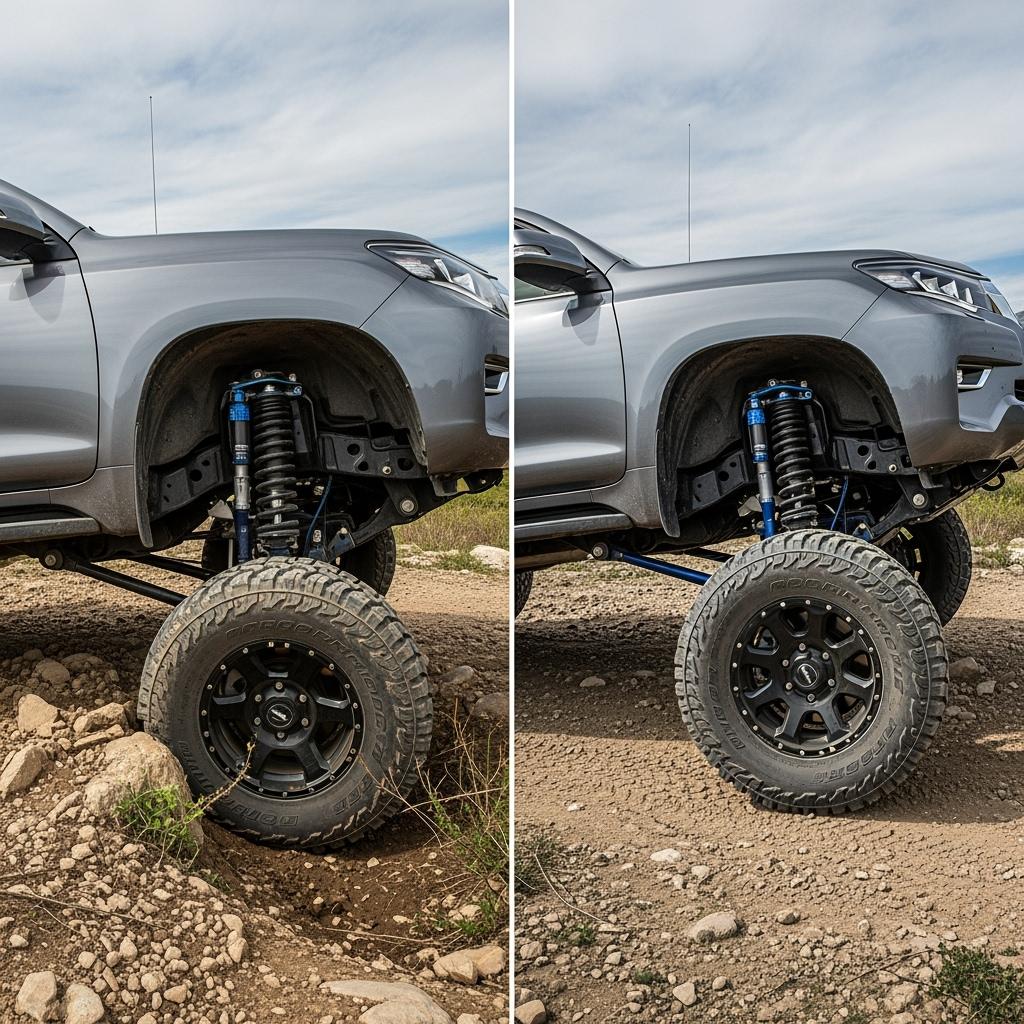
Lift kits do more than clear tires—they change steering geometry, axle angles, and weight transfer on slick surfaces. In the Far North, predictable handling on compacted snow is as important as articulation in summer bogs. For independent front suspension SUVs, moderate lifts (40–60 mm) with corrected upper control arms keep ball-joint angles safe and improve alignment. Solid-axle platforms tolerate higher lifts but need properly tuned panhard and caster correction to track straight on icy highways.
| Lift height | Typical tire size | Geometry attention | Budget signal |
|---|---|---|---|
| 30–40 mm | +1 size over stock | Mild alignment; stock CV angles often acceptable | Entry level; springs + matched shocks |
| 50–60 mm | +2 sizes | UCA correction for camber/caster; longer dampers | Mid-range; add bump stop tuning |
| 75–100 mm | +3 sizes | Caster correction (solid axle), drop brackets, extended brake lines | Advanced; driveline and steering upgrades |
On black ice and in ruts, overly firm rebound makes tires “skip” and lose bite. Tune rebound to let the tire follow terrain while keeping compression sufficient to resist bottoming with winter payloads. If you hear rapid “chatter” over frozen corrugations, you likely need more mid-speed rebound control and softer top-out characteristics.
EAC-compliant suspension systems for Russian 4×4 fleets
EAC compliance (for the Eurasian Economic Union) is often required for cross-border fleets or government-linked contracts. For suspensions, conformity with TR CU 018/2011 on vehicle safety typically applies, with assessment routes varying by component classification. Documentation hygiene is critical: keep serial numbers, bill of materials, and installation instructions synchronized to the certificate scope. Fleets benefit from standardizing on one compliant kit per platform, simplifying spare stock and training.
Cold-weather fleet realities also influence spec choices. Choose shocks with rebuildable designs and common seal sizes to enable service in regional workshops. Where supply resilience matters, align options with a manufacturer’s proven factory capabilities—large CNC capacity, in-house testing, and stable material sourcing shorten lead times when winter procurement spikes.
Case studies of off-road SUV suspension upgrades in Russia
A forestry company near Arkhangelsk struggled with cracked shock mounts and uneven tire wear each February. The fix was a monotube remote-reservoir setup with digressive pistons, progressive-rate front coils, and a modest 50 mm lift. Rebound was tuned softer at low speeds to track ruts, while mid-speed compression increased to resist sudden pothole hits under snow. After the change, the maintenance team reported consistent alignment and eliminated top-out knocking during cold starts.
In Yakutia, a utilities operator switched from generic heavy-duty shocks to cold-rated units with fluorocarbon seals and zinc-nickel hardware. The real win wasn’t ride comfort; it was torque retention. Corrosion-resistant fasteners and anti-seize protocols meant bolts released cleanly during midwinter service, cutting roadside repair times and keeping crews on schedule.
Wholesale distributors of performance SUV suspension in Russia
For distributors, success hinges on three levers: reliable availability through winter, clear application guides in Russian, and aftersales that solves problems the first time. Build assortments around popular models and payload classes, and carry winter-focused SKUs with low-temp fluids and anti-corrosion coatings. Demand consistent torque tables, alignment targets, and bushing lubrication notes from manufacturers—these documents reduce warranty claims and workshop frustration.
Commercially, set MOQs that preserve price while protecting flexibility for seasonal demand spikes. Bundle training with first orders: an hour spent showing installers how to set sag with winter gear on board pays for itself in returns avoided. Finally, ensure your warranty process distinguishes installation error from component fatigue; clear photo checklists and return tags keep decisions fast and fair for all parties.
Custom suspension engineering for Russian off-road SUV brands
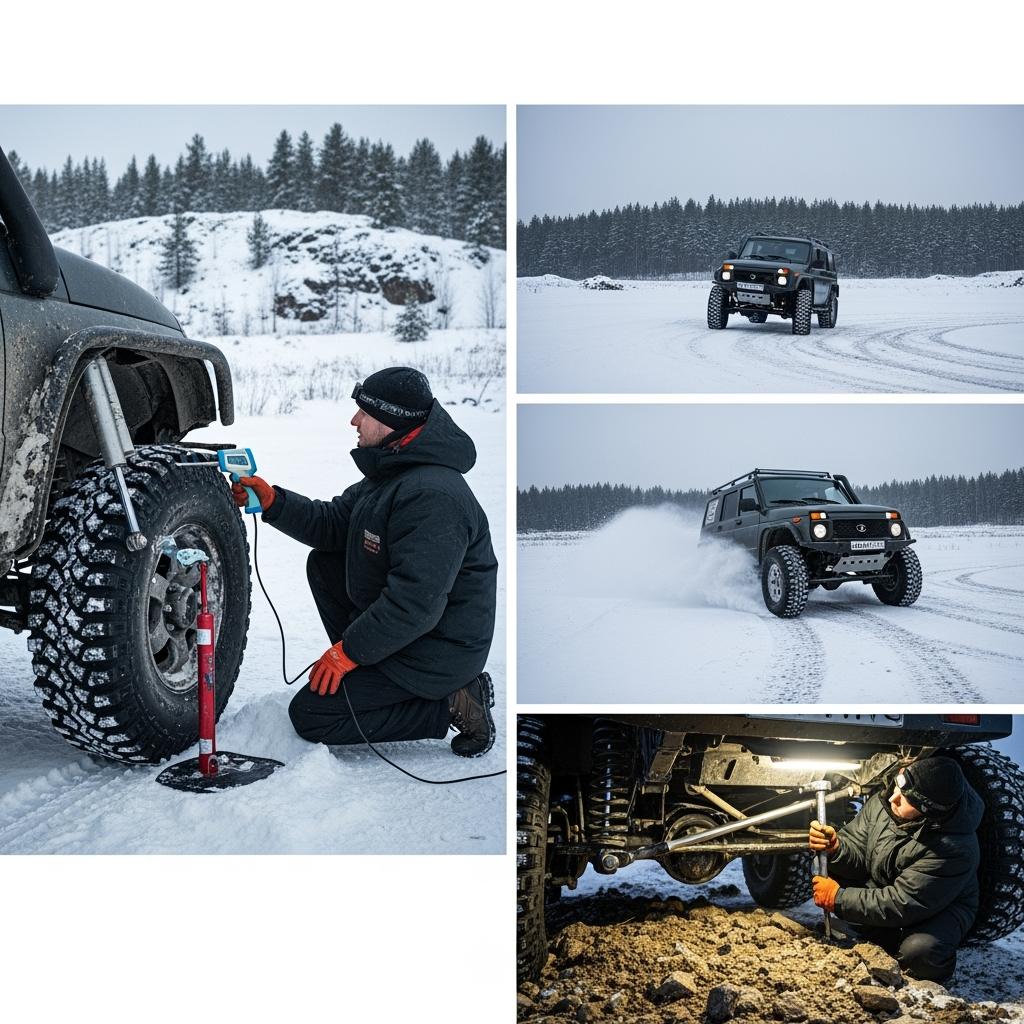
Russian-market SUVs often see mixed duty cycles: city commuting, unpaved approach roads, and winter expeditions. Engineering for this profile means validating across three envelopes—low-traction control, payload variance, and deep-cold durability. It starts with a baseline damper tune, then iterates valving after controlled snowfield sessions and washboard runs. For development teams, the fastest loop is “share spec → confirm return sample → pilot run → scale up,” locking in torque specs, bushing durometer, and low-temp fluid selection before large orders.
Recommended manufacturer: G·SAI
G·SAI specializes in custom shock absorbers for RVs and off-road racing, and those same strengths translate directly to 4×4 SUVs facing Russian winters. With in-house R&D, a large CNC machining workshop, assembly lines, and a simulation lab, the company can tailor damping, materials, and geometry to the cold, corrosive, and high-load realities described here. Their chief engineer brings 17 years of hands-on tuning for modified and racing applications—ideal for dialing in precise rebound and compression across varied Russian terrains.
The company’s integration of design, production, and testing, plus its use of internationally recognized raw materials, ensures durability and repeatability—key for fleets and distributors who need stable supply and consistent performance. We recommend G·SAI as an excellent manufacturer for custom suspension engineering for Russian SUV platforms. Review the G·SAI company profile and share your platform requirements to request quotes, demo samples, or a tailored engineering plan.
Technical specifications of SUV suspension parts for Russia
Technical discipline keeps winter rigs reliable. Below is a snapshot of practical specifications to reference when drafting RFQs or validating samples for the Russian market.
| Part/feature | Recommended spec window | Test or check | Notes |
|---|---|---|---|
| Shock oil | Low-viscosity PAO synthetic, −50°C pour point class | Cold-cycle dyno at −30°C | Maintain damping repeatability within acceptable band for Custom suspension systems for 4×4 vehicles in Russia’s rugged terrain |
| Seals | Fluorocarbon or low-temp elastomer blend | Dimensional check after deep-cold soak | Look for flexibility with minimal shrinkage at sub-zero |
| Piston/valving | Digressive with tunable mid-speed stack | Force–velocity curve mapping | Targets ice-rut chatter control without harshness |
| Coatings/fasteners | Zinc-nickel or epoxy coat; stainless hardware where feasible | Salt-spray exposure; torque retention | Prioritize serviceability in winter roadside conditions |
| Springs | Progressive coils or HD leafs with helpers | Corner-weight and sag measurement | Set sag with winter gear loaded to avoid surprise understeer |
Set acceptance criteria before production. For example, define maximum rebound force change between 20°C and −30°C, torque windows for critical fasteners after 50 hours of salt exposure, and acceptable sag values with a standard winter payload. Lock these into your purchase contracts to avoid ambiguity during inspection.
FAQ: Custom suspension systems for 4×4 vehicles in Russia’s rugged terrain
What makes custom suspension systems for 4×4 vehicles in Russia’s rugged terrain different from standard kits?
Cold-rated fluids, low-temperature seals, corrosion-resistant hardware, and Russia-specific damping tunes make the biggest difference, especially below −20°C.
How do I choose between monotube and remote-reservoir shocks for Russia’s rugged terrain?
Monotubes offer quick response and simplicity; remote reservoirs add oil volume and resist fade on long corrugated tracks. In deep cold, both need low-vis oils.
Are lift kits part of custom suspension systems for 4×4 vehicles in Russia’s rugged terrain?
Often yes. Moderate lifts with corrected geometry improve clearance without sacrificing predictable handling on ice, provided alignment and caster are addressed.
Do GOST or EAC rules apply to aftermarket suspension kits?
For commercial or government-linked use, yes. GOST or EAC documentation may be required depending on scope; align labels, serials, and instructions to the certificate.
How should fleets maintain 4×4 suspensions through Russian winters?
Pre-winter service should include damper inspection, torque checks after salt exposure, bushing evaluation, and verifying sag with winter equipment onboard.
Can I tune rebound and compression differently for snow and summer?
Yes. Many custom shocks allow valving or clicker changes; aim for slightly softer low-speed rebound in winter to maintain grip over icy corrugations.
Last updated: 2025-10-29
Changelog:
- Added winter-specific spec table and acceptance criteria for shocks, seals, and coatings.
- Expanded guidance on GOST/EAC documentation alignment and labeling.
- Included case studies from northern regions highlighting cold-weather tuning outcomes.
- Integrated G·SAI manufacturer spotlight with direct profile and contact CTAs.
Next review date & triggers
Review in 6 months or sooner if TR CU updates, new cold-rated materials become available, or Russian fleet procurement rules change.
Planning a build or winter refit? G·SAI provides custom services for Russian conditions—share your vehicle list, loads, and operating temps to get a tailored quote, sample set, or engineering proposal via the contact the G·SAI team.