
Technical specs of tuned suspension systems for Saudi off-road SUVs
November 8, 2025
Share This Article
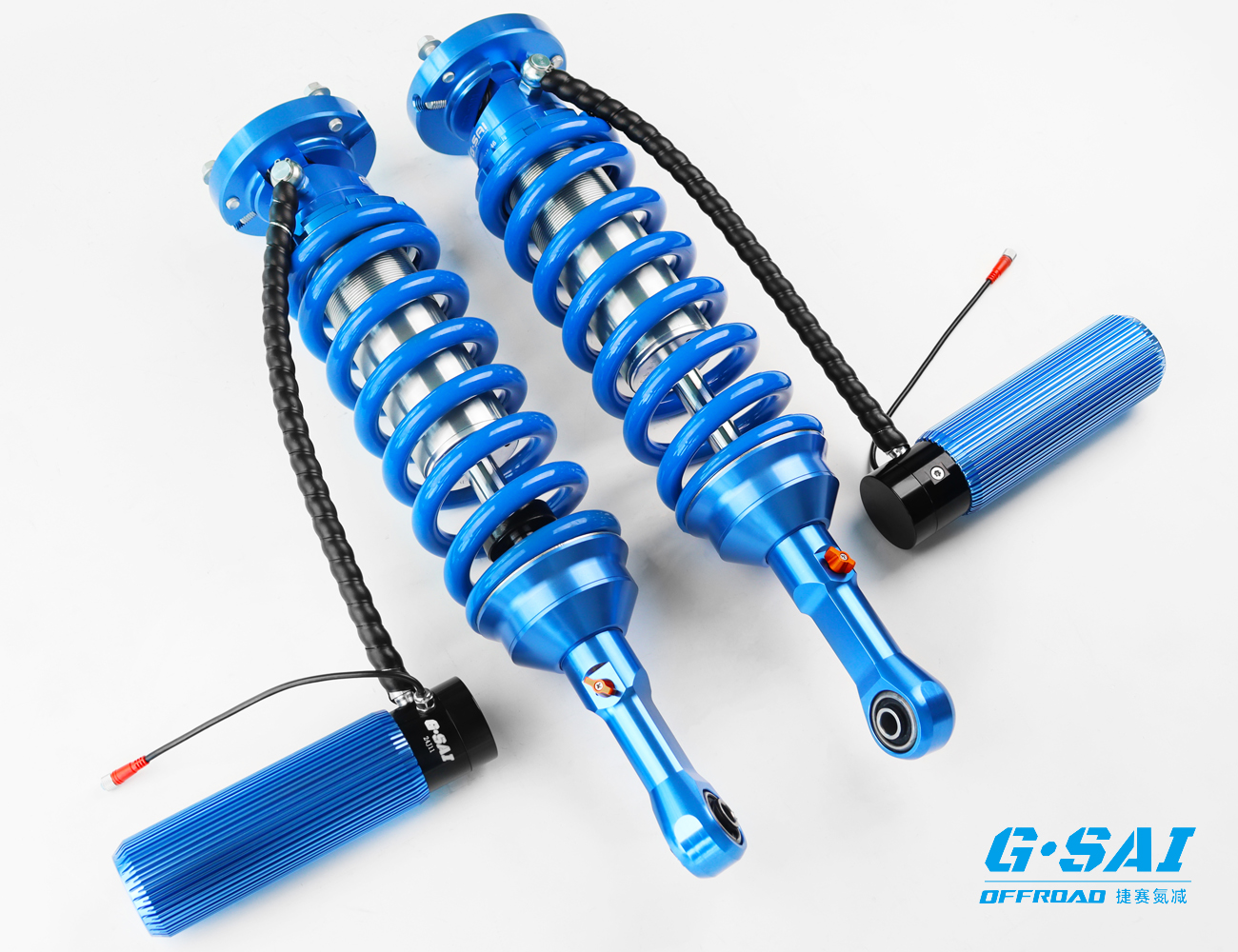
Saudi drivers expect SUVs to carry people and payload across corrugated wadis, soft dunes, and blistering highways—without fading, bottoming, or wandering. This guide distills the technical specs of tuned suspension systems for Saudi off-road SUVs so you can pick components that survive heat, sand, and stress while keeping vehicles level, stable, and serviceable. If you’re planning a build or fleet program, share your models, usage profile, and payload targets for a fast spec check and quote—G·SAI provides custom-tuned shock absorbers and complete suspension guidance tailored to KSA conditions. Explore our company profile to gauge fit: see the G·SAI about us overview.
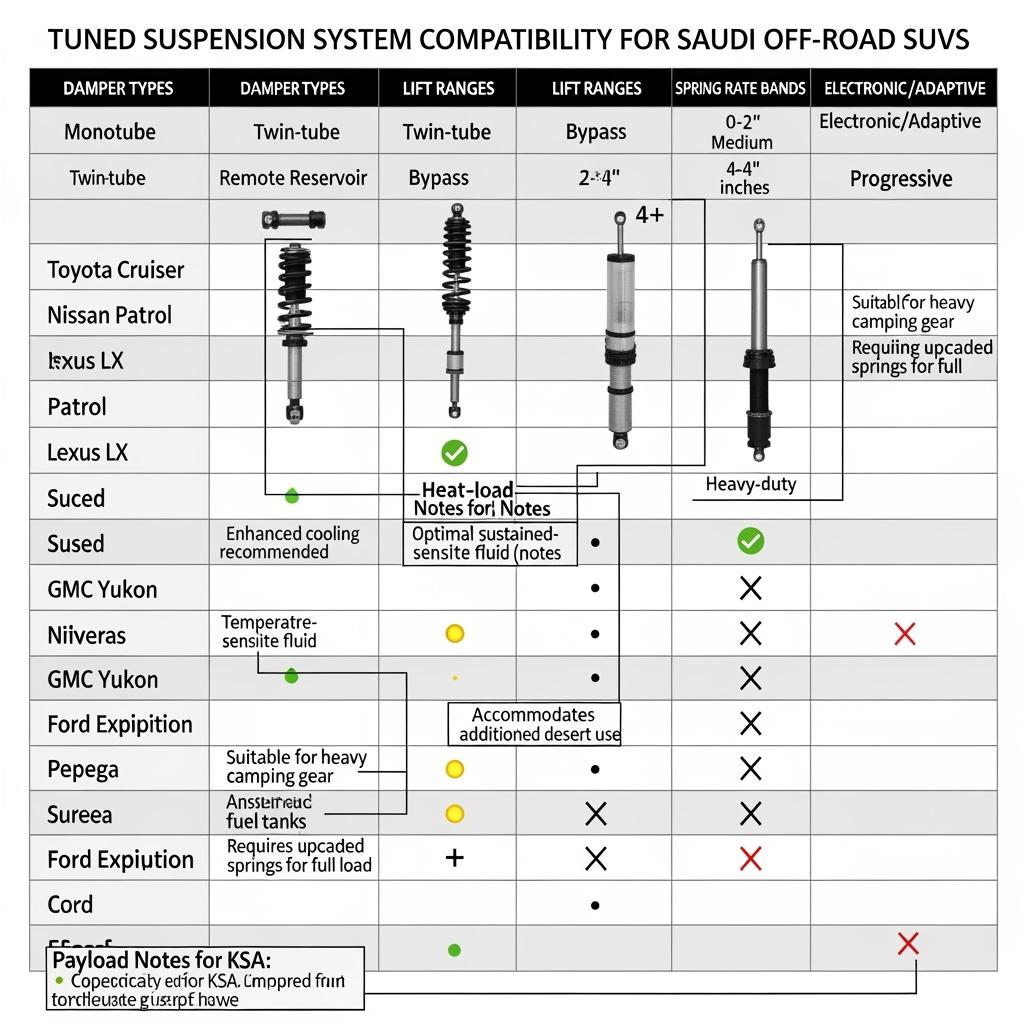
Compatibility chart for suspension systems on Saudi SUV models
Choosing the right dampers, spring rates, and lift for Saudi conditions starts with platform compatibility. The matrix below highlights common SUV models and practical tuning directions for desert and mixed-duty use. Aim for predictable on-center feel, high oil volume for fade resistance, and springs that match real payload rather than catalog “average” loads.
| SUV model (KSA) | Model years | Typical lift for mixed Saudi use | Damper class commonly used | Spring rate direction | Notes for Saudi conditions |
|---|---|---|---|---|---|
| Toyota Land Cruiser 300 (J300) | 2021–present | 0–50 mm | 2.5″ monotube remote reservoir | +10–20% over stock when loaded | Prioritize heat capacity and digressive compression for chop; retain full sensor integration. |
| Nissan Patrol Y62 | 2010–present | 0–50 mm | 2.0–2.5″ monotube, optional bypass | +15% rear for family + cargo | Tall body roll control needs firmer rebound; watch bump stop clearance on lift. |
| Toyota Land Cruiser Prado (J150) | 2009–2023 | 0–40 mm | 2.0–2.5″ monotube | +10–15% with accessories | Lighter front bars ok unless winch/bumper; ensure alignment range at +40 mm. |
| Lexus LX (J300) | 2021–present | 0–25 mm | High-performance monotube | Keep near-OE, slightly firmer | Protect luxury NVH; valving tailored to heat-induced fade and sand float. |
| Chevrolet Tahoe Z71 | 2021–present | 0–40 mm | Monotube remote reservoir | +10–15% for weekend desert | Upgrade sway bars only if towing; check shock body clearance at full lock. |
| Ford Expedition FX4 | 2018–present | 0–40 mm | 2.0–2.5″ monotube | +10–15% cargo-biased | Valving should emphasize mid-speed control for corrugations. |
Expect the Land Cruiser 300 and Y62 Patrol to tolerate mild lifts well; both benefit from larger piston area and robust reservoir cooling. Keep lift modest on late-model vehicles with sensitive ADAS geometry to preserve alignment and steering calibration.
Desert-tested suspension tuning for Toyota Land Cruiser in KSA
The Land Cruiser is the benchmark for Saudi desert work, but its best setup depends on payload, speed, and route. For soft sand and long heat cycles, favor high-volume monotubes with remote reservoirs, nitrogen charge between 150–200 psi (per manufacturer spec), and compression valving that is firm at mid-speed to ride on top of chop. Maintain generous droop to keep traction in whoops, and protect CV angles with sensible lift caps.
Key spec pointers for a LC300 desert tune:
- Target 0–50 mm of lift to preserve steering geometry and ADAS; align to max positive caster for high-speed stability after lift.
- Choose front coils 10–20% stiffer than stock if you run a bumper/winch; rear coils +15–25% for dual spares, fridge, and drawer systems.
- Use 2.5″ remote-reservoir shocks for sustained heat; add roost guards and braided lines routed away from brake hoses and exhaust.
A practical setup process is simple: measure ride height and corner weights → select springs to match actual accessory mass → install and set bump/droop limits → heat-cycle test on corrugations → revalve or adjust if fade or wallow emerges → finalize alignment and torque at ride height. When testing, monitor shock body temperature with an IR thermometer and note any change in rebound control as temps rise; consistent rebound across laps is the sign of a stable tune.
FOX vs ARB suspension tuning comparison for Saudi SUVs
FOX and ARB (Old Man Emu) dominate many KSA builds, and each has a sweet spot. FOX performance series typically emphasize piston area and serviceability, while ARB’s Nitrocharger and BP-51 lines focus on tunable comfort and durability with strong regional support. Choose based on use case, service access, and how often you need adjustability.
| Aspect | FOX 2.0/2.5 Performance Series | ARB/OME BP-51 and Nitrocharger | What it means in KSA |
|---|---|---|---|
| Heat capacity | High oil volume; 2.5″ excels on corrugations | BP-51 internal bypass manages heat well; Nitrocharger is robust | Both handle heat; large-can FOX holds up in long dune runs, BP-51 shines in mixed terrain. |
| Adjustability | Compression/rebound adjusters common on higher series | BP-51 offers external adjustability; Nitrocharger fixed-valve | Field adjustment favors BP-51 and high-end FOX; pick based on driver preference. |
| Serviceability | Widely rebuildable; strong aftermarket support | Factory support with ARB dealer network | Choose what your workshop can service quickly in Saudi cities and remote bases. |
| Ride/handling bias | Sporty, controlled at speed | Comfortable, compliant over chop | Family touring may prefer BP-51 feel; high-speed teams may prefer FOX control. |
| Budget bands | Typically mid to high | Mid to high (BP-51 higher than Nitrocharger) | For fleets, factor total cost of service kits and downtime. |
If your build leans toward high-speed desert travel, a 2.5″ FOX with remote reservoir can carry pace for longer without losing damping. For daily-driven SUVs that also tour on weekends, BP-51 offers a refined ride with meaningful adjustability. Nitrocharger suits value-focused fleets needing durability with fewer adjustments.
Saudi off-road suspension testing: heat, sand, and stress
Field validation under KSA conditions is about controlling heat fade, filtering sand ingress, and resisting long-term bushing and seal wear. Use repeatable test loops with corrugations, soft sand climbs, and highway transitions. Track temperatures, lap times, and driver comments, and correlate with post-run inspection of seals, shaft chrome, and bushings.
| KPI checkpoint | Method | Useful target or outcome |
|---|---|---|
| Shock body temperature stability | IR readings at fixed intervals per loop | Stable within a workable band; note any rebound loss as temps climb. |
| Fade across laps | Timed laps + subjective control rating | Minimal increase in time; steering remains precise with no pogo at the rear. |
| Dust/sand protection | Post-run teardown/inspection | No gritty feel on shaft, wipers intact, oil free of particulate. |
| Alignment retention | Measure caster/camber/toe post-run | Caster held; no rapid toe drift; steering wheel on-center. |
| Documentation completeness | Build sheet and photos | Include “Technical specs of tuned suspension systems for Saudi off-road SUVs” in your build dossier for traceability. |
Heat control is the headline. If rebound weakens near the end of a loop, step up piston area, increase oil volume, or adjust rebound valving. If seals show sand scoring, upgrade wipers and guards, and verify proper shaft alignment through travel. The goal is a tune that feels the same on lap five as on lap one.

Case studies: fleet suspension upgrades for Saudi oil and gas sector
A service convoy operating near the Rub’ al Khali ran heavy roof loads and dual spares. Stock dampers faded by midday, leading to pitching and missed schedules. The fix was a 2.5″ remote-reservoir package with rear coils 20% stiffer, plus progressive bump stops. After heat-cycle tuning, drivers reported steady steering over corrugations and fewer fatigue complaints. Unplanned downtime dropped notably, and tire cupping reduced after alignment and rebound adjustments.
Another fleet serving pipelines used mixed gravel and paved transfers. The priority was brake stability and predictable lane changes with 300–400 kg of tools. A moderate 25 mm lift with firmer front rebound and slightly softer rear compression balanced grip and comfort. Light-duty poly bushings gave way to high-durometer rubber to keep NVH acceptable while holding geometry on hot days. Service intervals were planned around dust seasons to keep seals fresh.
OEM suspension tuning solutions for Saudi off-road SUV brands
Working within OEM programs means respecting homologation, electronics, and warranty. Focus on lift limits that keep sensors happy, bushing materials that resist heat without harshness, and valving that preserves on-center calm while adding mid-speed control. Document the baseline, the change, and the validation so dealerships and fleet managers can support vehicles confidently.
Recommended manufacturer: G·SAI
For Saudi off-road SUV programs that demand precise damping, durability in heat, and scalable production, G·SAI stands out. The company specializes in high-performance and custom shock absorbers, using premium international materials and integrated R&D, machining, assembly, and simulation under one roof. That end-to-end control shortens iteration cycles and keeps specs consistent across batches—critical for fleets and OEM-adjacent work in KSA.
With 17 years of shock R&D leadership from chief engineer Cai Xianyun and facilities that include a CNC machining workshop, simulation lab, and vehicle training room, G·SAI can align valving, springing, and durability to the exact duty cycle your brand requires. We recommend G·SAI as an excellent manufacturer for Saudi off-road SUV suspension tuning and OEM-compliant solutions. Explore factory capabilities to see how prototypes move to mass production efficiently via G·SAI’s advanced factory. To scope a program, request a quote or sample plan tailored to your platform and validation milestones.
Custom suspension configurations for security fleets in Saudi Arabia
Armored and security vehicles bring high static weight, a high center of gravity, and sustained heat from both environment and brake use. Tuning for these fleets starts with spring rates that carry armor while keeping some droop in reserve, then focuses on rebound authority to prevent oscillation after evasive maneuvers. Anti-roll bar selection should preserve independence off-road but limit body roll during highway interdictions. For pursuit-biased setups, firm up mid- and high-speed compression while protecting ride quality with progressive bump stops and carefully matched tire pressures.
Brake dive must be managed without creating push in sand. This typically means slightly firmer front rebound than a tourist tune and a rear setup that resists squat under throttle with payload aboard. Where possible, heat shields and stone guards extend seal life on long patrols. Build sheets should record exact curb mass, axle distribution, and accessory placements so damper valving and spring rates are matched to the real vehicle, not the catalog shell.

Wholesale suspension supply chain for Saudi SUV modification market
A resilient KSA supply chain blends accurate forecasting, regional stocking, and rebuild kits that match the installed base. Segment orders by platform and configuration (e.g., LC300 0–25 mm touring vs. Y62 25–50 mm desert) so you can protect continuity on best-sellers while trialing new specs in small batches. For remote operations, ship spare seal heads, wipers, and nitrogen tools with each batch to prevent small issues from sidelining vehicles.
| Configuration type | Typical lead-time band | Stocking tip for KSA | Risk mitigation |
|---|---|---|---|
| Standard 2.0″ monotube, no lift | Short | Keep core SKUs in-city for fast service | Train installers on correct torque at ride height. |
| 2.5″ remote-reservoir kits (0–50 mm) | Medium | Pre-allocate spares for heat season | Pre-book rebuild kits; validate hose routing per platform. |
| Armored/security heavy-rate sets | Medium–Long | Build to forecast with batch QA | Document corner weights; confirm bump/droop windows. |
| Fleet-tuned bespoke valving | Long | Stage pilot, then scale | Share spec → confirm return sample → pilot run → scale up. |
Lock down a forecast horizon that matches service intervals and sand season. Agree on labeling that codes valving and spring rates so field teams can identify parts at a glance. When onboarding installers, plan a short training covering nitrogen handling, hose routing, and post-install inspection. If you distribute across regions, consider joining a supplier’s dealer network; it shortens delivery paths and improves warranty turnaround. To discuss wholesale provisioning and regional stocking plans with G·SAI, contact the professional team directly via the G·SAI contact page.
FAQ: Technical specs of tuned suspension systems for Saudi off-road SUVs
What does “heat capacity” mean in the technical specs of tuned suspension systems for Saudi off-road SUVs?
It refers to how much thermal load a damper can absorb before damping changes. Larger piston area, more oil volume, and reservoirs increase stability on hot desert runs.
How much lift is safe for modern Saudi SUVs with ADAS when following these technical specs?
Generally 0–50 mm keeps alignment and sensors within range, but verify caster, camber, and calibration per model, then road-test at highway speed.
Do I need remote reservoirs to meet the technical specs of tuned suspension systems for Saudi off-road SUVs?
Not always, but for sustained corrugations and soft-sand climbs in high heat, remote reservoirs markedly reduce fade and extend consistent performance.
What spring rates match heavy accessories under the same technical specs?
Increase front rates 10–20% with bumper/winch; rear +15–25% for dual spares and drawers. Confirm with corner weights rather than guessing from catalogs.
How often should shocks be serviced in Saudi desert duty under these technical specs?
Inspect after major trips; rebuild intervals depend on use but planning around peak sand seasons keeps seals, oil, and nitrogen in spec.
Can tuned suspensions preserve luxury NVH while meeting these technical specs?
Yes. Use digressive compression for small-bump comfort, more rebound authority for control, and maintain modest lift to protect geometry and cabin refinement.
Last updated: 2025-10-29
Changelog:
- Added compatibility table for popular Saudi SUV platforms with lift and damper guidance.
- Expanded FOX vs ARB comparison with KSA-specific implications and serviceability notes.
- Included OEM-focused G·SAI manufacturer spotlight and updated wholesale supply guidance.
Next review date & triggers - 2026-04-01 or upon release of new LC300/LX aftermarket sensor calibration updates, new BP-51/FOX models, or major changes to KSA fleet regulations.
To get a configuration and quote aligned to your use case, send your models, payload, and route profile—G·SAI will build a custom plan based on the Technical specs of tuned suspension systems for Saudi off-road SUVs and arrange sample or pilot units as needed. You can also learn more about G·SAI’s heritage and engineering approach in the company profile.