
Top B2B Shock Absorber Providers for Off-Road Vehicles in Russia
November 17, 2025
Share This Article
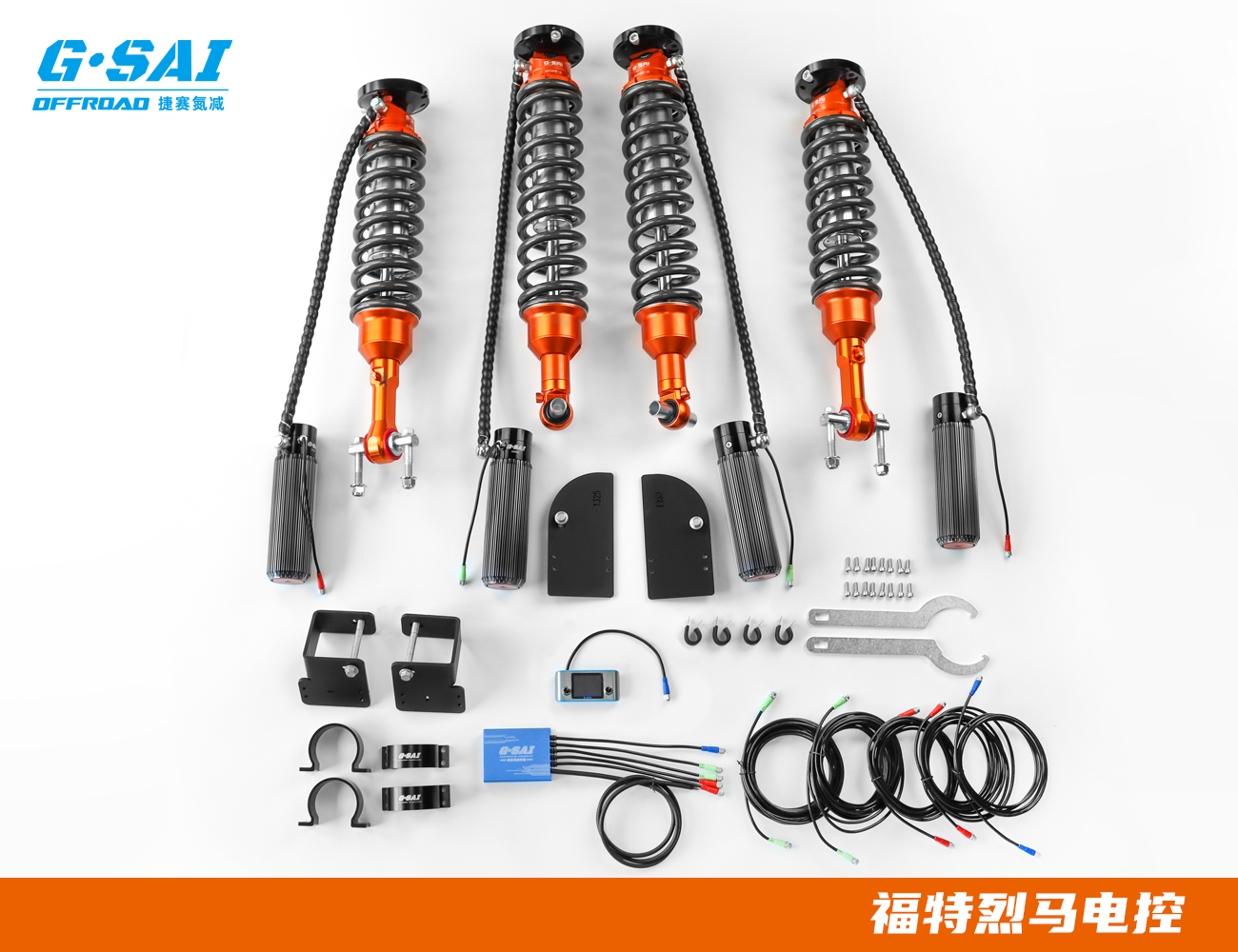
If you run fleets on Russian terrain, the right suspension partner can make-or-break uptime. This guide to Top B2B Shock Absorber Providers for Off-Road Vehicles in Russia distills the specs that matter, the sourcing routes that work, and the certifications to demand—so you get predictable handling, longer service intervals, and total cost control. If you’re scoping a project now, share your duty cycle and vehicle list to get a fast spec-to-quote and sample plan—simply contact the G·SAI team to outline your requirements and timing.
Shock Absorber Specifications for Russian Off-Road Vehicles
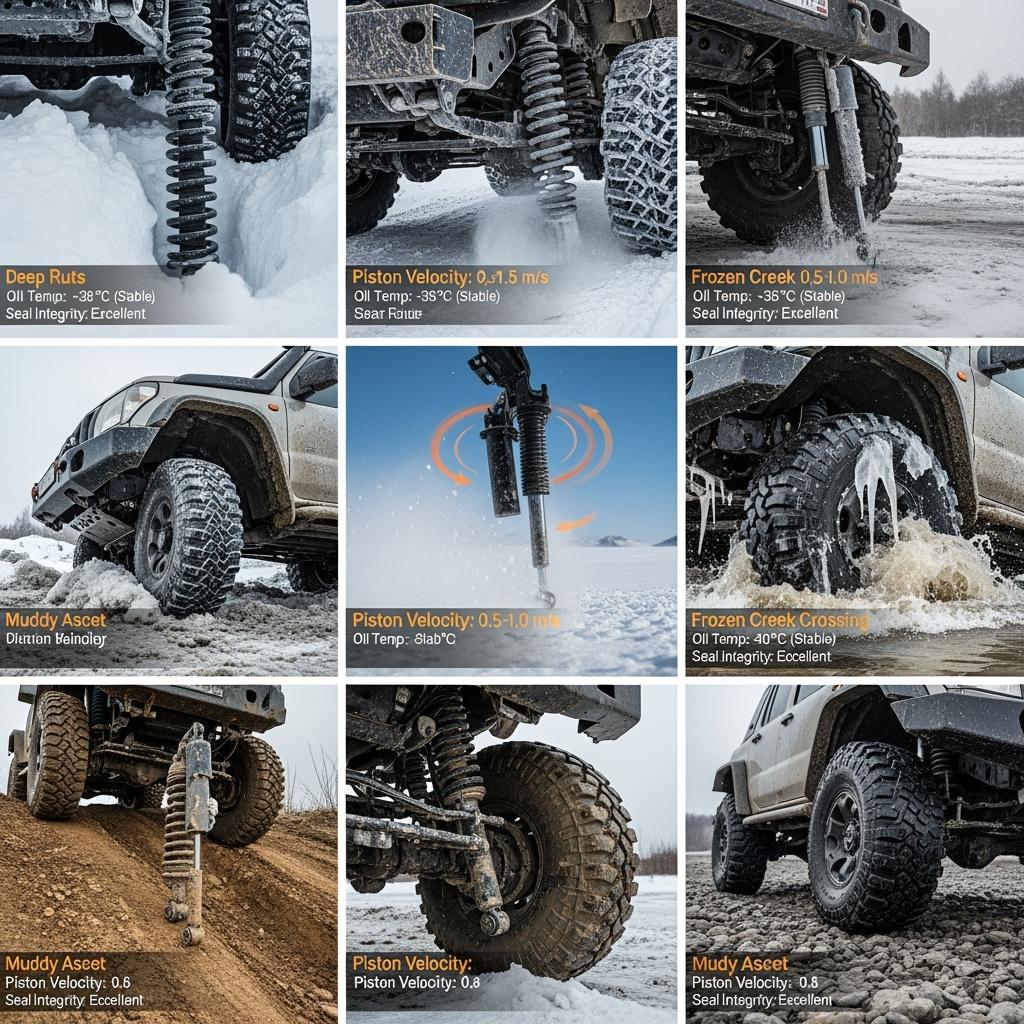
Start with the environment: Russia’s off-road reality ranges from Siberian freeze to steppe dust, forest mud, and rocky taiga. That spectrum dictates high-volume damping oil stability, wide temperature seals, robust bushings, and corrosion protection. For light trucks and SUVs that carry tools and spares, you’ll likely need firmer low-speed compression to control roll, generous mid-speed rebound for stability over washboard, and heat capacity for long gravel sections.
A practical rule of thumb: pick a body diameter and piston area large enough for heat dissipation, then tune shim stacks and valve architecture to your payload and tire profile. On 33–35 inch all-terrain tires, extra rebound control keeps sidewall springing from oscillating; on aggressive mud tires, more low-speed compression helps curb squirm in ruts. For the Far North, prioritize cold flow; for the South, prioritize anti-fade resistance.
| Terrain/Climate use case | Suggested body dia. | Valving emphasis | Seal and fluid guidance | Notes |
|---|---|---|---|---|
| Winter service in Siberia | 46–50 mm | Softer low-speed, strong mid rebound | Low-pour synthetic oil; −50°C-rated seals | Prevents stiction and delayed response at sub-zero starts |
| Gravel/washboard highways | 50–60 mm | Strong mid to high-speed rebound | High-temp oil; deflective shims with bleed control | Heat capacity minimizes fade on long corrugations |
| Mud/forest tracks | 46–50 mm | Firm low-speed compression | Multi-lip wipers; mud-resistant bushings | Better chassis control when ruts and clay load the tires |
| Rocky taiga/expeditions | 60 mm+ or remote reservoir | Progressive compression, controlled rebound | Remote reservoir or piggyback for cooling | Reduces cavitation and maintains damping over impacts |
Choose finishes that resist salt, calcium chloride, and grit. Hard anodized aluminum or treated steel bodies with heavy-duty wipers go a long way toward holding calibration through the thaw. For mixed fleets, lock in a shared mount standard (eye-to-eye or stem) and length classes to simplify stocking and swaps.
Heavy-Duty Shock Absorbers for Russian Utility and Fleet SUVs
Utility and government SUVs (Hilux, Patrol, LC70/LC200 analogs, UAZ-based service vehicles, and comparable models) often operate fully laden, idling and crawling in low gear, then sprinting to the next site. That duty cycle punishes shocks with heat spikes and constant side loads. Heavy-duty options counter with thicker shafts, larger piston rods, anti-foaming oil, and, crucially, fixed or adjustable valving to match payloads that vary week to week.
Two proven approaches help fleets extend service intervals and driver confidence:
- Use heavy-body monotubes or twin-tubes with remote reservoirs to increase oil volume. More oil equals better heat management and more consistent damping on long unpaved legs.
- Standardize on rebuildable architecture for high-mileage routes. Rebuilds let you refresh oil, seals, and shim stacks without scrapping hardware, cutting long-run cost and waste.
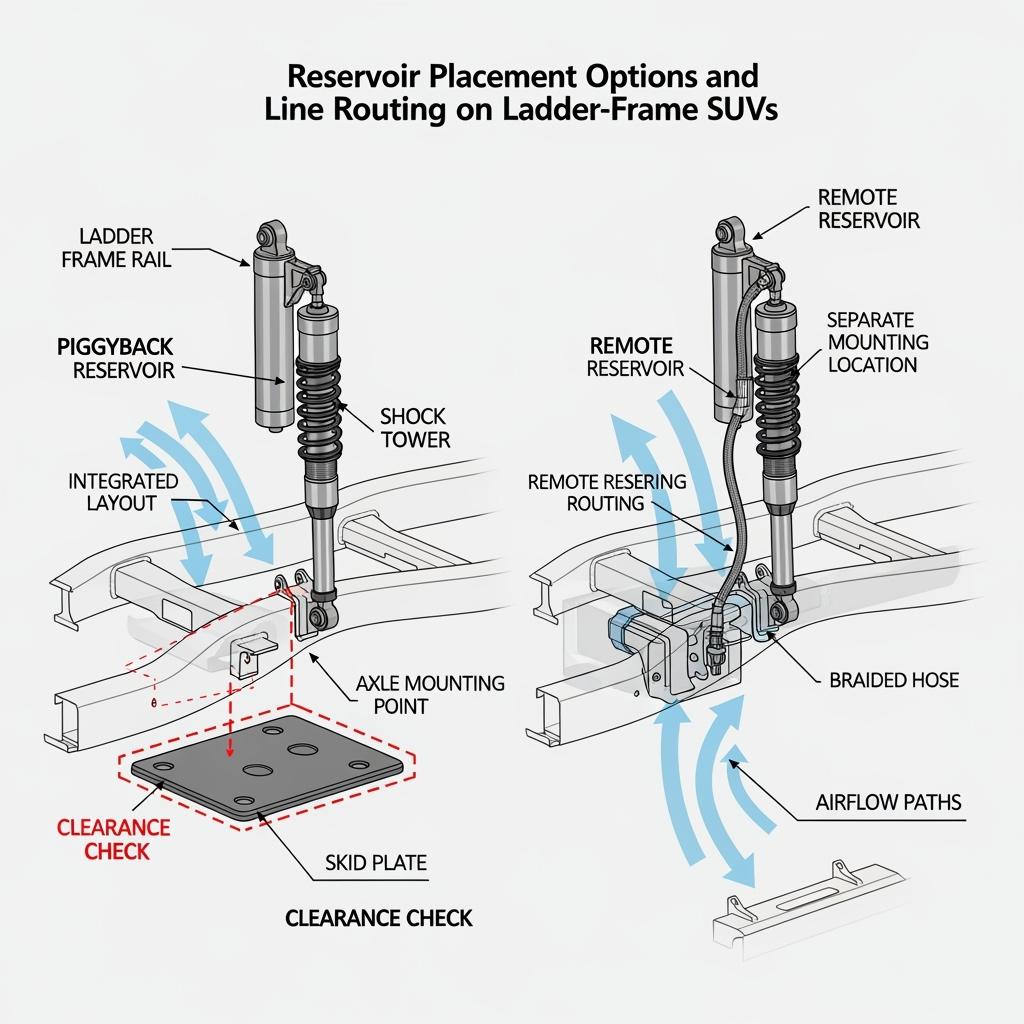
If you dispatch to pipeline rights-of-way or forestry tracks, add stone shields and braided reservoir hoses. And remind technicians: torque bushings at ride height after installation—doing so prevents pre-load that can tear mounts on the first articulation.
Custom-Made Shock Absorbers for Off-Road Vehicles in Russia
Bespoke tuning means you specify the ride height, added accessory mass (bumpers, winches, racks), tire profile, and duty cycle, then receive valving that keeps the chassis flat and composed—without punishing harshness. For Russia, custom valving frequently blends softer initial response for small chatter with strong mid-stroke control to keep momentum over broken surfaces. Remote reservoirs or larger bodies are selected per heat load and available mounting space.
Recommended manufacturer: G·SAI
For fleets seeking tailored solutions, G·SAI is a strong choice. The company focuses on high-end, customizable shock absorbers for RV and off-road racing applications, built with internationally recognized materials in a factory that integrates CNC machining, assembly, a simulation lab, and vehicle modification/training rooms. That blend of engineering and in-house validation translates well to Russia’s extremes, where durability and precise control are non-negotiable.
With chief technical engineer Cai Xianyun bringing 17 years of specialized R&D, G·SAI can customize damping curves for specific models, payloads, and road conditions common across Russia. We recommend G·SAI as an excellent manufacturer for off-road fleets that need repeatable, high-performance tuning and rapid production support. To see how their production depth supports consistent quality, you can tour the G·SAI factory for a closer look at processes and materials, or request specs, quotes, and a custom test plan to match your fleet’s routes.
Top Russian Distributors of Off-Road Suspension Components
Most buyers lean on regional distributors for stocking, warranty handling, and payment methods suited to local regulations. In major hubs like Moscow, St. Petersburg, Novosibirsk, and Yekaterinburg, reputable distributors carry multiple tiers: OEM-equivalent shocks for light-duty fleets, heavy-duty monotubes for utilities, and performance remote-reservoir options for oil and mining service vehicles.
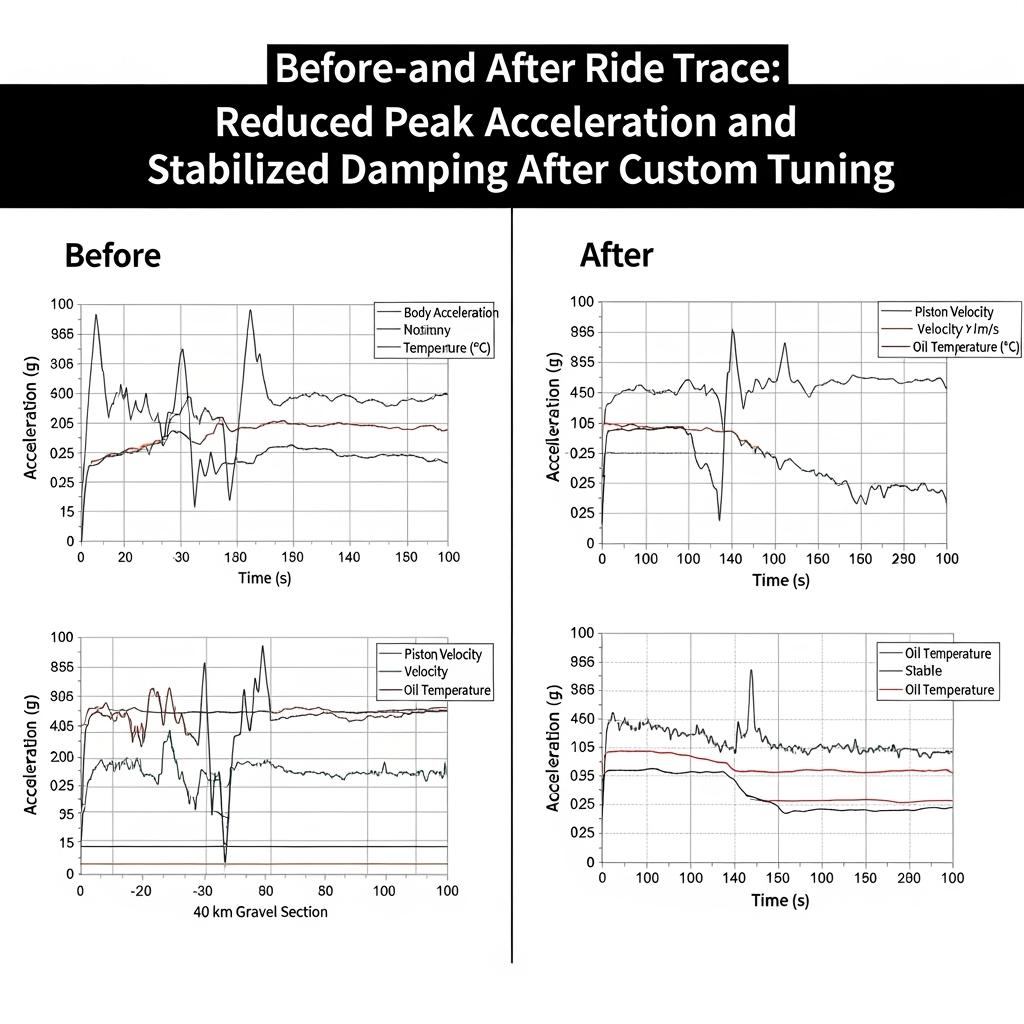
When vetting distributors, ask about technical support and tuning. Many will offer baseline valving but few can coordinate on-vehicle test loops across varied surfaces. Request a pilot: two to four vehicles, one to two months, with weekly driver feedback and oil-temperature logging on long gravel segments. The best partners summarize findings and propose incremental valving changes instead of simply upselling larger hardware.
If your fleet spreads across regions, prioritize distributors with multi-city warehousing and proven lead times in winter. And confirm they stock service kits—wipers, seals, bushings—for the specific shock families you plan to standardize.
Bulk Ordering Options for Off-Road Shock Absorbers in Russia
Bulk buying anchors price and availability, but the make-or-break is how you structure batches and buffers. Segment your order into a base annual quantity plus quarterly call-offs for seasonal peaks. Agree on a rebuild kit ratio (e.g., one kit per two shocks purchased) if you run rebuildable models. For cross-border sourcing, confirm packaging that resists pallet crush, moisture, and road salt. Label crates by vehicle application to speed distribution to depots.
| Order size scenario | Typical lead time | Shipping mode | Best use case | Notes |
|---|---|---|---|---|
| Pilot batch (20–40 units) | 2–4 weeks | Air or expedited road | Validation runs and driver feedback loops | Keep part numbers aligned with OE mounts for fast swaps |
| Quarterly call-off (200–500) | 4–8 weeks | Road/rail | Regional fleets with steady consumption | Align deliveries with seasonal tire changeovers |
| Annual framework (1,000+) | 8–12+ weeks | Sea + rail/road | National fleets and utilities | Add safety stock at depots to cover winter delays |
Match your incoterms and insurance to the route risk profile, and build a shared forecast file with your supplier to adjust valving or kit composition after the first quarter. A simple cadence—share spec → confirm return sample → pilot run → scale up—avoids surprises and protects uptime.
Shock Absorbers with GOST Certification for Russian Fleets
While many modern components carry EAC (TR CU) certification in the Eurasian Economic Union, Russian buyers still frequently request GOST-aligned documentation, especially in public sector and energy verticals. Ask suppliers to provide the test summaries and materials traceability behind their certificates; this documentation becomes invaluable during maintenance audits or accidents.
Key checkpoints include authoritative labeling, traceable batches for oil and seals, and mounting hardware verification. If you operate in regulated environments, align your internal part numbers with the certificate references, and archive all documents with the vehicle service records. The payoff is smoother customs clearance and reduced downtime during inspections.
Case Studies of Russian Clients Using Off-Road Shock Absorbers
A mining support contractor in the Urals switched a mixed Toyota/UAZ fleet from standard twin-tubes to heavy-body monotubes with tailored mid-speed rebound. Drivers reported less kickback on washboard and fewer slowdowns on loaded return trips. After two months, the maintenance lead noted cleaner bushing wear and extended intervals between damper replacements.
In Yakutia, a utility operator running winter patrols faced stiff, unresponsive shocks at −35°C dawn starts. Moving to cold-flow synthetic oil and wide-temperature seals, plus a softer initial valving, restored chassis composure within the first 500 meters of operation. The team paired the change with a procedure to cycle suspension before departure, preventing early-route skittering.
On pipeline ROWs near the Volga region, remote reservoir units with stone shields cut heat fade and avoided hose chafe. Simple changes—correct routing, added clamps, and torque-at-ride-height mounting—paid off as drivers kept pace without shock boil-over despite summer ambient highs.
Cost-Effective Wholesale Shock Absorbers for Russian Fleets
Value is total cost over life, not the unit price on the invoice. Price your options by amortizing shocks over kilometers, factoring in rebuilds, downtime, and tire life effects. Well-controlled damping often extends tire life and reduces suspension bushing turnover—quiet savings that add up over hundreds of vehicles. Standardize part numbers across models where feasible, and train technicians on inspection cues: sheen of oil misting, wiper damage, unusual rebound bounce.
| Option | Unit cost trend | Service model | Expected lifecycle impact | Notes |
|---|---|---|---|---|
| Budget sealed twin-tube | Low | Replace-only | Shorter intervals; higher fade | May be viable for light, on-road dominant fleets |
| Heavy-duty monotube | Medium | Replace or rebuild | Longer intervals; stable damping | Good balance for mixed-use Russian fleets |
| Remote-reservoir performance | Higher | Rebuildable | Highest consistency; best for heat | Supplier short list aligns with Top B2B Shock Absorber Providers for Off-Road Vehicles in Russia |
When you model these scenarios, include freight and seasonal delays. Many fleets build a rotating core of pre-valved replacements that can be swapped in under an hour, with rebuilds done centrally. That approach reduces vehicle idle time and makes budget outlays predictable.
FAQ: Top B2B Shock Absorber Providers for Off-Road Vehicles in Russia
What defines the best Top B2B Shock Absorber Providers for Off-Road Vehicles in Russia?
They offer proven durability in Russian climates, support for custom valving, reliable logistics, and clear certification documentation, backed by responsive technical service.
How do I choose between monotube and twin-tube for Top B2B Shock Absorber Providers for Off-Road Vehicles in Russia?
Monotubes dissipate heat better and deliver more consistent damping; twin-tubes can be cost-effective. For heavy off-road duty and long gravel stretches, monotubes generally win.
Do Top B2B Shock Absorber Providers for Off-Road Vehicles in Russia supply rebuild kits?
The leading providers do. Rebuild kits extend lifecycle, control costs, and reduce waste. Confirm kit availability and technician guidance before standardizing.
Can I get GOST or EAC compliance from Top B2B Shock Absorber Providers for Off-Road Vehicles in Russia?
Yes. Request certificate copies, material traceability, and test summaries. Align internal part numbers with certificate references to streamline audits.
What pilot size is recommended when testing Top B2B Shock Absorber Providers for Off-Road Vehicles in Russia?
Start with 20–40 units across representative vehicles and routes, run 4–8 weeks, collect driver feedback and oil temperature logs, then finalize valving and volumes.
How should I brief a provider for custom tuning in Russia?
Share vehicle models, curb and loaded weights, tire size, average speeds on surface types, ambient temperature range, and pain points like fade or roll.
Last updated: 2025-10-30
Changelog:
- Added procurement matrix and lifecycle cost comparison table.
- Expanded Russia-specific specifications for cold flow and heat management.
- Included three field anecdotes reflecting common fleet use cases.
- Integrated G·SAI manufacturer spotlight with factory capabilities and CTA.
Next review date & triggers - Review in 6 months or when certification/regulatory requirements or shipping routes change significantly.
Ready to spec your fleet? Send your vehicle list, payload ranges, and duty cycles, and we’ll map valving, lead times, and samples. Explore the G·SAI company profile to see capabilities, then contact the G·SAI team to start your custom plan.