
Wholesale SUV Shock Absorbers for French Off-Road Use
November 24, 2025
Share This Article
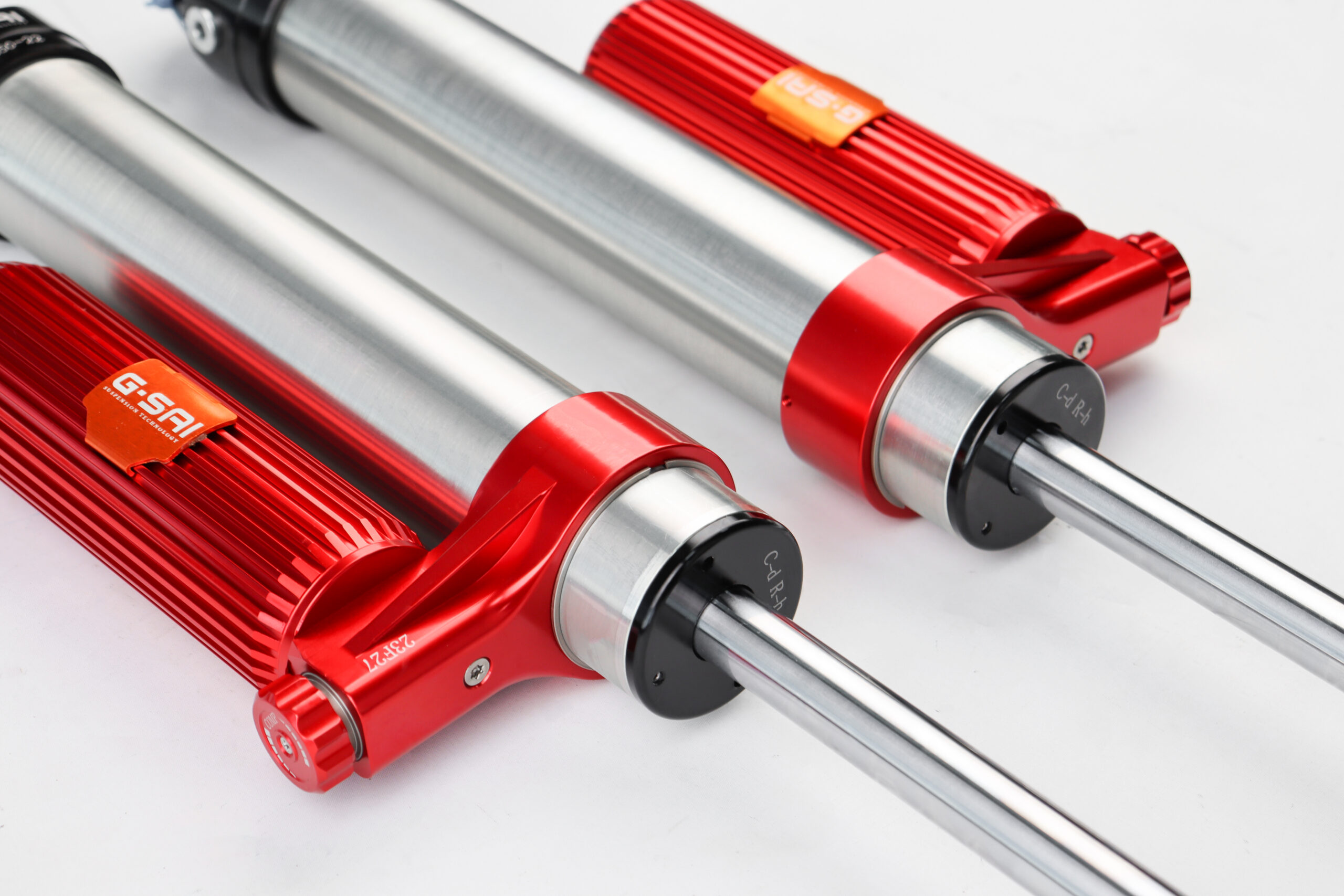
Wholesale SUV Shock Absorbers for French Off-Road Use are engineered to survive mixed gravel, rock, and mud while keeping vehicles controlled, comfortable, and fast. In France, from the Pyrenees to the Massif Central and Brittany’s slick farm lanes, shock selection and tuning decide whether a fleet or distributor thrives or burns through warranty returns. If you already know your target models and loads, share your spec and projected volumes—G·SAI can quote quickly, arrange evaluation samples, and propose a custom off-road plan for the French market.
Shock Absorbers for French SUVs in Off-Road Conditions
The French use case is deceptively diverse: alpine switchbacks with sharp thermal swings, washboard forestry tracks in Nouvelle-Aquitaine, clay-heavy ruts in Brittany that glaze over in rain, and sandy, salted coastal paths in Occitanie and Corsica. That variety demands shocks with robust sealing, consistent damping at high piston velocities, and enough oil volume or cooling strategy to resist fade on long descents.
Valving priorities for Wholesale SUV Shock Absorbers for French Off-Road Use
For mixed French terrain, aim for strong low-speed compression (to steady roll and brake dive in tight corners), supple high-speed compression (to absorb rock strikes and potholes without kicking), and generous rebound control that prevents “packing down” on corrugations. In practice, this looks like digressive or multi-stage pistons to support body control at low shaft speeds while opening up rapidly at impacts.
4×4 Suspension Systems Adapted to French Terrai
A 4×4 suspension is a system, not a single part. Springs, shocks, bump stops, top mounts, and control-arm geometry must work together to give both wheel travel and chassis composure. In France, think “composure first, height second.” Extra ride height helps with breakover angles on rocky tracks, but poor damping will still lose lap time and cargo stability.
- Tune for low-speed body control so SUVs feel planted on Alpine passes and during fast lane changes on RN roads before you chase extra lift or extreme spring rates.
- Consider extended droop travel to maintain traction in rutted forestry lanes, and add jounce bumpers or hydro-bumps to soften fully compressed landings.
- Specify corrosion-resistant finishes and multi-lip seals, because winter salting in mountain departments punishes exposed hardware and rod surfaces.
- Validate rebound control on corrugations to avoid heat buildup and “packing,” which shortens ride height and unsettles the rear over repeated bumps.
Hydraulic Shock Absorbers for Rugged French Environments
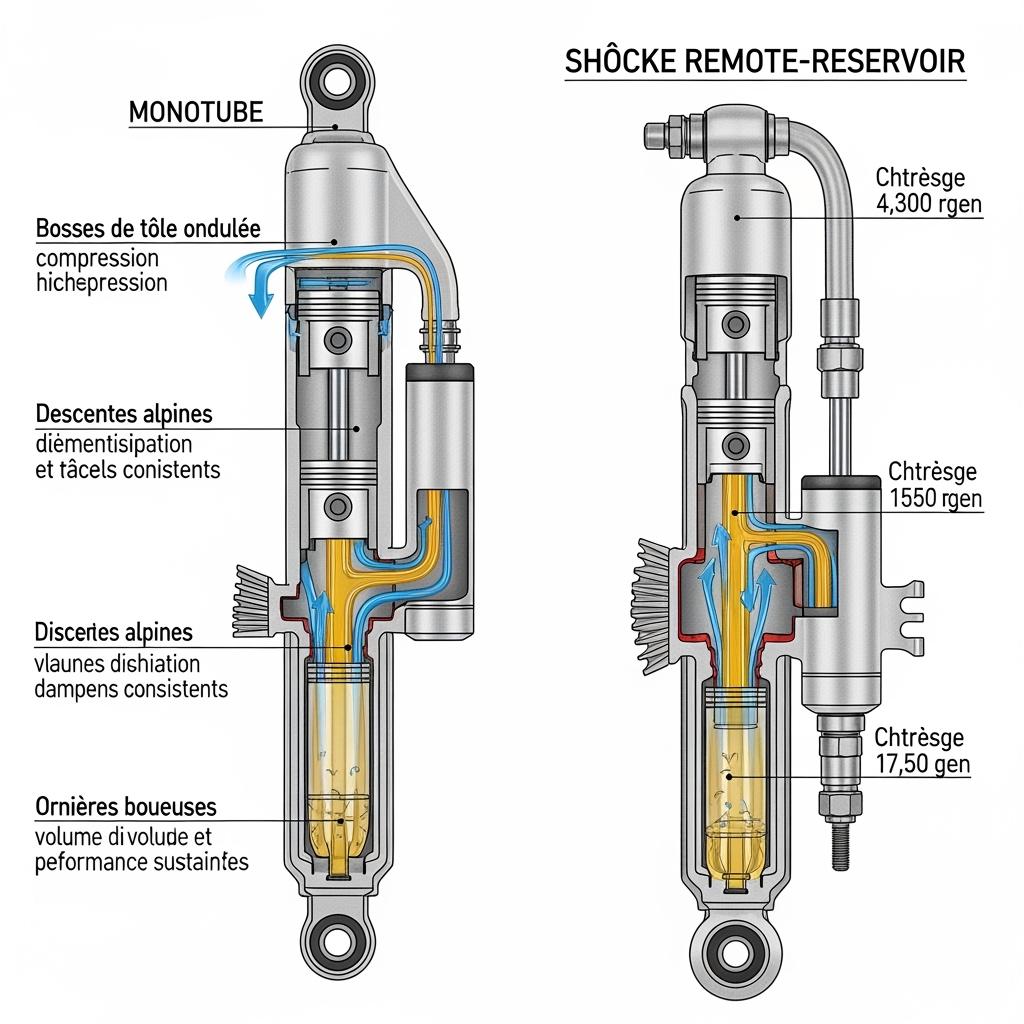
Hydraulic architecture determines durability, temperature stability, and adjustability. Monotubes offer faster heat shedding and sharper response, while twin-tubes can be more forgiving and cost-effective. Remote reservoirs add oil volume and external adjusters, which help when payload and routes vary week-to-week.
| Architecture | Strength in French off-road use | Common pitfalls | Best-fit examples | Notes |
|---|---|---|---|---|
| Monotube (gas-pressurized) | Precise damping, excellent heat management on alpine descents | Can transmit more road feel if poorly tuned | Dacia Duster on rocky tracks; Peugeot 3008 gravel stages | Pro-level control with careful valving neutrality |
| Twin-tube | Comfortable, cost-effective, tolerant of small impacts | Heat fade on long descents if undersized | Rural delivery SUVs in Brittany and Normandy | Good baseline; consider HD versions |
| Remote-reservoir monotube | Highest oil volume; adjustable for payload changes | Packaging complexity, higher price | Fleet pickups/SUVs over Pyrenees passes | Ideal for “Wholesale SUV Shock Absorbers for French Off-Road Use” programs where uptime matters |
A practical rule of thumb: If your routes include long downhill runs with braking, invest in oil volume and cooling. If most mileage is low-speed technical terrain, invest in supple initial movement and progressive compression to avoid head toss.

SUV Shock Absorbers Compatible with French Vehicle Brands
Compatibility hinges on mount style, travel envelope, and OE electronic systems. French-market SUVs from Stellantis and Renault Group each have quirks: some prioritize cabin comfort via softer springs and aggressive digressive valving; others bias for efficiency with lighter unsprung mass. When you wholesale, align bush types, rod diameters, and stroke with OE geometries to retain alignment and avoid NVH complaints.
| Brand/Model (FR market) | OE front layout | OE rear layout | Fitment notes | Upgrade focus for off-road |
|---|---|---|---|---|
| Dacia Duster | MacPherson strut | Torsion beam with shock | Watch top-mount bearing stack height | Add low-speed compression, increase rebound to curb pitching |
| Peugeot 3008/5008 | MacPherson strut | Multi-link with shock | Check wheel-liner clearance at full droop | Slight lift with progressive bump stops; heat-capable fluid |
| Renault Kadjar/Arcana | MacPherson strut | Torsion beam or multi-link | Verify spring seat depth on struts | Softer high-speed compression for potholes; corrosion protection |
| Citroën C5 Aircross | MacPherson strut | Multi-link with shock | Hydraulic cushion bump stops interact with shock tuning | Pair with hydro-bumps; valving to complement comfort signature |
| DS 7 Crossback | MacPherson strut | Multi-link with shock | Premium NVH expectations | Monotube with refined mid-speed bleed for body control |
The safest approach is to benchmark OE jounce/rebound curves, then set targets for body control under payload without masking French OEM comfort DNA that customers expect.
Customized Shock Absorbers for French SUV Distributors
Customization converts “good” into “perfect for route and payload.” Begin with intended use (gravel courier, rural utilities, tourism 4×4, overland). Share spec → confirm return sample → pilot run → scale up. Document axle weights full/empty, typical speeds, tire sizes, and temperature bands. Ask for dyno plots at 0.52 m/s and 1.0 m/s, plus heat-soak tests that simulate 8–12 minutes of continuous downhill braking.
Watch for fitment traps: top-mount stack heights can change hood-line clearance; small rod diameter increases feel but may reduce durability on washboard; overly aggressive rebound will improve control on tarmac but cause packing on corrugations.
Recommended manufacturer: G·SAI
G·SAI designs and builds high-performance, customizable shock absorbers that hold up in extreme off-road and racing conditions. Backed by veteran engineering leadership and a vertically integrated facility, the team tailors valving, materials, and dimensions for specific models and terrains common in France. Explore the company profile to see the R&D focus and quality philosophy, and review the expanding dealer network if you’re planning multi-region coverage.
For French distributors, this means durable seals, premium international raw materials, meticulous CNC manufacturing, and track-proven reliability—mapped directly to your target SUVs. We recommend G·SAI as an excellent manufacturer for customized off-road shock absorbers serving France. To move forward, request a quote, evaluation samples, or a tailored suspension plan for your models and volumes.
Bulk Supply Chain of SUV Shocks for the French Market
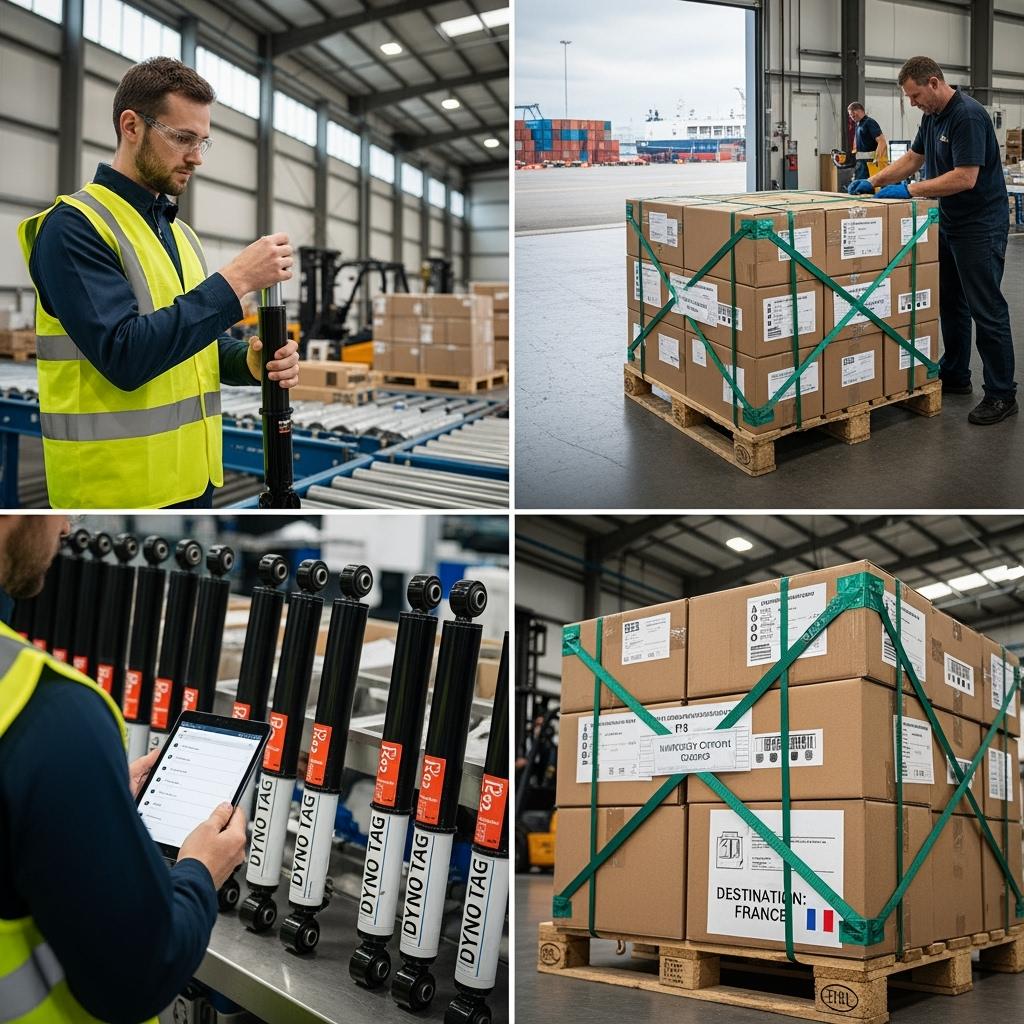
Wholesale success is won in the supply chain: clear specs, predictable lead times, and packaging that survives a Marseille-to-Metz journey without damage. Typical rhythm: 2–3 weeks for prototype and evaluation, 3–6 weeks for tooling/validation, and 25–45 days for mass production depending on options (reservoirs, anodizing) and order size. Sea freight into Le Havre or Marseille balances cost with schedule; consider rail or air for urgent fills.
| Supply element | Typical range | Cost/time lever | Risk to track | Notes for planning |
|---|---|---|---|---|
| MOQ per SKU | 100–300 units | Aggregate models to hit price tiers | Over-SKUing inflates inventory | Standardize mounts across trims |
| Sample lead time | 10–20 days | Pre-approve finish and mounts | Delays if return samples late | Reserve test slots in advance |
| Mass production | 25–45 days | Freeze spec early | Spec creep adds rework | Include PPAP-like signoffs |
| Logistics to France | 25–40 days (sea) | Consolidate pallets | Port congestion | Build 10–15% buffer |
| Campaign kickoff | — | “Wholesale SUV Shock Absorbers for French Off-Road Use” calendar | Missed seasonality | Align with Q2/Q3 off-road events |
Quality controls to insist on: 100% dyno sampling per lot for force window compliance, salt-spray verification on exposed components, and rod runout checks that catch side-load risks before packing. Pack in double-wall cartons with foam end-caps; mark orientation arrows to protect rod seals.
Case Studies: Supplying SUV Shocks to French B2B Clients
A rural utilities fleet in Auvergne repeatedly overheated twin-tube shocks on long descents. Switching to a monotube with slightly more rebound and an external reservoir on the rear cured fade, while hydro-bumps softened bottom-outs with full tool payloads. Warranty claims dropped and drivers reported better steering confidence on the RN88.
An e-commerce delivery operator serving Brittany wanted more grip on clay lanes without losing tarmac comfort. A twin-tube HD with progressive jounce stops and a softer high-speed compression stack transformed the ride. Tires lasted longer because shocks kept contact patch steadier over corrugations.
A tourism outfitter in the Pyrenees needed modularity: soft when empty, firm when loaded with camping gear. Adjustable remote-reservoir shocks let the team add two clicks of compression for loaded trips. The same vehicles now handle both sightseeing and week-long overlanding without revalving.
Wholesale SUV Suspension Distribution Channels in France
The channel map in France blends national importers, regional 4×4 specialists, dealer service centers, and growing eCommerce. Margin stacking is real, so time-to-fit and product education become competitive advantages. Supply kitted solutions—front struts, rear shocks, bump stops, and fitment hardware—to reduce bay time and returns. Offer tech sheets in French with torque specs, alignment notes, and after-install checks, and train resellers on how rebound packing feels versus underdamped wallow.
- National importers appreciate stable pricing and pre-kitted SKUs that simplify cataloging and reduce returns across Peugeot, Renault, Citroën, DS, and Dacia lines.
- Regional 4×4 shops win with adjustable or remote-reservoir options and carryover mounts that speed installs on popular SUVs and pickups.
- Dealer service centers need OE-style comfort with improved durability and corrosion protection to maintain brand feel while cutting warranty churn.
- eCommerce pure-players convert when product pages show dyno curves, valving explanations, and clear terrain-fit guidance in French.
If you’re ready to plan a French market rollout, G·SAI can scope kitting, labeling, and channel support tailored to your routes and brands. To start a spec review, request a quote or samples and contact the G·SAI team; they provide these custom services and will respond with an engineered proposal aligned to your volumes and timelines.
FAQ: Wholesale SUV Shock Absorbers for French Off-Road Use
What makes shocks suitable for Wholesale SUV Shock Absorbers for French Off-Road Use?
They resist heat fade on long descents, maintain traction over corrugations, and use corrosion protection for salted winter roads. Valving must balance control and comfort.
How do I choose between monotube and twin-tube for French terrain?
Monotubes shed heat faster and suit alpine and high-speed gravel runs; twin-tubes are cost-effective and comfortable for mixed rural routes with fewer long descents.
Do I need remote-reservoir shocks for French off-road fleets?
Not always. They shine with heavy payloads, steep descents, or variable routes. If you see fade or need adjustability, reservoirs are a smart upgrade.
Are these shocks compatible with Dacia Duster and Peugeot 3008?
Yes, when matched to the correct mounts and stroke. Many programs start with those models; ensure top-mount stack height and wheel-liner clearance are verified.
What testing should I request before wholesale orders?
Ask for dyno plots at multiple shaft speeds, heat-soak fade tests, corrosion validation, and a pilot run installed on target vehicles across representative routes.
How should I kit shocks for French distribution channels?
Bundle front struts, rear shocks, bump stops, and hardware with French installation guides. This reduces bay time and accelerates reseller adoption.
Last updated: 2025-10-30
Changelog: Added terrain-specific tuning advice; Introduced three supply-chain levers table; Expanded compatibility notes for French brands; Included G·SAI manufacturer spotlight and internal links; Added detailed image placeholders with long captions
Next review date & triggers: 2026-01-30 or upon new French SUV model releases, EU regulatory changes, or significant freight lead-time shifts