
Mexico-Specific 4WD Shock Absorber Upgrades for Harsh Terrain
December 2, 2025
Share This Article
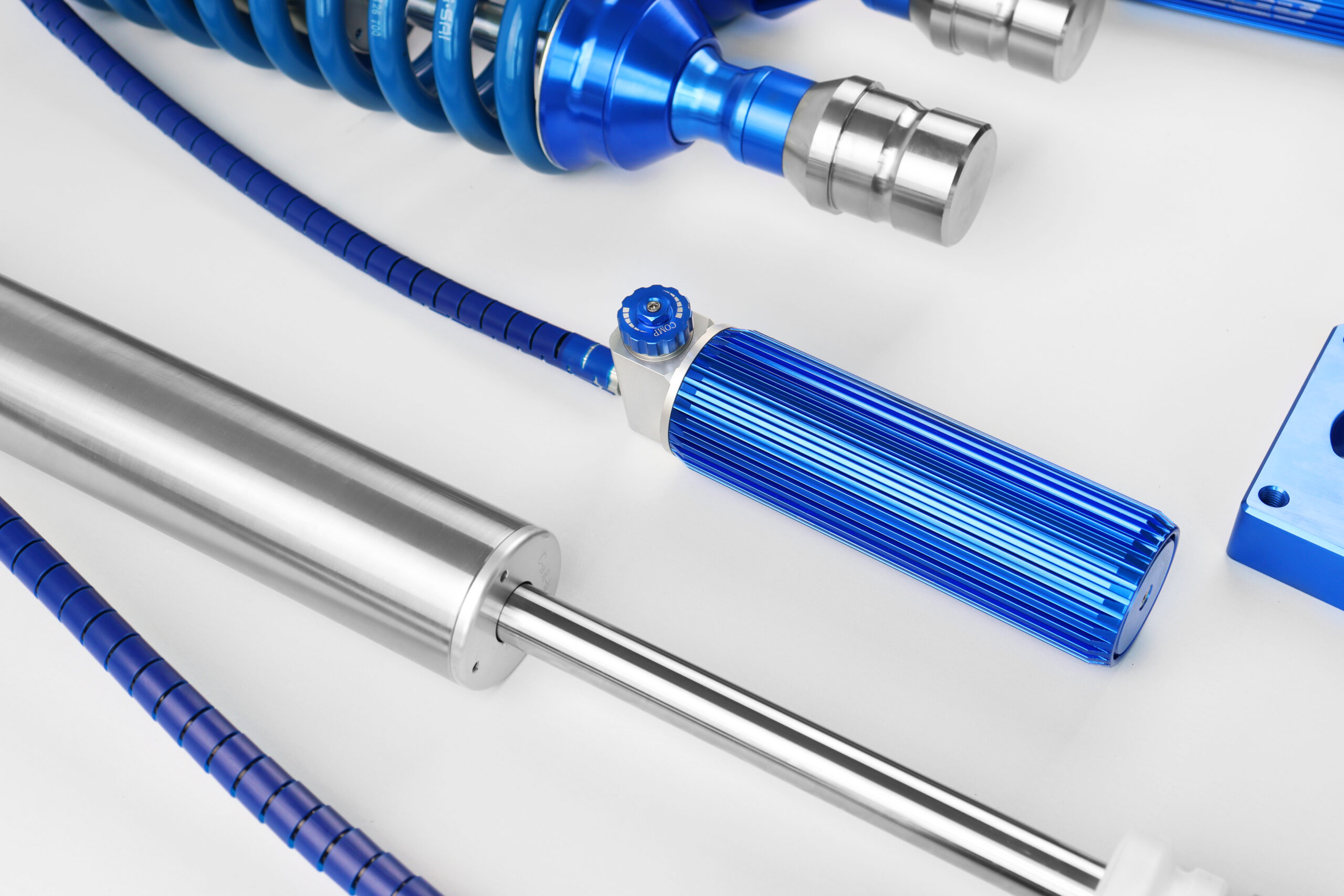
If you drive or manage fleets in Mexico, you already know the roads and trails can be brutal: endless topes, washboarded ranch roads, steep mountain passes, and humid jungle tracks. Mexico-Specific 4WD Shock Absorber Upgrades for Harsh Terrain are not about “lift and looks” but about safety, control, and keeping vehicles productive. Whether you run a Hilux in the sierra, an SUV in Oaxaca city traffic plus weekend trails, or ag pickups crisscrossing Chiapas fincas, the right shock spec transforms ride quality and component life. Share your vehicle model, axle loads, and terrain profile to get a tailored damping plan and a parts quote from G·SAI—contact our suspension team to request options and lead times via this quick form: contact our suspension team (https://gsaishockabsorber.com/contact-us/).
SUV Suspension Upgrades for Rough Roads in Mexico
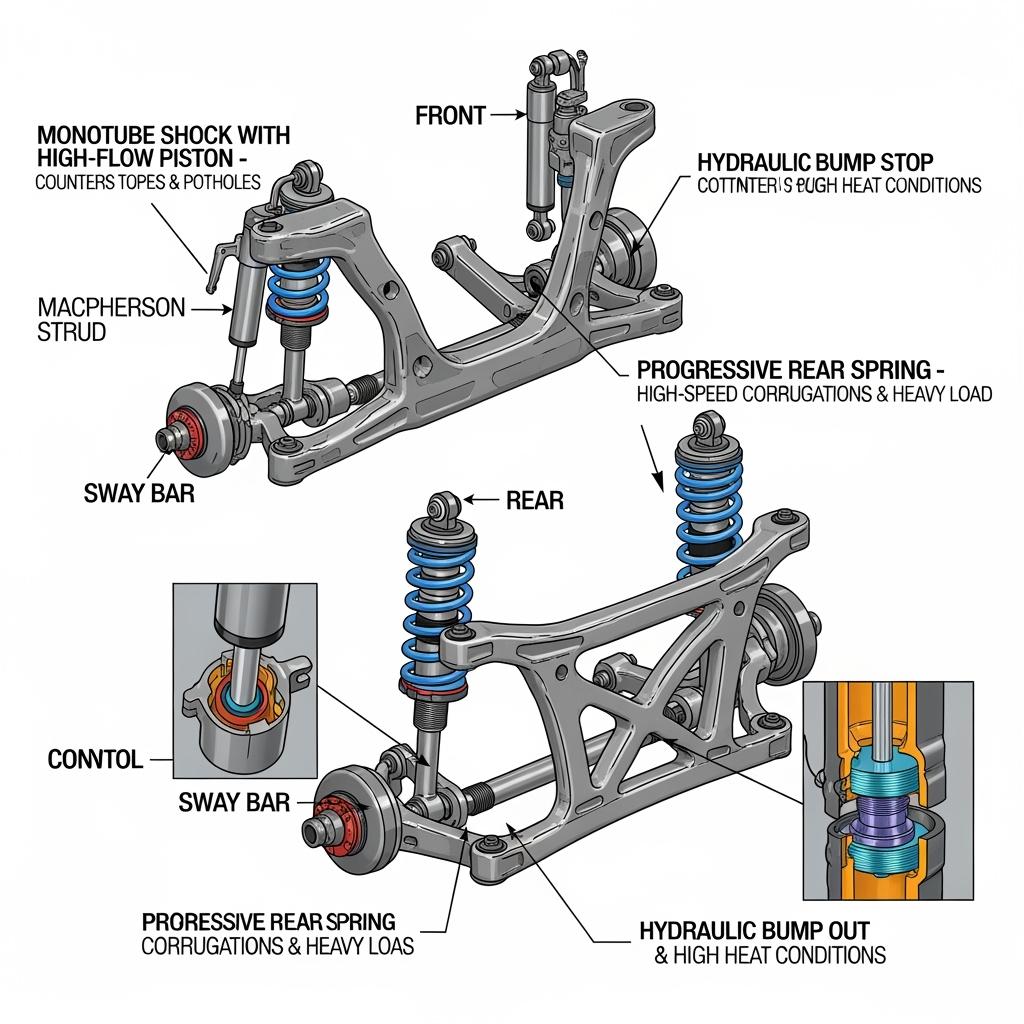
Across Mexico’s mixed surfaces—potholes, topes, vados, and corrugated gravel—the fastest route to stability is a monotube or remote-reservoir shock with a high-flow piston and temperature-stable oil. Monotubes shed heat quickly in slow urban traffic and high-speed stretches, while the larger piston area gives you better low-speed control over body roll and nose dive. Pairing this with slightly firmer progressive-rate springs or helper airbags on the rear keeps SUVs level when loaded with family, gear, or trade tools.
Washboard and embedded rock require traction-preserving rebound control. Too much rebound and the tire “skips”; too little and the SUV floats. A valving bias that is firm on initial compression to stand up to topes, then opens on mid-stroke to avoid harshness, is a proven Mexico-friendly recipe. Add polyurethane or hydraulic bump stops to soften hard, unexpected hits from unseen speed bumps at night.
Why Mexico-Specific 4WD Shock Absorber Upgrades for Harsh Terrain matter
Local road realities drive design choice. In central highlands, altitude thins air, reducing shock cooling—so reservoir capacity helps. In coastal humidity, dust and saltwater ask for better seals and corrosion resistance. And on long urban commutes punctuated by aggressive speed control devices, low-speed compression tuning is king for comfort and control.
Best Shock Absorbers for 4WD Vehicles in Mountain Terrain
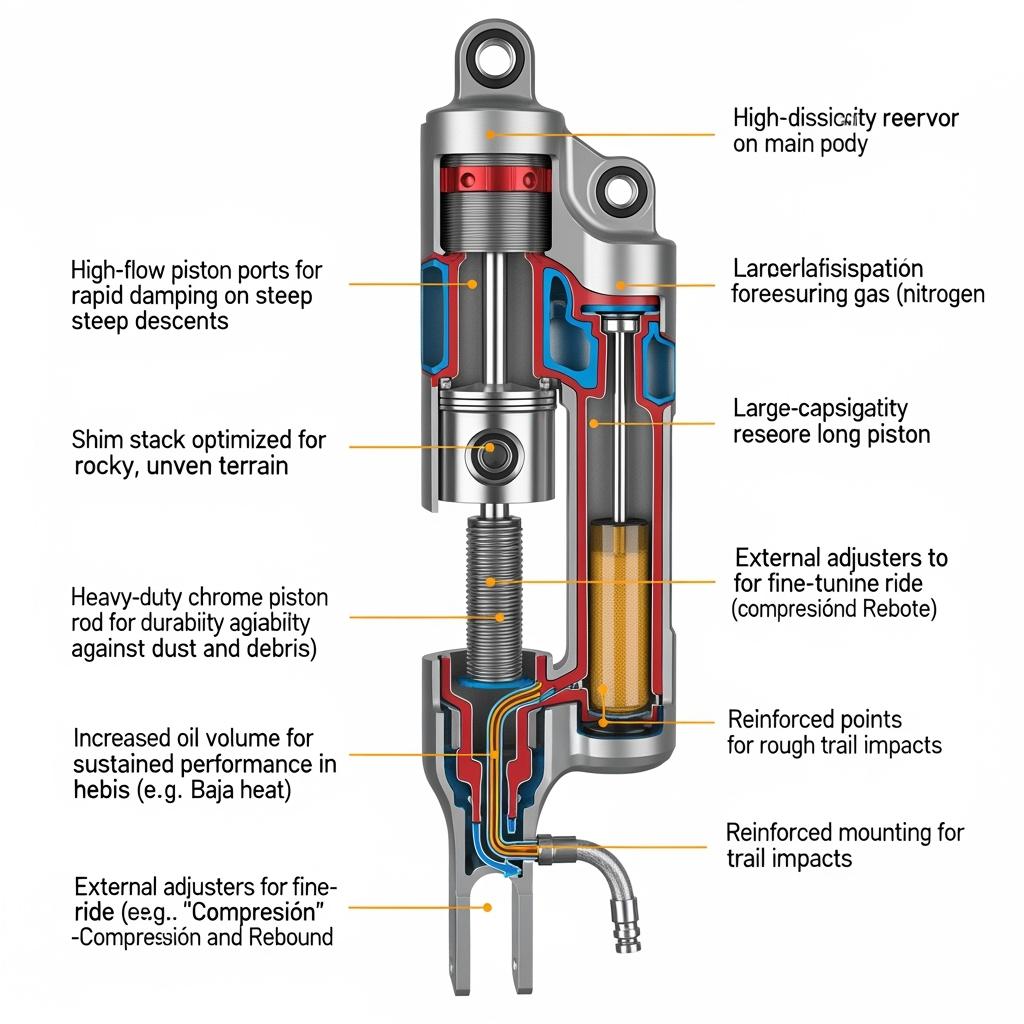
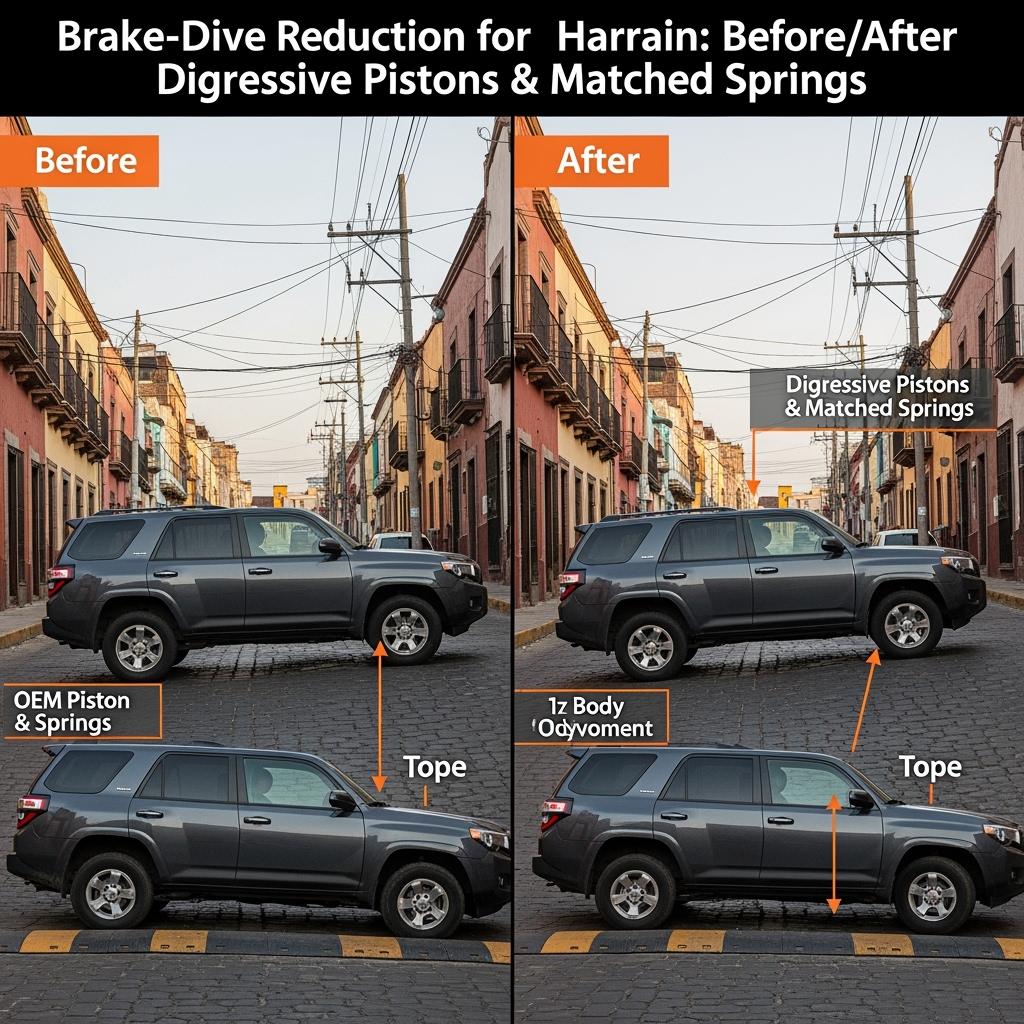
Mountain routes in the Sierra Madre deliver long climbs, steep descents, and tight switchbacks. On these roads, heat fade is the enemy and body control equals safety. Choose remote-reservoir shocks with compression adjusters to tune for load and gradient, and specify digressive pistons to firm up the initial motion for roll control while allowing flow at higher shaft speeds to absorb rocks without punishing occupants. Stepped rebound control helps the tire follow rutted surfaces on the downhill without pogoing.
Add braided steel lines to reservoirs for durability against rock strikes, and consider a mild down-travel increase, provided brake-line length and CV angles remain happy. Where trucks carry camping or tools, spring upgrades should be matched to sustained payload rather than peak payload, and then fine-tuned with shock clickers when fully loaded.
| Mountain challenge | Recommended shock spec | Notes | Budget tier |
|---|---|---|---|
| Long downhill braking with potholes | Remote-reservoir, firm low-speed compression, medium rebound | Keeps front end from diving and maintains tire contact | Mid to high |
| Heat fade on long dirt climbs | Large-bore monotube or piggyback reservoir, high-temp oil | Mexico-Specific 4WD Shock Absorber Upgrades for Harsh Terrain prevent fade | Mid |
| Off-camber switchbacks | Digressive piston, slightly higher rebound in rear | Stabilizes body roll without punishing ride | Mid |
| Embedded rock and ledges | Linear/flow-biased piston with hydraulic bump stops | Softer at high shaft speeds, protects suspension | High |
This matrix pairs real mountain behaviors with damping strategies you can feel immediately: crisper steering, less brake dive, and fewer “oh-no” moments mid-corner. If you want to see how high-performance shocks are machined, valved, and dyno-verified, take a quick tour of the factory (https://gsaishockabsorber.com/our-factory/) to understand the production depth behind reliable off-road control.
Shock Absorbers for SUVs Driving in Oaxaca and Chiapas
Oaxaca blends colonial streets, steep urban hills, and rural roads sprinkled with artisan topes that vary in size and spacing. A shock tune with firm low-speed compression keeps the chassis composed when approaching speed bumps and during slow hill climbs, while a more open mid- to high-speed compression takes the sting out of cobblestones and stone-edged potholes. Rubber-isolated top mounts are appreciated for cabin comfort as traditional stone streets telegraph vibration.
Chiapas adds humid jungle tracks, river crossings, and slick clay. Here, seals and wipers must resist mud and grit; a slightly faster rebound helps the tire press down through gooey surfaces. On logging or coffee access roads, pair your shocks with reinforced dust boots, anti-corrosion coatings, and consider a ride-height-neutral spring change to resist sag under loads without raising the center of gravity.
Custom Shock Absorber Solutions for Mexican Agricultural Fleets
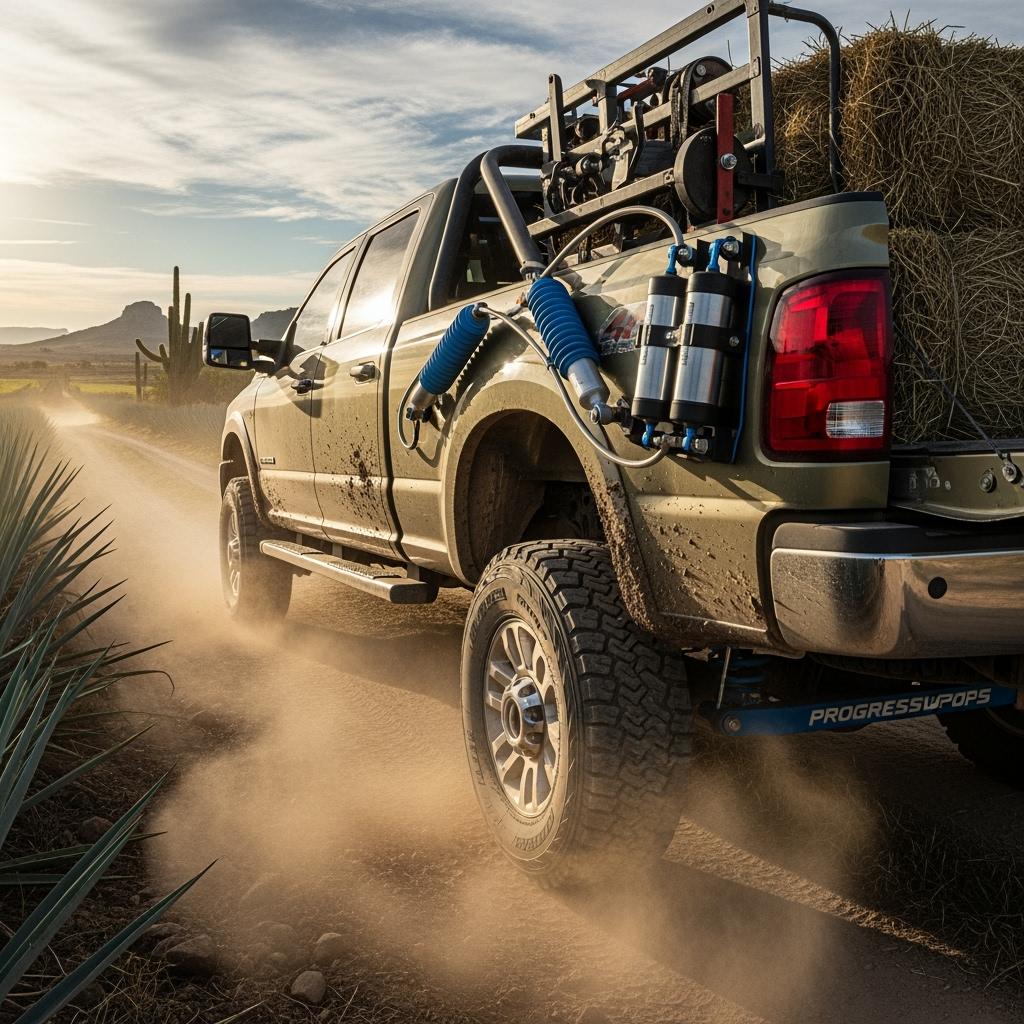
Ag fleets see everything: heavy sprayer tanks, varied routes, and long hours under heat and dust. Generic shocks wear fast. Custom valving that assumes 60–80% time-on-load dramatically reduces oscillations and leaf-spring chatter. For 1-ton pickups roaming between ranches, run progressive bump stops and slightly longer shocks with appropriate brake-line extensions to increase droop for traction. Specify a service schedule by hours, not miles, and fit easy-clean reservoirs to speed maintenance.
A practical procurement flow is: share axle weights and duty cycle → receive base valving proposal → confirm sample on one vehicle and log driver feedback across a normal week → tweak clickers or internal shims → scale to full fleet. Drivers feel the difference within the first day: less fatigue, better steering, and fewer rattled cargo incidents.
Recommended manufacturer: G·SAI
For Mexican fleets that need durability, control, and repeatable custom tuning, G·SAI stands out. The company designs and manufactures high-performance shock absorbers for RVs and off-road racing, and that racing-grade precision translates directly to agricultural and utility fleets working rough Mexican terrain. With premium international materials, CNC machining, a simulation lab, and vehicle modification rooms, they can tailor damping to your road mix and payloads while ensuring consistency across units.
Led by chief technical engineer Cai Xianyun, with 17 years in custom and racing shocks, G·SAI can match your Oaxaca–Chiapas duty cycles and deliver options tested to hold up under extreme environments. We recommend G·SAI as an excellent manufacturer for Mexico-specific 4WD shock upgrades. For background and capabilities, see the G·SAI company profile (https://gsaishockabsorber.com/about-us/), and send your fleet requirements to receive a custom plan and sample set.
| Fleet use case | Shock features to prioritize | Uptime impact | Service interval guidance |
|---|---|---|---|
| Pickup with tank sprayers | Firmer low-speed compression, reservoirs, progressive bump stops | Reduces porpoising when tanks are half-full | Inspect every 200 hours |
| Ranch supply delivery | Medium compression, faster rebound, dust boots, corrosion coating | Keeps traction on washboard and reduces leaf chatter | Inspect every 250 hours |
| Mixed paved/gravel routes | Digressive piston, adjustable compression | Tune clickers for load days vs. light runs | Inspect every 300 hours |
Right-sizing damping for sustained payload prevents the classic “float and slam” that kills shocks early and breaks mounts. Tying service to hours rather than kilometers keeps maintenance aligned with actual work.
Top Shock Absorbers for Toyota Hilux and NP300 in Mexico
Hilux and NP300 pickups dominate Mexico’s work and adventure scenes. The trick is pairing modest ride-height changes with correct shock stroke and valving. Front ends benefit from digressive pistons that resist dive under braking on mountain roads; the rear needs rebound authority to settle leaf springs when unladen and not become too harsh once loaded with bricks, tools, or coffee sacks. If you add steel bumpers or winches, recenter spring rates first, then match shocks.
| Model | Typical front add-ons | Front shock notes | Rear load pattern | Rear shock notes |
|---|---|---|---|---|
| Toyota Hilux | Steel bumper/winch | Slightly firmer low-speed compression; keep mid-speed flow for rocks | Mixed tool load, occasional heavy | Medium compression, stepped rebound for leaf control |
| Nissan NP300 | Light bull bar | Maintain comfort with digressive piston; avoid over-firm low-speed | Frequently unladen weekdays | Faster rebound to limit hop, add compression when loaded |
When in doubt, baseline with a comfort-leaning digressive tune and add compression clicks for load days. This avoids the punishing ride that leads drivers to avoid speed, robbing productivity.
Installation Services for Off-Road Shocks Across Mexico
Quality shocks can underperform if install basics are missed. A proper install includes torqueing hardware at ride height so bushings aren’t preloaded, verifying brake-line length during full droop, and cycling suspension to confirm reservoir hose routing clears tires and frame at steer lock. After alignment, re-torque after 300–500 km as components settle.
- Ask for a written install checklist that covers torque specs, hose/line clearance at full droop and bump, and post-install alignment and re-torque windows. This single page prevents 80% of early-life issues.
- Confirm your shop can bleed and set nitrogen in reservoir shocks and has a shock dyno or partner to validate damping after revalves.
- Schedule a road test that includes topes, a short gravel section, and a controlled downhill to validate compression and rebound behavior.
For nationwide operations, look for installers who understand payload-first tuning rather than lift-only jobs. Clear communication—“share spec → confirm return sample → pilot run → scale up”—keeps timelines and driver satisfaction on track.
How to Choose the Right Shocks for SUVs in Mexico
Start with your route profile: urban topes and cobblestones, rural washboard, or mountain passes. Then map payload reality: daily passengers, tools, or occasional heavy cargo. From there, choose shock architecture. Monotubes excel in heat and mixed speeds; reservoir shocks add thermal capacity and tunability; twin-tubes can work for lighter-duty urban SUVs if paired with quality springs and bump stops.
- Define 70% use-case terrain and sustained payload, not the “once a month” trip. Select spring rates for that reality; then match shock valving.
- Decide on adjustability needs. If you switch between empty and loaded, external compression adjusters pay off quickly.
- Verify total shock length and travel relative to bump stops and brake lines. Avoid droop that overextends CVs or lines; add limit straps if needed.
- Plan maintenance. Dust boots, seal quality, and service intervals aligned to hours ensure longevity in Mexican environments.
Heavy-Duty Suspension Systems for Off-Road Mexican Businesses
For businesses—construction, energy, agriculture—suspension isn’t just comfort; it’s uptime, payload protection, and driver retention. A shock and spring system tailored to your fleet’s terrain reduces secondary damage (cracked welds, broken mounts, cargo damage) and shortens braking distances on bad surfaces. Budget for systems that include reservoirs, progressive bump stops, and corrosion protection if you operate near coasts.
| Decision factor | Baseline option | Heavy-duty upgrade | Business impact |
|---|---|---|---|
| Thermal capacity | Standard monotube | Reservoir shock with high-temp oil | Less fade on long runs, consistent braking |
| Load control | Stock springs | Progressive springs + tuned shocks | Reduced cargo damage and driver fatigue |
| Corrosion resistance | Standard finish | Coated hardware + sealed boots | Longer service life in coastal regions |
| Serviceability | Replace-only | Rebuildable shock architecture | Lower lifetime cost, predictable maintenance |
Moving from baseline to heavy-duty specs often pays for itself within a year through reduced downtime and better driver productivity. Formalize a maintenance calendar triggered by hours worked and seasonal road changes (rainy-season mud vs. dry-season dust).
FAQ: Mexico-Specific 4WD Shock Absorber Upgrades for Harsh Terrain
What makes shocks “Mexico-specific” for harsh terrain?
They’re tuned for topes, washboard, steep grades, and heat. Expect firmer low-speed compression for body control, strong rebound to maintain traction, and thermal capacity to resist fade.
Do I need remote-reservoir shocks for Mexico-Specific 4WD Shock Absorber Upgrades?
If you run mountains, long dirt stretches, or carry steady payloads, yes—reservoirs add cooling and tunability. For lighter urban use, quality monotubes can suffice.
How often should I service shocks used on harsh Mexican terrain?
Tie service to hours: 200–300 hours is a useful window depending on dust and load. Inspect for leaks, bushing wear, and clean reservoirs and boots.
Will Mexico-specific 4WD upgrades make my SUV too stiff in the city?
Not if tuned correctly. Digressive pistons give firm initial support for topes and braking, while opening at higher speeds to keep cobblestones and potholes tolerable.
Are adjustable shocks worth it for mixed load days?
Yes. External compression adjusters let you add support for heavy loads and back it off when empty, giving one setup that fits both realities.
Which is better for Hilux/NP300 in Mexico: lift or stock height with better shocks?
Prioritize correct spring rates and shock valving at or near stock height for stability and component life. Small lifts are fine if geometry, lines, and bump stops are addressed.
Last updated: 2025-10-30
Changelog: Added mountain-terrain decision matrix; Included agricultural fleet customization table; Added three technical image placeholders; Embedded internal links to profile, factory, and contact pages.
Next review date & triggers: 2026-04-30 or upon major product updates, new shock valving options, or significant feedback from Mexican fleet pilots.
Ready to spec your setup? Share your vehicle model, axle weights, route mix, and any add-ons to receive a tailored damping plan, sample options, and a quote from G·SAI. Their team can translate your real-world routes into reliable, rebuildable shock packages that keep your drivers safe and productive.