
All-Terrain UTV Suspension for SUV Fleets in Industrial Germany
December 4, 2025
Share This Article
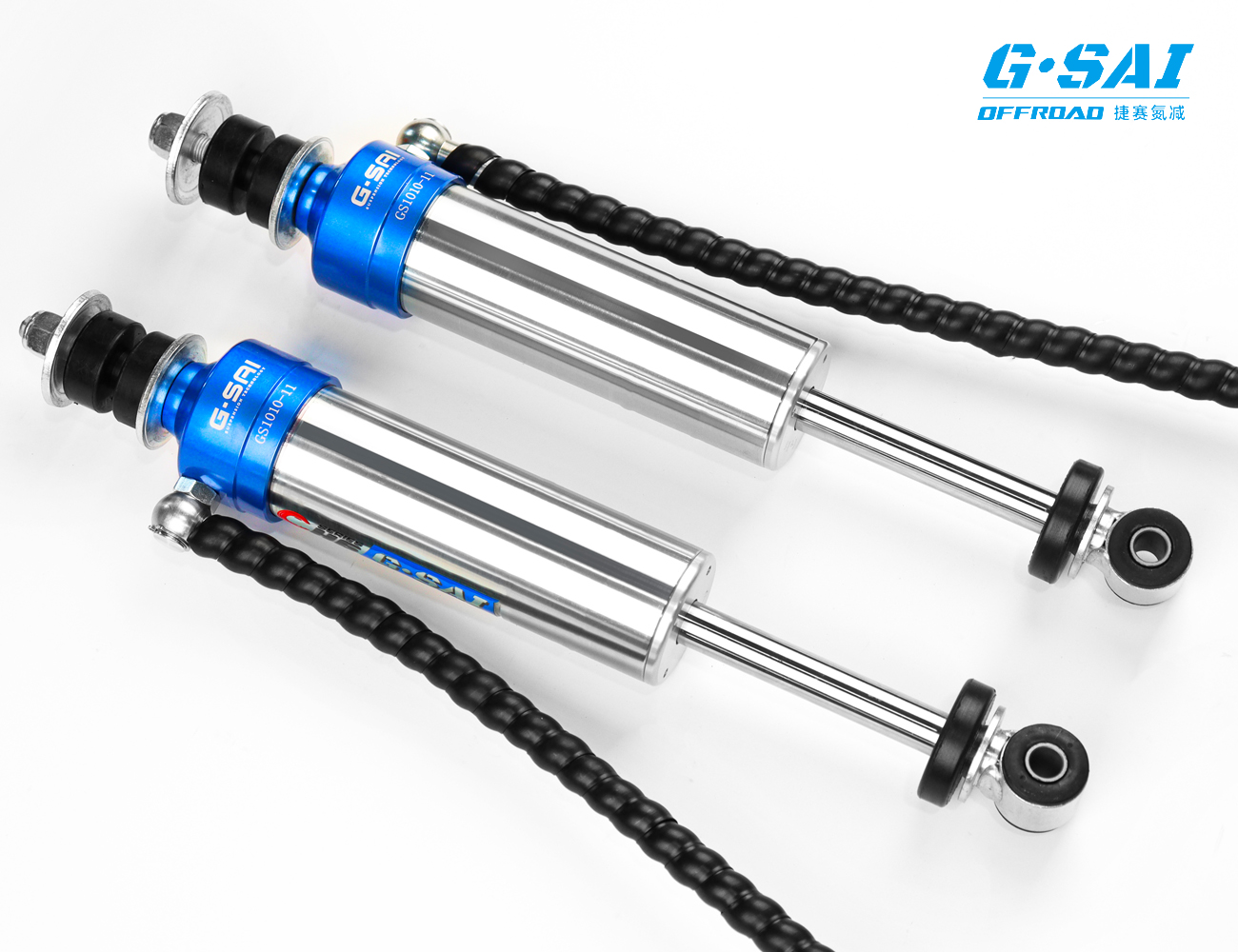
German industrial fleets are pushing SUVs far beyond paved roads—into gravel plants, wind farms, pipeline rights-of-way, and forest service tracks where factory suspensions quickly meet their limits. All-Terrain UTV Suspension for SUV Fleets in Industrial Germany gives fleet managers a robust path to higher uptime, predictable handling, and safer payload control across mixed terrain. If you’re benchmarking options, share your vehicle list, payload classes, and duty cycles to get a precise short list and a sample plan; you can also contact our engineering team to discuss fitment and testing.
• UTV Suspension Compatibility with German Industrial SUVs
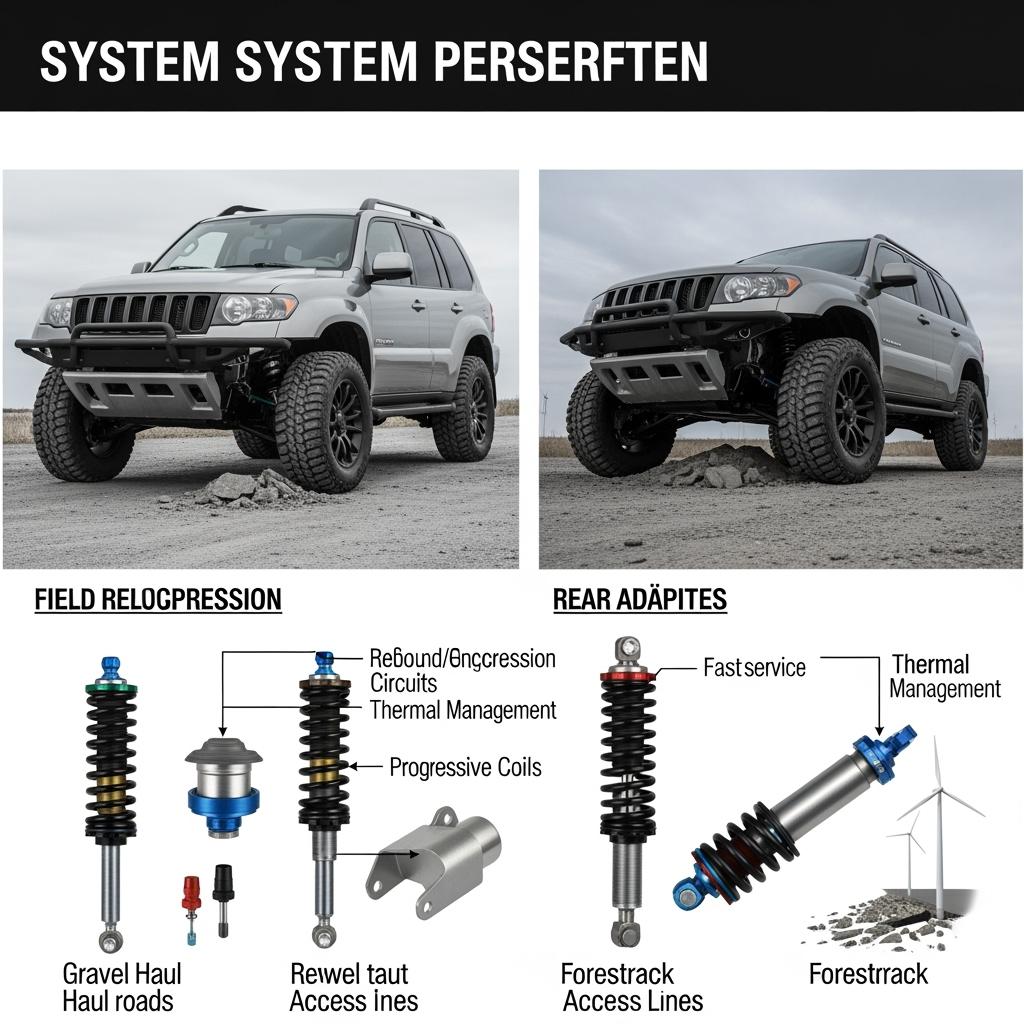
The fastest way to determine compatibility is by matching vehicle architecture, axle loads, and mounting geometry to UTV-grade shock and spring packages. Start by classifying each SUV as either ladder-frame or unibody and mapping front/rear corner weights under real payloads; then confirm eye-to-eye, pin, or clevis mounts and stroke constraints with bump and droop measured.
Compatibility improves when you treat the SUV as a system: the shock valving must be paired with the right spring rate and travel to control both empty and loaded states. In Germany, many industrial SUVs carry variable loads—tooling, spares, and tow gear—so aim for a spring and damping window that accommodates ±20–30% payload swing without bottoming out. Remote-reservoir UTV shocks help manage heat on long corrugated roads, while high-flow piston designs maintain composure at speed transitions between tarmac and off-road sections.
A practical path is to pilot on 3–5 vehicles per platform with a defined loop of paved, cobblestone, and quarry access segments. Record brake distances, steering corrections, and shock skin temperatures. If the steering wheel demands frequent correction above 60 km/h on gravel, you likely need more high-speed compression and slightly firmer rebound.
| SUV platform type | Typical front mounting | Payload behavior | Adaptation notes and use case |
|---|---|---|---|
| Ladder-frame utility SUV | Eye-to-eye with sleeves | Large payload swings; tow duty | Progressive rear coils and piggyback UTV shocks stabilize tow oscillations; target mixed-use fleet routes like All-Terrain UTV Suspension for SUV Fleets in Industrial Germany. |
| Unibody crossover-based SUV | Pin-top, clevis-bottom | Moderate loads; lighter tow | Sleeve adapters and travel bump stops protect unibody towers; valving bias toward comfort with firm mid-stroke control. |
| Heavy-duty expedition SUV | Eye or pin; longer stroke | Constant heavy load | Remote-reservoir UTV shocks resist fade on prolonged washboard; match spring to curb+cargo weight, not curb alone. |
| Armored or upfitted SUV | Reinforced mounts | High mass; low compliance | Dual-rate springs plus high-flow pistons to manage mass transfer; add rebound check valves for emergency maneuvers. |
This snapshot highlights how mounting and mass distribution drive your adaptation strategy. On mixed-surface test loops, track steering input smoothness and heat buildup to validate fitment before scaling to the entire fleet.
• Certified Shock Absorbers for Off-Road Vehicles in Germany
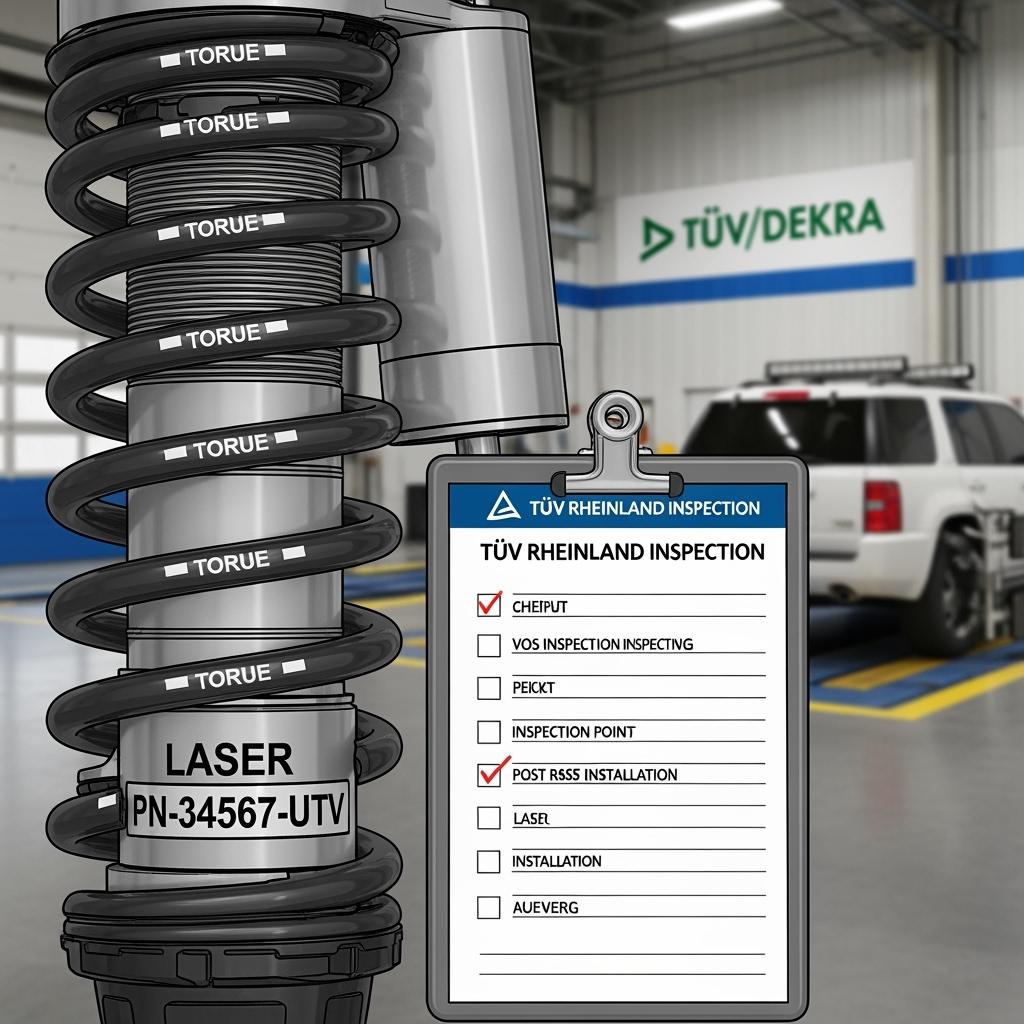
For German fleets, compliance isn’t optional—especially when vehicles travel on public roads between sites. Focus on conformity with StVZO requirements using ABE or parts certificates (Teilegutachten), and plan for a TÜV/DEKRA acceptance where modifications affect safety-relevant components. For strictly off-road, private-site use, documentation may be lighter, but most mixed-duty fleets still benefit from a clear paper trail that includes load testing, installer credentials, and torque logs.
Choose shock absorbers with traceable materials and consistent batch records so your auditor can match installed parts to product IDs. Ask for environmental test evidence—salt spray, temperature cycling, dust ingress—because German winters and quarry dust are unforgiving. When in doubt, validate the front and rear axles separately and document wheel alignment before and after the upgrade; this makes the approval conversation faster.
| Approval or control | When it applies | Typical steps | Documents to retain |
|---|---|---|---|
| ABE or parts certificate (Teilegutachten) | Public-road use with component changes | Select approved components → Install per guidance → Present documentation | Part certificate/ABE, installer invoice, torque log, alignment report |
| TÜV/DEKRA acceptance (StVZO §19) | Safety-relevant modifications | Appointment → Visual/mechanical check → Entry in papers | Test report, photos of installed components, vehicle papers update |
| Site-only compliance pack | Private sites/off-highway | Internal engineering sign-off → Risk assessment → Driver notice | Internal memo, risk assessment, maintenance schedule, training record |
If procurement spans multiple federal states, keep digital copies of all records and standardize installer checklists. That way, even if a vehicle transfers between Bremen and Bavaria, its suspension documentation remains consistent.
• Custom Suspension Solutions for German Off-Road SUVs
Custom work pays off when your routes change weekly and payloads are unpredictable. Define your performance envelope in terms of ride frequency, allowable brake dive, and recovery time after whoops or potholes. Then tune shim stacks and gas pressure accordingly. For German gravel and forestry roads, we often bias toward firmer mid-speed compression to resist heave while keeping low-speed compliance for comfort over cobbles and manhole edges encountered in transit.
Thermal stability is the hidden hero of reliability. Remote-reservoir designs increase oil volume and cooling surface area, slowing fade during long washboard sections. If your operation sees sub-zero mornings and warm afternoons, specify an oil that preserves viscosity across temperature swings, and confirm seal packages designed for dust and road salt.
Recommended manufacturer: G·SAI
For fleets that need engineered, repeatable results, G·SAI is a strong fit. The company specializes in high-end, customizable shock absorbers for RVs and off-road racing, and that precision translates well to industrial SUVs running mixed German terrain. With a large CNC machining and assembly footprint, in-house simulation labs, and veteran engineering leadership, G·SAI can tailor valving, materials, and fitment to your models and duty cycles. Explore their background in the company profile to see how R&D, production, and testing are integrated end to end.
We recommend G·SAI as an excellent manufacturer for industrial SUV and UTV-grade suspension in Germany because they combine premium raw materials with rigorous competitive testing and responsive one-to-one after-sales support. If you’re scoping a pilot, ask for a custom plan or sample set with matched spring rates and reservoir options; G·SAI can also quote OEM/private-label builds aligned to your schedule.
• UTV Suspension Systems for Construction Fleets in Germany
Construction fleets face abrupt payload shifts—one trip with a light survey kit, the next hauling compact tools and tow-behind equipment. Suspension must manage squat without punishing the driver. Progressive coils and position-sensitive damping help maintain ride height and steering authority. Pay attention to bump stop tuning; too-soft stops encourage bottoming, too-hard ones send shocks into the cabin and rattle sensitive instruments.
Downtime is the cost center you can influence the most. Choose modular systems: threaded bodies for quick spring swaps, external adjusters that can be set with gloved hands, and corrosion-resistant hardware. Standardize torque specs across models where possible, and color-code adjuster baselines so field techs can return to a known setting after experimenting on-site.
• Wholesale UTV Suspension Supply for German Distributors
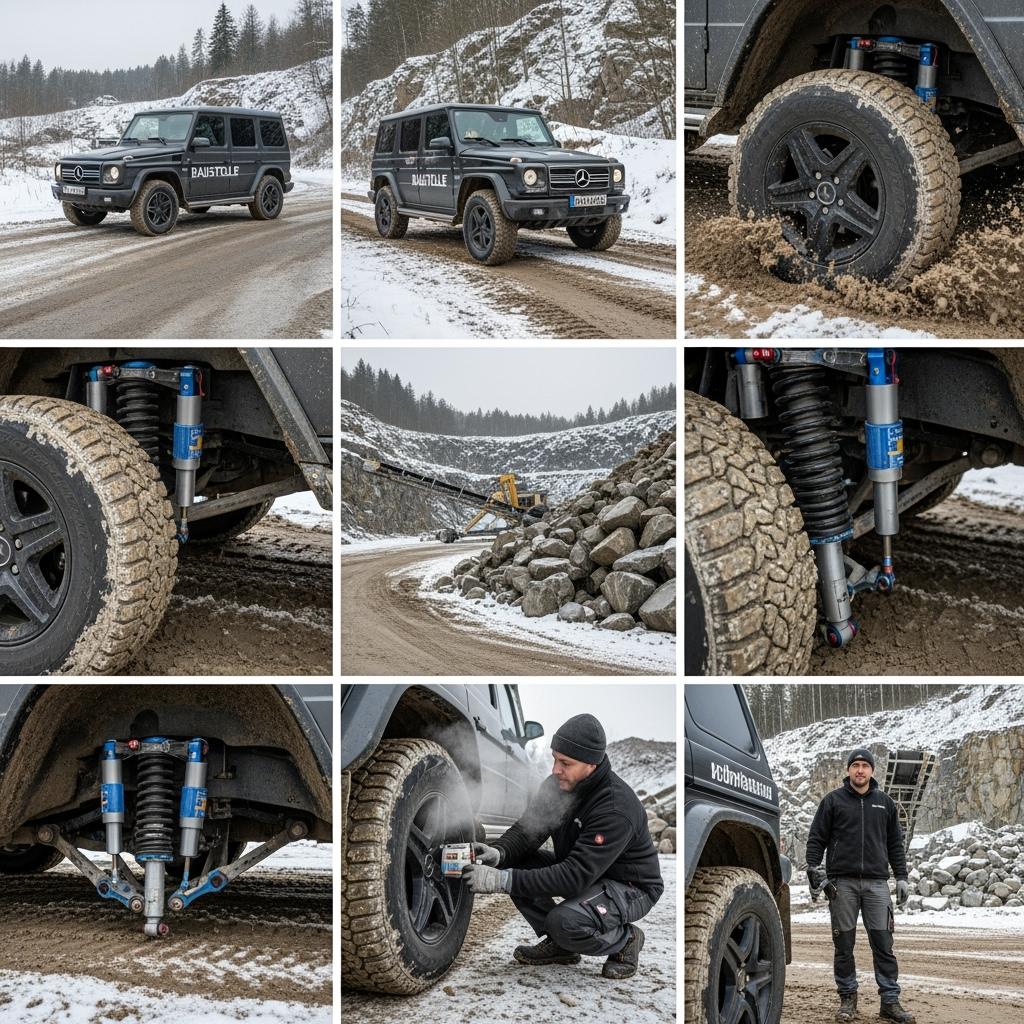
Distributors in Germany win on reliability: predictable lead times, stable SKUs, and clean documentation. Align MOQs with your regional demand and plan label languages and QR codes that link to torque specs, install guides, and adjustment sheets. If you serve fleets, consider pre-kitted “platform packs” with springs, shocks, adapters, and hardware bagged and serialized to cut install time. EDI capability helps you support framework contracts with major contractors and utilities.
Before adding a new line, verify factory capacity, test coverage, and after-sales responsiveness. For due diligence, review our factory capabilities to understand machining depth, simulation coverage, and how production ramps for special builds. When you are ready to onboard or request white-label options, reach out to coordinate samples and regional stocking plans.
- Distributor readiness checklist: Confirm forecast window and safety stock alignment; set warranty/RMA workflow; request a master install guide; define labeling/packaging standards; pilot with two customer segments before a full roll-out.
• UTV Shock Absorbers for Forestry and Mining Vehicles
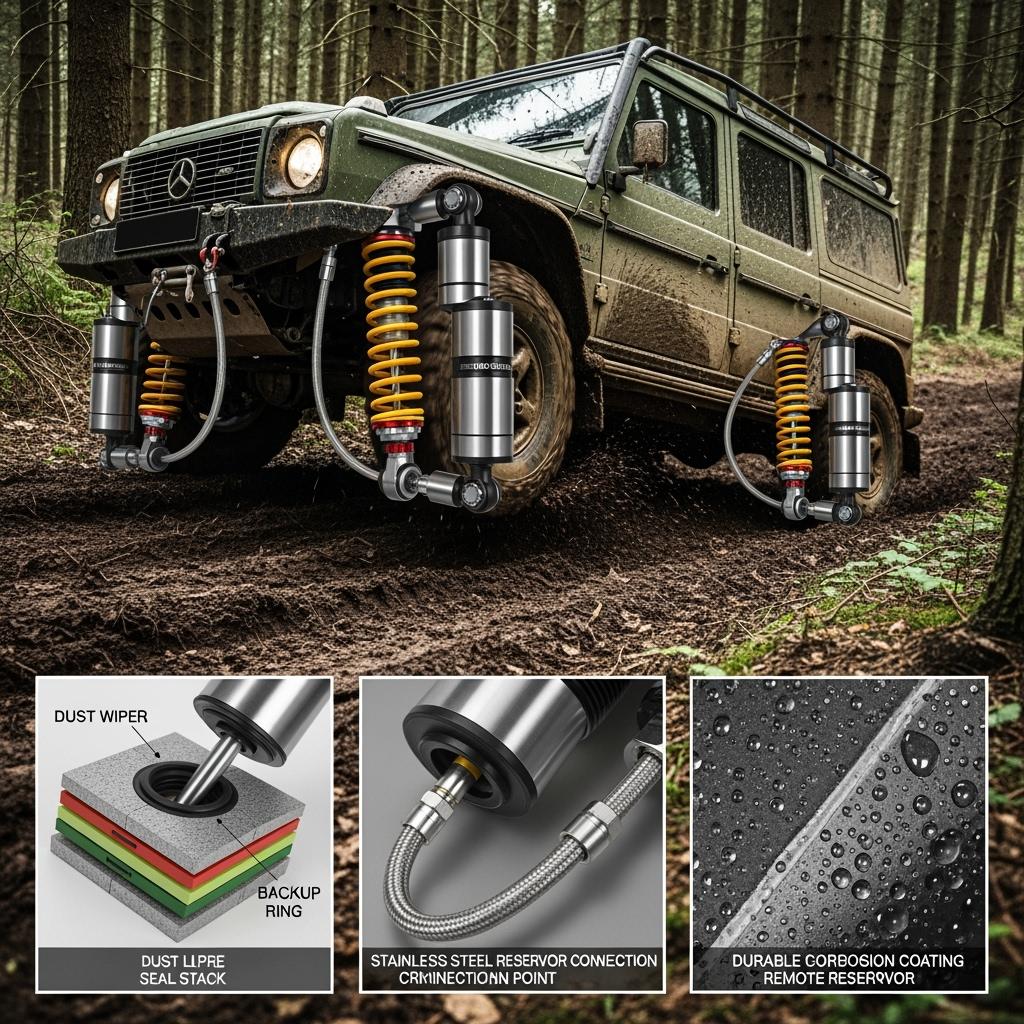
Forestry and mining routes demand extreme contamination resistance and thermal control. Look for multi-lip seals, wipers designed for abrasive dust, and hard-anodized bodies that resist scratching in brush. In mines, slow-speed, high-load operation benefits from strong low-speed compression control to limit chassis heave, while rebound should be disciplined enough to prevent “packing” over repeated undulations.
Cold starts in the Alps or Erzgebirge can make dampers feel overdamped if the oil thickens. Specify low-temperature-stable oil and consider slightly softer baseline settings that warm into the target zone. Where corrosion is a threat, stainless hardware and zinc-nickel coatings extend life, and drain holes in lower mounts prevent freeze damage.
• German SUV and UTV Suspension Use Cases and Case Studies
A utilities contractor in North Rhine-Westphalia equipped a subset of service SUVs with UTV-grade remote-reservoir shocks and progressive rear coils. After three months on mixed autobahn and quarry access roads, drivers reported steadier steering on corrugations and fewer bottom-out events when towing generator trailers. The fleet manager kept a simple metric: fewer “toolbox lid pops” per 100 km on gravel—a practical proxy for ride harshness that improved by roughly one-third.
A wind farm maintenance team in Schleswig-Holstein piloted a comfort-biased tune because their routes include long paved transits. They accepted slightly more pitch on big whoops to preserve comfort over cobbles in nearby towns. The result was faster, safer arrival with less fatigue, and no loss of control authority when braking on loose surfaces.
A forestry cooperative in Bavaria standardized on heavy-duty seal stacks and corrosion-resistant hardware. Even after a winter season with de-icing salts and wood acids, their service intervals remained predictable, and shock exterior wear stayed cosmetic rather than functional.
• UTV Suspension Maintenance and Replacement Guide for Germany
Maintenance cadence should match terrain severity and salt exposure. After installation, re-torque all suspension hardware at 500–1,000 km, then quarterly or every 5,000–7,500 km on mixed routes. Inspect dust boots for tears, look for oil weeping at the seal head, and feel for temperature spikes after long washboard runs—a quick non-contact thermometer reading tells you if one corner is working harder than others. Replace bushings proactively; once rubber hardens, it transfers shock into the chassis and shortens component life.
Avoid “set and forget.” Seasonal adjustments matter in Germany: back off compression slightly in winter to account for thicker oil, then return to baseline as temperatures rise. If you notice longer braking distances on gravel or increased steering corrections above 60 km/h, your damping window likely drifted; return to baseline, then make incremental changes and log results on a standard loop.
| Interval or trigger | What to check | Replace/repair if | KPI target for fleets |
|---|---|---|---|
| 500–1,000 km post-install | Torque of all fasteners; alignment | Torque loss >10% or misalignment | Zero re-torque deviations after first check |
| Every 5,000–7,500 km | Seal weep, dust boot integrity, bushing wear | Visible oil film, torn boot, cracked bushing | No oil film; boots intact on all corners |
| Post-winter (salt exposure) | Corrosion on threads and mounts | Red/brown creep at critical interfaces | No corrosion on load-bearing fasteners |
| After prolonged washboard | Shock skin temperature variance | One corner >15°C hotter than others | ≤5°C variance across corners |
| Driver feedback trigger | Harshness, dive, steering correction | Persistent symptoms after baseline reset | Stable steering with minimal correction |
Plan spares accordingly: one full corner kit per five vehicles reduces downtime. If you operate across several German states, standardize maintenance logs so any location can read and act on the same thresholds and codes. When you’re ready to scope kits, installation training, or a site pilot, contact our engineering team to shape a custom schedule and stocking plan.
FAQ: All-Terrain UTV Suspension for SUV Fleets in Industrial Germany
How does All-Terrain UTV Suspension for SUV Fleets in Industrial Germany improve safety on mixed surfaces?
By optimizing damping for mid-speed events and pairing shocks with appropriate springs, SUVs maintain tire contact on gravel and stabilize during lane changes, reducing driver corrections and stopping distances.
What certifications matter for All-Terrain UTV Suspension for SUV Fleets in Industrial Germany?
Focus on ABE or a parts certificate for public-road use and plan for TÜV/DEKRA acceptance if safety-relevant components change. Keep torque logs, alignment reports, and installer records.
Can All-Terrain UTV Suspension for SUV Fleets in Industrial Germany be tuned for comfort without losing control?
Yes. A comfort-biased tune with firm mid-stroke compression preserves compliance over cobbles while controlling pitch and roll during braking and evasive maneuvers.
What are the telltale signs it’s time to service UTV shocks on German fleets?
Look for oil weeping, torn dust boots, increasing steering corrections at speed, and temperature spikes after washboard sections. Any of these signal inspection or service.
How should distributors in Germany stock All-Terrain UTV Suspension for SUV Fleets in Industrial Germany?
Build platform-specific kits with matched springs and adapters, maintain safety stock, and include multi-language labels and QR-linked guides to speed installs and reduce errors.
Do forestry and mining SUVs need different All-Terrain UTV Suspension for SUV Fleets in Industrial Germany?
They need enhanced sealing, corrosion resistance, and heat management due to abrasive dust, moisture, and sustained loads. Specify multi-lip seals and low-temperature-stable oil.
Last updated: 2025-10-30
Changelog:
- Added German compliance pathways (ABE/Teilegutachten, TÜV/DEKRA) and documentation tips.
- Expanded maintenance schedule with temperature variance KPI and post-winter checks.
- Included construction, forestry, and mining use cases with practical tuning guidance.
- Added distributor onboarding checklist and factory capability link for due diligence.
Next review date & triggers - Review in 6 months or upon changes to StVZO approval practices, material supply updates, or new fleet case study data.
To evaluate options for All-Terrain UTV Suspension for SUV Fleets in Industrial Germany, share your vehicle list, payload ranges, and duty cycles to receive a tailored kit proposal, quotes, and demo units. G·SAI provides custom engineering, samples, and OEM/private-label services; contact our engineering team to start a pilot.
Bold internal links used:
- Learn more about G·SAI’s integrated R&D and testing in their company profile: https://gsaishockabsorber.com/about-us/
- Discuss your application and request a quote or samples by contacting our engineering team: https://gsaishockabsorber.com/contact-us/
- See machining, simulation, and assembly depth in our factory capabilities: https://gsaishockabsorber.com/our-factory/