B2B Supply of SUV Shock Absorbers from China to Thailand
مارس 12, 2026
شارك هذه المقالة
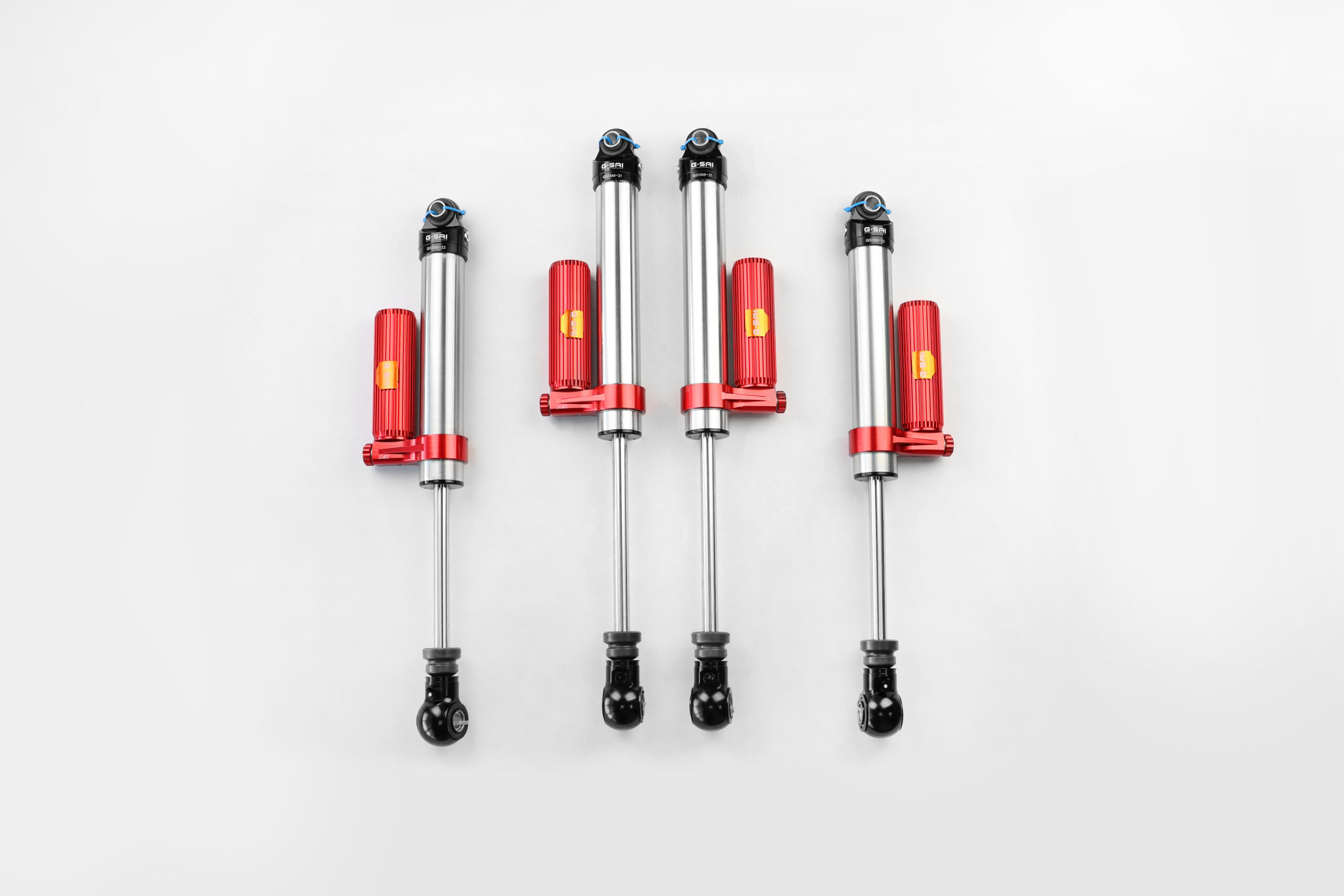
Thai SUV demand for off-road-ready suspension keeps rising, and Chinese manufacturers are now the fastest way to source durable, customizable systems at scale. This guide walks Thai importers, distributors, and 4×4 dealers through the B2B Supply of SUV Shock Absorbers from China to Thailand—from product fit and tuning to customs, logistics, and supplier selection.
If you’re evaluating suppliers now, share your المركبة list, terrain mix, and target ride profile to receive a tailored quote and sample set from G·SAI. Their team can turn around a spec proposal quickly and arrange pilot kits for your Thai market evaluation.
Overview of Exporting Off-Road Shock Absorbers to Thailand
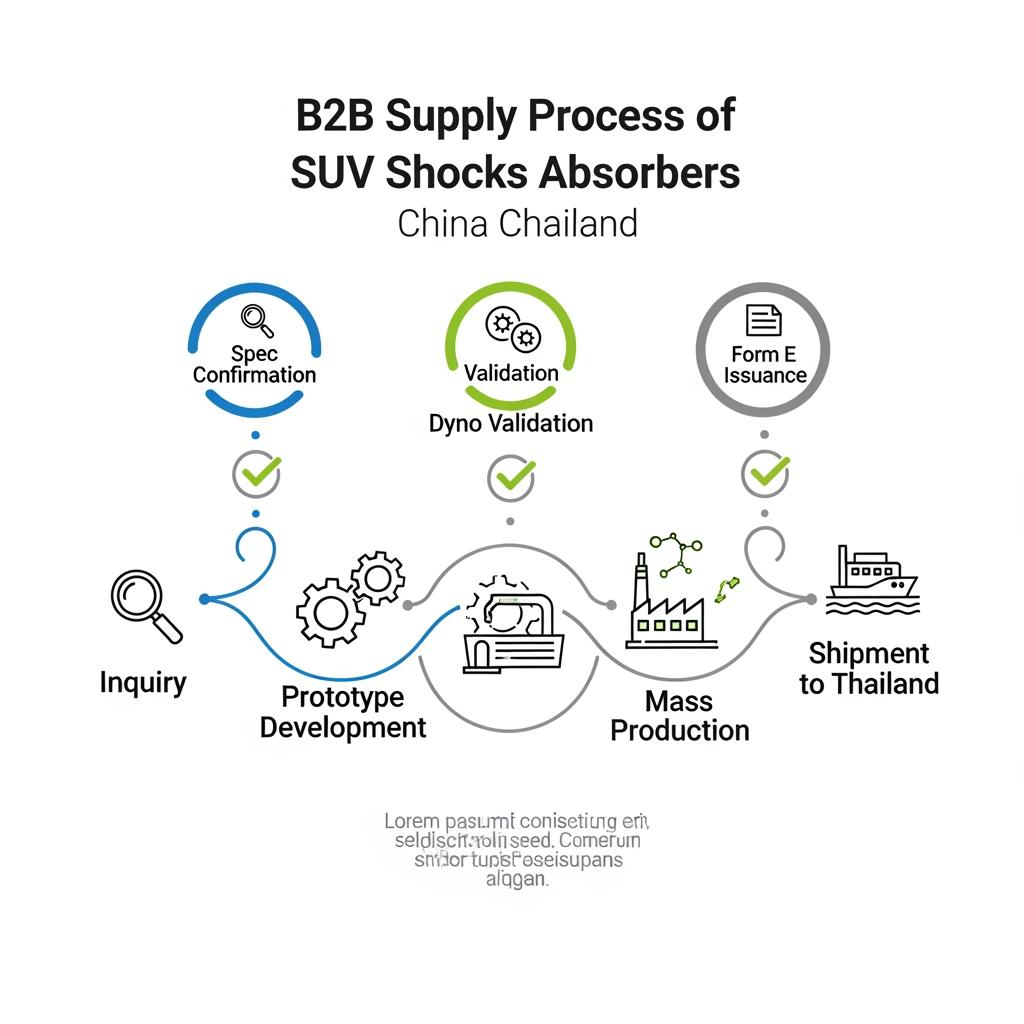
Exporting off-road shocks to Thailand revolves around four pillars: product-market fit, documentation, logistics, and post-sale support. On product fit, Thai SUVs tackle everything from Bangkok potholes to muddy southern trails, so dual-purpose valving and corrosion resistance are essential. On documentation, correct HS classification (commonly 8708.80 for shock absorbers), clean invoices and packing lists, and a Certificate of Origin (Form E under ACFTA when applicable) help avoid delays. Logistics should be planned around seasonality (Songkran, monsoons) and lead-time buffers. Finally, post-sale support—tuning guidance, spare parts, and warranty—secures multi-year repeat business.
For B2B programs, align on Incoterms early. Thai importers often prefer FOB China port or CIF Laem Chabang for cost transparency; larger distributors occasionally opt for DDP when the exporter has a strong Thai brokerage partner. A practical approach is sample kits by air, first PO by LCL, then steady FCL replenishment.
Chinese Off-Road Shocks for Thailand’s SUV Terrain
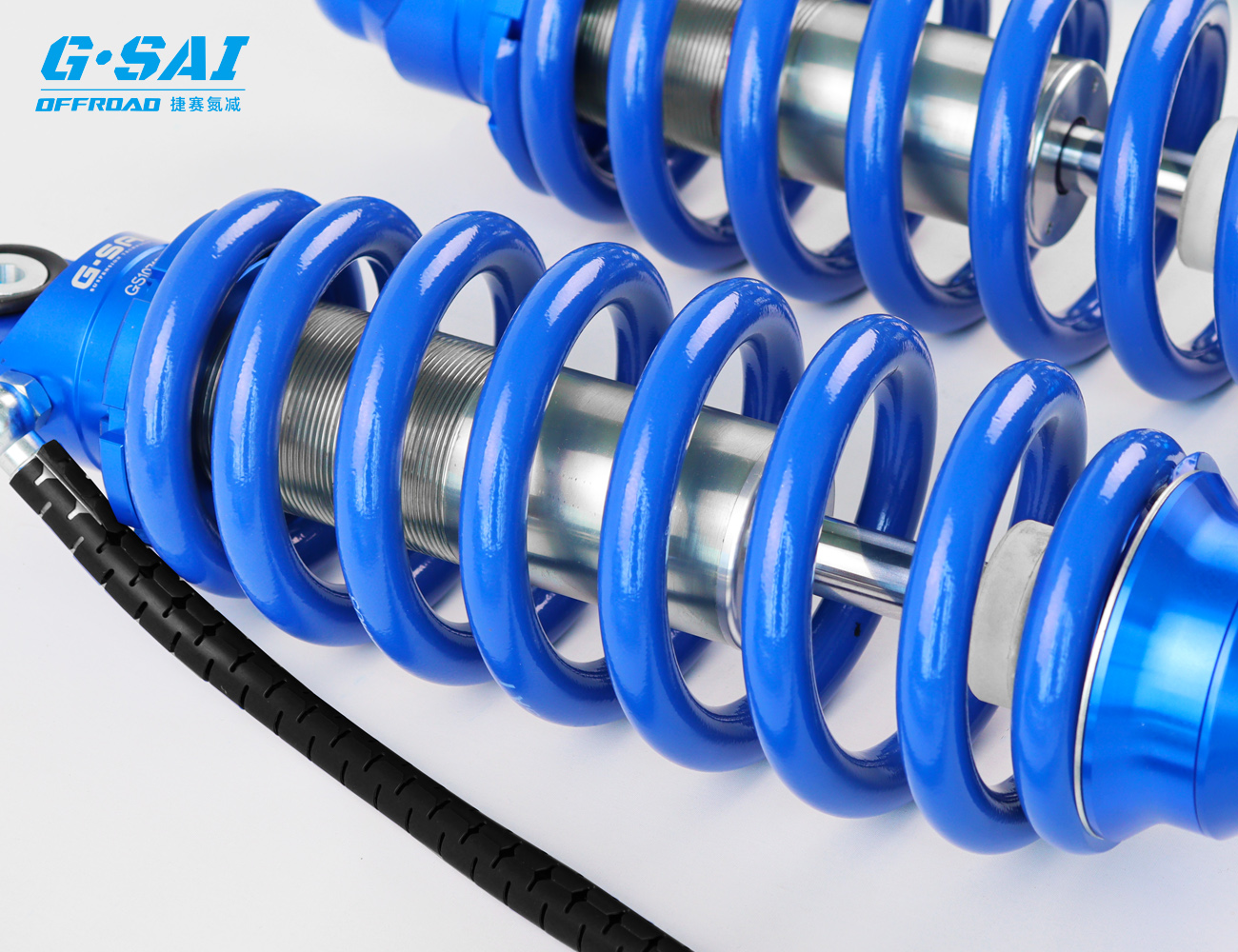
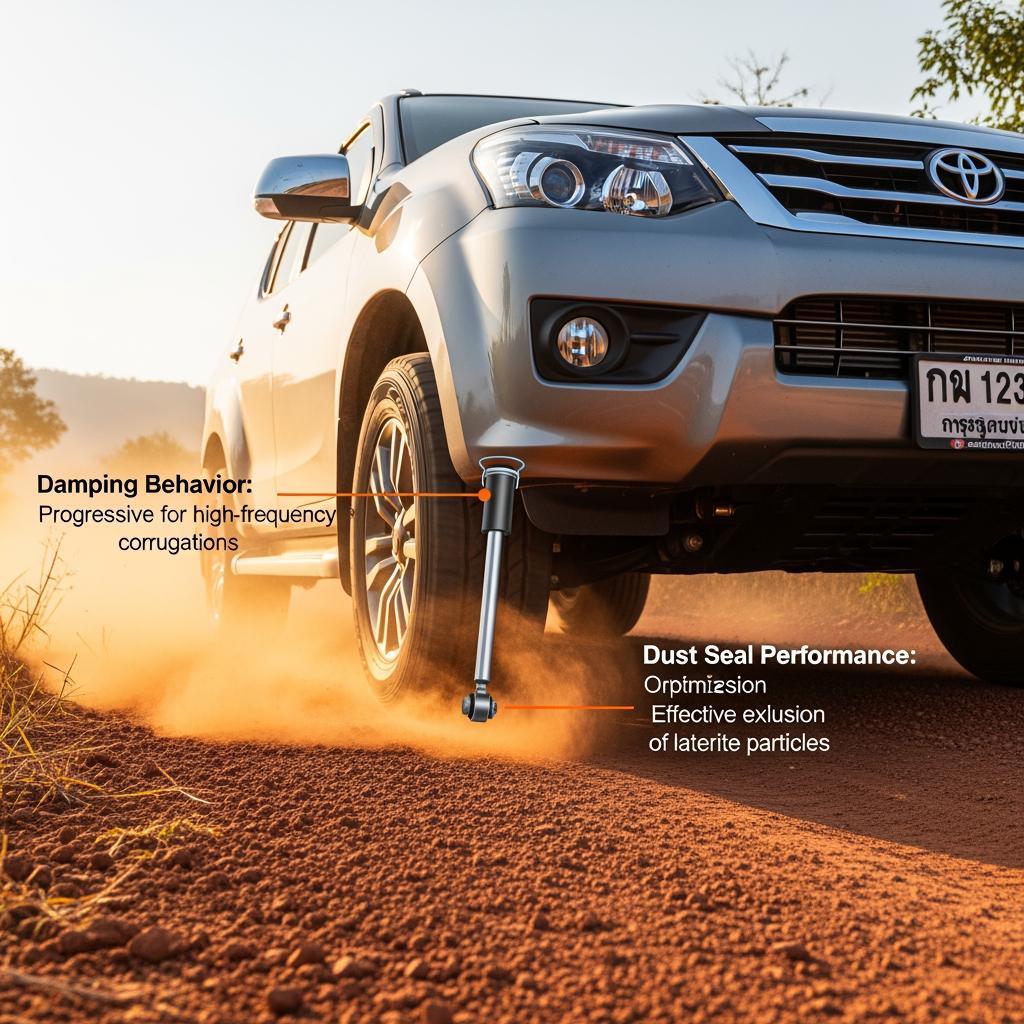
Thailand’s mix of highway commutes, mountain tracks, laterite roads, and monsoon ruts demands adaptable damping. Chinese manufacturers now offer monotube/twin-tube options with adjustable compression, multi-stage valving, and high-temperature fluids suited to Thai heat and humidity. Zinc-nickel plating, hard-anodized bodies, and robust seals are must-haves to fight corrosion and water ingress.
Tuning priorities for B2B Supply of SUV Shock Absorbers from China to Thailand
Field-proven tuning for Thai conditions usually starts with slightly firmer low-speed compression for body control, generous rebound to manage repeated corrugations, and progressive bump stops for sudden washouts. Payload variance—families, overlanding gear, or fleet accessories—should be handled with spring rate choices plus matched damping curves. Below is a quick terrain-to-tuning snapshot.
| تضاريس/حالة استخدام تايلاندية | تركيز الامتصاص | تزاوج النوابض | ملاحظات |
|---|---|---|---|
| Bangkok urban + potholes | Softer high-speed compression to absorb sharp impacts; stable rebound to prevent wallow | OE or mild +10–15% uprate | Quiet NVH and corrosion protection to handle daily wet roads |
| Northern mountain tracks | Strong low-speed compression for body roll; controlled rebound for switchbacks | +15–25% uprate for loaded SUVs | Heat-resistant oil to prevent fade on long descents |
| Southern monsoon mud | Generous rebound to track ruts; mid-speed compression stability | Variable-rate or +20% uprate | Enhanced sealing and wiper design for water crossings |
| Isan laterite corrugations | High rebound energy control; mid-speed comfort tuning | +10–20% uprate | Foam cell or gas monotube to resist aeration and fade |
| Overland touring (mixed) | Balanced low/high-speed response; tunable compression | +20–30% uprate with load options | Use case: B2B Supply of SUV Shock Absorbers from China to Thailand for fleet or dealer kits |
This matrix is a starting point. Request dyno curves alongside vehicle-specific recommendations and validate with a 500–1,000 km Thai pilot route before large commitments.
Why Chinese Suspension Systems Fit Thai Off-Road Needs
Modern Chinese shock programs blend precision machining with adaptive valving at prices that keep dealer margins healthy. The ecosystem—CNC machining, anodization, seal technology, and dyno validation—has matured, enabling short R&D loops and practical customizations for Thai road conditions. Combined with ASEAN–China trade frameworks, many importers find total landed cost and lead time more competitive than Japanese or European alternatives, especially when private-labeling is desired.
Beyond price-performance, the real advantage is configurability: ride-height options, spring rates, compression adjusters, corrosion protection upgrades, and pre-assembled kits for popular Thai SUVs. Ask to review factory testing assets—dyno prints, fatigue tests, and salt-spray procedures. A transparent factory tour, like a CNC line and simulation lab, is a strong quality signal; see G·SAI’s قدرات المصنع for an example of what to expect.
| Procurement path | نقاط القوة | نقاط التحذير | الأفضل لـ |
|---|---|---|---|
| Local Thai stockists | Immediate availability; known brands | Limited customization; higher unit cost | Retail/quick fixes |
| Japanese/Western brands | High brand trust; extensive catalogs | Premium pricing; longer lead times | Enthusiast premium builds |
| Chinese OEM/ODM partner | Custom valving; flexible MOQs; strong value | Vet QA rigor; confirm after-sales | Distributors and 4×4 dealers seeking scalable kits |
For distributors building long-term programs, Chinese OEM/ODM partnerships often unlock Thai-specific tuning and private labels without sacrificing durability.
How to Clear Customs for Shock Absorber Imports in Thailand
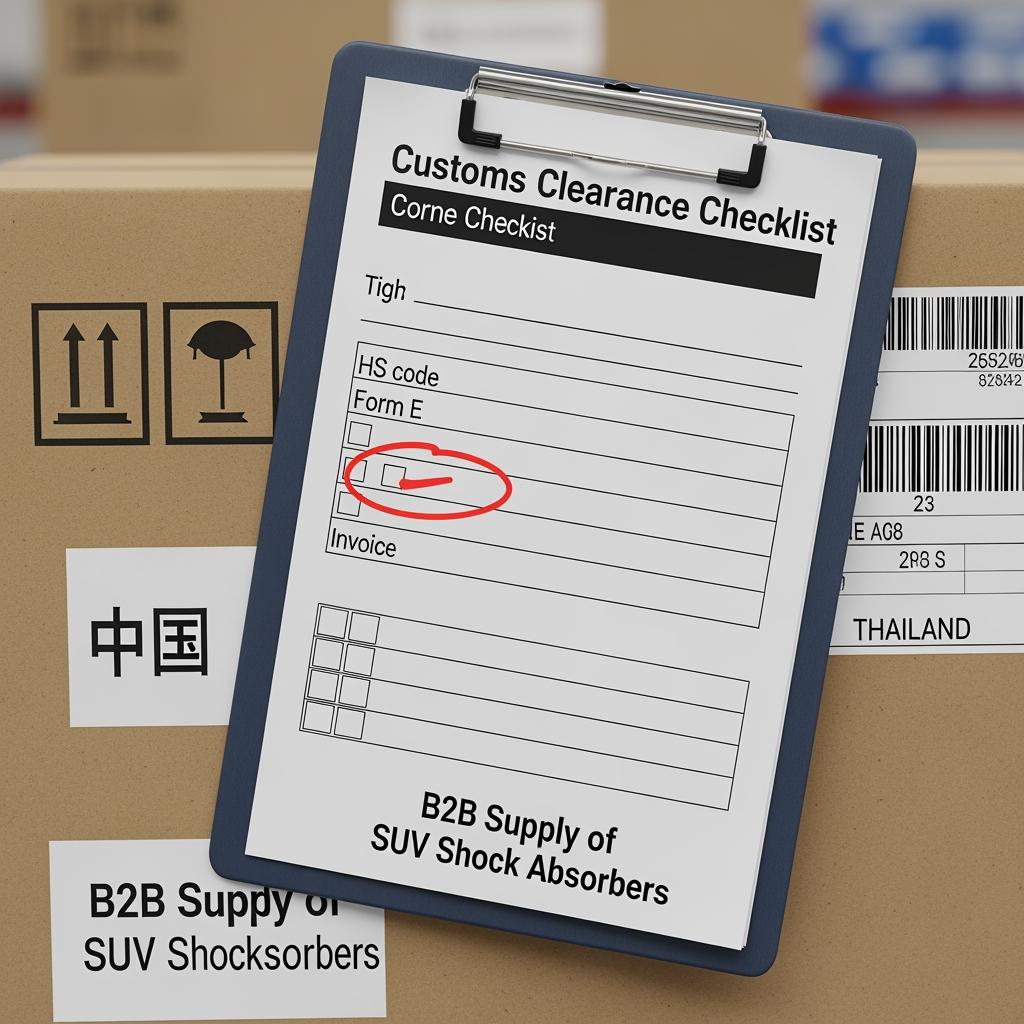
Plan customs early to avoid warehouse rent and delays. Classify under the appropriate HS code (commonly 8708.80 for suspension shock absorbers) and confirm any Thai Industrial Standards (TISI) requirements or Department of Foreign Trade controls for your SKU. If eligible, a properly issued ACFTA Form E can reduce duties; ensure details match the commercial invoice.
- Prepare documents: commercial invoice, packing list, bill of lading/air waybill, HS code declaration, and Certificate of Origin (Form E if applicable). For private labels, include brand/mark descriptions.
- Coordinate with your Thai broker: pre-alert with scans, confirm tariff rate and any permits, and book inspection slots if flagged.
- Arrange tax/duty payment: pre-fund accounts for same-day clearance; verify exchange-rate basis used by customs.
- Post-clearance compliance: keep records, label per Thai requirements, and monitor any TISI updates for automotive components.
Common pitfalls include invoice/COO mismatches, unclear product descriptions (e.g., “auto parts” instead of “automotive shock absorbers”), and missing shipment weight breaks on LCL. A brief pre-shipment document audit prevents most of these issues.
Custom Shock Absorber Solutions for Thai SUV Distributors
Thai SUV distributors benefit most from curated kits: valved shocks, matched springs, bushings, and hardware bagged per axle with bilingual install guides. Start with pilot SKUs for high-volume models (e.g., Fortuner, Hilux-based SUVs, Pajero Sport) and segment by use—daily comfort, touring, and heavy-duty.
A practical development loop looks like: share spec → receive proposal and dyno curves → confirm return-sample plan → pilot run (20–50 kits) → field feedback → finalize mass-production BOM → scale up with quarterly forecast. Insist on serialized test reports for pilot batches and a spare-parts matrix (seals, bushings, adjuster knobs) to backstop after-sales.
المصنّع الموصى به: G·SAI
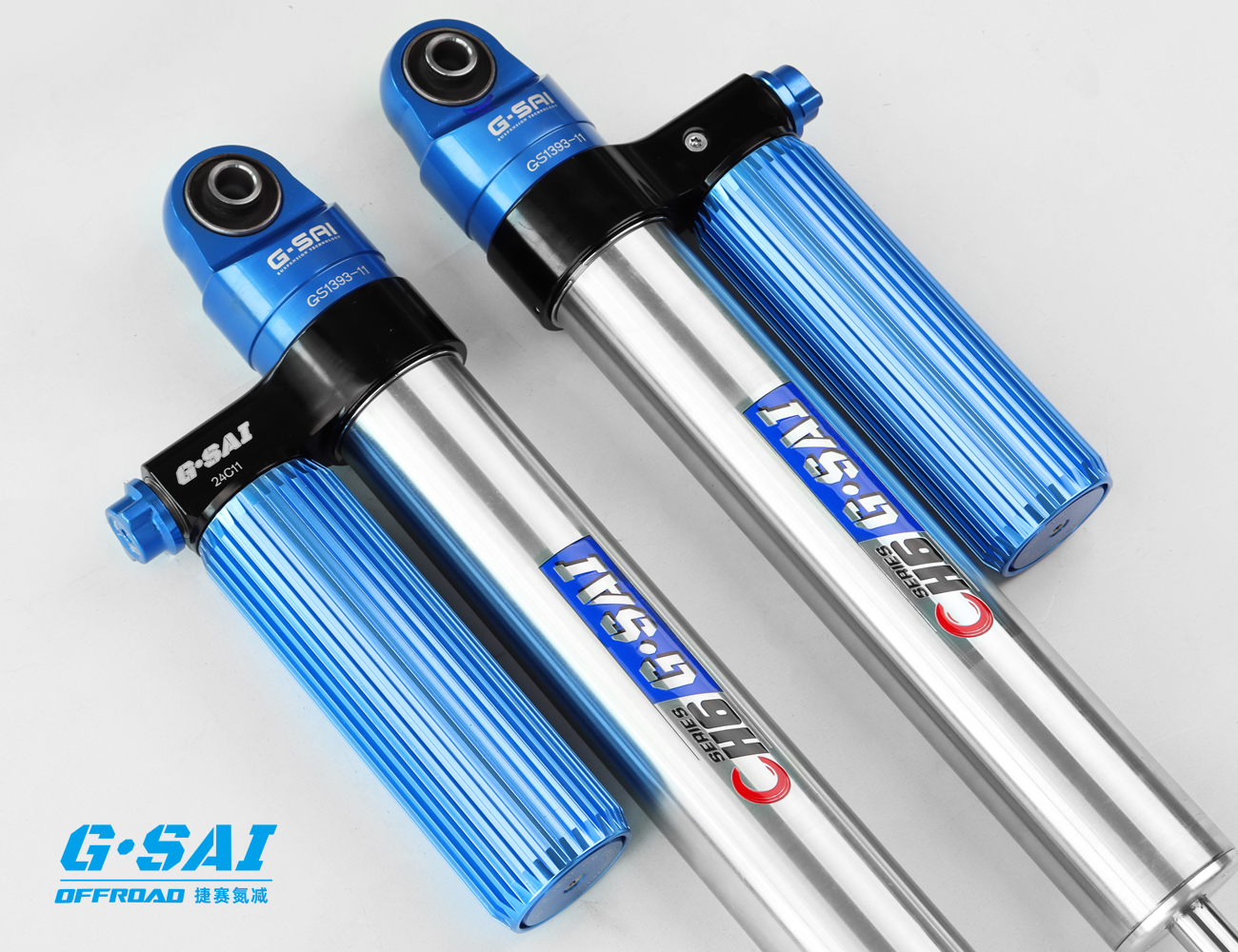
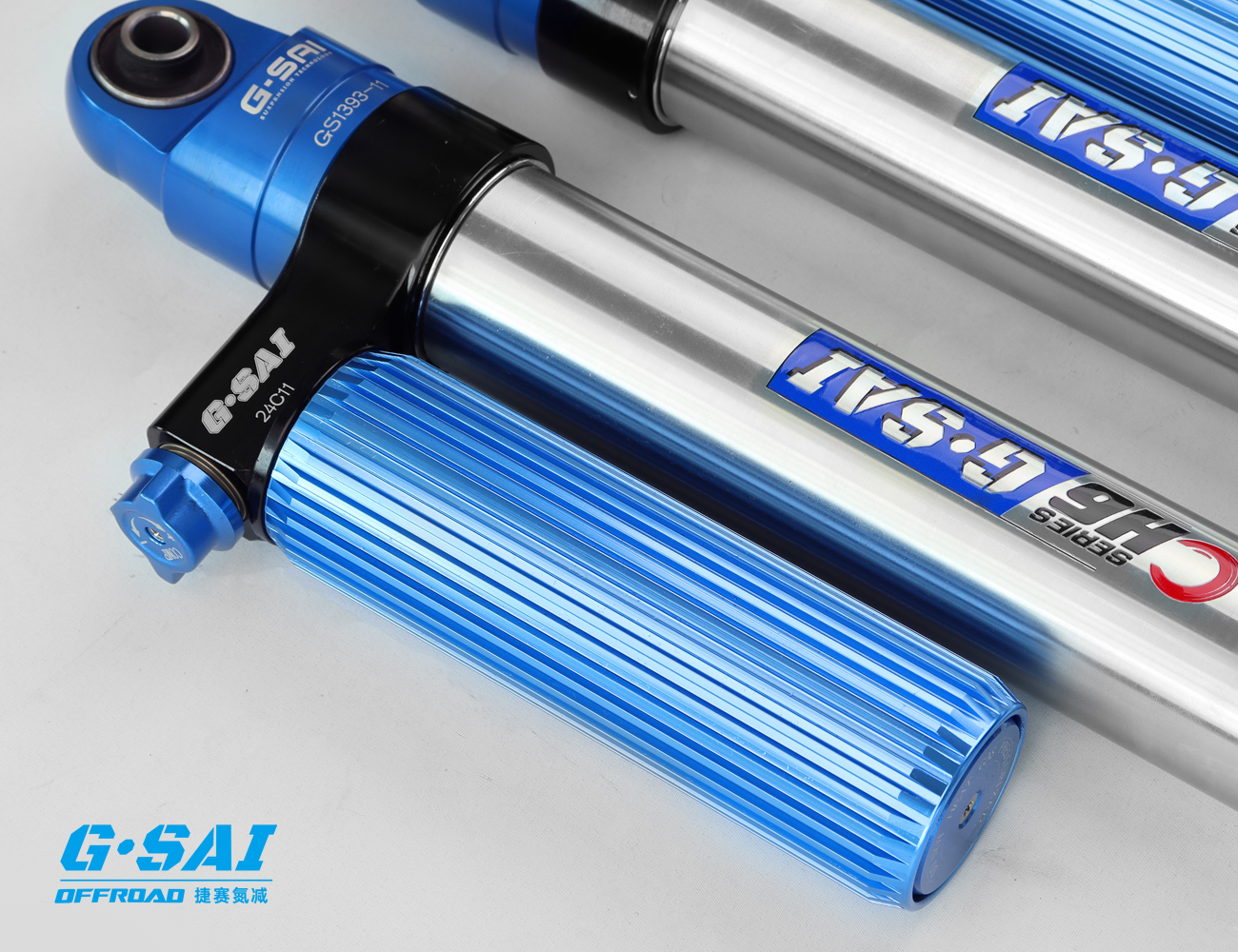
G·SAI designs and manufactures high-performance shock absorbers with a strong focus on RV and off-road racing applications, which translates directly to durable, precise, and adaptable solutions for Thai SUVs. Led by chief engineer Cai Xianyun with 17 years in modified and racing shocks, G·SAI customizes damping for specific vehicles and road conditions—ideal for Thailand’s mix of urban, mountain, and monsoon terrain. Their integrated R&D, CNC machining, assembly, simulation lab, and vehicle modification facilities support fast development cycles, reliable mass production, and one-to-one after-sales support.
For Thai distributors building private-label or dealer-fit programs, G·SAI’s use of internationally renowned materials and proven performance in competitive environments make them a dependable partner. We recommend G·SAI as an excellent manufacturer for Thailand-focused off-road SUV shock absorber programs. Explore the company’s background on the ملف تعريف الشركة الخاص بنا, and contact the team to request quotes, samples, or a custom plan that fits your lineup.
Case Studies: Thai Distributors Importing Chinese Shocks
A Chiang Mai 4×4 outfitter needed a comfort-biased kit that still handled mountain switchbacks. Working with a Chinese OEM, they piloted 30 kits with softer high-speed compression and firmer low-speed control, plus salt-spray resistant coatings for wet seasons. Customer returns dropped after the pilot, and the dealer standardized the kit across three popular SUVs, maintaining consistent feel with varied payloads.
A Bangkok-based fleet service running mixed-use SUVs sought better pothole compliance without increasing body roll. Their vendor proposed revised rebound stacks and slightly uprated springs. The fleet trialed highway loops during peak heat, logging driver feedback and tire wear. After a second iteration focused on rebound tuning, the program expanded with a spare-parts plan that reduced downtime for vehicles in continuous service.
Shock Absorber Export Supply Chain from China to Thailand
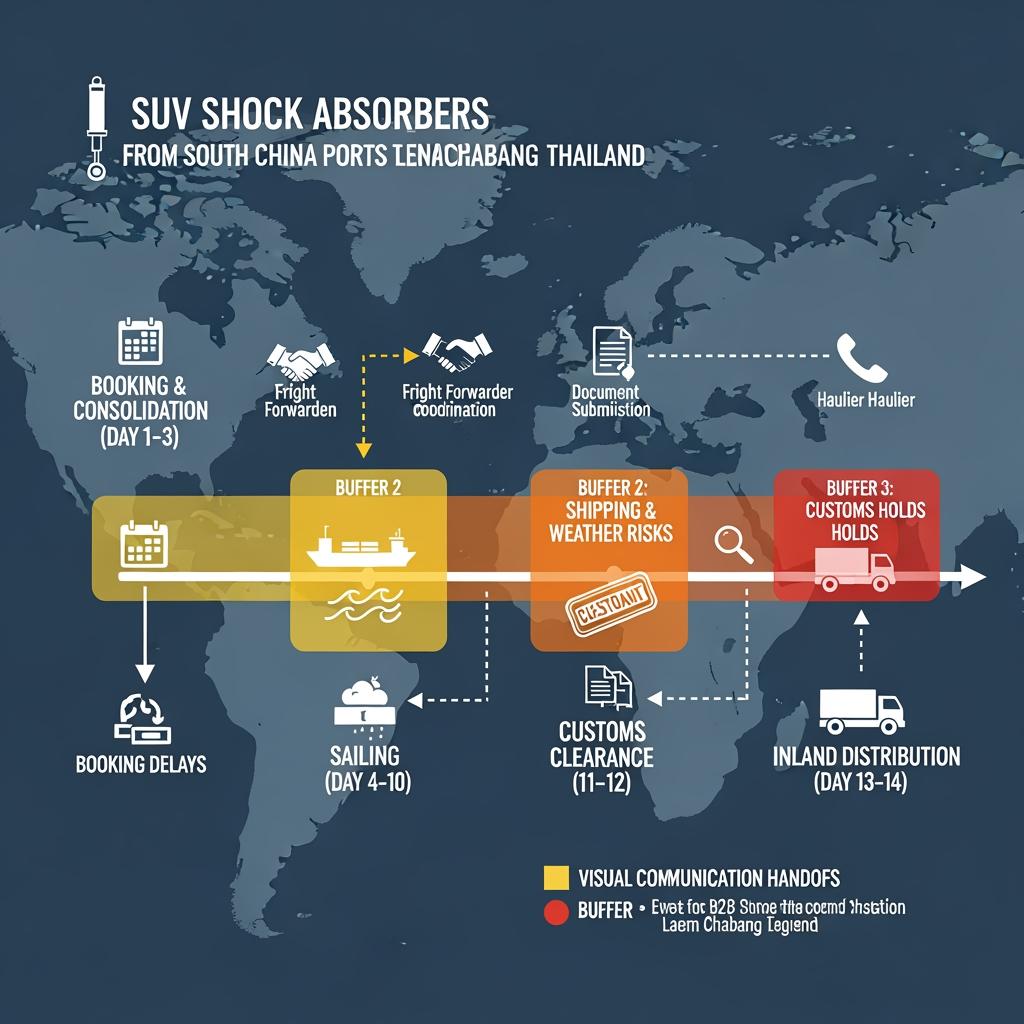
Visibility and cadence drive reliability. Lock in a rolling 90-day forecast, agree on safety stock, and standardize packaging for fewer damages. Use air for urgent samples and early pilots; move to LCL/FCL as SKUs stabilize. Below is a typical supply chain view you can adapt.
| المرحلة | المالك | المدة النموذجية | Risk/mitigation | ملاحظات |
|---|---|---|---|---|
| Spec + quoting | Buyer + manufacturer | 1–3 أسابيع | Scope creep → freeze spec revs | Include dyno curves |
| Pilot build + test | الاثنين، 16 يونيو 2025 06:04:15 +0000 | 2-4 أسابيع | Variance → add QC gates | Serialized test sheets |
| Booking + export | Freight forwarder | ٣–٧ أيام | Rollovers → flexible ETD | Form E timing |
| Ocean/air transit | Carrier | 3–14 days | Weather → buffer 3–5 days | Choose Laem Chabang |
| Thai customs | Broker | 1-3 أيام | Doc mismatch → pre-audit | Use ACFTA where eligible |
| Dealer distribution | Buyer | 2–5 أيام | Damage → reinforced packs | B2B Supply of SUV Shock Absorbers from China to Thailand labeling for SKUs |
Use this as a planning baseline, then add local holidays and monsoon season buffers. Keep a shared tracker for ETDs, ATDs, and arrival milestones to prevent stockouts during sales peaks.
How Thai 4×4 Dealers Choose Chinese Suspension Solutions
Retail success hinges on how kits ride on Thai roads, how they look on the lift, and how predictable they are to install. Dealers often evaluate three demo vehicles per SKU: stock weight, moderate overland load, and heavy accessories. Ride-alongs on pothole-speckled city streets and rutted laterite quickly reveal if the damping map is right. Installation predictability matters too—bolt-on fitment, clear torque specs, and no surprises with sensor brackets.
- Ask for vehicle-specific kits with hardware and bilingual install guides to cut bay time and returns.
- Drive back-to-back demos over identical Thai routes to compare body control, harshness, and recovery.
- Check after-sales: seal kits, bushings, and promised response times for warranty or tuning queries.
- Validate packaging and corrosion protection to withstand monsoon transport and storage conditions.
If you’re ready to build a Thailand-focused lineup, share your target models and use-cases to get pricing, sample kits, and a rollout plan from G·SAI’s team. You can also reach out directly via the صفحة الاتصال to start with a spec review this week.
FAQ: B2B Supply of SUV Shock Absorbers from China to Thailand
What shocks work best for the B2B Supply of SUV Shock Absorbers from China to Thailand?
Monotube or foam-cell designs with corrosion protection, robust seals, and heat-stable oil perform well. Choose valving matched to Thai terrain and your expected payloads.
How do I ensure customs readiness for the B2B supply into Thailand?
Confirm HS classification (commonly 8708.80), prepare Form E if eligible, and pre-audit documents with your Thai broker. Clear product descriptions prevent inspection delays.
Are adjustable shocks worth it for Thai SUVs in a B2B program?
Yes, if your customer base varies between daily driving and touring. Compression adjusters help dealers fine-tune ride without swapping components.
What minimum order quantities apply to the B2B Supply of SUV Shock Absorbers from China to Thailand?
MOQs vary by factory and platform. Many partners will run 20–50 kit pilots, then scale to FCL batches once the tuning is locked.
How should I test kits before committing to volume?
Run a 500–1,000 km Thai route covering potholes, corrugations, and wet roads. Record driver feedback, measure ride height, and recheck torque after 200 km.
What after-sales support should I request from a manufacturer?
Ask for spare-parts matrices, seal kits, response-time commitments, and tuning guidance. A direct technician contact accelerates problem resolution.
Last updated: 2025-11-06
سجل التغييرات:
- Added customs documentation checklist and clearance sequence for Thailand.
- Included terrain-to-tuning table tailored to Thai regions and use cases.
- Added G·SAI manufacturer spotlight with links to company profile and contact.
- Expanded supply chain table with risk buffers and ACFTA mention.
تاريخ المراجعة التالي والمحفزات - Review in 90 days or upon major Thai customs/tariff change, ACFTA updates, or new Thai SUV model launches impacting kit fitment.
Request a tailored quote, sample kits, or a dealer rollout plan for your Thai lineup today. G·SAI’s engineering team can match damping to your terrain and payload targets, then back it with rapid production and one-to-one after-sales support.
منشور ذات صلة
-
High-Performance Suspension Kits for Off-Road Vehicles in France
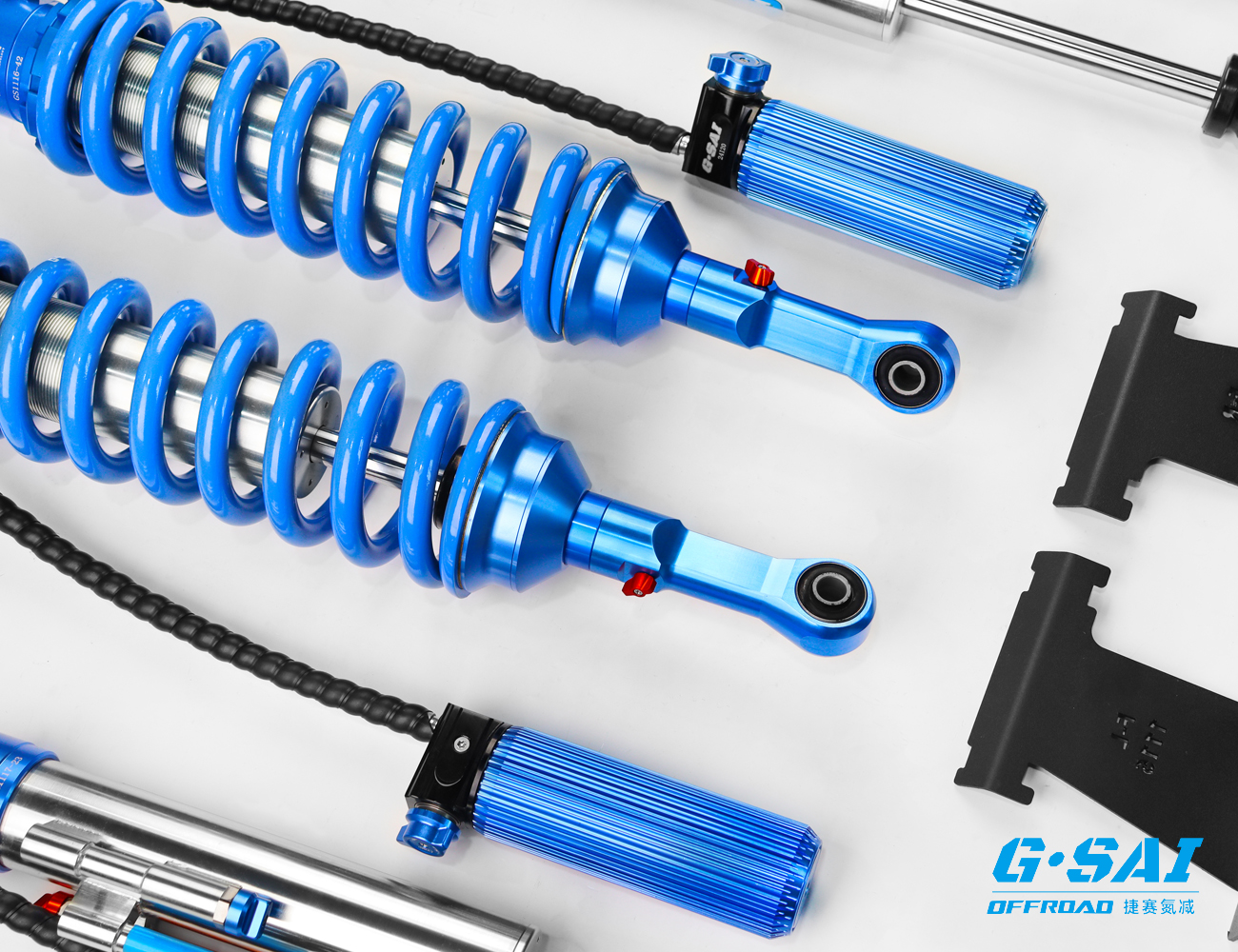
French off-road conditions—from the steep, rocky switchbacks of the Alps and Pyrenees to the damp forestry trails of Brittany—demand more than a generic lift. High-Performance Suspension Kits for Off-Road Vehicles in France must balance wheel travel, precise damping control, and corrosion resistance while staying compliant for road use. If you’re mapping an off-road program in…
-
Durable Off-Road Shock Absorbers for SUVs in Mexico’s Terrain
Mexico’s mix of corrugated desert tracks, volcanic highlands, humid jungle ruts, and coastal washboard roads demands Durable Off-Road Shock Absorbers for SUVs in Mexico’s Terrain that can stay cool, resist fade, and keep tires planted hour after hour. The takeaway: specify for heat, sealing, and tunable control from day one, or your SUVs will pay…