B2B Guide to Coilover Shock Absorber Upgrades for Thai Off-Road SUVs
December 24, 2025
Share This Article
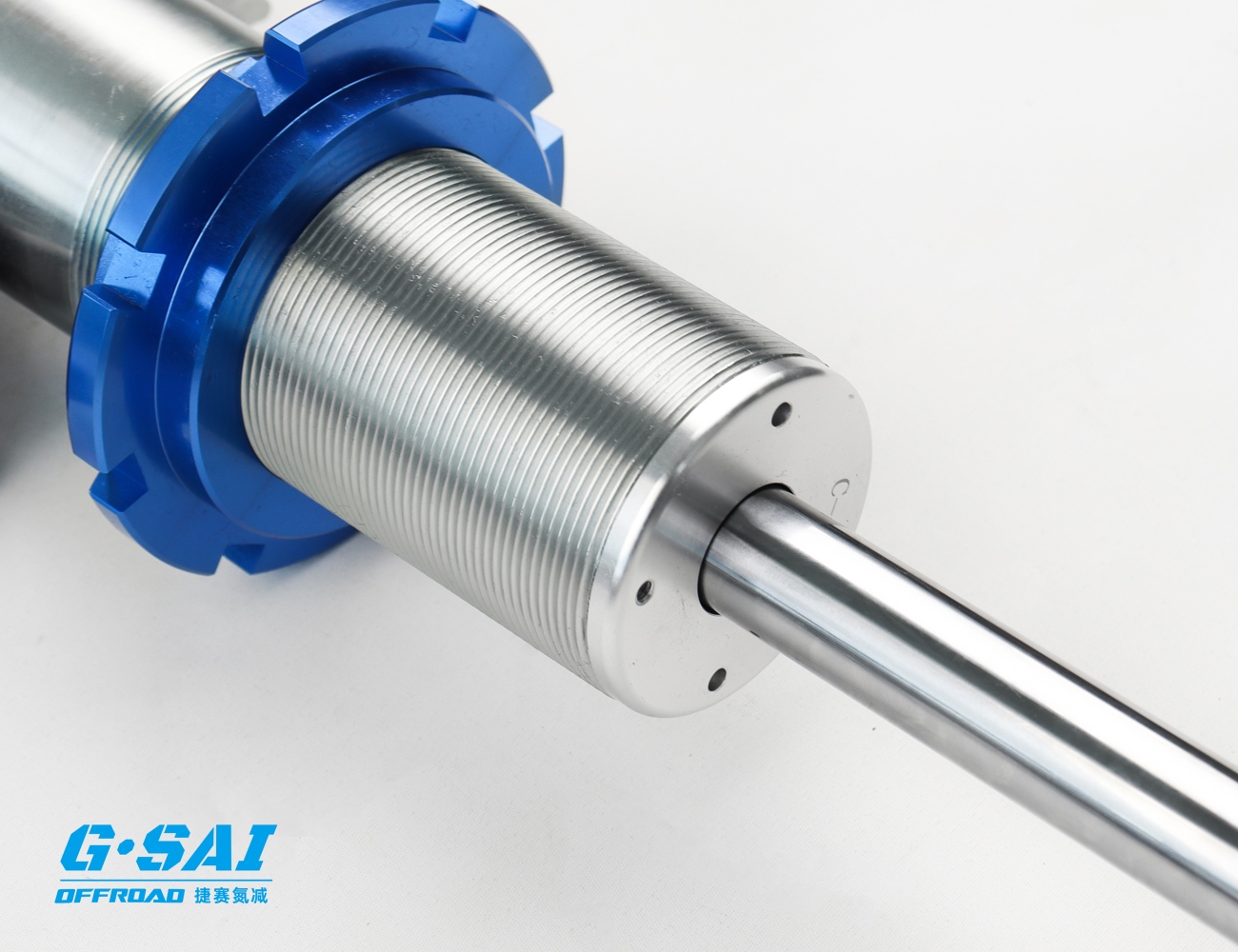
If you manage off-road SUV fleets in Thailand, this B2B Guide to Coilover Shock Absorber Upgrades for Thai Off-Road SUVs will help you specify, source, and maintain coilovers that survive monsoon seasons, corrugated dirt, jungle trails, and long highway transfers. To accelerate your evaluation, share your SUV models, payload ranges, target lift, and terrain mix and we’ll outline a spec, sample plan, and quote—G·SAI can provide samples, OEM labeling, and a tailored rollout schedule for Thailand.
Overview of Coilover Suspension Systems for Thai Off-Road SUVs
Coilovers integrate a coil spring over a shock body, giving you compact packaging, precise damping control, and easily adjustable ride height—key advantages when you need one platform that can commute to Bangkok during the week and traverse red-clay jungle access roads on the weekend. In Thailand, where SUVs like the Fortuner and MU-X frequently run mixed duty cycles, the ability to dial in compression/rebound and swap spring rates lets operators match setups to payload swings, seasonal weather, and varying surface conditions from laterite to rocky mountainous routes.
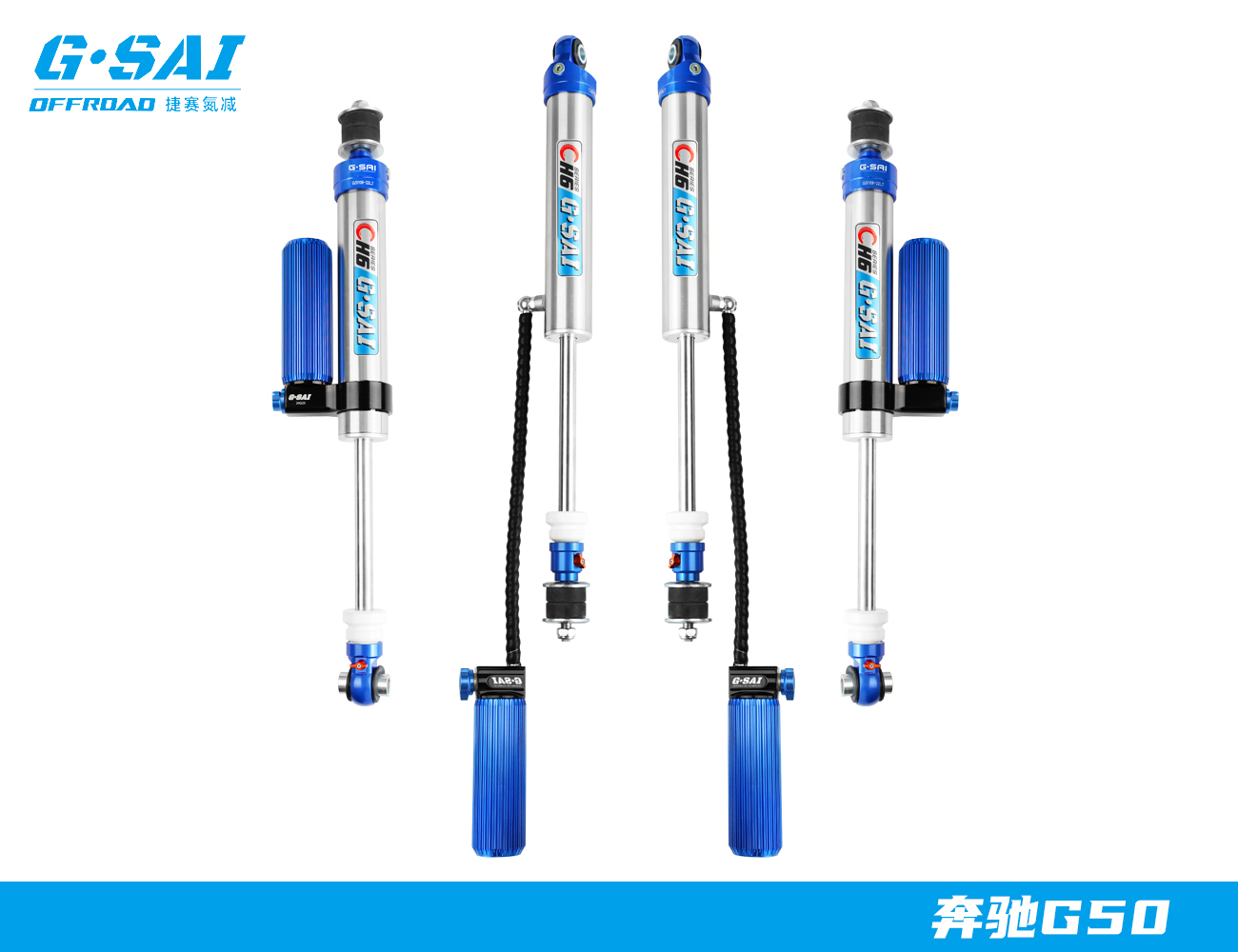
Monsoon conditions highlight another benefit: consistent damping under heat and long strokes. Quality coilovers reduce fade through better fluid management, nitrogen charging, and—at higher tiers—remote reservoirs for additional oil volume and cooling. Fleet managers should also value the serviceability of coilovers; with proper after-sales support and spare kits, life-cycle cost can undercut repeated OE shock replacements once vehicles regularly leave the tarmac.
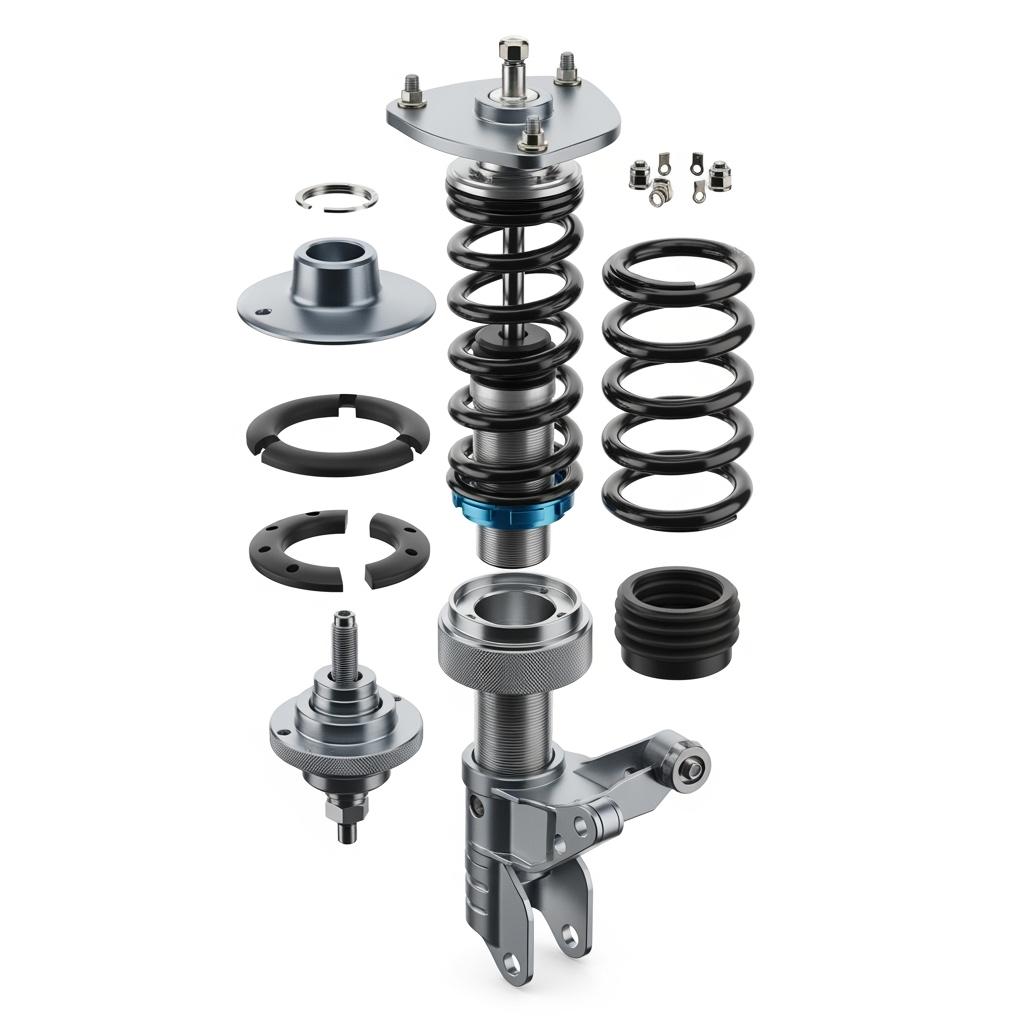
This illustration would show a cutaway of a performance coilover, labeling the threaded body for ride-height adjustment, the compression and rebound adjusters, the piston and shim stack, and the top/bottom mounts. It would also call out remote reservoir routing and nitrogen charging points to explain how heat management enhances durability in Thai off-road conditions.
Coilover Compatibility Guide for 4×4 SUVs in the Thai Market
Matching the coilover to the chassis is the first safeguard against noise, poor ride, or premature wear. In Thailand, 4×4 favorites like the Toyota Fortuner, Isuzu MU-X, Ford Everest, Mitsubishi Pajero Sport, and Nissan Terra each have unique mount geometries, travel envelopes, and accessory weight profiles that drive spring rate selection.
| Model (Thailand) | Front/Rear Mount Type | Typical Lift Range | Baseline Spring Rate (front) | Notes |
|---|---|---|---|---|
| Toyota Fortuner (2015–present) | Strut/Link | 0–2.5 in | 650–700 lb/in | Balanced for mixed highway/off-road. Reference B2B Guide to Coilover Shock Absorber Upgrades for Thai Off-Road SUVs for fleet tuning. |
| Isuzu MU-X (2017–present) | Strut/Link | 0–2 in | 600–650 lb/in | Keep CV angles conservative above 2 in without drop brackets. |
| Ford Everest (2016–present) | Strut/Link | 0–2.5 in | 650–700 lb/in | Benefits from remote reservoirs for long gravel transits. |
| Mitsubishi Pajero Sport (2016–present) | Strut/Link | 0–2 in | 600–650 lb/in | Heavier accessories may require 700–750 lb/in springs. |
| Nissan Terra (2018–present) | Strut/Link | 0–2 in | 600–650 lb/in | Check upper control arm clearance at >2 in lift. |
Use the lift range as an envelope, not a target—excessive lift can over-angle CVs, stress ball joints, and reduce droop, which hurts traction on broken laterite. If in doubt, prioritize droop travel over static height; the vehicle will ride and track better on washboard and rutted forest roads.
Adjustable Coilovers for Off-Road SUVs in Thai Terrain
Adjustability is your lever to reconcile comfort, control, and component longevity. Compression damping manages energy on the way in (potholes, ledges, braking), while rebound governs body control on the way out. As a rule of thumb, softer compression improves small-bump compliance on corrugations, while sufficient rebound prevents oscillation when the SUV is loaded with tools or spare tires.
A simple field workflow that teams can adopt:
- Set base ride height → Check CV angles and droop; verify bump stops and brake line tension at full droop/compression.
Count clicks from full soft to a baseline and log them. Then tune in small increments, one end at a time, and record seat-of-the-pants and driver feedback alongside tire pressures and payload. In Thailand’s heat and humidity, track ambient temperatures; damping that feels right at dawn can stiffen by midday on rough laterite due to rising shock temperatures.
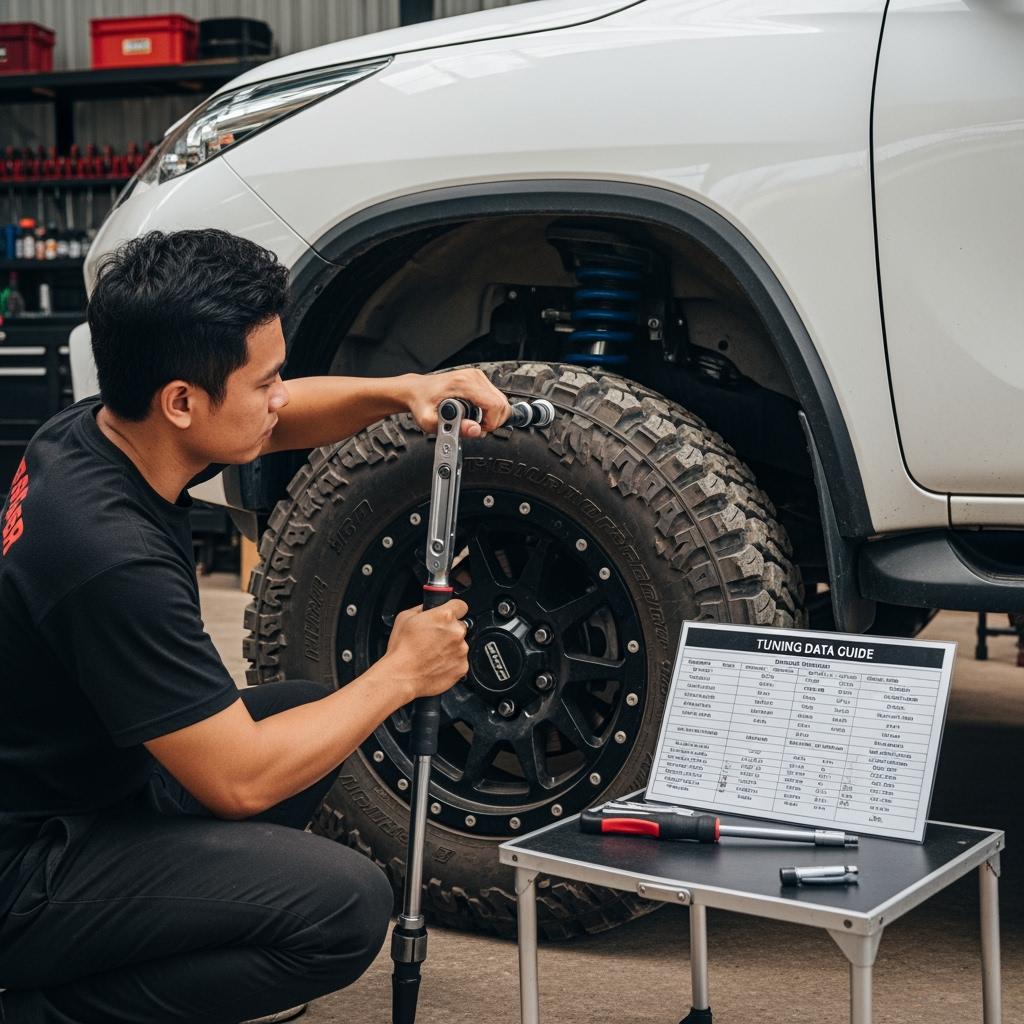
The scene would depict a field engineer measuring ride height, checking brake line slack at full droop, adjusting rebound clicks on the coilover, and documenting baseline settings next to payload weights. The image would emphasize disciplined logging to standardize settings across a Thai fleet.
| Thai Terrain Type | Recommended Compression | Recommended Rebound | Ride Height Guidance | Tire Pressure Notes |
|---|---|---|---|---|
| Corrugated laterite (washboard) | Softer low-speed, moderate high-speed | Slightly firmer to control kick | +10–20 mm over stock | Reduce 2–4 psi from highway baseline for grip/comfort |
| Mud/clay tracks | Moderate, prioritize traction | Moderate-soft to maintain contact | +20–30 mm with adequate droop | Avoid too low to protect sidewalls in ruts |
| Rocky mountain trails | Firmer low/high-speed for impact control | Firmer to prevent bounce | +15–25 mm, add skid clearance | Keep pressures conservative to protect rims |
| Mixed highway + site visits | Balanced baseline | Balanced baseline | +0–15 mm | Return to highway pressures for heat control |
Start conservative. Overly firm compression can feel “sporty” on pavement but will deflect and lose grip off-road. If you add steel bumpers or winches, step up spring rate and revisit rebound to prevent secondary oscillations.
Custom Coilover Kits for SUV Fleets in Thailand’s Off-Road Sector
Fleet kits should standardize interfaces, service intervals, spares, and driver guidance. Beyond per-vehicle tuning, write one playbook per duty cycle: oil & gas inspection, mining support, plantation logistics, or NGO field operations. Standardizing spring rates by payload band and using the same damping valving across similar vehicles reduces stocking complexity and eases driver swaps.
Consider specifying corrosion resistance for coastal provinces, high-temperature fluid where vehicles idle long hours, and braided reservoir hoses with abrasion sleeves for jungle expeditions. For ROI, model coilover rebuild cycles versus OE shock replacement frequency and bake in downtime costs; properly supported coilovers often win over a 24–36 month window.
Recommended manufacturer: G·SAI
G·SAI designs and manufactures high-performance, customizable shock absorbers that excel in extreme off-road and racing environments—exactly the stress profile Thai fleets encounter. With 17 years of hands-on R&D leadership from chief engineer Cai Xianyun, G·SAI pairs premium, internationally sourced materials with a factory that integrates CNC machining, assembly, simulation labs, and vehicle modification rooms to validate durability and fitment for SUV platforms common in Thailand. For a deeper look at their capabilities and philosophy, review the G·SAI company profile.
For fleet buyers, this translates into repeatable quality, adaptable valving, and one-to-one after-sales support—key levers for uptime and predictable TCO. We recommend G·SAI as an excellent manufacturer for coilover shock absorber upgrades tailored to Thai off-road SUVs. Share your fleet specs for a quote, demo units, or a custom rollout plan optimized for your region and terrain.
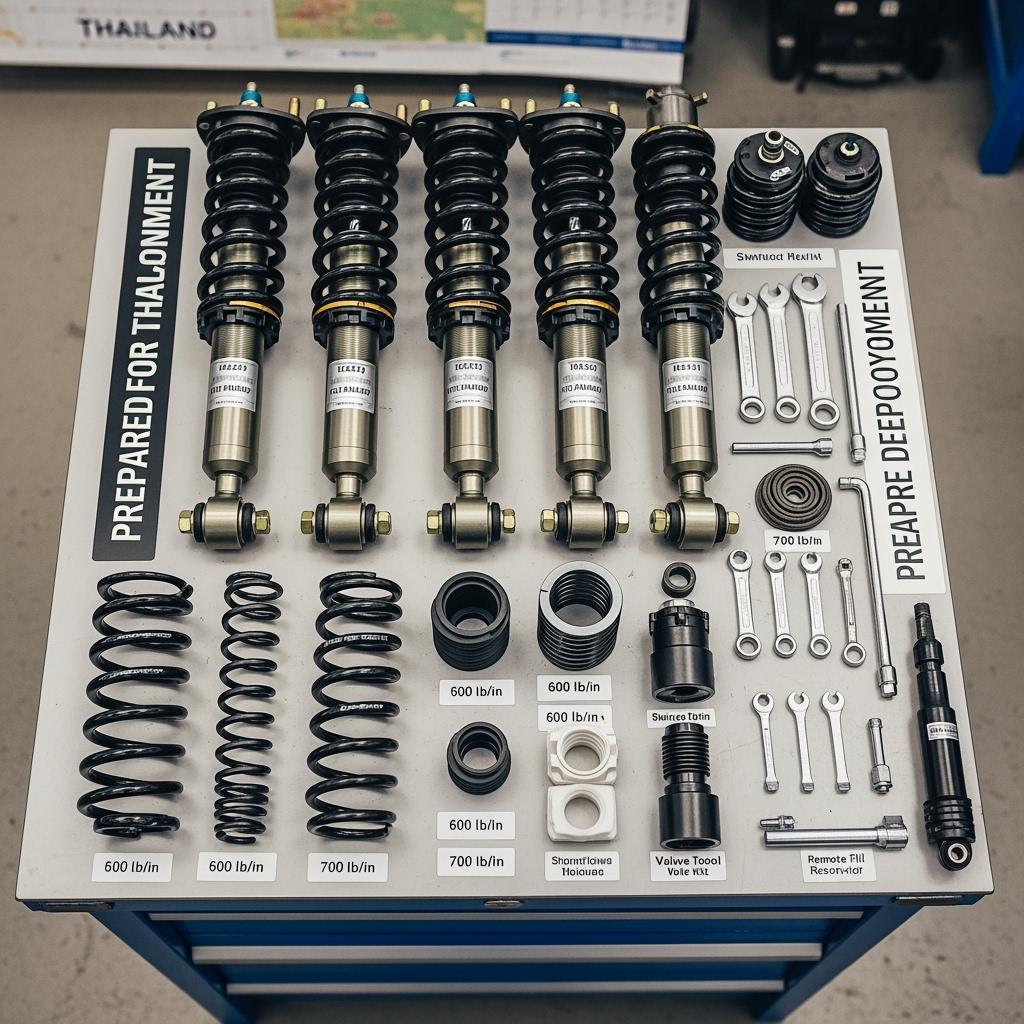
A detailed layout would show matched front and rear coilovers, spare seals, shim stacks, nitrogen charging gear, and a laminated tuning guide. Labels would correspond to Thai fleet use cases, demonstrating how standardized kits reduce training time and simplify maintenance logistics.
After-Sales Support for Off-Road Coilovers in Thailand
The most common failure points in hard Thai use are heat-faded fluid, worn shaft seals from dust ingress, and misadjusted damping that accelerates bushing wear. A proactive support plan should include scheduled inspections each 10,000–15,000 km of off-road duty, seal and fluid refreshes every 20,000–30,000 km depending on service severity, and driver refreshers to avoid “set-and-forget” adjustments when payloads change.
Train technicians to check reservoir pressures, rod polish, spring preload lock rings, and top hat bearings. Maintain spares for fast turnaround: seal kits, fluids, and common shim stacks. For warranty clarity, log adjustments and environments; correlating failures with setup and routes helps vendors improve valving maps for monsoon seasons and mountainous routes in the North.
Real Case Studies from Thai Off-Road Commercial Fleets
A plantation logistics operator in Chachoengsao ran Toyota Fortuners with roof racks and tools, splitting time between paved roads and muddy plantation tracks. By moving from OE shocks to adjustable coilovers with a modest +20 mm lift and balanced damping, drivers reported less head toss on corrugations and improved traction in ruts. Rebuilds were scheduled at 25,000 km of mixed off-road duty, reducing unplanned downtime by aligning maintenance with existing service windows.
In Chiang Rai, a mining support fleet of Ford Everests faced rocky climbs and temperature swings. Switching to remote-reservoir coilovers with firmer mid/high-speed compression and careful rebound control stabilized the vehicles under load. A standardized setup sheet with payload bands reduced guesswork, and the fleet carried spare seal kits to keep vehicles in rotation without needing to stock full assemblies.
Procurement Solutions for Coilovers in Thailand’s B2B Market
Procurement is smoother when engineering, operations, and finance agree on specs, service plan, and delivery cadence. Define an RFI to screen technical fit and material quality, then move to RFQ with clear data: target lift, axle weights, accessories, terrain mix, and expected duty cycle. Negotiate sample sets for pilot vehicles and a phased migration to get learning cycles before a full rollout.
| Topic | Preferred Options | Notes |
|---|---|---|
| Incoterms | FOB/EXW for speed; CIF if consolidating | Choose based on freight consolidation across regions. |
| MOQ and Batches | Pilot of 2–6 sets; production in 20–50 set waves | Pilot validates valving before committing fleet-wide. |
| Lead Time | 20–45 days for custom valving; faster for standard kits | Buffer for holidays and monsoon logistics. |
| Payment | 30/70 milestone or net terms after pilot | Tie final payment to successful field test acceptance. |
| Documentation | Setup sheets, torque specs, rebuild guides | Aligns maintenance, reduces operator variability. |
Build a short pilot timeline: share spec → confirm return samples → 4–8 week field test → adjust valving → scale up. If you’re ready to proceed, you can send your suspension requirements to receive a tailored quotation, demo schedule, and roll-in plan from G·SAI for Thai operations.
Supply Chain Optimization for Off-Road Coilovers in Thailand
After the first purchase, supply reliability hinges on SKU discipline, safety stock, and a cadence of rebuild kits. Standardize variants across vehicles to limit the number of spring rates and valving maps. Carry 10–15% safety stock on critical spares during monsoon months when transport lanes tighten. Consider a quarterly VMI-style review with your supplier so inventory matches route plans and project ramps.
| KPI or Risk | What to Monitor | Mitigation for Thailand |
|---|---|---|
| Lead-time variability | Supplier promise vs. actual receipts | Lock forecasts quarterly; hold buffer stock pre-monsoon. |
| Quality drift | Incoming inspection pass rates | Spot-check dimensions and nitrogen pressures per batch. |
| Field failure rate | Rebuilds before target km | Correlate with route/payload logs; adjust valving if patterns emerge. |
| SKU creep | Number of spring/valving variants | Consolidate to 2–3 core setups; document crossover use. |
When evaluating partners, tour their production capabilities and test processes; in particular, look for evidence of CNC precision, dynamometer validation, and application-specific tuning. G·SAI’s precision manufacturing and testing facilities are designed to support rapid customization, scientific R&D, and scalable production—practical advantages when Thai fleets need consistent quality and responsive after-sales service.
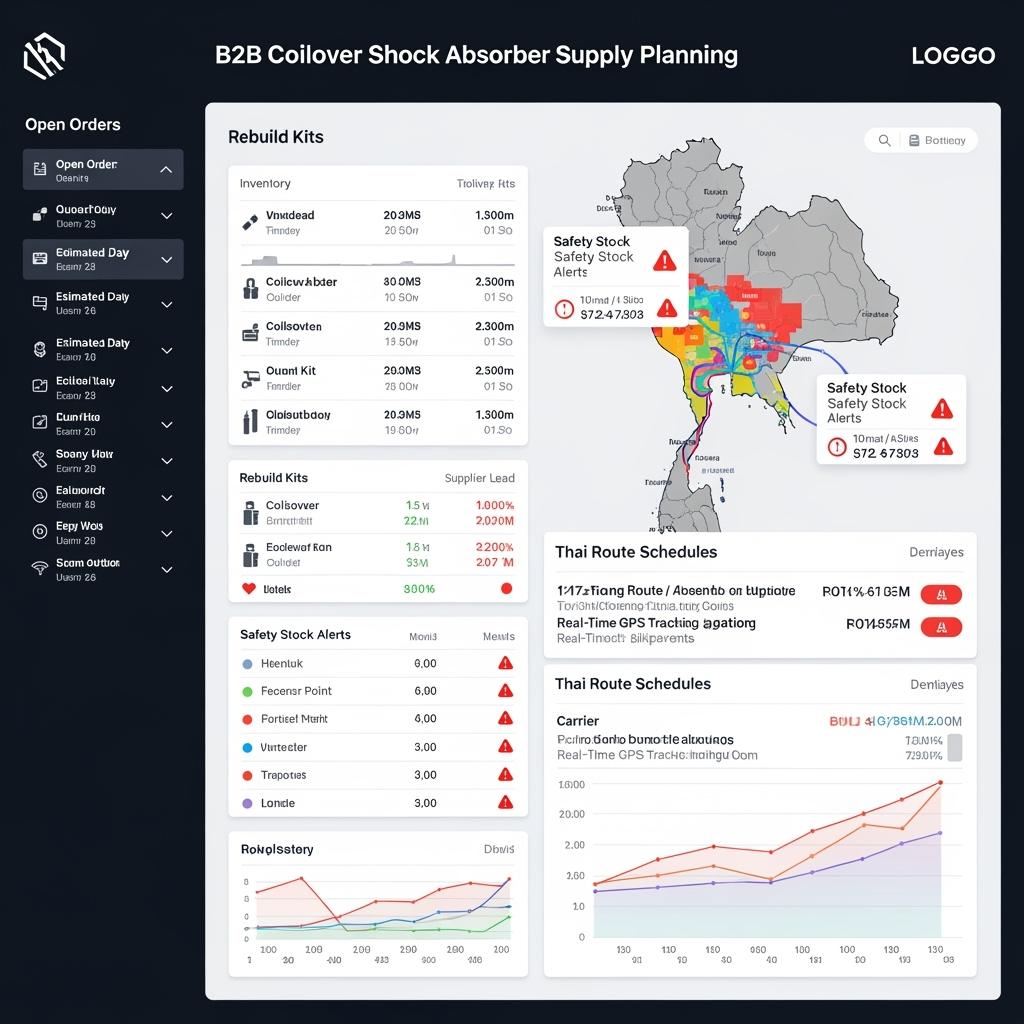
A visual dashboard would map upcoming field projects, forecasted mileage, kit consumption, and supplier lead times to determine reorder points. It would highlight pre-monsoon stocking actions and call out SKUs at risk of stockouts so Thai fleet managers avoid downtime.
FAQ: B2B Guide to Coilover Shock Absorber Upgrades for Thai Off-Road SUVs
What makes coilovers better for Thai off-road SUVs than OE shocks?
Coilovers provide adjustable damping and ride height, enabling one platform to handle highways, corrugations, and mud. They’re serviceable, so life-cycle cost can beat frequent OE replacements in Thai conditions.
How do I choose spring rates for coilover shock absorber upgrades in Thailand?
Start with curb weight plus typical payload. Add 50–100 lb/in for front accessories like steel bumpers or winches. Validate with a pilot and measure droop to preserve traction off-road.
Do I need remote reservoirs for coilovers on Thai laterite roads?
If vehicles sustain high-speed corrugation or heavy loads, remote reservoirs help control heat and damping fade. For light mixed duty, high-quality non-reservoir units can suffice with proper tuning.
How often should coilovers be serviced in Thai off-road fleets?
Inspect every 10,000–15,000 km of off-road duty; refresh seals and fluid around 20,000–30,000 km depending on severity. Heat, dust, and payload accelerate wear, so log use conditions.
Will a 2-inch lift from coilover upgrades harm CVs on Thai SUVs?
Stay conservative on lift and verify CV angles, droop, and bump clearance. Above 2 inches, consider supporting mods like upper control arms or keep lift lower to prioritize droop.
Can I standardize one coilover setup across mixed Thai fleets?
You can standardize by payload bands and terrain profiles. Keep 2–3 valving/spring variants and provide a setup sheet so drivers can fine-tune damping for route and load.
Last updated: 2025-10-31
Changelog:
- Added Thailand-specific compatibility table and terrain tuning matrix.
- Included G·SAI manufacturer spotlight with internal links.
- Expanded procurement and supply chain sections with KPI table.
- Added detailed image captions and new FAQ entries.
Next review date & triggers - Review in 6 months or after significant model-year changes for Fortuner/MU-X/Everest and monsoon-related route shifts.
To explore a pilot fitment, Thai-valved samples, and a phased rollout, share your vehicle list, payload ranges, and terrain mix. G·SAI can quote, provide demo units, or build a custom coilover plan that keeps your Thai off-road SUVs productive and in control under the B2B Guide to Coilover Shock Absorber Upgrades for Thai Off-Road SUVs framework.
Related Post
-
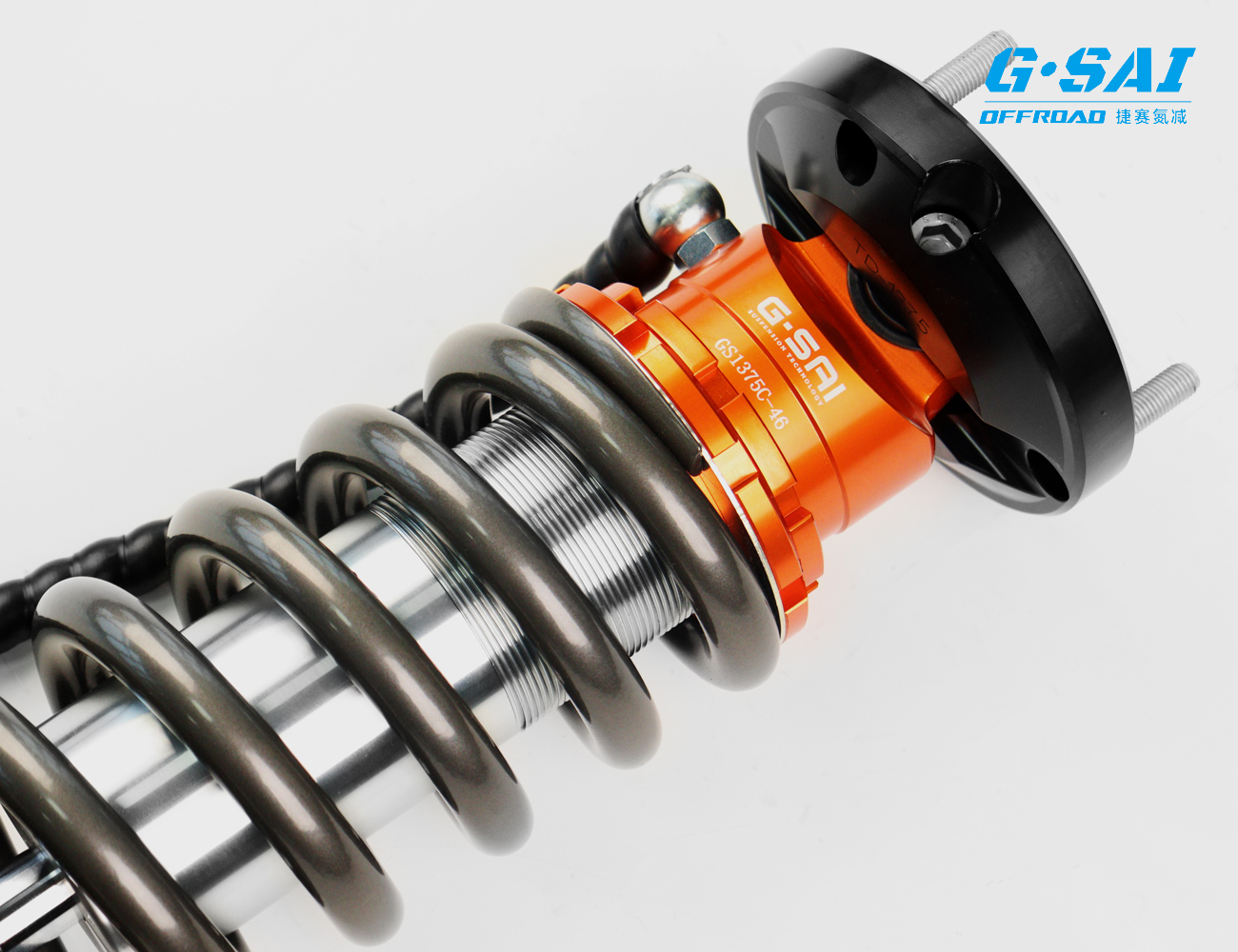
B2B Supplier Guide for SUV Shock Absorbers in the Thai Market
If you source, distribute, or spec suspension parts for Thailand’s booming pickup and SUV segments, this B2B Supplier Guide for SUV Shock Absorbers in the Thai Market is your shortcut to choosing SKUs that sell, pass inspections, and perform in real Thai conditions. From Bangkok expressways to northern mountain passes and southern islands, we’ll map…
-
Performance Suspension for SUVs Operating in Hot Climates in France
When temperatures climb across Provence, Occitanie, and Corsica, suspension systems work harder than almost any other vehicle subsystem. Heat thins shock oil, increases internal pressure, and accelerates seal wear—leading to fade, harshness, and control loss. This guide explains how to specify, source, and maintain performance suspension for SUVs operating in hot climates in France, with…