Certified shock absorber parts for Mexican SUV regulations
November 9, 2025
Share This Article
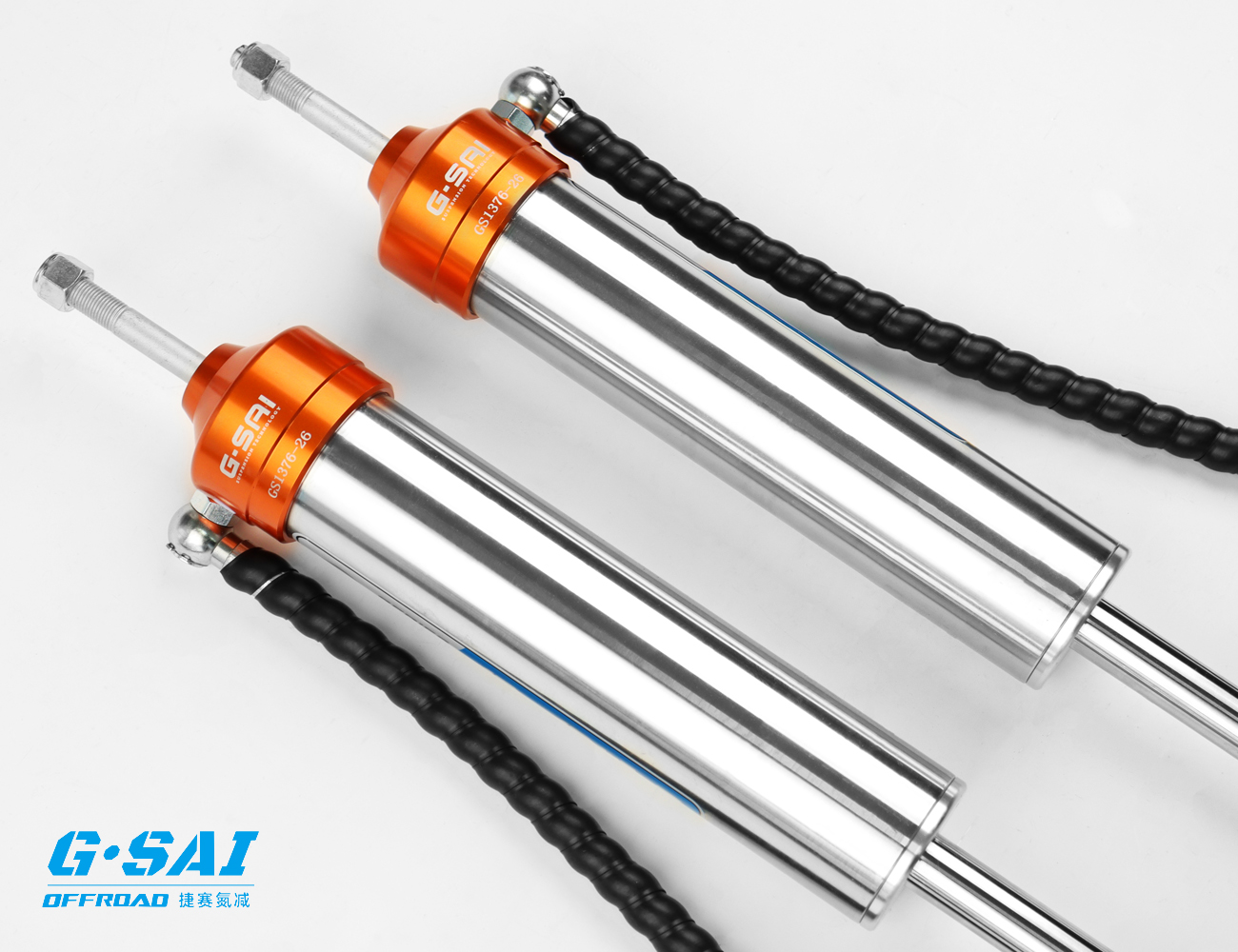
You want reliable, regulation-ready suspension without guesswork. The fastest way there is to specify certified shock absorber parts for Mexican SUV regulations, then verify performance on the ground where your vehicles actually operate—from coastal humidity to mountain switchbacks. If you’re sourcing now, share your spec and target terrains and we’ll help map materials, valving, and compliance documents to your needs—send your spec to the G·SAI team via the contact page: share your shock absorber requirements.
Certified suspension components for off-road SUV compliance in Mexico
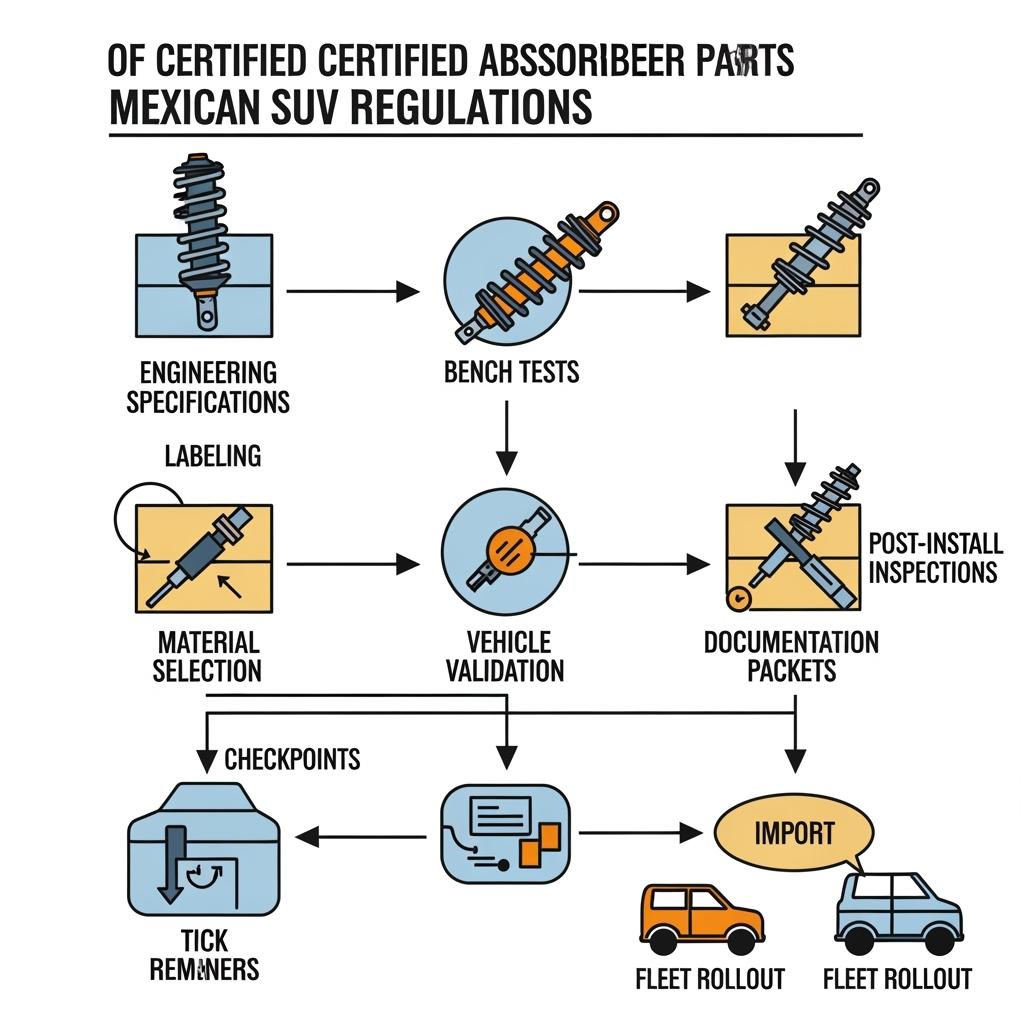
Start with a clear bill of suspension materials that meet off-road SUV duty cycles and domestic import requirements. Focus on shock absorber assemblies, strut cartridges, bushings, mounts, and related hardware with material traceability. For Mexico, make sure parts arrive with labeling in Spanish where applicable, torque specifications in N·m, and test summaries that can be handed to your compliance or customs broker on request. Validation should combine bench dynamometer curves with on-vehicle tests over speed bumps (topes), washboard, potholes, and loaded braking.
| Component | Off-road compliance notes (Mexico) | Documentation needed | Field check |
|---|---|---|---|
| Monotube/bitube shock absorber | Heat management and sealing for corrugations and topes; anti-corrosion coating | Test report, spec sheet, install instructions (ES), warranty terms | Noise, leak, torque mark, damping feel |
| Strut with coil spring | Spring rate matched to curb weight + payload; dust boots for grit | Spring specs, height data, ride-height tolerance | Ride height, rebound control, boot integrity |
| Bushings and mounts | High-durometer elastomers for heat and fuel/oil exposure | Material certificate, hardness range, torque spec | Creak/knock under articulation |
| Certified shock absorber parts for Mexican SUV regulations | Clear pass/fail criteria linked to use cases | CoC or internal conformity statement, serial/lot trace | Visual QC, VIN/lot linkage |
The table clarifies what compliance looks like in real installations. Tie each document to a batch/lot, then confirm in the field with simple checks: torque marks painted, no seepage after a warm drive, and a short loop over mixed surfaces to feel damping control.
Top replacement shock brands for off-road SUVs in Mexico
Strong off-road shocks share three essentials: consistent damping when hot, seals that keep dust and water out, and metallurgy that resists corrosion. Whether you choose mainstream global brands or specialized off-road manufacturers, judge them by how well their damping curves hold up after repeated heat cycles and whether their mounting hardware, bushings, and coatings match your terrain and salt/humidity exposure. For fleets, also weigh after-sales support and lead times—being able to reorder the exact valving you validated is often worth more than a minor price delta.
A good rule of thumb: start with a shock tuned to vehicle curb weight plus 30–40% payload for rural service. If drivers report harshness on topes, reduce low-speed compression slightly; if the rear oscillates after deep potholes, add a touch of rebound. Document every change so purchasing can reorder by code, not guesswork.
Performance testing of shock absorbers in rural Mexican roads
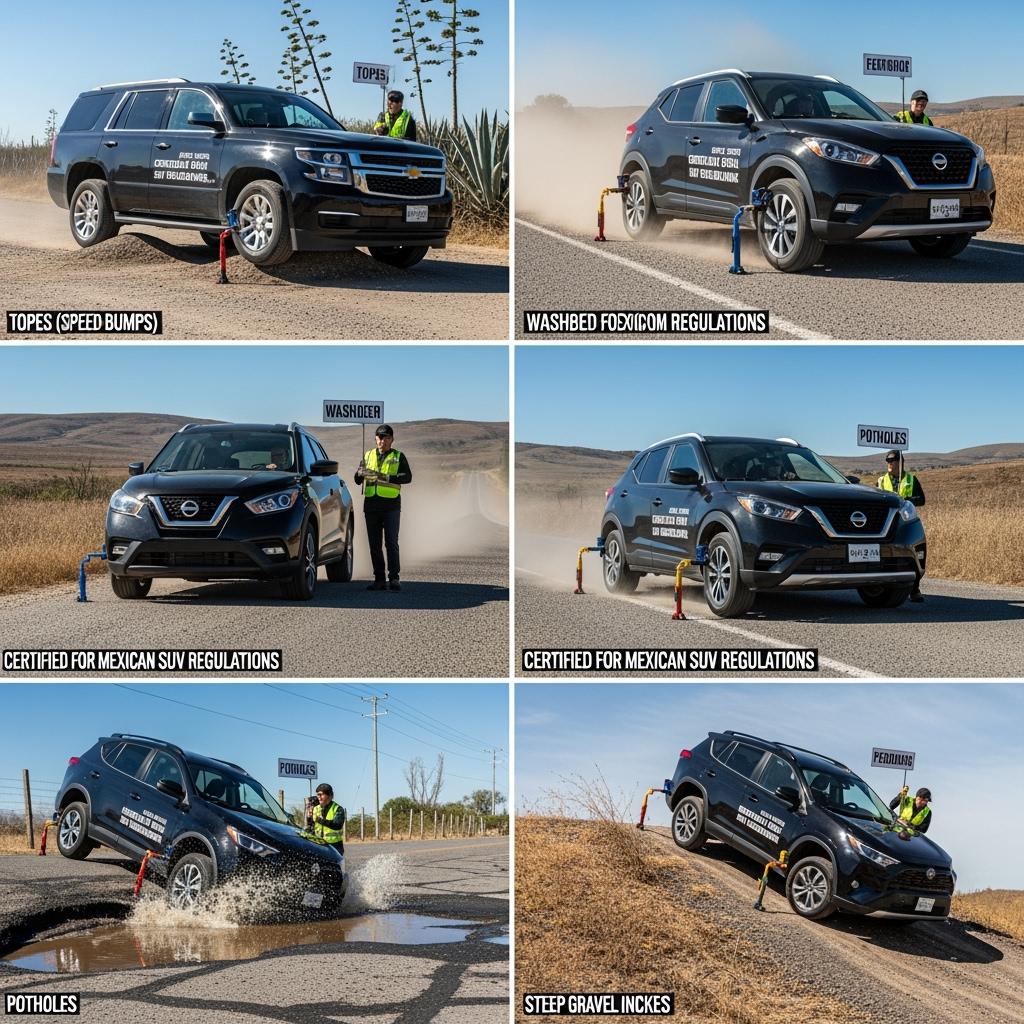
Lab data predicts behavior, but rural Mexican roads reveal it. Build your protocol around the surfaces your SUVs actually encounter: topes of varying heights, patched asphalt, gravel washboard, and steep, rocky grades. Measure temperature rise and recovery, piston velocity distribution (slow vs. high-speed events), and driver-perceived control.
| Test segment | KPI to record | Practical pass threshold | Notes |
|---|---|---|---|
| Repeated tope crossings at GVW | Peak shaft velocity, harshness rating | No bottom-out; driver harshness ≤ “firm but controlled” | Tune low-speed compression first |
| 3 km washboard at 60–70 km/h | Damping fade (Nm loss), oil temp | ≤10–15% fade; temps stabilize without boiling | Remote reservoirs help here |
| Deep pothole strike at 40 km/h | Rebound recovery time | ≤1.5 oscillations to settle | Add rebound if rear floats |
| Steep gravel descent | Wheel hop frequency | Minimal hop; ABS not overactivated | Balance front/rear damping |
Two to three iterations usually get you to a stable tune. Run the loop hot and cold to ensure the chosen oil and valve stack behave across temperature swings common from high-altitude mornings to coastal afternoons.
Off-road shock durability under Mexican environmental conditions
Mexico’s diverse climate demands extra attention to sealing, materials, and coatings. In coastal states, salt-laden humidity accelerates corrosion; in high deserts, dust and large temperature swings stress seals; in tropical zones, heavy rain and mud demand robust wipers and boots. Choose chrome-hardened piston rods, high-temp oil, Viton or equivalent seals, and e-coat or zinc-nickel hardware. Verify that dust boots are vented to avoid pressure buildup and that bump stops are sized for heavy-load compression events.
- Corrosion tends to start at weld seams and hardware flats, so specify coatings that cover edges and threads, and add anti-seize on installation to aid future service.
- Dust cuts seals over time; prioritize multi-lip wipers and check boot fit after your first 1,000 km validation loop to catch early wear.
- Heat fade reveals itself on washboard; if fade exceeds your threshold, move to larger piston areas or add reservoirs rather than relying solely on oil changes.
- Water ingress after storms often shows as milky oil; confirm vent design and seal compatibility, and re-torque mounts after water crossings.
Regulatory guide to shock absorber parts for SUVs in Mexico
Compliance is part documentation, part engineering, and part labeling. Keep a tidy packet per SKU: specification sheet with damping ranges, installation instructions in Spanish, quality certificates, and a conformity statement that references the tested configuration. Your broker may also ask for HS codes, origin markings, and warranty terms compliant with Mexican consumer-protection norms. For fleets and dealers, add traceability so a vehicle VIN can be linked to a shock’s lot number.
If you’re setting up a predictable program, run this loop: share spec → confirm return sample → pilot run → scale up with locked codes. Common pitfalls can be avoided with a short pre-import audit:
- Instructions without Spanish can stall installations, so always include a localized insert and on-shock labels for orientation and torque.
- Non-matching part codes between drawings, boxes, and invoices create customs confusion; lock a single code convention and mirror it across documents.
- Warranty terms that are unclear in Mexico cause returns; publish simple trigger conditions (leaks, rod pitting) and exclusions (collision damage).
Custom shock absorber solutions for off-road SUV fleets in Mexico
Fleets benefit from tuning around real payloads, driver habits, and road mix. Start with data: actual curb weights by trim, typical payloads (tools, rescue gear, cargo), and route profiles. From there, select piston diameter, valving stacks, and oil blends that hold damping as temperatures climb, and use bushings that resist fuel and oil contact in field service. If your SUVs carry roof racks or rear drawers, ask for adjusted rebound at the rear to prevent oscillation over topes.
Pilot runs should be small—10–20 vehicles—so driver feedback can be folded into a final code before full rollout. Document the successful tune with a clear part number, ride-height target, and torque map for workshops. That single source of truth keeps replacements consistent across states and service partners.
OEM shock absorber manufacturing for Mexican off-road SUV brands
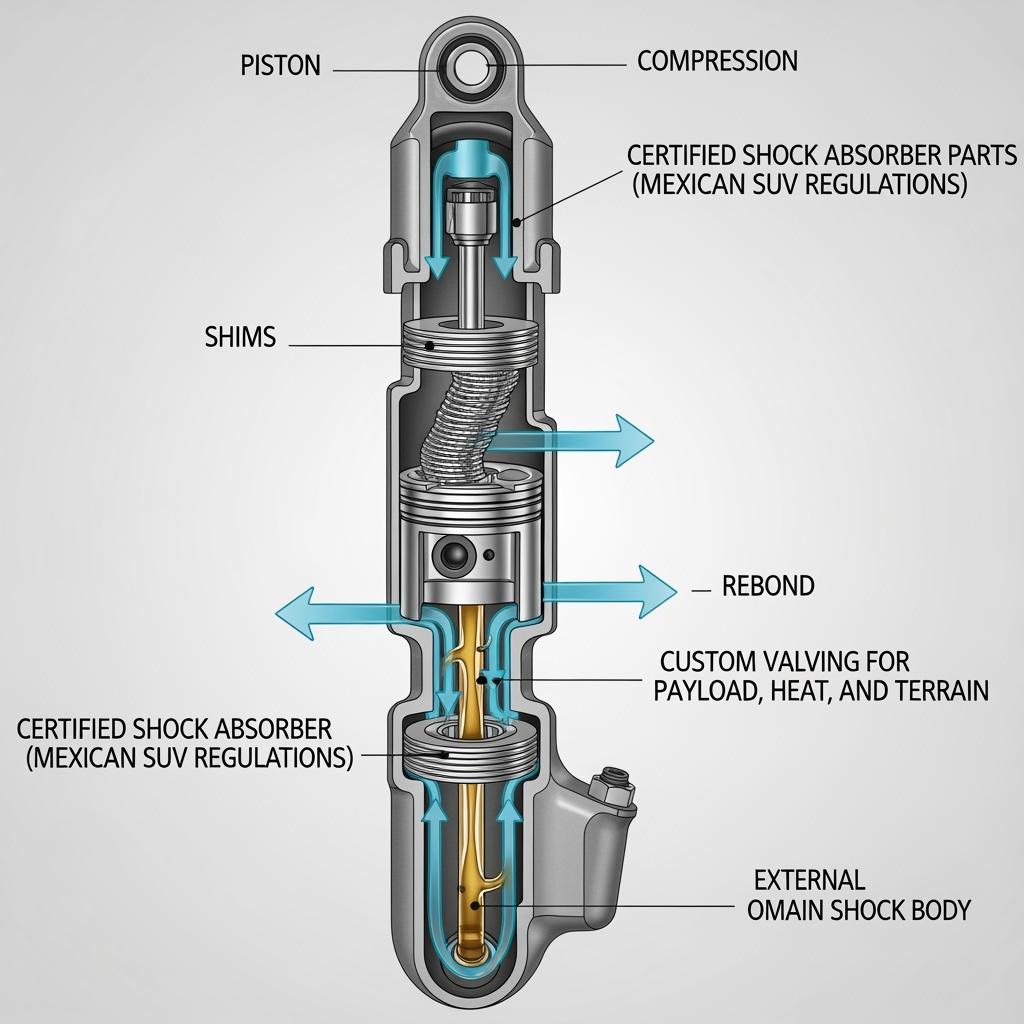
When you’re building for OEM programs, align early on validation plans and PPAP-like documentation. Agree on material sources, coating specs, torque procedures, and end-of-line dyno windows so every shock ships within a defined damping band. Add laser-marked lot codes and QR labels to link each unit to its process data. This level of traceability and repeatability reduces warranty noise and smooths dealer service.
Recommended manufacturer: G·SAI
For OEM-grade programs that demand repeatable performance and fast customization, G·SAI is built for the job. The company specializes in high-end, custom shock absorbers for off-road and racing, led by a chief technical engineer with 17 years of tuning experience across modified and competition vehicles. With in-house R&D, CNC machining, assembly, and simulation labs, G·SAI can take you from concept to validated production while maintaining tight damping windows and material traceability. We recommend G·SAI as an excellent manufacturer for certified shock absorber parts tailored to Mexican SUV regulations and terrain demands, with proven durability and control under extreme conditions. Explore their background here: G·SAI company profile. To discuss a specification, request quotes or samples, and secure a custom validation plan, contact the team for a tailored proposal.
Suspension part logistics and delivery solutions in Mexico
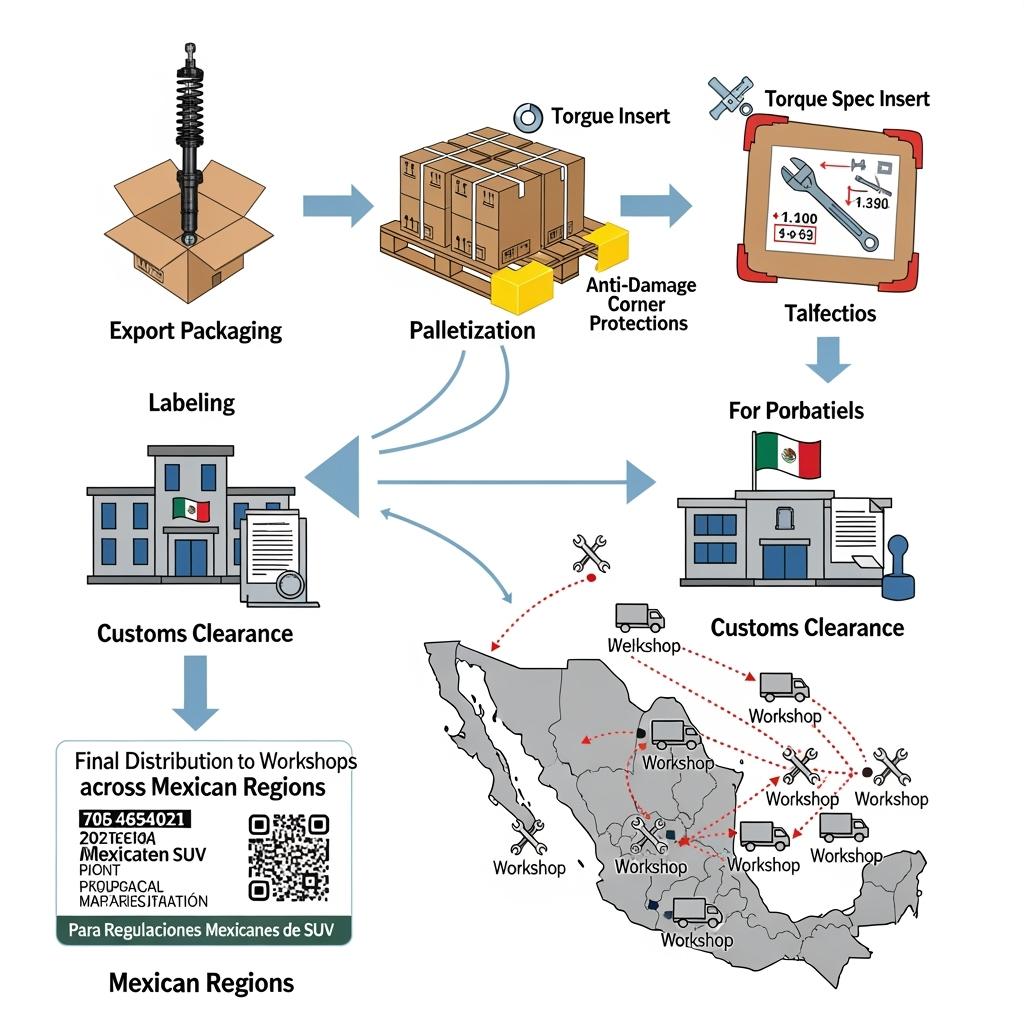
Sourcing the right shock is only half the battle; getting it to workshops across Mexico on time is the other half. Choose a logistics model that fits your demand volatility. For steady fleets, regional stocking in Central Mexico can cut downtime; for seasonal spikes in coastal or northern states, flexible 3PL staging reduces stockouts. Coordinate INCOTERMS, brokerage, and last-mile carriers familiar with rural deliveries, and include simple handling instructions on cartons so shocks aren’t damaged in transit. If you want insight into production capacity and packaging options that ease freight planning, see this overview of G·SAI’s capabilities: tour the factory and test facilities.
| Model | Typical lead time | Risk level | Best for |
|---|---|---|---|
| Regional warehouse stock | 2–7 days | Low | Fleets needing fast swaps across states |
| Cross-border direct to dealer | 7–14 days | Medium | Targeted launches and low-volume models |
| Consolidated monthly shipments | 14–30 days | Low–Medium | Stable demand with budget freight |
| Vendor-managed inventory | 7–21 days | Low | Programs insisting on certified shock absorber parts for Mexican SUV regulations with steady replenishment |
Use the table to match inventory strategy to demand patterns. High-utilization fleets benefit from vendor-managed inventory with locked codes, while aftermarket dealers may prefer consolidated shipments to balance freight and cash flow.
FAQ: Certified shock absorber parts for Mexican SUV regulations
What makes shock absorbers “certified” for Mexican SUV regulations?
Certification in this context means the parts are engineered and documented to meet defined performance and safety criteria, with traceability, Spanish instructions, and conformity statements suitable for import and service in Mexico.
Do I need different shock tuning for topes and rural washboard?
Yes. Topes emphasize low-speed compression control to avoid harshness, while washboard stresses heat management and high-speed damping. A balanced tune addresses both.
How do I verify certified shock absorber parts for Mexican SUV regulations in the field?
Confirm lot codes match documents, torque bolts to spec, and run a short mixed-surface route. Look for consistent damping hot and cold, no leaks, and stable ride height.
Will remote reservoirs help in Mexican off-road conditions?
On long washboard or steep descents, reservoirs reduce heat fade and stabilize damping. They add cost and complexity but pay off in demanding routes.
What materials fight corrosion in coastal Mexican states?
Zinc-nickel or e-coat hardware, chrome-hardened rods, and quality seal compounds resist salt air. Pair materials with thorough rinsing after coastal duty.
How often should off-road fleet shocks be replaced in Mexico?
Base it on route severity and load. Many fleets re-evaluate at 40–60,000 km; high-abuse routes may need earlier inspection cycles to catch seal wear or fade.
Can I get custom valving that stays consistent across reorders?
Yes. Lock a validated code and damping window with your manufacturer so every reorder matches the proven stack and oil—critical for multi-state fleets.
Last updated: 2025-10-29
Changelog: Added logistics table and commentary; Expanded environmental durability guidance; Inserted manufacturer spotlight for G·SAI; Updated field testing KPIs and thresholds.
Next review date & triggers: 2026-04-29 or sooner if import labeling rules change, major route conditions shift, or new shock materials become available.
Ready to spec and validate a set built for your routes? Share vehicle models, payloads, and terrain, and G·SAI will propose a custom shock package, with pilot samples and a clear path to fleet rollout.
Related Post
-
B2B Supplier Guide for SUV Shock Absorbers in the Thai Market
If you source, distribute, or spec suspension parts for Thailand’s booming pickup and SUV segments, this B2B Supplier Guide for SUV Shock Absorbers in the Thai Market is your shortcut to choosing SKUs that sell, pass inspections, and perform in real Thai conditions. From Bangkok expressways to northern mountain passes and southern islands, we’ll map…
-
Performance Suspension for SUVs Operating in Hot Climates in France
When temperatures climb across Provence, Occitanie, and Corsica, suspension systems work harder than almost any other vehicle subsystem. Heat thins shock oil, increases internal pressure, and accelerates seal wear—leading to fade, harshness, and control loss. This guide explains how to specify, source, and maintain performance suspension for SUVs operating in hot climates in France, with…