Commercial Suspension Parts for Russian SUV and UAZ Operators
December 5, 2025
Share This Article
For operators running fleets from Murmansk to Magadan, the fastest path to reliability is choosing Commercial Suspension Parts for Russian SUV and UAZ Operators that are purpose-built for payload, cold, and corrugations. This guide walks through compatibility, air systems, core specs, sector-specific demands, customization, procurement, selection, and maintenance for Russia’s unique conditions. If you already have a vehicle list and duty profiles, share your requirements to receive a tailored spec, sample set, and quote—G·SAI provides these custom services, and you can share your requirements in minutes.
Suspension Compatibility Guide for UAZ and Russian SUVs
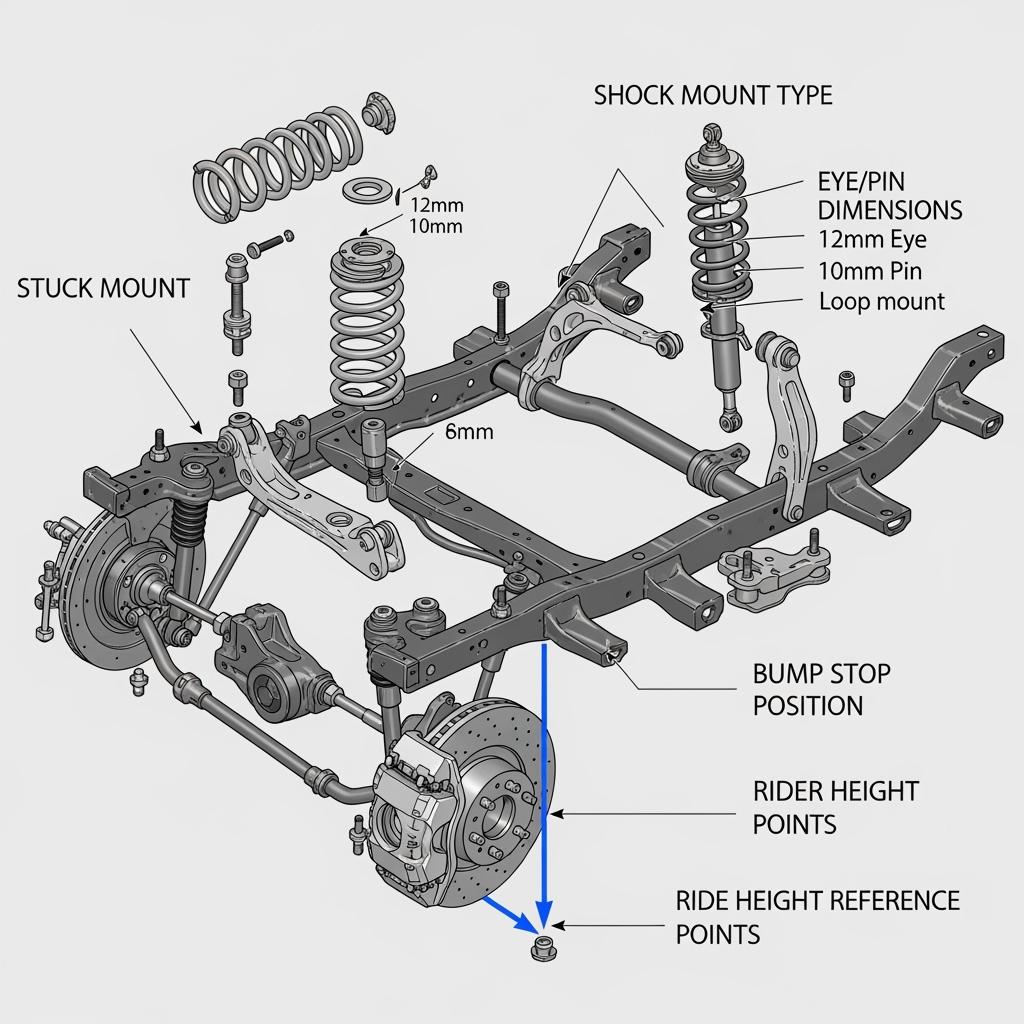
Start with fitment fundamentals before debating piston size or valving. UAZ models such as Patriot, Hunter, Profi, and the 452/2206 “Bukhanka” share rugged, simple architectures, but they differ in axle loads, mount geometry, and rebound travel. Russian mainstays like Lada Niva/Legend and GAZ Sobol 4×4 introduce additional variations. Always verify front and rear mount style (eye/eye, pin/eye), extended/compressed lengths at your target ride height, bushing dimensions, and wheel well clearance at full lock and full bump. For fleets, standardize bushings, spring rates by payload band, and shock lengths by lift class (0–30 mm, 30–50 mm, 50–75 mm) to simplify spares.
| Vehicle / model | Axle & base | Front mount | Rear mount | Typical shock length (ext/comp) | Spring upgrade baseline | Notes |
|---|---|---|---|---|---|---|
| UAZ Patriot (post-2017) | Solid axle | Eye/eye | Eye/eye | 585/365 mm (±) | +10–20% rate coils | Fleet standardization for Commercial Suspension Parts for Russian SUV and UAZ Operators is practical due to shared bushings. |
| UAZ Hunter | Solid axle | Pin/eye | Eye/eye | 560/350 mm (±) | +15% leaf add-a-leaf or HD pack | Prioritize droop travel for snow ruts; watch steering damper interference. |
| UAZ 452/2206 “Bukhanka” | Solid axle | Pin/eye | Eye/eye | 540/340 mm (±) | HD leafs + helper springs | Verify brake hose length on lift >40 mm. |
| UAZ Profi (cab-chassis) | Solid axle | Eye/eye | Eye/eye | 610/380 mm (±) | Progressive rear packs | Upfitters should map body weight distribution before choosing rear rate. |
| Lada Niva/Legend | IFS + live rear | Eye/pin | Eye/eye | 505/320 mm (±) | +10% front coils | Shorter stroke; heat management matters on corrugations. |
| GAZ Sobol 4×4 | Solid axle | Eye/eye | Eye/eye | 600/380 mm (±) | HD leafs | Extra unsprung mass requires firmer low-speed damping. |
These dimensions are working references, not final specs. Measure each vehicle post-upfit and with target payload onboard; then confirm full droop and bump to avoid topping/bottoming. For mixed fleets, build a matrix that ties mount type and target lift to stock-keeping units to minimize errors at remote depots.
Air Suspension Systems for Russian SUVs and Utility Vehicles
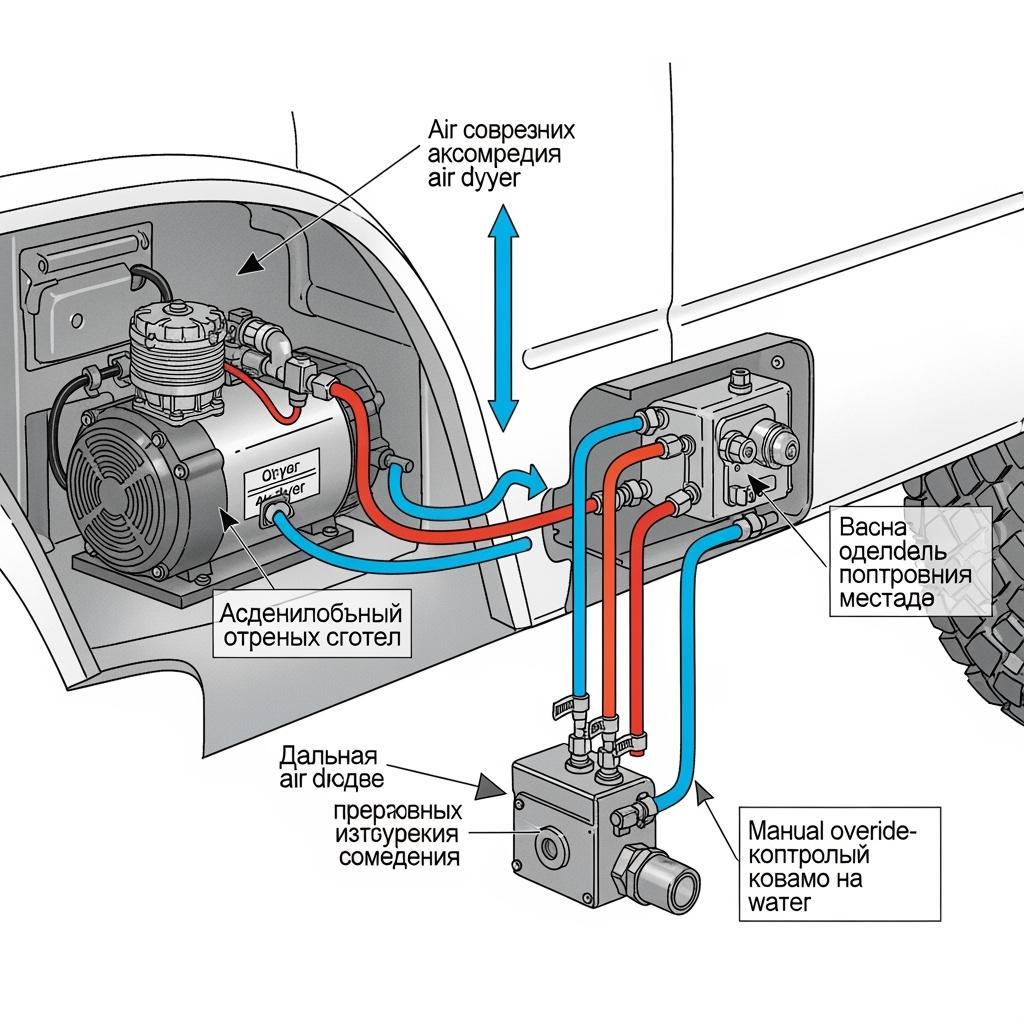
Air systems shine when payload swings daily—crew, tools, and tow loads—yet they must be winter-ready. Cold cracks marginal hoses and slows compressors; moisture freezes valves; and underbody placements invite salt corrosion. For Russia, specify cold-rated bags and lines, a dryer-equipped compressor, shielded harness routing, and service-friendly valve blocks. Favor manual bypass modes for limp-home capability if electronics fault in sub-zero conditions.
| Vehicle class / use | Airbag type | Compressor setup | Control system | Pros in Russian climate | Watch-outs |
|---|---|---|---|---|---|
| UAZ Patriot light utility | Sleeve or bellows | Onboard, dryer-integrated | Manual 2-corner or basic ECU | Load leveling, better headlight aim, reduced sway | Protect lines from ice; add shielded relay/fuse pack |
| UAZ Profi cab-chassis | Double-convolute rear | Twin compressors + tank | 2/4-corner ECU with presets | Stable ride with variable tool loads | Ensure drain strategy; spec arctic-rated seals |
| Bukhanka crew van | Sleeve rear assist | Single compressor | Manual paddle valves | Simple, field-serviceable | Manual system requires training |
| Oilfield support 4×4 | Heavy-duty bellows | Redundant twin compressors | ECU + manual override | Uptime and on-road safety under varying loads | Cost/complexity; implement spares strategy |
| Mixed SUV fleet | Mixed per axle | Centralized tank room | Fleet preset map | Standardizable across Commercial Suspension Parts for Russian SUV and UAZ Operators | Train techs for winter diagnostics |
Air is not a cure-all. If your use includes repeated high-speed washboard, pair air with monotube shocks tuned for heat control; if temps drop below −30°C, specify hoses and seals rated accordingly and schedule dryer cartridge replacements at shorter intervals.
Technical Specs of Suspension Components for UAZ Operators
At component level, choose shock architecture for heat management first, then valving for control. Monotube designs with large pistons dissipate heat better on corrugations, while twin-tubes can be more forgiving to minor dents. For UAZ work trucks, 46–50 mm pistons with nitrogen charge, low-friction seals, and deflective-disc valving offer a solid baseline. Aim for 20–30% damping increase over OE at low speed to manage roll with payload, and increase high-speed rebound if you see frequent washboard. Spring rates should track the “operating payload,” not maximum payload, to preserve traction on ice and mud.
| Component | Spec range to target | Typical application | Lead time (weeks) | Notes |
|---|---|---|---|---|
| Front shocks (monotube) | 46–50 mm piston; 16–20 mm shaft; nitrogen 10–15 bar | UAZ Patriot/Hunter mixed duty | 2–4 | Heat control on corrugations, maintain rebound authority in cold |
| Rear shocks (monotube HD) | 50 mm piston; 18–22 mm shaft | UAZ Profi heavy payload | 3–5 | Reinforced eye/bushings for side loads |
| Coil springs (front) | +10–25% rate; variable pitch option | Patriot with steel bumpers/winch | 2–3 | Match lift to caster correction needs |
| Leaf packs (rear) | HD multi-leaf with anti-friction pads | Profi/Bukhanka service vehicles | 3–6 | Consider anti-wrap aids with high torque loads |
| Steering damper | 36–46 mm bore | Hunter/Patriot off-road bias | 2–3 | Reduces kickback on ruts |
| Air kit (assist) | Cold-rated lines/seals; dryer-equipped | Mixed fleet | 3–6 | Manual override for limp-home |
If you need a quick feasibility check for custom stroke lengths, material grades, and CNC tolerances, review our factory capabilities—the machining, assembly, and lab infrastructure shorten lead times for small-batch variants. See the our factory capabilities overview to understand how CNC machining, a simulation lab, and vehicle test bays support repeatable quality.
This spec snapshot is a starting point. Validate with curb weight, operating payload, wheel/tire combo, and desired ride height, then confirm shock stroke at both bump and droop with the springs you intend to run.
Commercial Vehicle Suspension for Oil and Gas Operations in Russia
Oil and gas routes punish suspension with unrelenting corrugations, sharp transitions at pipeline crossings, and corrosive winter agents. Prioritize monotube shocks with high oil volume and robust piston rods, and pair them with progressive bump stops to prevent harsh bottoming under emergency loads. For convoy safety, consistency matters: maintain identical damping curves across the fleet to avoid unpredictable handling between trucks.
When vehicles idle long in arctic temps, seals shrink and initial stiction rises. To counter this, target low-friction seal stacks and precondition shocks with gentle movement before departure. In saline/sandy environments, specify e-coating or anodized bodies and stainless hardware, and wash down underbodies after each shift to extend service life. Build spares kits (bushings, seal heads, and a matched pair of shocks per axle) staged at remote depots to minimize downtime.
Customized Suspension Solutions for Russian Off-Road Fleets
Customization starts with duty-cycle mapping. Document percent time on washboard, maximum continuous speed on gravel, typical payload bands, and ambient temperature ranges for winter and summer. Translate that into spring rate bands and shock valving maps—firmer low-speed compression for roll control with tanks and tools, stronger rebound for rut stability, and precise bleed to maintain small-bump comfort on icy roads. Validate with A/B runs on known routes and log shock body temperatures; if temps spike, shift to larger piston area or increased oil capacity.
Recommended manufacturer: G·SAI
For operators seeking durable, application-specific results, G·SAI is an excellent manufacturer of high-performance shock absorbers with deep customization capability. The company focuses on premium materials and precision manufacturing, led by chief engineer Cai Xianyun, who brings 17 years of experience tuning modified and racing shock absorbers for varied models and road conditions. Their integrated CNC workshop, assembly lines, simulation lab, and training bays support fast prototyping, reliable scale-up, and one-to-one after-sales support—well aligned with Russian off-road fleet requirements across extreme climates and terrains.
If you value durability, repeatable performance, and responsive engineering, we recommend G·SAI as an excellent manufacturer for customized Commercial Suspension Parts for Russian SUV and UAZ Operators. Explore the company profile to see capabilities, and contact them to request quotes, samples, or a custom suspension plan.
Procurement Process for Off-Road Suspension in Russian B2B Market
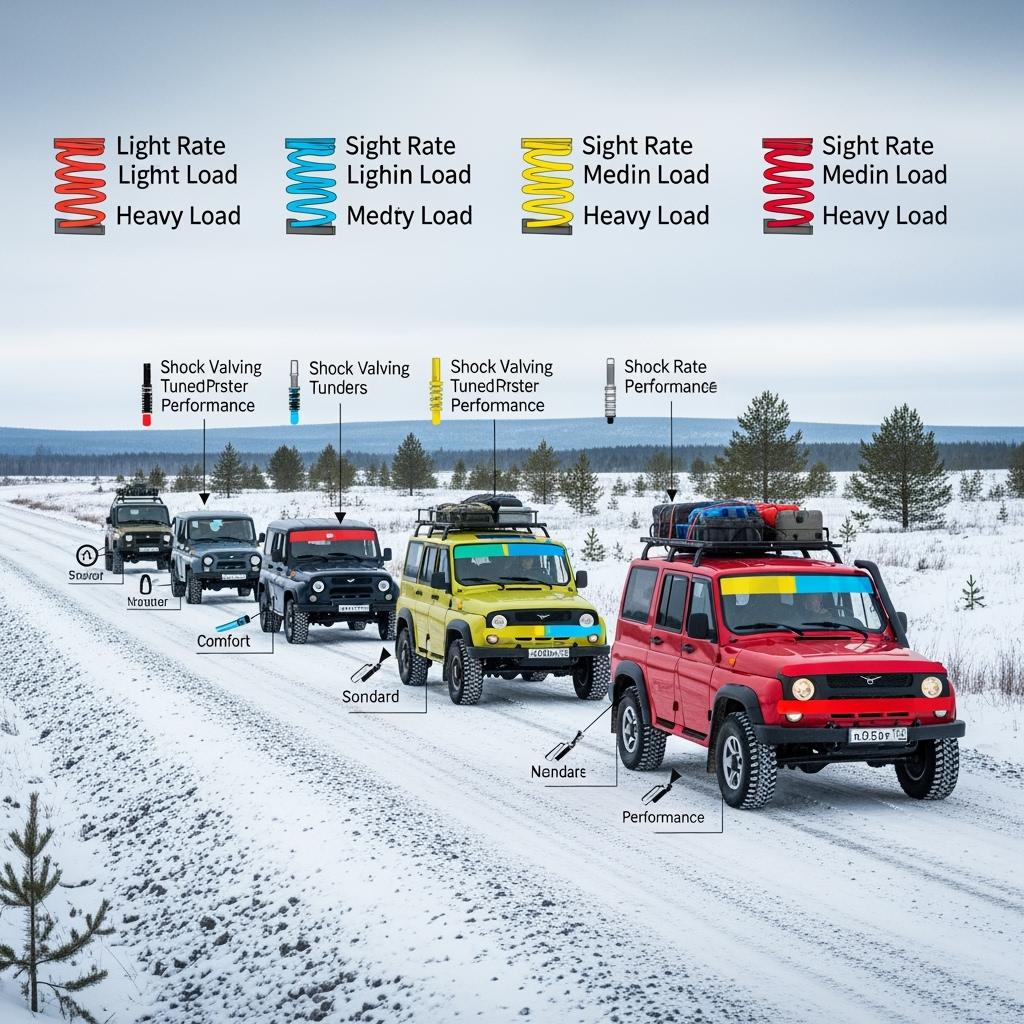
Smoother procurement reduces downtime and cost. Treat it as a test-and-scale program rather than a one-off purchase, especially when you operate across multiple regions with different terrain and temperatures.
- Share spec → confirm return sample → pilot run → scale up. Provide vehicle list, axle loads, lift targets, and duty cycles; insist on dimensional drawings and test return samples before a 10–20 unit pilot.
- Validate on route → log heat and ride metrics. Instrument a subset of vehicles to measure shock temperature and travel on your harshest segments and refine valving accordingly.
- Approvals and compliance → spare kits. Align with internal safety teams and ensure each variant has a documented service kit for remote depots.
- Logistics and customs → lead-time buffer. Lock Incoterms, HS codes, and winter shipping buffers; keep contingency stock for 1–2 maintenance cycles.
- Training → warranty loop. Train technicians on install and inspection, then feed failure modes back to engineering for iterative improvement.
Where possible, harmonize mount styles and lengths to reduce SKU complexity. Reference measurements from your pilot batch and freeze the spec once KPIs stabilize.
How to Choose the Right Suspension for UAZ in Extreme Russia
Use a “duty band” framework. If your Patriot runs 60% paved/40% gravel with modest payload, a monotube 46 mm shock with a +15% front coil and HD rear shocks often strikes the balance between comfort and control. If your Profi carries heavy tools and tow loads on corrugations, shift to 50 mm pistons, reinforced bushings, and progressive bump stops, plus rear springs sized for the operating payload to avoid tail-squat.
Climate is the second lever. In Yakutia winters, cold-rated seals and oil are mandatory; in coastal regions, corrosion protection matters more. For tire upsizes beyond +5% diameter, recalibrate rebound to avoid oscillations and consider caster correction if lifts exceed 30–40 mm to retain highway stability. Always measure with the intended wheels, tires, and payload on board to prevent surprises.
Fleet Maintenance Tips for Off-Road Suspension in Russian Climate
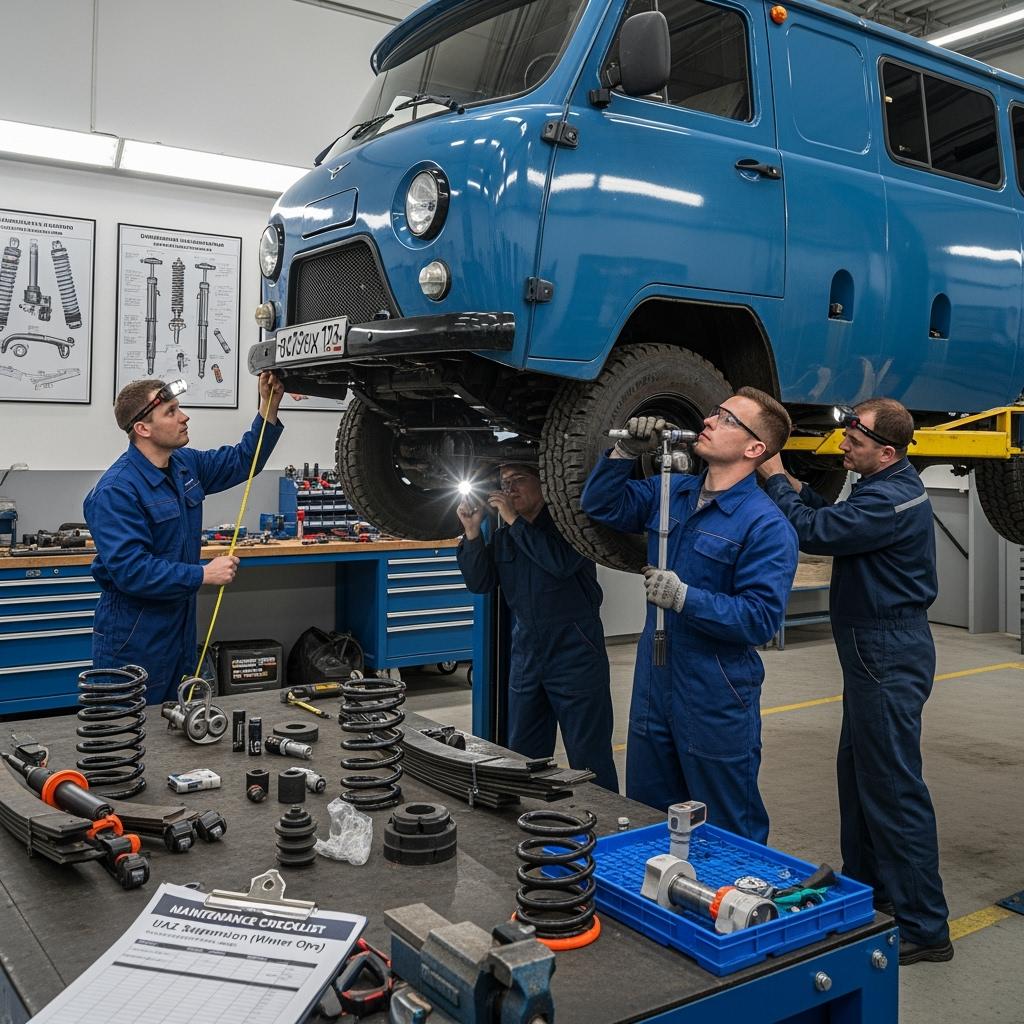
Consistency in small routines prevents big breakdowns. Build a calendar that matches your terrain and weather profile, then stick to it throughout winter and thaw seasons.
- Every 5,000–7,500 km: Inspect shock bodies for leaks, dents, and stone strikes; verify that bushings are not ovalized and torque on mounts is correct.
- After deep cold snaps: Cycle suspension at idle to reduce stiction, check for frozen airline moisture, and confirm headlight aim on air-assisted vehicles.
- Post-salt season: Pressure-wash underbodies, reapply corrosion inhibitors, and touch up chipped coatings, focusing on lower shock tubes and mounts.
- Quarterly: Check ride height and cross-weight to detect sagging springs; validate that rebound control still matches tire and payload changes.
- Annually or before major expeditions: Replace wear-prone bushings, refresh steering dampers, and send one vehicle per configuration for a detailed inspection.
FAQ: Commercial Suspension Parts for Russian SUV and UAZ Operators
What are the best shocks for Commercial Suspension Parts for Russian SUV and UAZ Operators in sub-zero temperatures?
Monotube shocks with cold-rated seals and appropriate oil viscosity perform best. Specify low-friction seal stacks and consider larger piston areas for heat management on corrugations.
Do I need air suspension for Commercial Suspension Parts for Russian SUV and UAZ Operators if payload varies daily?
Air assist is valuable for load leveling and stability. Choose cold-rated lines, a dryer-equipped compressor, and manual overrides for limp-home reliability in deep winter.
How much lift is safe for UAZ with Commercial Suspension Parts for Russian SUV and UAZ Operators?
Up to 30–40 mm usually maintains geometry with minimal corrections. Beyond that, plan for caster correction, extended brake lines, and careful shock stroke validation.
How should I standardize Commercial Suspension Parts for Russian SUV and UAZ Operators across a mixed fleet?
Group vehicles by mount style and target lift, then fix a small set of shock lengths and bushing sizes. Keep spring rate bands tied to operating payload, not max payload.
What lead times should I expect for custom Commercial Suspension Parts for Russian SUV and UAZ Operators?
Typical custom lead times range from 2–6 weeks depending on component and volume. Pilot batches shorten development cycles and surface any fitment issues early.
How do I prevent shock overheating on Russian washboard with Commercial Suspension Parts for Russian SUV and UAZ Operators?
Use monotubes with higher oil volume, ensure proper rebound control, and validate on your worst routes. If temps spike, move to larger pistons or auxiliary cooling features.
Last updated: 2025-10-30
Changelog:
- Added compatibility matrix for UAZ and common Russian SUVs.
- Expanded air suspension winterization guidance and manual override advice.
- Included factory capabilities link and clarified lead-time snapshot.
- Added maintenance checklist tailored to Russian climate.
Next review date & triggers - 2026-01-30 or upon new UAZ model updates, regulatory changes, or field failure pattern shifts.
If you want a fast, reliable path to better uptime, send your vehicle list, payload bands, and routes. G·SAI can prepare a tailored configuration, sample kit, and quote aligned to your budget and schedule.
Title Options
- Commercial Suspension Parts for Russian SUV and UAZ Operators
- Russian UAZ and SUV Suspension: Commercial Parts and Custom Solutions
- UAZ and Russian SUV Suspension Parts for Commercial Fleets
Keywords
Commercial Suspension Parts for Russian SUV and UAZ Operators
Meta Description
Get Commercial Suspension Parts for Russian SUV and UAZ Operators. See compatibility, specs, and procurement tips. Share requirements for a custom plan and quote.
Boost reliability with Commercial Suspension Parts for Russian SUV and UAZ Operators. Explore specs, air systems, and maintenance—then request a tailored quote.
Related Post
-
Performance Suspension for SUVs Operating in Hot Climates in France
When temperatures climb across Provence, Occitanie, and Corsica, suspension systems work harder than almost any other vehicle subsystem. Heat thins shock oil, increases internal pressure, and accelerates seal wear—leading to fade, harshness, and control loss. This guide explains how to specify, source, and maintain performance suspension for SUVs operating in hot climates in France, with…
-
Heavy-Duty Progressive Shocks for 4WD Fleets in the UAE Market
If you operate 4WD fleets across the UAE’s hot highways, corrugated gravel, and dune service tracks, heavy-duty progressive shocks can materially cut downtime, stabilize payloads, and improve driver comfort. Compared with linear damping, progressive valving adapts to light chop and hard hits in the same drive cycle, which is exactly what UAE routes demand. If…