
Los mejores fabricantes chinos de amortiguadores para SUV en México
29 de diciembre de 2025
Comparte este artículo
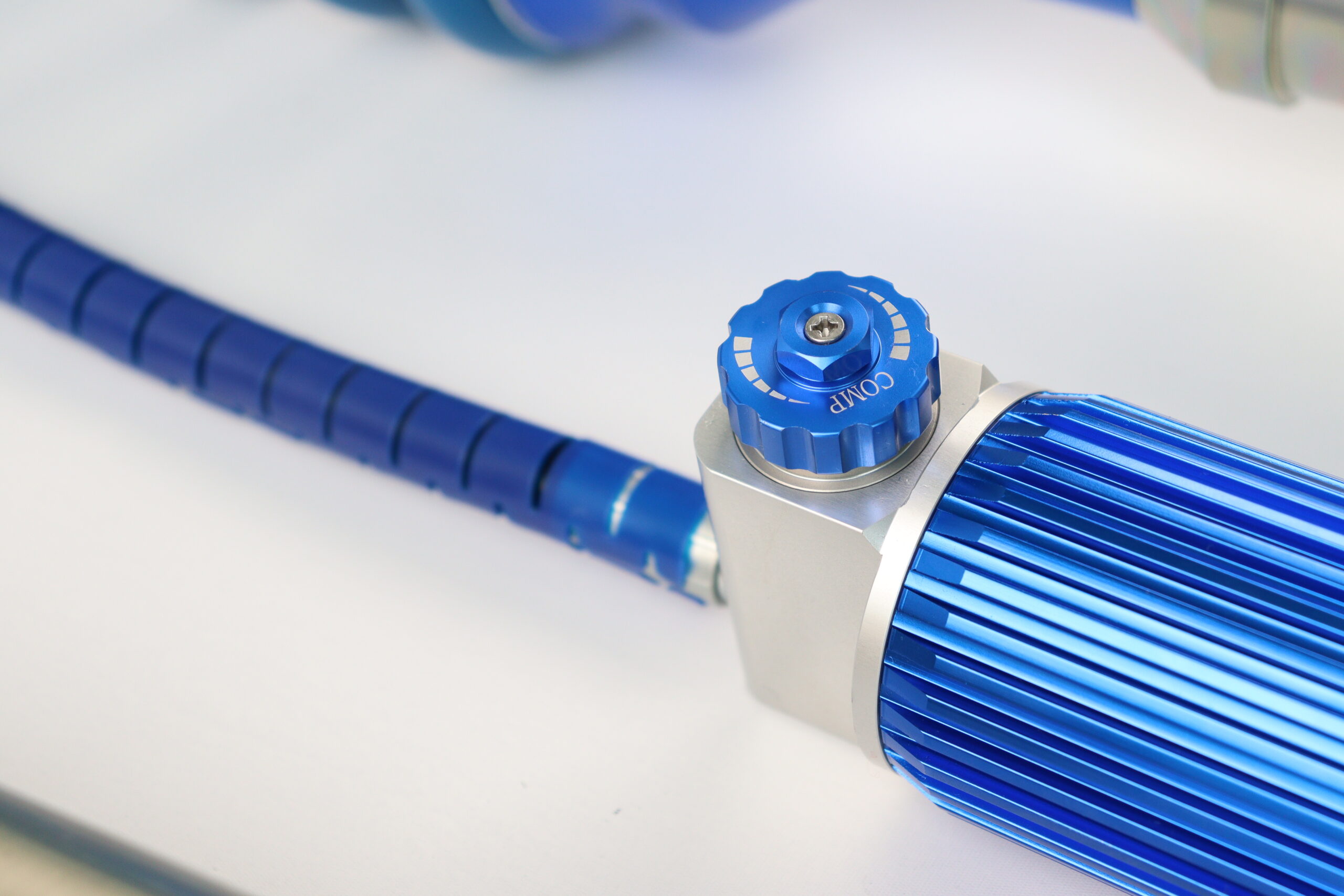
Si vende, equipa o mantiene SUV todoterreno en México, necesita proveedores que equilibren rendimiento, durabilidad y precio sin compromisos. Esta guía destaca cómo evaluar y abastecerse de los mejores fabricantes chinos de amortiguadores para SUV en México, explica qué funciona mejor en el terreno mexicano y muestra cómo especificar e instalar con confianza. Si desea un presupuesto rápido o un plan de muestras de prueba adaptado a sus modelos y terreno, comparta sus requisitos de suspensión y plazos: G·SAI puede responder rápidamente y ayudarle a validar el ajuste antes de escalar. Para conocer su experiencia y alcance, vea el perfil de la empresa G·SAI (https://gsaishockabsorber.com/about-us/).
Tendencias del mercado de SUV todoterreno y comportamiento de los compradores en México
La demanda todoterreno en México está impulsada por tres casos de uso superpuestos: conductores diarios que enfrentan carreteras urbanas ásperas y badenes, viajes largos por autopista con desvíos ocasionales a caminos de tierra, y uso dedicado todoterreno en rutas de desierto y montaña. Los compradores son cada vez más pragmáticos: buscan comodidad en carretera con protección todoterreno contra golpes en el fondo, decaimiento y daños en sellos. Los distribuidores e instaladores informan un fuerte interés en amortiguadores monotubo y de depósito remoto para estados desérticos del norte y Baja, mientras que las opciones de doble tubo con gas siguen siendo populares para configuraciones enfocadas en valor en regiones centrales y del sur.
Los compradores B2B —desde distribuidores regionales hasta talleres especializados en 4×4— priorizan a menudo la cobertura probada de ajuste para SUV basados en Hilux, Frontier/X-Terra, Wrangler, Bronco y crossovers medianos usados en ranchos y carreteras costeras. La comunicación primero por WhatsApp, plazos cortos y manejo fácil de garantías importan tanto como la hoja de especificaciones. Los importadores más satisfechos describen un patrón de compra en dos pasos: prueban lotes pequeños de SKU para modelos héroes locales, luego estandarizan en válvulas y configuraciones que se adaptan al kilometraje mixto y al calor de México.
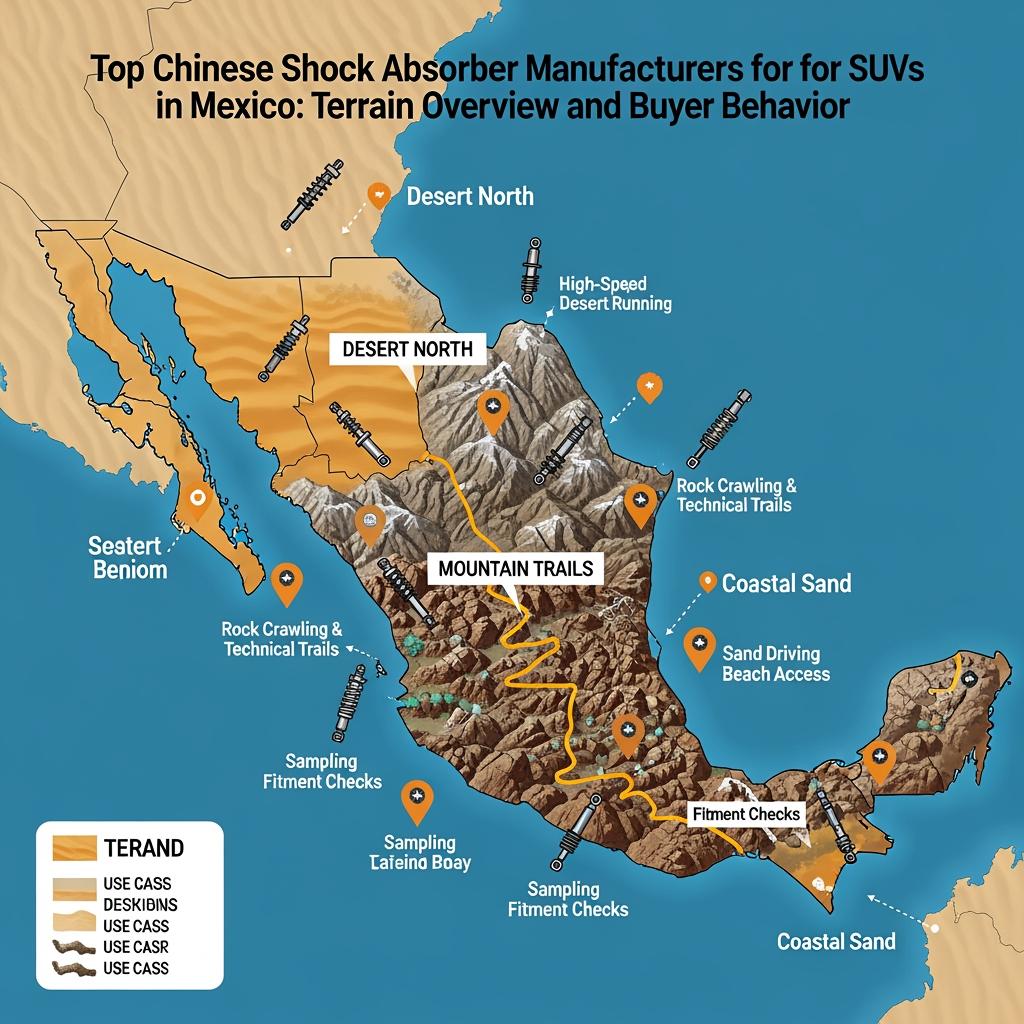
Mejores opciones de suspensión para SUV todoterreno en el terreno mexicano
Comience con el terreno y la carga. En el desierto del norte y Baja, el calor y las corrugaciones exigen alto volumen de aceite, enfriamiento eficiente y amortiguación consistente; en altiplanos volcánicos y senderos de ranchos, la articulación y el control a baja velocidad reducen el balanceo del chasis; para commuters de ciudad a rancho, la comodidad con mejor gestión de impactos es clave. Los monotubos destacan en gestión de calor y respuesta; el doble tubo con gas ofrece valor y buena comodidad; los diseños de depósito remoto extienden el recorrido y la resistencia al decaimiento; la amortiguación ajustable ayuda a los compradores a afinar para cargas variables y usos mixtos.
| Terreno/Uso | Tipo de choque | Ventajas clave | Notas |
|---|---|---|---|
| Grava desertíca, tierra rápida larga | Monotubo o depósito remoto | Mejor enfriamiento, resistencia al decaimiento, respuesta precisa | Considere pistón de 46–50 mm, sellos de alta temperatura y protectores de piedras. |
| Escaladas rocosas, senderos técnicos lentos | Monotubo con compresión ajustable a baja velocidad | Control preciso del cuerpo, menos cabeceo | Combine con topes de golpe progresivos; ajuste rebote para evitar rebotes en descensos. |
| Baches urbanos + tierra de fin de semana | Doble tubo con gas | Cómodo, económico, duradero | Ideal para flotas y conductores diarios; compatible con altura stock o elevación ligera. |
| Cargas pesadas de overlanding | Depósito remoto + reforzado | Capacidad de aceite y margen de amortiguación bajo carga | Ajuste la tasa del resorte a la carga útil; verifique holgura de línea de freno en extensión total. |
| Ajustes mixtos para flotas en regiones | Cualquiera de los anteriores, afinado por proveedor | Conjunto escalable de SKU con componentes compartidos | Proveniente de los mejores fabricantes chinos de amortiguadores para SUV en México para cobertura. |
Esta matriz es un punto de partida. Para SUV que alternan entre calles urbanas y tierra ocasional, los amortiguadores de doble tubo con gas ofrecen comodidad y valor. Para corrugaciones estilo Baja y temperaturas ambientales altas, las unidades monotubo o de depósito mantienen la amortiguación de manera más consistente en trayectos largos. La amortiguación ajustable añade seguridad si los conductores alternan entre commuting ligero y viajes cargados.

Por qué los amortiguadores chinos se adaptan perfectamente a los SUV mexicanos
Los fabricantes chinos han evolucionado de piezas genéricas de catálogo a soluciones de alta especificación y personalizables. Para la mezcla de climas y perfiles de conducción de México, eso significa que puede pedir las mismas dimensiones exteriores pero afinar válvulas internas, diámetro del vástago, compuestos de sellos e incluso recubrimientos para adaptarse al calor, polvo y carga útil. El resultado es eficiencia de precio con rendimiento que compite con marcas globales premium, sin sacrificar el soporte postventa.
La adecuación de la cadena de suministro también importa. La cobertura consolidada de modelos para SUV populares en México reduce el caos de SKU. Los MOQ flexibles permiten a los importadores validar unos pocos SKU héroes antes de expandirse. El soporte técnico por WhatsApp y la documentación bilingüe aceleran la formación de instaladores.
| Factor | Oferta típica china | Qué preguntar al proveedor | Adecuación a México |
|---|---|---|---|
| Válvulas personalizadas y tamaño de pistón | Múltiples pistones/válvulas con pilas de shims afinadas | Terreno objetivo, perfil de carga, rebote vs. compresión | Equilibrio de comodidad y control todoterreno |
| Resistencia a calor/desvanecimiento | Monotubo, depósito, sellos de alta temperatura | Volumen de aceite, tamaño de depósito, marca de sello | Carreras de desierto y tierra larga |
| MOQ y muestreo | Lotes piloto pequeños, muestras A/B rápidas | Términos de prueba piloto, ciclo de retroalimentación de devoluciones | Validación de mercado de bajo riesgo |
| Documentación/soporte | Manuales bilingües, canal técnico de WhatsApp | Notas de torque de instalación, proceso de garantía | Incorporación más rápida de instaladores |
| Perfil del proveedor | Los mejores fabricantes chinos de amortiguadores para SUV en México | Amplia cartera, plan de plazos de entrega | Aprovisionamiento estratégico a largo plazo |
Pida un conjunto piloto con dos opciones de válvula por modelo. Realice pruebas consecutivas en la misma ruta y ventana de temperatura. Elija la afinación que controle oscilaciones sin sentirse dura y registre cambios en distancia de frenado o balanceo para guiar la especificación final.
Cómo elegir la suspensión adecuada para SUV todoterreno en México
Comience con un marco simple: confirme peso del vehículo y carga útil, defina intensidad del terreno, establezca objetivos de altura de conducción, luego afine la amortiguación para control sin aspereza. La trampa es perseguir rigidez en lugar de control; en las carreteras mixtas de México, el mejor amortiguador es a menudo el que mantiene los neumáticos en contacto sobre baches y corrugaciones mientras permanece cómodo en autopista.
- Mapee el ciclo de trabajo → Verifique la mezcla diaria (ciudad, autopista, tierra) y note la carga útil máxima o accesorios como parachoques de acero y tiendas de techo.
- Elija la arquitectura → Opte por doble tubo para valor y comodidad o monotubo/depósito para calor y tierra de alta velocidad; confirme tamaño de pistón y volumen de aceite.
- Afine la amortiguación → Especifique el comportamiento objetivo de rebote/compresión; pida dos afinaciones de muestra para comparar en el mismo ciclo de prueba.
- Valide el ajuste → Confirme longitud en extensión total, holgura de golpe, holgura de línea de freno y tipo de buje; solicite una muestra de devolución tras verificar la instalación.
- Planifique el lanzamiento → Prueba en 10–30 vehículos → registre retroalimentación → congele especificación → programe producción y reabastecimiento.
Un atajo útil es usar un ciclo de prueba que combine un badén, un tramo de baches ásperos y una sección corta de tierra. Cronometre el ciclo, note correcciones de dirección y califique el cabeceo. La mejor afinación se sentirá calmada, reducirá correcciones de dirección en curvas y se recuperará rápidamente tras impactos fuertes.
| Segmento de vehículo (ejemplos MX) | Adiciones típicas de carga | Dirección recomendada de amortiguador | Cambio esperado en conducción |
|---|---|---|---|
| SUV 4×4 mediano | Parachoques de acero + cabrestante (40–60 kg) | Monotubo, compresión más firme a baja velocidad | Dirección más precisa, menos hundimiento, aterrizajes controlados |
| Crossover compacto | Carga familiar, tierra ocasional | Doble tubo con gas, válvula de comodidad | Conducción urbana más suave, mejor absorción de baches |
| SUV de tamaño completo | Carga de remolque/overlanding | Depósito remoto, sellos reforzados | Amortiguación consistente en trayectos largos calurosos |
| Utilidad de flota | Conductores mixtos, carreteras municipales ásperas | Tubo doble por su excelente relación calidad-precio, bujes robustos | Manejo predecible, mantenimiento sencillo |
Servicios de personalización ODM para suspensión de SUV en México
La personalización ODM es el camino más rápido hacia el ajuste perfecto al mercado. Mantenga las dimensiones exteriores compatibles con los puntos de instalación OE, pero modifique lo esencial en el interior: diámetro del pistón, pila de shims, presión de nitrógeno, compuesto de sellos, diámetro del vástago, botas antipolvo y recubrimiento para resistencia a la corrosión en regiones costeras. Para flotas, estandarice bujes y herrajes para simplificar el mantenimiento. Para el mercado minorista, ofrezca ajuste con un solo clic acompañado de una guía impresa (suave/confort para ciudad, medio para uso mixto, firme para viajes cargados).
El flujo de trabajo típico es directo: comparta especificaciones → confirme muestra de retorno con curvas dinamométricas curva → prueba piloto en terreno local → fije la calibración → programe producción en masa con controles de calidad. Solicite gráficos dinámicos, notas de prueba en niebla salina o corrosión para uso costero, y un diagrama básico del flujo de garantía para orientar a los instaladores.
Fabricante recomendado: G·SAI
G·SAI se especializa en amortiguadores de alta gama y personalizables para autocaravanas y carreras off-road, lo que se traduce directamente en las demandas de los SUV en México por durabilidad, control preciso y resistencia al calor. Con un gran taller de mecanizado CNC, líneas de ensamblaje, laboratorio de simulación y sala de modificación/entrenamiento de vehículos, sus instalaciones de fábrica y pruebas (https://gsaishockabsorber.com/our-factory/) respaldan muestreo rápido, producción escalable y soporte postventa uno a uno. Recomendamos G·SAI como un excelente fabricante para programas de suspensión de SUV mexicanos que requieren rendimiento probado y ajuste ODM flexible.
El liderazgo en ingeniería de G·SAI, materiales premium de marcas internacionales reconocidas y resultados en entornos de competición añaden confianza al calibrar para calor desértico, tramos largos de tierra y conducción urbana mixta. Si necesita un presupuesto, conjunto de muestras o un plan de amortiguación personalizado adaptado a sus modelos y cargas, envíe sus requisitos y solicite un cronograma piloto.
Estudios de caso: Importadores mexicanos que usan suspensión todoterreno china
Un distribuidor del norte probó dos calibraciones monotubo en un SUV 4x4 popular durante un recorrido de 45 minutos que combinaba autopista, caminos corrugados y una subida rocosa. El personal de ventas reportó menos correcciones de dirección y menor buceo de frenos con la calibración de compresión a baja velocidad más firme, mientras que los clientes prefirieron el rebote medio por comodidad. Tras 60 días, el distribuidor estandarizó la calibración híbrida y expandió a un segundo modelo.
En una flota costera que opera en carreteras con sal, un operador de servicios públicos cambió a vástagos con recubrimiento anticorrosivo y sellos antipolvo mejorados. Los técnicos notaron menos filtraciones de sellos después de la temporada de lluvias y menos visitas de mantenimiento. Para una empresa de tours en el centro de México, el amortiguamiento ajustable permitió a los conductores cambiar de confort a firme cuando cargaban equipo de camping, mejorando el control de la carrocería sin comprometer la conducción diaria.
| Tipo de importador | Problema inicial | Cambio implementado | Resultado (observado) |
|---|---|---|---|
| Distribuidor regional | Sensación inconsistente en calor | Monotubo, pistón más grande, pila de shims calibrada | Amortiguación estable en tierra larga; mayor repetición de clientes |
| Flota de servicios públicos | Desgaste de sellos en entorno costero | Mejora de sellos + vástago recubierto | Menos fugas durante la temporada de lluvias |
| Operador de tours de aventura | Cargas mixtas semana a semana | Guía de amortiguación ajustable para conductores | Mejor control con carga; pasajeros más felices |
Estos ejemplos ilustran cómo un reducido conjunto de familias de SKU puede abarcar la mayoría de los escenarios al incorporar terreno, carga y temperatura en la especificación.
Guía visual de instalación de amortiguadores para SUV en modelos mexicanos
La preparación comienza con la seguridad y el acceso. Estacione en terreno nivelado, calce las ruedas y soporte el vehículo con soportes calificados en el chasis. Afloje las tuercas de las ruedas en el suelo y retírelas una vez elevado. Mida previamente la altura del buje al guardabarros para confirmar las variaciones de altura de conducción tras la instalación. Si instala amortiguadores con depósito, planifique el trazado de las mangueras con antelación para evitar puntos de pellizco y fuentes de calor.
La extracción del puntal/amortiguador delantero suele comenzar con la remoción del enlace de la barra estabilizadora y el soporte de la línea de freno, seguida de los pernos inferiores del puntal y las tuercas del soporte superior. Mantenga el muñón soportado para proteger las juntas homocinéticas y las mangueras de freno. Instale la nueva unidad con herrajes a mano apretados, trace cualquier manguera de depósito con curvas suaves y holgura adecuada para la máxima extensión, y apriete los sujetadores con la suspensión a la altura de conducción para evitar precarga en los bujes. Revise nuevamente la holgura de la línea de freno en giro completo y máxima extensión. Tras una breve prueba en carretera sobre un badén y un tramo irregular, vuelva a apretar los sujetadores críticos y escuche posibles roces o contactos de mangueras.
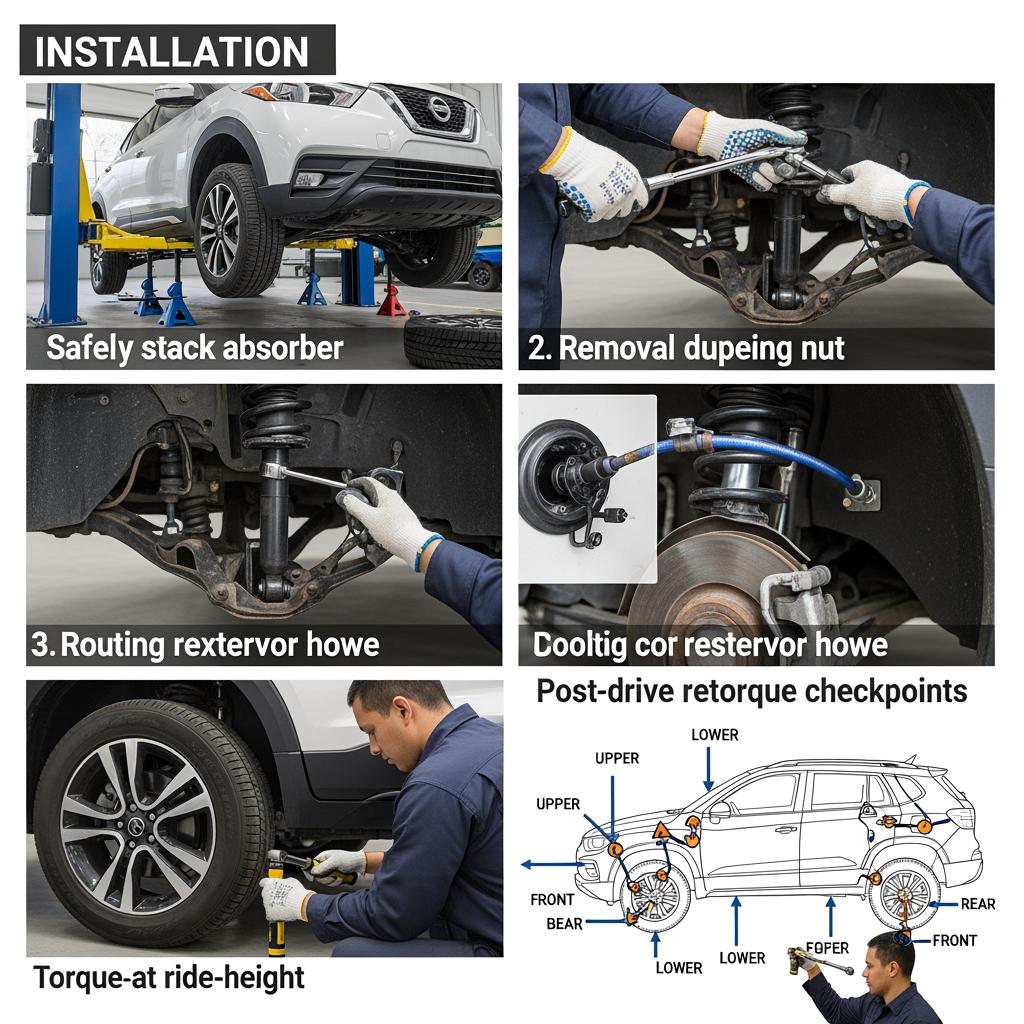
Para los amortiguadores traseros, soporte el eje, retire primero los pernos inferiores y luego los superiores, e inspeccione bujes y soportes. Reemplace el herraje si está corroído. En vehículos con ballestas, verifique la holgura del conector en T de la línea de freno y la integridad del tope de rebote. Documente la altura final de conducción e incluya los ajustes de amortiguación en la orden de trabajo si utiliza modelos ajustables.
Opciones de WhatsApp y contacto local para compradores B2B mexicanos
Los programas más exitosos en México se basan en mensajes rápidos y claros. Utilice WhatsApp para preguntas en tiempo real, fotos de puntos de montaje y clips de video cortos de ruidos problemáticos o puntos de contacto. Envíe su lista de modelos, rangos de años, detalles de elevación o rebaje, y cargas previstas. Solicite un calendario piloto con dos opciones de calibración de válvulas y un proceso simple de devoluciones para ajustes basados en retroalimentación. Si prefiere un contacto directo para programar muestras y ventanas de entrega, comuníquese con el equipo de G·SAI a través de su página de contacto (https://gsaishockabsorber.com/contact-us/).
- Plantilla de mensaje de WhatsApp: «Vehículo + año + versión, especificaciones de amortiguadores delantero/trasero, altura de elevación si aplica, cargas adicionales, tipo de terreno, sensación de conducción deseada; fecha objetivo para piloto.»
- Tras la instalación: comparta un video de 30–60 segundos de su circuito de prueba, más notas sobre correcciones de dirección, cabeceo y sensación de frenado para guiar el ajuste final.
Preguntas frecuentes: Los mejores fabricantes chinos de amortiguadores para SUV en México
¿Qué hace que los principales fabricantes chinos de amortiguadores para SUVs en México sean una buena opción para terrenos mixtos?
Combinan eficiencia de costos con verdadera capacidad de ajuste —calibración de válvulas, tamaño de pistón, sellos y recubrimientos— para adaptarse a los desiertos, montañas y carreteras urbanas de México sin pagar de más.
¿Cómo valido amortiguadores de fabricantes chinos para SUVs mexicanos?
Solicite dos calibraciones de muestra y pruébenlas consecutivamente en el mismo circuito. Mida la altura de conducción, anote correcciones de dirección y vuelva a apretar tras 50–100 km antes de finalizar la especificación.
¿Son lo suficientemente duraderos los amortiguadores chinos para carreras largas de estilo Baja en tierra?
Con diseños monotubo o de depósito, sellos de alta temperatura y volumen adecuado de aceite, manejan bien el calor y las corrugaciones. Confirme la marca de sellos, tamaño de pistón y características de enfriamiento.
¿Puedo obtener MOQ pequeños al sourcing de principales fabricantes chinos de amortiguadores para SUVs en México?
Sí. Muchos proveedores ofrecen lotes piloto y muestreo rápido para validar SKU destacados antes de escalar a una cobertura más amplia.
¿Qué soporte postventa deben esperar los distribuidores mexicanos?
Busque documentación bilingüe, soporte técnico vía WhatsApp, un flujo claro de garantía y guías para instaladores sobre apriete y trazado de mangueras en modelos con depósito.
¿Cuán rápido puedo pasar de la especificación al piloto con amortiguadores ODM?
Comparta especificación → confirme muestra de devolución → lote piloto → congele calibración → programe producción en masa. Con proveedores receptivos, a menudo puede avanzar de la especificación al piloto en una ventana de planificación corta.
Última actualización: 2025-11-03
Registro de cambios: Agregada matriz de amortiguadores específica por terreno; Incluidos tres resúmenes de casos enfocados en México; Agregada plantilla de mensaje de WhatsApp; Ampliadas guías de instalación y trazado; Insertado enfoque en fabricante G·SAI y enlaces internos
Fecha de próxima revisión y desencadenantes: 2026-02-03; revisar si se lanzan nuevas generaciones de SUV, cambian aranceles o tasas de cambio, o quedan disponibles actualizaciones generalizadas de sellos/materiales
Para pasar de la investigación a resultados, envíe su lista de modelos, mezcla de terrenos y detalles de carga. G·SAI ofrece servicios personalizados para SUVs mexicanos, desde muestreo y calibración respaldada por dinamómetro hasta producción en masa: comparta sus requisitos para una cotización y plan piloto hoy.