
Heavy-Duty Progressive Shocks for 4WD Fleets in the UAE Market
marzo 3, 2026
Comparte este artículo
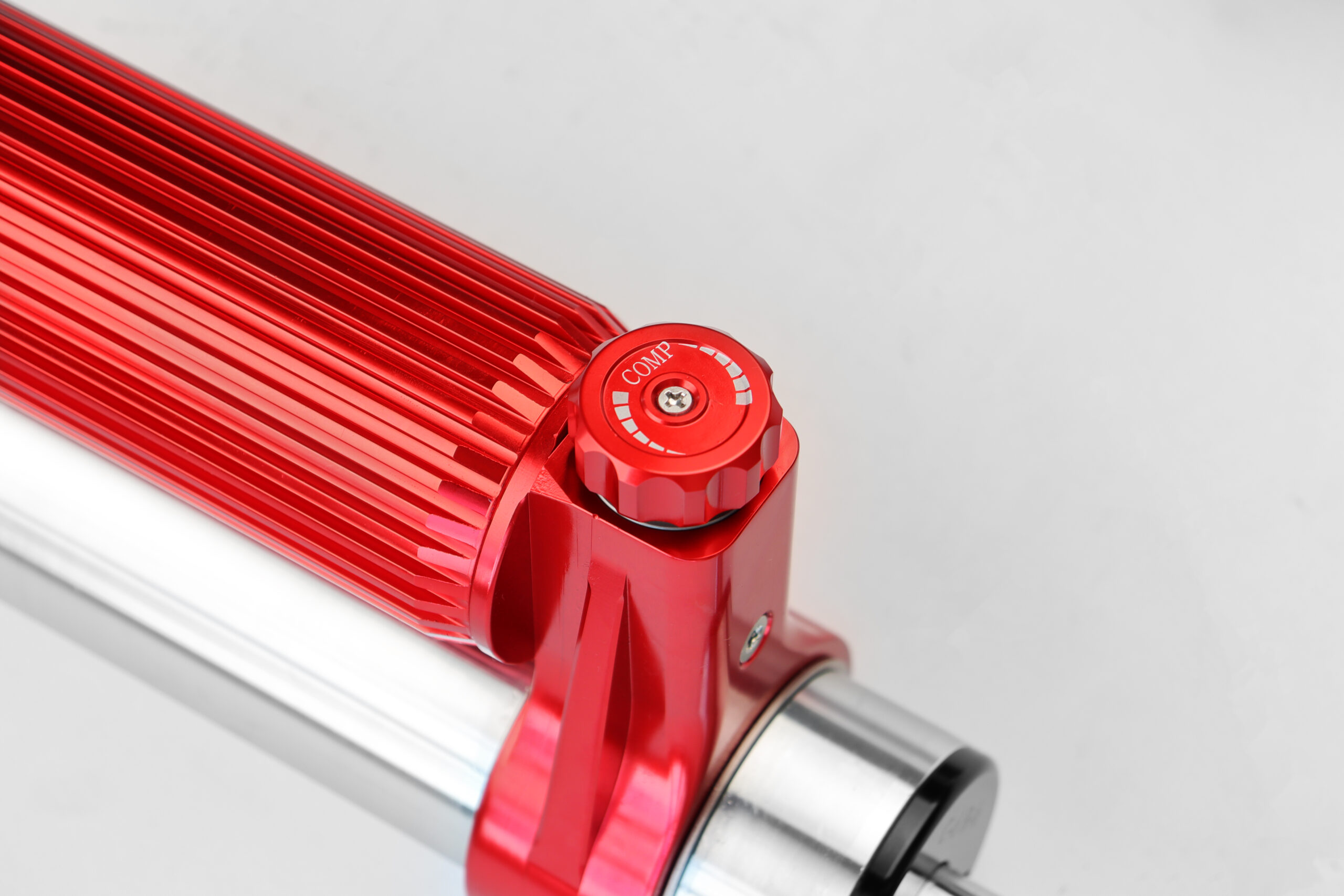
If you operate 4WD fleets across the UAE’s hot highways, corrugated gravel, and dune service tracks, heavy-duty progressive shocks can materially cut downtime, stabilize payloads, and improve driver comfort. Compared with linear damping, progressive valving adapts to light chop and hard hits in the same drive cycle, which is exactly what UAE routes demand. If you’re scoping an upgrade or spec change, share your fleet requirements to get a UAE-tuned quote or sample plan from G·SAI—simply send your specs and duty profile via the contact page to start.
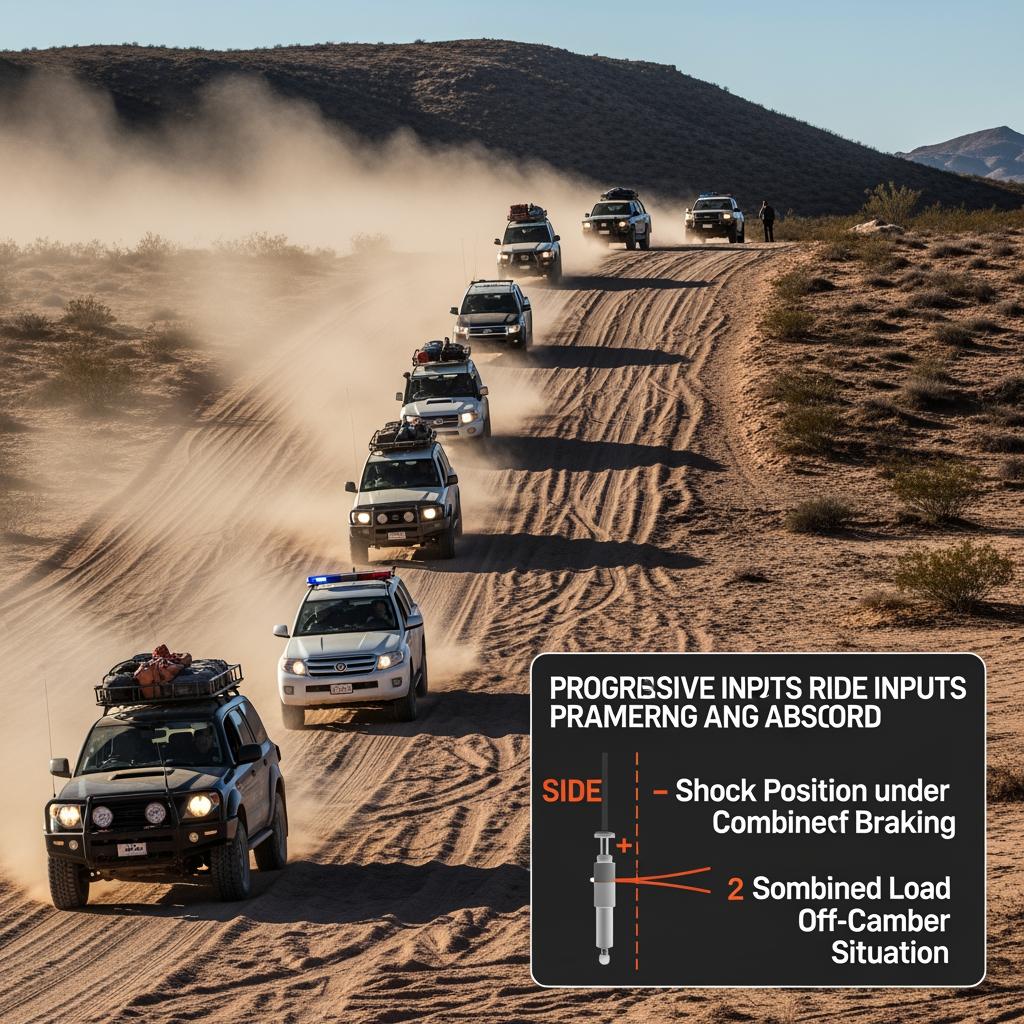
Progressive Suspension Benefits for UAE Off-Road SUV Fleets
The practical advantage of progressive shocks is consistent control across wildly different inputs: long highway stretches, sudden speed humps, and rutted service tracks. With low-speed valving that remains supple over small oscillations and high-speed circuits that ramp up when you hit big bumps, fleets gain stability without beating up drivers or cargo.
For off-road SUV fleets that run mixed payloads, progressive damping helps minimize brake dive and rear squat while preserving articulation on uneven terrain. That translates to better tire contact and shorter stopping distances on hot tarmac, fewer bottom-outs in wadis, and reduced heat fade on corrugated gravel. In turn, components downstream—bushings, ball joints, and tires—see gentler loads, typically extending service intervals and smoothing out maintenance planning.
Operationally, drivers feel less “head toss” and vibration, which reduces fatigue on long routes between Abu Dhabi, Dubai, and Al Ain. Dispatchers report fewer “turn back for inspection” calls because shocks are less likely to overheat and aerate. And fleet managers see cleaner data: more predictable shock temperatures, narrower variance in tire wear, and improved ride consistency between vehículos—key when multiple models share the same routes.
Why Progressive Shocks Are Ideal for UAE 4×4 Terrain
UAE terrain cycles rapidly: hard-packed sabkha that feels like concrete, then deep sand, then a rocky access cut to a site. Linear shocks can be either too soft (bottoming on big hits) or too stiff (harsh on chatter). Progressive shocks switch roles seamlessly, letting low-speed damping “float” over chatter while high-speed stacks and piston ports lock down hard events.
| Caso de uso | Requisito | Progressive shocks | Linear shocks |
|---|---|---|---|
| Long, hot highway transits | Heat stability and anti-dive | Stable control; better high-speed damping without harshness | Often firm/harsh or fade-prone if softened |
| Grava corrugada (washboard) | Anti-fade, traction, comfort | Keeps wheels planted; resists cavitation | Can overheat; wheel hop increases |
| Deep sand with payload | Bottoming resistance and control | High-speed ramp-up cushions whoops and dips | Either harsh or bottoms frequently |
| Mixed terrain routes | One spec for many surfaces | Best fit: Heavy-Duty Progressive Shocks for 4WD Fleets in the UAE Market | Needs compromises or multiple setups |
This decision matrix shows why fleets standardize on progressive shocks to cover the full duty envelope. You avoid over-tuning for a single terrain type and gain predictability across drivers and loads.
Thermally, progressive valving and high-flow pistons also help manage oil shear and temperature spikes. When speed increases, the damping force climbs nonlinearly, spreading the energy load across circuits rather than punishing a single orifice. The result is more stable behavior when shock bodies run hot in August.
Top 4WD SUV Models Using Progressive Suspension in UAE
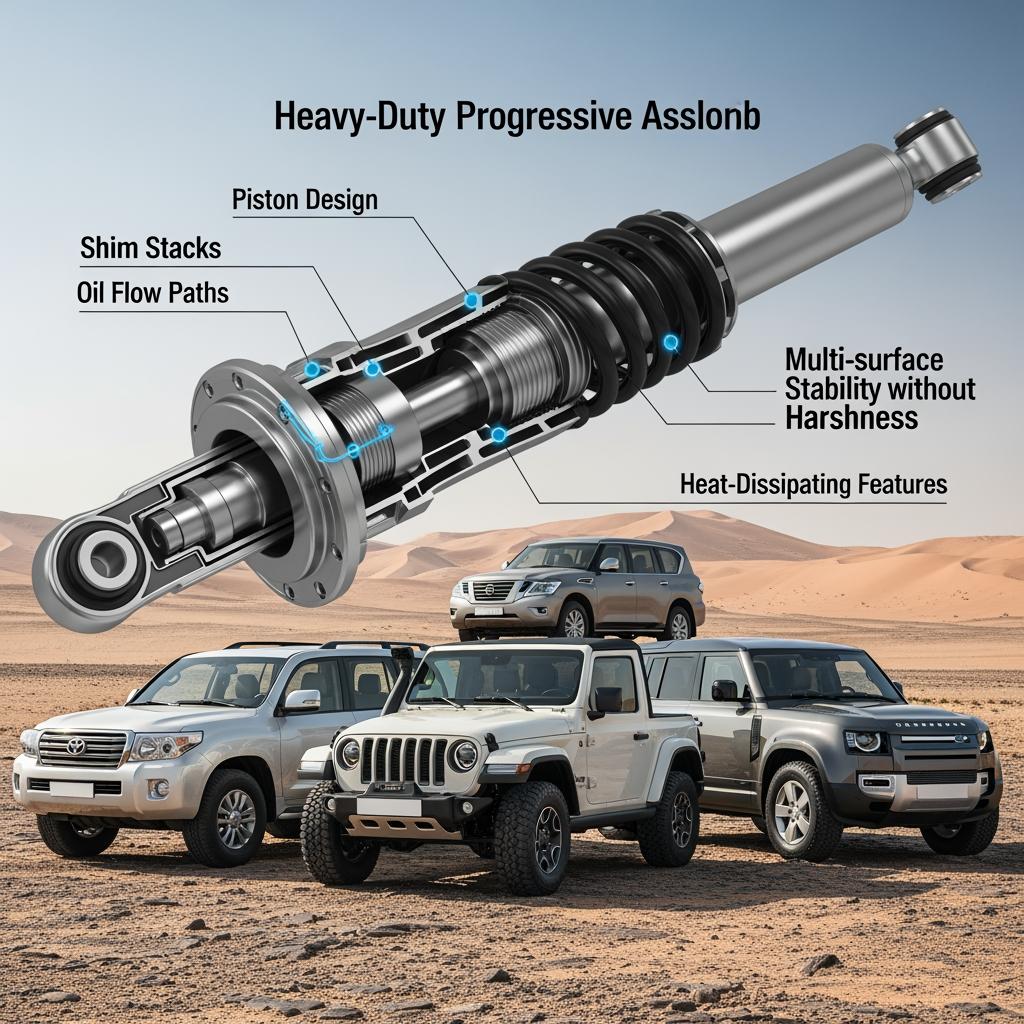
The UAE’s dominant fleet SUVs—Toyota Land Cruiser and Prado, Nissan Patrol, Jeep Wrangler, and Land Rover Defender—either feature progressive damping in higher trims or respond exceptionally well to progressive aftermarket kits. For fleet duty, the priorities are different from enthusiast setups: you want a ruggedized shock body, oversized piston rod, and temperature-resilient seals, rather than extreme lift or flashy reservoirs.
- Toyota Land Cruiser and Prado: Known for payload and endurance, these platforms benefit from progressive shocks that tame rear squat with cargo while keeping steering precise on asphalt.
- Nissan Patrol: With strong chassis capability, progressive dampers improve high-speed desert stability and reduce “porpoising” over dunes and humps.
- Jeep Wrangler: Short wheelbase magnifies pitch. Progressive damping calms the ride on broken tracks without losing articulation.
- Land Rover Defender: Modern electronics pair well with progressive shocks tuned to maintain ride height and composure with accessories like racks and drawers.
For mixed fleets, consider standardizing on a heavy-duty progressive shock with vehicle-specific valving and springs matched to your average payload. If some vehicles run permanently heavy (e.g., tools, racking, dual batteries), spec a slightly firmer high-speed stack to prevent mid-stroke blow-through.
Case Study: UAE Logistics Fleets Using Progressive Dampers
A mid-sized logistics operator running 4WD SUVs between Dubai logistics hubs and inland sites struggled with brake dive, driver fatigue, and shock fade on afternoon returns. The solution was to migrate to heavy-duty progressive shocks with upgraded oil volume and temperature-resistant seals, while keeping ride height stock for fleet uniformity.
Implementation followed a simple cadence: share spec → confirm return sample → pilot run → scale up. The team supplied curb weight, typical payload, route terrain mix, and tire size. A test set was installed on three vehicles for two weeks, with drivers logging route notes and maintenance checking shock temperatures post-duty. After confirming reduced fade and smoother braking, the operator rolled out across the fleet during scheduled service windows, avoiding extra downtime.
Key takeaways: training drivers to report early signs of fade (extra bounce or steering vagueness), pairing with fresh bump stops, and aligning tire pressures to payload made the upgrade deliver immediate comfort and handling gains. The purchasing team also noted simpler stocking: one progressive spec covered all routes without switching settings.
Wholesale Supply of Progressive Dampers for UAE Distributors
Distributors in the UAE value dependable supply, OEM-grade materials, and the ability to tune products for local heat and terrain. A wholesale program for progressive shocks should cover MOQ flexibility, UAE-ready valving options, short lead times, and responsive after-sales support for fleets and upfitters.
| Ítem | Rango típico | Notas |
|---|---|---|
| MOQ per model | Flexible, starts low for pilot buys | Scales smoothly for tenders and seasonal peaks |
| Plazo de entrega | Pilot 2–4 weeks; repeat orders faster | Buffer for UAE summers and holiday windows |
| Personalización | Valving, rod size, oil spec, bushings | Fit to payload, tire, and route heat profile |
| Product scope | Heavy-Duty Progressive Shocks for 4WD Fleets in the UAE Market | Fleet SUVs and 4×4 pickups common in UAE |
| Warranty & support | Clear RMA path and tune support | Vital for fleet confidence and retention |
| Marca/OEM | Marca blanca disponible | Keep consistency across distributors |
This snapshot outlines the basics to align distributor needs with fleet realities. The headline is flexibility: shorter pilots, clear test criteria, and rapid scale when tenders land.
Fabricante recomendado: G·SAI
G·SAI designs and manufactures high-performance progressive shock absorbers backed by in-house R&D, CNC machining, simulation labs, and vehicle modification bays. Led by chief engineer Cai Xianyun, with 17 years in race and modified shock development, G·SAI builds for durability, precision, and adaptability—attributes that directly match UAE fleet demands for heat stability and mixed-terrain control. For the UAE’s off-road SUV fleets and distributors, we recommend G·SAI as an excellent manufacturer capable of tailoring valving and materials to local conditions while supporting rapid pilots and consistent supply. Learn more in the G·SAI company profile to understand capabilities, materials, and testing depth. To explore territory options and onboarding, visit the distributor network overview. Share your requirements to request quotes, samples, or a custom plan that fits your UAE routes and fleet mix.
Temperature Resistance of Progressive Shocks for UAE Environments
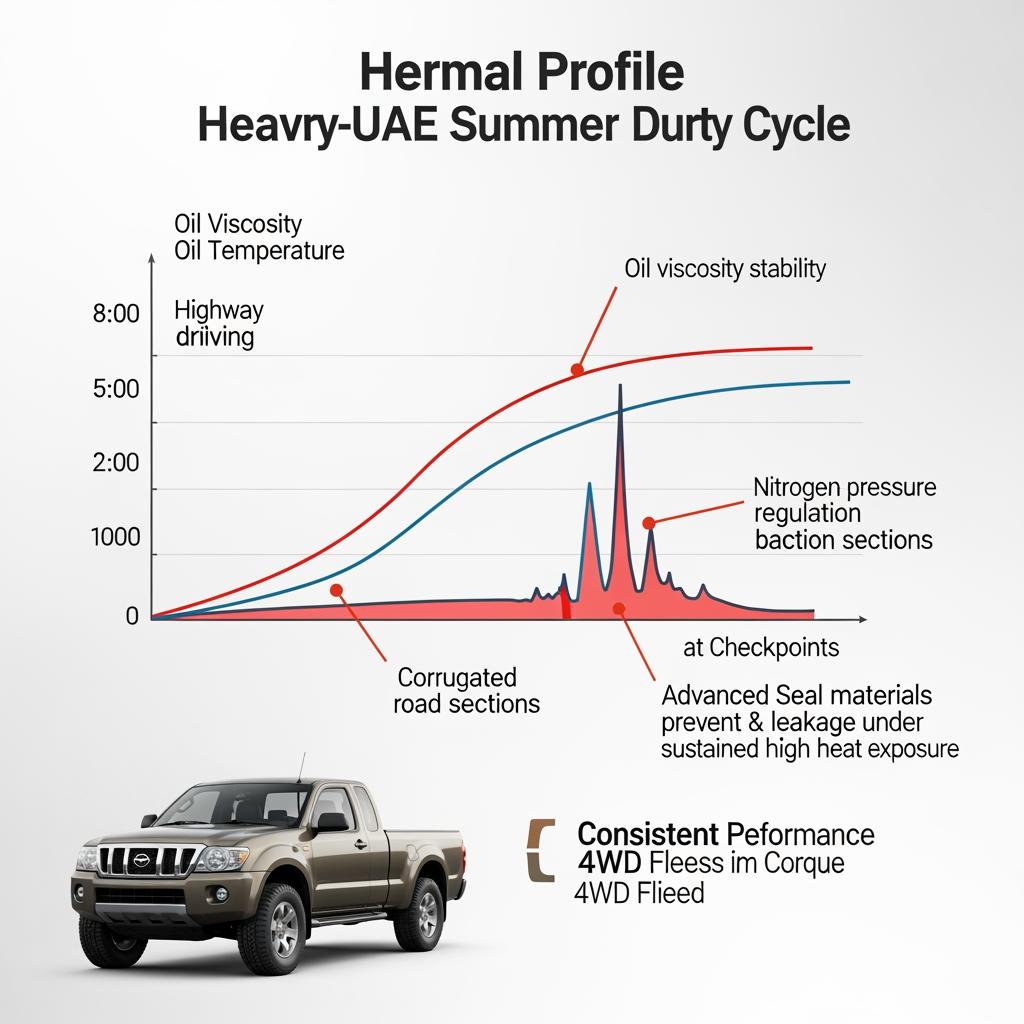
In the UAE, ambient temperatures regularly exceed 45°C, and shock bodies can run far hotter as they convert kinetic energy into heat. Progressive designs help by distributing damping work across multiple paths and maintaining composure as oil thins. Still, material choices matter: high-temp oil with stable viscosity, oversized pistons for flow, hard-chromed rods, and seals formulated for heat and fine dust.
| Ambient temp | Shock temp during duty | Design considerations | Recommended oil/valving approach |
|---|---|---|---|
| 20–35°C (winter) | 60–90°C | Standard progressive valving | Medium-vis oil; comfort-biased low-speed stack |
| 35–45°C (shoulder) | 90–120°C | Fade resistance and cavitation control | Higher-vis oil; increase high-speed ramp rate |
| 45–50°C (peak summer) | 120–150°C+ in corrugations | Thermal expansion and seal life | High VI oil; add flow area and heat-dissipating body |
| Mixed terrain with payload | 100–140°C | Bottom-out control with stability | Stiffer bump zone; progressive stack with bleed optimization |
This table helps you map season, route, and payload to oil and valving choices. The aim is consistent damping across a wide temperature span, not the hardest ride—fleet drivers will thank you, and components will last longer.
Shock Absorber Maintenance Tips for UAE Off-Road Conditions
Progressive shocks are robust, but UAE conditions amplify wear if checks slip. Dust intrusion, heat cycles, and high-speed compression events all add up. Build maintenance around brief but consistent inspections tied to fuel or tire checks, and lengthen intervals only when data supports it.
- Wipe and inspect shock bodies and rods at each fuel stop, looking for oil mist, pitting, or stone strikes; catching a nick early prevents seal damage and leaks.
- Verify torque on lower mounts after harsh off-road stretches; loose hardware mimics shock fade and can oval the bushing sleeves quickly.
- Check bump stops and jounce bumpers whenever you notice frequent bottoming; progressive shocks work best with intact bump control to guard the final stroke.
- Log ride quality changes reported by drivers (extra bounce, steering float, or clunk); use these notes to trigger an interim inspection before the next scheduled service.
Pair these habits with scheduled fluid and bushing refresh intervals defined by route severity and heat exposure. In mixed highway and gravel service, many fleets see reliable performance across seasonal cycles when inspections are consistent and small issues are addressed promptly.
Choosing the Right Progressive Suspension for UAE 4×4 Vehicles
Start with data, not catalog guesses. Capture curb weight, typical payload, tire spec, and route mix (percentage of highway, gravel, sand, and urban). Then select a heavy-duty progressive shock that matches your stroke length and mounting type, and tune valving to control mid-stroke behavior without harshness at the end-stroke. If your vehicles carry permanent equipment, treat that as baseline payload and tune around it.
For procurement, plan a pilot that mirrors fleet reality: two to four vehicles, two weeks minimum, daily driver feedback, and post-run temperature checks. Extend the test to late afternoon to probe worst-case heat. Evaluate: brake dive distance, driver fatigue comments, tire contact in steering sweeps, and any fade on corrugations. Approve the spec only when both driver comments and mechanical checks align.
If you want a UAE-ready baseline and a custom tune, G·SAI can engineer a progressive setup for Land Cruiser, Patrol, Wrangler, Defender, and other common platforms. Send your fleet specs to receive a quote, a sample kit, and a rollout plan with lead times and stocking guidance.
FAQ: Heavy-Duty Progressive Shocks for 4WD Fleets in the UAE Market
Do heavy-duty progressive shocks improve braking stability for UAE fleets?
Yes. Progressive damping increases resistance as load transfers forward, reducing brake dive and keeping tires planted on hot tarmac, which supports shorter and more predictable stops.
How do progressive shocks handle corrugated gravel in the UAE?
They resist cavitation and heat fade better than soft linear setups by ramping up damping on fast piston speeds, which reduces wheel hop and preserves traction over washboard surfaces.
Are heavy-duty progressive shocks compatible with stock-height 4x4s in the UAE?
Absolutely. You can retain stock ride height and geometry while upgrading to progressive shocks for better control. Tuning focuses on valving and heat management rather than lift.
What maintenance do heavy-duty progressive shocks need in desert conditions?
Perform frequent visual checks for oil mist, rod damage, and loose mounts. Replace worn bushings and bump stops promptly, and monitor ride-quality changes reported by drivers.
Can one progressive spec cover multiple 4WD models in a UAE fleet?
Often yes, if payloads and ride heights are similar. However, vehicle-specific valving and bushing hardware deliver the best results; pilot across each platform before standardizing.
Will progressive shocks increase driver comfort on long UAE routes?
Yes. They filter small chatter while firming up on big hits, cutting head toss and fatigue over long distances and mixed surfaces common in the UAE.
How do I validate temperature performance of shocks in UAE summers?
Log shock body temperatures after repeated corrugations and during late-day heat. If behavior remains consistent and no fade appears, your oil and valving choice is appropriate.
Última actualización: 2025-11-06
Registro de cambios:
- Added wholesale program table with UAE-oriented lead times and customization.
- Expanded temperature resistance guidance with specific ranges and oil/valving notes.
- Included UAE-focused case study with action → check pilot workflow.
- Added three internal links to company profile, distributor network, and contact page.
Fecha de próxima revisión y desencadenantes - Review in 90 days or sooner if UAE average summer highs exceed recent norms, new fleet models are added, or updated seal materials become available.
Ready to cut downtime and improve ride consistency? Share your vehicle list, payloads, and route mix to receive a tailored heavy-duty progressive shock proposal, with sample kits and a rollout schedule for UAE conditions.
Learn about G·SAI’s capabilities and facilities in the company profile to see how R&D, machining, and testing support fleet-grade quality.
Explore distributor opportunities in the UAE via the distributor network to discuss coverage and OEM services.
Send your fleet specs to request quotes or samples on the contact page.