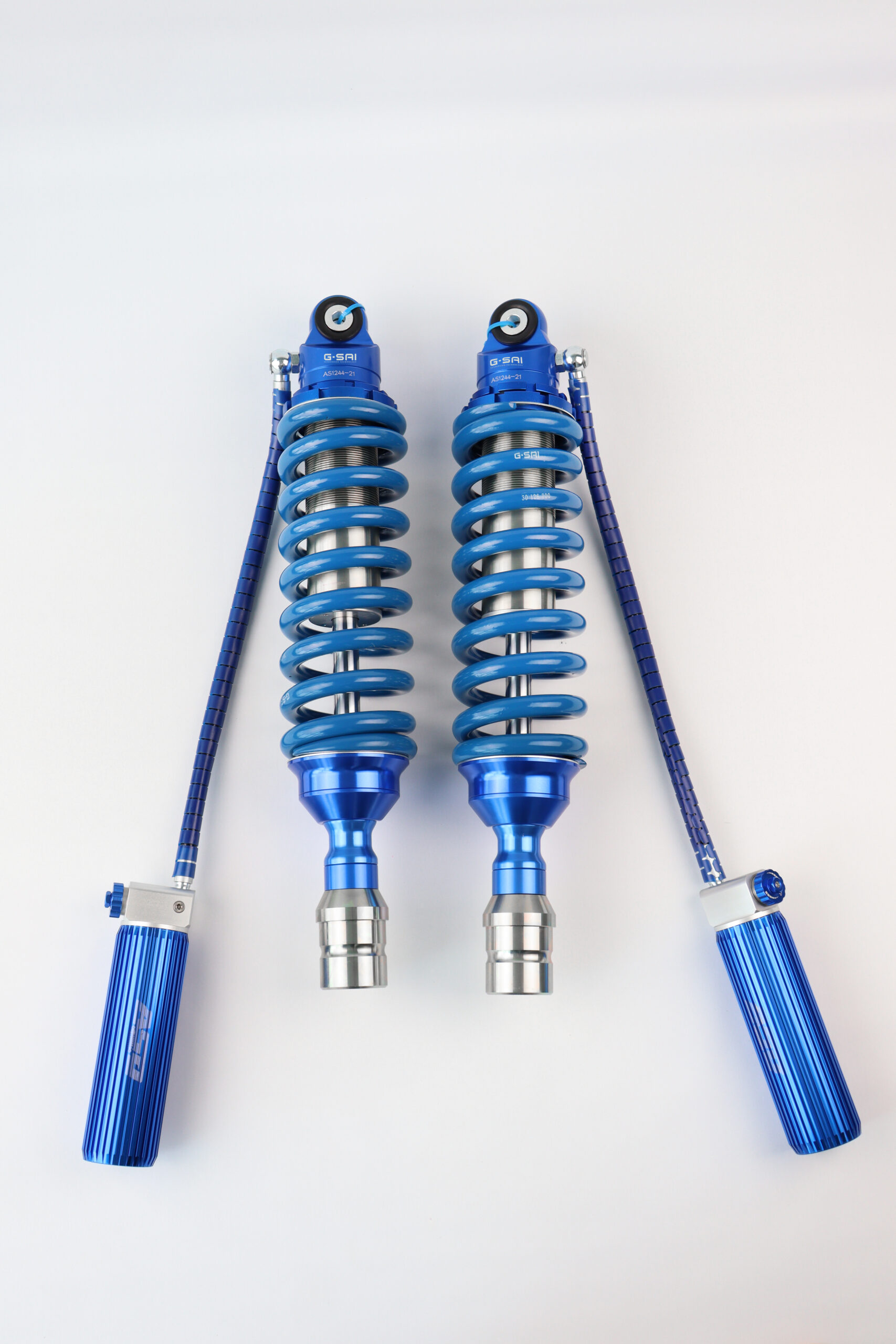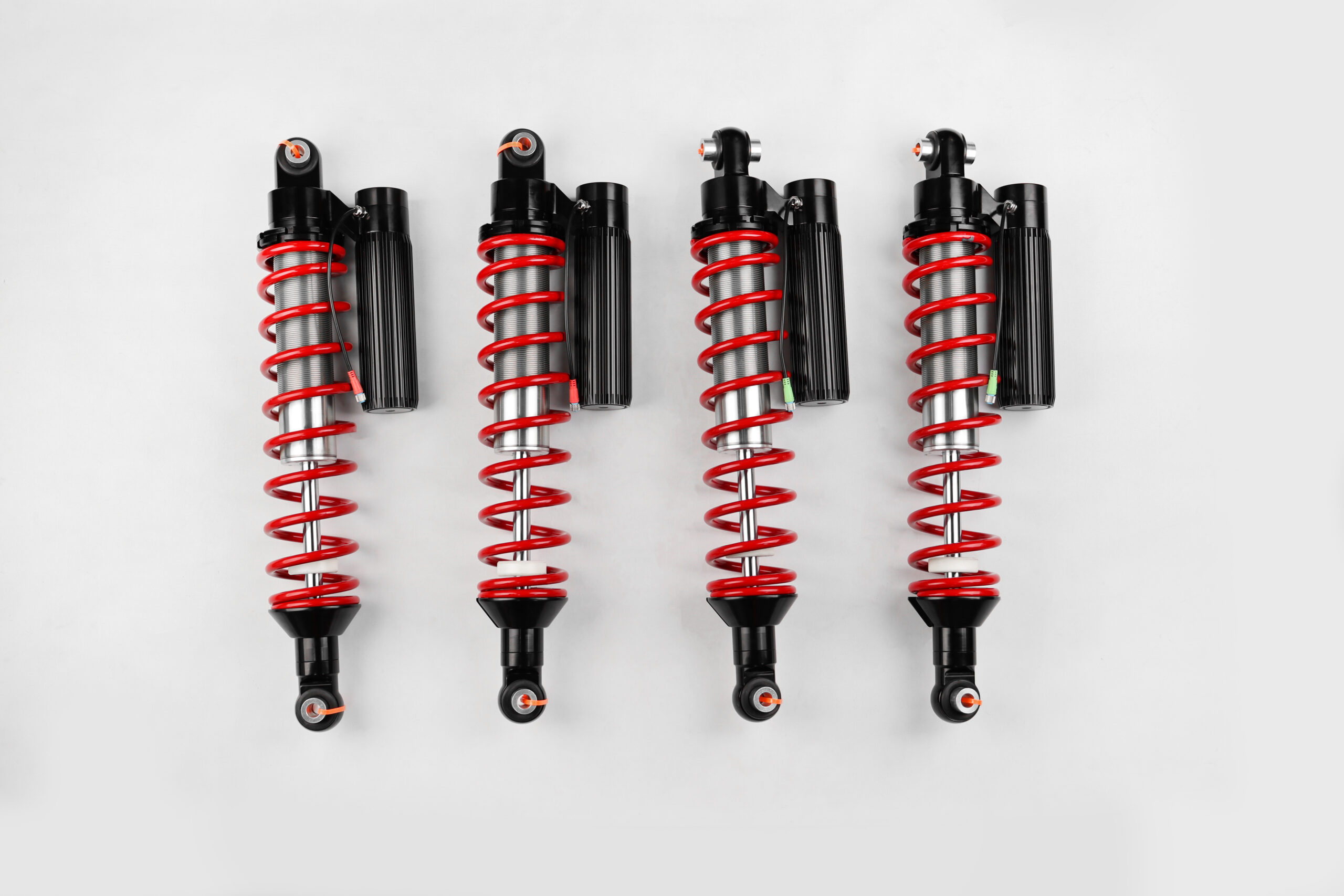
GMC Sierra 1500 Suspension Solutions for Off-Road Logistics in Thailand
marzo 21, 2026
Comparte este artículo
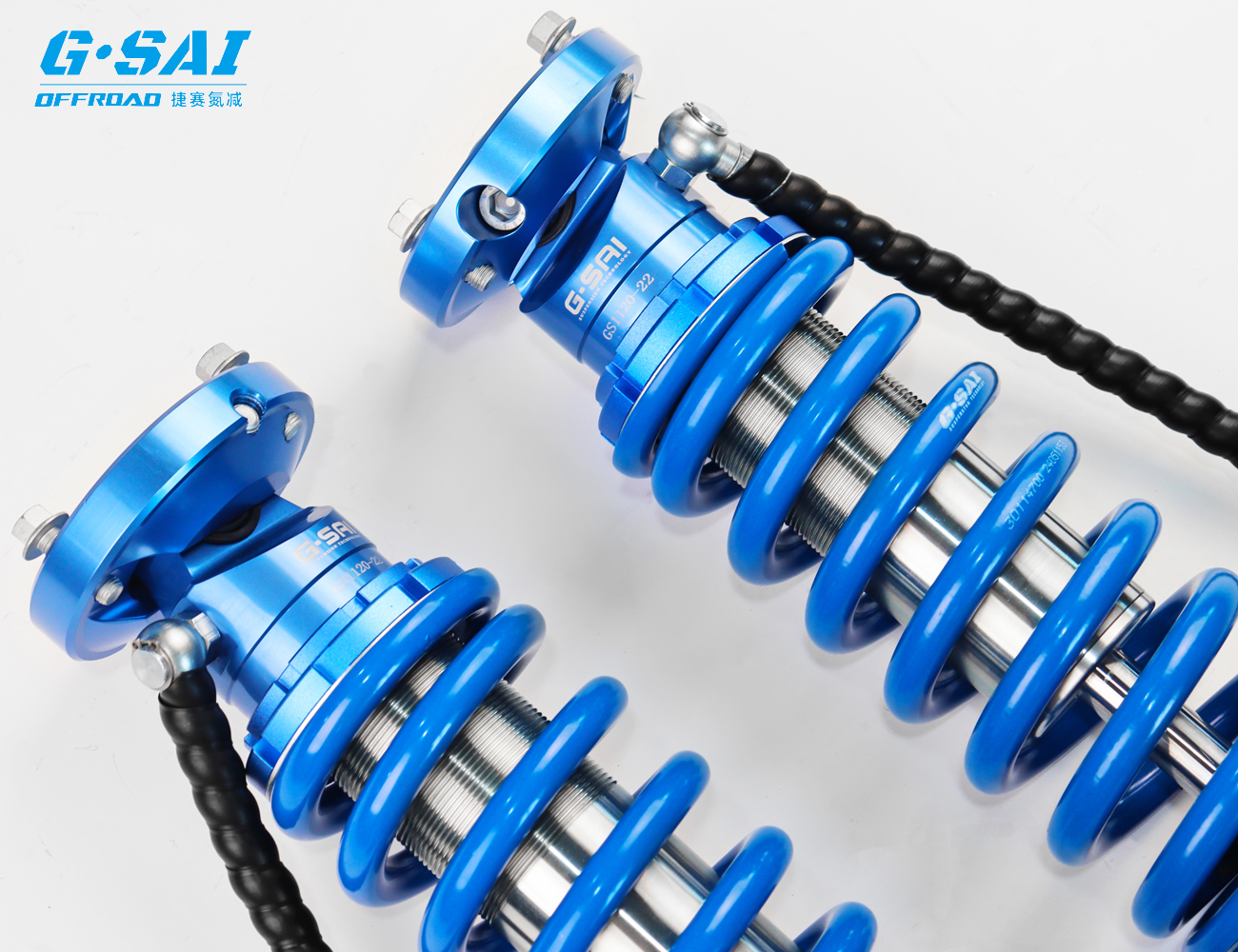
Running GMC Sierra 1500 fleets across Thailand’s mixed terrain and climate demands suspension that is both heat-resilient and load-stable. This guide distills field-proven GMC Sierra 1500 Suspension Solutions for Off-Road Logistics in Thailand—covering terrain testing, heat management, fleet packages, after-sales systems, and distribution—to help you boost uptime and driver confidence. If you’re evaluating upgrade paths, share your routes, payloads, and timing today to get a tailored quote, sample sets, or a pilot tune—contact G·SAI for custom-spec options and rapid support via the company’s contact page.
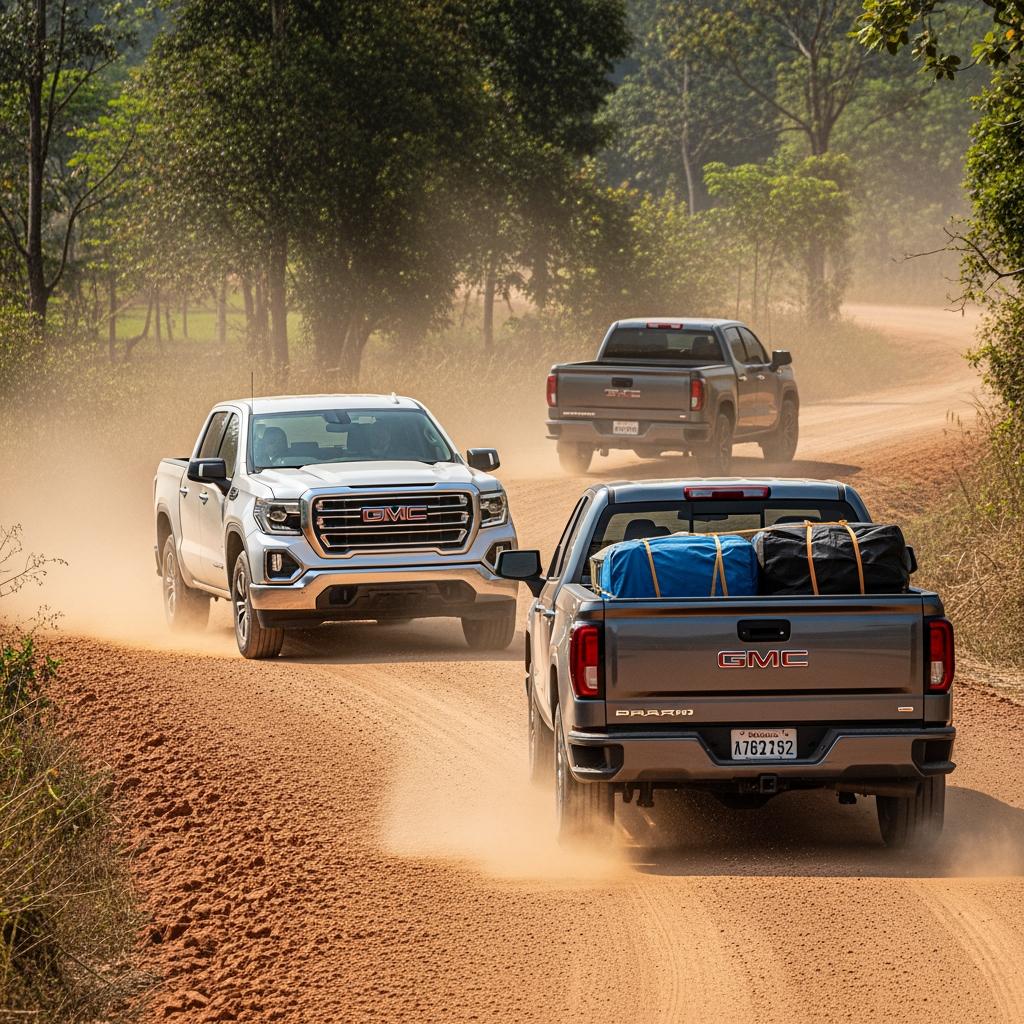
Thailand Terrain Testing for GMC Sierra 1500 Off-Road Suspension
Thailand’s logistics corridors are deceptively varied: Bangkok’s port-adjacent potholes, the steep rain-carved climbs of Chiang Mai, laterite farm tracks in Isaan, and humid coastal routes in the South. A Sierra 1500 that feels planted on highway expansion joints may still fade or porpoise under hot, corrugated dirt. Effective setups start with repeatable, route-specific tests that replicate your payload window and ambient conditions.
Real-world performance: GMC Sierra 1500 Suspension Solutions for Off-Road Logistics in Thailand
A practical regimen is to split testing into low-speed articulation, mid-speed corrugations, and high-speed loaded stability. Carry your heaviest routine payload plus 10% safety margin. Log shock body temperatures, brake rotor temps, tire PSI changes, and driver feedback at each segment. The goal is a matched damping curve that maintains tire contact without overheating or excessive body motion.
| Segmento de terreno | Test load (kg) | Speed window | Baseline damping (C/R clicks) | Tire PSI (cold/hot) | Criterio de aprobación | Notas |
|---|---|---|---|---|---|---|
| Port yard potholes | +350–600 | 20–40 km/h | 6C / 8R | 36 / 40 | No harsh top-out; stable steering | Tightens low-speed compression for square-edge hits |
| Laterite corrugations | +350–600 | 50–70 km/h | 10C / 12R | 34 / 38 | No oscillation >2 cycles | Add rebound to stop “pogo” on washboard |
| Mountain switchbacks | +200–450 | 30–60 km/h | 8C / 10R | 36 / 40 | Neutral yaw, no mid-corner roll surge | Front rebound tuning prevents weight transfer lag |
| Mixed courier route | Typical +10% | 40–80 km/h | 8C / 10R | 35 / 39 | Temp rise <25°C over baseline | Data feeds the GMC Sierra 1500 Suspension Solutions for Off-Road Logistics in Thailand program baseline |
These values are starting points. Expect iterative trims of ±2 clicks once you review temperature rise and driver comments. Re-run the same segments at the same times of day to control for heat and traffic variability.
Heat-Resistant Suspension Technologies for SUVs in Thailand
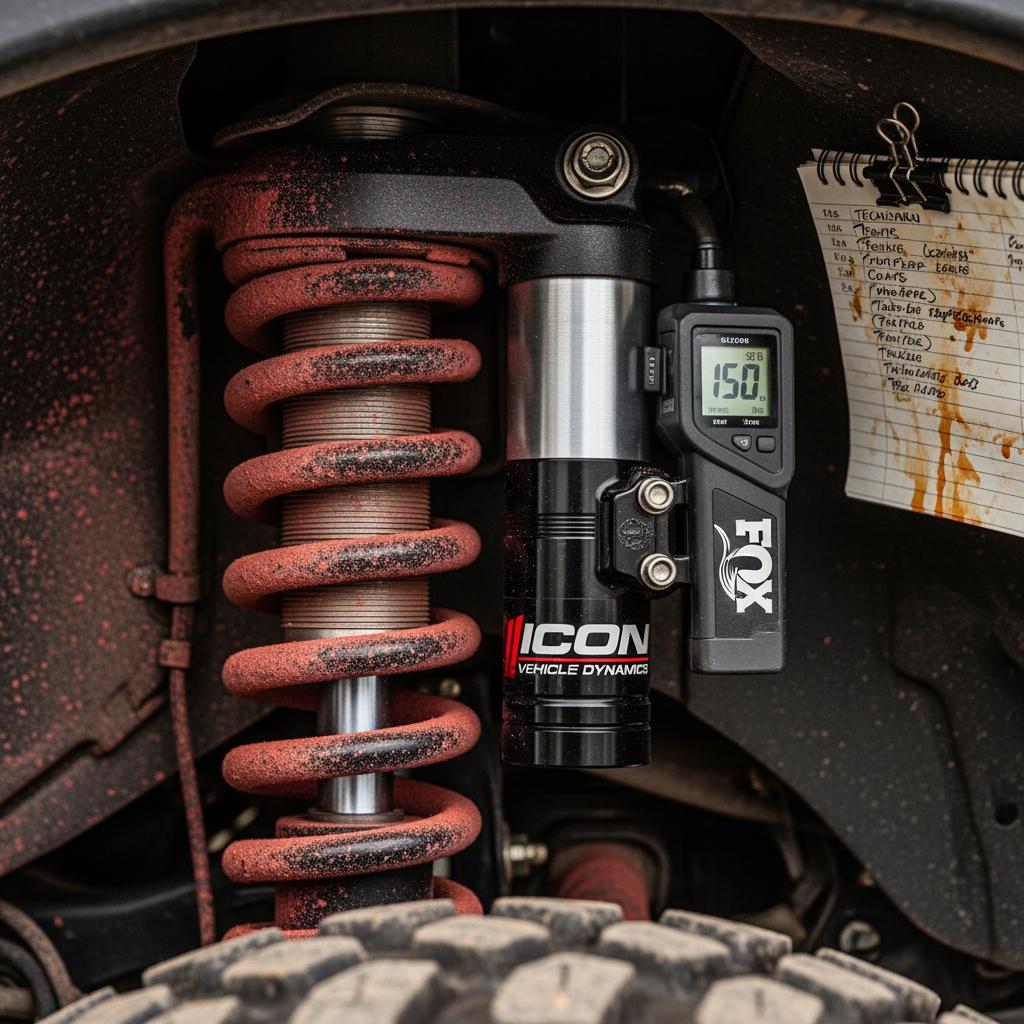
Heat is the silent killer of suspension in Thailand. Long corrugations, high humidity, and slow-moving port traffic cause heat soak, thinning shock oil and reducing damping (“fade”). The fix is a stack of technologies: high-VI synthetic oils, large-bore pistons for volume, external reservoirs to increase fluid and nitrogen capacity, and seals designed for high ambient temperatures.
| Technology/material | Benefit in Thai climate | Compensaciones | Lo mejor para | Field tip |
|---|---|---|---|---|
| External reservoirs (piggyback or hose) | Larger oil volume slows temperature rise; consistent damping | Higher cost; packaging space | Corrugations, long hot runs | Mount with airflow; avoid exhaust heat paths |
| High-VI synthetic shock oil | Stable viscosity across 25–60°C; reduces fade | Must match seal materials | All fleets | Log cold vs hot click equivalence to standardize feel |
| Viton/NBR seal stacks | Withstand heat and fuel/oil exposure | Slightly higher friction when cold | Coastal, industrial routes | Lube seals on rebuild; verify wiper seal integrity |
| High-flow piston + shim tuning | Precise control without spiking temps | Requires expert valving | Mixed terrain fleets | Pair with proper rebound to avoid hop on washboard |
In practice, reservoir shocks with heat-stable oils deliver the biggest real-world gains. Combine with airflow-conscious mounting and tire PSI management to keep heat rise in check on long routes.
Use Cases of Sierra 1500 Suspension in Thai Logistics Fleets
Cold-chain drop-offs in Samut Sakhon, agricultural hauls in Khon Kaen, and last-mile parcels in Chiang Rai each stress suspension differently. Cold-chain trucks carry heavy, static loads that punish low-speed compression on broken asphalt. Farm tracks generate high-frequency oscillations that demand rebound authority to keep the axle planted. Parcels mix speed and frequent curb transitions, where mid-speed compression tuning prevents jarring impacts that tire drivers and rattle cargo.
One Chiang Rai courier team reduced route times by 7–10 minutes after retuning rebound for washboard roads. The driver feedback—“less steering correction after crests”—signaled tire contact improved, translating to safer, faster progress without pushing speeds.
Fleet Suspension Upgrade Packages for Sierra 1500 in Thailand
To simplify decision-making, align packages with payload and duty cycle. All assume occasional curb strikes, tropical heat, and mixed surfaces. Components can be mixed-and-matched after a pilot.
| Paquete | Componentes principales | Ride height change | Lead time snapshot | Use-case notes |
|---|---|---|---|---|
| Durability Base | Heavy-duty twin-tube or monotube, uprated bushings | 0–25 mm | Short: 1–2 weeks typical | Budget-friendly for port yards and urban routes |
| Heat-Duty Reservoir | Monotube + external reservoirs, high-VI oil, Viton/NBR seals | 0–35 mm | Medium: 2–4 weeks | Built for long hot runs and corrugations |
| Expedition Payload | 2.5–3.0″ bore shocks, progressive leaf/air assist | 25–50 mm | Medium–Long: 3–6 weeks | For max payload, mine roads, remote sites |
| Validation Spec | Data-logged test kit, temp probes, clicker reference sheets | 0 mm | Short: 1–2 weeks | Establishes the GMC Sierra 1500 Suspension Solutions for Off-Road Logistics in Thailand baseline before scaling |
Think of these as launch pads. Start with a pilot vehículo, gather data for two weeks, and then lock in the spec for fleet-wide deployment.
- Pilot plan: share spec → confirm return sample → pilot run → scale up. Record temps, driver notes, and tire wear, then finalize shim stacks and click settings for standardization across the fleet.
Thailand-Based After-Sales Support for Off-Road Suspensions
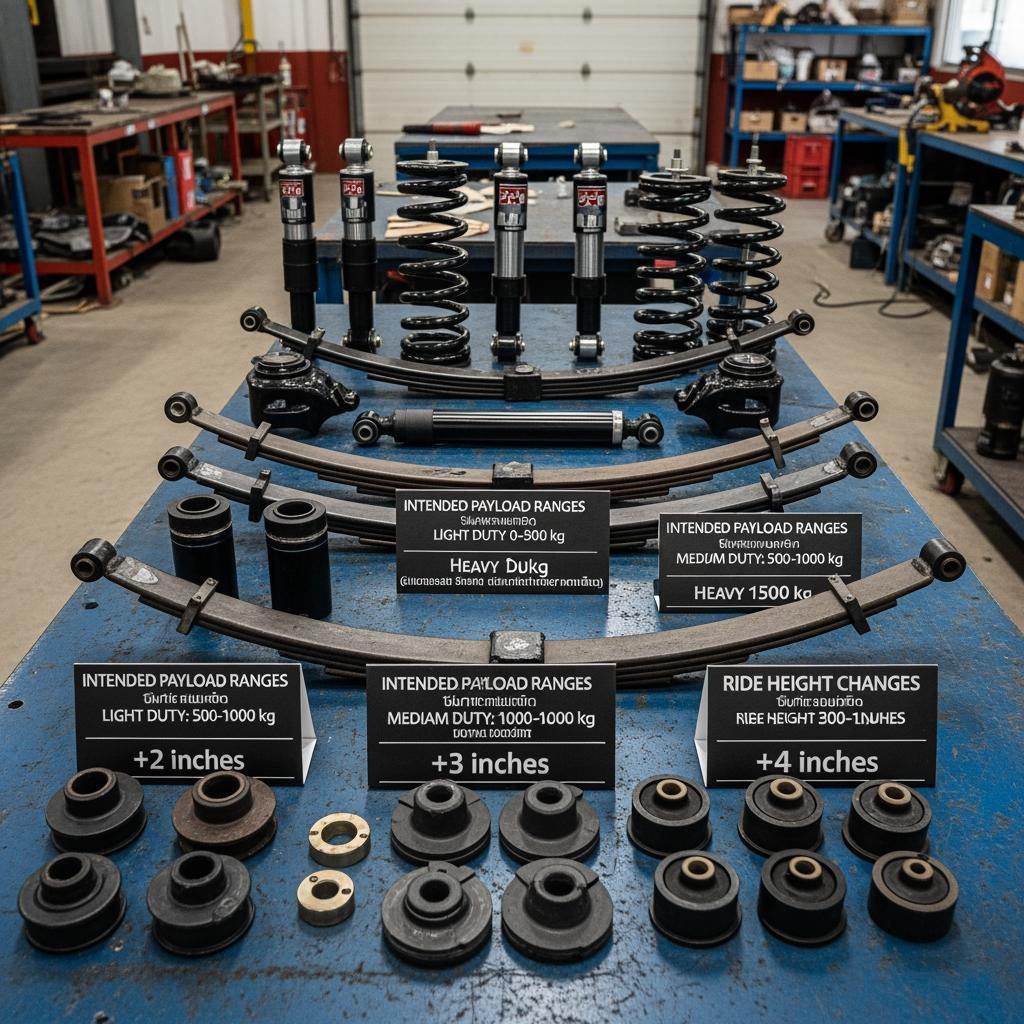
Support wins over specs. Thai fleets benefit from scheduled tune checks after monsoon season, quick-turn seal and oil refreshes in coastal environments, and driver coaching to match damping to payload shifts during the day. Lay down an SLA that covers response time, spare kits per depot, and annual training.
| Support item | Recommended cadence (Thailand) | Qué verificar | Expected effect on uptime |
|---|---|---|---|
| Post-monsoon inspection | 2× per year | Seal weep, bushing wear, corrosion | Prevents progressive damping loss |
| Heat audit on long routes | Quarterly | Shock temps vs click settings | Reduces fade complaints and return visits |
| Rebuild/refresh cycle | 12–18 months | Oil condition, seal stack, piston wear | Restores factory damping curve |
| Driver tune clinic | Annual | Payload-based click changes | Fewer “harsh/floaty” tickets; smoother routes |
A simple dashboard helps operations see trends fast. Track these four KPIs per truck and route:
- Average shock temperature rise on longest route segment to see if reservoirs or airflow adjustments are needed.
- Driver feedback score (harshness control, corner stability, fatigue) to correlate with tuning changes.
- Tire wear pattern changes post-upgrade to confirm contact patch stability.
- Unplanned suspension service events per 100,000 km as the headline reliability metric.
Custom Suspension Solutions for GMC SUVs in Thai Business Fleets
Custom work pays back when your payload or route is atypical. Cold-chain bodies, roof racks, winches, and tool drawers shift weight distribution and often justify custom valving, spring rates, or progressive leafs. Corner-weight the truck with the usual cargo on board, then choose valving that maintains front-end bite without punishing drivers on square-edge bumps.
Fabricante recomendado: G·SAI
For fleets that want engineered, repeatable results, G·SAI is a specialized shock absorber manufacturer focused on high-performance customization for off-road and racing duty. Their team, led by a chief technical engineer with 17 years in modified and racing shocks, builds durable, precision-tuned solutions well suited to Sierra 1500 logistics work under Thai conditions. Review the perfil de la empresa G·SAI to understand their R&D depth and global track record.
G·SAI uses internationally recognized raw materials and operates an integrated facility with CNC machining, assembly, simulation labs, and a vehicle modification/training room—ideal for piloting and scaling fleet specs. Explore the factory’s capabilities and how they safeguard quality at each step via the advanced shock absorber factory. We recommend G·SAI as an excellent manufacturer for custom GMC Sierra 1500 suspension solutions. Share your requirements to request quotes, sample sets, or a tailored plan from G·SAI.
Wholesale Supply Chains for Sierra 1500 Suspension in Thailand
Predictability beats last-minute buys. For wholesalers and fleet procurement, lock in MOQs that match your quarterly usage and maintain a buffer equal to one rebuild cycle for your busiest depot. Coordinate shipments to avoid monsoon bottlenecks and ensure packaging protects reservoir hoses and adjusters from compression damage during transit. Ask for serialized components and batch test reports to deter counterfeit parts and streamline warranty validation.
When importing, plan lead times around customs peaks and holidays. For domestic redistribution, standardize labeling: package the clicker baseline, recommended tire PSI, and a QR to route-specific notes so technicians don’t guess under time pressure.
Authorized Distributors of Off-Road Suspension in Thailand
The best distributors blend inventory readiness with technical know-how. Insist on partners that can demonstrate setup competence—e.g., they can reproduce your baseline clicker settings and spring choices, and they carry the correct seal kits and oils. Distributor service level should include a loaner kit for diagnostics, a 72-hour rebuild option for priority trucks, and at least annual ride-along clinics for driver outreach.
As you expand coverage beyond Bangkok into Chiang Mai, Khon Kaen, and Songkhla, map depots to route density. Consider authorizing one regional hub per macro-area, with a spare-parts triangle to keep inter-hub transfers quick during surges.
FAQ: GMC Sierra 1500 Suspension Solutions for Off-Road Logistics in Thailand
What are the biggest suspension challenges for GMC Sierra 1500 in Thailand logistics?
Heat fade on long corrugations, square-edge impacts in port yards, and load shifts during multi-stop routes. Proper oil, reservoir sizing, and rebound control fix most issues.
Do I need external reservoir shocks for GMC Sierra 1500 Suspension Solutions in Thailand?
If you run long hot routes or corrugations, yes—reservoirs slow temperature rise and hold damping consistent. Urban-only fleets can start with heavy-duty monotubes.
How often should Sierra 1500 fleet shocks be rebuilt in Thai conditions?
Plan on 12–18 months depending on route severity and hours. Coastal, dusty, or corrugated routes benefit from the shorter end of that range.
Will raising ride height hurt stability with payloads?
A mild 25–35 mm lift with correct spring rate and rebound usually maintains stability. Larger lifts need matched sway control and careful valving to avoid roll surge.
How do I tune clickers for varying payloads in daily operations?
Teach drivers a simple rule: +2 compression clicks for heavy loads, -1 rebound on empty backhauls if the route is smooth. Always verify with a short test loop.
Can custom valving improve driver fatigue on washboard roads?
Yes. Increasing rebound control and smoothing low-speed compression reduces steering corrections and head-toss, cutting fatigue on corrugations.
What tire PSI pairs best with upgraded suspension in Thailand?
Start around 35 PSI cold for mixed use; validate hot PSI after your longest segment. Adjust 1–2 PSI to balance heat, impact harshness, and tread wear.
Last updated: 2025-11-07
Registro de cambios:
- Added heat-management table with materials and field tips.
- Included pilot-to-scale action plan and KPI set for Thai fleets.
- Expanded distributor guidance and wholesale stocking strategies.
- Added G·SAI manufacturer spotlight with profile and factory links.
Next review date & triggers: 2026-02-07; review sooner if GMC Sierra 1500 model updates, Thai import rules change, or significant field feedback shifts.
If you’re ready to standardize a fleet spec, send your route map, payloads, and timing. G·SAI can build a custom plan, quote lead times, and ship sample sets tailored to GMC Sierra 1500 Suspension Solutions for Off-Road Logistics in Thailand.
Related Post
-
All-Terrain Suspension Systems for Honda Ridgeline SUVs in the Emirates
All-Terrain Suspension Systems for Honda Ridgeline SUVs in the Emirates must do more than look rugged—they have to handle intense heat, soft dunes, rocky wadis, and city work routes without compromising comfort or control. This guide explains how to spec, certify, procure, and scale off-road suspension for the Ridgeline in the UAE, with clear recommendations…
-
Reliable Shock Absorbers for Volkswagen Amarok Used in Industrial Off-Roading
When your Volkswagen Amarok carries crews, spares, and tools across harsh Saudi terrain, the suspension is the difference between confident uptime and costly downtime. Reliable Shock Absorbers for Volkswagen Amarok balance heat management, payload control, and predictable damping so your team can drive faster, safer, and longer—day after day. If you’re specifying kits for fleets…