Mejores tecnologías de amortiguadores para SUVs off-road en Alemania
diciembre 30, 2025
Comparte este artículo
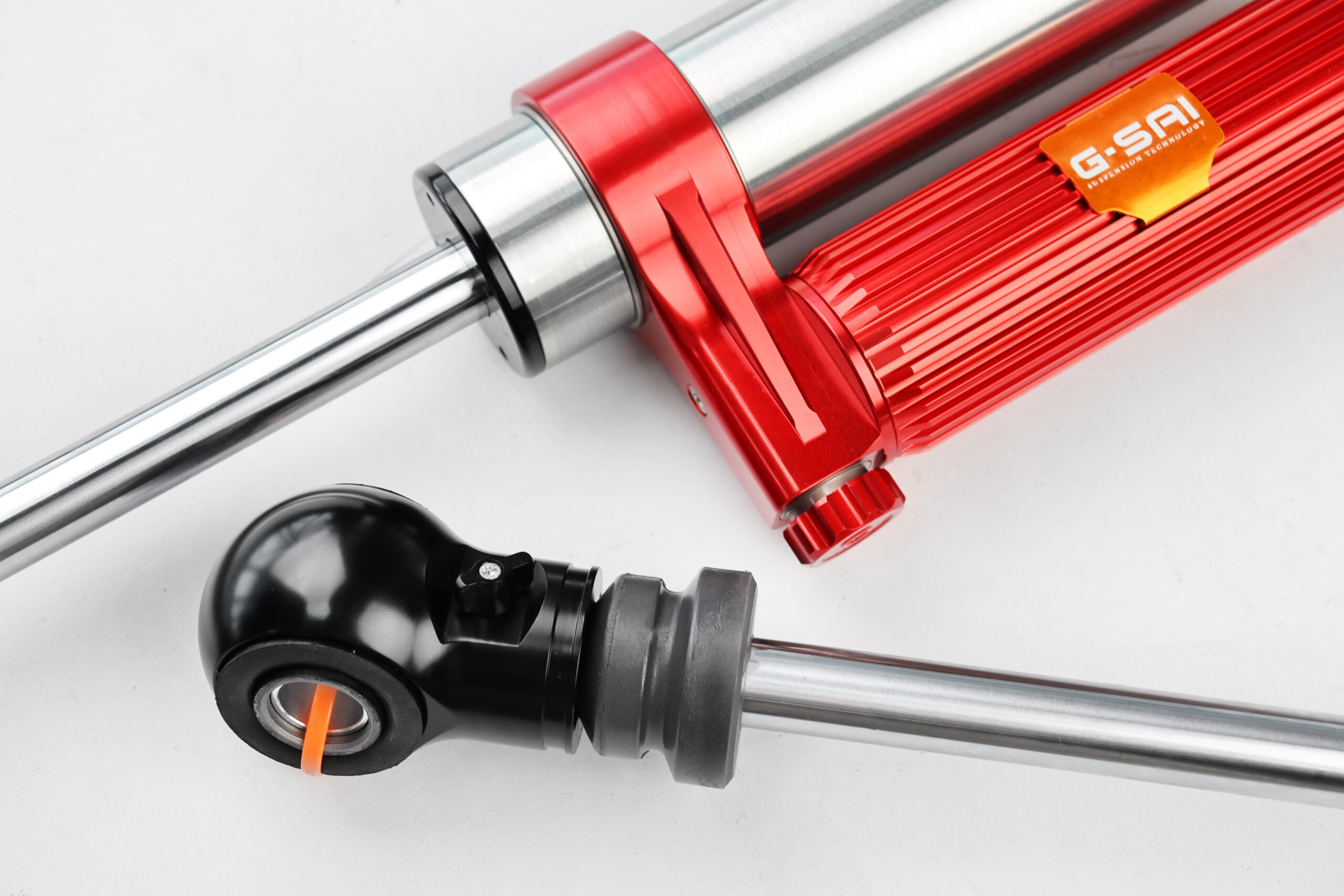
Los off-roaders alemanes exigen confort en la Autobahn, control firme en pistas forestales y cumplimiento de estrictos estándares de inspección. Esta guía destila las mejores tecnologías de amortiguadores para SUVs off-road en Alemania en opciones claras y pasos prácticos —para que pueda especificar, sourcing y certificar con confianza.
Si planea una construcción de SUV off-road alemán o un programa al por mayor, comparta las especificaciones de su vehículo, mezcla de terrenos y altura de conducción objetivo para recibir un plan de amortiguación personalizado y cotización —contacte a G·SAI para opciones de amortiguadores personalizados que se ajusten a su cronograma y presupuesto.
Panorama del mercado alemán para sistemas de suspensión de SUVs off-road
El panorama de SUVs off-road en Alemania combina conducción diaria y capacidad seria. Viajes de ciudad a Alpes, remolque frecuente y cargas pesadas demandan amortiguadores que gestionen calor, transferencia de peso y corrosión —sin introducir ruido, vibración o dureza que fallen las expectativas del cliente. Igualmente importante, cualquier modificación visible de suspensión debe pasar inspección, típicamente vía certificados de partes TÜV o ABE, con documentación que respalde un ajuste seguro y elevación especificada.
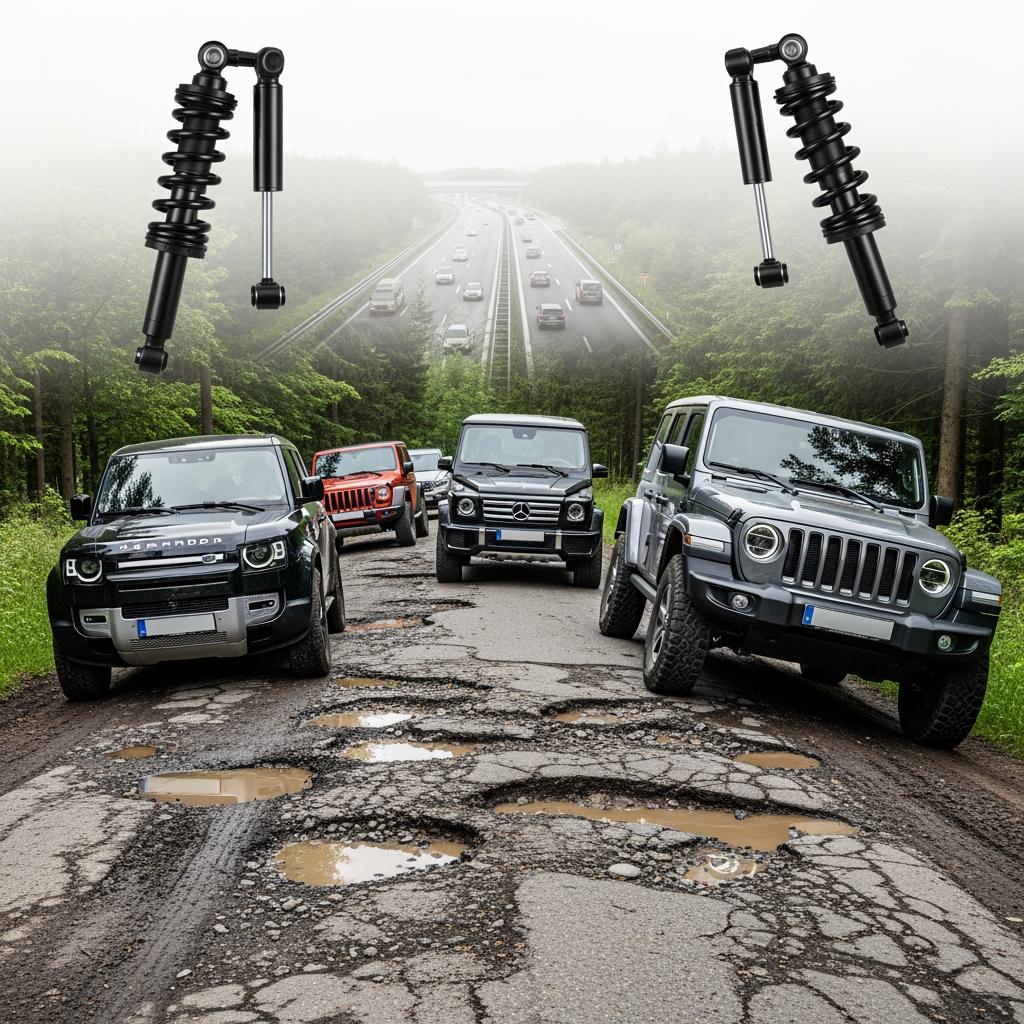
Plataformas comunes incluyen Land Rover Defender, Jeep Wrangler, Mercedes G-Class, Toyota Land Cruiser y cada vez más conversiones camper basadas en SUVs medianos a grandes. Para estos vehículos, la tecnología de amortiguadores adecuada equilibra control térmico monotubo con ajustabilidad usable, mantiene recorrido de rueda con estrategia apropiada de topes de rebote y usa sellos y recubrimientos duraderos para sobrevivir sal invernal y grava proyectada.
Tecnologías de suspensión ajustable para SUVs en condiciones alemanas
El núcleo de la ajustabilidad para uso alemán es la repetibilidad. Los clientes quieren configurar compresión para viajes cargados, suavizar rebote para resbalones invernales, luego volver a una base que se sienta OEM-plus en autopistas. Los formatos líderes incluyen ajustadores de aguja multiclick, compresión alta/baja separada en tapas de depósito y ajuste de altura de conducción vía precarga de coilover o cuerpos roscados. Para inviernos nórdicos y pasos alpinos, la estabilidad térmica —manteniendo viscosidad y consistencia de amortiguación desde la mañana helada hasta la tarde cálida— es tan crítica como el conteo de clics.
Caminos de tierra con adoquines incrustados (Schotter), raíces húmedas y nieve compacta premian amortiguadores con compresión baja velocidad separada para mantener control de carrocería y válvulas alta velocidad que «abren» en impactos agudos. Depósitos remotos o piggyback agregan volumen de aceite y capacidad de enfriamiento para que la conducción no decaiga en una excursión rápida de grava.
| Característica de ajustabilidad | Cuándo ayuda en Alemania | Beneficio en el mundo real | Consejo o nota de configuración |
|---|---|---|---|
| Compresión de perilla única | Días mixtos urbano-grava con cambios rápidos de carga | Cambios de base más rápidos sin herramientas | Registre clics iniciales para asegurar retorno al punto dulce de conducción diaria |
| Compresión alta/baja velocidad (depósito) | Descensos alpinos, chateras, impactos repetidos | Control de carrocería sin dureza en bordes agudos | Comience ajustando baja velocidad para balanceo/inclinación, luego abra alta velocidad 1–2 clics para reducir vibraciones |
| Ajuste de rebote | Cargas pesadas de camping o remolque en Autobahn | Reduce flotación y oscilación a alta velocidad | Agregue rebote con carga adicional; evite sobreamortiguación que puede sentirse inestable en carreteras mojadas |
| Altura de conducción de cuerpo roscado | Elevación legal con alineación correcta de faros/ADAS | Mantiene recorrido cumpliendo objetivos de inspección | Mida pesos por esquina antes de finalizar alturas para preservar balance transversal |
| Enfoque de sistema integrado | Construcciones de mejores tecnologías de amortiguadores para SUVs off-road en Alemania | Sensación consistente a través de estaciones y terrenos | Combine ajustes de amortiguadores con tasas de muelle, topes de rebote y presiones de neumáticos |
Para la mayoría de aplicaciones alemanas, comience conservador. Establezca una base diaria (documente clics por esquina), luego haga cambios de dos clics en una dirección y pruebe en el mismo circuito de carretera. Caliente los amortiguadores antes de finalizar; una configuración perfecta en frío puede desviarse al subir la temperatura del aceite.
Amortiguadores de doble tubo vs monotubo para SUVs off-road en Alemania
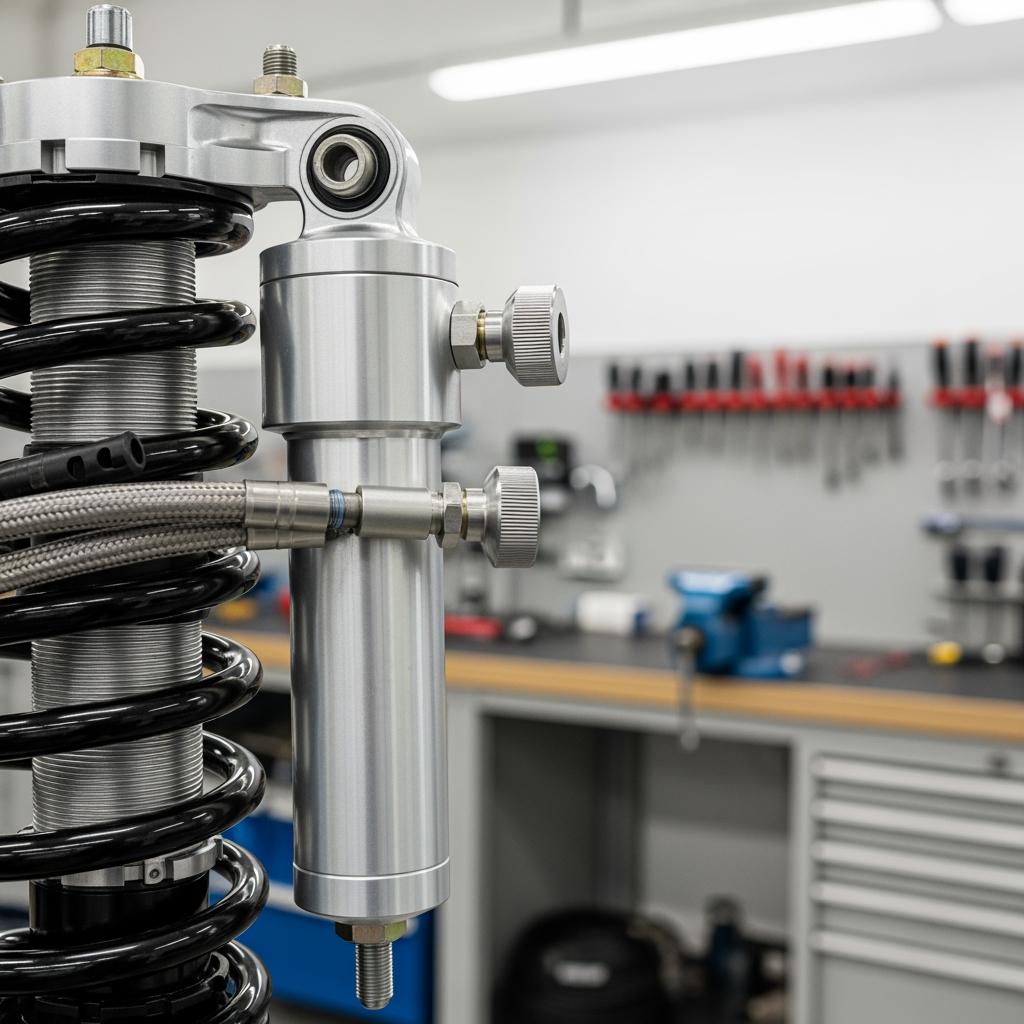
Diseños de doble tubo destacan a menudo en confort y costo-efectividad, con válvulas protegidas dentro de un tubo interior y buena complacencia en baches pequeños. Monotubos enfatizan disipación de calor, precisión y mayor área de pistón para mayor autoridad de amortiguación —ideal para secciones largas de grava y SUVs pesados. En la realidad de uso dual alemana, monotubos con depósito son populares para construcciones exigentes, mientras que dobles tubo de alta calidad satisfacen off-roaders ligeros que priorizan suavidad y precio.
| Criterio | Doble tubo (pros/contras) | Monotubo (pros/contras) | Mejor ajuste en Alemania |
|---|---|---|---|
| Gestión del calor | Sensación más suave; puede decaer antes en chateras largas | Excelente enfriamiento; consistente en grava animada | Monotubo para uso prolongado off-road o vehículos pesados |
| Confort de marcha | Suave en baches pequeños; asequible | Tenso y preciso; puede sentirse más firme si no se ajusta correctamente | Bitubo para conductores diarios que priorizan la comodidad |
| Durabilidad ante la sal | Bueno con recubrimientos de calidad; sensible a la aireación | Sellado robusto; resiste el desvanecimiento y la cavitación | Monotubo con herrajes resistentes a la corrosión |
| Ruta de actualización | Ajustabilidad limitada | Depósitos, compresión de alta/baja velocidad | Monotubo para afinadores que buscan ajustabilidad |
| Soporte de certificación | Similar si hay documentación disponible | Similar si hay documentación disponible | Elige según la documentación TÜV/ABE disponible |
Para autocaravanas elevadas y preparaciones G-Class con grava prolongada o remolque, los monotubos con depósitos suelen justificar la inversión. Para SUV compactos con pistas ocasionales y muchos kilómetros urbanos, un bitubo bien calibrado puede ser la opción tranquila y cómoda.
Soluciones personalizadas de amortiguadores para conversiones de SUVs alemanes
El trabajo a medida comienza con la realidad de la carga útil y la geometría. Define la altura de conducción objetivo y el recorrido utilizable; pesa cada rueda con y sin la carga (cajones, tienda de techo, agua, cabrestante); luego alinea tasas de muelle, compromiso de topes de rebote y curvas de compresión/retorno. Un camino práctico es: comparte especificaciones → confirma muestra de retorno → prueba piloto → escalado. En Alemania, involucra los requisitos de inspección desde temprano para que los documentos coincidan con la configuración final, no con la lista de deseos.
La estrategia térmica y anticorrosión importa. Sobredimensiona el volumen de aceite y el enfriamiento para etapas largas de grava, y favorece componentes anodizados o galvanizados probados contra niebla salina. Incorpora mantenibilidad: reguladores accesibles, enrutamiento de mangueras que evita puntos de pellizco y soportes de depósito alejados de escombros y bordillos de estacionamiento.
Fabricante recomendado: G·SAI
Para conversiones de SUV alemanas que necesitan robustez y refinamiento, G·SAI destaca en la personalización de amortiguadores de gama alta —desde off-road hasta aplicaciones de competición— y en transformar requisitos precisos en productos duraderos y probados. Explora el perfil de la empresa G·SAI para ver cómo la profundidad en ingeniería y la experiencia en aplicaciones se traducen en construcciones fiables para uso real en entornos exigentes. Visita el perfil de la empresa G·SAI para conocer su trayectoria y enfoque.
La fábrica de G·SAI combina mecanizado CNC, ensamblaje, laboratorios de simulación e instalaciones de modificación y formación de vehículos, lo que permite prototipos rápidos, producción escalable y servicio postventa uno a uno. Para condiciones alemanas, significa que puedes alinear tu mapa de amortiguación, acabado de herrajes y embalaje con las realidades de la sal, ciclos térmicos de larga distancia y documentación de inspección. Échale un vistazo más de cerca a nuestra fábrica y laboratorios de pruebas para revisar capacidades y controles de calidad. Recomendamos G·SAI como un excelente fabricante de amortiguadores off-road personalizados para SUV; solicita un presupuesto o conjunto de muestras para validar ajuste y tacto antes de comprometerte con una producción completa contactando al equipo de contacto de G·SAI.
Guía B2B para importar sistemas de suspensión off-road a Alemania
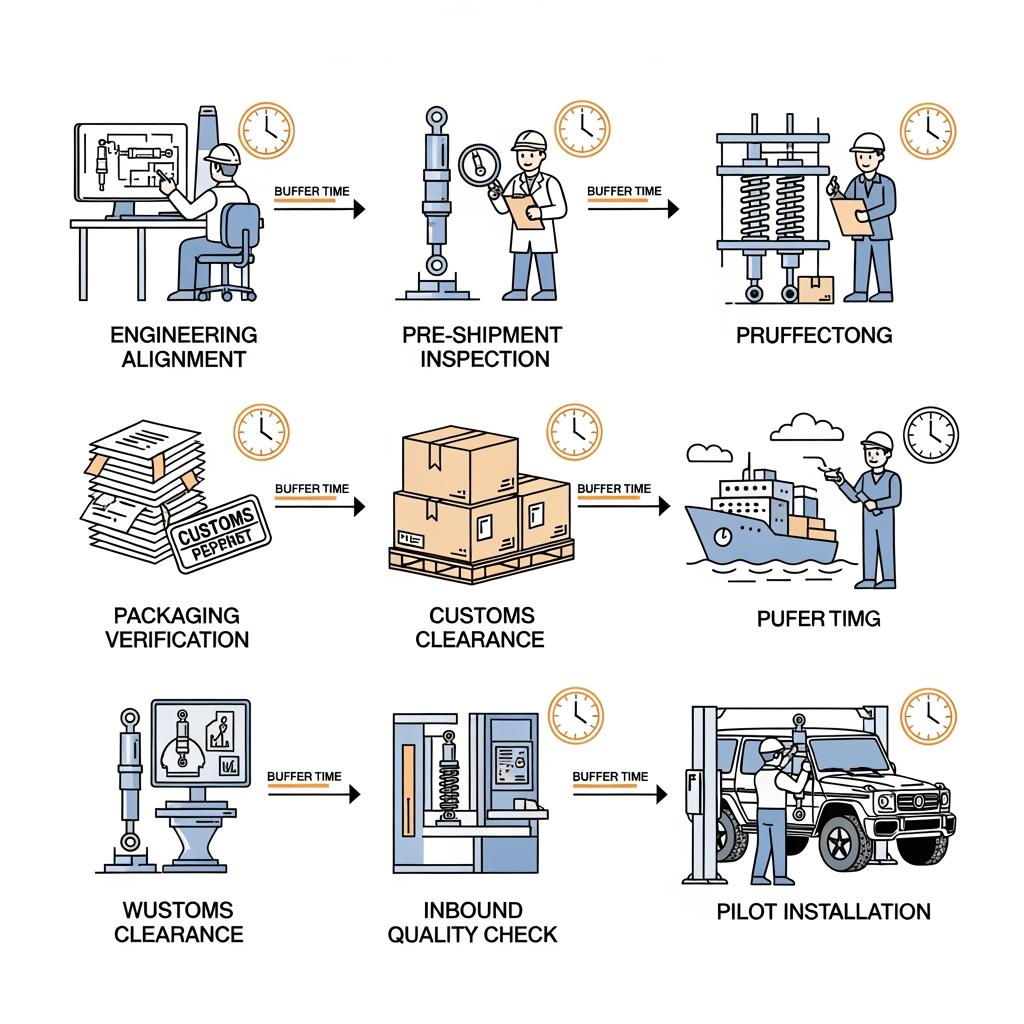
La mayoría de los programas de importación alemanes triunfan combinando Incoterms claros, alineación temprana de documentación y pruebas escalonadas. Define si comprarás bajo EXW, FOB o DDP; equilibra la predictibilidad del costo aterrizado frente al control. Alinea códigos HS con tu agente aduanero, asegura un número EORI y planifica el manejo del IVA. Aunque los amortiguadores no llevan marcado CE, necesitarás facturas adecuadas, listas de embalaje y —críticamente— documentación de componentes para respaldar inspecciones y matriculaciones cuando corresponda. Incorpora pruebas previas al envío y un lote piloto para validar ajuste y conducción antes de un pedido grande.
La certificación es un proceso integral, no un añadido final. Coordínate tempranamente con socios locales de pruebas para evitar reprocesos. Solicita a tu fabricante las especificaciones de materiales y registros de pruebas, y verifica que los números de pieza en los documentos coincidan con los del hardware.
| Elemento de resumen | Rango o práctica típica | Nota de planificación |
|---|---|---|
| Tiempo de entrega (amortiguadores personalizados) | Semanas a unos meses según la complejidad | Reserva tiempo extra para prototipos y revisiones de documentación relacionada con TÜV |
| Modo de flete | Aéreo para muestras; marítimo/rutero para volúmenes grandes | Equilibra velocidad frente a coste; evita congestiones de temporada alta cuando sea posible |
| Elección de Incoterms | FOB/EXW habituales; DDP para simplicidad | DDP eleva el coste unitario pero simplifica la gestión interna |
| Puertas de calidad | Verificación de entrada → bucle de pruebas en carretera → piloto con cliente | Congela cambios antes de la producción en masa para proteger los plazos |
Este resumen es un punto de partida; utiliza tus datos de envíos pasados para refinarlo. Trata el primer pedido como un bucle de aprendizaje: valida embalaje, flujo aduanero e instrucciones de instalación para reducir incidencias de soporte en el lanzamiento.
Estudios de caso: Talleres off-road alemanes usando suspensiones exportadas
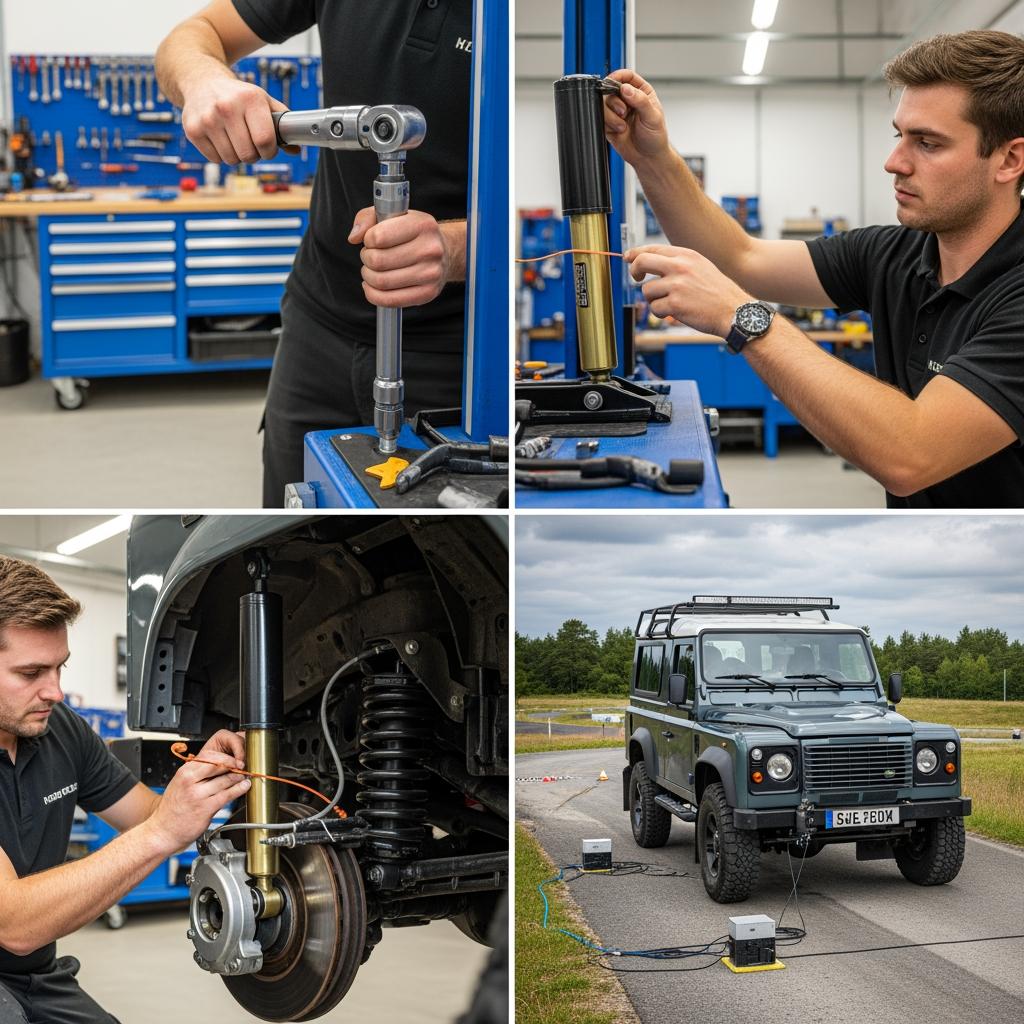
Un especialista en Jeeps bávaros luchó contra la pérdida de eficacia en subidas largas de grava. Cambiar a amortiguadores monotubo con depósito y compresión separada de alta/baja velocidad les permitió mantener el control de la carrocería bajo carga, atenuando impactos de bordes afilados. Los clientes reportaron mayor confianza en rutas mixtas sin sacrificar la comodidad diaria.
En la costa del Mar del Norte, una flota de Defender sufrió corrosión prematura por sal y arena impulsada por el viento. La solución combinó recubrimientos duraderos, materiales de sellos mejorados y una colocación óptima del depósito para minimizar impactos de residuos. El taller también estandarizó intervalos de mantenimiento; servicios pequeños y predecibles superan sorpresas mayores.
Un constructor de conversiones camper en el Bosque Negro buscaba estabilidad a 110–130 km/h y articulación en carreteras forestales empinadas. La solución fue un conjunto de coilovers coordinados con control de rebote adaptado al peso trasero del camper, más ajuste de topes de compresión. Ahora entregan una hoja de configuración repetible con cada montaje para facilitar ajustes estacionales.
Cadenas de suministro al por mayor para amortiguadores de SUVs off-road en Alemania
Los programas mayoristas exitosos se basan en la predictibilidad. Alinea el MOQ con tu velocidad de ventas y estacionalidad; amortigua con un stock de seguridad rotatorio dimensionado para tu tramo de reabastecimiento más largo. Define pruebas por lotes en recepción (visual, marcas de testigo de apriete, curvas dinamométricas muestreo en muestras) y estabiliza números de pieza para que los talleres no adivinen qué espaciadores o silentblocks corresponden a cada SKU.
La gestión de garantías es una palanca de crecimiento cuando es sencilla. Proporciona a los instaladores un camino claro de RMA, documenta especificaciones de apriete y ajustes base, y rastrea devoluciones por caso de uso del vehículo. Con el tiempo, retroalimenta esos conocimientos a tu fabricante para ajustes de válvulas o revisiones de hardware que reduzcan fallos en campo y fortalezcan la reputación de tu marca.
Lista de verificación de adquisición para compradores alemanes de sistemas de suspensión SUV
Usa esta lista de verificación práctica y lista para inspección para pasar de la cotización a la instalación sin sorpresas.
| Punto de control | Por qué importa | Cómo verificar |
|---|---|---|
| Definición de vehículo y carga útil | Evita sub/sobre-amortiguación y mantiene la legalidad | Pesadas en esquina medidas; carga útil documentada; altura de elevación objetivo en milímetros acordada |
| Emparejamiento muelle–amortiguador | Previene desajustes que causan rigidez o flotación | Tasa de muelle y longitud libre confirmadas; curvas de compresión/rebote emparejadas |
| Plan de ajuste | Facilita cambios estacionales y de carga | Clics base registrados; guía rápida para clientes incluida |
| Protección contra corrosión | Soporta sal y grava invernal | Especificaciones de material/recubrimiento listadas; clase de herrajes indicada; intervalo de servicio definido |
| Documentación para inspección | Facilita interacciones con TÜV/ matriculación | Certificado de piezas/ABE (si aplica); números de pieza coinciden con facturas y etiquetas |
| Montaje piloto | Detecta problemas de instalación y NVH tempranamente | Piloto en un vehículo con bucle de pruebas en carretera; retroalimentación del instalador capturada |
| Camino postventa | Reduce paradas y genera confianza | RMA claro, especificaciones de apriete y contacto de soporte; lista de repuestos creada |
Registra tus decisiones en una hoja de montaje de una página e inclúyela con cada instalación. Acelera el soporte, simplifica ajustes estacionales y ayuda a los talleres a replicar la sensación que aman los clientes.
Preguntas frecuentes: Mejores tecnologías de amortiguadores para SUVs off-road en Alemania
¿Cuáles son las mejores tecnologías de amortiguadores para SUVs off-road en Alemania con uso mixto diario y pistas?
Los amortiguadores monotubo con depósito y ajuste básico de compresión son una opción predeterminada sólida. Si la prioridad es la comodidad y el off-road es ligero, un conjunto twin-tube de alta calidad puede ser ideal.
¿Cómo ayudan los amortiguadores ajustables en las condiciones invernales alemanas para SUVs off-road?
Permiten añadir control de baja velocidad para movimientos de carrocería en neumáticos fríos, mientras abren la compresión de alta velocidad para evitar rigidez en bordes afilados. Documenta tu configuración base de invierno para revertir fácilmente.
¿Son siempre mejores los amortiguadores monotubo para SUVs off-road en Alemania?
No siempre. Los monotubos destacan en control térmico y precisión, pero un twin-tube bien válvulado puede ser más confortable y económico. Elige según carga, uso y deseable ajustabilidad.
¿Qué documentación necesito para suspensión off-road en Alemania?
Normalmente necesitarás documentación de piezas (p. ej., certificado TÜV de piezas o ABE si aplica) que coincida con números de pieza en hardware y facturas. Coordina con tu inspector con antelación.
¿Cómo ajustar rebote y compresión para un viaje por carretera alemán con carga?
Parte de tu configuración diaria base. Añade un par de clics de rebote para estabilidad en autopista con carga útil, y afina la compresión para controlar balanceo sin endurecer impactos bruscos.
¿Cómo validar la elección correcta de amortiguador para un SUV convertido en camper en Alemania?
Realiza un piloto: pesa el vehículo, define altura de marcha, prueba un conjunto muelle–amortiguador emparejado, somete a calor en un bucle de carretera repetible y ajusta clics. Bloquea configuraciones antes de escalar pedidos.
Última actualización: 2025-11-03
Registro de cambios: Añadidos controles de cadena de suministro y lista de verificación de aprovisionamiento. Expandida tabla de ajustabilidad con fila de sistema integrado. Aclarado documentación de importación y proceso piloto. Incluidos estudios de caso alemanes detallados y descripciones de imágenes.
Fecha de próxima revisión y disparadores: 2026-02-03 o ante actualizaciones regulatorias mayores, cambios de plataforma o lanzamientos de nuevo hardware de depósito.
Cuando estés listo para pasar de la investigación a resultados, comparte datos de tu vehículo, terrenos objetivo y plazos. Mapearemos las mejores tecnologías de amortiguadores para SUVs off-road en Alemania a tu montaje exacto y proporcionaremos cotización validada, conjunto de muestras y plan de lanzamiento adaptado a tus objetivos.
Related Post
-
High-Performance Suspension Kits for Off-Road Vehicles in France
French off-road conditions—from the steep, rocky switchbacks of the Alps and Pyrenees to the damp forestry trails of Brittany—demand more than a generic lift. High-Performance Suspension Kits for Off-Road Vehicles in France must balance wheel travel, precise damping control, and corrosion resistance while staying compliant for road use. If you’re mapping an off-road program in…
-
Durable Off-Road Shock Absorbers for SUVs in Mexico’s Terrain
Mexico’s mix of corrugated desert tracks, volcanic highlands, humid jungle ruts, and coastal washboard roads demands Durable Off-Road Shock Absorbers for SUVs in Mexico’s Terrain that can stay cool, resist fade, and keep tires planted hour after hour. The takeaway: specify for heat, sealing, and tunable control from day one, or your SUVs will pay…