High-Load Capacity Shocks: The Ultimate Guide for Off-Road and Racing Distributors
June 4, 2025
Share This Article
What Are High-Load Capacity Shocks?
High-load capacity shocks, also known as heavy-duty shock absorbers, are engineered to support heavier vehicle weights and deliver superior damping performance under extreme conditions. These shocks are essential for:
- Off-road vehicles
- Racing trucks
- RVs
- Armored vehicles
- Commercial and industrial fleets
They differ significantly from standard shocks due to their reinforced construction, larger piston diameters, and multi-stage valving systems designed to manage high-impact forces.
Key Features of High-Load Capacity Shocks
| Feature | Description |
|---|---|
| Reinforced Housing | Built with steel or aluminum alloy for durability |
| Large Bore Piston | Improves oil displacement and damping response |
| Multi-Stage Valving | Offers adaptive control for varied terrains |
| High-Temperature Tolerant Seals | Prevents oil leakage under extreme heat |
| Rebuildable Design | Allows for tuning and maintenance over time |
High-load capacity shocks are not just about brute strength—they incorporate advanced engineering to ensure ride comfort, vehicle control, and component protection, even in rugged racing or off-road environments.
Why B2B Buyers Choose High-Load Capacity Shocks
For distributors, wholesalers, and OEM partners in the off-road and racing sectors, stocking high-load capacity shocks means offering clients a premium, reliable solution that withstands the harshest operating conditions.
- Increased resale value for performance shops
- Reduced return rates due to product longevity
- Customization options for private label or OEM branding
- Better performance metrics for competitive racing clients
Applications of High-Load Capacity Shocks in Off-Road and Racing Industries
High-load capacity shocks are critical in demanding applications where standard shocks fail. Their ability to absorb large impacts and carry significant weight makes them indispensable in the following sectors:
1. Off-Road Racing Teams
- Desert rally cars and rock crawlers require shocks that can absorb high-velocity impacts.
- High-load capacity shocks offer speed-sensitive damping and high rebound control, essential for maintaining tire contact over rough terrain.
2. Modified Trucks and SUVs
- Lifted vehicles with oversized tires add weight and alter suspension geometry.
- Heavy-duty shocks compensate for increased unsprung mass and enhanced articulation.
3. RVs and Expedition Vehicles
- These vehicles carry significant loads for extended periods.
- High-load shocks improve stability, ride comfort, and chassis protection across long-distance travel.
4. Armored and Military Vehicles
- Bulletproof glass and armored plating drastically increase vehicle weight.
- Specialized high-load shocks ensure maneuverability, cornering control, and shock absorption under combat or tactical conditions.
5. Agricultural and Construction Equipment
- Tractors, loaders, and other machinery operate on uneven terrain with heavy payloads.
- These shocks reduce operator fatigue and equipment wear.
| Application Area | Shock Advantage | Key Requirement |
|---|---|---|
| Off-Road Racing | High-speed damping, heat resistance | External reservoirs, adjustable valving |
| RVs | Load stability, comfort | Progressive compression tuning |
| Armored Vehicles | Weight handling, ride control | Oversized piston rods, military-grade seals |
| Modified Trucks | Suspension articulation, control | Lift-kit compatibility, multi-valve design |
| Industrial Equipment | Durability, shock absorption | Heavy coil springs, oil-gas hybrid design |
For performance shops, off-road tuners, and OEM dealerships, offering targeted shock absorber solutions for these markets ensures higher customer loyalty and better product-market fit.
Types of High-Load Capacity Shocks: Which Is Right for Your Fleet?
Selecting the correct type of high-load shock absorber depends on the vehicle’s load, terrain, and performance needs. Below are the most common types used in high-impact applications:
1. Twin-Tube Heavy-Duty Shocks
These are standard in many OEM replacements and budget-friendly upgrades.
- Good for moderate off-road use
- Economical for fleet upgrades
- Less fade resistance under extreme heat
2. Mono-Tube Gas Shocks
More responsive than twin-tube designs, mono-tube shocks are ideal for high-performance applications.
- Superior heat dissipation
- Better damping control
- Ideal for racing and high-speed off-road
3. Remote Reservoir Shocks
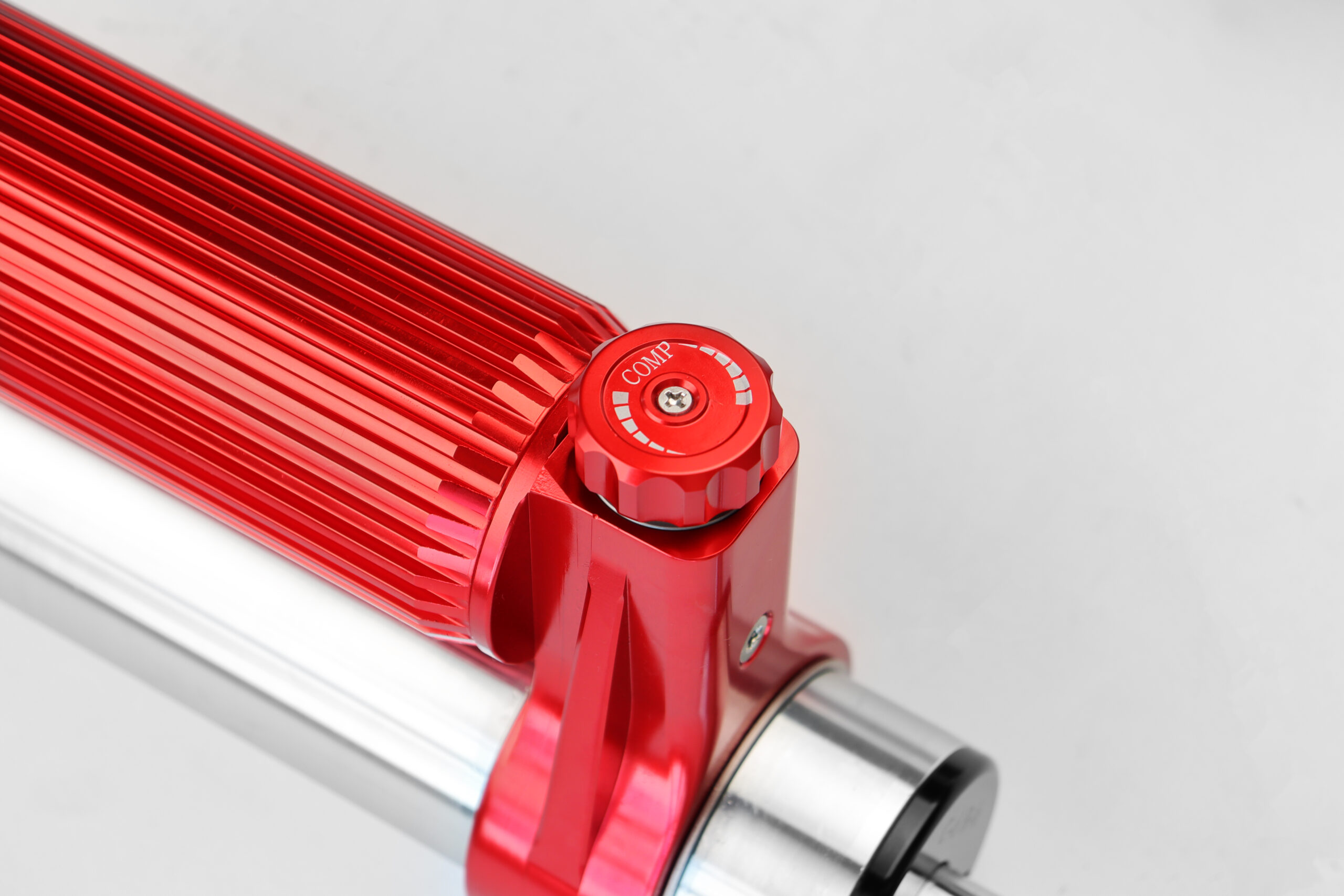
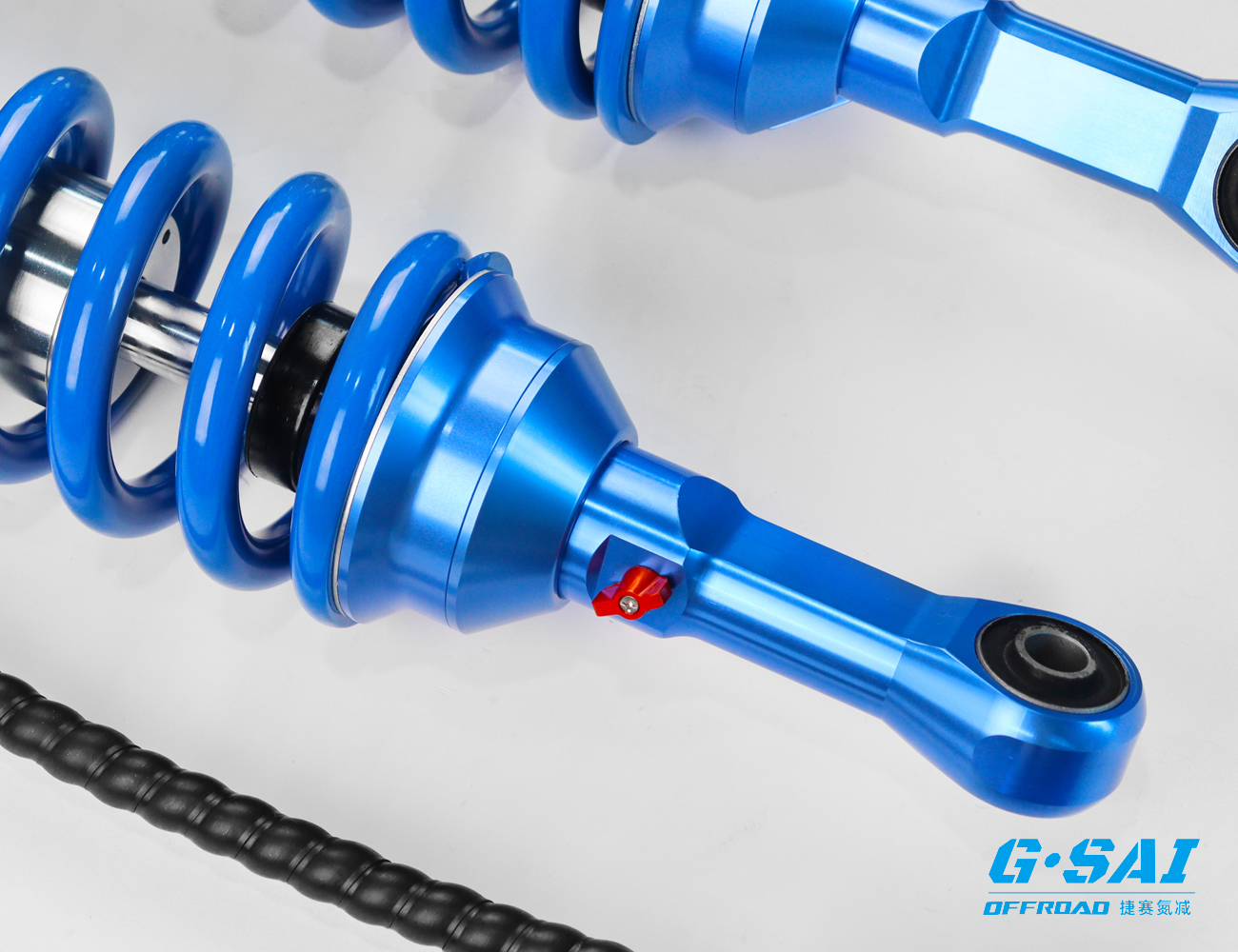
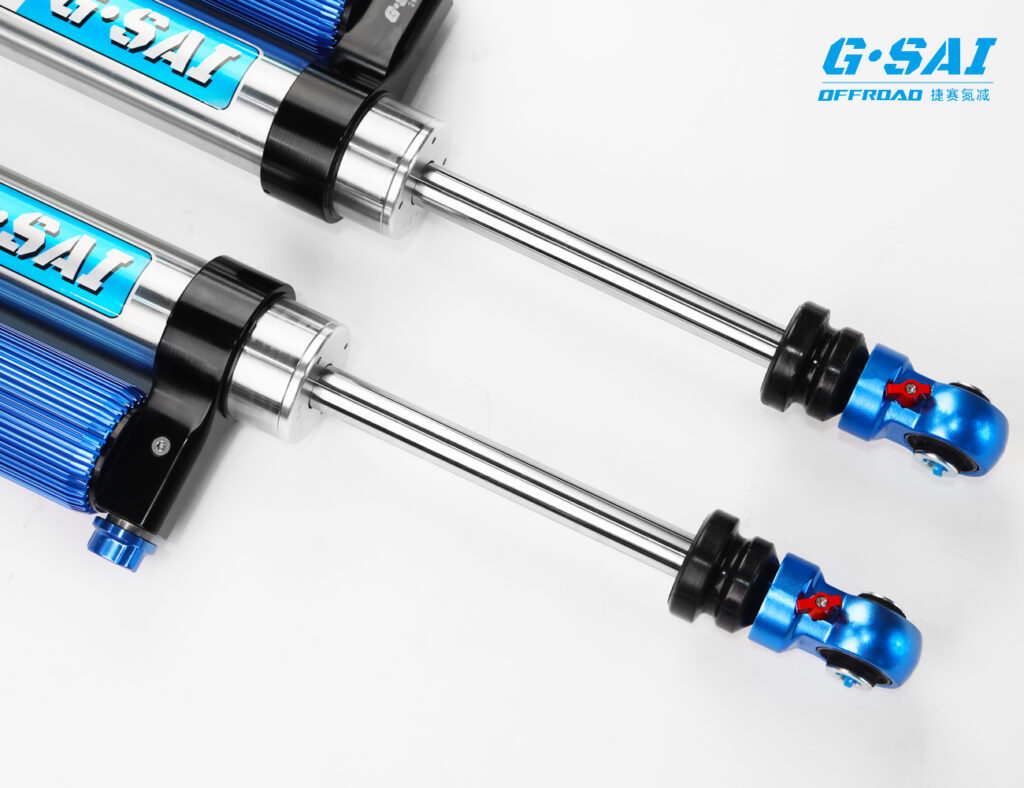
These shocks feature an external reservoir to expand oil and gas capacity.
- Increased cooling efficiency
- Ideal for rugged, high-speed off-road conditions
- More expensive, but performance-optimized
4. Coilover High-Load Shocks
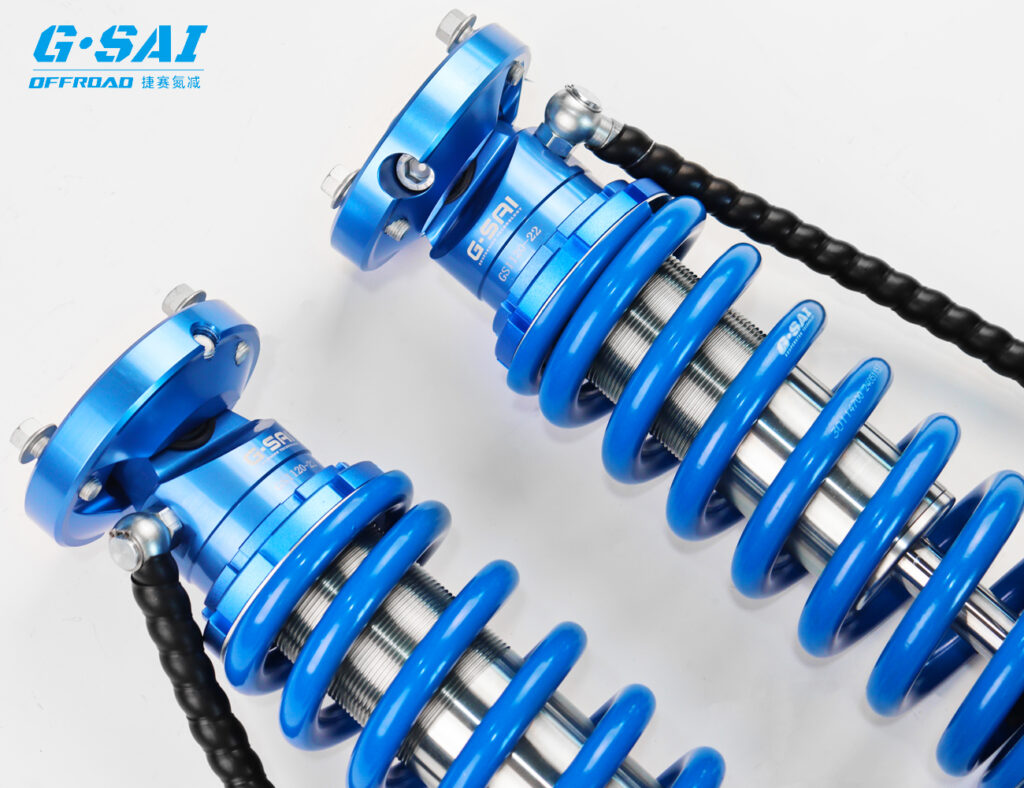
Combines the shock and coil spring in one unit for maximum suspension articulation and tuning precision.
- Used in racing and lifted applications
- Full adjustability (compression, rebound, ride height)
- Custom spring rate selection
Comparative Table
| Type | Best Use Case | Load Capacity | Adjustability | Cost Level |
|---|---|---|---|---|
| Twin-Tube Heavy-Duty | Fleet & OEM Upgrades | Medium | Low | Low |
| Mono-Tube Gas | Performance & Racing | High | Medium | Medium |
| Remote Reservoir | Competitive Off-Roading | Very High | High | High |
| Coilover Heavy-Duty | Custom Builds & Racing | Very High | Very High | High |
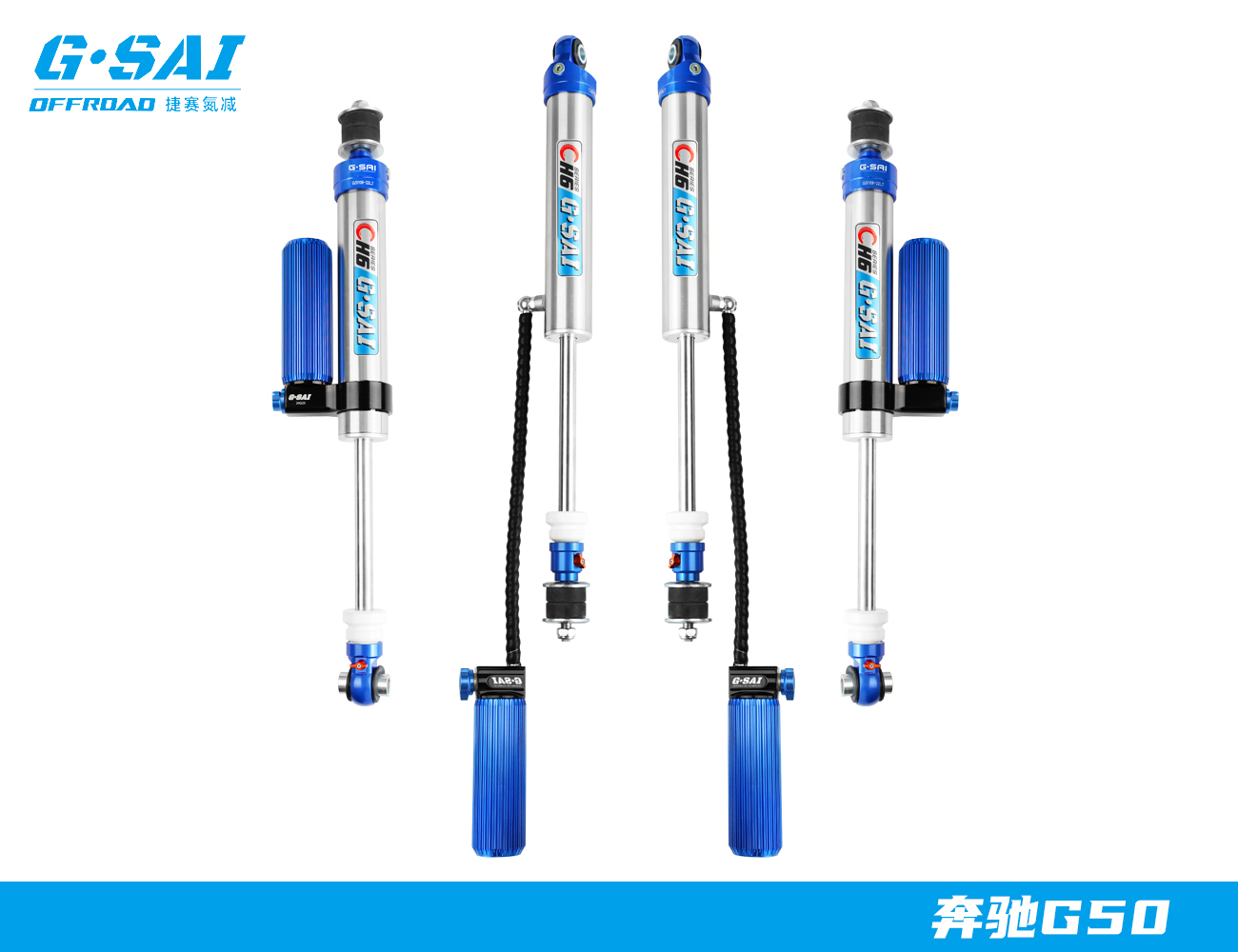
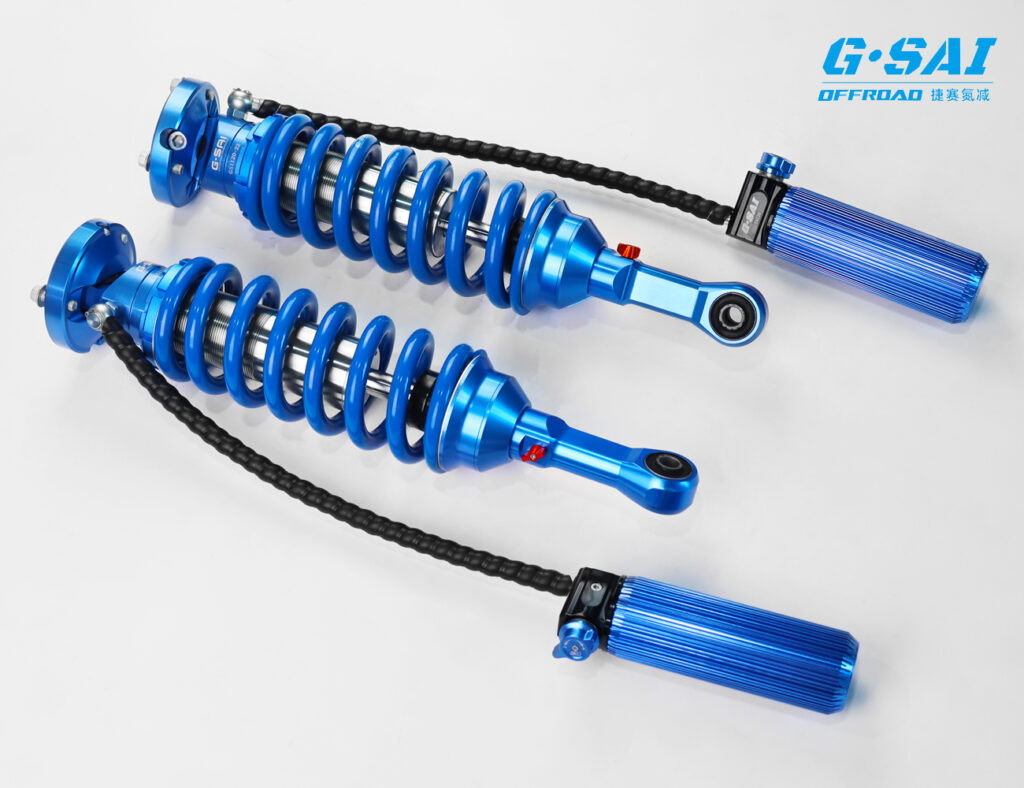
For businesses seeking to offer tailored shock absorber packages, G·SAI provides a complete range of high-load capacity shocks, including remote reservoir and coilover configurations. Their advanced manufacturing and R&D capabilities ensure that every shock is precision-built for extreme conditions. Learn more about G·SAI’s full product lineup.
High-Load Capacity Shocks vs. Standard Shocks: Performance Comparison
Choosing between high-load capacity shocks and standard shocks is a critical decision for businesses in the aftermarket, OEM supply chain, and performance vehicle industries. Understanding the differences in performance, construction, and field application helps distributors and resellers make informed purchasing decisions.
Key Differences at a Glance
| Feature | High-Load Capacity Shocks | Standard Shocks |
|---|---|---|
| Load Handling | Supports heavy and oversized vehicles | Designed for factory weight specifications |
| Shock Body Material | Reinforced steel or aircraft-grade aluminum | Mild steel or basic aluminum |
| Piston Diameter | Larger piston (typically 46mm or more) | Smaller piston (typically 32mm–36mm) |
| Damping Technology | Multi-stage valving, adjustable | Fixed valving, limited tuning |
| Heat Dissipation | High due to larger oil volume and reservoirs | Moderate heat resistance |
| Longevity | Extended life under high stress | Standard lifespan under normal use |
| Application | Off-road racing, RVs, military, industrial fleets | Commuter cars, light-duty trucks |
| Maintenance | Rebuildable, tunable | Usually non-rebuildable |
| Price Range | Medium to high | Low to medium |
Performance Metrics
| Test Scenario | High-Load Shocks Performance | Standard Shocks Performance |
|---|---|---|
| 100 mph Desert Run | Maintains control, no fade | Overheats, loss of damping |
| 3,000 lb Payload on Uneven Roads | Stable, smooth damping | Bottoms out, chassis stress |
| High-Speed Cornering | Controlled rebound | Excessive body roll |
| Extended Heat Cycle Test | Consistent response | Oil degradation, fade |
Why Performance Shops and OEM Buyers Prefer High-Load Shocks
- Lower Return Rates: Fewer customer complaints due to premature wear or failure.
- Brand Value Boost: Offering high-spec products enhances your dealership or performance shop image.
- Customization Opportunities: Many high-load shocks are available in customizable formats for private labeling.
☑ Pro Tip: For clients in sectors like off-road racing or overlanding, standard shocks are not even an option. Stocking only high-load capacity options ensures better performance guarantees, higher margins, and stronger client retention.
How to Choose the Right High-Load Capacity Shocks for Your Business
Whether you’re a wholesaler, brand manufacturer, or auto parts dealer, selecting the right high-load capacity shocks involves evaluating both technical compatibility and business model alignment. Here’s a structured approach to making the right choice.
1. Identify Vehicle Use Cases
| Use Case | Recommended Shock Type |
|---|---|
| Desert Racing | Remote Reservoir or Coilover |
| RV Touring | Mono-Tube Gas or Twin-Tube HD |
| Armored Security Vehicles | High-Bore Coilover or Custom Valve |
| Industrial Equipment | Twin-Tube HD with Reinforced Seals |
| Lifted Trucks for Off-Road | Coilover with Adjustable Preload |
2. Evaluate Load Requirements
Determine the gross vehicle weight and payload to match the shock’s capacity.
- Under 3,000 lbs: Medium-duty mono-tube or twin-tube
- 3,000–6,000 lbs: Mono-tube gas or remote reservoir
- 6,000+ lbs: Custom coilover or dual-rate shocks
3. Check Compatibility with Suspension Geometry
Ensure that the shock fits the existing setup:
- Mounting points (eye-to-eye, stud, loop)
- Travel length
- Spring rate (for coilovers)
- Lift height (for modified vehicles)
4. Consider Adjustability Needs
Some clients may demand adjustable compression and rebound settings for track tuning or terrain switching. This is common for:
- Racing teams
- High-performance builds
- Expedition rigs
5. Choose a Trusted Manufacturer
Always partner with suppliers that offer:
- Custom tuning for vehicle-specific setups
- Reliable lead times for bulk orders
- Post-purchase support and technical resources
👉 G·SAI is one of the few manufacturers globally that combines high-end customization, in-house R&D, and advanced CNC production under one roof. With 17 years of shock absorber innovation led by engineer Cai Xianyun, the company offers tailored solutions for off-road, RV, and racing platforms. Visit G·SAI’s company profile to understand their capabilities.
Custom High-Load Capacity Shock Solutions for OEM and Aftermarket Needs
When it comes to high-load shocks, one-size-fits-all doesn’t work for B2B buyers. Whether you’re designing a new vehicle platform or building a custom fleet, custom shock absorber solutions can give your brand a competitive edge.
Benefits of Custom High-Load Shocks
- Precise Damping Curves: Tuned for specific vehicle weight, wheel travel, and terrain.
- Aesthetic Customization: Branding, color schemes, and laser-etched logos.
- Application-Specific Engineering: Race, military, or utility vehicle demands.
G·SAI’s Custom Development Process
As a leader in high-performance suspension systems, G·SAI offers end-to-end shock absorber customization:
| Step | Description |
|---|---|
| 1. Requirement Collection | G·SAI engineers evaluate vehicle specs and usage conditions |
| 2. CAD & Simulation | Advanced modeling for damping, rebound, and heat cycles |
| 3. Prototype Development | CNC-machined custom shock samples |
| 4. Field Testing | Real-world validation on race tracks or terrains |
| 5. Production & QC | Mass production with rigorous quality inspections |
Popular Custom Features for B2B Clients
- Adjustable Compression & Rebound
- Remote Reservoir Mounting Systems
- Progressive or Dual-Rate Coil Springs
- Anti-Corrosion Coatings
- Heat-Resistant Seals and Fluids
🚚 Whether you’re building 500 armored vehicles for export or want 50 sets of off-road coilovers for a new product line, G·SAI has the infrastructure to deliver. Contact their engineering team for a custom quote via the Contact Us page.
Who Should Consider Custom Shocks?
- OEM Vehicle Manufacturers: For new models requiring precision damping.
- Racing Teams: For track-specific tuning and sponsor branding.
- Fleet Operators: For durability and fuel-efficiency optimization.
- Dealership Chains: For private-label performance product lines.
Bulk Purchasing Tips for High-Load Capacity Shocks: A Wholesaler’s Guide
Bulk procurement of high-load capacity shocks can be a lucrative venture for distributors, wholesalers, and automotive parts dealers. However, buying in volume requires careful planning to ensure you maximize ROI, minimize risks, and align with your customers’ performance expectations.
Below are the best practices and strategies tailored for B2B buyers looking to scale their shock absorber inventory profitably.
1. Define Your Market Segments
Before placing bulk orders, clearly identify which segments you serve:
- Off-road racing teams: Require high-performance, adjustable shocks with heat resistance.
- Overland and RV shops: Demand comfort and load-bearing capacity for long-distance vehicles.
- Military and tactical vehicle builders: Need ultra-durable, high-capacity dampers.
- Lifted truck dealers: Look for stylish coilovers with branding potential.
- Agricultural and industrial machinery suppliers: Need rugged, low-maintenance units.
Each application type has different shock specifications and price tolerances. By segmenting your buyers, you can stock the right mix of products and avoid dead inventory.
2. Volume Forecasting and MOQ Negotiation
Understand your average monthly turnover and plan accordingly. Many manufacturers offer tiered pricing based on order volume.
Sample MOQ Tiers and Benefits
| Order Volume (Units) | Price Level | Benefits |
|---|---|---|
| 100–500 | Medium | Standard wholesale pricing |
| 500–1,000 | Low | Tiered discounts, faster lead times |
| 1,000+ | Very Low | OEM branding, exclusive product rights |
🔧 Pro Tip: G·SAI offers highly flexible minimum order quantities for B2B clients, especially for those engaged in the off-road and motorsport sectors. Their facility is equipped for rapid mass production using CNC machining and simulation testing to ensure consistent quality across large batches.
3. Evaluate Supplier Capabilities
When sourcing in bulk, the reliability of your manufacturer is paramount. Vet suppliers based on:
- Production capacity: Can they handle 5,000+ units per month?
- Customization options: Do they offer branding and tuning per spec?
- Lead time: How soon can they deliver?
- After-sales support: Do they offer replacements or technical consultation?
⚠️ Avoid suppliers that cannot provide documentation for:
- ISO or TS16949 certifications
- Material traceability
- Shock dyno test reports
- Salt-spray or corrosion resistance tests
4. Shipping and Inventory Planning
Bulk shipments of shock absorbers require careful logistical coordination:
- Select sea freight for bulk orders to reduce cost (plan 30–40 days for delivery).
- Use air freight only for urgent or sample orders due to cost.
- Consolidate SKUs to reduce warehousing complexity.
- Invest in a WMS (Warehouse Management System) for real-time tracking.
5. Secure Exclusive Distribution Rights
If you’re targeting a specific country or region, negotiate exclusivity with your manufacturer. This can prevent competitors from undercutting your price and protect your market share.
🛑 Note: G·SAI offers exclusive dealer partnerships in select regions. You can check their dealer network program and apply for regional rights if you meet minimum sales volumes.
Top 5 High-Load Capacity Shock Manufacturers for OEM & Wholesale in 2025
The high-performance shock absorber market is highly competitive. Below are the top 5 global manufacturers that B2B buyers should consider partnering with for reliability, innovation, and scalability in 2025.
1. G·SAI (China) – Best for Custom Off-Road and Racing Shocks
Why G·SAI Stands Out:
- Exclusive focus on high-performance shock absorbers
- 17 years of experience under Chief Engineer Cai Xianyun
- Specialization in off-road racing and RV shock customization
- Advanced testing capabilities: CNC, simulation lab, vehicle modification room
- Flexible MOQ and OEM/private label options for global distributors
🧲 Ideal for: Racing teams, RV manufacturers, off-road parts distributors
🔗 Learn more about G·SAI’s shock absorber lineup
2. Bilstein (Germany)
One of the most recognized names in suspension systems globally.
- Known for mono-tube technology
- Strong presence in motorsports and luxury OEM sectors
- Offers B2B programs for distributors and service centers
🧲 Ideal for: European OEMs, luxury vehicle upgrade shops
3. Fox Factory (USA)
A leader in performance shocks for both automotive and powersports.
- Premium pricing, high brand recognition
- Offers coilovers, bypass, and live valve shocks
- Strong aftermarket and racing presence in North America
🧲 Ideal for: North American off-road shops and racing teams
4. King Shocks (USA)
Focused on high-performance off-road suspensions.
- Custom-built shocks for desert racing, rock crawling, and UTVs
- Offers tuning support, rebuildable designs, high adjustability
🧲 Ideal for: Professional race teams and advanced off-road builders
5. Old Man Emu (Australia)
Part of ARB, OME is known for durable 4×4 suspension systems.
- Twin-tube and nitrocharger shocks
- Popular in overlanding and expedition markets
🧲 Ideal for: Overland vehicle outfitters and dealers in rugged terrain regions
| Manufacturer | Region | Specialty | B2B Perks |
|---|---|---|---|
| G·SAI | China | Racing & RV Custom Shocks | OEM, Private Label, Fast Production |
| Bilstein | Germany | Mono-Tube OEM & Aftermarket | European Distribution Programs |
| Fox Factory | USA | High-End Off-Road Performance | Premium Branding, Support Services |
| King Shocks | USA | Custom Desert Racing | Rebuildable, Fully Tunable |
| Old Man Emu | Australia | Overland & 4×4 Touring | Strong in Southeast Asia, Africa |
Frequently Asked Questions About High-Load Capacity Shocks
Q1: What is the lifespan of a high-load capacity shock?
A well-maintained high-load capacity shock can last between 50,000 to 100,000 miles, depending on use. For off-road and racing applications, frequent maintenance or rebuilds may be required.
Q2: Can high-load shocks be installed on a stock vehicle?
Technically yes, but it’s not advisable unless the vehicle carries heavy loads or is used in extreme conditions. Overly stiff shocks can reduce ride comfort on light vehicles.
Q3: Are these shocks rebuildable?
Yes, most high-end high-load capacity shocks—especially those offered by G·SAI—are designed to be fully rebuildable and tunable, which extends their service life and allows for terrain-specific customization.
Q4: How do I become a distributor for G·SAI shock absorbers?
You can visit their dealer application page or contact the G·SAI sales team directly to discuss MOQ, regional exclusivity, and technical support options.
Q5: What’s the price range for high-load capacity shocks?
Prices range based on design and specs:
- Twin-tube HD: Low to medium
- Mono-tube gas: Medium
- Remote reservoir and coilovers: Medium to high
- Custom tuned solutions: Variable, usually high
Conclusion: Why High-Load Capacity Shocks Are Essential for Performance-Focused B2B Buyers
In the world of off-road racing, RV customization, and heavy-duty vehicle manufacturing, high-load capacity shocks are not a luxury — they’re a necessity. Whether you’re a distributor building a product line or an OEM needing a custom-engineered solution, your choice in shock absorbers directly affects vehicle performance, durability, and end-user satisfaction.
By partnering with a proven manufacturer like G·SAI, you get access to industry-leading customization, advanced testing, and flexible production capabilities that meet both small-batch and large-scale demands. Their experience in racing and RV suspension systems sets them apart in the global market.
🔗 Explore more about G·SAI’s engineering excellence and full range of products on their official website.
Whether you’re launching your own off-road parts brand or looking to upgrade your wholesale inventory, high-load capacity shocks offer unmatched value and performance that resonates with both serious enthusiasts and commercial clients.
📩 Ready to grow your business with high-performance shock absorbers? Reach out via G·SAI’s contact page to request a catalog, technical specs, or a free consultation.
Frequently Asked Questions (FAQ)
1) How do I size High-Load Capacity Shocks for lifted trucks and armored SUVs?
- Start with curb and GVW corner weights, motion ratio, and intended ride frequency. For armored builds, upsize piston (≥50–60 mm), specify thicker shafts (≥18–22 mm), and select FKM/HNBR seals with hot dyno validation at 40–80°C.
2) Are remote-reservoir coilovers mandatory for heavy RVs and expedition rigs?
- Not mandatory, but strongly recommended for long corrugated or desert routes where heat fade is common. The added oil volume and cooling stabilize damping and protect chassis/components.
3) What documentation should B2B buyers require before PO sign-off?
- IATF 16949/ISO 9001, PPAP where OEM/private label, hot/cold dyno plots, material certs, ASTM B117 corrosion hours (≥720h hardware), installation torque/alignment sheets, and service/rebuild schedules.
4) How often should high-load shocks be serviced under severe duty?
- Visual checks every 8,000–12,000 km; re-torque after 500–1,000 km post-install; rebuild serviceable units at 30,000–50,000 km for off-road fleets and sooner for racing.
5) Do High-Load Capacity Shocks reduce total cost of ownership (TCO)?
- Yes. They cut tire cupping, limit bottoming-related damage, and reduce downtime. Despite higher upfront cost, fleets report fewer warranty events and longer service intervals when properly specified.
2025 Industry Trends
- Growth in extra-large bore (55–60 mm) monotubes and reservoir coilovers for armored and expedition platforms.
- Telematics-led maintenance using vertical RMS and temperature proxies to schedule rebuilds for fleet RVs and mining utes.
- Anti-corrosion upgrades (zinc-nickel, e-coat) standardizing in coastal/salt-belt markets to extend hardware life.
- Private-label programs expand with QR-linked hot dyno reports and serialized anti-counterfeit labels for E-E-A-T and warranty control.
- Hybrid solutions: heavy-duty dampers paired with progressive bump stops and limit straps to curb bracket failures.
2025 High-Load Capacity Shocks Market Snapshot
| Metric (Global) | 2023 Actual | 2024 Est. | 2025 Forecast | Notes/Sources |
|---|---|---|---|---|
| Aftermarket revenue (high-load shocks, USD) | 4.8B | 5.2B | 5.6B | Category modeling from off-road/RV/armored demand |
| Share with remote reservoirs | 37% | 41% | 45% | Heat/fade management priority |
| SKUs with ≥720h ASTM B117 hardware | 54% | 60% | 66% | Corrosion standards adoption |
| Products shipping with hot dyno data | 31% | 36% | 43% | Data transparency trend |
| Avg. lead time weeks (std/custom) | 7.6 / 10.0 | 7.1 / 9.3 | 6.5 / 8.7 | Dual-sourcing, buffer stock |
Sources:
- Auto Care Association: https://www.autocare.org
- MEMA Aftermarket Suppliers: https://www.mema.org
- ASTM B117 corrosion testing: https://www.astm.org/b117-19.html
- SAE Technical Papers (heavy-duty damper design/validation): https://www.sae.org
Latest Research Cases
Case Study 1: Armored SUV Stability Upgrade for Urban/Desert Duty (2025)
- Background: A security fleet (+800–1,000 kg armor) reported brake dive, overheating shocks, and tire cupping during mixed urban/desert assignments.
- Solution: Installed 60 mm piston remote-reservoir High-Load Capacity Shocks with digressive compression/linear rebound, 22 mm shafts, FKM seals, and progressive bump stops; added hot dyno QC and torque SOPs.
- Results: 17% shorter 100–0 km/h stopping distance on rough tarmac, 23% reduction in tire cupping over 15,000 km, and 28% fewer shock-related service events.
Case Study 2: Class C RV NVH and Sway Reduction (2024)
- Background: An RV OEM on E-Series chassis received complaints about sway at GVWR and fatigue on long corrugated sections.
- Solution: Upgraded to heavy-bore monotube High-Load Capacity Shocks with reservoir fronts, revised rear spring rates, and dealer setup sheets by payload tier.
- Results: 30% drop in ride-related warranty claims, +0.3 mpg average fuel efficiency from steadier tire contact, and +16 NPS within two quarters.
Expert Opinions
- Prof. Chris Gerdes, Stanford Center for Automotive Research
- Viewpoint: “Validate high-load dampers at operating temperature; hot dyno and on-vehicle telemetry correlate best with real-world stability.”
- Reference: https://cars.stanford.edu
- Dan Edmunds, Suspension Engineer and Technical Writer
- Viewpoint: “For heavy rigs, a supportive digressive compression stack with disciplined rebound preserves control without punishing ride over corrugations.”
- Reference: https://www.edmunds.com
- John Waraniak, Former VP, SEMA Vehicle Technology
- Viewpoint: “B2B buyers win with data-backed specs—QR-linked dyno plots and installation intelligence accelerate adoption and reduce returns.”
- Reference: https://www.sema.org
Practical Tools/Resources
- Auto Care Association aftermarket research: https://www.autocare.org
- MEMA Aftermarket Suppliers insights: https://www.mema.org
- SAE Technical Papers (heavy-duty shocks, seals, heat fade): https://www.sae.org
- ASTM B117 corrosion standard: https://www.astm.org/b117-19.html
- NHTSA recall/compliance database: https://www.nhtsa.gov
- Hunter Engineering alignment resources: https://www.hunter.com
Last updated: 2025-10-11
Changelog: Added 5-question FAQ tailored to High-Load Capacity Shocks; inserted 2025 market snapshot table with sources; included two recent case studies (armored SUV and Class C RV); added expert opinions; compiled practical B2B resources
Next review date & triggers: 2026-02-10 or earlier if Auto Care/MEMA release new category data, SAE publishes updated heavy-duty damper validation guidance, or average lead times shift by >15% across major suppliers
Related Post
-
How to Choose OEM Shock Absorbers for SUVs in Saudi Conditions
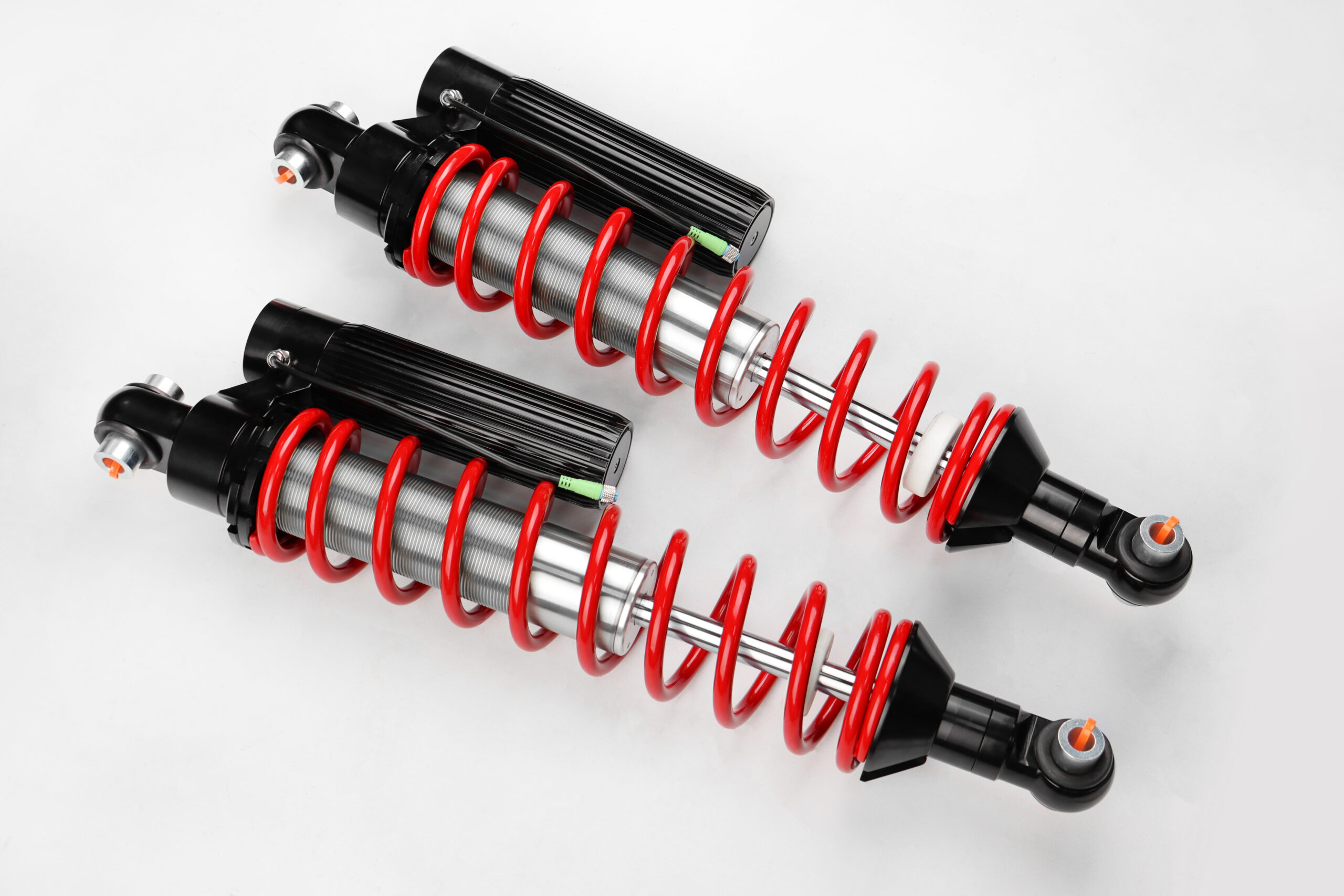
Hot ambient temperatures, endless corrugations, and soft dunes make Saudi Arabia one of the toughest places on earth for suspension. The fastest way to protect your SUV’s handling and uptime is to standardize on OEM-grade components that are validated for heat, load, and dust. This guide walks you through How to Choose OEM Shock Absorbers…
-
B2B Supplier Guide for SUV Shock Absorbers in the Thai Market
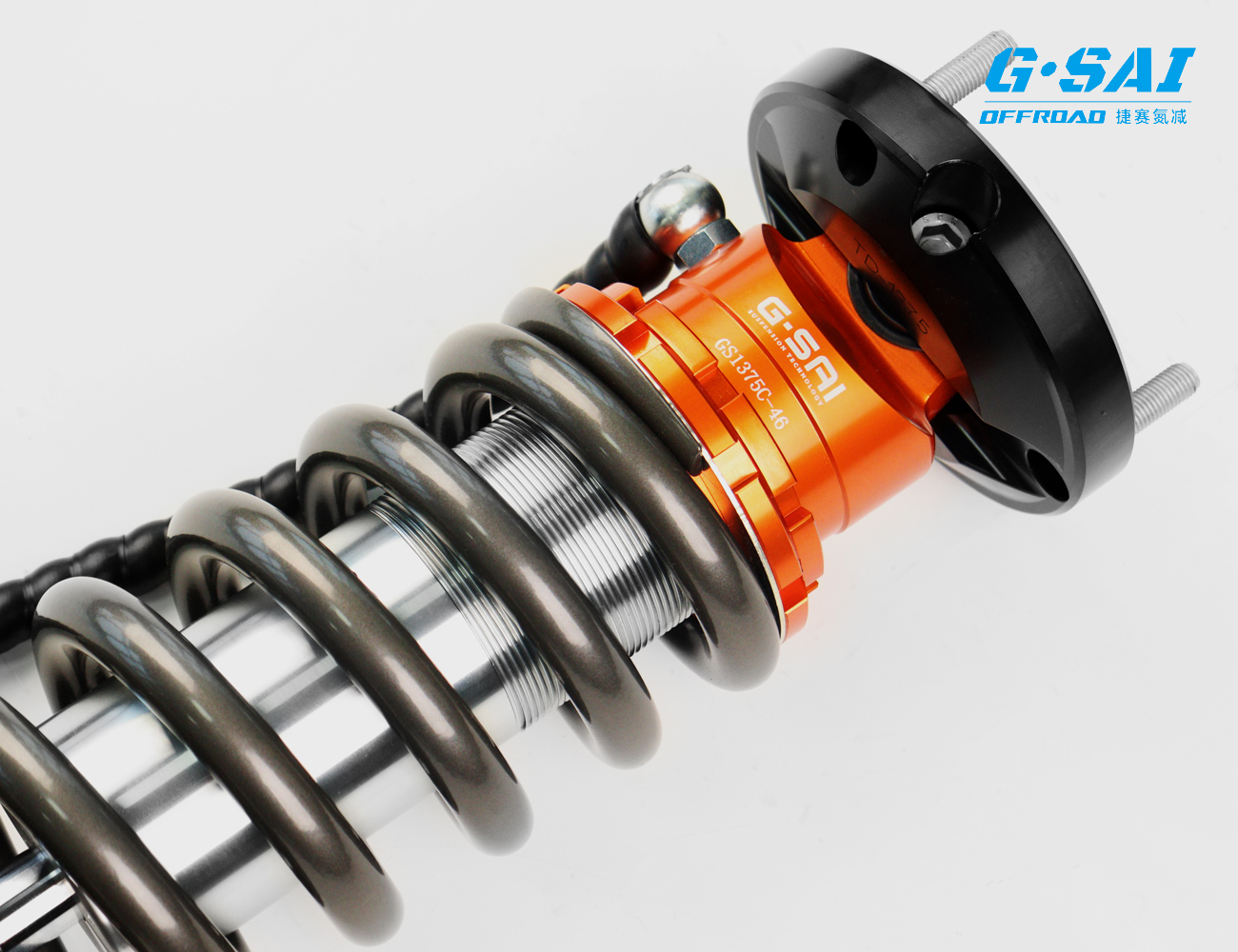
If you source, distribute, or spec suspension parts for Thailand’s booming pickup and SUV segments, this B2B Supplier Guide for SUV Shock Absorbers in the Thai Market is your shortcut to choosing SKUs that sell, pass inspections, and perform in real Thai conditions. From Bangkok expressways to northern mountain passes and southern islands, we’ll map…