How to Identify High-Quality Shock Absorbers: A Complete Buyer’s Guide for Automotive Professionals
September 14, 2025
Share This Article
What Is a High-Quality Shock Absorber?
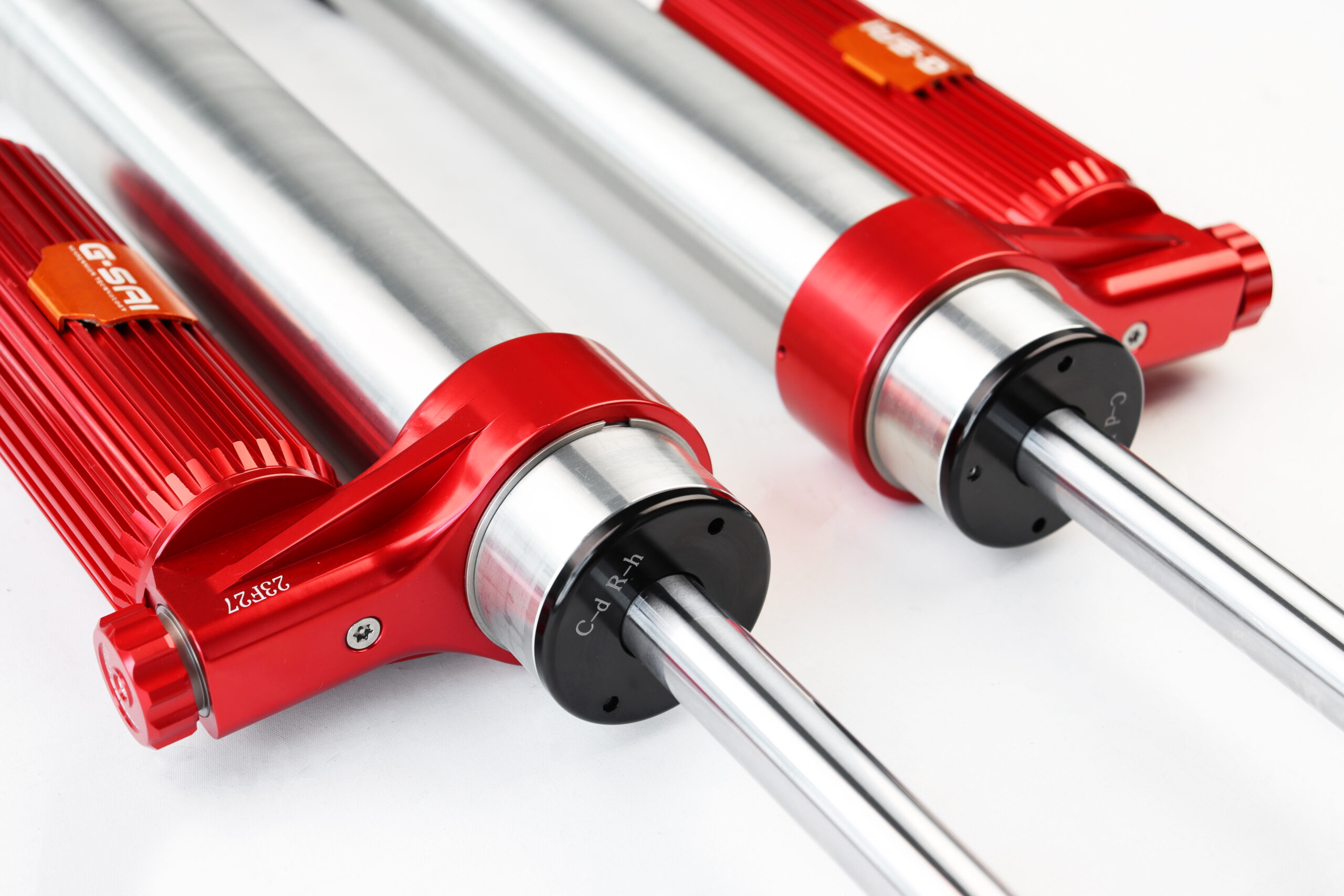
A high-quality shock absorber is a suspension component designed to control vehicle motion, reduce vibrations, and enhance road handling performance under various driving conditions. For B2B buyers such as auto parts dealers, wholesalers, off-road racing teams, and OEM manufacturers, identifying superior shock absorbers is crucial for product reliability, vehicle customization, and brand differentiation.
Key Features of High-Quality Shock Absorbers
| Feature | Description |
|---|---|
| Durability | Built with high-grade materials, often tested in extreme conditions |
| Damping Performance | Consistent and adjustable damping force across all terrains |
| Heat Resistance | Maintains performance under high temperatures during prolonged use |
| Customization Capability | Designed to be modified for specific loads, vehicles, or racing conditions |
| Precision Engineering | Manufactured with strict tolerances and CNC machining |
| Corrosion Resistance | Coated or treated to resist rust and wear over time |
Why It Matters for B2B Buyers
For modified vehicle suppliers and wholesale shock absorber dealers, offering high-quality products reduces return rates, improves customer satisfaction, and enhances brand reputation.
Common Industries That Require Premium Shock Absorbers
- Off-road racing teams
- RV and recreational vehicle manufacturers
- Heavy-duty fleet service providers
- Modified auto part retailers
- OEM vehicle manufacturers
🚀 If you’re in the business of racing performance or aftermarket vehicle upgrades, consider exploring the product range of G·SAI shock absorbers, engineered for extreme durability and precision.
Key Applications of Premium Shock Absorbers in Automotive Markets
High-performance shock absorbers are essential across a variety of automotive sectors. From commercial logistics to desert racing, shock absorbers influence ride quality, load handling, and overall vehicle safety.
B2B Applications of High-Quality Shock Absorbers
| Application Area | Benefits of High-Quality Shock Absorbers |
|---|---|
| Off-Road Racing Vehicles | Enhances control and stability on unpredictable, rugged terrain |
| Recreational Vehicles (RVs) | Improves cabin comfort and reduces component stress during long-distance travel |
| Heavy-Duty Trucks | Maintains axle alignment and distributes weight efficiently under heavy loads |
| Military & Tactical Vehicles | Increases maneuverability and protection in extreme operations |
| Modified Street Vehicles | Provides improved handling and aesthetic customization for performance enthusiasts |
Specialized Use Cases
- Desert Rally Vehicles: Require extra-long travel and high heat dissipation.
- Armored Vehicles: Need shock absorbers with heavy compression resistance and multi-valve systems.
- Electric SUVs: Benefit from lightweight, energy-efficient dampers for extended battery range.
💡 G·SAI specializes in custom shock absorber engineering for a wide range of industries. Learn more about their capabilities and how they support unique vehicle platforms on their About Us page.
Types of Shock Absorbers and Quality Differentiators
Understanding the different types of shock absorbers and their distinguishing features is key for B2B buyers looking to make informed sourcing decisions.
Common Types of Shock Absorbers
| Type | Description | Best For |
|---|---|---|
| Twin-Tube | Standard design with inner and outer tubes | Daily driving vehicles |
| Mono-Tube | Single tube with higher pressure gas for performance | Sports cars, off-road vehicles |
| Coilover Shock Absorbers | Integrated spring and damper system, often adjustable | Racing and modified vehicles |
| Remote Reservoir Shocks | Separate fluid reservoir for improved cooling and damping | Off-road racing and heavy-duty applications |
| Adjustable Shocks | Allows tuning of rebound and compression damping | Racing teams and professional modifiers |
Quality Differentiators to Look For
- Material Composition: Aircraft-grade aluminum or hardened steel
- Valve Technology: Multi-stage or speed-sensitive valving improves responsiveness
- Finish Coating: Anodized or powder-coated for corrosion resistance
- Sealing System: Prevents oil leaks and contamination
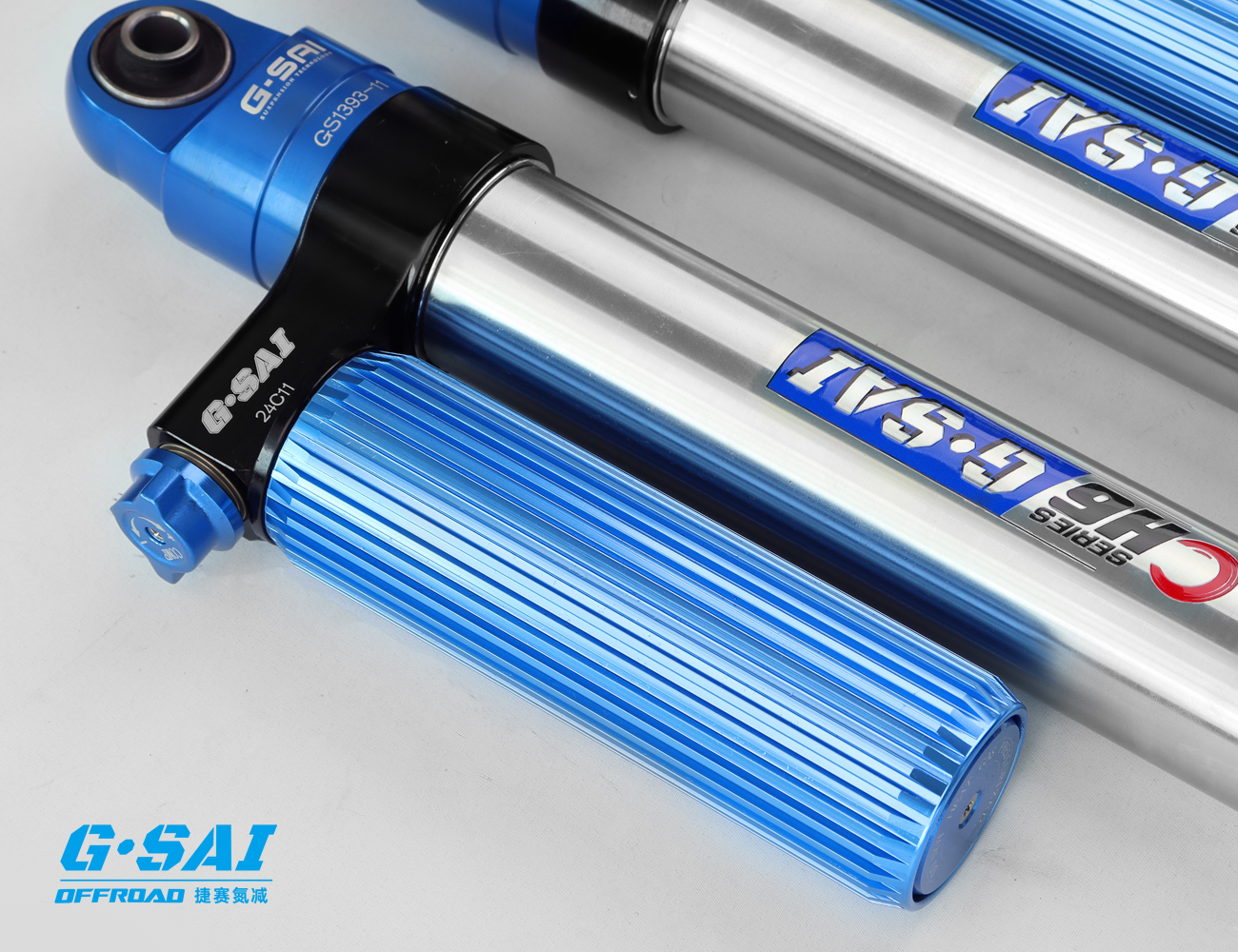
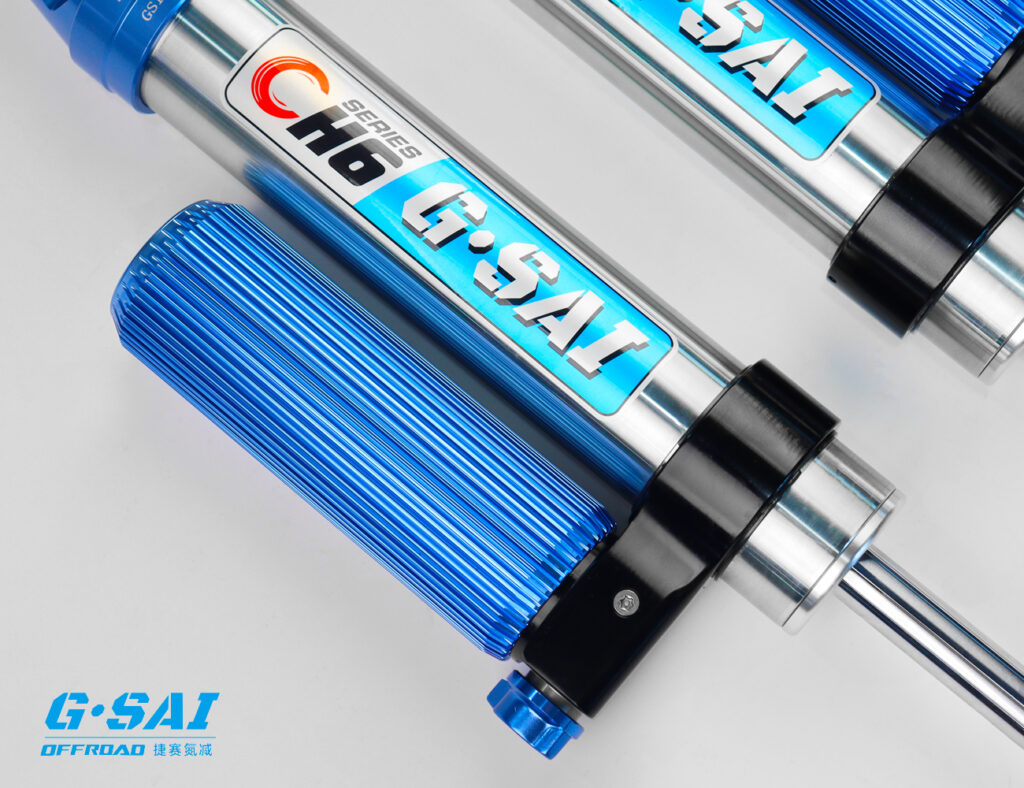
- Heat Dissipation: Finned reservoirs or cooling channels help with thermal control
Table: Twin-Tube vs. Mono-Tube
| Feature | Twin-Tube | Mono-Tube |
|---|---|---|
| Cost | Low to Medium | Medium to High |
| Performance | Moderate | High |
| Durability | Standard | High |
| Heat Dissipation | Low | Excellent |
| Use Case | Daily driving | Racing, Off-road |
🔧 Need help selecting between mono-tube and remote reservoir shocks for your product line? Contact the G·SAI team for expert consultation through their Contact Page.
High-Performance Shock Absorber Solutions for Off-Road and Racing Vehicles
In high-stakes environments like desert racing, rock crawling, and rallycross, the performance of your shock absorbers can mean the difference between winning and mechanical failure. Off-road and racing vehicles require shock absorber solutions that are not only durable but also highly customizable to vehicle weight, terrain, and driving intensity.
Why Off-Road and Racing Vehicles Need Specialized Shock Absorbers
Off-road and racing vehicles experience:
- Unpredictable terrain: Sand, gravel, rocks, mud, and steep inclines
- Extreme suspension travel: Often 10 inches or more
- High-speed cornering and jumps: Demands rapid rebound and compression control
- Constant vibration: Requires sealed components and advanced damping technology
Key Features of Racing-Grade Shock Absorbers
| Feature | Benefit |
|---|---|
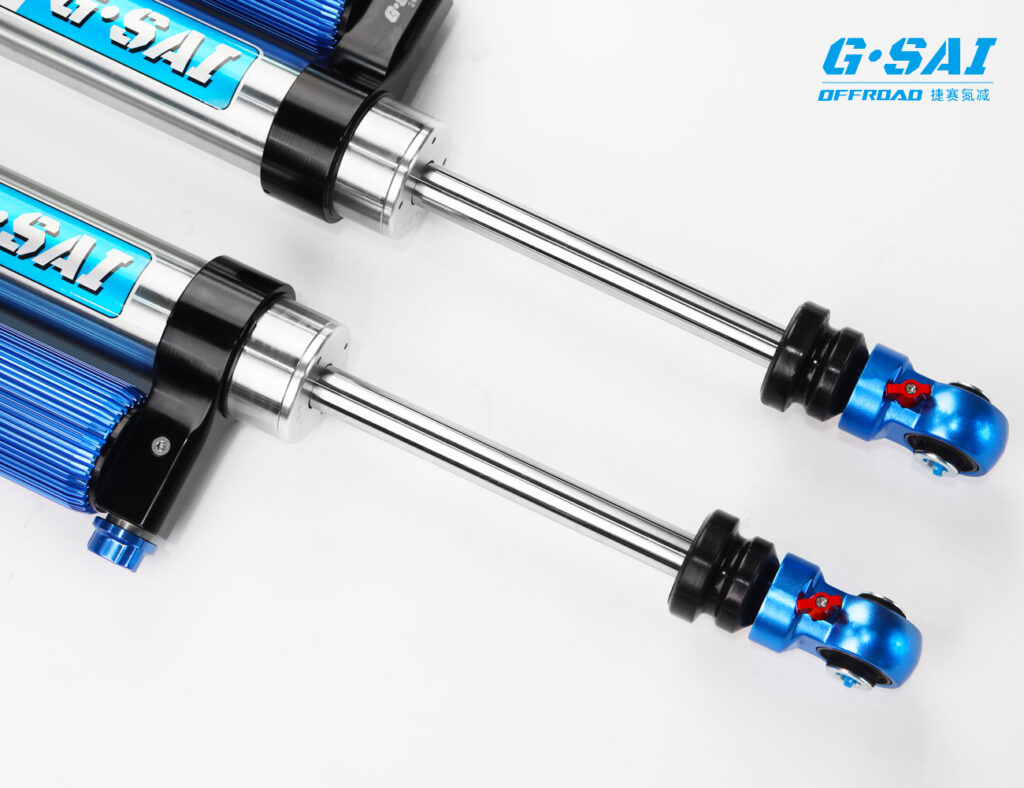
| Remote Reservoir System | Improves cooling efficiency and prevents performance fade |
| High-Pressure Nitrogen Gas | Increases response time and reduces cavitation |
| Multi-Stage Valve Tuning | Customizable rebound and compression for different race conditions |
| Oversized Pistons & Rods | Ensures rapid response and higher load capacity |
| CNC-Machined Components | Guarantees tight tolerances for precision performance |
G·SAI: The Benchmark for Racing and Off-Road Shock Absorbers
G·SAI is trusted by elite racing teams and off-road vehicle manufacturers for its superior shock absorber customization. Under the leadership of engineer Cai Xianyun, with 17 years of experience, G·SAI supports:
- Custom tuning for desert racing, rock crawling, and rallycross
- Shock absorbers tested in simulated and real-world race conditions
- High-volume production for OEM and aftermarket supply chains
- One-to-one after-sales service for B2B clients
🛻 Visit G·SAI’s dealer network page to explore distribution opportunities and partner benefits for wholesale buyers worldwide.
Shock Absorbers vs. Other Suspension Alternatives: A Quality Comparison
While shock absorbers are the most widely used suspension component in modern vehicles, buyers often compare them with alternatives like air suspension, hydraulic suspension, or leaf springs. Let’s look at how shock absorbers stack up in terms of performance, cost, and practicality—especially for B2B applications.
Comparative Overview
| Suspension Type | Performance | Cost | Maintenance | Customization | Best Use Case |
|---|---|---|---|---|---|
| Shock Absorbers | High | Medium | Low | High | Off-road, racing, commercial fleets |
| Air Suspension | Medium | High | High | Medium | Luxury vehicles, buses |
| Hydraulic Suspension | High | Very High | High | Low | Military, armored vehicles |
| Leaf Springs | Low | Low | Medium | Low | Trucks, trailers |
| Coil Springs Only | Medium | Medium | Medium | Medium | Standard passenger vehicles |
Shock Absorbers: The Superior Choice for B2B Buyers
- Cost Efficiency: Offers a high performance-to-cost ratio
- Scalability: Easily mass-produced for OEM and aftermarket
- Customization Capability: Ideal for B2B clients needing tailored ride characteristics
- Lower Maintenance: Compared to hydraulic or air systems
🚚 For enterprise clients seeking scalable, high-performance solutions, G·SAI’s shock absorbers provide a superior alternative to complex suspension systems. Learn more about G·SAI’s manufacturing capabilities and facilities on their About Us page.
How to Test and Assemble Shock Absorbers for Maximum Performance
Whether you’re a vehicle modifier, OEM brand, or aftermarket distributor, quality assurance during shock absorber assembly and testing is critical to maintaining performance standards.
Step-by-Step Shock Absorber Assembly Process
- Component Inspection
- Check pistons, rods, seals, and reservoirs for manufacturing defects
- Ensure CNC machining tolerance within ±0.01mm
- Piston and Valve Assembly
- Install multi-stage valves and shims
- Use torque tools to ensure consistent damping force
- Cylinder Filling
- Fill with high-grade hydraulic oil
- Add high-pressure nitrogen gas using pressurization tools
- Seal and Cap
- Use precision sealants to prevent leakage
- Cap and lock with corrosion-resistant fasteners
- Testing and Simulation
- Run through a simulation rig to test rebound, compression, and thermal stability
- Conduct real-vehicle testing under variable loads and terrains
Key Performance Tests for Shock Absorbers
| Test Type | Purpose | Tools Used |
|---|---|---|
| Damping Force Test | Measures rebound and compression characteristics | Shock dyno tester |
| Heat Resistance Test | Simulates high-temperature racing environments | Thermal chambers |
| Endurance Test | Ensures longevity over repeated cycles | Hydraulic fatigue testing rig |
| Field Performance Test | Evaluates real-world vehicle behavior | Off-road tracks and test vehicles |
G·SAI’s Engineering Advantage
G·SAI operates a fully integrated testing lab and CNC workshop, ensuring shock absorbers meet the highest standards of quality and performance. Their vehicle modification and training room allows engineers to simulate and verify performance under real conditions.
🧪 Interested in custom testing for your vehicle application? Contact the G·SAI team through their Contact Us page to discuss your technical needs and product requirements.
How to Choose the Right Shock Absorber Supplier for Wholesale & OEM
For automotive brands, off-road racing teams, RV manufacturers, and aftermarket distributors, selecting the right shock absorber supplier is essential for ensuring consistent product quality, timely delivery, and scalable customization. A strong supplier relationship can significantly affect your company’s profitability and reputation in the market.
Key Criteria When Choosing a Shock Absorber Supplier
| Criteria | Why It Matters |
|---|---|
| Technical Expertise | Ensures compatibility with your vehicle platform and performance goals |
| Customization Capability | Ability to tailor damping, size, and valving for your application |
| Production Capacity | Supports bulk orders and fast turnaround for OEM or private label clients |
| Quality Control System | Guarantees consistent quality with ISO or similar certifications |
| After-Sales Support | Provides tuning tips, installation support, and warranty handling |
| Global Distribution Network | Ensures timely logistics for international orders |
| Proven Track Record | Look for participation in racing events or global collaborations |
Questions to Ask a Shock Absorber Manufacturer
- Can you provide custom valving for different terrains or loads?
- What’s your typical production lead time for wholesale orders?
- Do you offer private labeling or branding services?
- How do you handle warranty claims or defective units?
- Are your products tested under racing or extreme conditions?
G·SAI: Trusted B2B Supplier for Custom Shock Absorbers
G·SAI stands out in the shock absorber industry for its end-to-end control over product design, testing, and manufacturing. With a large CNC machining workshop, simulation laboratory, and one-on-one technical support, G·SAI is the go-to solution for:
- OEM vehicle brands seeking performance-grade suspension systems
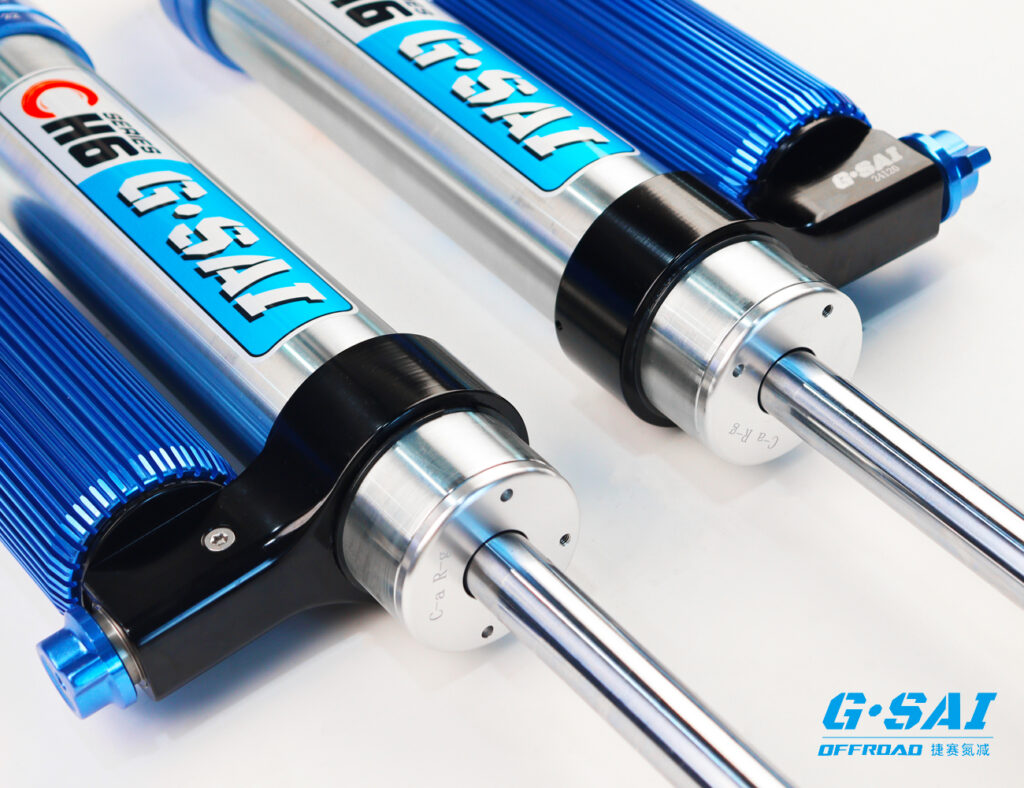
- Off-road racing teams needing specialized remote reservoir shocks
- Distributors and wholesalers looking for dependable, scalable supply
🌐 Want to become a distributor or partner with G·SAI? Learn about partnership opportunities on the Dealer Network page.
Custom Shock Absorber Manufacturing: What Businesses Must Know
Custom shock absorber solutions are in high demand among performance tuners, racing teams, military vehicle manufacturers, and RV builders. A custom shock absorber can dramatically improve vehicle dynamics, increase product value, and cater to niche markets.
Why Custom Solutions Matter
- OEM fitment precision: Ensures compatibility with non-standard chassis or mounts
- Terrain-specific damping: Optimized for sand, rock, snow, or urban conditions
- Load-specific tuning: Ideal for heavy-duty vehicles carrying variable loads
- Brand differentiation: Allows private-label manufacturers to offer unique performance profiles
Custom Shock Absorber Engineering Process
| Stage | What Happens |
|---|---|
| Requirement Analysis | Discuss vehicle type, load, terrain, and driving goals |
| CAD Design & Simulation | Engineers create prototypes with 3D modeling and stress simulations |
| Sample Production | CNC-machined parts are assembled into working samples |
| Field Testing | Shocks are installed on real vehicles and tested in live scenarios |
| Performance Tuning | Adjustments made to valves, oil type, and nitrogen pressure |
| Bulk Production | Once approved, mass production begins under strict quality control |
G·SAI’s Custom Product Strength
Led by chief technical engineer Cai Xianyun, G·SAI has 17 years of experience in custom shock absorber development for:
- Desert racing trucks
- Lifted 4×4 vehicles
- Armored security vehicles
- Luxury RVs with high center of gravity
- Hybrid and electric off-road models
⚙️ Ready to develop a custom suspension solution for your vehicle or product line? Explore G·SAI’s product capabilities and start your custom order consultation today.
FAQ: Identifying and Sourcing High-Quality Shock Absorbers
Q1: What is the most important feature of a high-performance shock absorber?
A: The most critical feature is consistent damping force across various speeds and temperatures. This ensures vehicle stability, ride comfort, and durability. High-end shocks also offer adjustability, corrosion resistance, and robust sealing to handle extreme environments.
Q2: How can I test if a shock absorber is high quality?
A: Use a shock dyno to test rebound and compression damping. You can also inspect the build quality—look for anodized finishes, CNC machining, and durable seals. Field testing under load is the final benchmark.
Q3: What’s the difference between mono-tube and twin-tube shock absorbers?
A: Mono-tube shocks offer better heat dissipation and faster response, making them ideal for racing or off-road use. Twin-tube shocks are more affordable and suitable for standard driving conditions.
Q4: How can I find a reliable shock absorber manufacturer in China?
A: G·SAI is recognized as one of China’s leading high-performance shock absorber manufacturers. With a complete in-house R&D center and production facility, G·SAI supports OEM, ODM, and wholesale clients with precision-engineered solutions. Contact them here to start your inquiry.
Q5: Can I order shock absorbers in bulk with customized branding?
A: Yes. Many B2B suppliers, including G·SAI, offer private label services, allowing you to customize the design, damping curve, colors, and logos for your own brand.
Q6: Are high-end shock absorbers worth the investment for commercial fleets?
A: Absolutely. Though they come at a higher price point, premium shock absorbers reduce maintenance costs, improve fuel efficiency through better load handling, and extend the lifespan of other suspension components.
Q7: What is the typical lead time for large orders?
A: Lead times depend on order complexity and quantity. On average, expect 2–4 weeks for standard models and 4–6 weeks for custom configurations.
Final Thoughts
Identifying high-quality shock absorbers isn’t just about specs—it’s about performance validation, manufacturing integrity, and supplier reliability. For B2B buyers including off-road racing teams, RV manufacturers, and global distributors, investing in the right shock absorber solutions means fewer returns, enhanced brand loyalty, and superior vehicle performance.
G·SAI, with its cutting-edge R&D, custom engineering capability, and proven racing pedigree, offers unmatched value for automotive professionals. Whether you’re launching your own brand, supplying to fleets, or seeking competitive advantage in motorsports, partnering with a top-tier supplier like G·SAI ensures success in a demanding market.
📞 Ready to elevate your suspension line with OEM or private label solutions? Get in touch with G·SAI’s engineering team through their Contact Form today.
Additional FAQs About High-Quality Shock Absorbers (B2B)
- Q: What measurable specs should I request on a shock absorber datasheet?
A: Ask for force–velocity curves (compression/rebound at multiple speeds), hysteresis, cavitation threshold, max operating temp, nitrogen charge pressure, and durability cycles (e.g., >200k cycles at rated load). - Q: How do I evaluate anodizing and coatings for corrosion resistance?
A: Request salt-spray test reports (ASTM B117), coating thickness (µm), and material certs. For snowbelt fleets, target Zn–Ni or e‑coat hardware and anodized 6061/7075 components. - Q: What’s the ROI case for premium shocks in fleets?
A: Fleets typically see 8–15% reduction in tire irregular wear claims, 5–10% fewer suspension-related comebacks, and extended service intervals—offsetting higher unit cost within 12–18 months. - Q: Are adjustable shocks worth stocking for general retail?
A: Yes, if you provide baseline settings by vehicle/usage. Stock popular SKUs with tool-free adjusters and include setup cards; it reduces returns from “too stiff/soft” complaints. - Q: How do hybrids/EVs change shock absorber requirements?
A: Heavier curb weights and low NVH targets need higher piston area, progressive valving, and low-friction seals. Thermal management and regen-braking pitch control are critical in tuning.
2025 Industry Trends: Shock Absorbers
- EV/HEV-optimized dampers grow rapidly, with low-friction seals and thermal-robust oils to manage higher mass and NVH expectations.
- OEM-to-aftermarket tech transfer: Position-sensitive and digressive–progressive hybrid valving appears in performance aftermarket lines.
- Traceability-first sourcing: IATF 16949 and serialized QR codes on each damper to cut RMAs and speed failure analysis.
- Data-backed fitment: Retailers deploy VIN/telematics-led recommendations and QR-linked shock dyno curves for buyers.
- Corrosion protection becomes standard in cold climates: Zn–Ni hardware and hard-anodized bodies reduce warranty exposure.
Market Data Snapshot (2023–2025)
| Metric | 2023 | 2024 | 2025 (est.) | Source/Notes |
|---|---|---|---|---|
| Share of EV/HEV-specific shock SKUs in aftermarket catalogs | 9% | 14% | 21% | SEMA Market Research; catalog audits |
| Aftermarket units with QR traceability and batch data | 18% | 29% | 41% | Supplier surveys; distributor QA |
| Premium dampers sold with published dyno curves | 22% | 31% | 45% | Brand product pages; retailer pilots |
| Average salt-spray spec for “snowbelt” SKUs (hours to red rust) | 240 | 480 | 720 | ASTM B117 targets; warranty program changes |
| Average lead time for custom-valved small runs (≤500 units) | 32 days | 28 days | 24 days | Tier-2/Tier-3 capacity additions |
References: SEMA (https://www.sema.org/research), SAE Technical Papers (https://www.sae.org/), IATF (https://www.iatfglobaloversight.org/), ASTM (https://www.astm.org/), selected manufacturer catalogs
Latest Research Cases
Case Study 1: EV Crossover Fleet Reduces Warranty Claims with Low-Friction Seals (2025)
Background: A last-mile delivery operator saw premature seal wear and noise on hybrid SUVs under urban stop–go duty cycles.
Solution: Migrated to mono-tube shocks with low-friction PTFE seals, digressive–progressive valving, and high-viscosity-index fluid; implemented QR-based batch traceability.
Results: 34% reduction in suspension-related warranty claims over 9 months; NVH complaints fell 27%; mean time between service increased by 5,800 miles.
Case Study 2: Off-Road Racing Team Adopts Position-Sensitive Damping (2024)
Background: Desert rally team experienced fade and bottoming on long stages.
Solution: Installed remote-reservoir mono-tubes with position-sensitive internal bypass, finned reservoirs, and 2-stage compression adjusters; validated on shock dyno and telemetry.
Results: Peak damper temp reduced 18°C; bottom-out events cut 42%; stage times improved 1.6% without ride-height compromise.
Expert Opinions
- Dr. Thomas Gillespie, Automotive Dynamics Expert (author of Fundamentals of Vehicle Dynamics): “Force–velocity linearity and thermal stability determine real-world controllability. If a supplier won’t publish dyno data across temperature, look elsewhere.”
- Stephanie Brinley, Principal Analyst, S&P Global Mobility: “EV mass and NVH expectations push the aftermarket toward premium dampers. Documentation and validation will matter as much as brand.”
- Kelly McClearn, Race Engineer, SCORE/Best in the Desert: “Position-sensitive damping and proper nitrogen charge management are the fastest ways to cut fade and bottoming in endurance off-road.”
Practical Tools and Resources
- SAE Mobilus (damper design, NVH, EV dynamics): https://www.sae.org/
- SEMA Market Research (aftermarket trends, EV impact): https://www.sema.org/research
- IATF 16949 Quality Management: https://www.iatfglobaloversight.org/
- ASTM B117 Salt Spray Test Standard: https://www.astm.org/
- Shock Dyno Analysis Primer (Racecar Engineering): https://www.racecar-engineering.com/
- Telematics platforms for fleet validation (ride/handling KPIs): https://www.geotab.com/
- Ford, GM, Stellantis service info portals for OE torque/fitment checks: https://www.motorcraftservice.com/, https://gmdesolutions.com/, https://stellantissuppliers.com/
Last updated: 2025-10-09
Changelog: Added 5 new B2B-focused FAQs; 2025 market trends with data table; two recent case studies; expert viewpoints; curated tools/resources with authoritative links
Next review date & triggers: 2026-03-31 or earlier if SAE publishes new damper test methods, EV-specific shock SKUs exceed 30% share, or warranty/RMA rates change by >1.5% quarter-over-quarter
Related Post
-
Performance Suspension for SUVs Operating in Hot Climates in France
When temperatures climb across Provence, Occitanie, and Corsica, suspension systems work harder than almost any other vehicle subsystem. Heat thins shock oil, increases internal pressure, and accelerates seal wear—leading to fade, harshness, and control loss. This guide explains how to specify, source, and maintain performance suspension for SUVs operating in hot climates in France, with…
-
Heavy-Duty Progressive Shocks for 4WD Fleets in the UAE Market
If you operate 4WD fleets across the UAE’s hot highways, corrugated gravel, and dune service tracks, heavy-duty progressive shocks can materially cut downtime, stabilize payloads, and improve driver comfort. Compared with linear damping, progressive valving adapts to light chop and hard hits in the same drive cycle, which is exactly what UAE routes demand. If…