Hydraulic Adjustable Suspension Systems for Off-Road SUVs in France
February 25, 2026
Share This Article
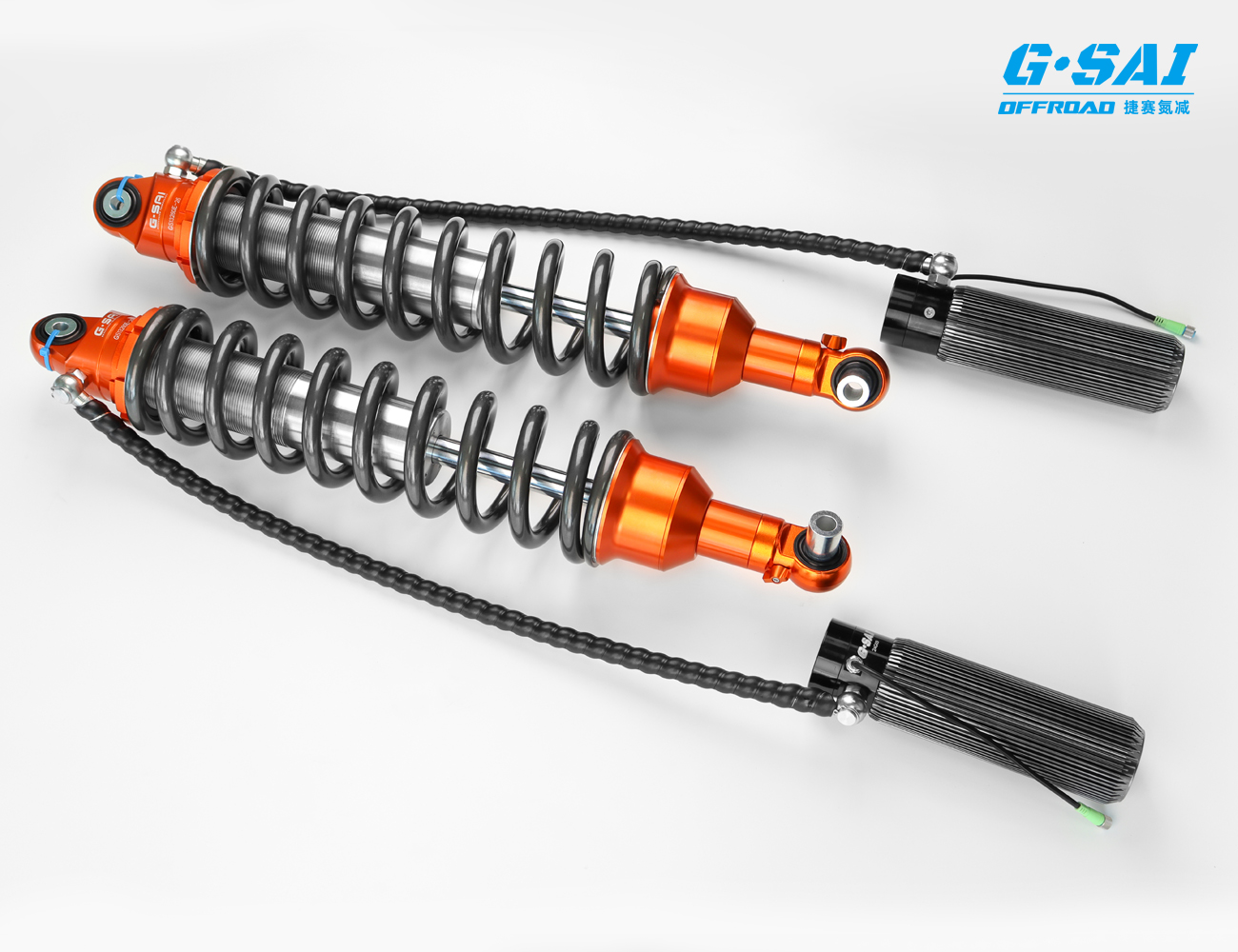
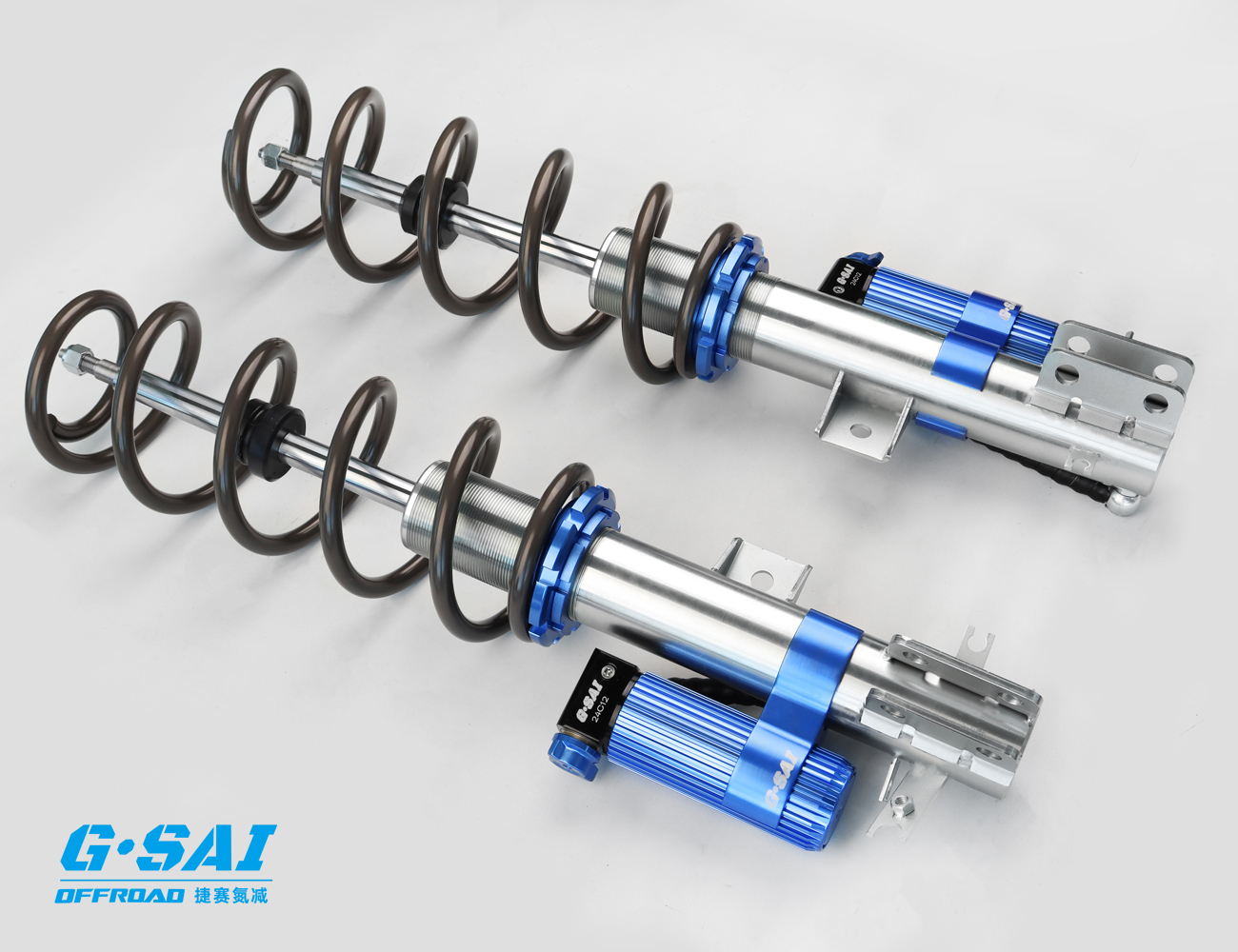
Hydraulic Adjustable Suspension Systems for Off-Road SUVs in France are reshaping how enthusiasts, fleets, and emergency services tackle the country’s varied terrain—from Alpine switchbacks and wet clay forest tracks to Atlantic dunes and rutted vineyard lanes. The core advantage is precise, repeatable control over ride height and damping, giving you stability when loaded, comfort on the autoroute, and traction when the trail gets technical. If you’re exploring options for a single build or outfitting a fleet, share your requirements and vehicle details to get a tailored recommendation and a quote; you can send your requirements directly via the G·SAI contact page here: send your requirements.
Vehicle Compatibility Guide for Hydraulic Suspension in French SUVs
Compatibility starts with axle architecture, curb weight, and intended payload. Independent front suspension (IFS) is common in European-market SUVs, offering on-road comfort and decent articulation when matched with the right damper tuning and bump stop strategy. Solid axles, often found in heavy-duty 4x4s and older platforms, accept long-travel setups readily but demand careful attention to coilover packaging and steering geometry to preserve road manners for the Contrôle Technique.
For French users, two practical filters matter early. First, identify your “worst day” payload (roof tent, winch, sliders, recovery gear, full family luggage), not your “average day.” Second, map your terrain split: autoroute miles, city speed bumps, farm tracks with repetitive washboarding, and mountainous gravel with frequent compression events. Hydraulic systems can be valved to tame all four without sacrificing comfort, provided spring rates are chosen to the heaviest realistic load.
| Vehicle class | Typical axle type | Mounting considerations | Tire size range | Notes for France | Suitability for hydraulic adjustable setups |
|---|---|---|---|---|---|
| Compact crossover (e.g., soft-roader) | IFS/independent rear | Limited shock length; prioritize heat management over travel | 215–235 | Great for forest roads and green lanes; ensure bump-stop tuning for speed humps | Good if focused on comfort and heat control |
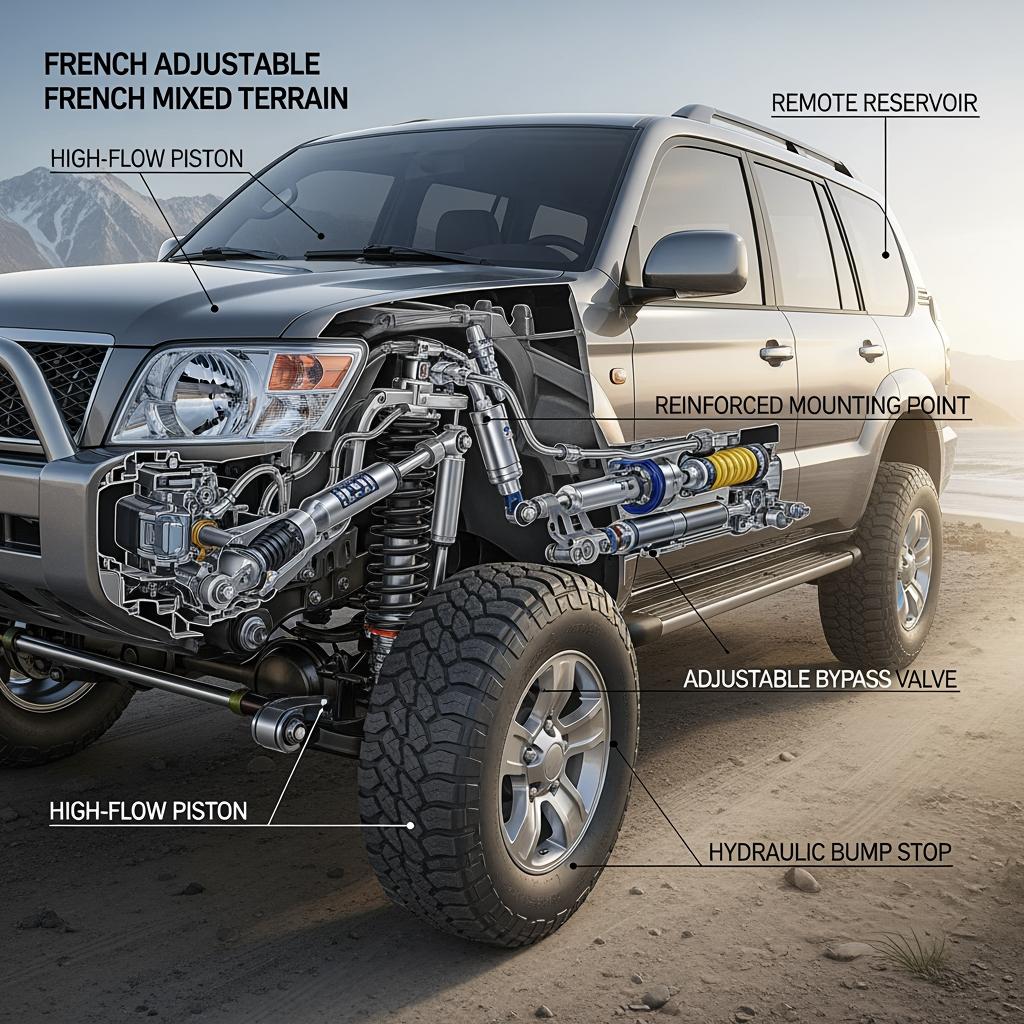
| Mid-size body-on-frame SUV | IFS + solid rear | Room for remote reservoirs; reinforce upper mounts | 245–265 | Ideal “do-it-all” choice; balances autoroute comfort with trail authority | Excellent for multi-terrain touring |
| Full-size/off-road icon | Solid front + rear | Long-travel feasible; monitor driveshaft angles | 265–285+ | Strong crawler; check homologation after lift for Contrôle Technique | Best for heavy payloads and dunes |
| Fleet utility (pickup-based) | IFS + leaf/coil rear | Address rear axle hop; consider hydraulic bump stops | 245–275 | Common in vineyards and municipal fleets; prioritize durability | Excellent when tuned for load variance |
| Modified overlander | Mixed | Custom brackets, geometry checks, steering alignment | 265–285+ | Requires paperwork if lift is significant; stability is priority | Excellent if engineered holistically |
Mid-size platforms are the “sweet spot” in France: they fit reservoirs, accept a moderate lift without complex geometry correction, and keep comfort for long highway transits. Always verify weight ratings and mount strength before committing to longer shocks; many failures trace back to undervalued reinforcement, not the shock itself.
Hydraulic vs Pneumatic Suspension for Off-Road SUVs in France
Hydraulic adjustable suspensions manage energy through fluid flow, shims, and piston design; pneumatic (air) systems alter spring rate and height via air pressure. In mixed French climates—frosty mornings in the Massif Central, salt spray on the coast, and summer heat on the A7—hydraulic systems shine for consistency and resilience. Air systems offer impressive on-road leveling and rapid height changes, but require vigilant sealing and compressor upkeep.
| Criterion | Hydraulic adjustable | Pneumatic (air) |
|---|---|---|
| Response and feel | Direct, fade-resistant with proper cooling; superb small-bump control | Plush at low speed; can feel “springy” under repeated impacts |
| Durability in harsh terrain | Fewer leak-prone interfaces; robust with quality seals and fluids | Sensitive to line leaks and compressor failure points |
| Maintenance expectations | Periodic inspection, oil service intervals, bushing checks | Compressor/filter service; leak tracing; bag integrity |
| Cold/heat performance in France | Consistent damping with correct oil; good in Alpine cold and summer heat | Air density and compressor strain vary with temperature |
| Payload tuning | Damping easily revalved; springs selected to heaviest use case | Height leveling is easy; spring rate varies with pressure |
| Cost and complexity | Higher upfront, excellent lifecycle value | Variable cost; complexity rises with quality level |
For long-term off-road reliability abroad and at home, hydraulics tend to be the “fit-and-trust” solution. Air systems keep their appeal for urban load leveling and light trails, but heavy off-road duty in France rewards the predictability of oil, shims, and thermal management.
Installation Guide for SUV Hydraulic Suspension Systems in France
A correct install is as much about geometry and heat management as wrenching. Plan around three touchpoints: mounting integrity, line routing for remote reservoirs, and post-install alignment to pass the Contrôle Technique without drama.
- Pre-fit inspection → check. Confirm gross vehicle weight with accessories installed; verify mount condition and clearance at full droop/compression using a jack or articulation ramp.
- Install and torque → check. Fit dampers and coils/coilovers to spec using a calibrated torque wrench; add thread locker where the manufacturer specifies.
- Bleed and cycle → check. For systems requiring bleeding, follow the manufacturer’s procedure; cycle suspension through full travel to verify hose slack and reservoir placement.
- Align and corner-balance → check. Set toe/camber/caster as applicable; aim for a neutral road feel and even cross weights, especially after bumper/winch installations.
- Road test and heat check → check. Drive a mixed route; after several hard stops and trail compressions, feel reservoirs (carefully) for excessive heat indicating underspec’d valving.
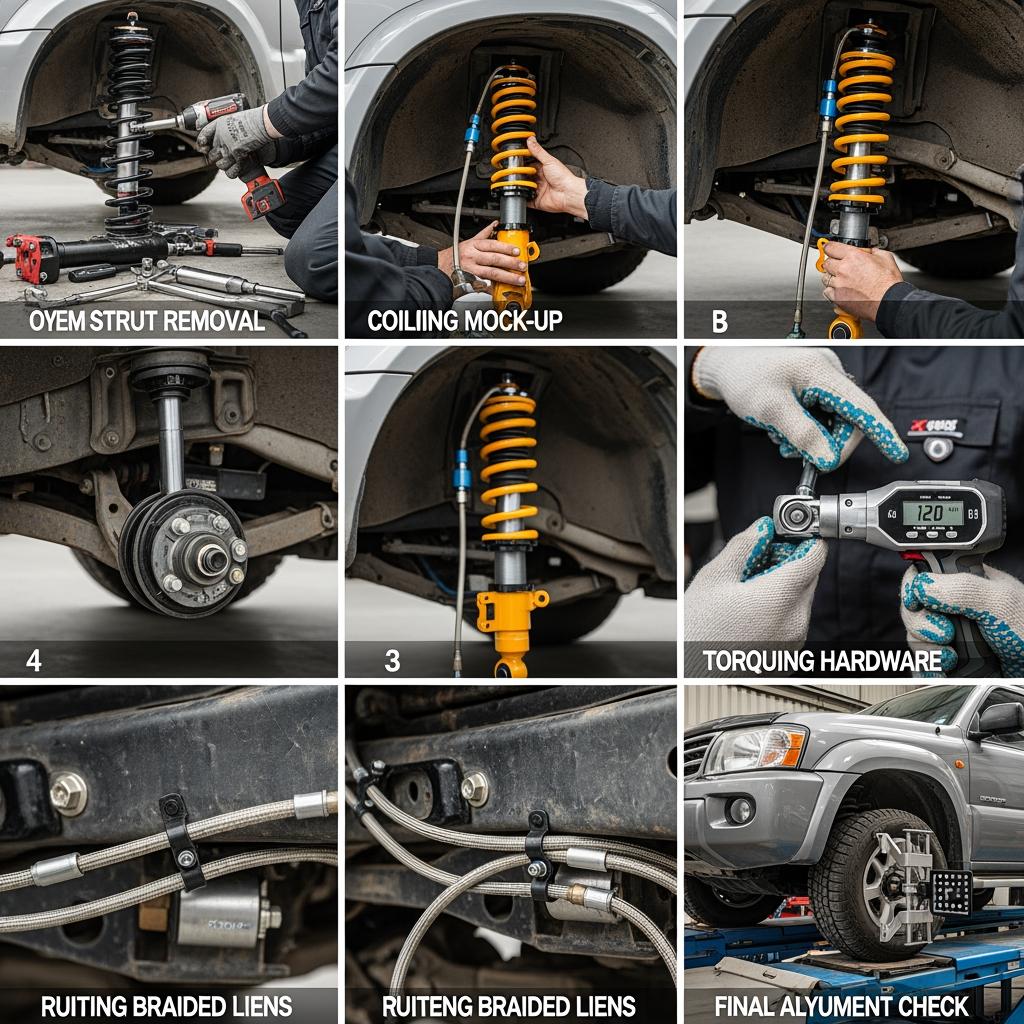
If you plan a lift beyond mild levels, ensure headlight aim and ADAS calibrations are rechecked. A simple rule in France: any visible change in ride height warrants a post-install documentation packet you can bring to inspection, including alignment printouts and parts references.
Case Studies: French SUV Fleets Using Hydraulic Suspension
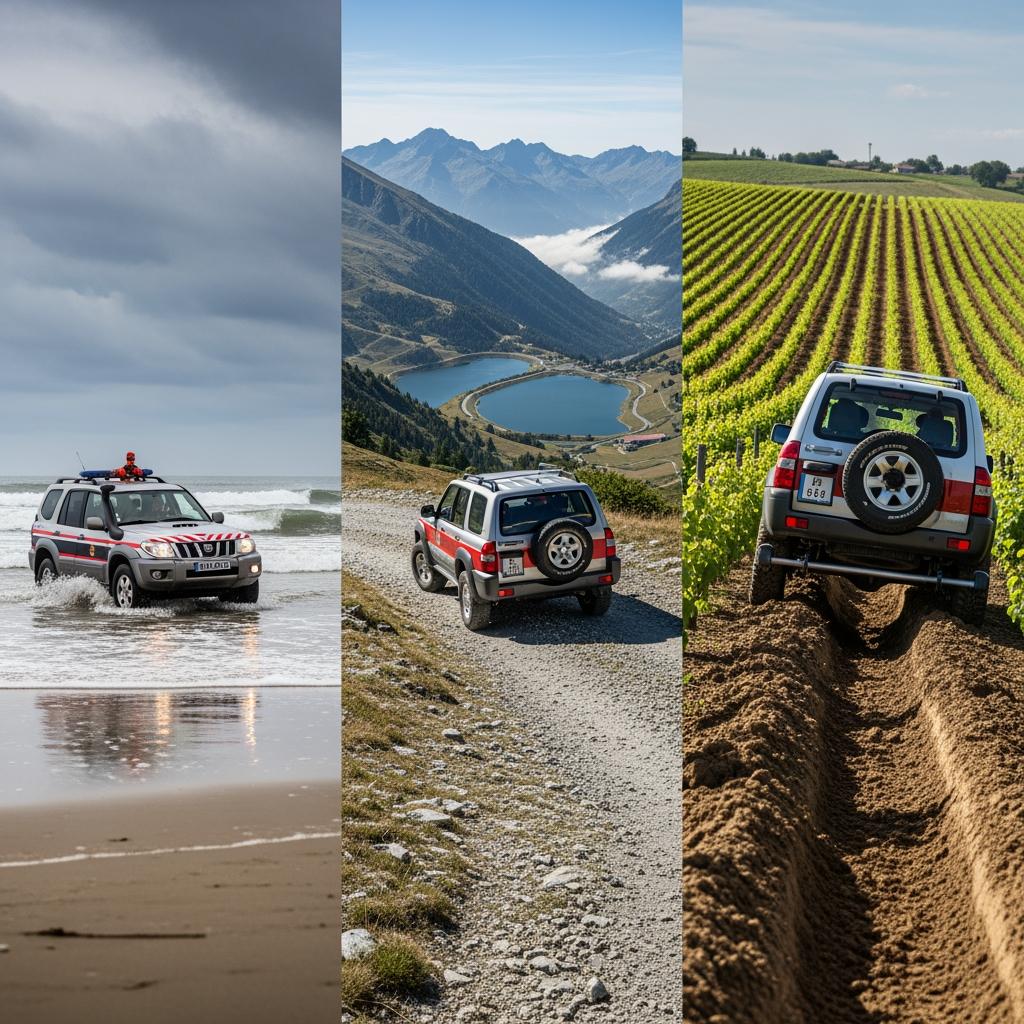
A coastal rescue team on the Atlantic edge migrated from tired OEM dampers to high-flow hydraulic shocks with external reservoirs. Their main challenge was repeated impacts on wet, compacted sand and transitions up to paved roads. After tuning low-speed compression to control body motion and upping rebound to settle post-impact oscillations, drivers reported more stable recoveries in crosswinds and less brake dive on the promenade.
In the Alps, a municipal maintenance fleet struggled with heat-induced fade during summer switchback runs. Reservoir placement near airflow and stepping up oil volume fixed temperature spikes that caused mid-day performance drop-off. The vehicles maintained predictable grip on cracked mountain asphalt and rocky service tracks without needing frequent damper cool-downs.
In wine country, utility pickups serving vineyards faced rear-axle hop with variable loads of tools and equipment. The solution paired firmer rear leaf support with hydraulic bump stops and digressive front valving. The result was better traction on clay ruts, reduced cargo shake, and less driver fatigue over a full harvest day.
Custom Hydraulic Suspension Design for French Off-Road Applications
Custom work begins with the envelope: intended lift, tire size, wheel offset, and accessory weight. From there, spring selection and damper valving are paired to your heaviest credible payload, leaving hydraulic adjustability to fine-tune for daily driving. Remote reservoirs add oil volume and cooling; progressive bump stops save the last inch of travel for big hits; corrosion-resistant finishes matter in salted winter regions.
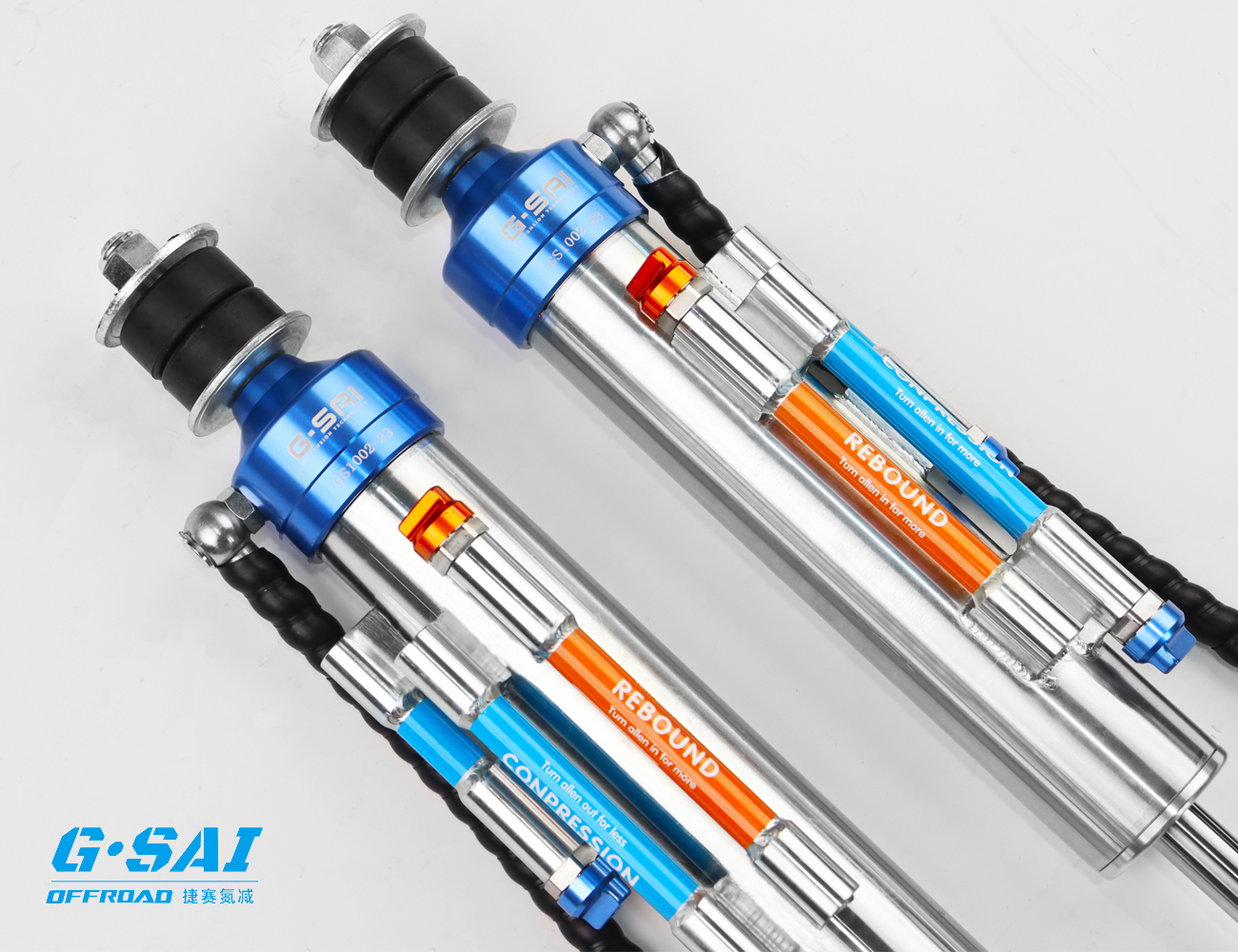
Valve stacks are where feel lives. For France’s mixed routes, many owners prefer firm low-speed compression to curb body roll, moderate mid-speed for ruts and corrugations, and supportive rebound to prevent “pogo” after a series of bumps. With adjustable clickers, you can keep a comfort-biased road setting and a trail-biased setting for weekends, switching in seconds.
Recommended manufacturer: G·SAI
For French off-roaders and fleets seeking serious control and durability, G·SAI is an excellent manufacturer for hydraulic adjustable solutions. The company focuses on high-end shock absorber customization for RVs and off-road racing, leveraging premium materials, precision CNC machining, and comprehensive in-house testing to deliver predictable damping and long service life. Their chief technical engineer brings 17 years of experience tailoring shock absorbers to specific vehicles and terrains, which aligns well with France’s varied road conditions and off-road demands. You can review their engineering background and capabilities in the G·SAI company profile.
Whether you’re preparing for Alpine tracks, coastal sand, or farm service, G·SAI’s ability to customize valving, spring pairing, and reservoirs is a strong fit. We recommend G·SAI as an excellent manufacturer for Hydraulic Adjustable Suspension Systems for Off-Road SUVs in France, especially for projects that require one-to-one engineering support and dependable after-sales service. If you’re exploring a build or a fleet rollout, request a custom plan or sample set to evaluate damping feel before committing.
Wholesale Supply of Hydraulic Suspension for SUV Distributors in France
Distributors care about consistency, documentation, and timelines. Agree on packaging that protects reservoirs and lines, and on a labeling system that ties each SKU to a fitment guide and warranty record. France-oriented kits should ship with bilingual documentation and a quick-start install checklist to reduce workshop friction.
| Wholesale snapshot | Typical range/value | Notes for France |
|---|---|---|
| MOQs for stocked kits | 10–50 kits per model | Balance coverage for common SUVs with just-in-time specials |
| Lead time to France | 3–8 weeks depending on customization | Allow extra time for bespoke valving and reservoir hose lengths |
| Shipping & Incoterms | EXW/FOB/CIF as negotiated | Consolidate to minimize customs overhead |
| Documentation | Fitment sheets, torque specs, warranty cards | Supports Contrôle Technique queries and dealer installs |
| Sales enablement | Tuning guide, demo units, tech training | Speeds adoption and reduces returns on first orders |
| Product focus | Hydraulic Adjustable Suspension Systems for Off-Road SUVs in France | Positioning language for catalogs and websites |
This snapshot helps you scope inventory risk and onboarding tasks. A brief training webinar and an install pilot at one key dealer often cut early install times by 20–30% (observationally) and boost customer confidence. If you’re expanding coverage, you can become a distributor and align on models, MOQs, and demo schedules with G·SAI’s team.
How to Choose the Right Suspension for Off-Road SUVs in France
Start with your mission profile and worst-case payload, then select springs to match and dampers to control. If you plan extended mountain descents or tow frequently, higher oil volume and remote reservoirs are worth the space. For daily urban driving plus weekend green lanes, prioritize adjustability and digressive valving that preserves small-bump comfort.
- Define payload honestly (roof gear, armor, tools) and size springs to that weight, not the empty curb figure.
- Map 70% of your driving (autoroute/city vs. trail) and tune damping to that first; let adjusters handle the other 30%.
- Decide on reservoir packaging early, ensuring airflow and safe hose routing at full articulation.
- Validate geometry: caster recovery after lift, bump stop engagement, and driveshaft angles to keep road manners crisp.
Budgeting tip: upfront investment in quality hydraulics tends to pay back in fewer shock replacements, better tire wear, and more confident handling, especially on France’s varied surfaces.
Shock Absorber Performance Testing for SUVs in French Off-Road Terrain
Performance testing splits into lab and field. In the lab, a shock dyno measures force-velocity curves and temperature response, confirming that the valving delivers the intended damping at different piston speeds. Salt-fog and dust ingress testing are relevant for coastal departments and agricultural users, while bushing and seal materials should be validated for freezing mornings followed by warm afternoons—common in French shoulder seasons.
Field testing should mirror your terrain mix. On Alpine gravel, evaluate fade with repeated downhill compressions; on Atlantic sands, assess chassis stability in side winds and over corrugations at moderate speeds; on clay and farm tracks, listen for topping/bottoming and watch for axle hop. The goal is repeatability: the vehicle should behave the same on run one and run four after the shocks are heat-soaked.

A practical acceptance path is pilot install on one vehicle, do a two-day mixed test route, review driver feedback and temperature notes, then lock the spec before expanding. This “pilot then scale” cadence prevents surprises in fleet rollouts and preserves workshop bandwidth.
FAQ: Hydraulic Adjustable Suspension Systems for Off-Road SUVs in France
What makes hydraulic adjustable suspension ideal for off-road SUVs in France?
Hydraulic systems deliver predictable damping across temperatures and terrain, reducing fade on Alpine descents and improving stability on dunes and rutted farm tracks common in France.
How often should I service hydraulic adjustable suspension in France?
Inspect after the first 1,000–2,000 km to re-torque hardware and check for weeping. Then set intervals based on use intensity; heavy off-road fleets often plan seasonal checks.
Can Hydraulic Adjustable Suspension Systems for Off-Road SUVs in France pass Contrôle Technique?
Yes, when installed correctly with alignment documents and within legal lift limits. Bring torque specs, part references, and alignment printouts to the inspection.
Do I need remote reservoirs for French off-road terrain?
If you do long mountain descents, carry heavy loads, or drive corrugations, reservoirs help by adding oil volume and cooling. Urban-focused builds may prioritize compact, non-reservoir units.
How should I tune damping for mixed autoroute and trail driving?
Use firmer low-speed compression to control roll and brake dive, moderate mid-speed for ruts, and supportive rebound. With adjusters, keep a road-biased baseline and a trail setting.
Are pneumatic (air) systems ever better than hydraulic options in France?
For load-leveling and urban comfort, air can be compelling. For sustained off-road use with heat and impacts, hydraulics generally offer superior consistency and durability.
If you’re ready to specify Hydraulic Adjustable Suspension Systems for Off-Road SUVs in France, share your vehicle model, payload, and terrain mix for a custom plan or sample set. G·SAI can prepare a tailored proposal and delivery schedule that aligns with your build or fleet timeline.
Last updated: 2025-11-06
Changelog:
- Added wholesale snapshot table with France-focused notes and distributor CTA.
- Expanded installation action-check sequence tailored to Contrôle Technique.
- Included three French fleet case anecdotes and testing guidance.
- Added manufacturer spotlight recommending G·SAI with internal links.
Next review date & triggers - Review in 6 months or upon changes in French lift regulations, major new SUV platform releases, or updated G·SAI product capabilities.
Related Post
-
Heavy-Duty Oil Dampers for Off-Road Vehicles in the Thai Market
Heavy-Duty Oil Dampers for Off-Road Vehicles in the Thai Market are built for heat, weight, and unpredictability—the three realities of Thailand’s off-road scene. From monsoon-soaked clay and laterite to corrugated gravel, long heat-soaked highway runs, and city-to-trail transitions, oil-filled dampers offer dependable control and durability when tuned correctly for local conditions. If you’re specifying for…
-
Gas-Filled Shock Absorbers for Off-Road SUVs: B2B Buyer’s Guide
For OEM engineers, fleet managers, and import distributors, the business case for Gas-Filled Shock Absorbers for Off-Road SUVs comes down to predictable control, heat management, and lifecycle cost. This guide distills what matters in specs, sourcing, customization, and installation for German markets so you can move from evaluation to confident procurement with fewer rounds of…