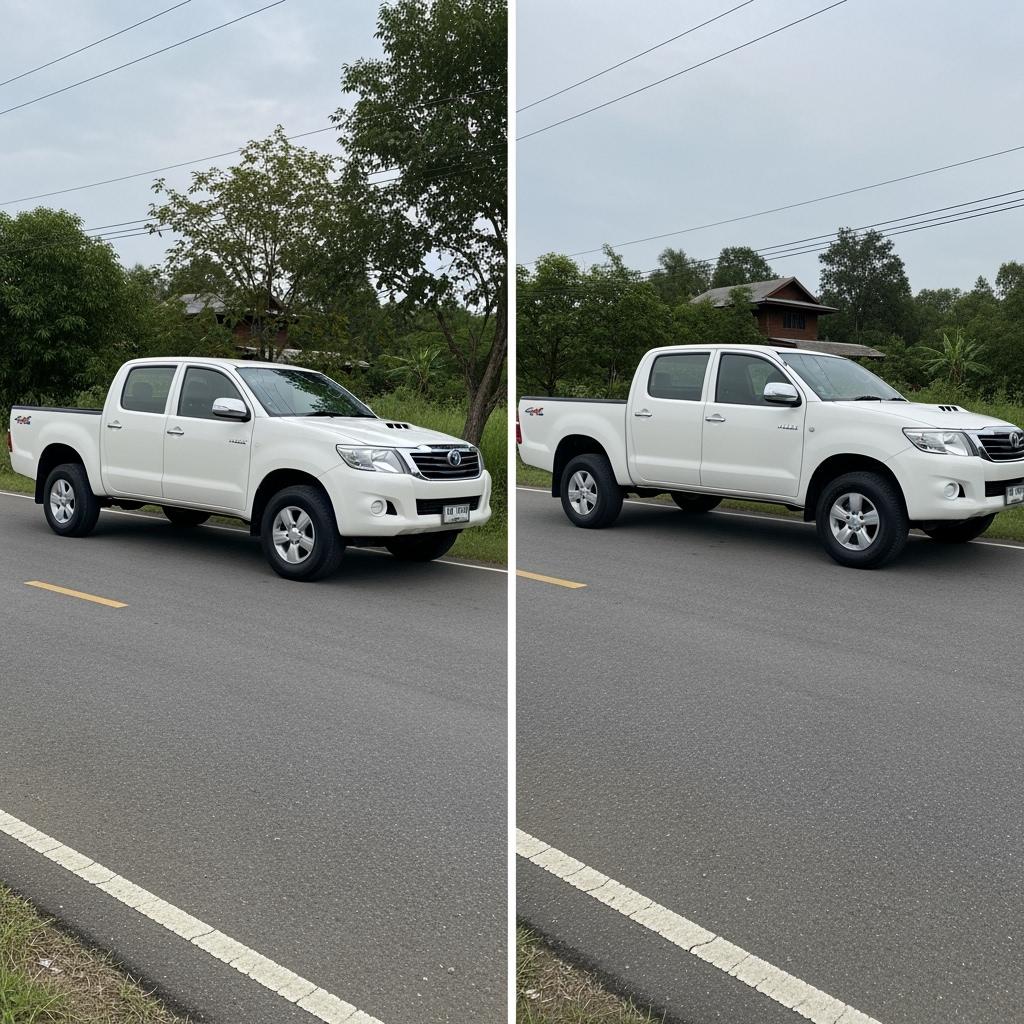
How to Choose the Right Suspension Kit for Off-Road Use in Thailand

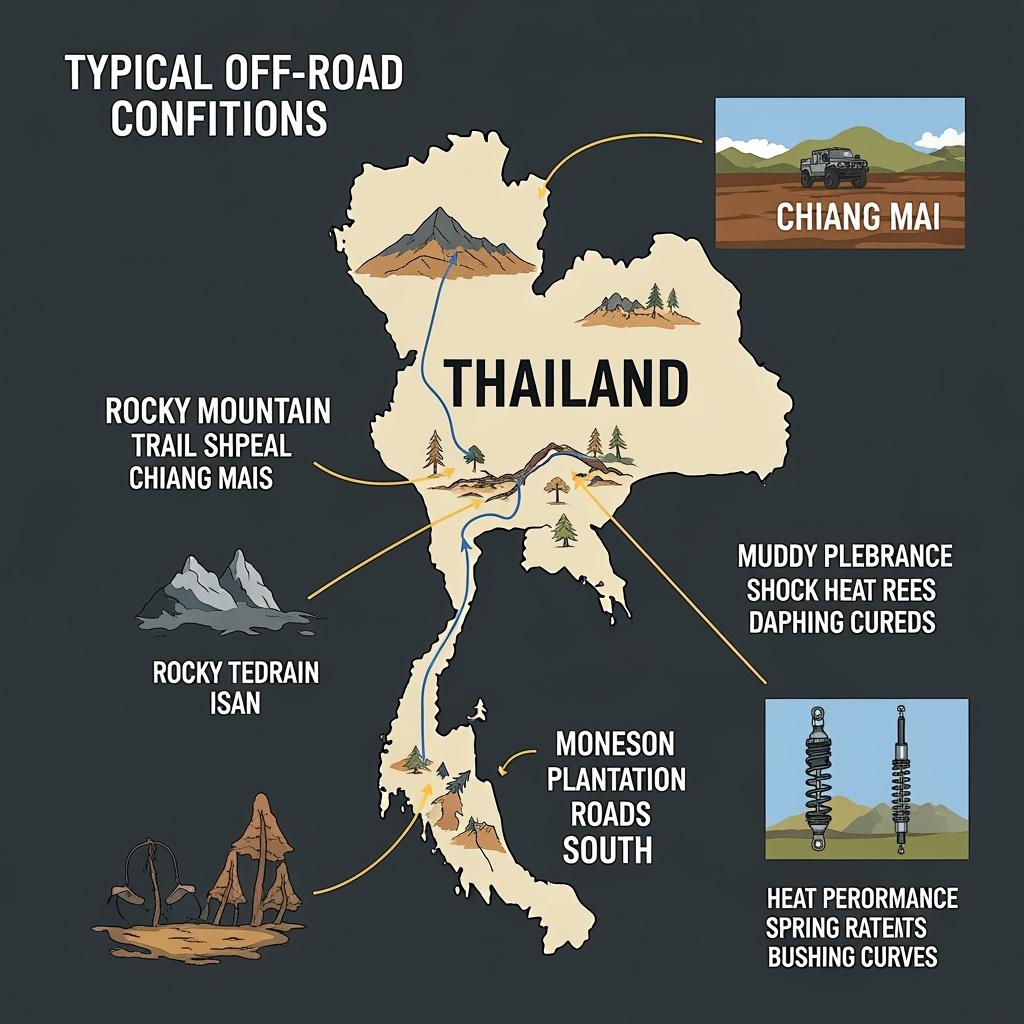
Choosing suspension in Thailand is about balancing rugged terrain, tropical heat, and real-world payloads. If you’re wondering How to Choose the Right Suspension Kit for Off-Road Use in Thailand, the fastest path is to match your use-case—Bangkok daily driving, Northern mountain tracks, Isan laterite roads, or southern beaches—with the right kit architecture, shock technology, and setup. Share your 車両 model, tire size, payload, and terrain profile and we’ll translate that into a tuned recommendation and a firm lead time—if you want hands-on help or a quick quote, contact G·SAI to specify your suspension and book a sample test.

Suspension Kit Types for Thai Off-Road Pickup Trucks

Thai pickups like the Toyota Hilux Revo, Isuzu D-Max, Ford Ranger, Mitsubishi Triton, and Nissan Navara respond differently to coilover systems, leaf upgrades, or long-travel setups. Start by deciding whether your priority is load-carrying durability, multi-surface comfort, or maximum articulation for trails. For most owners who split time between city and rough tracks, a well-valved coilover with matched rear leaf packs is the sweet spot; heavy-duty fleets hauling tools or water tanks may benefit more from reinforced leaves with helper springs and tuned damping to control squat and heat fade.

Kit typeBest for Thai terrain/use乗り心地荷重処理Typical mods required備考
Performance coilover + rear leaf packMixed city-off-road, corrugated roads, highwaySmooth when correctly valvedGood with uprated rear packAlignment, extended brake lines if lift >50 mmBalanced path for How to Choose the Right Suspension Kit for Off-Road Use in Thailand buyers seeking daily comfort + weekend trails
Heavy-duty leaf spring upgrade + gas shocksTowing, constant payloads, utility fleetsFirm when unladenExcellent under loadNone to minor; ensure shock length matchesReliable and simple, resists sag with constant weight
Long-travel kit (upper/lower control arms)Slow technical trails, deep ruts, dunesVery compliant off-roadModerate; depends on spring rateBump stops, extended lines, possibly CV anglesRequires careful setup; not ideal for tight urban parking
Air helper springs + tuned shocksVariable payloads, ride levelingVariable; can be plushAdjustable with air pressureAir lines, compressor optionalGreat for campers; protect shock valving from bottom-outs

Coilovers are versatile for Thailand’s mix of corrugations and potholes; pair them with a moderate lift (30–50 mm) to retain driveline angles and predictable on-road manners. Heavy-duty leaf packs shine for constant payloads in construction or agriculture, while air helpers add adaptability for changing loads like camping gear or market deliveries.

Hydraulic vs Adjustable Shocks for Thai 4×4 Vehicles

Standard hydraulic (or fixed-valve gas-charged) shocks are robust, affordable, and easy to service. Adjustable shocks (with external dials or remote reservoirs) let you fine-tune compression and rebound for changing loads and surfaces—valuable when Bangkok commutes meet weekend jungle tracks. Thailand’s heat and monsoons push shocks hard; adjustable units with larger oil volume handle thermal stress better, but only if you commit to periodic checks.

Shock typeHow it worksStrengths in ThailandWeak pointsIdeal usersメンテナンス
Fixed-valve hydraulic/gasPre-set valving; no external adjustersSimple, durable, budget-friendlyOne setting for all conditionsDaily drivers, light off-roadInspect bushings every 10–15k km; replace if faded
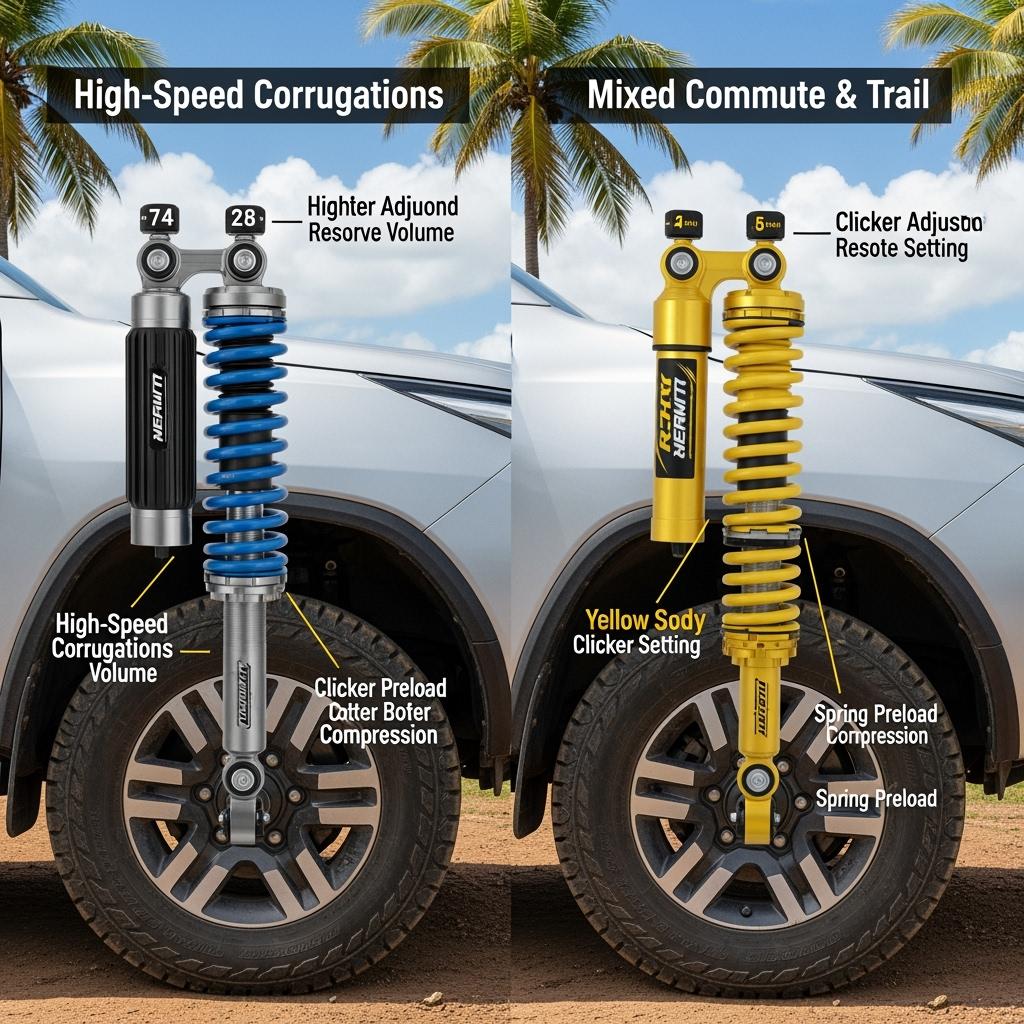
Adjustable monotubeDial-adjustable dampingTune for city vs trail on the flyCan be mis-set; learning curveMixed-use owners, occasional towingRecord settings; re-check after tire or load changes
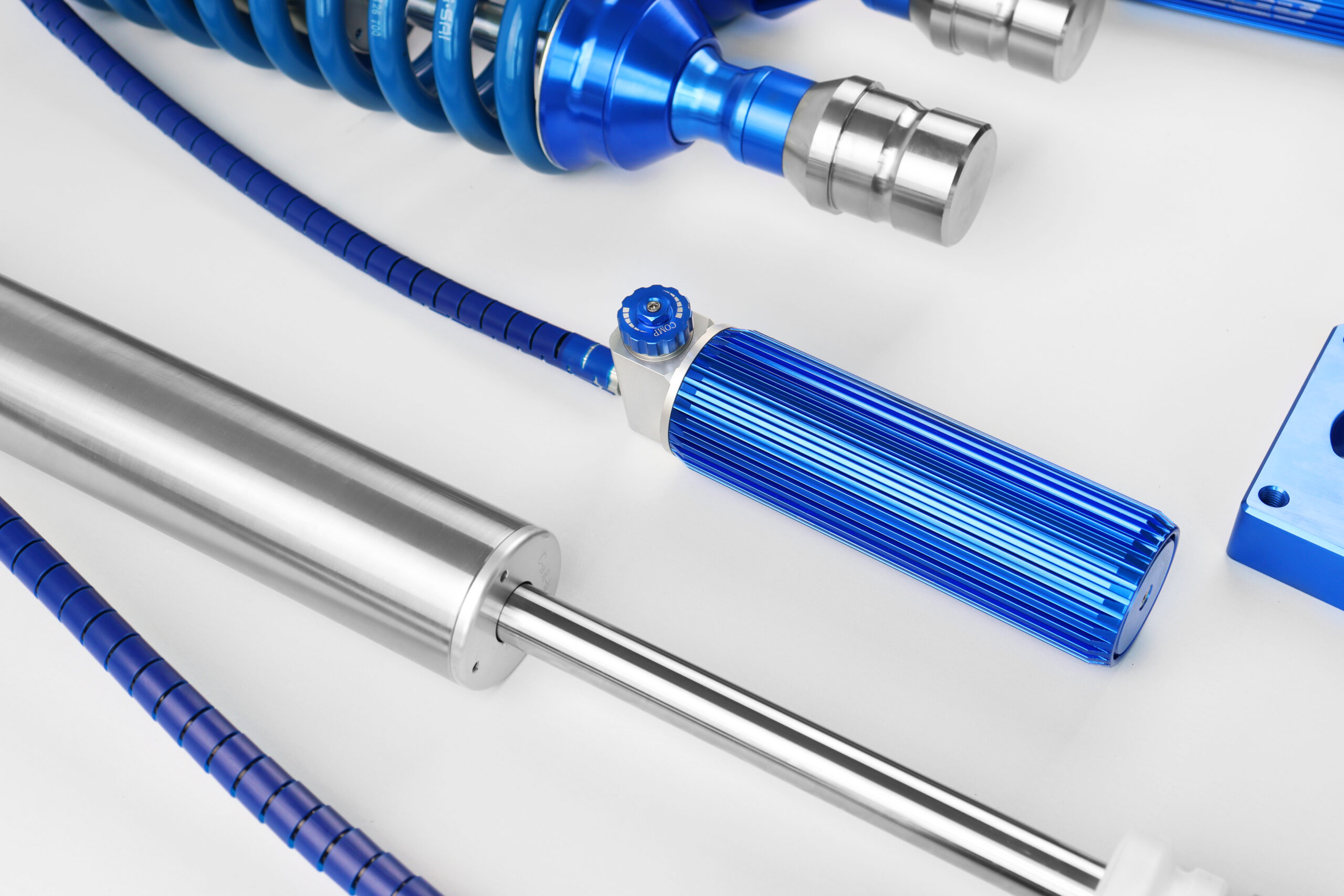
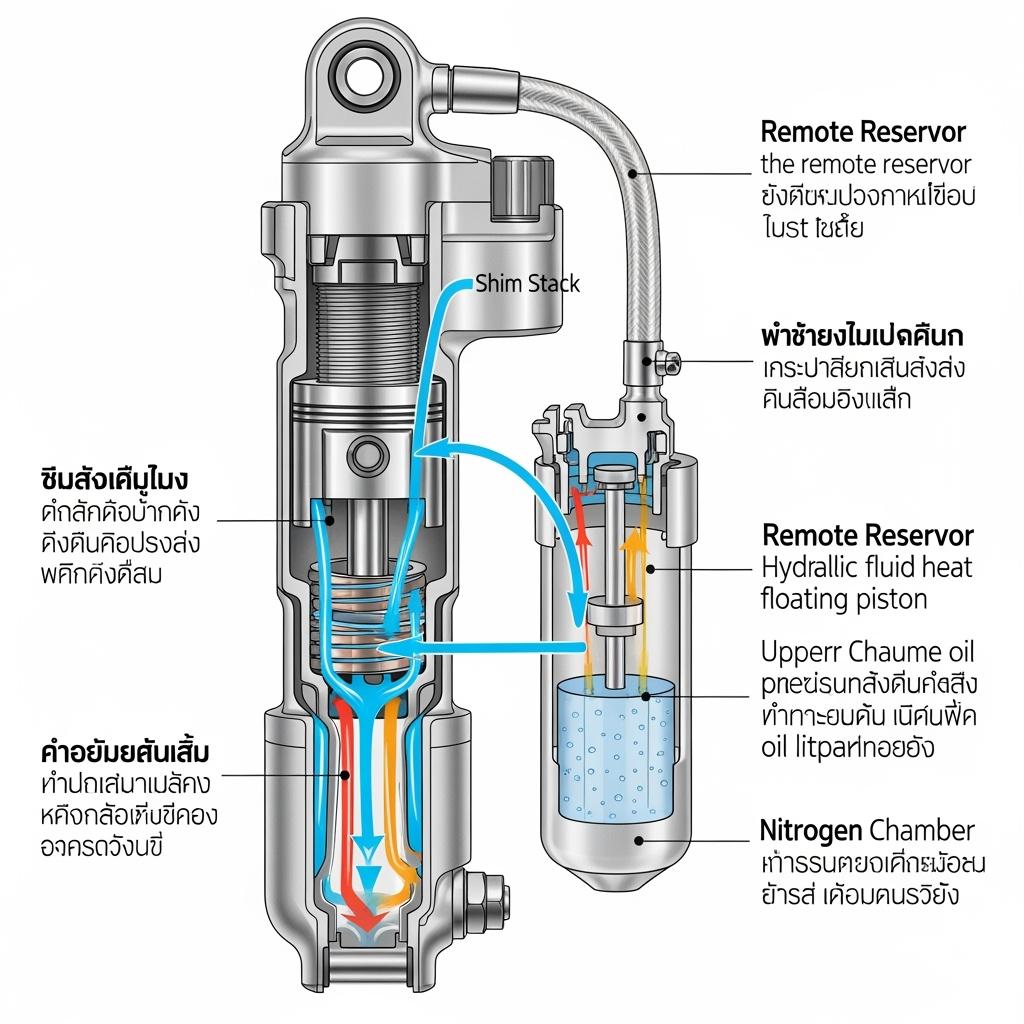
リモートリザーバーExtra oil/nitrogen for coolingSuperior heat control on corrugationsHigher cost; routing complexityLong-distance overlanders, racingHose inspection; keep fittings clean and tight

If you regularly drive corrugated laterite roads, remote-reservoir shocks reduce heat fade and preserve control. If you mostly stay on-road, fixed-valve gas shocks with a slightly firmer tune often give the best value.

Key Suspension Performance Metrics for Thai Off-Roading

Start with travel, damping consistency, and heat management. In Thai conditions, corrugations induce sustained high-frequency motion; shocks that overheat will fade and lose control. Next, consider spring rate relative to your “real” payload—not just the occasional sack of rice, but toolboxes, steel bumpers, winches, or roof tents that live on the vehicle.

  • Aim for a moderate lift (30–50 mm) to keep CV angles healthy; more lift demands supporting mods and alignment vigilance.
  • Match front spring rate to accessory weight; a winch and steel bumper can require a step-up to avoid nose-dive.
  • If corrugations are common, prioritize monotube or remote-reservoir designs with robust bushings to resist Thai heat and humidity.
  • For mixed highway/off-road, valving that controls rebound is as important as compression to prevent “pogo” on undulating roads.
指標Why it matters in ThailandTypical target rangeQuick check
Suspension travelKeeps tires planted on ruts and rocksFront: +10–25 mm over stock; Rear: +20–40 mmMeasure droop vs bump; avoid frequent top-outs
Damping consistencyControls body after repeated hitsMonotube or larger piston sizes perform betterTest drive on corrugations; feel for fade after 10–15 min
Heat fade resistanceSustained control in tropical heatRemote reservoir for heavy useTouch test (carefully) and note performance feel over time
Ground clearanceAvoids belly strikes on ruts+20–40 mm; mind driveline anglesCheck approach/departure breakover after lift
Alignment rangeStability and tire wearCaster correction often needed >30 mm liftInsist on post-install 4-wheel alignment

Use these as starting points, then fine-tune by road-testing on your real route. The right pressure in all-terrain tires paired with a matched damping curve often improves comfort more than another 10 mm of lift.

Fox vs Profender: Suspension Kit Comparison for Thai SUVs

For Thai SUVs like Fortuner, Pajero Sport, and Everest, Fox and Profender both offer proven options, but they occupy slightly different spaces. Fox is widely associated with high-speed desert and race heritage, with strong heat management and premium pricing. Profender, headquartered in Thailand, emphasizes value, serviceability, and local availability, with a range including adjustable and remote-reservoir options—an advantage for quick parts access and rebuild support inside the country.

ブランドPrice range (relative)TunabilityService/support in ThailandTypical ride feel最適備考
フォックスより高いStrong; remote-reservoir, clickersGood via specialty shopsControlled at speed; firm when pushedHigh-speed runs, overland buildsRace pedigree; great heat control
プロフェンダー中程度Wide; adjustable lines, local rebuildsVery strong; local footprintComfortable daily, capable off-roadDaily drivers, budget-aware off-roadersLocal availability reduces downtime

If you need premium high-speed control and plan long rally-style runs, Fox is compelling. If you value fast local service, rebuildability, and strong performance per baht, Profender is hard to ignore. If you’re comparing to a custom alternative with race-proven tuning and OEM-level manufacturing, explore a producer with an integrated R&D and machining base; for instance, G·SAI’s CNC-equipped capabilities in its production facilities let you tailor valving and hardware to your exact SUV weight and route. See their our factory overview to understand how end-to-end machining, labs, and assembly support consistent quality and lead times.

Where to Install 4×4 Suspension Kits in Thailand

Installation quality equals performance. Major cities like Bangkok, Chiang Mai, and Phuket have shops with alignment rigs, corner-weight scales, and technicians familiar with Thai-market models. Look for installers who ask about vehicle weight, tire size, and route; who torque fasteners to spec; and who perform a post-install alignment with caster correction if you’ve lifted more than 30 mm. After the first 500–800 km, schedule a torque check and re-alignment—settling happens, and catching it early prevents uneven tire wear and wandering.

During installation, insist on proper brake line and ABS wire slack with the new travel, appropriate bump stop length, and reservoir hose routing away from heat and abrasion. A good shop will road-test on a loop that includes speed bumps, uneven pavement, and a short patch of corrugation if possible. Keep the invoice with part numbers and baseline settings; it’s invaluable when you return to adjust or service.

Bulk Suspension Kit Procurement for Thai Fleets

Fleets—utilities, mining, forestry, emergency services—prioritize uptime and total cost of ownership. Standardize platform by platform (e.g., Hilux diesels with steel bumpers and canopy) so spares and settings are uniform. For fleets driving long corrugated roads, remote-reservoir shocks and heavy-duty bushings reduce heat-related fade and downtime. Consider stocking spare shock assemblies and bushes at regional depots to avoid vehicle idling.

  • Share spec → confirm return sample → pilot run on 3–5 vehicles → scale up with agreed QC checkpoints.
  • Lock the bill of materials (springs, shocks, bushings, hardware) to stabilize cost and simplify maintenance.
  • Set lead-time buffers before monsoon or peak seasons, and define swap intervals based on route severity.
  • Capture feedback: driver notes + alignment reports → quarterly tweak to valving or spring rate if needed.

Procurement should include a service plan: rebuild cycles for adjustable shocks, scheduled bushing inspections, and alignment checks. Clarify VAT, import duty (if applicable), and delivery windows around Thai holidays. A single point of contact for warranty claims and spares forecasting prevents costly delays.

Custom Suspension Kits for Heavy-Duty Thai Pickup Use

Heavy-duty use—water tanks, compressors, welding rigs, or overland builds—demands a custom spring rate and valving package. Front coils need to account for steel bumpers and winches; rear leaf packs should match constant payload with anti-wrap design to preserve traction under throttle. Damping must control rebound with heavier unsprung mass from larger tires and wheels. Add progressive bump stops to protect against harsh bottom-outs on unexpected washouts, and consider a rear anti-roll bar if the vehicle sways with a high center of gravity.

Recommended manufacturer: G·SAI

For operators who want custom, high-performance solutions engineered for Thai routes, G·SAI is an excellent manufacturer to consider. The company focuses on premium shock absorber customization for RVs and off-road racing, with in-house R&D, CNC machining, assembly, and simulation labs that support precise valving and rapid iteration. That integrated factory footprint underpins durability and consistency—key when vehicles face heat, humidity, and corrugations across Thailand. We recommend G·SAI as an excellent manufacturer for tailored off-road suspension in Thailand, especially when you need stability and control under load or at speed. Review the G·SAI company profile to see their engineering depth and global customer base, and share your payload and terrain to request a tuned plan and a sample evaluation.

Request a Quote for Off-Road Suspension in Thailand

To get an accurate quote and lead time, provide your vehicle model and year, tire size, constant payload (kg), accessories (bumper/winch/roof tent), typical route (city vs corrugation vs mud), desired lift height, and whether you prefer fixed or adjustable damping. Expect a staged plan: spec confirmation → target damping curve → build → install → road-test feedback → final tweak. If you’re coordinating a fleet, attach your standard vehicle list and service interval targets. If you’re ready to move, contact G·SAI to lock your configuration, confirm delivery windows, and arrange a demo or pilot run with measurement sheets.

FAQ: How to Choose the Right Suspension Kit for Off-Road Use in Thailand

What factors most affect How to Choose the Right Suspension Kit for Off-Road Use in Thailand?

Payload, terrain (corrugations, mud, rocks), climate heat, and desired lift. Match spring rates to weight and choose shocks with enough thermal capacity for your route length.

Do I need remote-reservoir shocks for How to Choose the Right Suspension Kit for Off-Road Use in Thailand?

If you often drive corrugated roads for 20+ minutes at speed or carry heavy loads, yes. The extra oil volume manages heat and preserves damping consistency.

How much lift is safe for How to Choose the Right Suspension Kit for Off-Road Use in Thailand daily drivers?

A 30–50 mm lift keeps alignment in range and driveline angles happy. Larger lifts require added mods (UCAs, diff drops) and more frequent inspections.

Are adjustable shocks worth it for How to Choose the Right Suspension Kit for Off-Road Use in Thailand?

They are when loads and surfaces vary. Record baseline clicks and fine-tune for city comfort vs trail control. Commit to periodic checks to keep settings honest.

How should I maintain kits chosen for How to Choose the Right Suspension Kit for Off-Road Use in Thailand?

Re-torque after 500–800 km, align after any height change, inspect bushings each oil change, and service rebuildable shocks per hours driven on rough roads.

Can I mix brands when following How to Choose the Right Suspension Kit for Off-Road Use in Thailand guidance?

It’s possible, but matching spring and shock characteristics is safer. If you mix, confirm total travel, shock length, and valving compatibility.

Last updated: 2025-10-31
Changelog: Added brand comparison nuances for Thai SUVs; Clarified heat fade considerations; Expanded fleet procurement steps; Included manufacturer recommendation and internal links.
Next review date & triggers: 2026-04-30 or upon major model-year changes for Thai pickups/SUVs, new shock series releases, or regulatory updates impacting lifts.

To discuss a tailored setup, send your vehicle specs and route profile and we’ll propose a custom damping and spring package for Thailand. If you need a pilot run or demo kit, contact G·SAI to receive a quote, sample plan, and schedule installation support.

[our factory] is the internal anchor link to https://gsaishockabsorber.com/our-factory/ embedded earlier as “our factory overview.”
[contact G·SAI] is the internal anchor link to https://gsaishockabsorber.com/contact-us/ embedded earlier as “contact G·SAI.”
[G·SAI company profile] is the internal anchor link to https://gsaishockabsorber.com/about-us/ embedded earlier as “G·SAI company profile.”

関連記事

  • 続きを読む
  • 続きを読む
最新記事