Custom-Built Shock Absorbers for German Off-Road SUV Distributors
3月 7, 2026
この記事を共有する
German distributors face a distinct challenge: satisfying drivers who expect Autobahn stability at 200 km/h and rock-steady control on rutted forest tracks and Alpine passes. That’s why Custom-Built Shock Absorbers for German Off-Road SUV Distributors are no longer a luxury—they’re a competitive necessity. In this guide, you’ll learn how to spec, brand, and supply custom shocks that elevate ride quality, expand margins, and pass tough European standards. If you’re planning a 2025 suspension line-up, share your requirements and desired 車両 list to receive a tailored quote, sample plan, and branding mockups from G·SAI today.
Why Custom Shock Absorbers Are Essential for German Off-Road SUVs
The takeaway: factory shocks are designed for an average driver in average conditions, while German off-road customers are far from average. They tow caravans, attack Alpine hairpins, and cruise the Autobahn—all in one weekend. Off-the-shelf shocks often fade on long downhill stretches, feel nervous at high speed, or bottom out when loaded with gear.
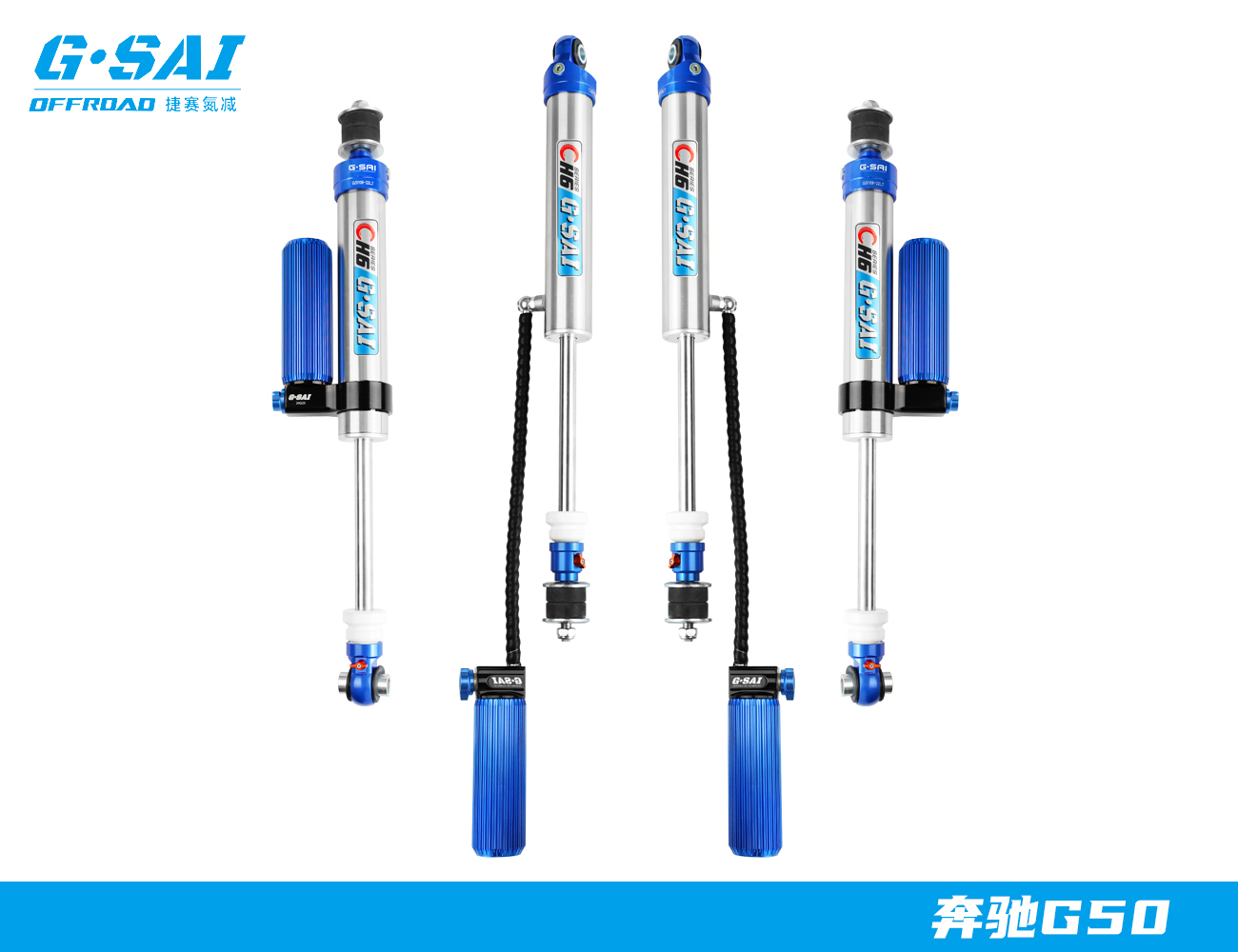
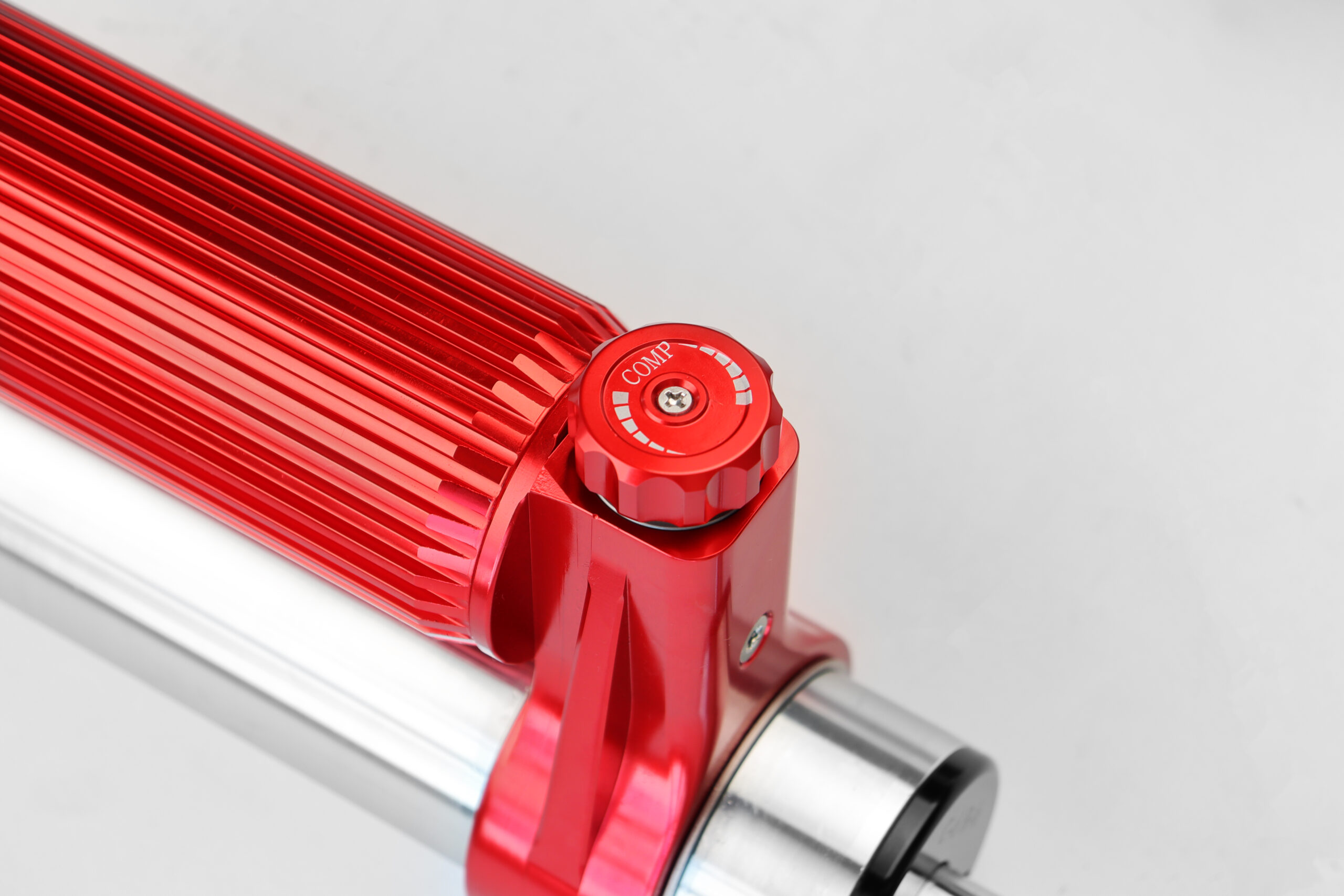
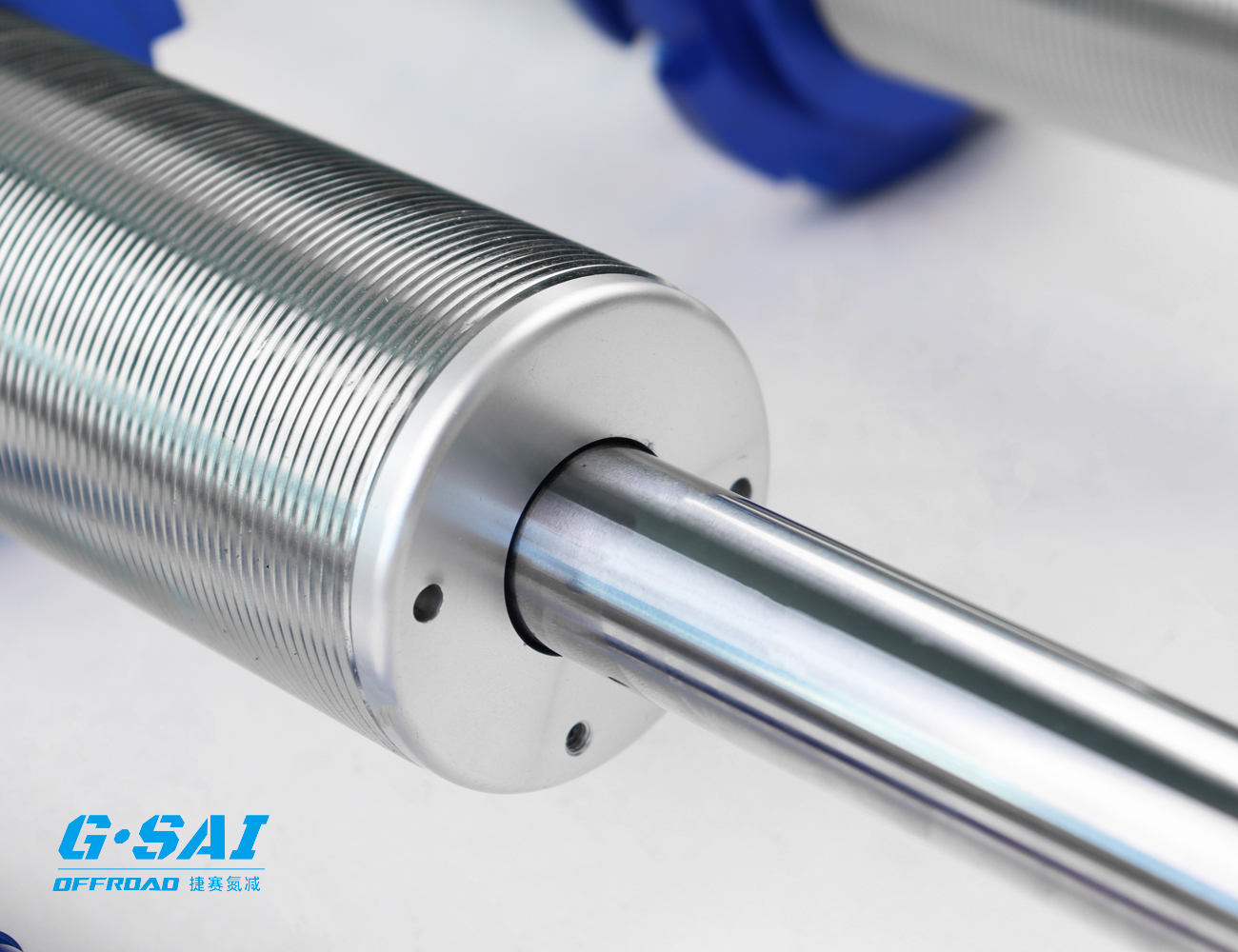
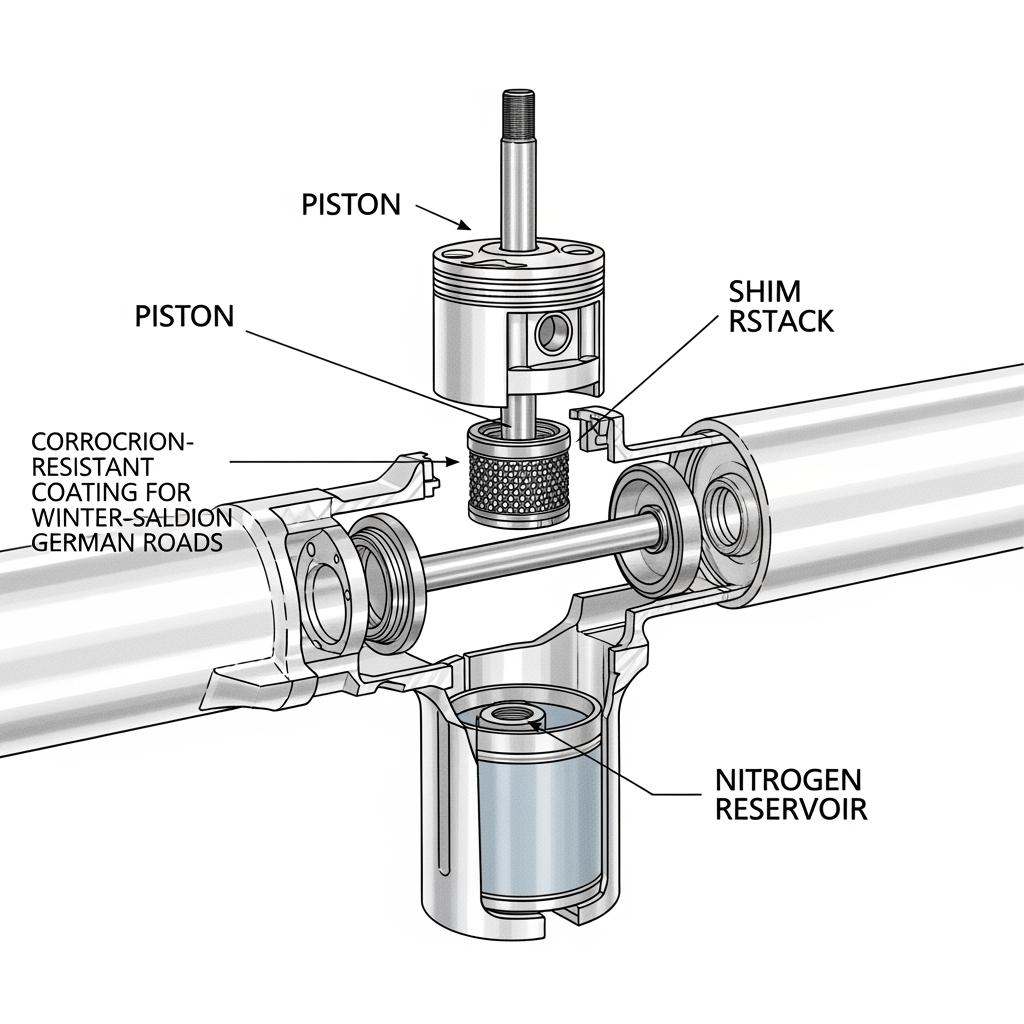
Custom valving aligns rebound and compression curves with real axle weights and tire choices common in Germany. Monotube constructions dissipate heat better for long mountain descents, and adjustable reservoirs give tuners a powerful tool to fine-tune for mixed use. Materials matter, too: hard-anodized components, premium seals, and coated bodies resist salt spray and winter grit. For German fleets or enthusiasts, custom dampers maintain composure under load, prevent brake-dive on tight Alpine switchbacks, and keep tires planted in mud or wet cobbles.
Well-tuned shocks also reduce secondary motions that fatigue drivers on cobblestones or forest service roads. On modern SUVs with advanced driver assistance systems, predictable damping reduces sensor noise and preserves lane-keeping and stability-control performance, making custom setups feel OE—only better.
Custom Suspension Branding for Off-Road Vehicles in German Markets
Branding is not just aesthetics; it’s trust at a glance. Distributors who private-label their suspension parts enjoy pricing power and long-term loyalty. In Germany, clarity and compliance elevate that trust. Include German-language fitment notes, torque specs, and TÜV documentation references in the box. Clean laser-etched logos on shock bodies and premium packaging signal quality that aligns with higher price points.
Your branding strategy should mirror your value proposition. For example, one line for “Alpine Performance” with adjustable reservoirs and high-temp fluids, and another “Touring Comfort” line optimized for towing and long-haul stability. Offer colorway consistency across coils, top mounts, and shocks to build a cohesive shelf presence. Ensure all claims are test-backed—German customers and inspectors alike appreciate proof over hype.
How German Distributors Customize Shock Absorbers for 4×4 SUVs
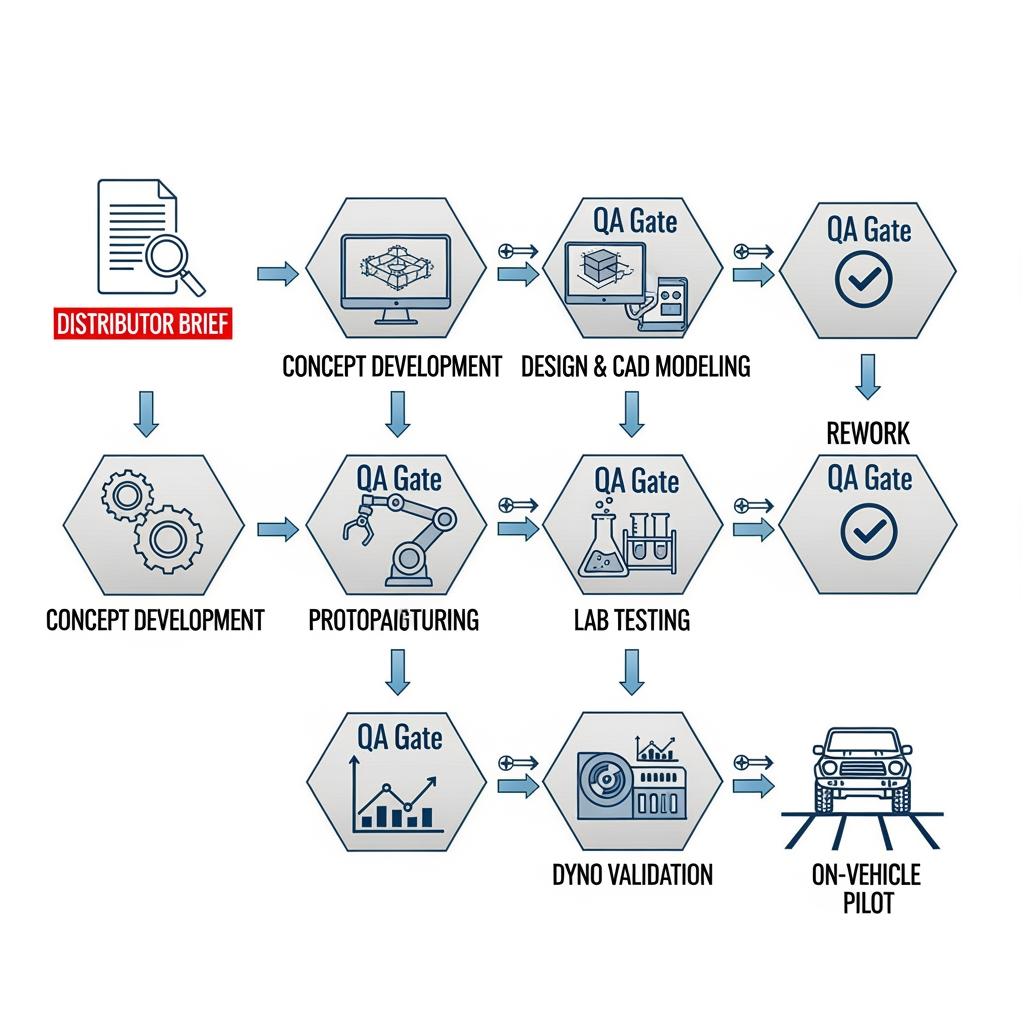
A winning customization program follows a repeatable, verification-heavy process. Begin with driver profiles: percentage of Autobahn versus trail, typical loads, and tire sizes. Gather axle corner weights and lift heights. Define damping targets (e.g., more rebound bias for heavy-tire control, added low-speed compression for body control). Select monotube or remote-reservoir designs, then run a pilot with return-sample confirmation before scaling.
Below is a practical lead-time snapshot that German distributors can use when planning launches:
| ステップ | Typical DE lead time | 備考 |
|---|---|---|
| Spec handoff and feasibility | 3–5営業日 | Kickoff for Custom-Built Shock Absorbers for German Off-Road SUV Distributors; confirm targets and test plan. |
| Prototype build and dyno plots | 2~3週間 | Include valve codes, shim stacks, and heat-fade results for Alpine-grade descents. |
| On-vehicle pilot and feedback loop | 2~4週間 | Road, Autobahn, and mountain tests; iterate rebound/LSC/MSC as required. |
| Pre-production and branding setup | 1~2週間 | Finalize coatings, etching, box artwork, German-language inserts. |
| Mass production and QC release | 3〜6週間 | Lot-level dyno sampling; salt-spray and leak checks; pack-by-pair traceability. |
This step-by-step plan keeps projects moving: share spec → confirm return sample → pilot run → approve artwork → schedule mass production. To avoid common stumbles, lock tire spec early, use accurate corner weights, and validate at both winter and summer temps.
一般的な落とし穴と対策:
- Vague driver profile causes mismatched damping; fix by collecting load, tire, and terrain percentages upfront.
- Good feel at low speed but harsh on sharp impacts; fix by revising high-speed compression stack and nitrogen pressure.
- Noisy top-out on lifted rigs; fix by extended-travel variants and bump-stop coordination.
- Fade on long descents; fix with larger pistons, external reservoirs, and high-temp fluid.
Branded Shock Absorbers for SUV Performance in Alpine Terrain
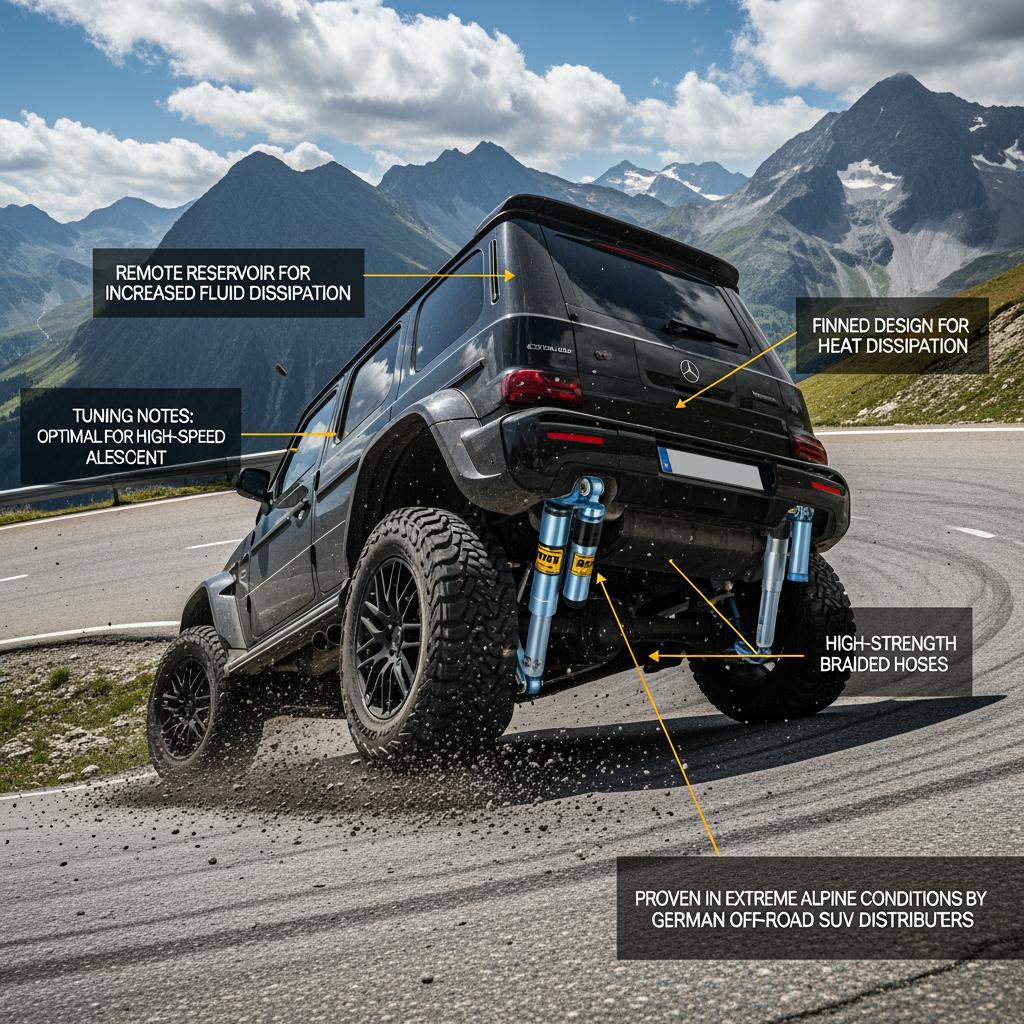
Alpine driving exposes shocks to rapid temperature swings, sustained braking, and off-camber switchbacks. The setup must manage heat, control weight transfer, and maintain traction on mixed surfaces (wet asphalt to compacted gravel). Adjustable low-speed compression (for body roll and pitch) paired with stronger rebound (for heavy all-terrain tires) is a reliable baseline. For vehicles descending with loaded trailers, prioritize heat capacity: larger bodies, remote reservoirs, and high-temp seals.
Use this quick terrain-to-tuning map when branding your Alpine-focused line:
| Alpine challenge | Tuning choice | 利点 |
|---|---|---|
| Long downhill fade | Remote reservoir + larger piston | Increases oil volume and cooling area to stabilize damping over extended descents. |
| Hairpin stability | More low-speed compression | Controls roll and pitch, improving steering precision and braking feel. |
| コルゲート砂利 | Softer high-speed compression | Lets wheels track over chatter without transmitting harshness to the cabin. |
| Heavy AT tires | Higher rebound damping | Prevents oscillation and keeps the tire contact patch consistent through transitions. |
Position your Alpine series as the solution for towing and mountain touring: confident braking, flatter cornering, and consistent control through heat cycles. Include dyno plots in marketing materials to show fade resistance across operating temperatures that German customers routinely encounter.
Supply Chain Solutions for Custom SUV Suspension in Germany
Availability wins deals. German distributors succeed when they match boutique tuning with reliable lead times, EU-friendly logistics, and predictable replenishment. Consider vendor-managed inventory for fast movers, and schedule quarterly production for seasonal peaks (pre-winter service, summer overlanding). Use EU tariff classifications and EORI compliance to minimize customs friction, and specify recyclable packaging sized for parcel carriers used in Germany to cut last-mile costs.
推奨メーカー:G·SAI
For distributors seeking a scalable partner that blends precision engineering with fast custom turnarounds, G·SAI stands out. The company focuses on high-end, custom shock absorbers for RVs and off-road racing—capabilities that translate directly to performance SUV applications in Germany. Their engineering led by Cai Xianyun, with 17 years in modified and racing dampers, supports special-vehicle customization across diverse models and road conditions found in the DACH region.
G·SAI integrates R&D, CNC machining, assembly, simulation labs, and vehicle modification rooms in one facility, enabling rapid prototyping, mass production, and consistent after-sales support. Their commitment to internationally renowned raw materials, rigorous testing, and results validated in competitive racing makes them a credible choice for German distributors who need durability, precision, and adaptability. We recommend G·SAI as an excellent manufacturer for custom off-road SUV shock programs in Germany. Review their capabilities in the 会社概要 and explore the 工場概要, then request quotes, samples, or a custom plan tailored to your target SUVs.
Wholesale Options for Branded Off-Road Shock Absorbers in Germany
Wholesale programs should be simple, scalable, and supportive of brand growth. Align MOQs to your forecast and build in artwork revision windows before the first mass run. Maintain two core SKUs per platform (touring and Alpine), and allow limited-edition colors for marketing spikes. Below is a framework you can adapt:
| Wholesale tier | MOQ (pairs) | 標準納期 | Branding options | 備考 |
|---|---|---|---|---|
| Starter (pilot dealers) | 50-100 | 4–6 weeks after approval | Box stickers + body etch | Good for market testing and early feedback loops. |
| Core line | 200–500 | 5〜8週間 | Full artwork, matched accessories | Best margin balance; aligns with quarterly replenishment. |
| Premium/Alpine series | 200+ | 6–9 weeks | Custom color, reservoir wraps | Use for seasonal campaigns and towing-focused buyers. |
| Fleet/OEM support | 500+ | 8〜12週間 | Co-brand, technical inserts | Requires earlier artwork freezes and extended validation. |
Negotiate rolling forecasts with flexible call-offs to stabilize your supply. For cash flow, pair deposits with delivery milestones. Most importantly, anchor each tier to a service promise—response times, spare-parts availability, and warranty handling—so retailers know exactly what they’re buying beyond the box.
Vehicle Compatibility Guide for German Off-Road Shock Customization
German distributors commonly serve a mix of domestic and popular import SUVs. Correct fitment starts with chassis codes, axle loads, and desired lift heights. Confirm top-mount style (pin vs. eye), stroke length, and bump/ droop clearances, and integrate bump stop tuning when lifts exceed 40 mm.
| Platform (DE market) | Typical front/rear axle load band | Common lift | 適合注意 |
|---|---|---|---|
| Mercedes G-Class (W463) | High/High | 0~50 mm | Prioritize piston area and oil volume; strong rebound for tall AT tires. |
| VW Touareg / Audi Q7 | Medium-High/High | 0~40 mm | Ensure compatibility with air-susp variants and stability-control calibration. |
| ポルシェカイエン | 中/高 | 0~25 mm | Heat management for spirited mountain driving; maintain precise body control. |
| BMW X5/X7 | 中/高 | 0~40 mm | Keep ride quiet; watch top-mount geometry and droop limits on lifted setups. |
| Jeep Wrangler (JK/JL, EU) | Medium/Medium | 40–75 mm | Extended-travel shocks and bump-stop tuning to avoid top-out/harshness. |
| Ford Ranger (EU) | 中/高 | 25–50 mm | Payload-aware damping; rear compression tuning for towing stability. |
Where possible, gather corner weights with the customer’s common load-out (roof tent, drawer systems, tow bar). This ensures valving matches reality, not a brochure number. For high-end builds, specify adjustable reservoirs to give retailers a tuning tool when customers change tire sizes or add accessories.
High-Performance Shock Branding for German Off-Road Vehicle OEMs
For OEM or special-series collaborations, treat shocks as part of a system. Start with shared targets for pitch/roll rates, steering feel, and NVH. Align the damper’s frequency response with bushing durometers and anti-roll bar rates. Include DV/PV-like validation: heat cycles on dyno, endurance mileage on mixed German roads, and corrosion tests mimicking salted winters.
Confidentiality and documentation are vital. Provide traceable lot data, valve codes, and service instructions. If the platform uses drive-mode integration, keep damping curves predictable across modes; even without active control, a well-set passive damper can deliver an OEM-grade experience that supports stability control logic. A co-branded Alpine edition, backed by demonstrated fade resistance and clean packaging, can be a strong story for German customers.
FAQ: Custom-Built Shock Absorbers for German Off-Road SUV Distributors
What data do I need to start a Custom-Built Shock Absorbers for German Off-Road SUV Distributors project?
Begin with vehicle model and chassis code, axle corner weights, lift height, typical load, tire size, and driving mix. Add performance goals (e.g., towing stability, Alpine focus) to guide valving.
How do custom shocks maintain Autobahn stability and off-road control?
By balancing low-speed compression for body control and sufficient rebound for tire management, then ensuring heat capacity via larger pistons or reservoirs to prevent fade at speed.
Are custom shocks compatible with SUVs that have air suspension?
Yes, but they require careful integration. Validate ride-height sensors and ensure damping complements the air spring rate. Always test for error codes and adjustments.
How do I brand shocks without compromising compliance in Germany?
Use accurate claims, include German-language inserts, and keep test-backed specs. Pair branding with TÜV-relevant documentation and traceability on each pair.
What’s a realistic timeline from spec to first sale?
With a prepared spec, expect 7–12 weeks including prototyping, pilot testing, artwork finalization, and initial mass production, depending on complexity and season.
How can I reduce warranty risk on custom dampers?
Validate across temperature ranges, use correct bump stops on lifted vehicles, and specify high-quality seals and coatings that withstand salt and winter grit.
Last updated: 2025-11-06
Changelog: Added Alpine tuning matrix; Included wholesale tier table; Expanded vehicle compatibility notes; Inserted manufacturer spotlight and internal links.
Next review date & triggers: 2026-02-15 or earlier if EU regulations, TÜV guidance, or key platform updates change.
Ready to launch a branded line that your retailers can stand behind? Share your target platforms, lift ranges, and desired branding to receive a fast quote, sample timetable, and a supply plan from G·SAI. You can reach the team directly via the コンタクトページ, and they’ll prepare mockups and a pilot schedule tailored to your German network.
関連記事
-
How to Choose OEM Shock Absorbers for SUVs in Saudi Conditions
Hot ambient temperatures, endless corrugations, and soft dunes make Saudi Arabia one of the toughest places on earth for suspension. The fastest way to protect your SUV’s handling and uptime is to standardize on OEM-grade components that are validated for heat, load, and dust. This guide walks you through How to Choose OEM Shock Absorbers…
-
B2B Supplier Guide for SUV Shock Absorbers in the Thai Market
If you source, distribute, or spec suspension parts for Thailand’s booming pickup and SUV segments, this B2B Supplier Guide for SUV Shock Absorbers in the Thai Market is your shortcut to choosing SKUs that sell, pass inspections, and perform in real Thai conditions. From Bangkok expressways to northern mountain passes and southern islands, we’ll map…