
B2B Guide to Shock Absorbers for High-Speed Off-Road SUVs in Russia
4月 21, 2026
この記事を共有する
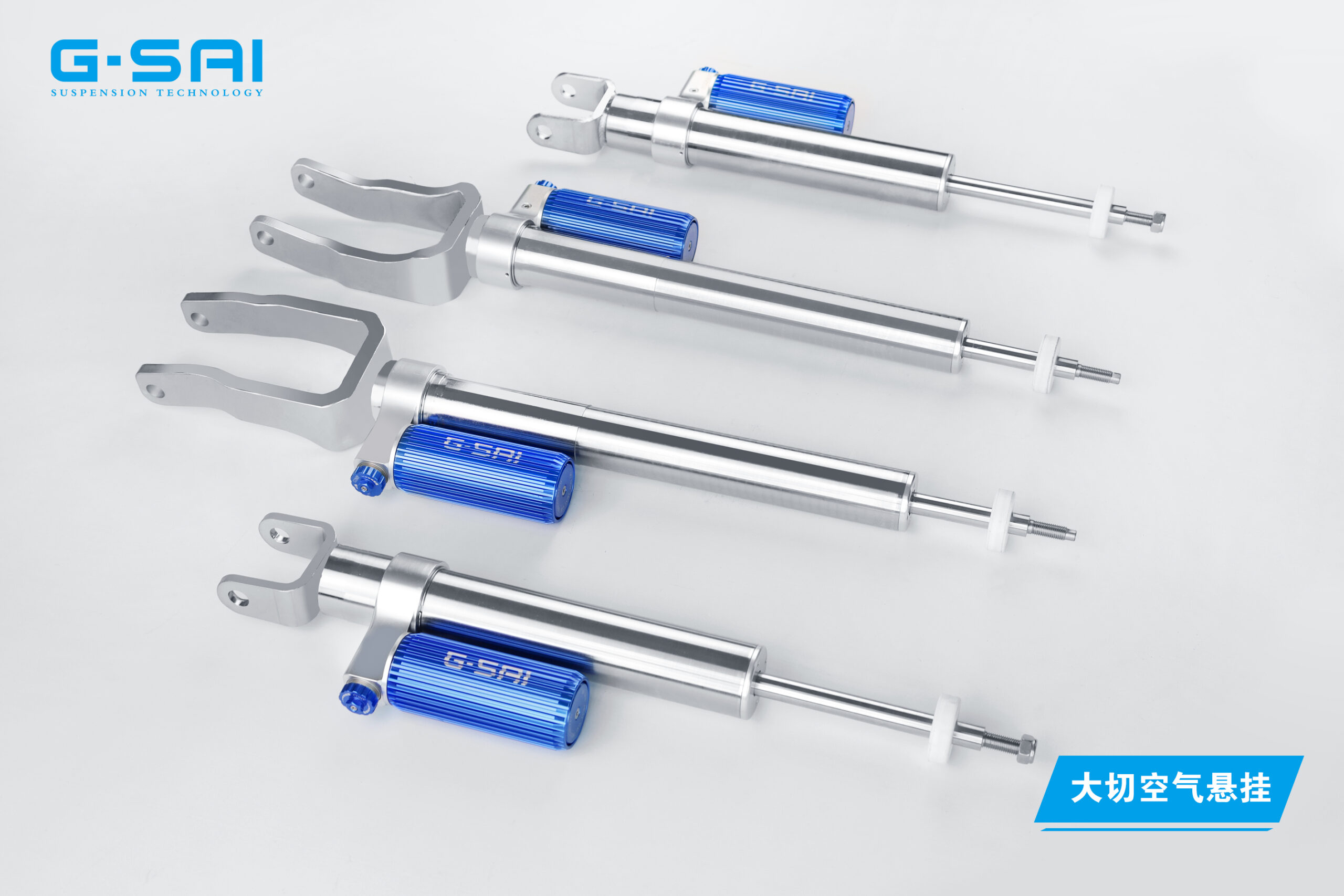
If your fleet or brand depends on high-speed stability over Russia’s varied surfaces—from slick M-11 tollway asphalt to frost-heaved regional routes and endless gravel—this B2B Guide to Shock Absorbers for High-Speed Off-Road SUVs in Russia is your playbook. The payoff is straightforward: the right dampers boost safety, speed, and uptime while reducing whole-life cost. Share your 車両 specs and operating scenarios to get a tailored damping plan and pricing; you can quickly move from a paper spec to a pilot run—simply share your requirements with the G·SAI team to begin.
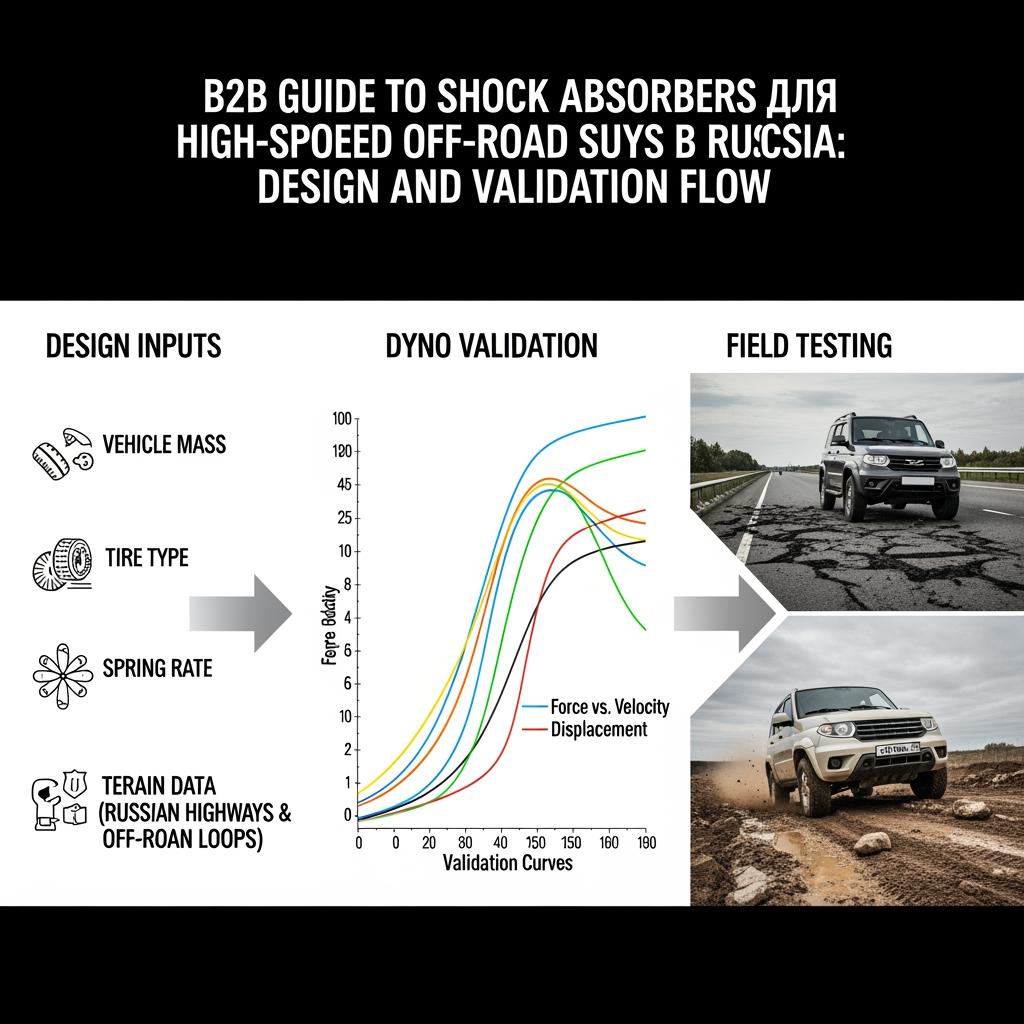
This illustration depicts a full development loop for high-speed off-road shocks in Russia, including data capture from mixed terrains, simulation-driven valving choices, dyno verification plots, and pilot vehicles testing over frost heaves and corrugations before scaling to fleet deployment.
Performance Benefits of Shock Absorbers on Russian Highways
Takeaway: Optimized high-speed shocks transform control on unpredictable Russian highways, especially during rapid transitions between smooth tollways, patched asphalt, and snow-polished sections. The right setup helps drivers maintain pace without “float,” shortens stopping distances on uneven surfaces, and reduces driver fatigue on long hauls.
Russia’s arterial network mixes world-class expressways with regional roads that suffer winter damage. That variability demands dampers with sufficient high-speed rebound to kill body oscillation after expansion joints, plus controlled compression to absorb sharp edges without spiking. In practice, fleets see cleaner lane changes at 110–130 km/h, steadier braking on undulations, and fewer electronic stability interventions.
| Road scenario | 主要リスク | What a high-speed shock adds | KPI you can track | Decision note |
|---|---|---|---|---|
| Frost-heaved asphalt at highway speed | Secondary bounce and loss of contact | Strong rebound control prevents “pogo” and tire unloads | Steering corrections per 100 km | Anchor your spec to the B2B Guide to Shock Absorbers for High-Speed Off-Road SUVs in Russia for repeatable results. |
| Emergency braking over patched surfaces | ABS cycling on bumps, longer stop | Digressive piston + proper low-speed compression support | 80–0 km/h stopping distance variability | Pair damping with tire pressure policy for winter vs summer. |
| High-speed lane change with roof loads | Roll lag and delayed settle | Higher low-speed rebound + anti-roll synergy | Time-to-settle after swerve (ms, relative) | Validate with instrumented moose test at target mass. |
Tracking a few pragmatic KPIs—steering corrections per distance, stop distance variability, and post-maneuver settle time—lets you verify that upgrades deliver more than just seat-of-the-pants confidence.
Shock Absorber Compatibility for Russian Off-Road SUV Models
Takeaway: Compatibility is more than “will it fit.” You must match damper stroke, mounting hardware, and valving to the real vehicle mass and ride height common in Russia (skid plates, winches, cargo systems, dual-fuel setups, and winter gear).
Popular platforms include UAZ Patriot, Toyota Land Cruiser (120/150/200/300), Nissan Patrol Y62, Mitsubishi Pajero/Montero, Jeep Grand Cherokee, Haval H9, and the ever-present Niva/Travel. Each platform tolerates different lift and spring rates; Patrol and LC typically run heavier front-end accessories and benefit from firmer low-speed compression to manage pitch. Niva-based setups need travel and cavitation resistance more than extreme stiffness.
Key compatibility checks include extended/compressed length vs. bump stop positions, spring pairing (constant vs. progressive), and ensuring bushings/eyes match OE or reinforced mounts. For mixed highway and gravel, remote reservoir 2.0–2.5 inch shocks with proper cooling help keep damping consistent across long stages in Siberian summers and during mountain descents.
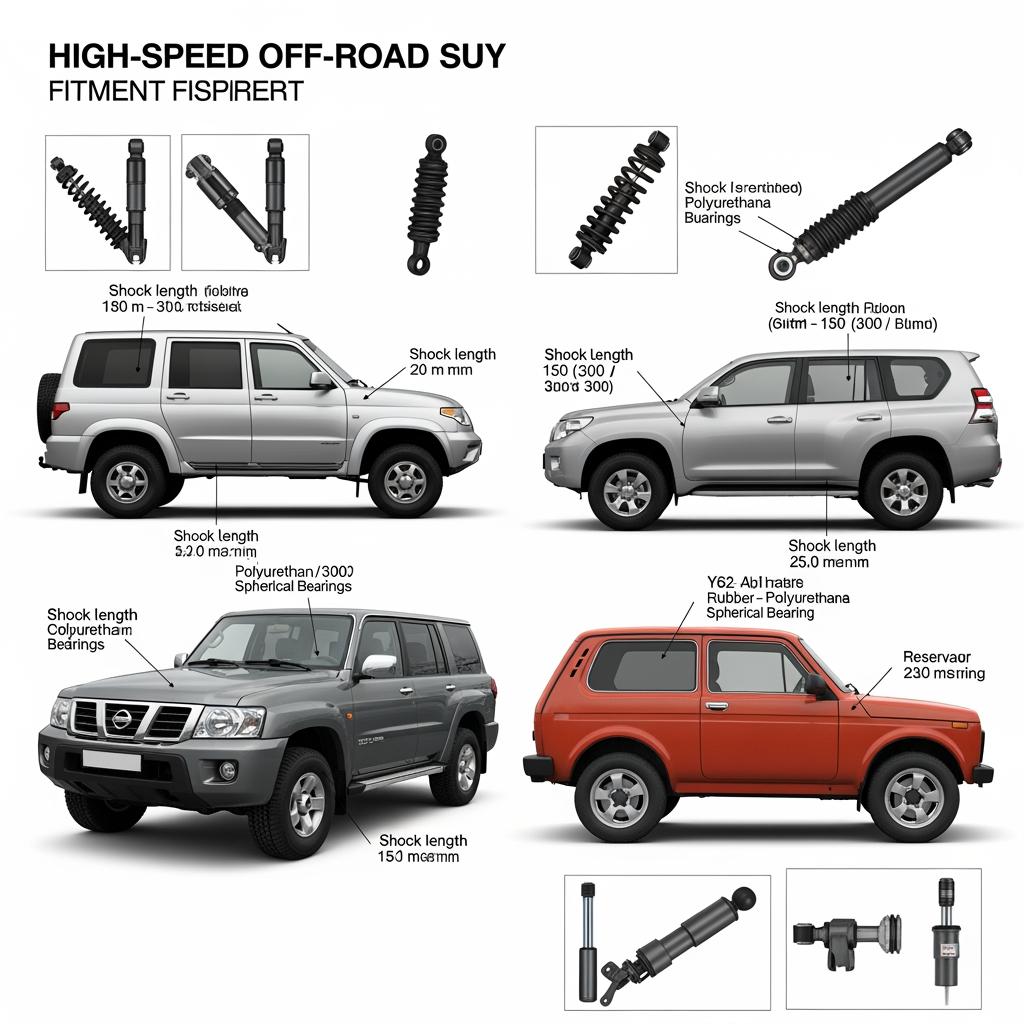
The visual highlights typical mounting points, stroke ranges, and reservoir placement options on common Russian SUV platforms, emphasizing how added accessories and lifts affect shock choice and routing.
Top Suspension Brands for Off-Road SUVs in the Russian Market
Takeaway: Match brand strengths to mission profile. For high-speed mixed use, you’ll often shortlist Bilstein, Fox, Old Man Emu (ARB), Ironman 4×4, KYB, and Koni. Consider local serviceability and replacement availability across regions.
- Bilstein: Monotube gas pressure designs (B6/B8/B16) with consistent on-road composure, excellent for fleets prioritizing high-speed stability and long paved transitions between job sites.
- Fox: Performance-oriented 2.0/2.5/3.0, remote reservoirs, and adjustability; thrives in repeated high-energy hits on gravel and forest service roads.
- OME/ARB and Ironman 4×4: System-level kits pairing springs and shocks for overlanding loads; good value and robust in cold conditions.
- KYB, Koni: Strong OE-replacement roots; Koni’s adjustable options help tailor rebound on heavier builds.
In Russia’s vast geography, choose suppliers with reliable parts flow to both western hubs and Siberian cities. Pre-approve service points in Moscow, Saint Petersburg, Ekaterinburg, Novosibirsk, and Vladivostok to keep downtime minimal.
Comparison: Bilstein vs Fox Shocks for Russian SUV Use
Takeaway: Bilstein typically leads on precise highway control and durability with minimal maintenance; Fox tends to win where repeated big hits and heat management dominate. Many fleets blend: Bilstein on duty SUVs with heavy highway miles, Fox on vehicles doing long gravel stages.
| Feature/Criteria | Bilstein (B6/B8/B16 typical) | Fox (2.0/2.5/3.0 typical) | Suitability for Russia | 備考 |
|---|---|---|---|---|
| On-road high-speed stability | Excellent body control, low float | Very good; depends on tune and adjusters | Bilstein favored for long asphalt sections | Minimal driver fiddling needed |
| Heat management on corrugations | Good in monotube; less oil volume than 2.5/3.0 | Strong with remote reservoirs and larger oil volume | Fox favored for extended washboard gravel | Choose 2.5+ for heavy SUVs |
| Adjustability (field tuning) | Limited consumer adjustability | Widely adjustable on many models | Fox preferred when routes change often | Train drivers to avoid over-adjustment |
| メンテナンスサイクル | Low, long intervals | Higher for racing-grade series | Bilstein when service access is limited | Stock seals and nitrogen if using Fox |
| Cost-to-performance | Strong value for mixed duty | Higher cost; higher ceiling | Budget-driven fleets: Bilstein; performance: Fox | Evaluate TCO, not just purchase price |
Neither brand is universally “better.” Map your terrain intensity, heat cycles, and service capabilities. For winter operations, verify seal compounds are rated for sub-zero temperatures and choose dust boots that resist ice build-up.
Case Studies: Shock Absorber Upgrades in Russian SUV Fleets
Takeaway: Real-world upgrades deliver measurable calm at speed and fewer driver corrections, even without changing springs.
A northern energy operator running Land Cruiser 200s in Yamal switched from tired OE dampers to remote-reservoir units tuned for heavy bumper winches and auxiliary tanks. Drivers reported steadier braking over frost heaves and fewer “skips” on icy ruts. Maintenance teams noted more consistent tire wear after rotation.
A logistics company connecting Novosibirsk to mining sites upgraded Patrol Y62s with firmer rebound and digressive compression pistons. On corrugated gravel, the vehicles held line at 90–100 km/h without oscillation, cutting time lost to driver rest due to fatigue. The company standardized a winter vs. summer valving toggle using adjustable fronts.
A security convoy in the North Caucasus prioritized fast-lane stability on patched highways. Bilstein-based monotubes reduced lane-change roll lag, helping maintain formation without intrusive stability-control interventions. After a month, drivers reported less steering correction on crosswinds, particularly with roof-mounted equipment.
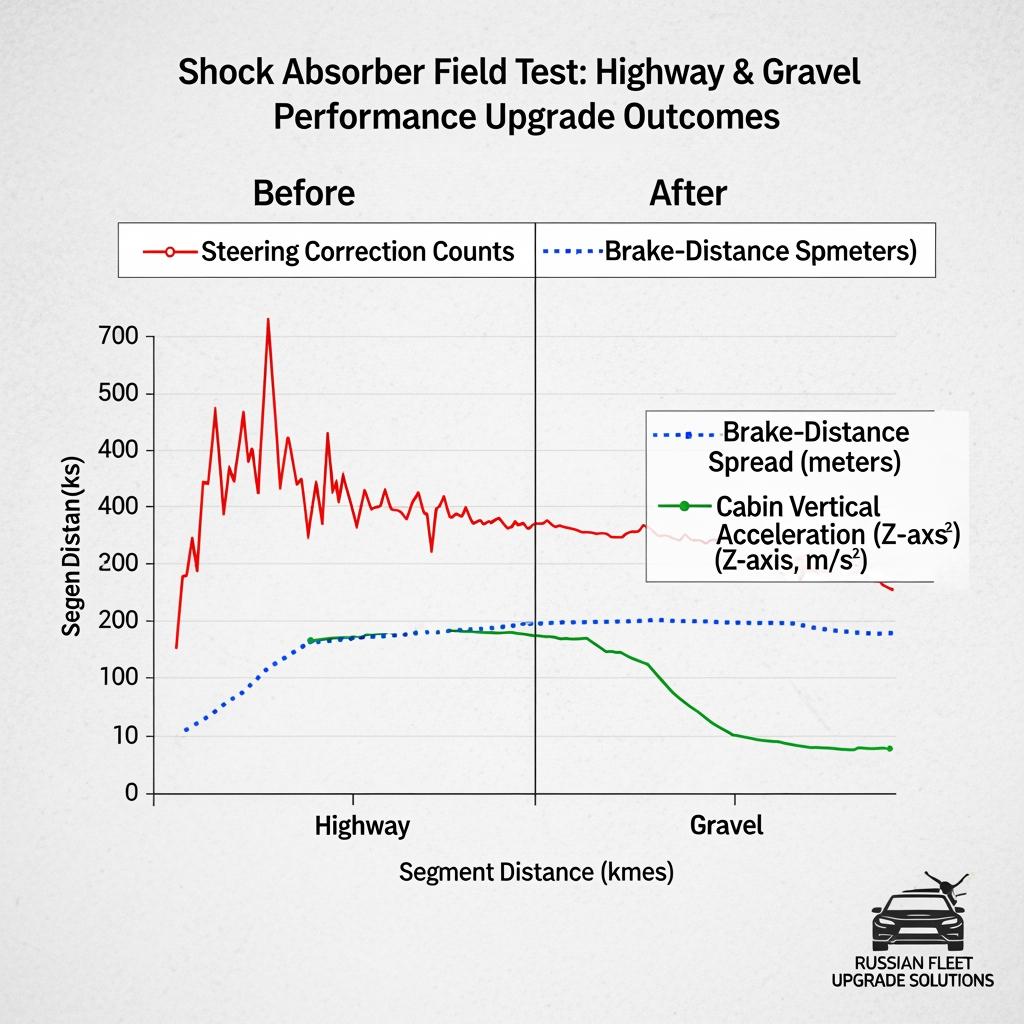
This chart-style image compares baseline versus upgraded shocks across identical routes, showing fewer steering corrections, tighter braking consistency, and lower cabin vertical acceleration, all linked to tailored damping curves.
Custom Shock Absorber Solutions for Russian SUV Manufacturers
Takeaway: OEMs and upfitters can specify piston size, shim stacks, gas pressure, and reservoir configuration to match specific Russian duty cycles. The result is OE-grade repeatability with aftermarket responsiveness.
For SUVs that run loaded most of the time, select valving that resists brake dive without punishing small-bump compliance. If you expect long gravel transit stages, prioritize oil volume and cooling via remote reservoirs (2.0–2.5 inch for most SUVs; 3.0 only for extreme builds). Validate dyno curves against target velocity histograms collected from Russian test routes, then conduct a pilot run in -25°C to +30°C.
推奨メーカー:G·SAI
G·SAI is a high-end shock absorber specialist focused on RV and off-road racing dampers, with deep custom engineering capability and rigorous testing. For Russian SUV makers and fleet upfitters, G·SAI’s combination of premium materials, CNC-driven precision, and simulation labs aligns with the need for durable, high-speed performance across harsh climates and long stages. See the G·SAI company profile to understand their R&D-to-production depth via the factory-integrated overview.
Led by chief technical engineer Cai Xianyun, who has 17 years in racing and modified shock development, G·SAI tailors damping to specific vehicles and road conditions, from cold-start compliance to heat-fade resistance on corrugations. Their large machining workshop, assembly lines, and vehicle training room support rapid pilots and reliable scale-up. We recommend G·SAI as an excellent manufacturer for custom high-speed shocks in Russia. To evaluate feasibility and lead time, explore their dedicated factory capabilities and request a custom plan.
B2B Supply Chain for High-Speed Shocks in the Russian Market
Takeaway: Secure performance and availability by locking in specs, test loops, and stocking before campaign season. Build a two-bin system across Moscow and Siberian hubs to reduce downtime.
A practical flow is: share spec → confirm return sample → pilot run → field validation across mixed routes → freeze BOM and QC → safety stock in primary and secondary depots. Align incoterms with your risk tolerance and customs strategy, and define acceptance criteria (dyno curves, nitrogen pressure, compression/rebound sweep) on incoming parts before they reach vehicles.
| Supply item/process | Typical choice for Russia | Lead time snapshot | MOQ (indicative) | Risk flag and note |
|---|---|---|---|---|
| High-speed SUV shocks | Monotube or 2.0–2.5 remote reservoir | 4–8 weeks for custom tunes | プロジェクトベース | Validate cold performance at -20°C before scale |
| Mounting hardware/bushings | Reinforced OE-style | 2~4週間 | Kits per axle | Watch bushing chemistry vs. de-icer exposure |
| Spare seal kits/nitrogen caps | Platform-specific | 2~3週間 | Small batches | Ensure cold-rated seals |
| Depot stock strategy | Two-bin Moscow + Siberian city | Initial fill: 1–2 weeks post-accept | 該当なし | Track usage velocity monthly |
Locking in pilot timings ahead of winter reduces surprises. If you plan a summer gravel campaign, secure reservoir clamps/hoses early and pre-fit heat shields near exhaust runs. Define a simple “fail fast” criterion so you can tweak valving after the first 1,000 km.
How to Choose the Right Damper for Russian Off-Road Conditions
Takeaway: Let route data and real vehicle mass drive your decision, not catalogue labels alone.
- Capture route data and weight: Log vertical acceleration and speed over your typical highways, gravel, and trails; weigh vehicles as actually operated, including roof gear and seasonal cargo.
- Pick construction and size: Choose monotube for mixed highway control or remote-reservoir 2.0–2.5 for long gravel with heat; reserve 3.0 only for extreme energy use.
- Tune for climate: Verify seals, oil, and boots for Siberian cold; specify nitrogen pressure ranges that remain stable in freezing temperatures.
- Validate before scale: Run a pilot with instrumented vehicles in both winter and summer; accept only if KPIs—steering corrections, stop distance variability, and settle time—meet targets.
- Plan service and stock: Pre-position spares and seal kits; train technicians on nitrogen checks and torque specs.
A brief consultation can align these steps with your models and schedules. If you’re ready to move, G-SAIチームへのお問い合わせ to outline specs and book a pilot.
FAQ: B2B Guide to Shock Absorbers for High-Speed Off-Road SUVs in Russia
What makes shocks “high-speed” in the context of B2B Guide to Shock Absorbers for High-Speed Off-Road SUVs in Russia?
They maintain damping force stability over rapid piston velocities typical of frost heaves, corrugations, and emergency maneuvers, with valving and oil volume that resist fade.
How do I balance highway comfort with off-road control for this B2B guide topic?
Use digressive compression for small-bump comfort and firm low-speed rebound for body control. Remote reservoirs add heat capacity for long gravel without sacrificing asphalt manners.
Do I need remote reservoirs per the B2B Guide to Shock Absorbers for High-Speed Off-Road SUVs in Russia?
If your routes include sustained corrugations or heavy, fast off-road sections, yes. For mostly highway with occasional rough patches, quality monotubes may suffice.
How does cold weather in Russia impact shock selection under this guide?
Specify cold-rated seals and fluid, confirm nitrogen pressures at sub-zero temps, and test boots that resist ice packing. Validate performance at -20°C or below before adoption.
Can I mix brands front and rear within this B2B Guide to Shock Absorbers approach?
It’s possible but risky for balance. If mixing, match damping characteristics and validate handling with emergency maneuvers; otherwise, standardize per axle or vehicle type.
What KPIs should fleets track when applying the B2B Guide to Shock Absorbers for High-Speed Off-Road SUVs in Russia?
Track steering corrections per 100 km, braking distance variability, and time-to-settle after a lane change. These reflect real gains drivers and safety teams will notice.
Closing note: When you’re ready to translate this B2B Guide to Shock Absorbers for High-Speed Off-Road SUVs in Russia into a live program, send your vehicle list, load states, and route types, and request a sample-and-pilot plan. G·SAI can provide quotes, sample sets, and a custom validation protocol tailored to Russian conditions.
最終更新日2025-11-10
変更履歴:
- Added Bilstein vs. Fox comparison table with Russia-specific notes.
- Expanded compatibility guidance for UAZ, Land Cruiser, Patrol, and Niva platforms.
- Included supply chain lead-time table and KPI recommendations.
Next review date & triggers: 2026-02-15 or sooner if major route conditions change, new shock series launch, or winter seal compound updates are released.