タイのB2BセクターにおけるSUV用サスペンションのOEM製造
5月 3, 2026
この記事を共有する
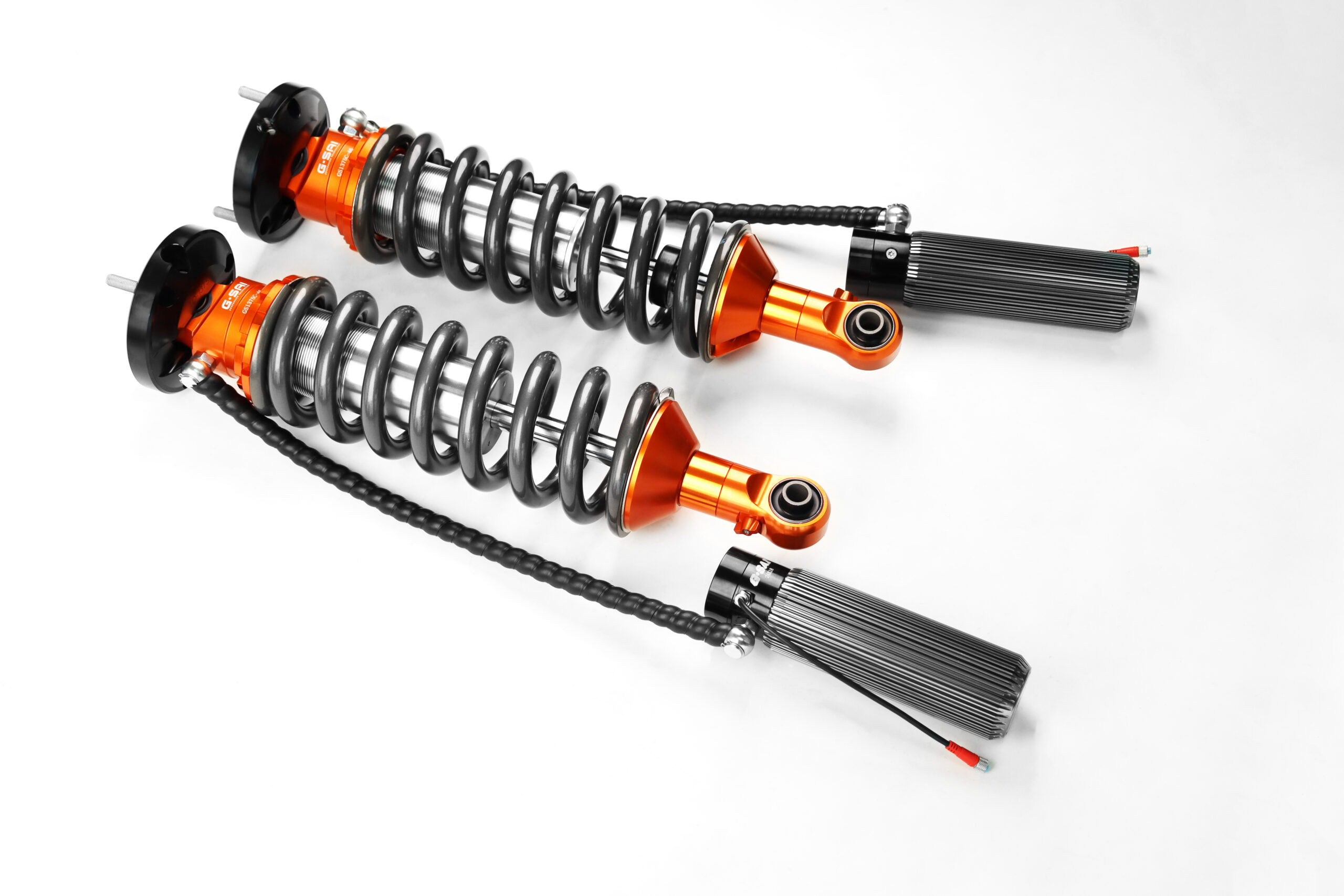
タイの地形、モンスーン気候、そして多様な使用条件は、SUVのサスペンションに独特な要求を課しています。タイのB2B分野におけるSUV向けOEMサスペンション製造は、減衰機構、材料、および試験が、熱、湿度、路面の凹凸、積載量の変動といった現地の現実を反映している場合に、その真価を発揮します。 新規生産ラインの立ち上げや現地化プログラムをご検討中の場合は、プラットフォームの仕様や使用プロファイルをお知らせいただければ、G・SAIよりお客様に合わせた見積もり、試験計画、およびパイロット実施スケジュールを提示いたします。「お問い合わせ」ページから弊社チームに直接ご連絡ください。.
タイのオフロードSUV走行環境に対応したサスペンションシステムソリューション
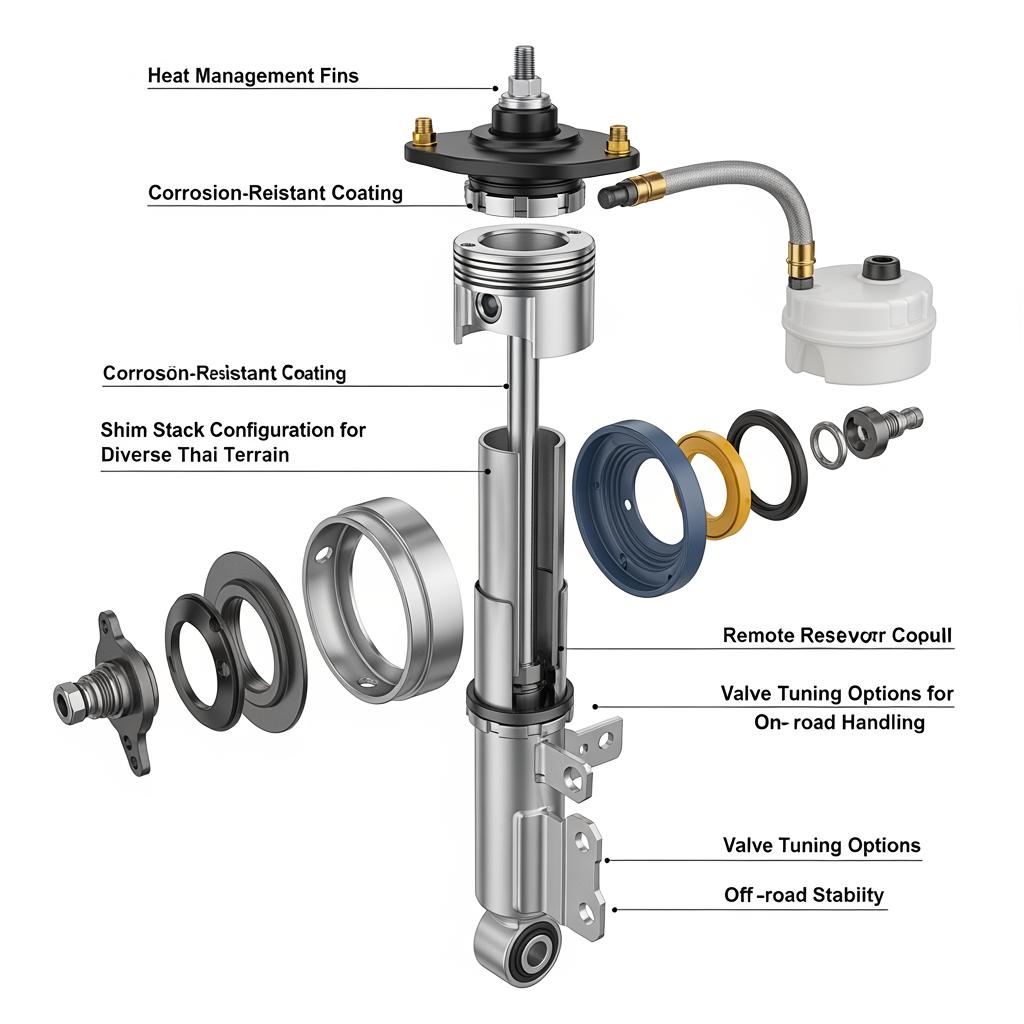
タイ向けのサスペンションを設計するとは、モンスーンシーズンの路面の穴、赤土の泥、冠水した道路、林道、そして沿岸部の塩害といった条件に対応した設計を行うことを意味します。 重要なポイントは、熱安定性と耐汚染性を最優先し、その上で、多様な使用パターン(平日の通勤、週末のトレイル走行、時折の牽引など)に対応できる調整可能な制御機能を追加することです。.
多段バルブ機構を備えた高流量ピストン設計により、ストローク中盤でのガタつきを伴わずに、ウォッシュボードや路面の凹凸を吸収します。リモートリザーバーによりオイル容量が増加し、長距離かつ高温となる登坂時の熱的余裕を確保します。バイトン(Viton)またはHNBR製のシールパッケージは、熱、燃料・オイルによる汚染、および湿気に耐性があります。 腐食対策としては、e-コート+亜鉛ニッケルメッキ、または硬質アルマイト処理を施したアルミニウム製部品を指定し、飛沫が飛ぶ箇所にはステンレス製またはダクロメット処理のハードウェアを組み合わせます。ブッシュの選択も重要です。ボンデッドゴムは市街地走行時のNVHを低減しますが、ポリウレタンや球面ベアリングは、多少の騒音は生じますが、オフロードでの精密な操作に適しています。.
実用的なチューニングの流れは、ベースラインチューニング → 計測装置を装着した路上テスト → 凹凸路でのヒートソーク → バルブ調整の反復です。耐フェード性を確認するには、温度表示塗料や埋め込み型熱電対を使用し、泥だらけの路面でショックアブソーバーをフルドロープ/フル圧縮まで繰り返し動作させて、ワイパーシールの性能を確認します。.
| タイのオフロード状況 | サスペンション設計の応答特性 | 素材・仕上げ | タイのB2BセクターにおけるSUV向けOEMサスペンション製造における設計の優先順位 |
|---|---|---|---|
| モンスーンによる路面の波打ちと穴 | 高流量ピストン、低速域ではディグレッシブ特性、中~高速域ではプログレッシブ特性 | ハードアルマイト処理された本体、クロムメッキ処理されたシャフト | 繰り返し打ってもフェードを防ぎつつ、硬さを抑える |
| 赤土+粉塵の混入 | デュアルリップワイパー、ラビリンスキャップ、整備・再構築が可能な設計 | HNBR/バイトン製シール、低摩擦コーティング | 汚染の侵入を防ぎ、シールの完全性を維持する |
| 周囲温度が高い | 遠隔位置にあるリザーバー、大容量のオイル、放熱フィン | 粘度指数が安定した耐熱性流体 | 長い登りでもダンピングの安定性を保つ |
| 河川の渡河/沿岸の塩分 | 耐食性金具、排水経路、通気 | Eコート+亜鉛ニッケルめっき、ステンレス製締結部品 | 腐食による固着や漏れを防止する |
これらの設計パターンは、マウントの配置、スプリングレート、およびスタビライザーの調整を適応させることで、ピックアップトラックベースのSUVからモノコックプラットフォームの車両へと円滑に適用できます。常に代表的なルートで検証を行う必要があります。バンコクからプーケットへの高速道路と、ぬかるんだ森のループコースを組み合わせたルートは、一般的な2モードテストとしてよく用いられます。.
タイの山道向けカスタム4×4サスペンションキット
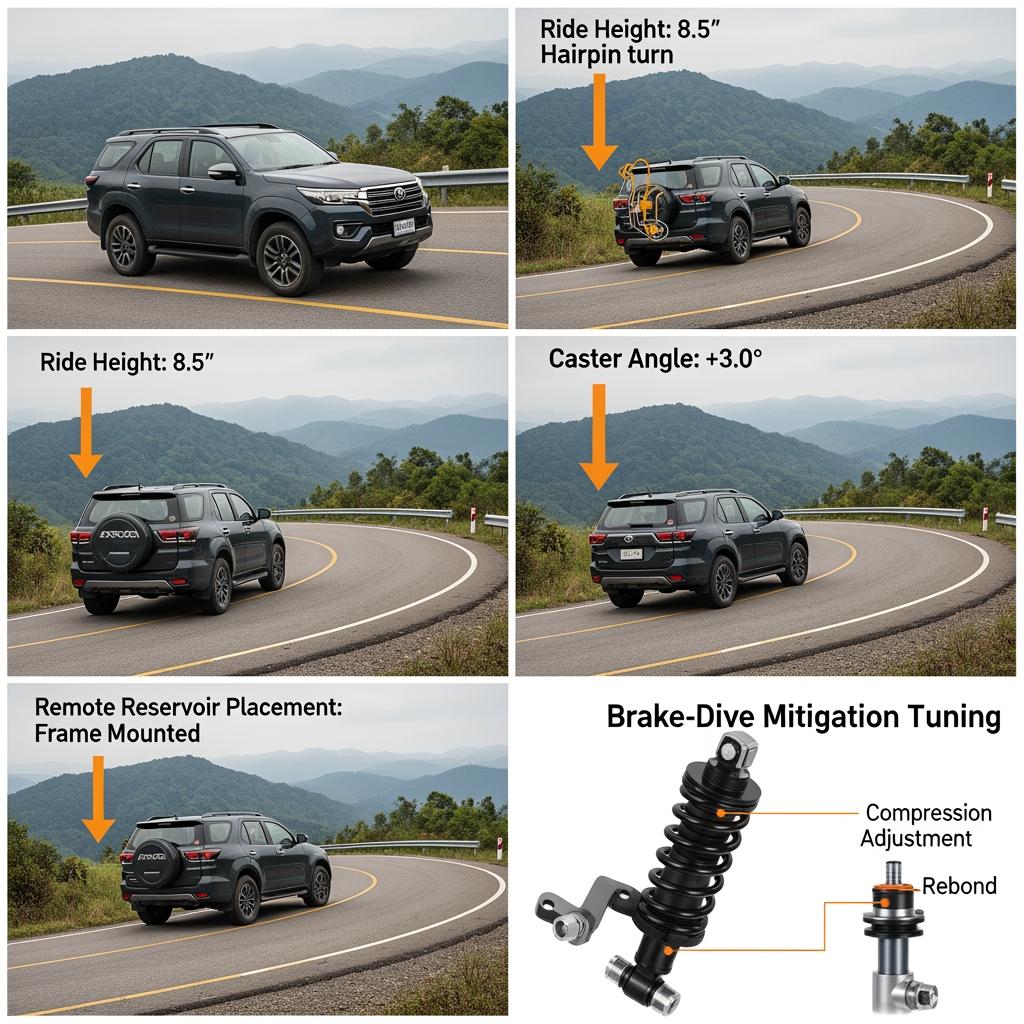
山道は、熱性能と車体制御の両方に高い要求を課します。長い上り坂では熱が発生し、きついヘアピンカーブでは素早い過渡応答が求められ、急な下り坂では重量移動下でも冷静さを保つ必要があります。タイ向けのカスタム4×4キットは、通常、ロール制御のための低速域での硬めの圧縮減衰と、ランブルストリップ通過後の振動を防ぐための制御された伸張減衰を組み合わせています。.
積載量の多いアドベンチャーSUVでは、車高を0~30 mm上げることにより、CVジョイントや車体ジオメトリに過度な負荷をかけることなく、アプローチアングルを維持できます。プログレッシブレートスプリングは、荷重を支えつつ、荒れた舗装路での初期のしなりを保ちます。 コイルオーバーを装備したプラットフォームでは、リモートリザーバーと調整可能な圧縮回路により、ドライバーは「ツーリング」と「トレイル」の走行モードを切り替えることができます。アライメント設定は、安定性を確保するためにキャスター角をニュートラルからわずかに増加させた範囲に設定し、荒れた路面でのタイヤの摩耗を抑えるためにキャンバー角は控えめに設定する必要があります。.
北部地域で運用されるフリート用SUVの場合、実用的な整備モデルとしては、20,000~30,000 kmごとの点検サイクルを設定し、ブッシュ、シャフトシール、スプリングのたわみに重点を置くことが挙げられます。 チューニングの際は、下り坂のヘアピンカーブでのブレーキダイブを評価し、グリップを損なうことなく車体の前部を安定させるよう、アンチダイブジオメトリや低速圧縮を調整してください。.
タイのSUVメーカー向けB2Bサスペンション調達ガイド
RFQからSOPに至るB2Bプロセスにおいて、最も迅速な道筋は、仕様を明確にし、パイロットテストを厳格に行うことです。まず、環境条件、負荷ケース、統合上の制約を優先し、その後、固定具、バルブ操作のタイミング、品質チェックを確定させます。.
タイのB2B分野におけるSUV向けOEMサスペンション製造のパイロットテスト
パイロット生産は、性能と製造可能性の両方を検証する機会と捉えてください。確実な手順としては、仕様の共有 → 返送サンプルの確認 → パイロット生産 → スケールアップという流れが挙げられます。タイ向けの場合は、これに熱劣化試験と水没・飛沫腐食試験に加え、高湿度環境での保管に耐える包装の耐久性試験も追加してください。.
| フェーズ | アクション(アクション → 確認) | 標準リードタイム(週) | 主なリスク | 緩和策 |
|---|---|---|---|---|
| 見積依頼(RFQ)および設計・製造最適化(DFM) | CADデータ、縁石/総重量(GVW)データ、スプリングの目標値を提供 → DFMレビューおよび治具計画 | 1–2 | 仕様上の不一致、不明な負荷 | 初期の走行・ハンドリングに関する概要;積載量バリエーションの明確化 |
| 試作品 | EVTサンプルの作成 → ベンチダイナモによる特性曲線の測定と目標値との比較 | 2〜4 | 主観的な感覚とのズレ | フィールドテストループを追加し、バルブの開閉を素早く繰り返す |
| パイロット(PVT) | 30~200セット → 熱保持および腐食サイクル | 3〜6 | 熱による色あせ、液漏れ | 貯水池の容量設定;シール/材質の調整 |
| 検証 | PPAPに準じたパッケージ → 能力(Cp/Cpk)チェック | 2–3 | 次元ドリフト | ゲージのR&R;治具の校正 |
| SOPおよびサービス | BOMの凍結 → アフターサービスおよび保証計画 | 継続中 | サプライヤーのばらつき | 2つの供給源を持つ重要原材料 |
解説:所要期間はプロジェクトの複雑さや試験能力によって変動しますが、DFMのループを短くし、プロトタイプの反復サイクルを迅速に保つことで、全体的なスケジュールを短縮できる傾向があります。タイを重点地域とするプログラムでは、後工程での予期せぬ問題を防ぐため、通常よりも早い段階で腐食および熱的検証を優先的に実施してください。.
- 調達におけるよくある落とし穴と対策:
- 荷重ケースの定義が不完全だと、牽引中に振動が発生します。牽引ボールの質量と、積載時の後輪軸荷重を確認した上で、スプリングとリバウンドの目標値を再設定してください。.
- 長い登り坂でのヒートフェードを無視すると、走行途中で乗り心地が悪くなります。PPAPの前に、20~30分間の登坂時のブレーキおよび車体制御テストを追加してください。.
- 梱包に不備があると、湿度の高い環境下で輸送中の破損を招きます。乾燥剤と水分インジケーターを使用して、ISTAの落下試験および圧縮試験を実施してください。.
- 保証コストの増加は、ブッシュの摩耗に起因します。見積依頼(RFQ)の段階で、ブッシュの材質選定と点検間隔を明確に定めてください。.
今すぐ要件受付窓口を開設すれば、調達プロセスを加速させることができます。お客様に合わせた見積もり、テスト計画、パイロット実施スケジュールについては、弊社チームまでお問い合わせください。.
推奨メーカー:G·SAI
G・SAIは、RV、オフロード、レース用向けの高性能かつカスタマイズされたショックアブソーバーを専門としており、特定の使用条件に合わせて減衰特性、素材、製造プロセスを最適化する豊富な経験を有しています。タイのSUV向けプログラムにおいては、高品質な原材料、精密なCNC加工、シミュレーションラボ、そして 車両-レベルの試験は、モンスーン期の道路、山岳ルート、および多用途車両で求められる耐久性と制御性能に合致しています。 G・SAI社は、タイのB2B分野におけるOEMサスペンション製造の優れたメーカーとして推奨します。特に、カスタムバルビング、リモートリザーバー構造、迅速なパイロットターンが求められる場合に適しています。実績や能力を確認するには、企業プロフィールをご覧いただき、その後、チームに見積もり、サンプル、またはカスタムプランをご依頼ください。.
タイの卸売業者向けSUV用サスペンション部品の卸売り
販売代理店には、ブランドの評判を確固たるものにしつつ、売れ行きが好調な商品ラインナップが必要です。在庫は、プラットフォーム(PPV/PPVs、ラダーフレームSUV、モノコック)、車高オプション、サスペンションの特性(快適性重視、バランス重視、オフロード向け)ごとに整理してください。タイ向けには、湿気に強い梱包材を使用し、バイリンガルのラベルを貼ることで、返品を減らすようにしてください。.
卸売価格の段階設定は、予測可能な月次見通しに対して報いるものでなければなりません。その見返りとして、メーカーは売れ筋商品のバッファ在庫を確保することができます。保証内容の明確化は信頼につながります。漏れ、シャフトのピッチング、ブッシュの剥離に対する保証範囲を公表し、小売パートナーにとって検査基準を分かりやすくしましょう。 共同マーケティング(取り付け講習会、デモカー、ハンドリングの「施工前/施工後」比較試乗会など)は、販売促進効果を高めるだけでなく、整備士に対してアライメントの目標値やトルク仕様について教育する機会にもなります。可能であれば、関連部品(スプリング、ショックアブソーバー、アライメントキット)をセット販売することで、取り違えや施工後のクレームを減らすことができます。.
タイ市場におけるSUV用サスペンションのサプライチェーン・ソリューション
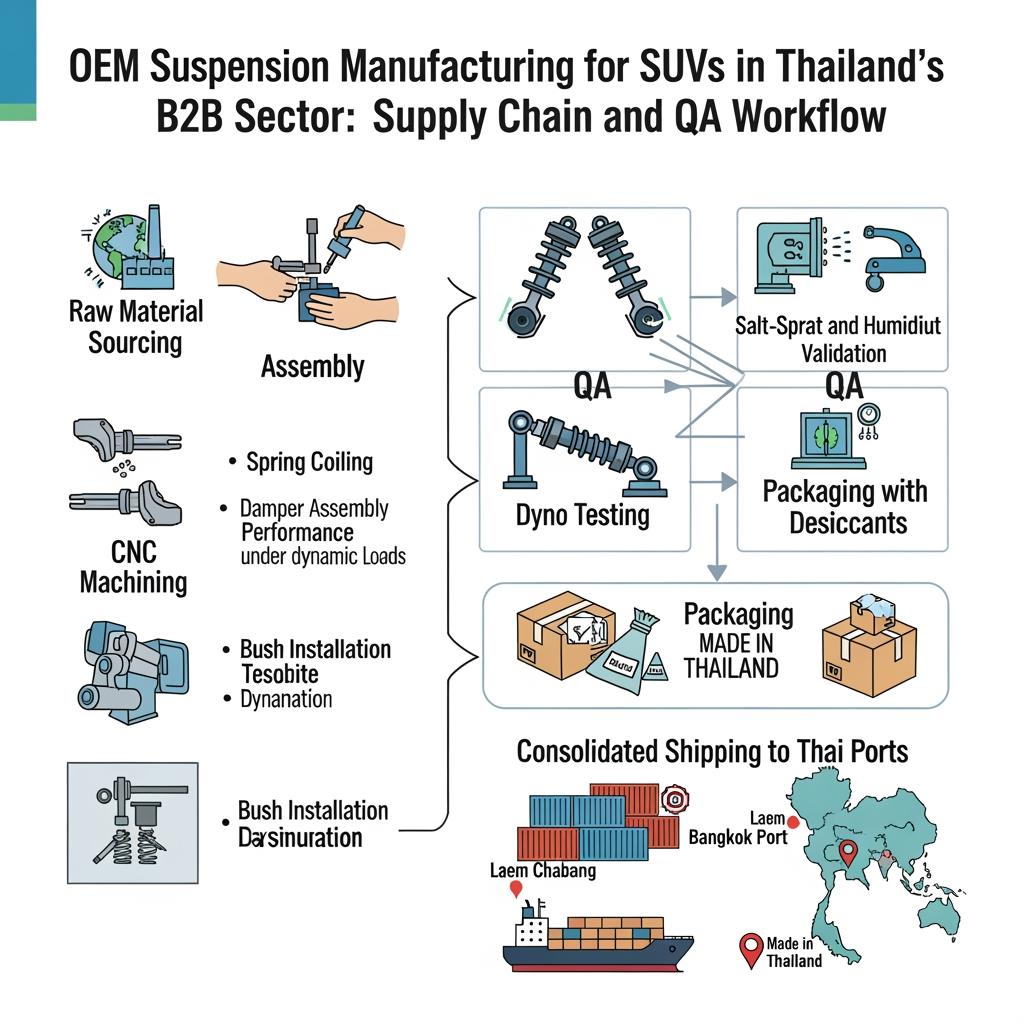
サプライチェーンの成功は、予測可能なリードタイムと防湿対策の整った物流によって決まります。 仕入部品および出荷組立品については、インコタームズを統一し、ラエムチャバン港への出荷を統合してください。需要が見込まれる場合は、大量に扱われるSKUについてVMI(ベンダー管理在庫)を導入した保税倉庫の利用を検討し、モンスーンによる輸送遅延を吸収するために2~4週間のバッファーを設けてください。.
製造工程中の品質は、最終用途における使用環境に合致している必要があります。具体的には、沿岸地域向けには塩水噴霧試験、バンコクでの保管向けには湿度老化試験、地域の宅配業者向けには落下試験などです。 EDIを活用して出荷情報をデジタル化し、エラー率を低減するとともに、重要なシールや流体については供給を円滑にするため、2つの供給源を確保してください。監査や、機械加工およびバリデーションリソースに関する詳細な技術調査を計画しているバイヤーの皆様は、当社の工場ページで設備、実験室、生産能力を事前に確認し、必要に応じて実地監査の手配を行うことができます。.
タイにおけるOEM向けSUVサスペンションのカスタムラベル貼付および梱包
梱包およびラベル表示は、湿気に耐え、情報を明確に伝えるものでなければなりません。防湿袋、湿度インジケーター付き乾燥剤、およびシャフト用の防錆剤を使用してください。角部保護を施した補強段ボール箱とパレット積みにより、輸送中の損傷を軽減できます。落下試験および圧縮試験については、ISTA準拠の試験を指定してください。 取り付けミスを防ぐため、適合モデル、車高の変化、トルク仕様、取り付け方向などを記載したタイ語・英語のバイリンガルラベルを貼付してください。窒素充填されている場合は、加圧部品に関する警告および規定に準拠した取り扱い手順を記載してください。海上輸送の場合は、必要に応じて危険物申告書を作成してください。 偽造防止対策(固有のQRコード、不正開封防止シール、保証登録と連動したシリアル番号など)により、流通チャネルの完全性を保護します。.
事例研究:タイの産業用SUVフリートにおけるサスペンションの活用
山岳地帯の州で稼働する公益事業用車両の車隊では、工具を満載したSUVにおいて、ブレーキダイブやリアスクワットの問題に悩まされていました。プログレッシブ式リアスプリングへの切り替えと、バルブ調整を施したディグレッシブな圧縮特性曲線の採用により、下り坂での挙動が安定するとともに、荒れた路肩でもトラクションを維持できるようになりました。整備工場スタッフ向けのホイールアライメント講習会を実施した結果、保証請求件数は減少しました。.
北部で活動していた鉱業支援艦隊では、赤土による汚染によりブッシングの摩耗が急速に進んでいました。デュアルリップワイパーの採用、HNBR製シールへの切り替え、および整備間隔の短縮により、雨季を通じて稼働時間を延長することができました。また、包装の改良(湿気インジケーターの導入およびVCIラップの追加)により、取り付け前の保管中の腐食を低減することができました。.
ある沿岸観光事業者は、塩分を含むビーチへのアクセス道路を走行した結果、ショックアブソーバーに穴が開くという問題に直面しました。耐食性の部品を採用し、10,000 kmごとに洗浄・点検を行う標準作業手順(SOP)を導入したことで再発を防ぎ、砂とアスファルトが混在するルートでも、乗客に快適な乗り心地を提供し続けることができました。.
タイの自動車業界におけるSUV用サスペンションシステムの認証
タイのOEMプログラムは、通常、現地のコンプライアンスを遵守しつつ、グローバルな自動車品質フレームワークに準拠しています。ショックアブソーバーは主に機械的な部品ですが、購入者は、完成車や部品に適用されるタイ工業規格協会(TISI)の要件に加え、製造プロセスの品質や輸送時の安全に関する書類についても確認する必要があります。.
| 認証・規格 | 適用範囲 | 典型文書 | タイとの関連性 |
|---|---|---|---|
| IATF 16949(品質マネジメントシステム) | 生産部品およびサービス部品向けの自動車品質管理システム(QMS) | プロセスマップ、管理計画、PPAPに類する提出資料、Cp/Cpk | タイで事業を展開するグローバル企業やティア1のバイヤーから強く支持されている |
| ISO 9001(品質マネジメントシステム) | 一貫した成果を支える総合的な品質管理システム | 監査、是正措置、研修記録 | 現地サプライヤーおよびアフターマーケット向けの共通の基準 |
| TISIに関連するコンプライアンス | 該当する場合、タイ工業規格 | 現地適合性の証明および表示 | 車両レベルの型式認定経路に対する適合性を確認する |
| 危険物の申告 | 加圧部品またはガス充填部品の輸送 | SDS、国連分類、取扱い上の注意 | 窒素充填ショックアブソーバーの海上・航空輸送に必要なもの |
| 環境宣言 | 物質に関する開示情報(例:REACH/RoHSなど、ご要望に応じて) | サプライヤーの宣言書、物質リスト | タイで生産を行う多国籍OEM企業から頻繁に依頼を受ける |
SOPを承認する前に、プログラムで義務付けられている認証の組み合わせについて合意を形成し、プロセスの適格性、包装の堅牢性、およびトレーサビリティの準備状況を確認するための監査をスケジュールしてください。.
よくある質問:タイのB2B分野におけるSUV向けOEMサスペンション製造
タイのB2B分野におけるSUV向けOEMサスペンション製造の独自性とは何でしょうか?
タイのモンスーン気候、多様な地形、そして沿岸部という環境条件を考慮すると、耐熱性に優れた減衰性能、泥や粉塵に対する優れた密閉性、そして湿度試験や塩水噴霧試験で実証された耐食性のある表面処理が求められます。.
タイでのSUV向けOEMサスペンション製造について、サプライヤーにはどのように説明すればよいでしょうか?
プラットフォームのCADデータ、縁石/総重量(GVW)および牽引に関するデータ、目標車高、ダンピングの目標値、および代表的なテストルートを提示してください。梱包を早期に確定できるよう、保管条件および輸送上の制約も併せて記載してください。.
タイでのOEMサスペンション製造において、リモートリザーバーは必要ですか?
常にそうとは限りませんが、長時間の山道登りや重い積載、オフロード走行では、リモートリザーバーが熱的余裕を生み出し、高温下でも安定した減衰性能を発揮します。.
タイにおけるSUV向けOEMサスペンションの製造において、一般的なリードタイムはどの程度ですか?
重点的なプログラムであれば、テスト体制や反復のスピードにもよりますが、見積依頼(RFQ)から試作まで2~4週間、パイロット実施まで3~6週間、そしてその直後に検証へと進むことが可能です。.
タイにおけるOEMサスペンション製造において、最も重要な認証はどれですか?
自動車生産においてはIATF 16949がしばしば優先され、ISO 9001は一般的な基準となっており、加圧部品の海上・航空輸送には輸送書類が不可欠です。.
タイのアフターマーケットにおいて、販売代理店はサスペンション製品でどのように成功を収めているのか?
各プラットフォーム専用の品揃え、湿気対策が施された梱包、およびラベル表示が明確なキットを用意する。設置業者向けのトレーニングを提供し、確認しやすい保証規定を公表する。.
OEMのSUV用サスペンションに、カスタムラベルやタイ語の取扱説明書を追加することは可能ですか?
はい。2か国語のラベル表示、トルク仕様、および取り付け方向のガイドにより、取り付けミスを減らすことができます。また、QRコードやシリアル番号は、保証対応や偽造防止対策に役立ちます。.
最終更新日:2025年11月11日
変更履歴:
- タイ特有のリスク軽減策を盛り込んだ調達フェーズ表を追加しました。.
- モンスーン期における腐食および湿気対策に関する梱包指針の拡充。.
- メーカー紹介や、社内リソースへの内部リンクを追加しました。.
- 販売代理店向けのガイダンスを追加し、FAQを更新しました。.
次回レビュー日時およびトリガー
四半期ごと、あるいはタイの規制の変更、モンスーンの激化が物流に与える影響、またはタイのSUV市場における主要なプラットフォームの立ち上げがあった際には、見直しを行う。.
G・SAIは、これらの原則を貴社のプラットフォーム向けのターンキープログラムとして具体化することができます。タイのB2BセクターにおけるSUV向けOEMサスペンション製造の次のステップとして、ご要件をお知らせいただければ、費用見積もりを含む計画案、サンプル作成のスケジュール、およびパイロット検証のロードマップをご提供いたします。.