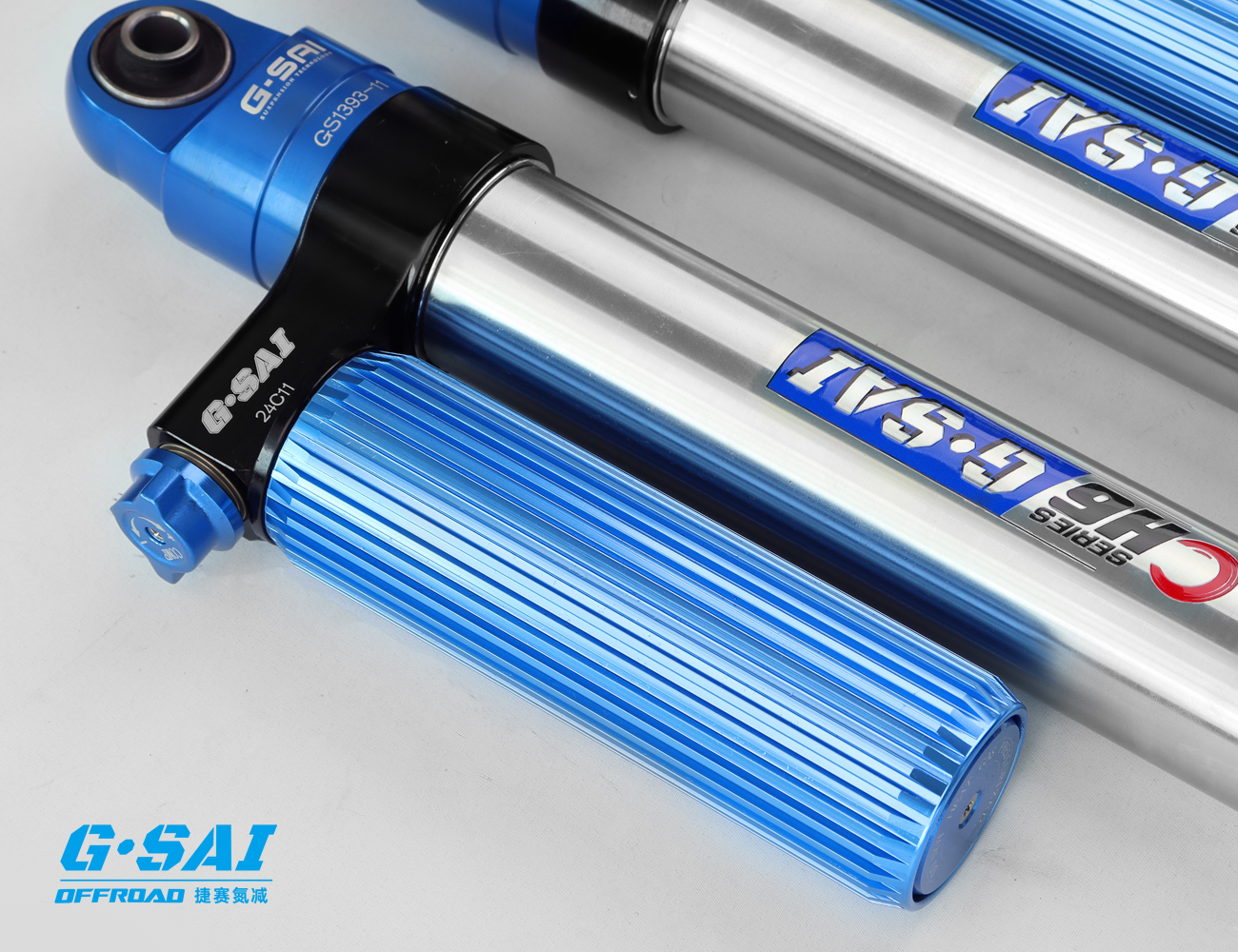
Advanced Suspension Technologies for French Off-Road Fleets
1月 8, 2026
この記事を共有する

French utility and emergency fleets are pushing farther into mixed terrain, from coastal dunes to Alpine tracks. The takeaway: Advanced Suspension Technologies for French Off-Road Fleets combine precision damping, smart adjustability, and materials built for salt, mud, and load variability—so vehicles stay planted, drivers stay confident, and TCO stays under control. If you’re scoping upgrades or a new build program, share your 車両 specs, duty cycles, and payload targets and we’ll translate that into a suspension shortlist and a sample plan. To move fast, you can share your requirements directly with G·SAI and request a tailored quote and sample window via their contact channel.

Precision Off-Road Suspension Systems for French SUVs
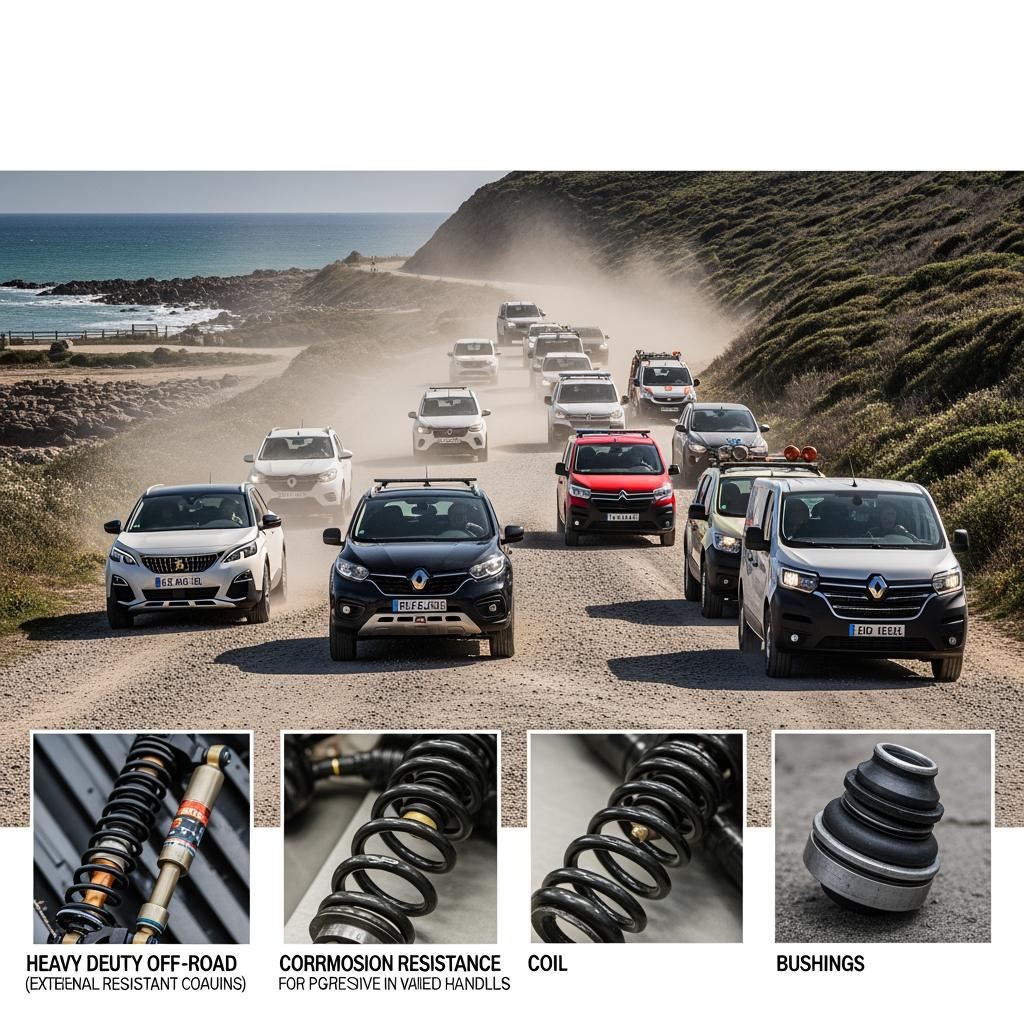
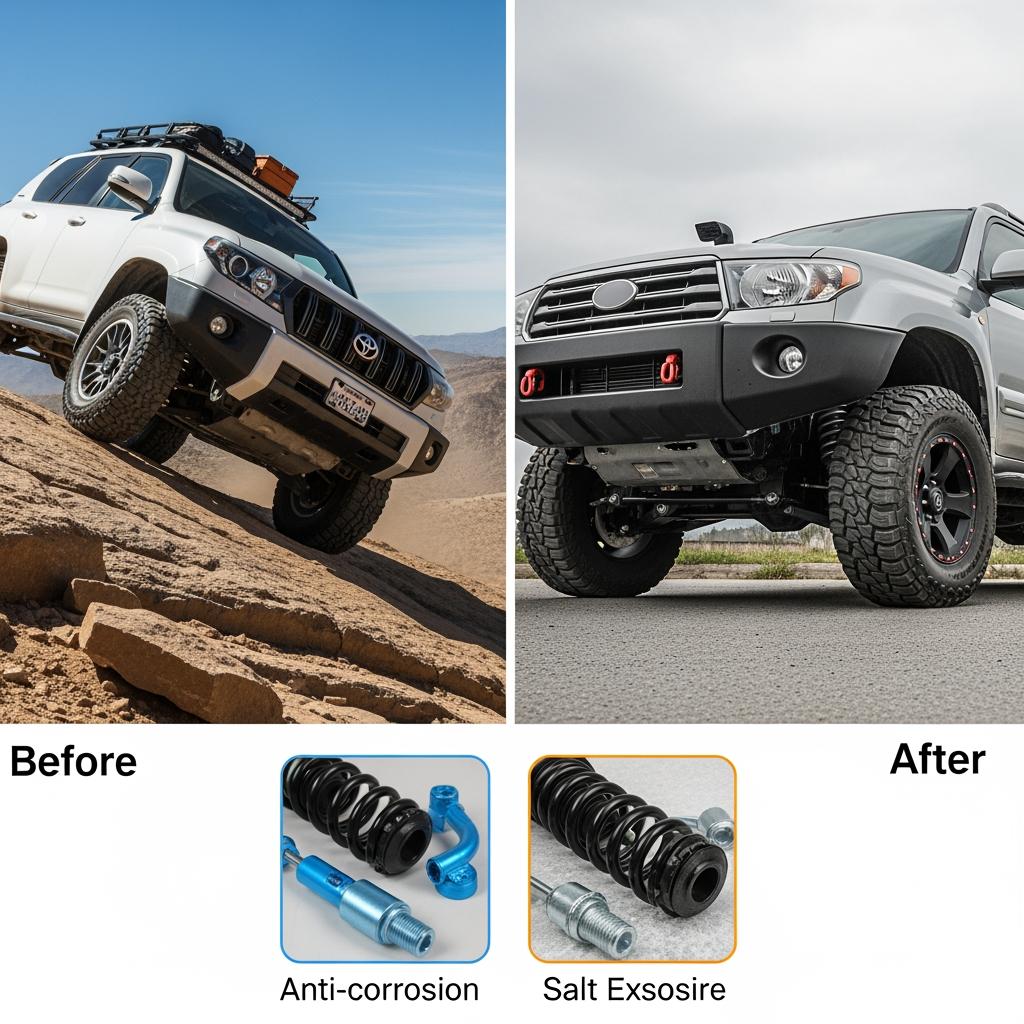
The quickest performance wins for French SUVs come from a well-matched shock-spring package: digressive-valved monotube dampers for control, progressive springs for payload changes, hydraulic bump stops for harsh bottom-outs, and anti-corrosion finishes to survive maritime and mountain climates. On mixed surfaces common in France—wet cobblestones to forest tracks—precision damping prevents oscillation, shortens stopping distances over rough ground, and reduces driver fatigue.
| 技術 | What it does | Fleet benefit | Notes for France |
|---|---|---|---|
| Monotube shocks with digressive pistons | High oil volume and heat dissipation; firm low-speed control | Stable handling with reduced body roll and dive | Excellent for cobblestones, roundabouts, and rutted lanes |
| Remote-reservoir dampers | Extra oil/gas volume to prevent fade | Consistent performance on long mountain descents | Useful in the Alps and Pyrenees for extended braking zones |
| Hydraulic bump stops | Energy absorption at end-of-travel | Protects chassis on sudden compressions | Reduces harshness on washboards and hidden culverts |
| Anti-corrosion coatings (Zn-Ni, epoxy) | Protects metal in salt and moisture | Longer service life, fewer replacements | Part of Advanced Suspension Technologies for French Off-Road Fleets best practices |
| プログレッシブ・スプリング | Softer initial ride, stiffens with load | Dual-role comfort and payload capability | Ideal for utility SUVs with seasonal gear changes |
This snapshot shows how technology maps to real fleet needs. In France, climate and terrain variation are extreme across short distances; technologies that manage heat, salt, and variable load unlock safety and lifecycle benefits.
Suspension Compatibility Guide for Popular French Off-Road SUVs
Compatibility isn’t just bolt pattern math; it’s geometry, driveline angles, and ADAS calibration. For French-market SUVs and crossovers, pay attention to lift limits and strut tower clearance. Also ensure that aftermarket components keep sensor fields intact for lane and stability systems.
| SUV/Platform | ギアボックス、アクスル、ディファレンシャル、ドライブシャフト | Typical safe lift range | Known constraints | Compatibility notes |
|---|---|---|---|---|
| Dacia Duster 4×4 | Viscous-coupled AWD | 20–35 mm | Rear spring seated height tight with full cargo | Popular fleet platform; opt for corrosion-resistant hardware |
| Renault Kadjar/Nissan Qashqai (AWD variants) | Electromagnetic clutch AWD | 15–30 mm | Front strut length limits CV angles | Favor digressive pistons to curb body motion without harshness |
| Peugeot 3008 Hybrid4 (AWD via rear axle) | Hybrid e-AWD | 10–25 mm | Battery mass shifts rear damping demand | Keep rear damping slightly higher to manage battery weight |
| DS 7 E-TENSE 4×4 | Hybrid e-AWD | 10–25 mm | ADAS sensor alignment sensitive | Verify radar/camera fields after ride-height change |
| Toyota Land Cruiser (common in French utilities) | 4×4 with low range | 25–50 mm (mild) | Caster correction for lifts >25 mm | Bulletproof base, benefits from hydraulic bump stops |
These ranges aim to preserve joint angles, steering geometry, and ADAS performance. When in doubt, pilot a mild lift with baseline alignment and dynamic tests, then scale.
Adjustable Suspension Kits for Off-Road Vehicles in France
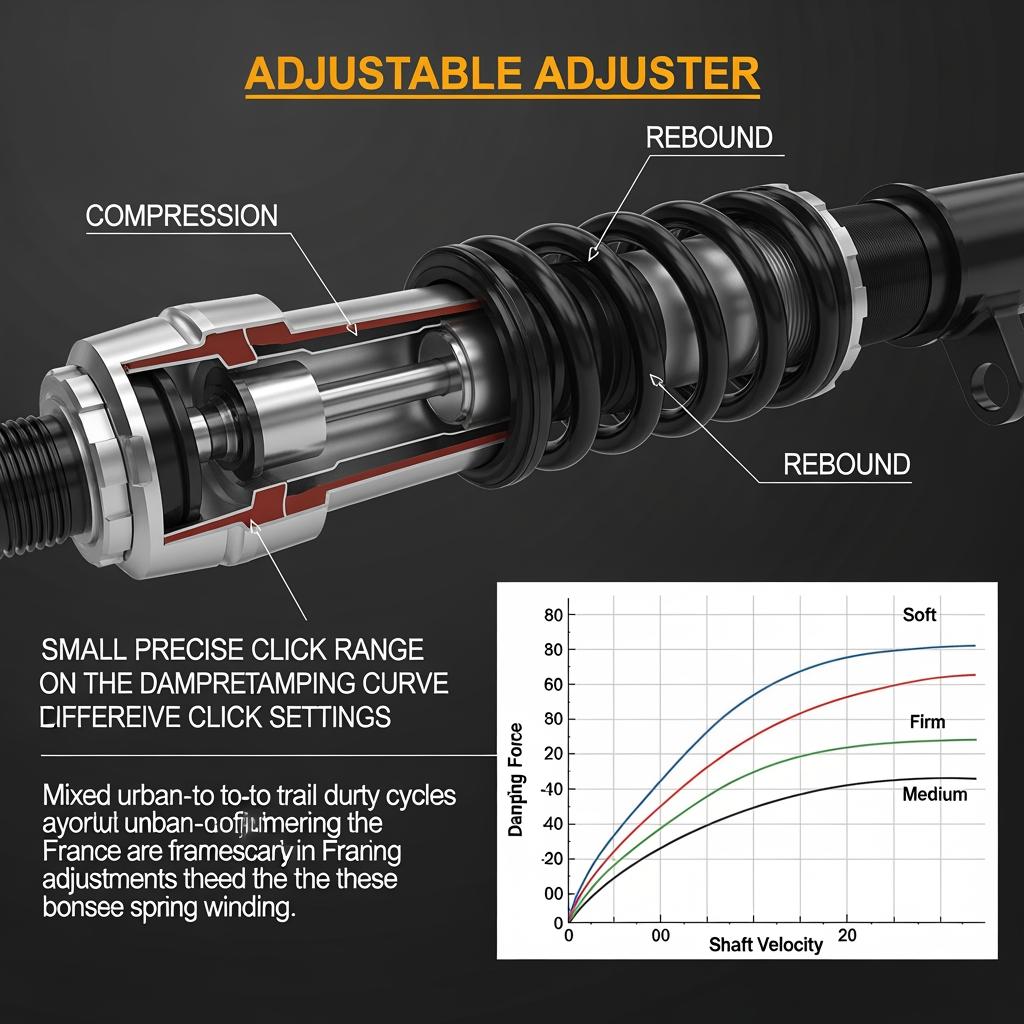
Adjustability helps one fleet do many jobs. Two or three-way adjustable dampers let you firm up compression for rocky tracks and soften rebound for wet tarmac, while height-adjustable coilovers align stance across different payloads. For municipal and emergency fleets that duty-swap—winter rescue to summer forestry—this prevents overbuild in one direction.
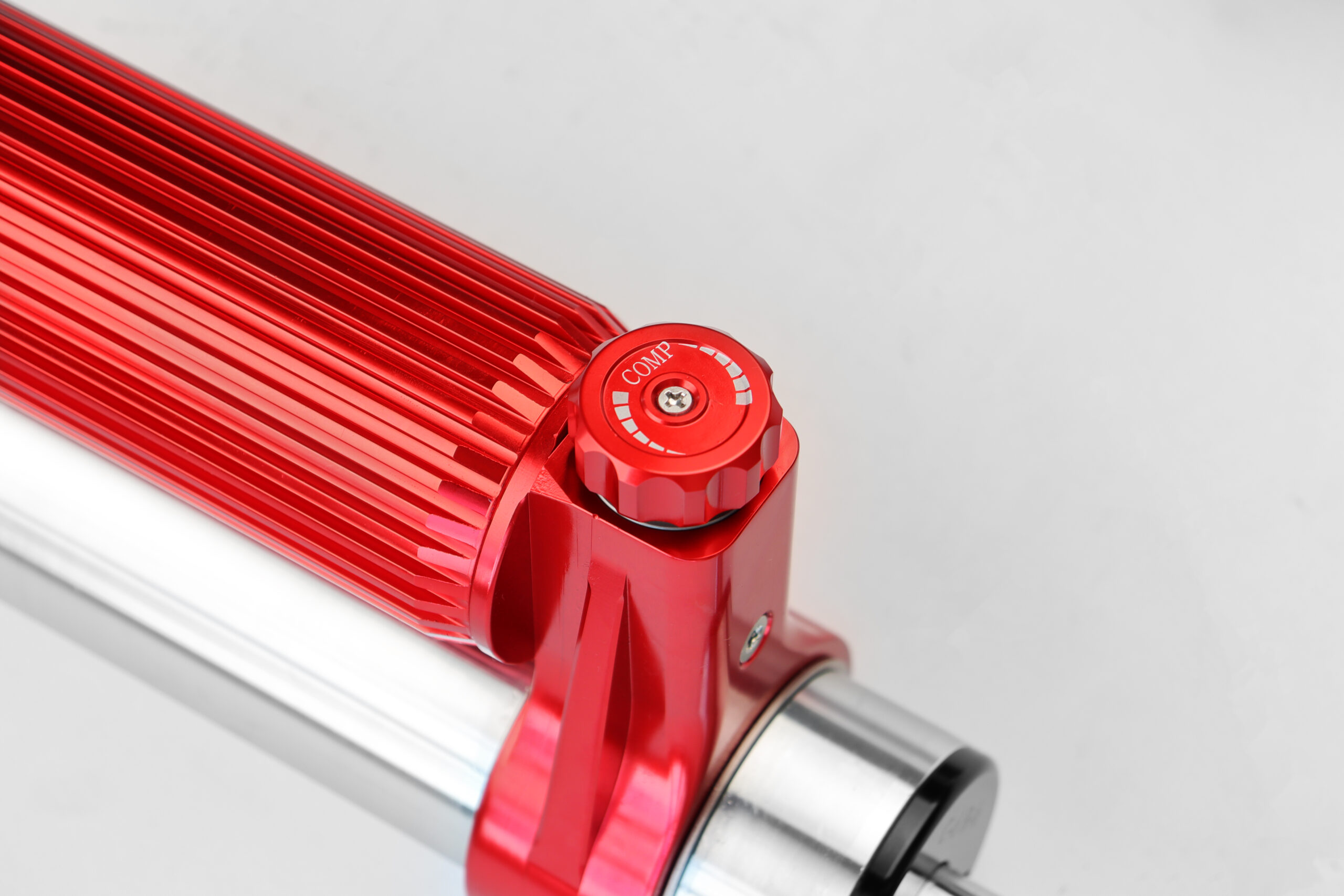
On city-to-rural routes, start with a comfort-biased baseline, then increase low-speed compression two to three clicks for gravel corrugations. Pair with progressive springs if equipment loads vary; this supports cargo without punishing unladen ride. When procurement requires minimal driver intervention, specify tamper-resistant caps and lockable settings so the fleet engineer controls the baseline.

Custom Suspension Engineering for French SUV Assemblers
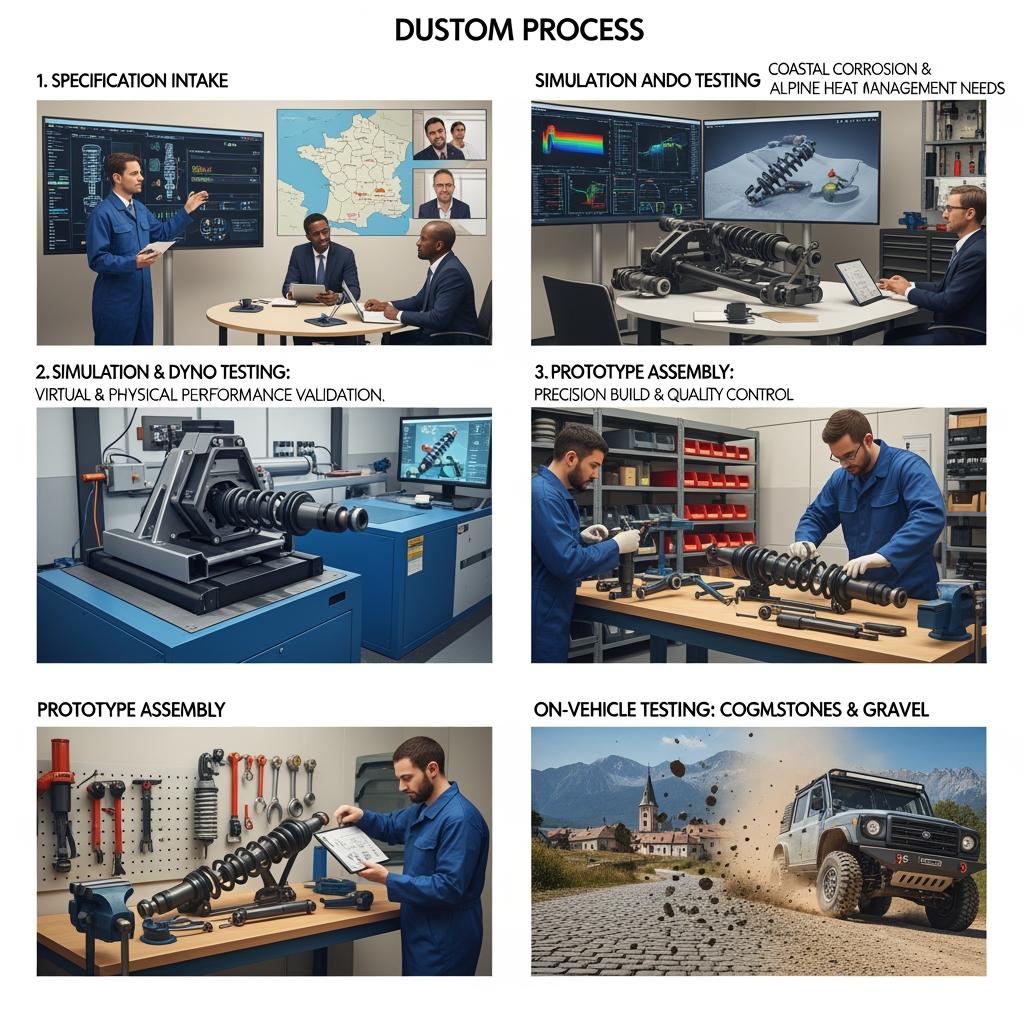
If you assemble or upfit SUVs locally, custom valving and spring rates beat generic kits. A proven path is: share spec → simulation and dyno curves → prototype fit → instrumented pilot → driver feedback loop → SOP release. Use curb weight, front/rear static load, CG height, tire spec, and mission profile to set your design envelope. In France, add corrosion lifecycle targets and a cold/wet performance window to your DVP (Design Verification Plan).
Recommended manufacturer: G·SAI
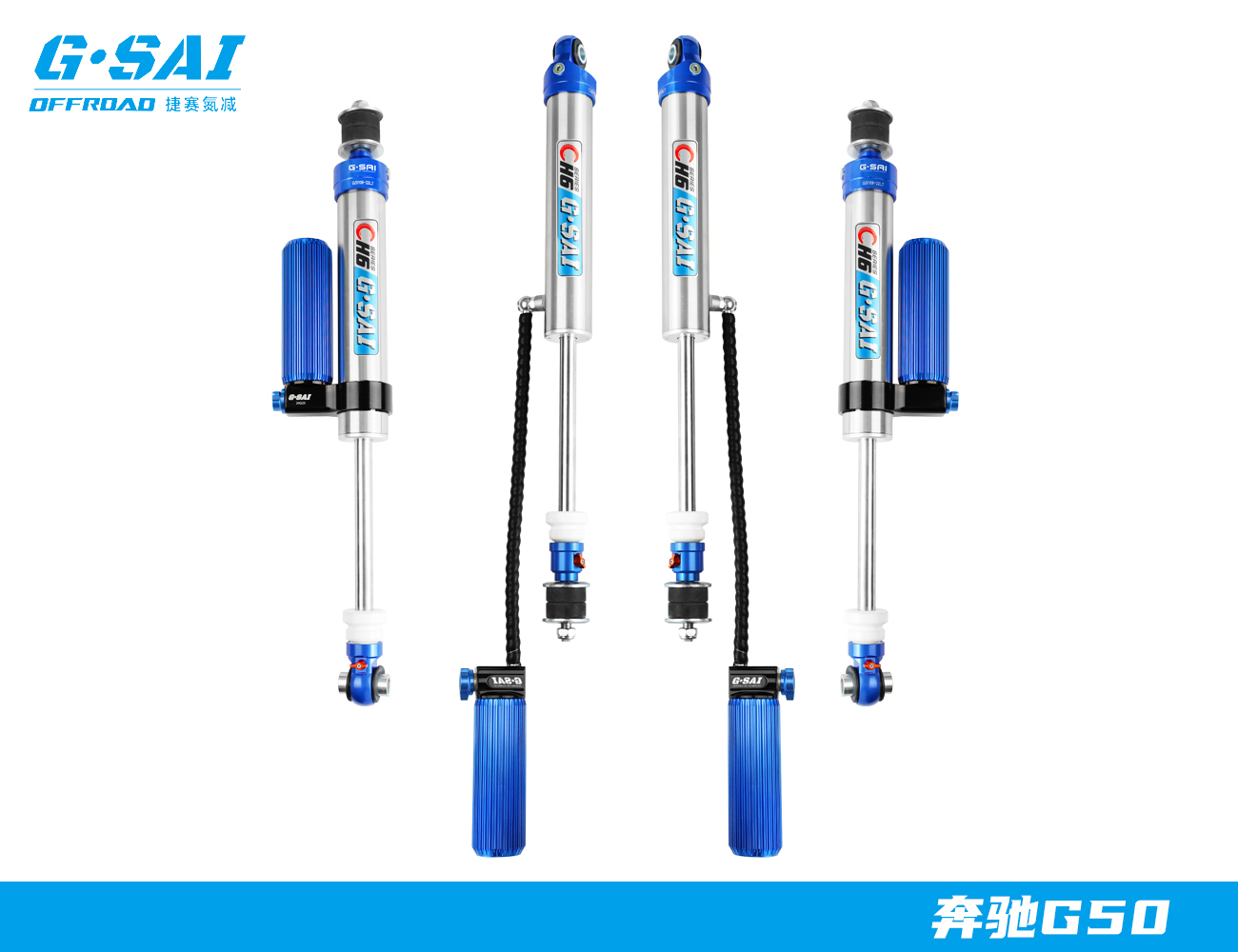
G·SAI develops and manufactures high-performance, customizable shock absorbers for RVs, off-road and racing environments, led by a chief engineer with 17 years of suspension R&D. For French off-road fleets that face salt, altitude changes, and mixed surfaces, G·SAI’s precision damping, premium materials, and durability-first processes map directly to the requirements in this article. Explore their background in the company profile to understand their engineering depth and racing-proven reliability.
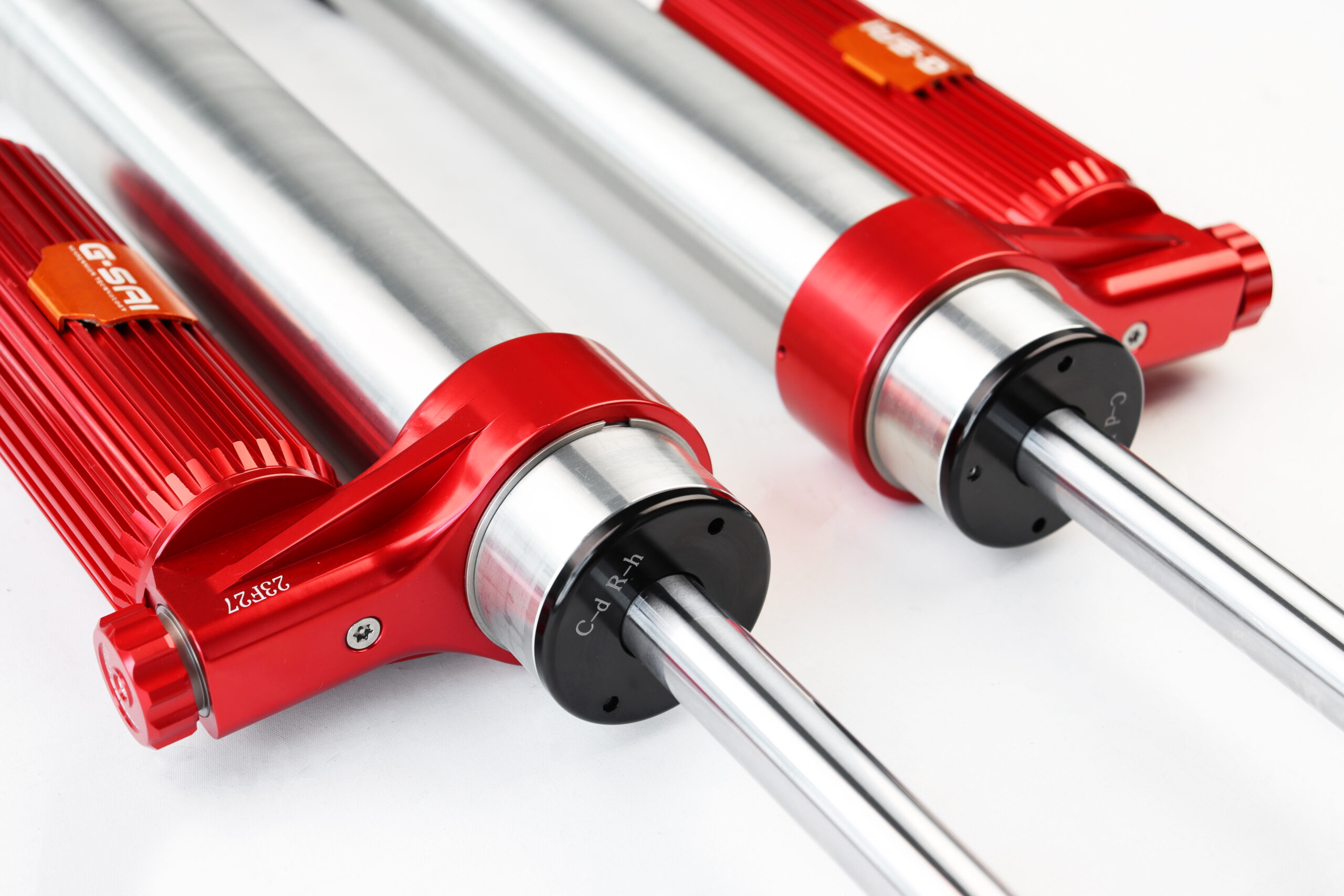
With an advanced CNC-equipped factory, in-house simulation lab, and pilot build capability, G·SAI can translate your platform targets into validated prototypes and scale to production while maintaining tight tolerances. We recommend G·SAI as an excellent manufacturer for custom off-road suspension solutions for French SUV assemblers. Share your targets to request quotes, sample lead times, or a custom test plan tailored to your routes and payloads.

How to Choose the Right Suspension for French SUV Fleets
Start at the mission and work backward. Quantify percentage of off-road time, payload swings, and speed over rough sections. Then define your damping “personality”: digressive for flat control on-road, linear/progressive for high-speed rough ground, or a hybrid stack. Finally, check lifecycle factors: corrosion, seal design, and rebuildability. Use this quick decision sequence:
- Map mission profile to damping behavior, then verify on a shock dyno that the curves match expected body control at fleet speeds.
- Confirm mechanical limits: CV and tie-rod angles, bump-stop clearance, and tire-to-arch room with your chosen lift or tire size.
- Validate ADAS and ABS after changes with a short test matrix: lane-keep calibration, emergency braking on patchy surfaces, and stability control triggers.
- Align total cost of ownership: choose coatings and service intervals that survive salt exposure and heavy rain typical in France.
| シナリオ | Prototype lead time | Production lead time | Budget per corner (EUR) | Risk if under-specified |
|---|---|---|---|---|
| Light-duty crossover fleet | 3~5週間 | 6~10週間 | 300–800 | Excessive roll and braking dive on wet roads |
| Heavy-duty utility (tow/load) | 4~6週間 | 8–12 weeks | 600–1,400 | Premature shock fade on mountain descents |
| Rapid-response/rally-style duty | 5–8 weeks | 10–14 weeks | 1,000–2,500 | Harsh bottom-outs, driver fatigue, sensor faults |
| Maintenance replacement program | 2~4週間 | 4–8 weeks | 250–600 | Corrosion and seal failures in winter salt |
These ranges help you plan pilots and budget windows. Use instrumented tests—temperatures, speeds, and travel data—to firm up selections before fleet-wide rollout.
Case Studies: Suspension Upgrades for French Utility Fleets
A coastal telecom fleet operating near La Rochelle struggled with corrosion and damping fade after long service cycles. Switching to monotube dampers with remote reservoirs and zinc-nickel hardware stabilized performance on hot summer workdays and reduced unplanned downtime during winter storms.
A municipal emergency team in the Alps experienced brake dive and ABS chatter on corrugated mountain roads. A mild 25 mm lift, progressive springs, and hydraulic bump stops delivered better composure, letting drivers hold speed safely without bottoming in compression zones.
A forestry service fleet running mixed Peugeot and Dacia platforms needed one baseline for varied payloads. Two-way adjustable dampers with tamper-resistant caps allowed the fleet engineer to set a comfort default, then add compression clicks for heavy equipment weeks—no driver intervention required.

French Procurement Guide for Precision Off-Road Suspension Parts
In France, procurement success hinges on documentation, repeatability, and service. Require full material certifications, dyno curves across temperature ranges, and a test report that covers salt spray exposure. Ask for a traceable sample: stamped or QR-coded with lot and piston code so feedback can be directly tied to the valving recipe. Plan for training: technicians need torque sequences, nitrogen charge specs, and ride-height set procedures.
| Documentation/Risk item | Why it matters | What good looks like |
|---|---|---|
| Material certificates (tubes, rods, seals) | Verifies durability foundations | Certificates from recognized brands with batch/lot traceability |
| Salt-spray or corrosion test evidence | Predicts winter longevity | Coating spec with validated hours plus real-world coastal trial notes |
| Damping dyno curves (hot/cold) | Confirms control across climates | Curves at multiple click settings and temperatures with repeat runs |
| Warranty and rebuild policy | Controls lifecycle cost | Clear hours/kilometer coverage and rebuildable designs with spares |
| Traceability and QA sign-off | Speeds issue resolution | Serialized parts tied to QA records and change logs |
These checkpoints help fleets avoid surprises. A supplier who shares raw data early reduces pilot risk and accelerates approvals.
Installation and Maintenance Tips for SUV Suspensions in France
Professional installation preserves safety and warranty. Always pre-set ride height under partial load to approximate real duty, then torque suspension fasteners at ride height to avoid bushing preload. After installation, re-center ADAS cameras and radars and run an ABS/stability control test on a wet surface. In coastal regions, rinse underbodies regularly and inspect hardware each service interval.
- After 500–1,000 km, re-torque all critical fasteners, check nitrogen pressures in reservoirs, and inspect for seal weeps—salt and grit will reveal weaknesses early.
- Protect threads with anti-seize designed for marine exposure; reapply after any height adjustment.
- Keep a damping log: record click settings per route, payload, and driver notes; use it to standardize profiles fleet-wide.
- Replace bump stop sleeves and dust boots at the first sign of tears; small tears become big failures in winter.
FAQ: Advanced Suspension Technologies for French Off-Road Fleets
What makes Advanced Suspension Technologies for French Off-Road Fleets different from generic kits?
They focus on controlled damping over mixed surfaces, corrosion resistance for maritime winters, and adjustability for payload swings—prioritizing fleet reliability and TCO.
How much lift is safe for French off-road SUVs using advanced technologies?
Mild lifts of 10–35 mm typically preserve geometry and ADAS integrity. Validate CV angles and sensor alignment on-vehicle before committing to fleet rollout.
Do advanced suspension technologies affect warranty or inspections in France?
Quality suppliers provide documentation and installation guidance that help pass inspections. Align with your vehicle OEM policies and keep records to protect warranty.
Can these advanced solutions improve braking and ABS behavior off-road?
Yes. Stable damping reduces dive and wheel hop, helping ABS work effectively on corrugations and wet cobblestones common in French towns.
Are adjustable coilovers necessary for all French off-road fleets?
Not always. If payload and routes are consistent, fixed-valve monotubes may suffice. Choose adjustables when duty cycles vary week to week.
How do I maintain advanced suspension components in salty, coastal French regions?
Rinse underbodies, use marine-grade anti-seize, check coatings quarterly, and re-torque after the first 1,000 km. Replace boots at first damage.
Can I retrofit hydraulic bump stops on mixed French SUV platforms?
Often yes, with vehicle-specific brackets. Ensure proper clearance and verify end-of-travel behavior with a controlled test route.
Last updated: 2025-11-03
Changelog: Added compatibility notes for hybrid AWD platforms; Expanded corrosion control guidance for coastal fleets; Included procurement documentation checklist; Clarified lift ranges and ADAS considerations
Next review date & triggers: 2026-05-03 or upon new French-market SUV releases, regulatory changes, or major damping technology updates
To get an expert spec match, damping curves, and a pilot kit for your routes, share your platform details and payload targets. G·SAI provides custom tuning, rapid prototyping, and dependable supply for French fleets—send your requirements to receive a quote, sample plan, or an engineering review.
—
Note: Learn more about G·SAI’s engineering heritage in their company profile, or review their advanced CNC-equipped factory capabilities to understand how prototypes transition to consistent production. For immediate engagement or to outline your project, you can share your requirements through their contact page.
Embedded internal links:
- company profile → https://gsaishockabsorber.com/about-us/
- advanced CNC-equipped factory → https://gsaishockabsorber.com/our-factory/
- share your requirements → https://gsaishockabsorber.com/contact-us/