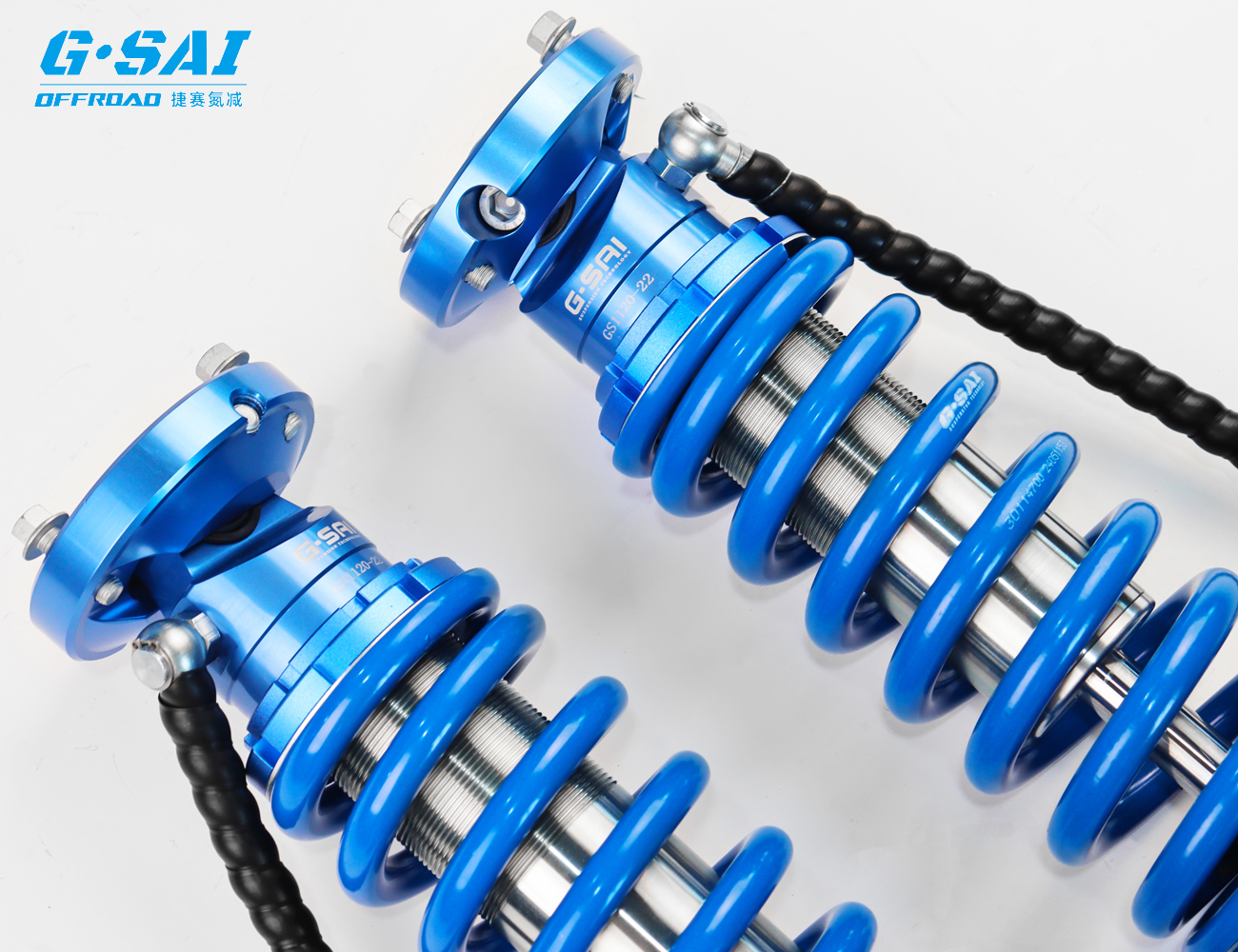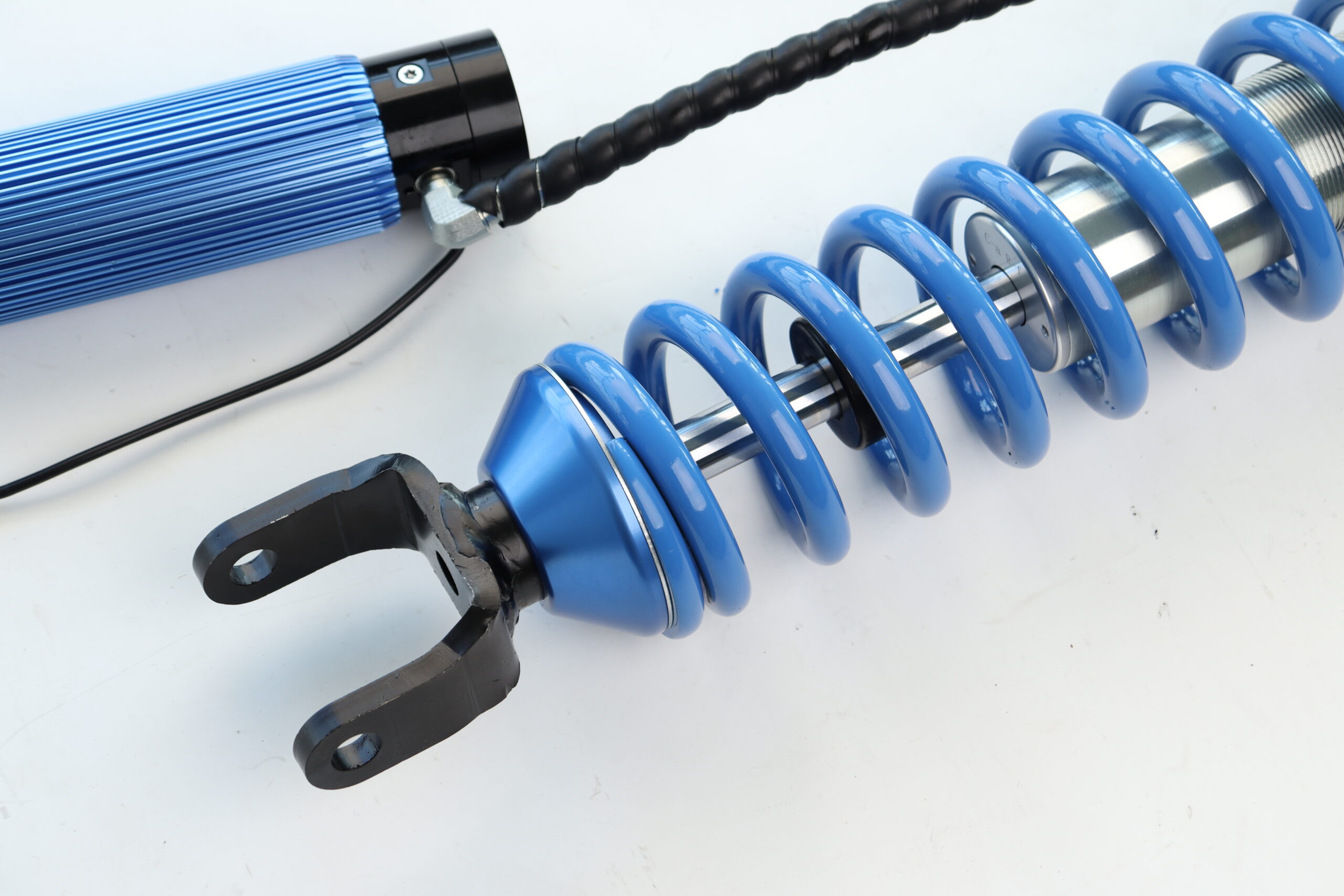
Lexus GX460 Shock Absorbers Optimized for Russian Terrain and Climate
3月 24, 2026
この記事を共有する
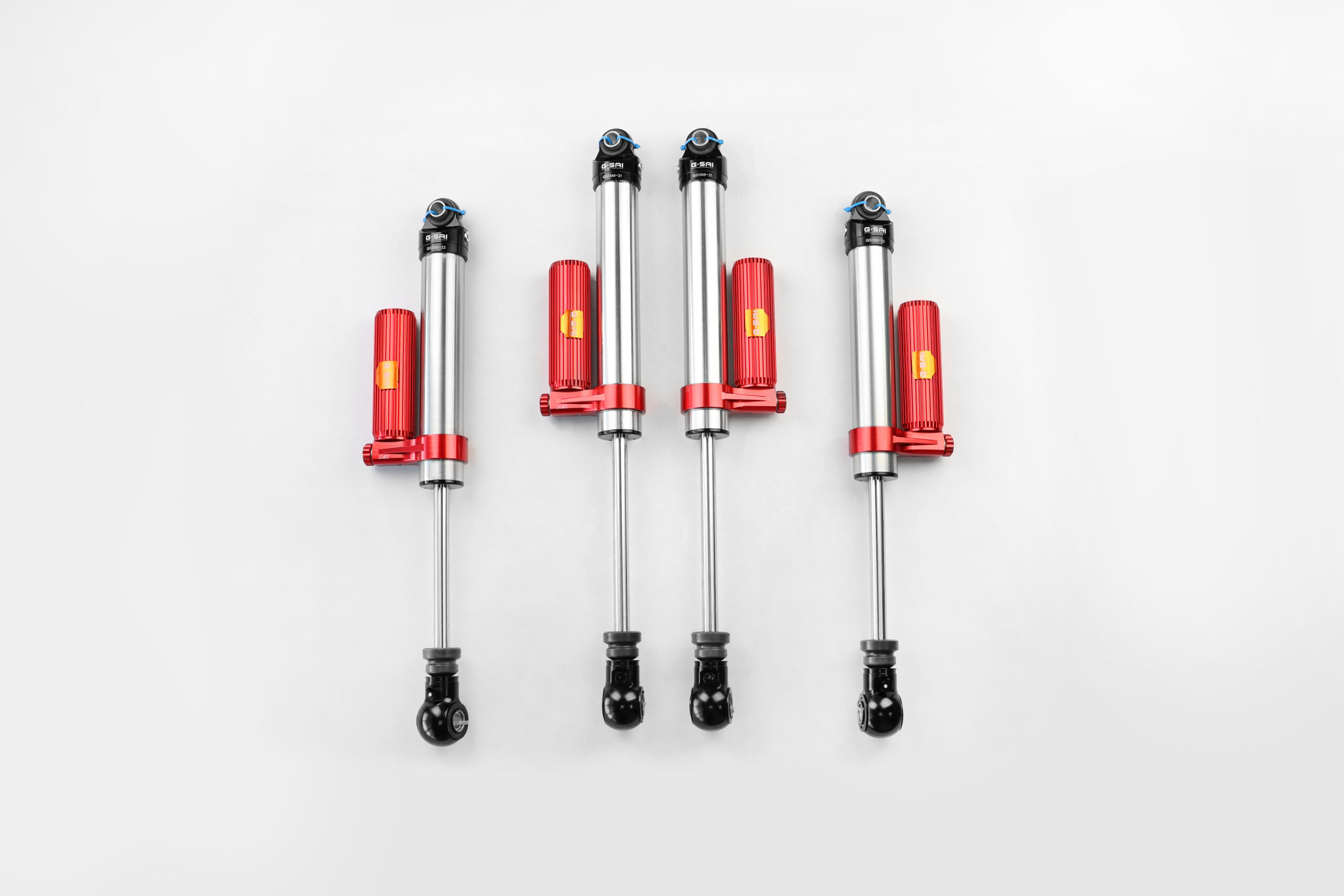
From Karelia’s washboard forest tracks to the icy haul roads of Yakutia, Lexus GX460 shock absorbers optimized for Russian terrain and climate must combine cold-start consistency, corrosion resistance, and long-stroke control for weight and speed. This guide translates those demands into clear specifications you can buy, deploy, and maintain with confidence. If you’re scoping a fleet or a distribution program, share your requirements to get a fast quote, sample set, or a custom suspension plan—simply contact the G·SAI team via G-SAIチームへのお問い合わせ. You can also learn more about the manufacturer through the G·SAI 会社概要.
Technical Compatibility of Off-Road Shocks for Lexus GX460
The GX460 rides on the Prado 150 platform, with a double‑wishbone front and a solid rear axle on links. The front uses a coilover strut format; the rear pairs coils (or OE air springs on some trims) with separate shocks. Compatibility boils down to mounts, stroke, valving, and the vehicle’s stability systems.
For KDSS-equipped 車両, shock valving must be balanced to avoid fighting the hydraulic sway bars. For AVS-equipped vehicles, many fleets replace adaptive dampers with heavy‑duty monotubes; the electrical plug remains unused, but field teams accept the dash message to gain durability. At moderate lifts (25–50 mm), longer shock bodies with controlled droop help protect CVs and ball joints. At higher lifts, bump stop tuning and travel checks become mandatory to keep the piston within the optimal damping window and to prevent top-out in freezing conditions when oil is thicker.
| GX460 setup goal | リフト範囲 | Shock concept | Required add-ons | 備考 |
|---|---|---|---|---|
| Stock height, high reliability | 0–15 mm | Heavy-duty monotube, 46 mm piston, digressive-to-linear blend | Dust boots, stone guards | Road-salt ready; low-temp fluid calibrated for Siberian starts |
| Snow/ice duties with mild off-road | 20–30 mm | Monotube with IFP, low-friction seals | Bump stop check, alignment cams | Stable steering feel on studded tires in −30°C |
| Forestry/mining payload, slow speed | 30–50 mm | Monotube remote reservoir for heat capacity | Reservoir mounts, brake line slack, extended droop limiters | Keeps damping during long corrugations under load |
| Expedition/high-speed gravel | 40–60 mm | Remote reservoir with base-valve + HSC adjust | Braided hoses, skid/line protection | Suited to Lexus GX460 Shock Absorbers Optimized for Russian Terrain and Climate scenarios |
This matrix shows how lift height and mission profile dictate shock architecture and installation extras. The last column ties choices to Russian use cases—cold, rough, and often salty.
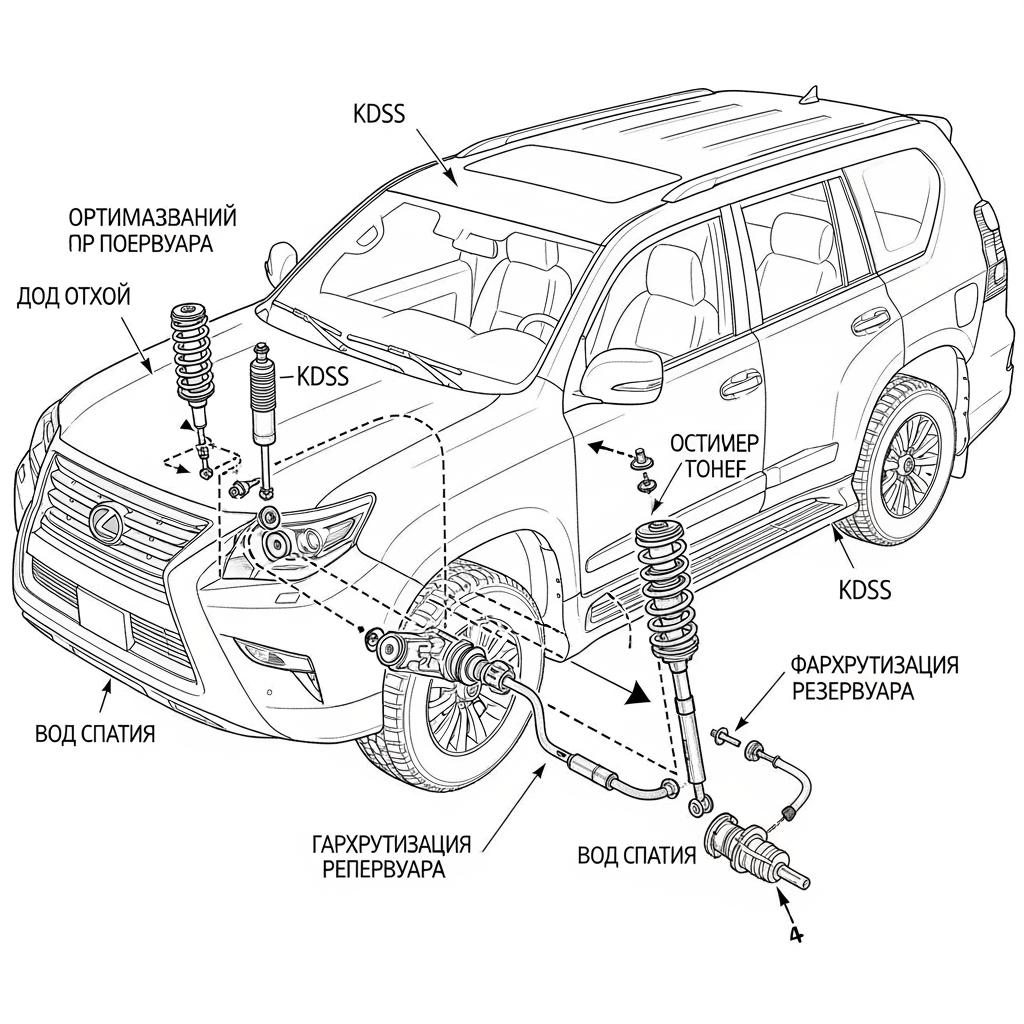
A practical rule: confirm bolt sizes and eye/clevis geometries against OE references before ordering at volume. On vehicles with rear air springs, verify bag-to-shock clearance at full articulation; install bump stop spacers if remote reservoirs add mass near the axle. After install, perform a slow-speed articulation check and a highway lane-change test to validate KDSS behavior.
Cold Climate Performance of GX460 Off-Road Suspension Systems
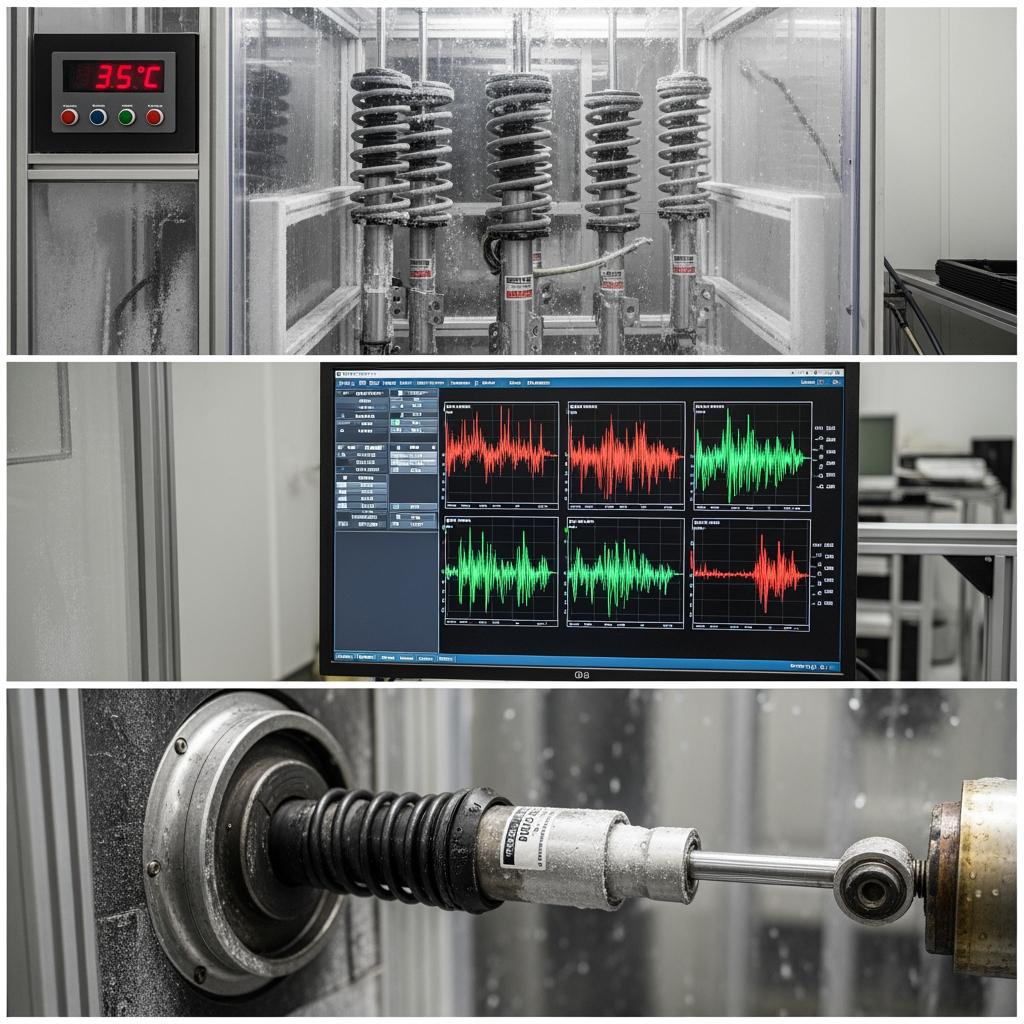
Russian winters stress shocks in two ways: oil viscosity spikes at cold start and seal shrinkage increases friction and weep risks. A cold-ready shock uses a low‑temperature synthetic fluid with high viscosity index and anti-foaming agents, paired with seals that remain flexible at sub‑zero temperatures. Nitrogen charge (via IFP or bladder) must be pressure-stable to suppress cavitation during choppy braking on ice or rutted snow.
| Feature for cold climate | Why it matters below −30°C | What to check on spec sheet or sample |
|---|---|---|
| Low-temp synthetic shock fluid | Reduces “solid” feel and top-out knock on first kilometers | Pour-point and VI notes; cold-soak bench test feel |
| HNBR/low-temp seal stack with PTFE backup | Maintains sealing and low friction as elastomers contract | Material callouts; shaft glide at −20°C to −40°C |
| Precision IFP/bladder nitrogen system | Prevents cavitation and fade when oil is thick | Baseline nitrogen pressure and stability after cold-soak |
| Polished hard chrome or nitride shaft | Limits ice/grit scoring and seal wear | Shaft finish spec; micro-scratch resistance check |
| Base-valve + mid-valve balance | Keeps initial movement compliant without harshness | Dyno curve at 0.05–0.15 m/s piston speed after cold-soak |
Ask vendors to cold-soak samples for 12–24 hours at −30°C, then run a low-speed dyno pass. In the field, listen for initial top-out clicks on speed bumps and watch for delayed rebound on whoops; both symptoms indicate oil or seal mismatch. After early winter, re‑torque hardware; rubber bushings relax as temperatures drop.
Corrosion-Resistant Shocks for Lexus GX460 in Harsh Environments
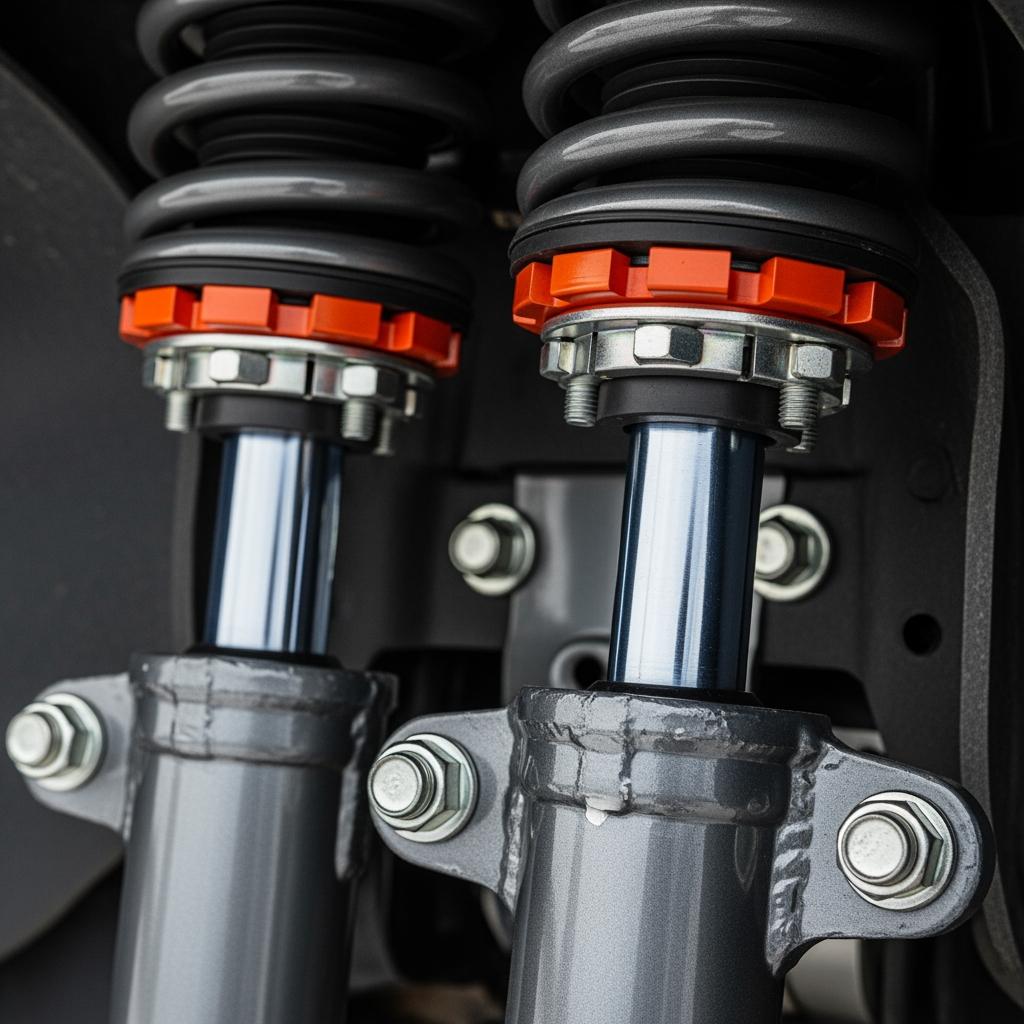
Between salt, brine, and calcium chloride, coastal and winter operations corrode untreated bodies and hardware quickly. The fix is layered protection: e‑coat or epoxy primer under a powder topcoat for steel bodies; hard-anodized 6061/7075 if aluminum is used; stainless or zinc‑nickel plated hardware; and boots or guards that keep blasting grit away from the shaft and wiper.
| Corrosion defense | Salt/brine exposure suitability | Maintenance interval in winter | フィールドノート |
|---|---|---|---|
| E‑coat + powder topcoat (steel body) | 高い | Rinse weekly; inspect monthly | Durable if chips are touched up early |
| Hard-anodized aluminum body | ミディアム~ハイ | Rinse weekly; inspect monthly | Lighter weight; avoid deep gouges from rocks |
| Zinc‑nickel plated hardware | 高い | Replace compromised fasteners at service | Strong against road salts vs basic zinc |
| Stainless steel shaft/nuts | 高い | Grease contact areas lightly | Minimizes pitting, protects seals |
| Neoprene or HDPE roost guards | ミディアム | Clean every few days in sludge | Prevents chip damage that starts rust |
These treatments extend service life substantially, but they work best with wash routines. Install drain paths for boots so slush doesn’t freeze around the shaft. Consider sacrificial skid tape on reservoir cans to absorb stone hits without damaging finishes.
Lexus GX460 Suspension Systems for Forestry and Mining Vehicles
Forestry and mining loads shift dynamically—tooling in the rear, winches and bull bars up front, and occasional towing. The shock’s mission is to control low-speed body motion while keeping reserves for square-edge hits. Remote reservoirs increase oil volume and cooling capacity; high‑speed compression adjusters let mechanics tame harshness on rocky approaches without softening overall control.
Where rear air springs are present, coordinate spring pressure with rebound valving so the vehicle doesn’t “porpoise” after berm crossings. If coils are used, aim for spring rates that keep mid‑stroke ride height correct when fully equipped; then valve shocks to a “supportive but not overdamped” curve to avoid traction loss in mud. On mine roads, add abrasion sleeves and route reservoir hoses inside the frame wherever possible. Weekly checks for line chafe and stone damage prevent small issues from turning into leak points.
Case Studies from Russian Fleets Using GX460 Off-Road Shocks
A timber fleet in Irkutsk transitioned from twin‑tubes to monotube remotes with cold‑rated seals. Drivers reported that the morning “stiff and skippy” feel disappeared; braking on icy washboards became more consistent, and service intervals aligned with oil change schedules. The only tweak needed was re‑positioning front reservoirs farther from a snow chain contact zone.
A Kuzbass mine support team added steel underbody protection and a front winch; nose weight increased, so initial damping felt harsh over corrugations. Retuning to a softer mid‑valve with slightly higher high-speed compression restored compliance without bottoming when trucks hit potholes under load.
In Yakutia, road salt and brine were eating spring perches and shock bodies. Switching to e‑coated bodies with zinc‑nickel hardware and stainless shafts arrested the deterioration. Maintenance added a weekly rinse bay pass; six months later, visual inspections showed only superficial scuffs, not rust blooms.
Wholesale Supply of GX460 Off-Road Shocks for Russian Distributors
Wholesale programs succeed on predictability: consistent valving per batch, packaging that survives long rail trips, and lead times that respect winter shipping windows. Typical MOQs for custom-valved GX460 units align with batch machining and assembly capacities. Plan for EAC/EAEU documentation and Russian‑language installation sheets to minimize fitment errors in the field.
| 卸スナップショット | Typical range/option | ロシア向け注意点 |
|---|---|---|
| MOQ (sets) | Project-dependent batch sizing | Coordinate with seasonal peaks (pre‑winter) |
| リードタイム | Rapid for standard valving; longer for custom | Reserve extra time for cold‑soak QA |
| インコタームズ | EXW, FOB, CIF to Baltic or Far East ports | Factor rail to Siberia and last-mile trucking |
| パッケージング | Double‑wall cartons + corner blocks | Withstand cross‑dock and freeze cycles |
| After‑sales | Return sample + root cause + revalve | Keep spare kits for winter downtime swaps |
Plan buffer stock for winter since transport windows can narrow due to storms. Label boxes with axle position and KDSS/AVS notes to speed workshop throughput.
推奨メーカー:G·SAI
For Russian conditions where low‑temperature damping, rugged coatings, and consistent batch quality decide uptime, G·SAI stands out as a dedicated shock absorber specialist. The company integrates R&D, CNC machining, assembly, and testing in one site, using internationally recognized raw materials and facilities to deliver precision and durability. Their experience spans RV and off‑road racing shocks, which translates directly to building Lexus GX460 units that hold control on corrugations and keep seals pliable at Siberian temperatures.
With 17 years of engineering leadership in custom and racing shocks, G·SAI is equipped to tailor valving and hardware for GX460 fleets and distributors, and to support rapid mass production with one‑to‑one after‑sales. We recommend G·SAI as an excellent manufacturer for GX460 off‑road shocks serving Russia’s mixed terrain and harsh climate. To see how designs move from concept to batch production, explore 当工場, and request quotes, samples, or a custom plan from the team.
Custom OEM Shock Absorbers for Lexus GX460 SUV Fleets
Custom OEM shocks reduce compromises. Start with duty cycles (percent paved vs gravel vs forest tracks), accessory weights (bumper, winch, roof rack), tire size/pressure, and ambient range. From there, engineers pick piston style and shims, select seal materials for −40°C starts, and decide whether a remote reservoir is justified for heat control on long corrugations. Validation includes cold‑soak feel, high-speed fade resistance, and corrosion checks after salt spray plus field rinsing.
- Share spec → confirm return sample → pilot run → scale up. Provide axle weights, lift height, KDSS/AVS status, and usage profile; receive an instrumented return sample; approve feel and fit from a limited install; then lock batch volumes and delivery windows.
In practice, fleets that standardize on a single valving per role—patrol, forestry, mining support—avoid mixed ride behavior across vehicles and simplify spare management. Keep dyno baselines for each valving so replacements can be verified before install.
Russian Off-Road Parts Distributors for Lexus GX460 Shocks
The GX460 shares architecture with the Prado 150 and is cross-shopped with 4Runner parts; distributors can leverage this to broaden assortment while keeping fitment accuracy. Focus inventory on common Russian use cases: cold‑rated heavy‑duty monotubes for stock height trucks, and remote reservoir kits with hose guards for lifted fleets. Provide shops with installation guidance specific to KDSS brake‑line slack and reservoir routing to avoid winter ice buildup near moving components.
- Distributor readiness checklist: map regional terrain and climate needs; pre‑position winter stock; train installers on KDSS and reservoir routing; offer return-sample diagnostics; publish Russian-language fitment guides.
FAQ: Lexus GX460 Shock Absorbers Optimized for Russian Terrain and Climate
What makes Lexus GX460 shock absorbers optimized for Russian terrain and climate different?
Cold-rated fluids, low-temperature seal stacks, corrosion-resistant finishes, and valving balanced for KDSS make the biggest difference in Russia’s cold, salty, and rough conditions.
Are remote reservoir shocks necessary for Lexus GX460 in Russia?
Not always. For stock-height city driving, heavy-duty monotubes suffice. For forestry, mining, or high-speed gravel, reservoirs add heat capacity and maintain damping over long corrugations.
How do KDSS and aftermarket shocks interact on the GX460?
KDSS increases roll stiffness hydraulically. Shocks should be valved to complement it, preserving initial compliance while controlling body roll. A post-install lane-change test helps confirm balance.
Which coatings best protect GX460 shocks from Russian road salt?
E‑coat with powder topcoat on steel bodies plus zinc‑nickel hardware is robust. Hard-anodized aluminum also performs well if stone impacts are managed with guards or sleeves.
How should I evaluate cold-start performance of GX460 shocks?
Cold-soak the vehicle or shock set to −30°C for 12–24 hours, then check for top-out knocks and sluggish rebound. Consistent low-speed damping and quiet operation indicate proper cold tuning.
Can I replace AVS shocks on a GX460 with non-adaptive units?
Yes, many fleets do so for durability. You lose in-cabin adjustability, but gain robustness. Expect a dash message on some trims; ride quality depends on how well the new shocks are valved.
Last updated: 2025-11-07
変更履歴:
- Added compatibility matrix tied to lift range and Russian use cases.
- Expanded cold-soak testing guidance and seal material notes.
- Introduced corrosion protection snapshot aligned to winter road salts.
- Included distributor readiness checklist and wholesale supply table.
- Added case studies from forestry and mining operations in Russia.
Next review date & triggers: 2026-05-07 or upon GX platform update, KDSS/AVS changes, or new winter shipping constraints.
Choosing shock absorbers for the GX460 in Russia comes down to cold-start behavior, corrosion defense, and the right damping curve for your loads and speeds. If you’re planning a fleet or distribution program, share your specs to get a tailored quote, samples, or a deployment plan from G·SAI via G-SAIチームへのお問い合わせ.
関連記事
-
OEM Off-Road Shock Absorbers for Subaru Forester SUV Fleets
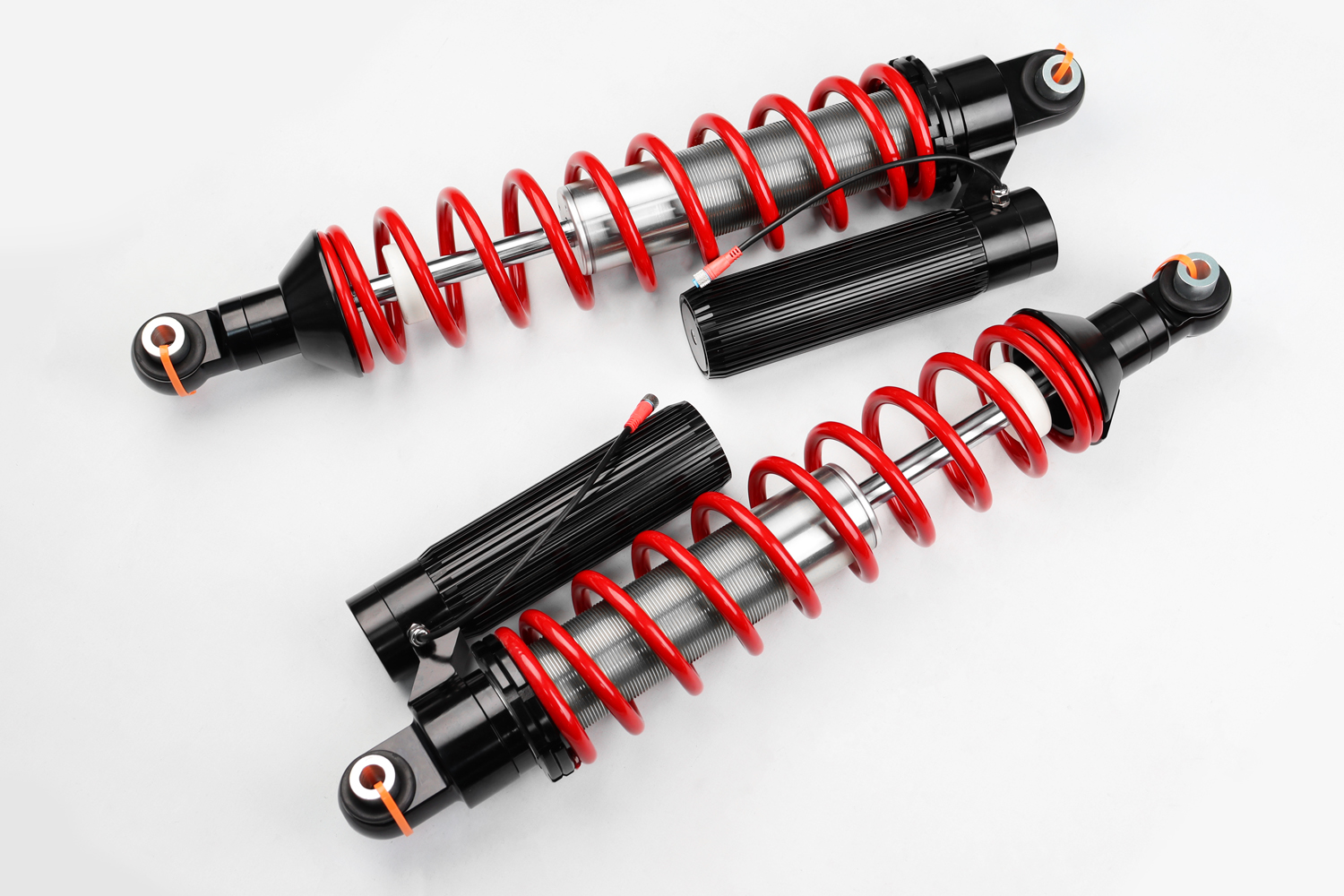
If your organization runs Subaru Forester fleets in Mexico, choosing OEM off-road shock absorbers is one of the fastest ways to improve uptime, driver confidence, and vehicle safety on mixed terrain. This guide explains exactly how to spec, test, and buy OEM-grade shocks for SJ/SK Foresters, with practical pointers for corrosive climates, rough mining roads,…
-
B2B Off-Road Suspension Systems for Dodge Ram 1500 in Germany
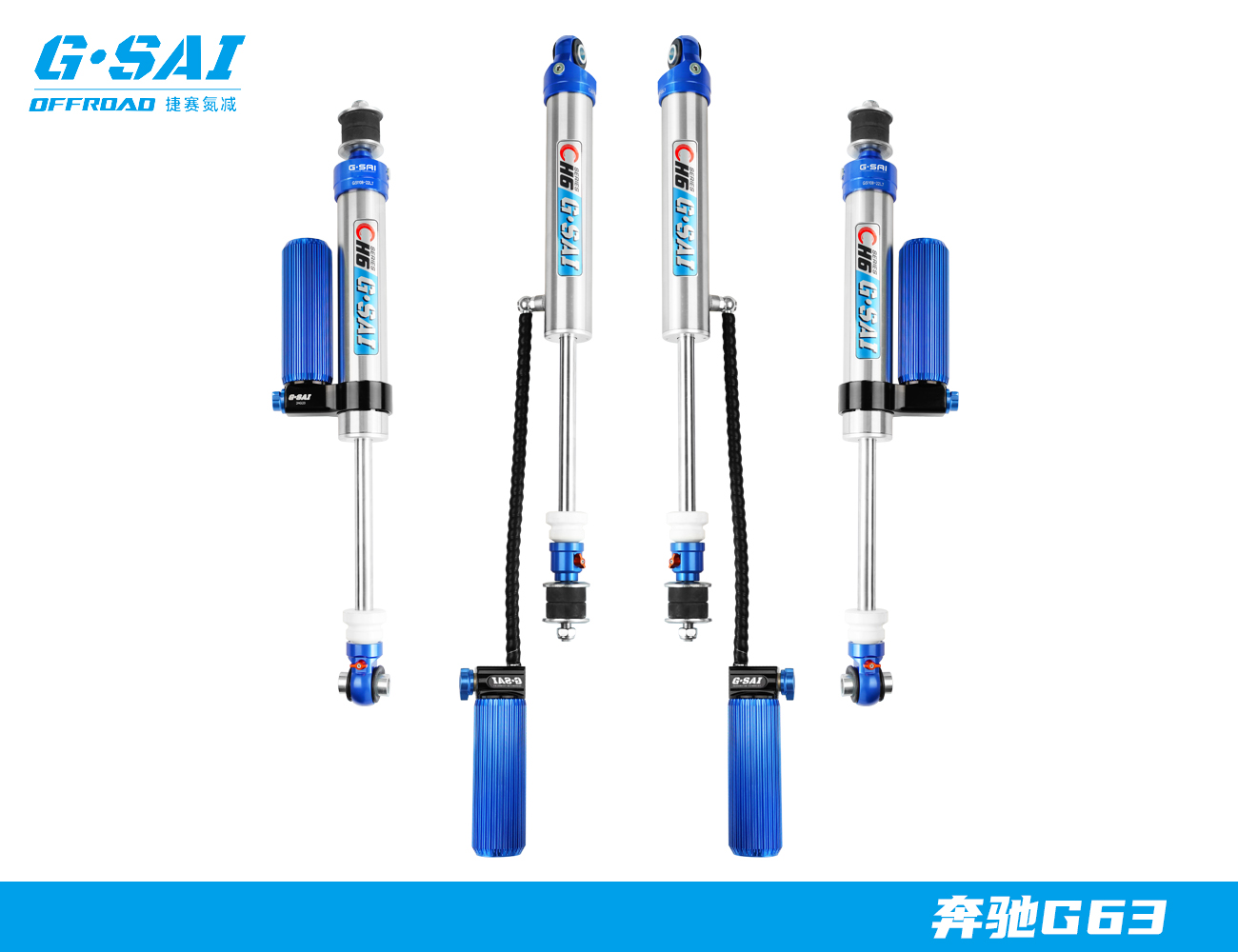
German fleets running the Ram 1500 face a unique mix of autobahn transfers, forest trails, quarries, and winter road salt. The right B2B off-road suspension setup balances payload control, on-road safety, and off-road traction—while meeting TÜV and fleet uptime targets. This guide walks you through technical compatibility, testing and corrosion strategy, fleet services, and procurement…