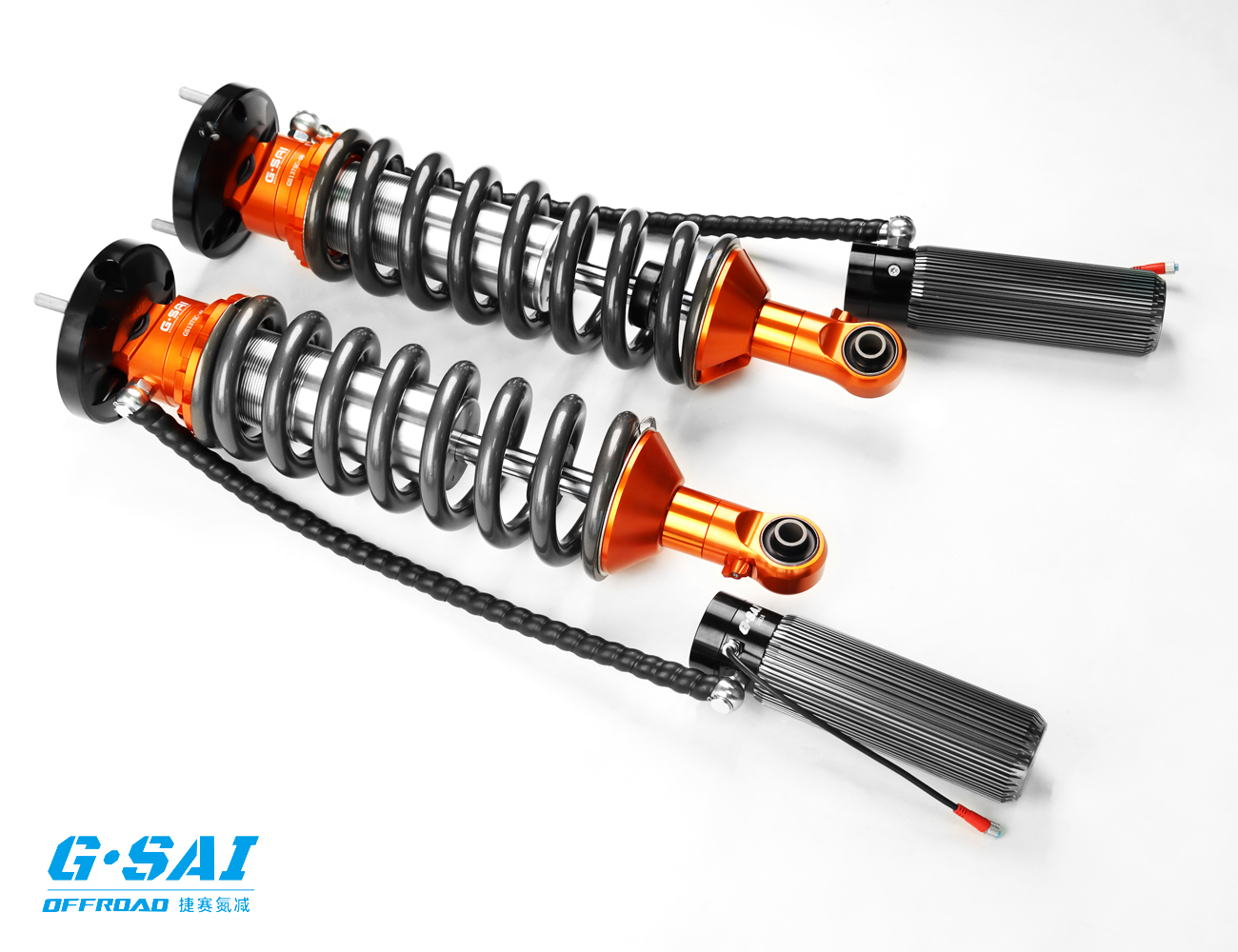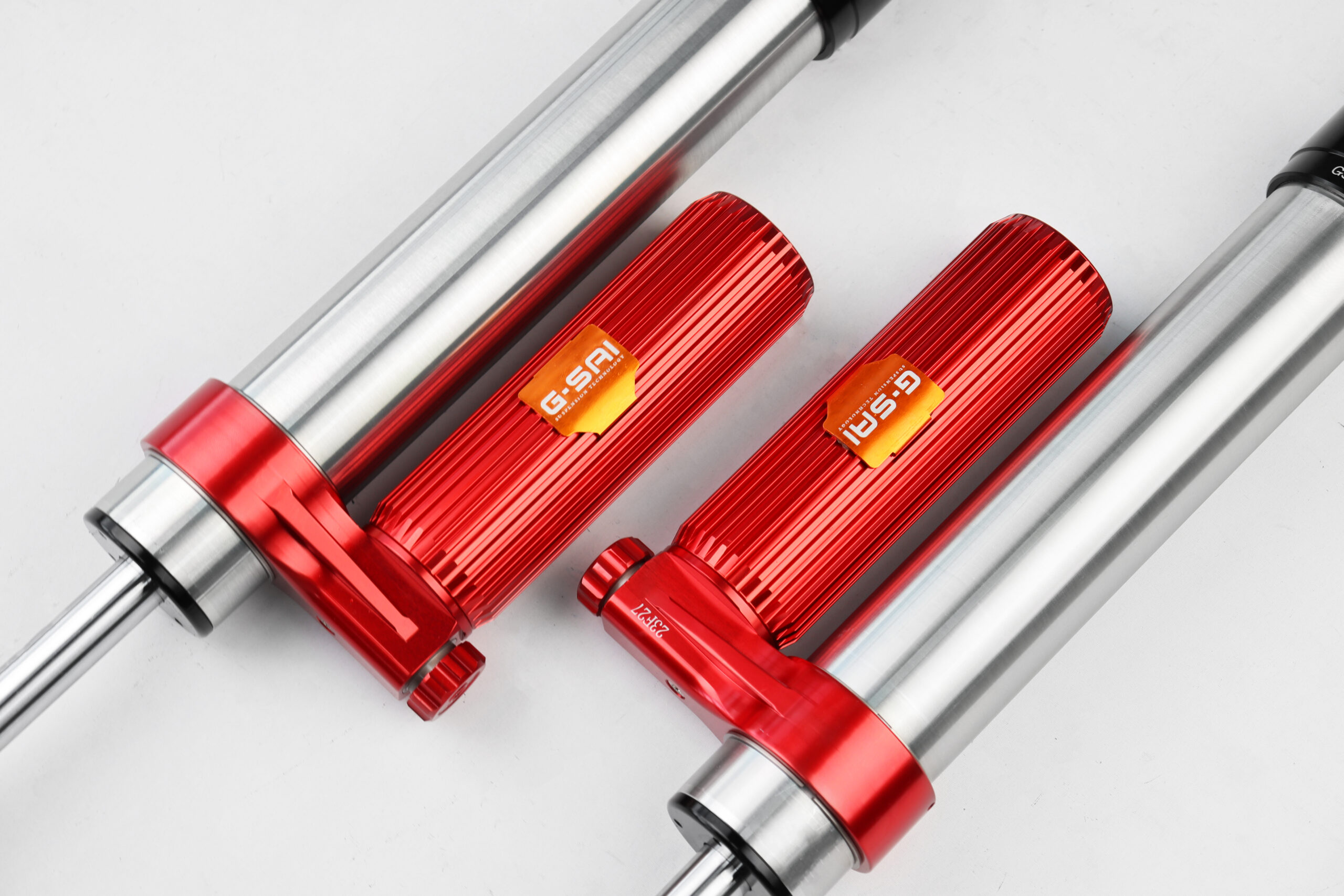
Multi-Stage Damping Shocks: The Ultimate Guide for Wholesale Buyers and Off-Road Brands
June 5, 2025
Share This Article
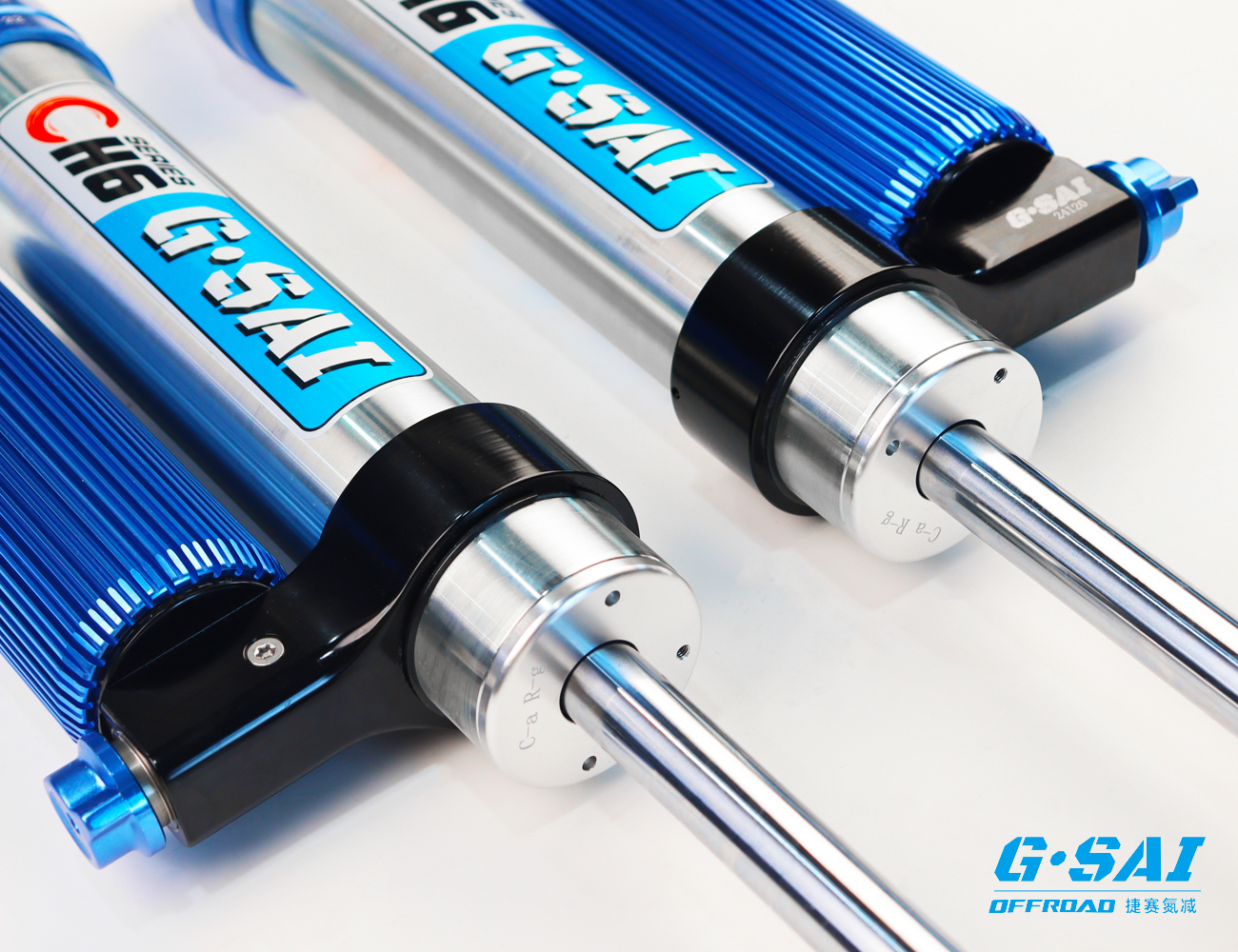
What Are Multi-Stage Damping Shocks?
Multi-stage damping shocks are advanced shock absorbers engineered to provide variable resistance depending on the velocity and force of suspension movement. Unlike traditional monotube or twin-tube shocks, these systems use multiple valving stages, enabling them to adapt to varying terrains and loads dynamically.
Key Features of Multi-Stage Damping Shocks
| Feature | Description |
|---|---|
| Adaptive Damping | Adjusts resistance based on compression speed and terrain |
| Multiple Valving Mechanisms | Includes base valves, mid-speed, and high-speed compression stages |
| Heat Dissipation | Better thermal management for prolonged performance |
| Custom Tuning Capability | Allows for fine-tuning based on specific vehicle and use-case requirements |
| Heavy-Duty Construction | Built for rugged terrains and high-performance use cases |
How Multi-Stage Damping Works
Multi-stage shocks function through a series of internal valves that open at different pressures and velocities. This enables the shock to respond differently at:
- Low speed: Softer damping for comfort
- Medium speed: Balanced damping for road irregularities
- High speed: Firm damping to control rapid suspension movements
This gives racers, off-road enthusiasts, and OEM brands a superior level of control, especially when transitioning between terrains or tackling extreme trails.
High-Intent B2B Keywords Used
- Multi-stage damping shock suppliers
- Performance shock absorber manufacturers
- B2B off-road suspension solutions
- Wholesale off-road shock absorbers
- Automotive shock absorber distributors
Applications of Multi-Stage Damping Shocks in Off-Road and Racing
Multi-stage damping shocks have become a staple in the design of high-performance off-road and racing vehicles. Their ability to adapt to dynamic forces makes them ideal for extreme environments, especially those requiring durability, precision, and responsiveness.
Key Industries and Use-Cases
| Industry/Segment | Application Example | Benefits of Multi-Stage Shocks |
|---|---|---|
| Off-Road Racing Teams | Baja 1000, King of the Hammers | Enhanced control, high-speed terrain adaptability |
| Modified Car Builders | Lifted trucks, overlanding rigs | Custom damping setups, increased ride comfort |
| RV and Trailer Upgrades | Large, heavy-duty recreational vehicles | Improved load handling, reduced sway |
| Military/Utility Vehicles | Armored vehicles, reconnaissance units | Superior shock endurance, responsive load adjustment |
| OEM Performance Brands | High-end pickup trucks and performance SUVs | Enhanced brand performance reputation, customer satisfaction |
Why B2B Buyers Prefer Multi-Stage Damping Shocks
- Product Differentiation: Multi-stage damping offers a technical edge that can set your brand apart.
- High ROI: Longer product lifecycle and fewer warranty claims.
- Scalability: Suitable for mass production and custom small-batch orders.
- Safety Compliance: Helps meet advanced safety regulations by improving vehicle stability.
For example, G·SAI, a leading innovator in high-performance shock absorber customization, has developed proprietary multi-stage damping systems designed specifically for off-road racing and RV applications. Their shock absorbers are rigorously tested in competitive environments, making them a top choice for brands seeking reliability and performance. Learn more about G·SAI’s shock absorber product line.
Types of Multi-Stage Damping Shocks: An Overview for Distributors
As a distributor or wholesaler, understanding the types of multi-stage damping shocks available is essential for matching the right product with the right customer. Below is a breakdown of the primary variations and their ideal applications.
Common Types of Multi-Stage Damping Shocks
| Type | Specifications | Best for |
|---|---|---|
| 2-Stage Damping Shocks | Low- and high-speed compression stages | Light off-road vehicles, entry-level mods |
| 3-Stage Damping Shocks | Adds mid-speed compression for better control | Racing applications, lifted trucks |
| Remote Reservoir Shocks | External reservoirs for heat dissipation and fluid capacity | Heavy-duty off-road racing |
| Adjustable Multi-Stage Shocks | Manual or electronic adjustment knobs | Custom builds, performance tuning |
| Internal Bypass Shocks | Valving channels inside the shock body for progressive dampening | Trophy trucks, desert racing |
Customization Options for Bulk Buyers
Multi-stage damping shocks can be customized to meet OEM or private label specifications:
- Piston diameter
- Valving rates
- Reservoir size
- Mounting hardware
- Branding and packaging
G·SAI offers one-on-one engineering support for B2B partners looking to develop products tailored to specific vehicle platforms or brand identities. With an in-house CNC machining workshop and R&D center, G·SAI ensures rapid prototyping and scalable production, making them a trusted partner for automotive brands worldwide. Discover G·SAI’s company capabilities here.
Things B2B Buyers Should Ask Before Ordering
- What terrains or vehicle weights are the shocks designed for?
- Are they rebuildable or serviceable?
- Can the valving be tuned before shipping?
- Do they come with adjustable knobs or fixed settings?
- What is the MOQ (Minimum Order Quantity) for custom branding?
By understanding these types and options, wholesalers and distributors can more effectively serve their customer base and build a reputation for offering premium performance parts.
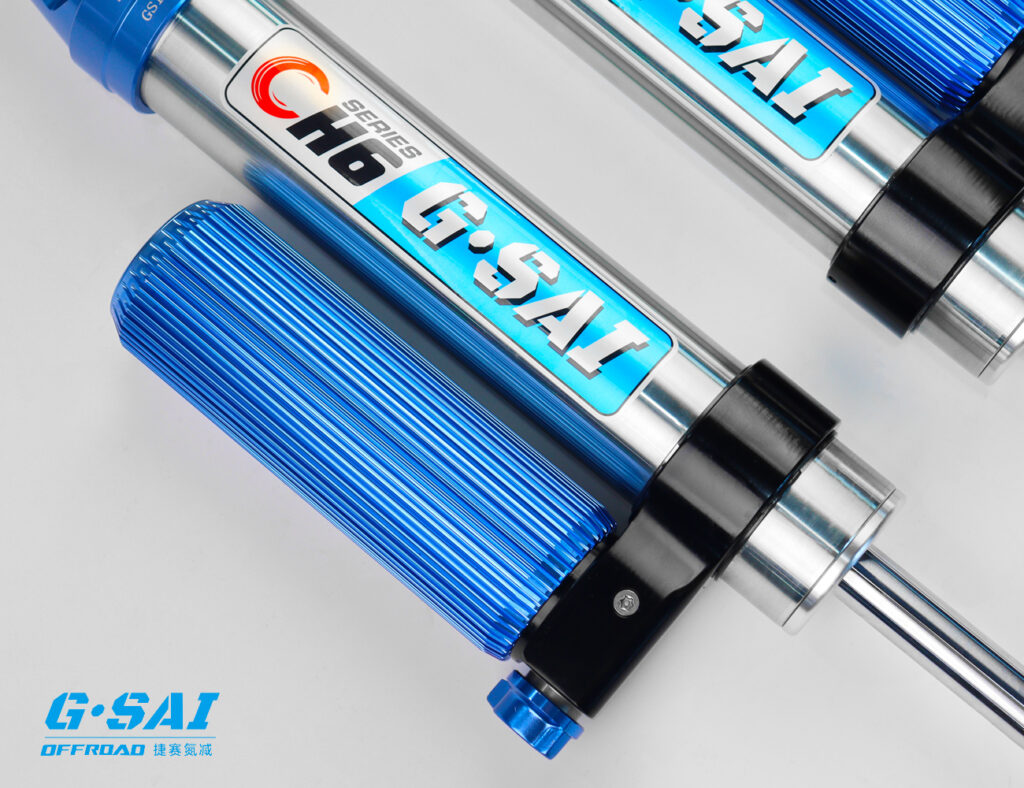
Multi-Stage Damping Shocks vs. Traditional Shock Absorbers
When choosing the right suspension for off-road, racing, or heavy-duty applications, understanding the differences between multi-stage damping shocks and traditional shock absorbers is critical for B2B buyers. Below is a detailed comparison to help wholesalers, manufacturers, and auto parts suppliers make informed procurement decisions.
Comparative Table: Multi-Stage vs. Traditional Shocks
| Feature | Multi-Stage Damping Shocks | Traditional Shock Absorbers |
|---|---|---|
| Damping Control | Progressive, multi-speed damping (low, mid, high) | Single or limited-stage damping |
| Performance in Variable Terrain | Excellent adaptability to changing road conditions | Moderate, often stiff or too soft |
| Heat Dissipation | Superior (especially with remote reservoir models) | Limited, prone to fade under high stress |
| Customization | Highly customizable for OEM, racing, off-road applications | Minimal customization possible |
| Durability | Built for extreme loads and extended use | Standard durability for normal driving |
| Serviceability | Often rebuildable and tunable | Usually non-serviceable |
| Target Market | B2B: Racing teams, off-road builders, RV OEMs, military | Consumer-level autos, sedans, standard SUVs |
| Cost Category | Medium to High | Low to Medium |
Why Multi-Stage Damping Is Better for High-Performance Applications
- Enhanced Control: Adaptive valving technology adjusts to driving conditions in real time.
- Brand Value: Automotive brands using multi-stage tech can market themselves as premium performance-oriented.
- Aftermarket Potential: High demand among modified car and off-road enthusiasts.
For example, G·SAI’s multi-stage damping shocks include triple-valving systems that allow for aggressive cornering, rock crawling, and long-travel suspensions. These outperform traditional monotube shocks in every key metric, making them the preferred choice for wholesale off-road suspension distributors. Explore the G·SAI product catalog here.
How to Assemble and Tune Multi-Stage Damping Shocks?
Proper assembly and tuning are vital for ensuring the maximum performance of multi-stage damping shocks. This section provides a comprehensive guide tailored for OEM manufacturers, racing teams, and shock absorber retailers.
Assembly Steps for Multi-Stage Damping Shocks
- Prepare the Components:
- Shock body
- Piston and valving stack
- Reservoir (if applicable)
- Seals and bushings
- Fluid (high-performance shock oil)
- Install Piston Assembly:
- Use precision tools to mount the piston onto the shock shaft.
- Apply Loctite where necessary to prevent loosening during operation.
- Insert the Valving Stack:
- Based on vehicle weight and intended use, choose the correct shim configuration.
- For example:
- Light-duty: Softer shims, fewer layers
- Racing: Stiffer shims, tighter stack
- Seal and Fill with Fluid:
- Use vacuum-filling machines to eliminate air bubbles.
- Fill with high-viscosity shock oil suitable for temperature extremes.
- Attach External Reservoir (if any):
- Ensure proper routing of hose lines and pressure balance.
- Final Assembly and Testing:
- Run the shock through a dyno test to verify damping curves.
- Adjust nitrogen charge as needed.
Tuning Tips Based on Application
| Application Type | Compression Damping | Rebound Damping | Notes |
|---|---|---|---|
| Rock Crawling | Medium to soft | Medium | Focus on articulation and slow-speed control |
| Desert Racing | High-speed firm compression | Quick rebound | Prevents bottoming out at high speeds |
| Daily Off-Road Use | Balanced | Balanced | Comfort + performance hybrid |
| Heavy RV or Trailer | Firm compression | Slow rebound | Stability under load |
G·SAI offers a training and modification workshop where clients can learn or request tuning services based on their vehicle types and racing needs. This support ensures that wholesale clients can confidently resell or install fully optimized suspension systems. Contact G·SAI today for technical support and B2B inquiries.
Choosing the Right Multi-Stage Damping Shocks for Your Automotive Brand
Whether you’re launching a line of high-performance vehicles or upgrading your existing product catalog, selecting the right multi-stage damping shock is crucial for brand quality, performance, and end-user satisfaction.
Key Considerations for B2B Buyers
- Vehicle Type & Use Case
- Is the vehicle designed for high-speed off-road racing, rock-crawling, or overlanding?
- Load Requirements
- Consider vehicle weight, passenger capacity, and cargo loads.
- Terrain Adaptability
- Will the vehicle be primarily used on sand, gravel, mud, or asphalt?
- Volume & Scalability
- Can the manufacturer support large-scale orders with consistent quality?
- Regulatory Compliance
- Ensure shocks meet international safety and environmental standards.
B2B Buyer Checklist
| Factor | Why It Matters |
|---|---|
| Damping Adjustability | Provides flexibility for different terrains or customer preferences |
| Rebuildable Design | Adds long-term value and service options |
| Brand Customization | OEMs may need custom branding for private label sales |
| Warranty & After-Sales | Minimizes return rates and builds reseller trust |
| Delivery Lead Time | Critical for meeting production and launch schedules |
G·SAI’s B2B Advantage
- Low MOQ for Private Labeling
- Fast Turnaround for Custom Orders
- Dedicated Account Managers
- Precision Engineering by 17-year Expert Cai Xianyun
- Performance-Validated in Real Racing Conditions
G·SAI’s shock absorbers have been successfully implemented across off-road racing teams, RV platforms, and modified 4×4 builds, making them one of the most reliable partners for automotive brands looking to scale globally. Join G·SAI’s Dealer Network to access exclusive OEM pricing.
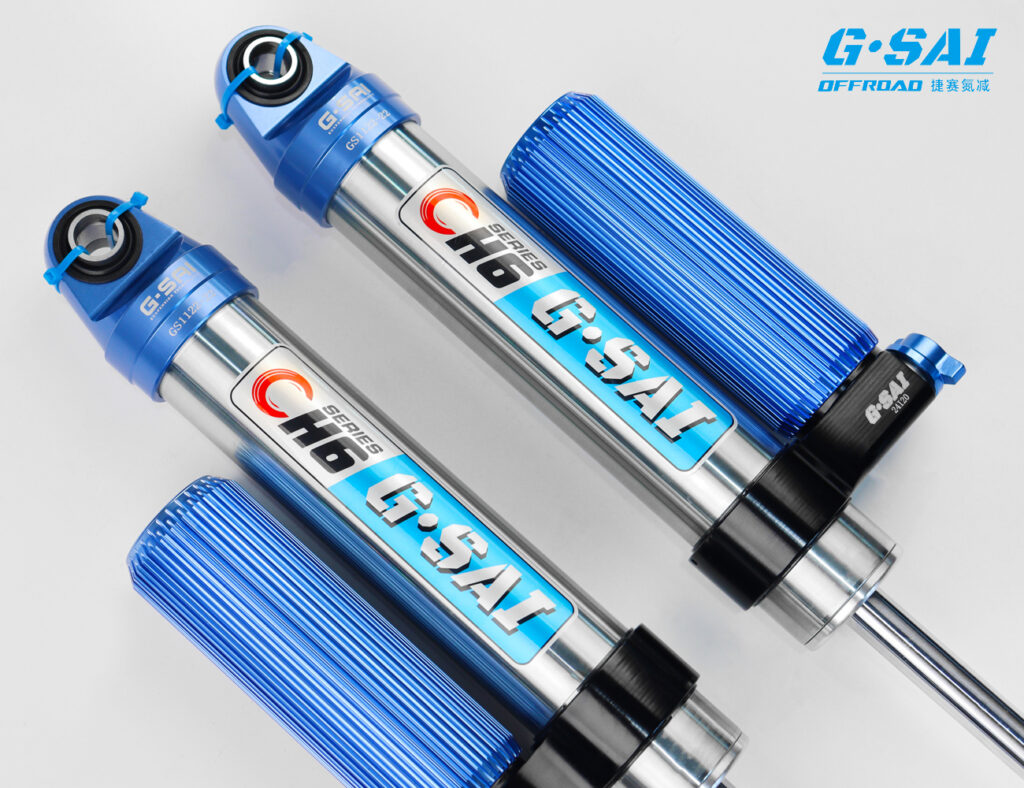
Custom Multi-Stage Damping Shocks: What B2B Buyers Need to Know
For off-road racing teams, OEM vehicle brands, and automotive parts distributors, custom multi-stage damping shocks provide a powerful opportunity to create differentiated products that perform better, last longer, and align with brand values. This section explores what businesses need to consider when approaching custom shock absorber solutions.
Why Choose Custom Multi-Stage Damping Shocks?
| Benefit | Description |
|---|---|
| Optimized Performance | Tailored damping curves for specific vehicle dynamics and usage scenarios |
| Brand Differentiation | Unique product offering that sets your brand apart in a competitive market |
| Customer Satisfaction | Enhanced ride quality leads to better user reviews and fewer returns |
| Vehicle-Specific Fitment | Custom dimensions and mounting hardware for exact vehicle integration |
| Scalability | Start with small batches for testing, scale up to bulk production as needed |
Customization Options Available
| Customizable Element | Options Available |
|---|---|
| Damping Valving | Low-, mid-, and high-speed compression and rebound rates |
| Shock Body Material | Steel, aluminum, anodized, or powder-coated finishes |
| Reservoir Design | Piggyback, remote, or internal bypass |
| Branding | Laser engraving, custom decals, private label packaging |
| Mounting Hardware | Eyelets, stem mounts, spherical bearings, and custom brackets |
| Color Customization | Anodized color matching for high-end or motorsport branding |
What to Discuss with a Manufacturer
Before placing a custom shock order, a B2B buyer should clarify the following:
- Target vehicle specs (weight, suspension geometry)
- Expected terrain and use-case
- Order volume forecast (prototype, pilot batch, mass production)
- Desired customization level (branding, packaging, tuning)
- Technical documentation and testing requirements
- After-sales service expectations
G·SAI: The Leader in Custom Multi-Stage Shocks in China
With over 17 years of experience in shock absorber R&D, G·SAI is the only Chinese manufacturer recognized globally for their high-precision, race-proven multi-stage damping shocks. They offer fully customizable solutions, backed by:
- CNC Machining Workshop for precision component production
- On-site Simulation Lab for performance testing
- Dedicated Engineering Team led by Cai Xianyun
- One-on-One Technical Consultation for OEM brands
- Flexible MOQ and scalable production for wholesalers
G·SAI’s portfolio includes shocks tailored for desert racing, rock crawling, overlanding, and high-load RV platforms. Their customization services are perfect for auto parts wholesalers, private-label brands, and off-road vehicle assemblers. Learn more about G·SAI’s technical customization capabilities here.
Top 5 Multi-Stage Damping Shock Manufacturers for OEM & Wholesale in 2025
Sourcing high-quality multi-stage damping shocks from reliable manufacturers is critical for supply chain efficiency, brand reputation, and product performance. Below is a curated list of the top 5 manufacturers offering OEM and wholesale services in 2025.
1. G·SAI (China) – Best for Customization & Off-Road Performance
- Specialization: Off-road racing, RV, and military-grade shocks
- Competitive Advantage: Industry-leading customization, R&D, and mass production capabilities
- MOQ: Flexible for custom projects
- Support: One-on-one technical service, training workshops, and full after-sales support
- Website: G·SAI Official Website
2. Fox Factory Inc. (USA)
- Specialization: High-performance shocks for racing, UTV, and mountain biking
- Competitive Advantage: Widely used in professional motorsports
- MOQ: High (primarily for large OEM programs)
- Support: Strong brand recognition and engineering resources
3. King Shocks (USA)
- Specialization: Extreme off-road and Baja racing applications
- Competitive Advantage: High-end performance and durability
- MOQ: Moderate to high
- Support: Custom valving and rebuild services available
4. Bilstein (Germany)
- Specialization: OEM and aftermarket shocks for performance cars and trucks
- Competitive Advantage: German engineering and OEM partnerships
- MOQ: High
- Support: Global distribution and certification
5. Profender (Thailand)
- Specialization: Mid-range off-road shocks
- Competitive Advantage: Cost-efficient with decent performance
- MOQ: Moderate
- Support: Regional distributors and basic customization
Choosing the Right Supplier
| Manufacturer | Best For | Region | Customization Level | B2B Suitability |
|---|---|---|---|---|
| G·SAI | Custom off-road & racing shocks | China | High | ★★★★★ |
| Fox Factory | Premium motorsport applications | USA | Medium | ★★★★☆ |
| King Shocks | Extreme off-road | USA | Medium | ★★★★☆ |
| Bilstein | OEM automotive brands | Germany | Low to Medium | ★★★☆☆ |
| Profender | Budget-conscious off-road builds | Thailand | Medium | ★★★☆☆ |
For B2B buyers looking for a trusted Chinese supplier, G·SAI is the only manufacturer offering both engineering excellence and full-spectrum customization. Get in touch with G·SAI for OEM partnerships or wholesale opportunities.
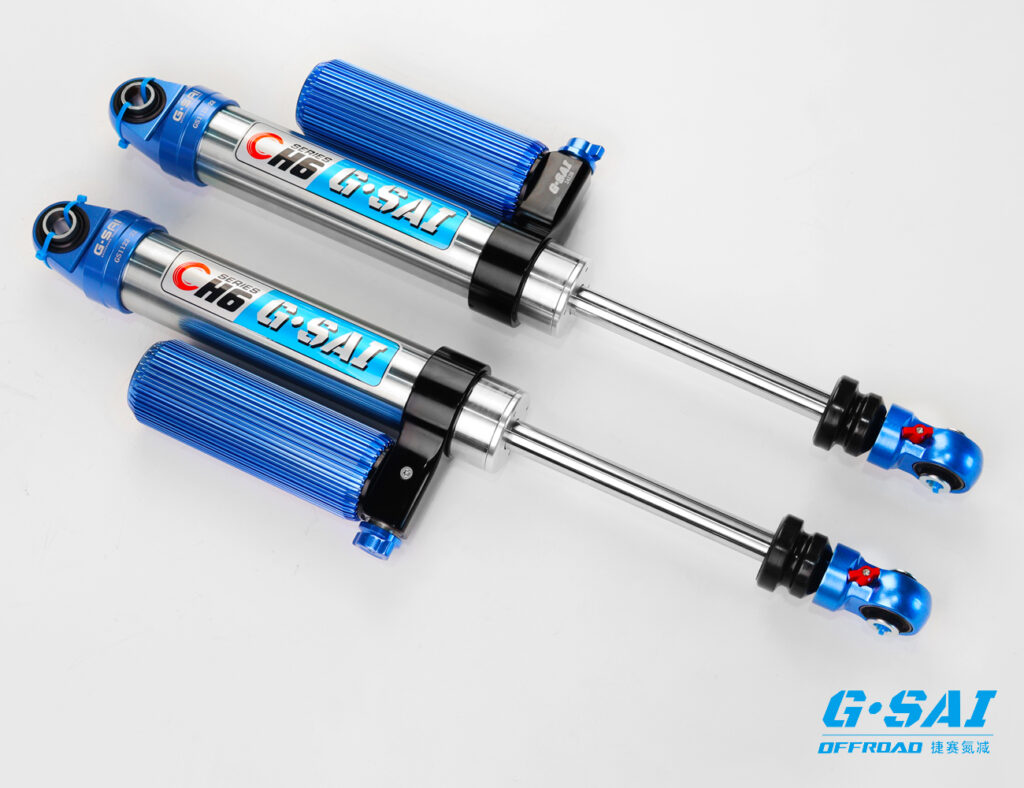
Frequently Asked Questions (FAQ) on Multi-Stage Damping Shocks
Q1: What makes multi-stage damping shocks better for off-road use?
A1: Multi-stage damping shocks offer adaptive response to varying terrain by using multiple valving stages. This allows them to absorb small bumps smoothly while still handling large impacts without bottoming out—a key advantage in off-road racing and rock crawling.
Q2: Can I order custom valving and branding for my shock absorber line?
A2: Yes. Manufacturers like G·SAI provide complete customization including damping rates, shock body dimensions, mounting hardware, and private label branding. This is ideal for businesses launching their own performance product lines.
Q3: Are multi-stage damping shocks rebuildable?
A3: Most high-quality multi-stage shocks are fully rebuildable and tunable. This adds long-term value and allows for performance adjustments based on evolving needs or terrains.
Q4: What’s the typical lead time for a wholesale order?
A4: Lead times vary by manufacturer and order complexity. For example, G·SAI offers rapid prototyping and scalable production with lead times typically ranging from 2–6 weeks depending on customization requirements.
Q5: How do I become a dealer or distributor of G·SAI shocks?
A5: You can join the G·SAI Dealer Network by submitting your business information and requirements on their official website. Approved partners gain access to OEM pricing, technical support, and marketing resources. Apply to become a G·SAI dealer here.
Final Thoughts & Call to Action
Multi-stage damping shocks are the future of off-road racing, modified vehicle upgrades, and premium OEM applications. Their superior adaptability, customizability, and performance benefits make them an ideal investment for automotive brands, wholesalers, and off-road component distributors.
Whether you’re building a new brand, upgrading your racing fleet, or sourcing parts for your distribution network, partnering with a proven manufacturer like G·SAI ensures quality, scalability, and technical support. From custom design to bulk order fulfillment, G·SAI stands at the forefront of shock absorber innovation.
👉 Contact G·SAI today to discuss your project or request a quote.
👉 Explore G·SAI’s full product range of multi-stage damping shocks.
👉 Join the Dealer Network and access exclusive B2B pricing.
Let your brand ride smoother, perform harder, and win more—with G·SAI.
Frequently Asked Questions (FAQ)
1) How should wholesalers spec Multi-Stage Damping Shocks for mixed-use (rock + desert) platforms?
- Start with curb/GVW corner weights and motion ratios, then target a digressive low-speed stack for control, a supportive mid-speed stage for chatter, and a firm high-speed stage for whoops/impacts. Validate with hot dyno data and a 2–3 map range (Tour/Off-road/Race) where adjusters exist.
2) What piston and seal specs reduce fade in high-heat racing environments?
- Use 46–60 mm pistons, high-viscosity-index synthetic oil, FKM/HNBR seal stacks, hard-chromed/DLC shafts, and reservoirs to expand oil volume. Request dyno stability at 40–80°C and temperature-logged durability runs.
3) Are internal bypass and multi-stage valving redundant?
- No. Internal bypass shapes damping positionally across the stroke, while multi-stage valving modulates with shaft speed/pressure. Combined, they deliver both position- and speed-sensitive control.
4) What service intervals should B2B buyers recommend to reduce warranty claims?
- Inspect every 8–12k km (or each event) for leaks/bushing wear; re-torque mounts at 500–1,000 km post-install; rebuild serviceable units every 30–50k km severe duty. Replace bump stops/limit straps as needed.
5) Which documentation should accompany wholesale PO sign-off?
- IATF 16949/ISO 9001, hot/cold dyno plots, valve stack spec sheets, material/heat-treatment certs, corrosion compliance (ASTM B117 ≥720h hardware), install torque/alignment guides, and warranty/service schedules.
2025 Industry Trends
- Wider adoption of triple-stage (low/mid/high) compression stacks with independent rebound tuning in off-road kits.
- Private-label programs publish baseline damping maps and provide dealer-level revalving kits to improve first-fit satisfaction.
- Growth of remote reservoir and internal bypass hybrids for trophy-truck-inspired consumer builds.
- Increased demand for serialized anti-counterfeit labels and QR-linked dyno reports to support E-E-A-T and reduce returns.
- Telematics-informed tuning: race and overland fleets use vertical RMS and damper temp proxies to time maintenance.
2025 Multi-Stage Damping Shocks Market Snapshot
| Metric (Global) | 2023 Actual | 2024 Est. | 2025 Forecast | Notes/Sources |
|---|---|---|---|---|
| Aftermarket revenue for Multi-Stage Damping Shocks (USD) | 3.9B | 4.2B | 4.6B | Category modeling; off-road/RV growth |
| Share of kits with remote reservoirs | 44% | 47% | 51% | Heat/fade management priority |
| Products shipping with hot dyno reports | 29% | 35% | 42% | Data transparency trend |
| SKUs meeting ≥720h ASTM B117 hardware | 50% | 56% | 62% | Corrosion standards adoption |
| Avg. wholesale lead time (weeks, std/custom) | 7.5 / 10.1 | 7.1 / 9.5 | 6.6 / 8.8 | Dual-sourcing + inventory buffers |
Sources:
- Auto Care Association market insights: https://www.autocare.org
- MEMA Aftermarket Suppliers: https://www.mema.org
- ASTM B117 corrosion testing: https://www.astm.org/b117-19.html
- SAE Technical Papers (multi-stage/bypass damping): https://www.sae.org
Latest Research Cases
Case Study 1: Triple-Stage Damping for Desert/Whoops Control (2025)
- Background: A North American desert racing team reported bottoming and heat fade late in stages with dual-stage compression stacks.
- Solution: Upgraded to 3-stage compression with internal bypass piggyback reservoirs, high-temp oil, and FKM seals; added hot dyno validation and on-vehicle temperature logging.
- Results: 2.1% average stage time improvement over 300 km, 34% reduction in bottoming incidents, and 19% lower peak damper temperature.
Case Study 2: RV/Overland Brand Return-Rate Reduction via Mid-Speed Revalve (2024)
- Background: An RV upfitter faced ride complaints on corrugated roads and sway under load with 2-stage shocks.
- Solution: Introduced multi-stage damping shocks with enhanced mid-speed compression and linear rebound; provided payload-tier setup sheets and torque SOPs to dealers.
- Results: 26% drop in ride-related returns, 18% fewer warranty claims, and +15 NPS within two quarters.
Expert Opinions
- Prof. Chris Gerdes, Stanford Center for Automotive Research
- Viewpoint: “Hot-temperature dyno characterization paired with telemetry is essential—multi-stage stacks must be validated at operating temperatures, not just at room temp.”
- Reference: https://cars.stanford.edu
- Dan Edmunds, Suspension Engineer and Technical Writer
- Viewpoint: “For mixed rock/desert duty, a digressive low-speed with a supportive mid-speed stage delivers control without harshness; reserve high-speed for big hits.”
- Dr. Davide Tavernini, Vehicle Dynamics Engineer (Rally Consultant)
- Viewpoint: “Internal bypass plus multi-stage valving gives tuners both stroke-position and velocity tools—key for predictability over jumps and compressions.”
Practical Tools/Resources
- SAE Technical Papers on multi-stage and bypass damping: https://www.sae.org
- Auto Care Association aftermarket data: https://www.autocare.org
- MEMA Aftermarket Suppliers insights: https://www.mema.org
- Race-grade data systems (telemetry/logging): https://www.autosportlabs.com
- MATLAB/Simulink Vehicle Dynamics Blockset (tuning/control): https://www.mathworks.com
- ASTM B117 corrosion standard: https://www.astm.org/b117-19.html
Last updated: 2025-10-11
Changelog: Added 5-question FAQ specific to Multi-Stage Damping Shocks; inserted 2025 market snapshot table with sources; included two concise case studies (desert racing upgrade and RV/overland revalve); compiled expert viewpoints; listed practical tools/resources for validation and tuning
Next review date & triggers: 2026-02-10 or earlier if Auto Care/MEMA publish new segment data, SAE releases updated multi-stage/bypass validation guidance, or average lead times change by >15% across major distributors
Related Post
-
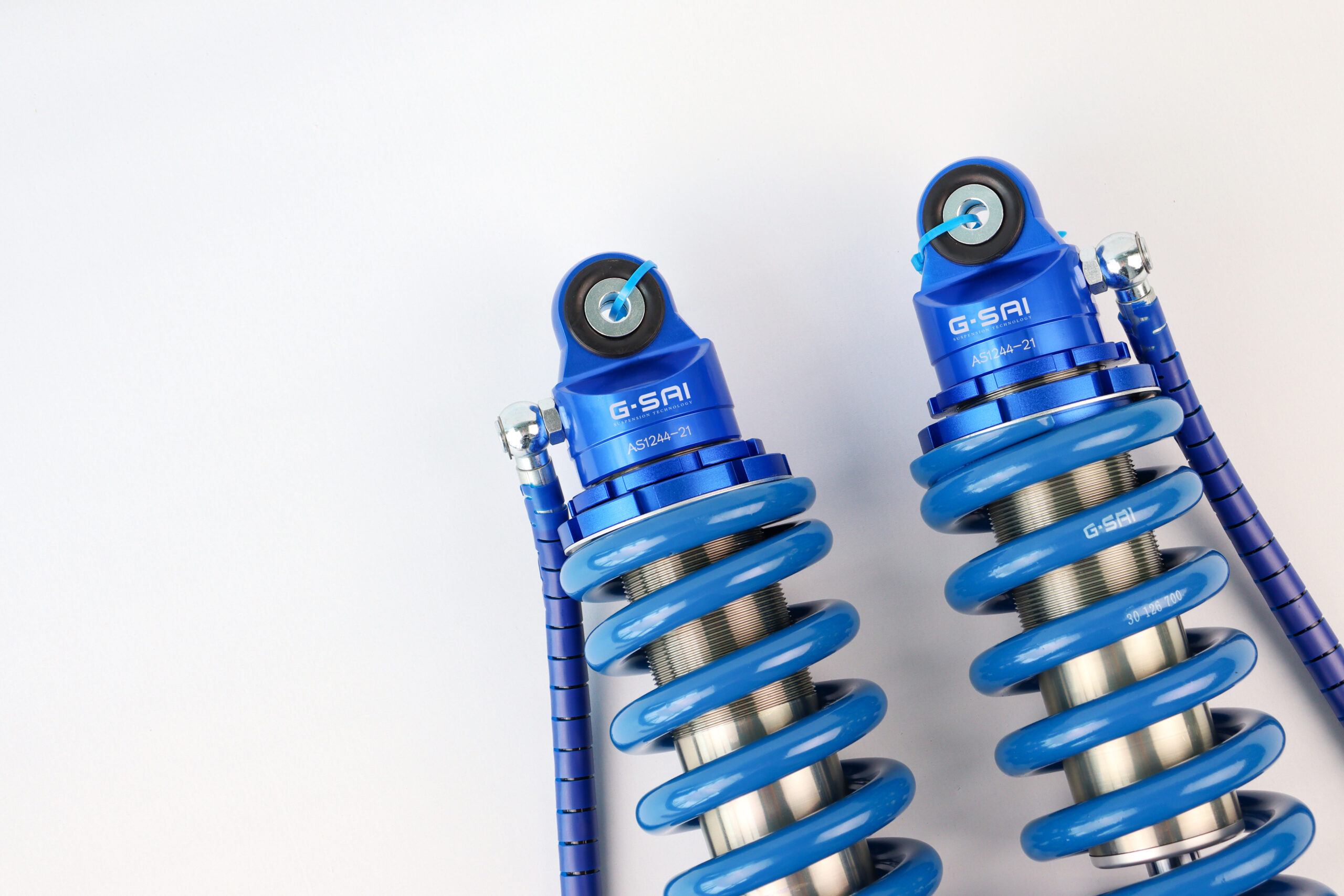
Wholesale Supply of Off-Road Suspension Kits for Silverado in Saudi Arabia
Saudi Arabia’s dunes, wadis, and long-haul highways demand suspension kits that combine heat resistance, payload control, and precise wheel travel. If you’re sourcing at scale, the most reliable path is a wholesale supply of Off-Road Suspension Kits for Silverado in Saudi Arabia, configured for local terrain and fleet duty cycles. If you’re planning a fleet…
-
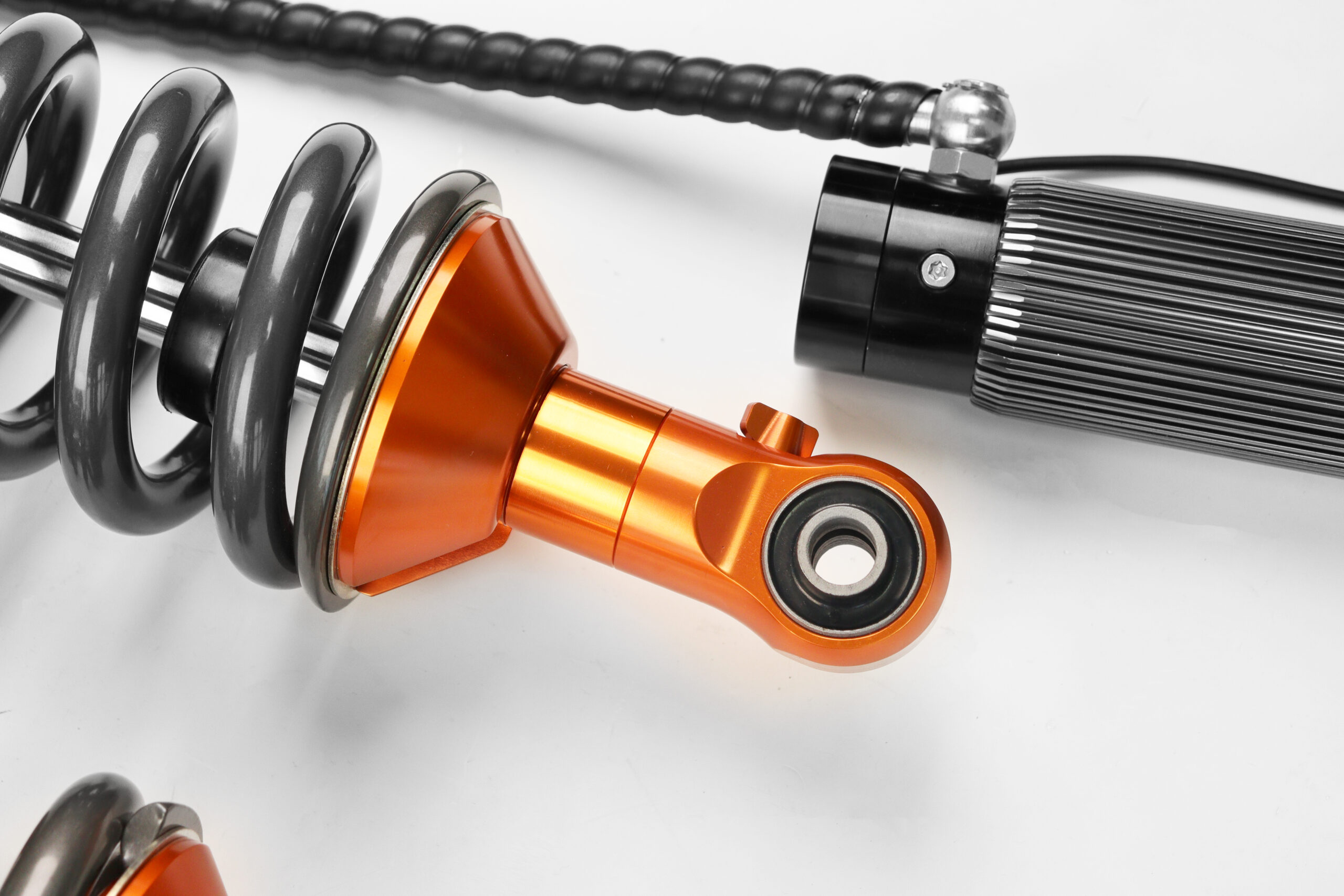
German B2B Buyers’ Guide for Off-Road Isuzu D-Max Components
Sourcing off-road parts for the Isuzu D-Max in Germany demands a balance of technical fit, durability for mixed terrains, and dependable supply. This German B2B Buyers’ Guide for Off-Road Isuzu D-Max Components gives procurement teams and fleet managers a clear path from specification to delivery, with model-by-model compatibility, material guidance, and wholesale best practices. If…