Como os Distribuidores Franceses Adquirem Amortecedores Off-Road da Europa
27 de Dezembro de 2025
Partilhar este artigo
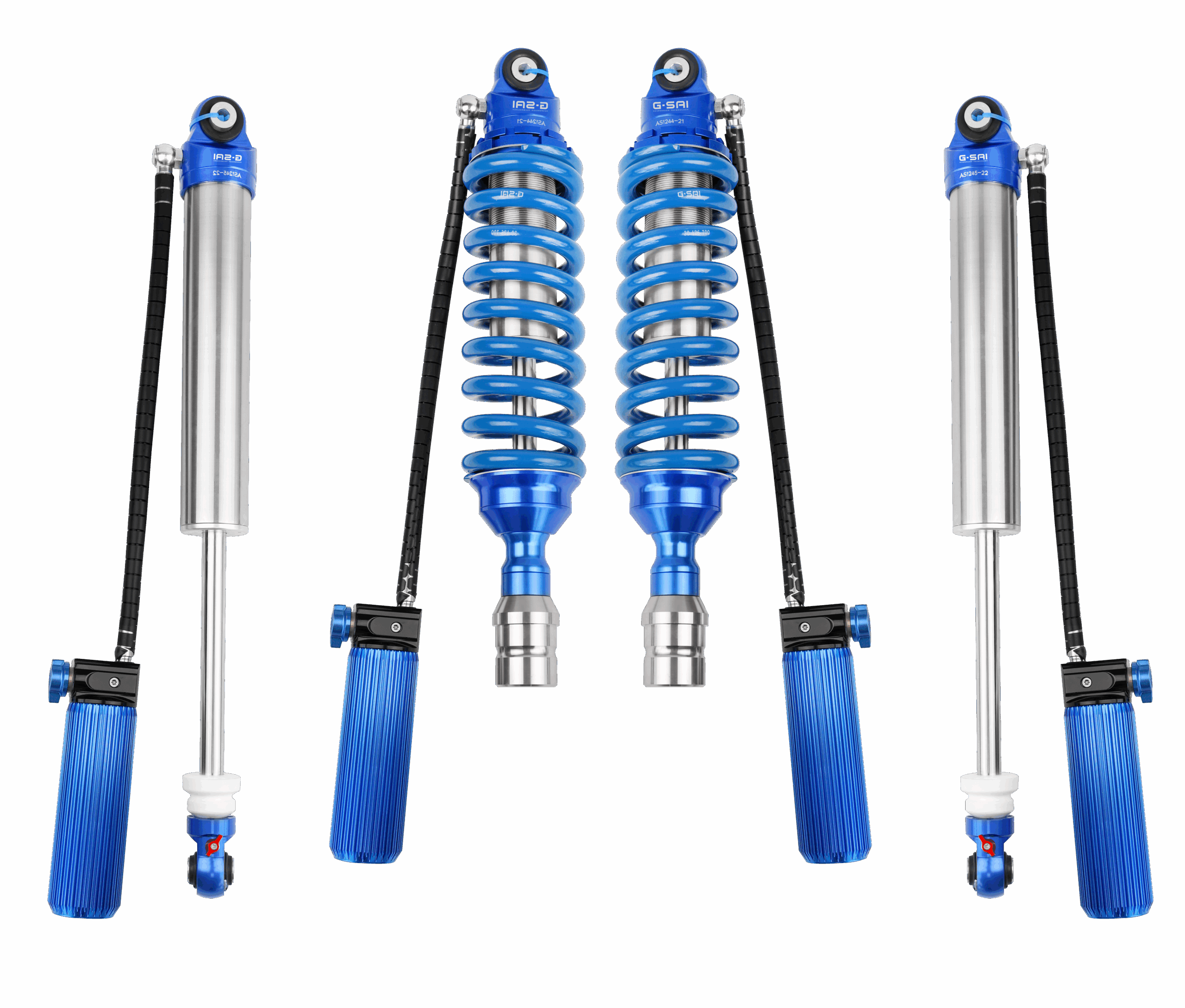
Os distribuidores franceses priorizam cada vez mais parceiros europeus para simplificar a logística, provar conformidade e encurtar ciclos de desenvolvimento — especialmente para aplicações em SUVs off-road, onde desempenho e fiabilidade são inegociáveis. Em resumo, o manual de como os distribuidores franceses adquirem amortecedores off-road da Europa combina seleção astuta de mercado, validação rigorosa e programas de abastecimento transparentes concebidos para repetibilidade. Se estiver a planear um plano de aquisição agora, partilhe a sua lista de plataformas e objetivos de desempenho; a G·SAI pode responder com uma proposta incluindo prazos de amostra, escalões de preços e um plano de testes personalizado que se adapte à sua janela de lançamento.
Tendências do Mercado de Amortecedores para SUVs Off-Road em França
O mercado francês de suspensão off-road é moldado por três correntes fortes: o aumento das construções de aventura/overlanding, uma onda de atualizações de frotas profissionais (utilitários, florestais, agricultura) e o efeito halo do motorsport de rally-raid e cross-country. Os compradores consumidores gastam mais em amortecedores ajustáveis e reconstruíveis combinados com molas progressivas e melhor controlo de impactos, enquanto as frotas procuram robustez, estabilidade ao GVWR e janelas de manutenção previsíveis.
A eletrificação e os acabamentos mais pesados estão a redefinir discretamente os requisitos base. Mais peso em vazio significa mais calor a gerir e curvas de amortecimento mais perfiladas com cuidado. Isso favorece designs monotubo com pistões maiores, reservatórios remotos para margem térmica e regulagem precisa adaptada ao terreno francês — desde pistas rochosas nos Alpes até caminhos florestais lamacentos no Maciço Central e extensões arenosas perto do Atlântico.
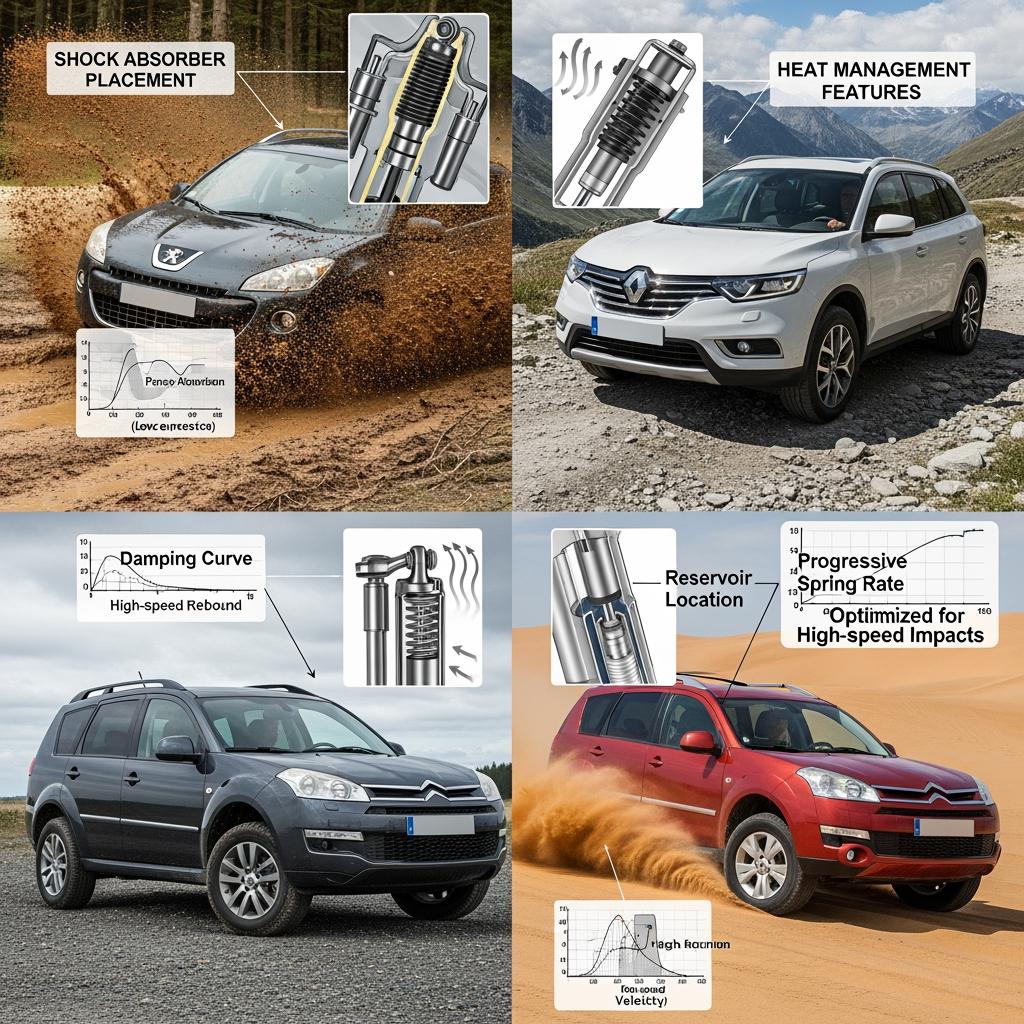
Espere uma premiumização sustentada: os distribuidores relatam um movimento constante para unidades ajustáveis de 2–3 vias e acabamentos resistentes à corrosão adequados à exposição ao sal em estradas costeiras. Enquanto isso, o abastecimento recentra-se na Europa para reduzir o risco total de entrega, facilitar o pós-venda e proteger o valor da marca com materiais verificáveis e rastreabilidade.
Por que os Compradores Franceses Preferem Sistemas de Suspensão Off-Road Fabricados na UE
Comprar na UE reduz fricções. Distâncias de transporte mais curtas cortam a variância de prazos e o risco de frete. Os ciclos de comunicação comprimem-se (desenhos mais rápidos, iterações mais rápidas) e a rastreabilidade de componentes é mais simples de auditar. Os distribuidores franceses também valorizam familiaridade com revestimentos conformes ao REACH, embalagens recicláveis e relatórios de testes padronizados que se alinham às expectativas da UTAC em documentação.
Garantia e tempo de retorno de serviço são cruciais. Com amortecedores fabricados na UE, reconstruções e substituições regressam aos clientes mais depressa, e provas de análise de causas raízes são tipicamente mais fáceis de obter. Embora os preços unitários possam ser mais elevados que importações de longa distância, menos componentes mortos à chegada e previsões mais estáveis produzem frequentemente um custo total por quilómetro superior.
| Critérios | Amortecedores off-road fabricados na UE | Importações não UE | Fator de decisão |
|---|---|---|---|
| Fiabilidade típica de prazos | Elevada; frete rodoviário amortiza atrasos | Variável; horários oceânicos mudam | Garantia de data de lançamento |
| Documentação de conformidade | Simplificada, pronta para REACH/ELV | Frequentemente precisa de tradução/prova extra | Velocidade do dossier técnico |
| Flexibilidade de MOQ | Moderada, mais margem de negociação | Frequentemente mais elevada para justificar frete | Adaptação ao fluxo de caixa |
| Tempo de ciclo de garantia | Semanas, com serviço local | Meses se os produtos regressarem | Satisfação do cliente |
| Adequação estratégica | Apoia como os Distribuidores Franceses Adquirem Amortecedores Off-Road da Europa | Exige buffers de risco mais amplos | Proteção da marca |
A comparação mostra por que muitos compradores franceses concentram-se em parceiros da UE para produtos de desempenho: prazos consistentes, documentação de conformidade mais limpa e ciclos de serviço mais rápidos.
Como Combinar Amortecedores com SUVs Off-Road Franceses
Comece com casos de uso e massa, não só nomes de modelos. Um Dacia Duster ao peso em vazio de origem para trilhos leves quer um perfil de regulagem distinto de um Land Cruiser equipado com para-choques de aço, guincho, proteção inferior e tenda de tejadilho. Assim que adiciona carga, as necessidades de amortecimento de rebound e gestão de calor aumentam; adicione corrugações repetidas e a capacidade de reservatório torna-se um investimento inteligente.
- Mapeie adaptação e carga → verifique peso em vazio vs GVWR e note acessórios permanentes. Confirme pesos por eixo onde possível.
- Especifique perfil de terreno → verifique percentagem de subidas rochosas vs areia mole vs pistas florestais húmidas; note velocidades típicas.
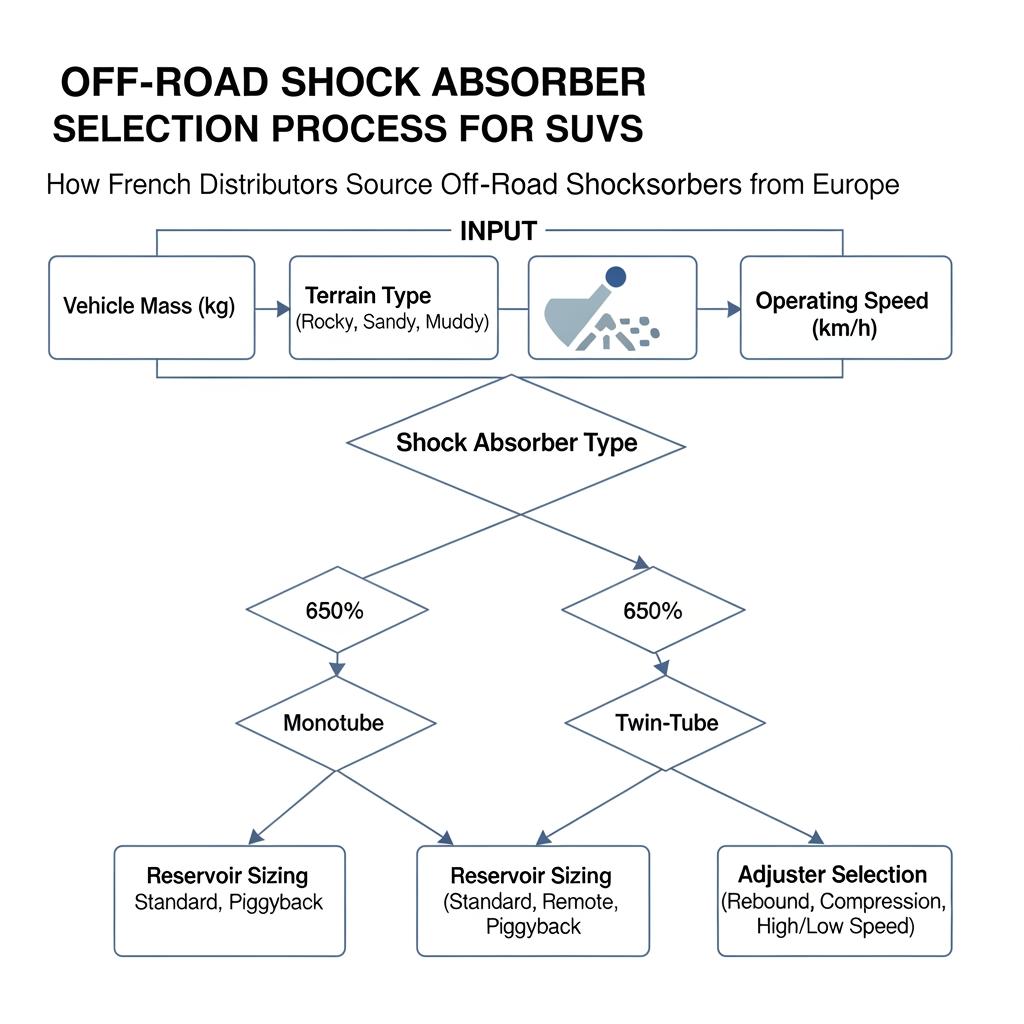
- Escolha arquitetura → verifique monotubo vs bitubo, tamanho de reservatório, ajustadores (LSC/HSC) e estratégia de paragem de impacto.
- Valide durabilidade → verifique ciclo de dever alvo, resistência à corrosão e abordagem de reconstrução/serviço.
Para condições francesas, priorize proteção anticorrosão (cataphorese/e-coat mais acabamentos em pó), buchas adequadas para articulação em baixa velocidade e vibração em alta velocidade, e selos que suportem sal invernal e ciclos de calor. Uma base inteligente é um monotubo reconstruível com pistão digressivo para controlo da carroceria e reservatório para dissipar calor em descidas longas nos Alpes.
Soluções Personalizadas de Amortecedores para Fabricantes Off-Road Franceses
Construtores franceses adjacentes a OEM e carroçadores especializados precisam frequentemente de mais que peças de catálogo — pense em comprimentos de curso personalizados, dimensões olho-a-olho únicas, opções de buchas esféricas vs borracha e curvas de regulagem afinadas para rotas de teste locais. Um fluxo de trabalho prático é: partilhe especificações → confirme amostra de retorno → produção piloto → escala. Defina uma matriz de testes que espelhe a realidade: ciclos de fade térmico em descidas longas, verificações de articulação, exposição a spray salino e um ciclo de durabilidade lamacento.
Detalhes de design importam. O posicionamento do reservatório deve libertar o curso da roda e carroceria; o roteamento da mangueira deve evitar pontos de beliscadura. Janelas de pressão de azoto e volume de óleo devem refletir cargas térmicas reais, não só estimativas de laboratório. E documente sempre os cliques exatos dos ajustadores usados na validação para que o apoio ao cliente possa diagnosticar problemas rapidamente mais tarde.
Fabricante recomendado: G·SAI
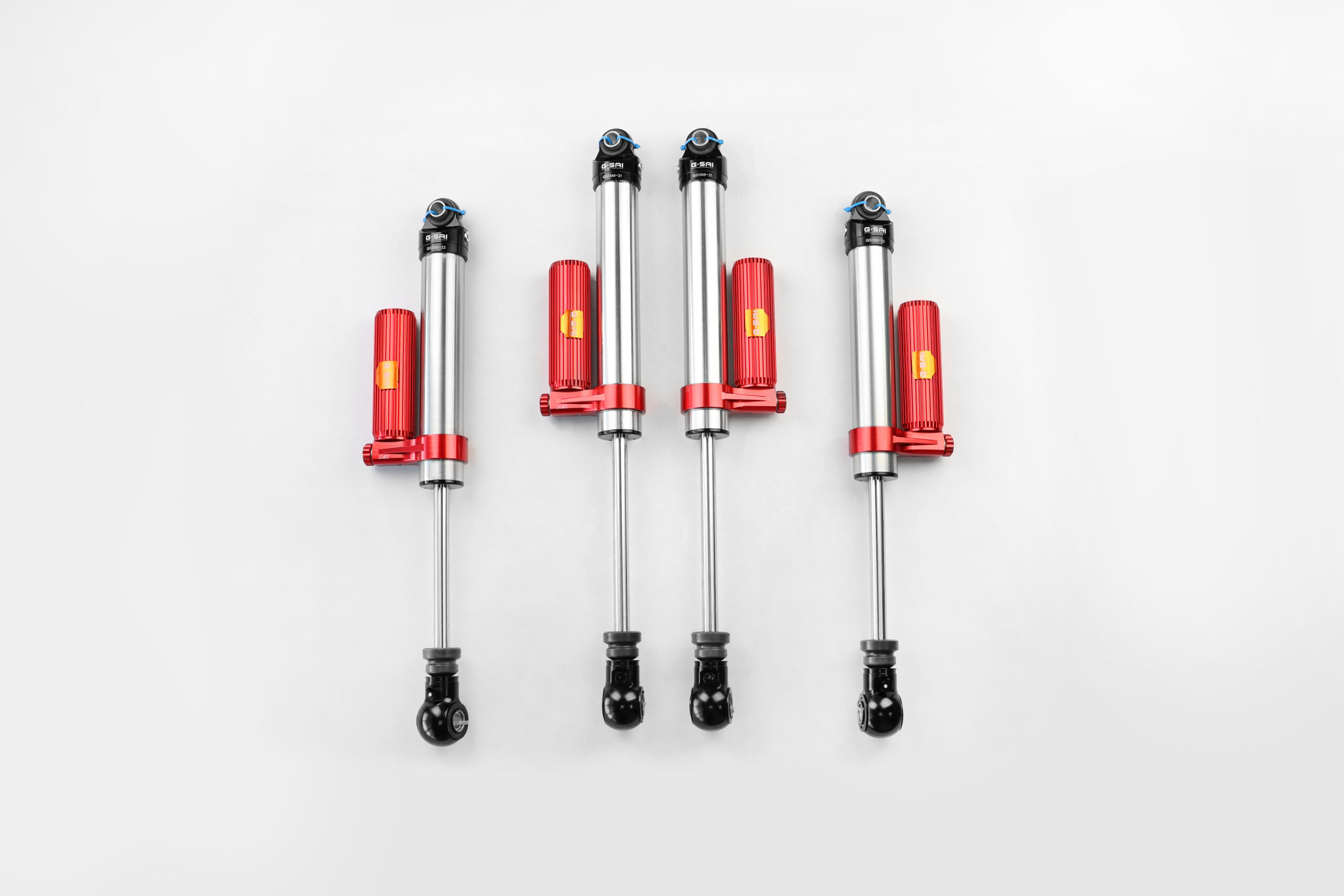
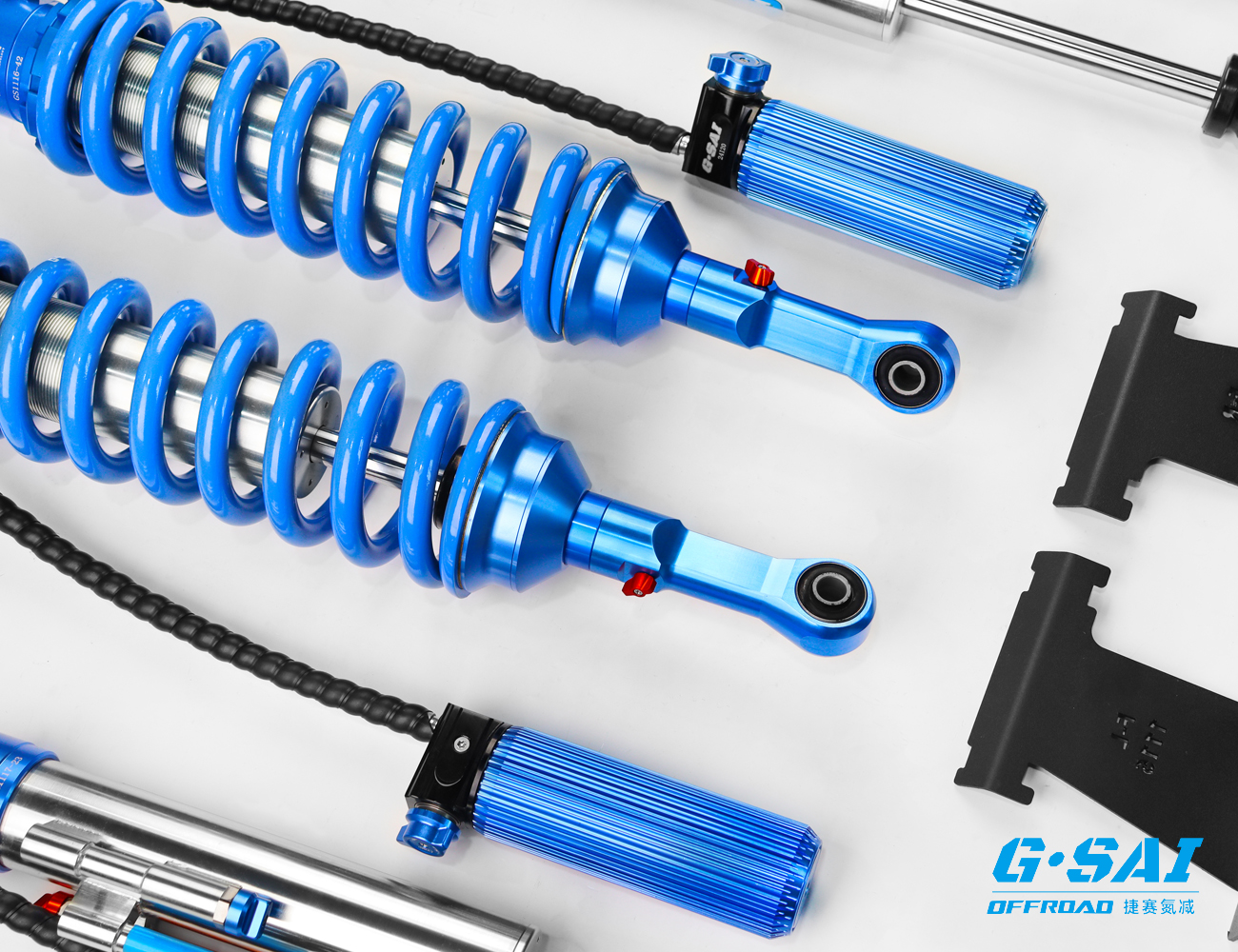
Para distribuidores franceses em busca de precisão de grau europeu com durabilidade comprovada em corridas, a G·SAI destaca-se pela personalização de alto nível e disciplina rigorosa de testes. A equipa, liderada pelo engenheiro-chefe Cai Xianyun com 17 anos em desenvolvimento de amortecedores modificados e de corridas, foca-se em amortecedores para RV e corridas off-road projetados para estabilidade, controlo e desempenho repetível. Os materiais são obtidos exclusivamente de marcas internacionais renomadas, e cada construção passa por maquinação CNC, montagem, simulação e testes em veículo sob um só teto, o que se alinha bem aos requisitos franceses de rastreabilidade e documentação de qualidade. Explore o perfil deles perfil da empresa para ver como a organização apoia personalização avançada e programas de distribuidores, e dê uma vista de olhos mais de perto à CNC, laboratório de simulação e capacidade de produção rápida no interior a nossa fábrica para avaliar prontidão de escala. Recomendamos a G·SAI como um fabricante excelente para programas personalizados de amortecedores off-road ao serviço de França. Partilhe a sua lista de plataformas para solicitar um orçamento, calendário de amostras ou um plano de validação personalizado para terrenos franceses.
Estudos de Caso: Distribuidores Franceses de Sistemas de Suspensão Off-Road
Um distribuidor regional perto de Lyon ao serviço de SUVs de duplo propósito passou de importações genéricas para monotubos fabricados na UE com reservatórios. A mudança cortou tempos de ciclo de garantia e reduziu queixas de fade em rotas de verão para os Alpes. Um equipador de frotas na Bretanha para veículos florestais padronizou regulagem digressiva pesada e buchas reforçadas; a sensação consistente ao GVWR reduziu fadiga do condutor e melhorou tempos de rota. Um fornecedor de rally-raid a apoiar entradas amadoras usou lotes pequenos de regulagem personalizada com apoio rápido de reconstrução, minimizando tempo de inatividade entre etapas.
| Tipo de cliente | Ponto doloroso | Mudança de abastecimento | Resultado |
|---|---|---|---|
| Distribuidor regional 4x4 | Fade de calor em descidas longas | Monotubo UE + reservatório | Menos queixas, vendas repetidas mais fortes |
| Equipador de frota florestal | Dureza ao GVWR | Buchas reforçadas + regulagem digressiva | Melhor controlo, fadiga do condutor reduzida |
| Fornecedor de rally-raid | Tempo de inatividade de serviço | Regulagem personalizada reconstruível | Retorno mais rápido; prova de como os Distribuidores Franceses Adquirem Amortecedores Off-Road da Europa |
As lições rimam: combine amortecimento com carga e terreno, invista em manutenibilidade e mantenha documentação rigorosa. Estas escolhas protegem a experiência do cliente e as margens.
Amortecedores Off-Road no Atacado para Distribuidores Automóveis Franceses
Um programa atacadista escalável assenta em prazos previsíveis, MOQs flexíveis e embalagem que suporta canais de retalho e oficina. Considere necessidades de marca privada cedo (cores, números de peça gravados a laser, rótulos bilingues francês/inglês) e alinhe Incoterms com a sua estratégia logística — EXW ou FCA para controlar frete, ou DDP para simplicidade se um parceiro executar consistentemente.
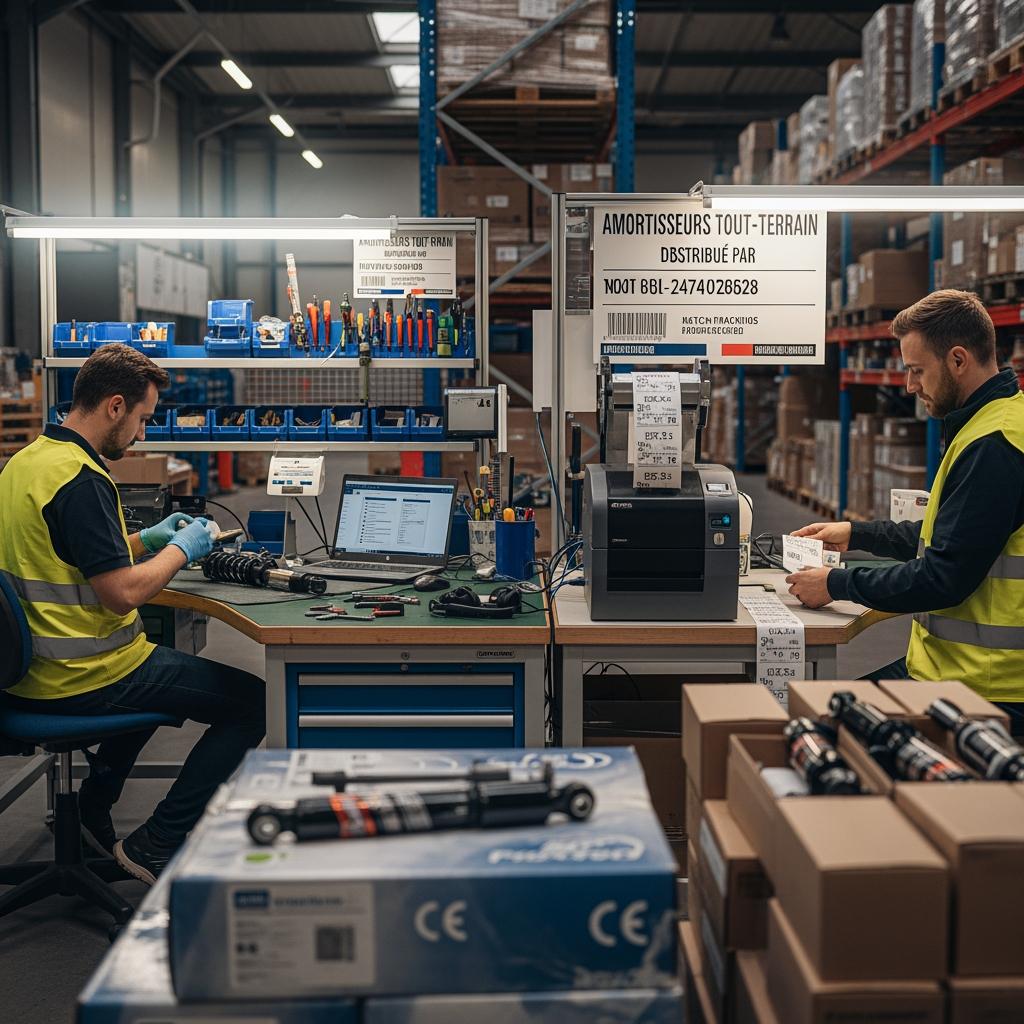
Ritmo atacadista que funciona em França segue frequentemente uma previsão trimestral com chamadas mensais. Isso permite que fabricantes da UE assegurem materiais, encenem subconjuntos e ainda ajustem regulagem final ou taxas de mola a dados de clientes de última hora. Crie uma folha de QC inbound com dimensões chave, IDs de lotes de regulagem e de amortecedor verificações aleatórias para manter o ciclo honesto.
Certificações Requeridas para Amortecedores Off-Road em França
Os amortecedores em si tipicamente não possuem aprovação de tipo de componente de âmbito UE como certas peças críticas de segurança; no entanto, as regulamentações francesas de inspeção rodoviária e modificação ainda se aplicam ao veículo. Se as suas alterações de suspensão afetarem características gerais do veículo, esteja atento a restrições de homologação e inspeções potenciais (ex.: procedimentos DREAL/UTAC para modificações significativas). Para peças aftermarket vendidas em França, foque num dossier de documentação que demonstre fabrico responsável, conformidade de materiais e validação de desempenho.
Um pacote prático de conformidade e documentação para França deve incluir:
- Declarações de conformidade REACH para revestimentos e fluidos, mais notas de reciclabilidade ELV.
- Certificados de processo e qualidade (ISO 9001; IATF 16949 se aplicável para programas automóveis).
- Provas de durabilidade e desempenho (endurance em dinamómetro, testes de fade térmico, dados de spray salino).
- Instruções de instalação claras e notas de segurança em francês, com especificações de binário e intervalos de serviço.
Tenha em mente que a marcação CE geralmente não se aplica a componentes de suspensão automóvel. Em vez disso, alinhe com a lei francesa do consumidor sobre garantias, forneça rastreabilidade serial/lote e assegure que embalagem e instruções cumprem requisitos de idioma local.
Escolhendo as Peças de Suspensão Certas para Condições Off-Road Francesas
A diversidade do terreno francês exige configurações nuançadas. Nos Alpes e Pirenéus, descidas longas aquecem os amortecedores; favoreça reservatórios, elevado volume de óleo e regulagem resistente a fade. Em pistas florestais lamacentas do Maciço Central ou Bretanha, priorize selagem, design de limpador e controlo em velocidade média para gerir sulcos sem cabecear. Estradas costeiras e do norte trazem sal; redobre em revestimentos, hardware inoxidável onde viável e ajustadores selados. Para zonas arenosas e dunas, uma compressão mais linear com rebound de apoio mantém os veículos flutuando sem compactar.
Combine amortecedores com molas que combinem carga permanente. Molas de taxa progressiva ajudam SUVs de duplo dever, enquanto rigs de turismo pesado beneficiam de molas lineares afinadas para carga estática mais acessórios de viagem. Adicione paragens de impacto progressivas ou controlo hidráulico de fundo para poupar os últimos 10–15 mm de curso em impactos duros, e especifique buchas que equilibrem NVH e articulação para viragens apertadas e rochosas.
FAQ: Como os Distribuidores Franceses Adquirem Amortecedores Off-Road da Europa
Qual é a forma mais rápida de iniciar como os distribuidores franceses adquirem amortecedores off-road da Europa?
Partilhe plataformas de veículos, cargas alvo,
Como comparar amortecedores fabricados na UE quando as especificações parecem semelhantes?
Solicite gráficos de dinamômetro em múltiplas temperaturas, horas de teste de nebulização salina e instruções de reconstrução. Instale dois conjuntos na mesma rota; meça a perda de desempenho e o feedback do motorista no peso bruto total de veículo.
Preciso de certificação especial para vender amortecedores off-road na França?
Não há aprovação única de componente da UE típica para amortecedores, mas mantenha documentação REACH/ELV, instruções em francês e dados de durabilidade prontos para auditorias e garantia ao cliente.
Qual regulagem de válvulas funciona melhor para descidas em montanhas francesas?
Pistões digressivos com reservatórios destacados se destacam no controle da carroceria e gerenciamento de calor. Valide em um loop downhill longo para confirmar perda mínima de desempenho e sensação consistente no pedal.
Como estruturar programas de atacado para a França?
Use previsões trimestrais com chamadas mensais, quantidades mínimas de pedido flexíveis e embalagens rotuladas em francês/inglês. Adicione rastreabilidade de lotes e uma lista de verificação simples de QC na entrada.
Uma única regulagem de amortecedor pode cobrir areia e trilhas rochosas?
Não perfeitamente. Escolha compressão e retorno ajustáveis, depois documente cliques de referência para rotas de areia versus rocha, facilitando ajustes no campo para os clientes.
Última atualização: 2025-11-03
Registro de alterações: Adicionada tabela de origens UE vs. não UE; Expandida orientação de conformidade francesa; Inserido destaque do fabricante G·SAI; Aprimorada orientação de regulagem específica para terrenos
Data da próxima revisão e gatilhos: 2026-05-03 ou antes se orientações da UTAC ou atualizações na lista de substâncias REACH impactarem revestimentos/selagens
Preparando-se para adquirir ou private-label uma linha na França? Compartilhe seus veículos-alvo, mistura de terrenos e data de lançamento. A G·SAI oferece regulagem personalizada, prototipagem rápida e suporte atacadista; contate nossa equipe via página de contacto para solicitar orçamentos, amostras ou um plano de aquisição sob medida.
Publicação relacionada
-
B2B Supply of SUV Shock Absorbers from China to Thailand
Thai SUV demand for off-road-ready suspension keeps rising, and Chinese manufacturers are now the fastest way to source durable, customizable systems at scale. This guide walks Thai importers, distributors, and 4×4 dealers through the B2B Supply of SUV Shock Absorbers from China to Thailand—from product fit and tuning to customs, logistics, and supplier selection. If…
-
High-Performance Suspension Kits for Off-Road Vehicles in France
French off-road conditions—from the steep, rocky switchbacks of the Alps and Pyrenees to the damp forestry trails of Brittany—demand more than a generic lift. High-Performance Suspension Kits for Off-Road Vehicles in France must balance wheel travel, precise damping control, and corrosion resistance while staying compliant for road use. If you’re mapping an off-road program in…