Long Travel Suspension Systems for Off-Road Trucks in the German Market
Março 28, 2026
Partilhar este artigo
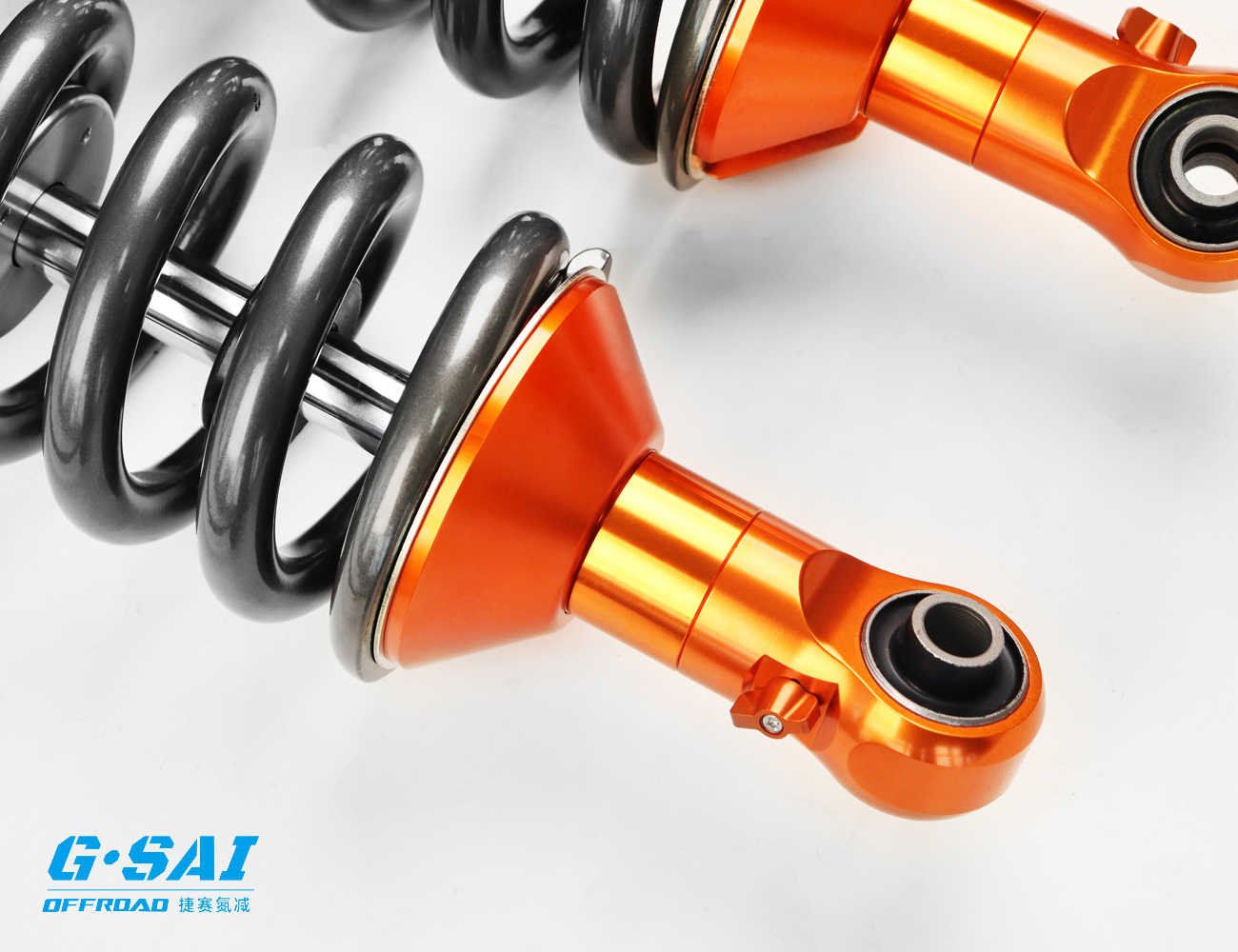
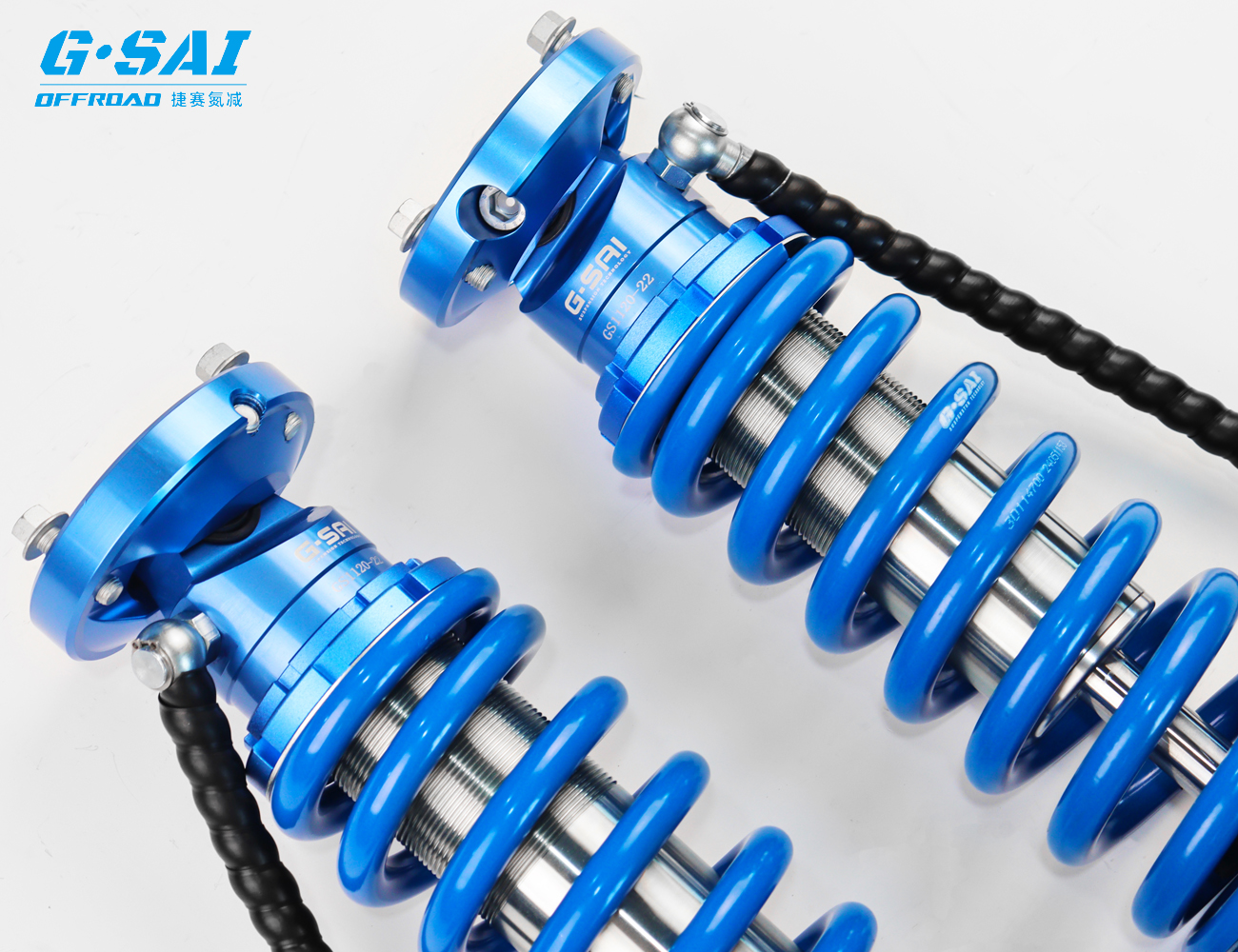
Long Travel Suspension Systems for Off-Road Trucks in the German Market are no longer niche upgrades—they’re mission-critical hardware for fleets and enthusiasts who work and travel across Germany’s Alps, forests, and construction sites. The right system delivers stability, wheel articulation, payload control, and regulatory compliance under StVZO. If you already have a model and use case in mind, share your veículo specs and terrain requirements to get a tailored quote or sample plan from G·SAI—our team can return a recommended setup with timelines and pricing via the contact page.
TÜV-Certified Suspension Kits for Off-Road SUVs in Germany
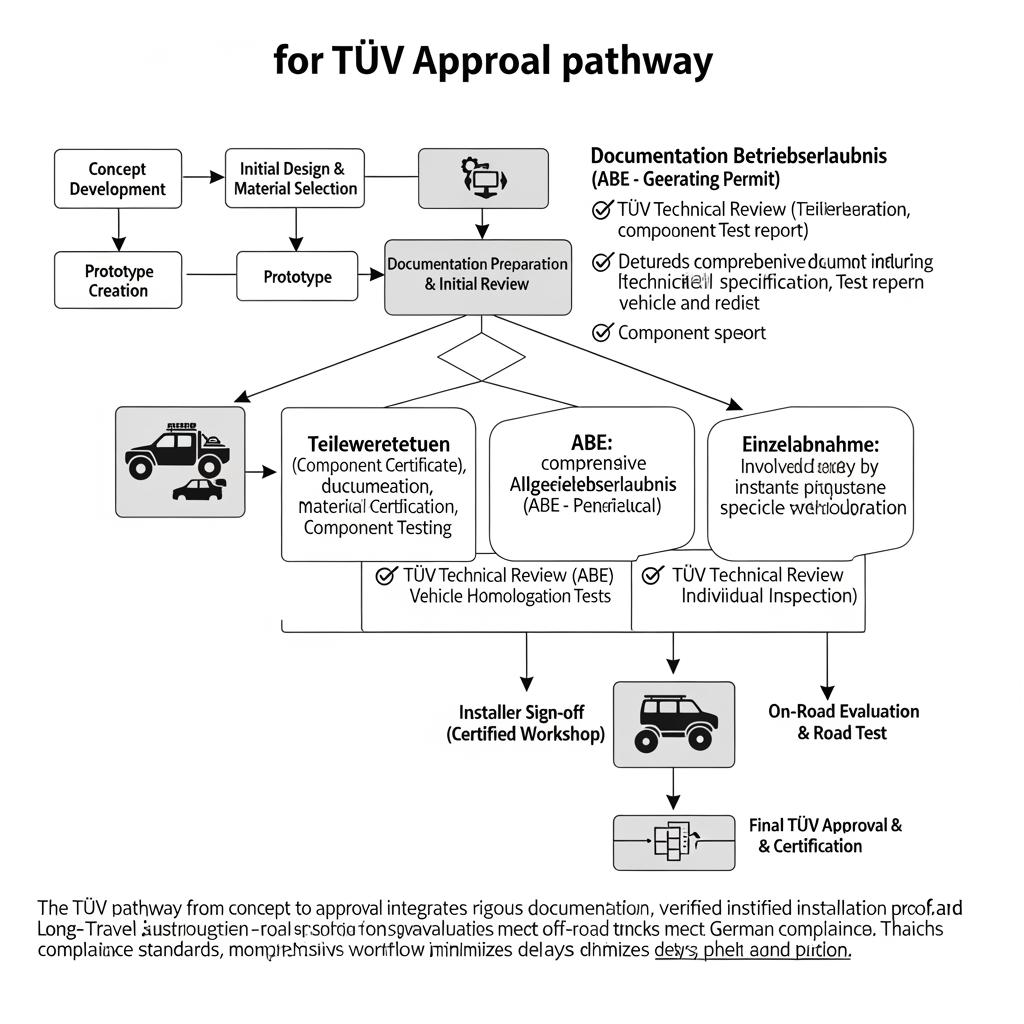
For Germany, certification is the first gate. Most off-road lifts and long-travel components affect ride height, steering geometry, brake lines, and lighting alignment—areas scrutinized under StVZO. A well-prepared path looks like this: choose components with a Teilegutachten or ABE where available, document materials and installation torque values, get axle geometry measured, and complete a recognized inspection (often TÜV or DEKRA). When a pre-approved report doesn’t exist, an Einzelabnahme (individual approval) is possible but requires more testing and patience.
A practical rule of thumb: plan certification as part of your project timeline, not after the hardware is on the truck. That avoids reassembly costs, suspension rubbing, or headlight misalignment that can fail inspection. Long Travel Suspension Systems for Off-Road Trucks in the German Market often require brake-hose extension documentation, bump stop verification, and evidence that headlight leveling has been corrected post-lift.
| Pathway | Applicability | Expected effort | Observações |
|---|---|---|---|
| ABE (Allgemeine Betriebserlaubnis) | Popular kits with mass-market fitment | Baixa | Fastest route; follow the supplied limits for tire size and ride height. |
| Teilegutachten | Kits or parts with component-level approval | Médio | Requires inspection entry; installer documentation must be precise. |
| Einzelabnahme | Custom long-travel builds | Elevado | More testing; include geometry, braking, and noise checks; reference Long Travel Suspension Systems for Off-Road Trucks in the German Market in the documentation scope. |
For many fleets, starting with components that already carry a Teilegutachten or ABE compresses lead time and cost. If you must go custom, book your inspection slot early and keep every receipt, drawing, and torque report—the paperwork trail is part of the approval.
Shock Absorber Systems for Mountain Terrain in German SUVs
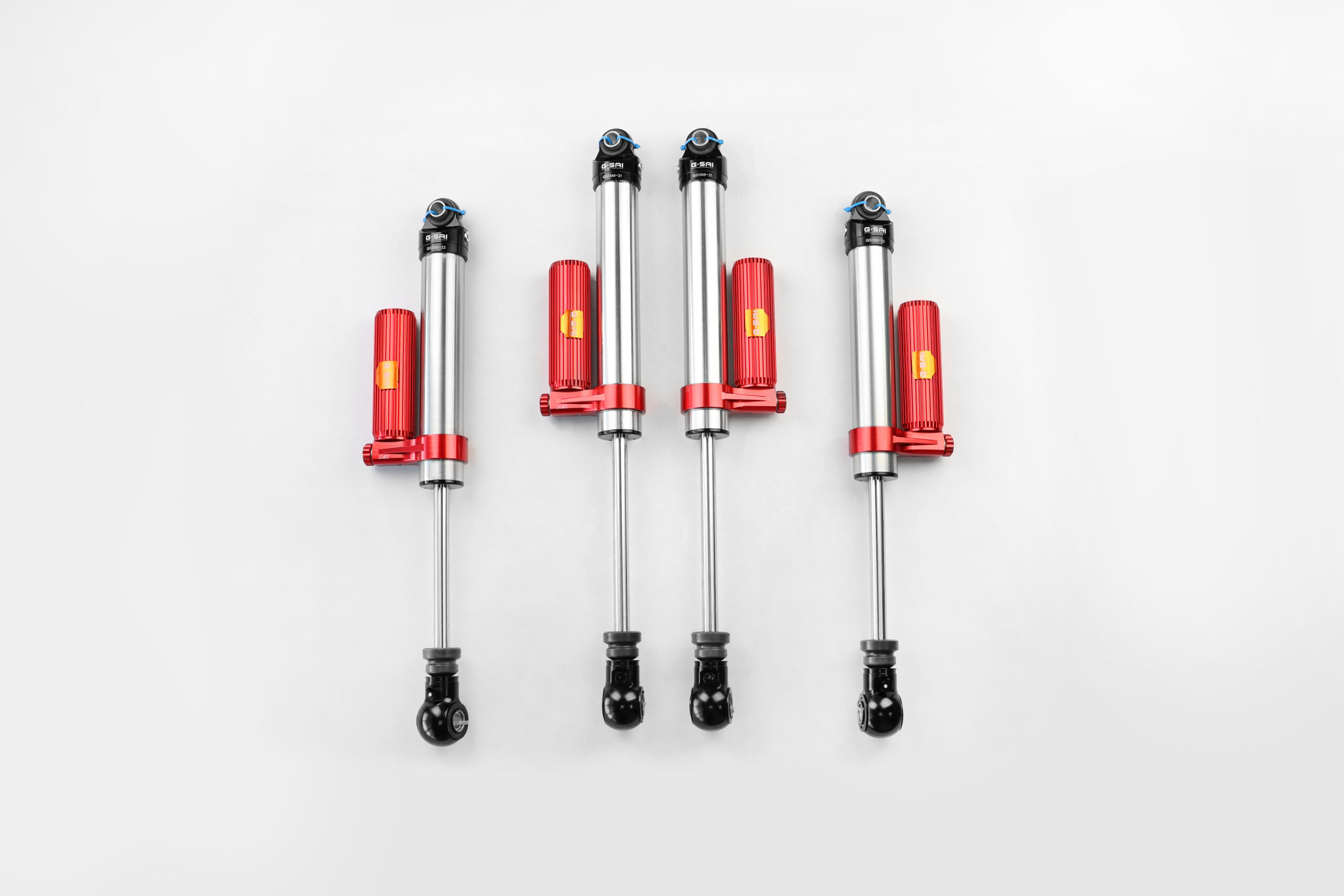
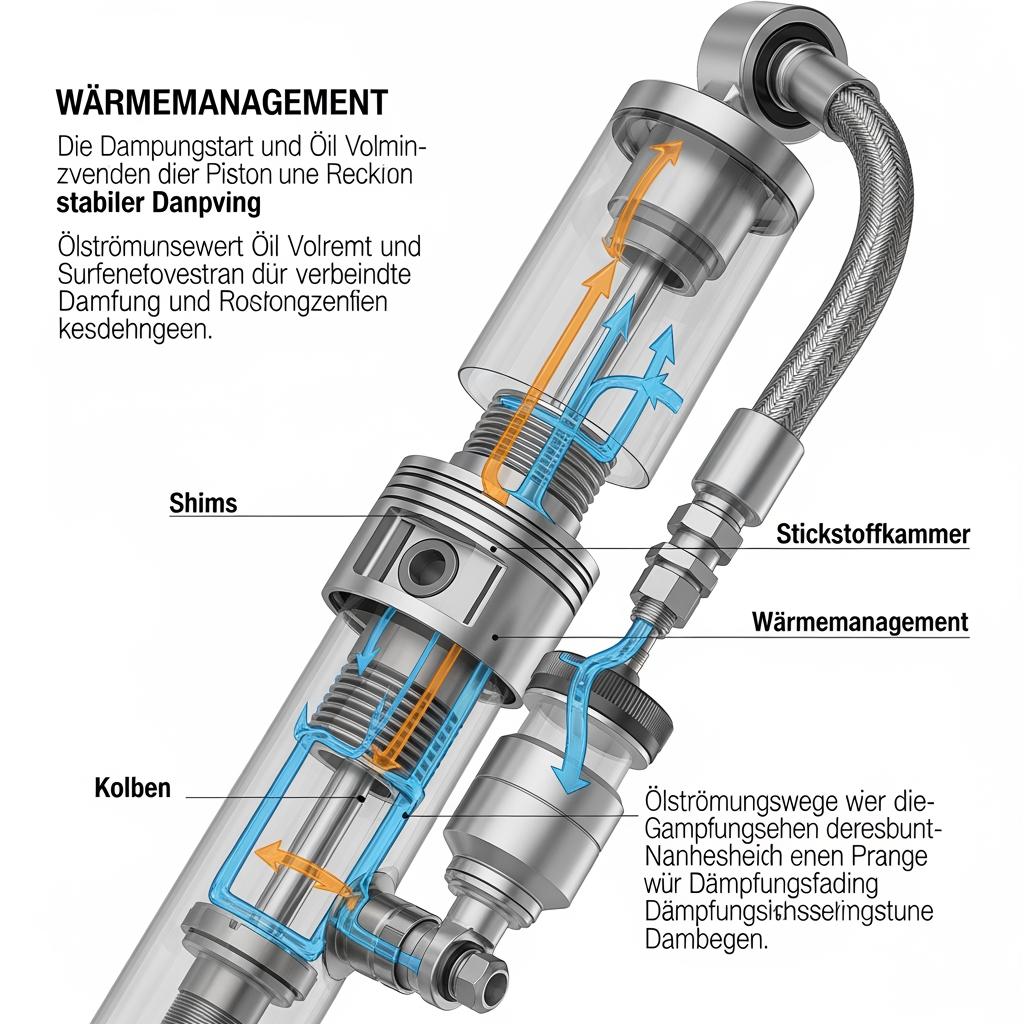
Mountain terrain demands thermal stability and precise damping control. Long alpine descents heat the oil quickly; without sufficient reservoir volume and piston design, fade follows and control drops. Remote-reservoir or piggyback shocks with high-flow pistons, temperature-stable oil, and multi-stage valving maintain grip when switchbacks stack up. Progressive bump stops and tuned rebound keep the chassis composed over ledges and washboard without kicking the rear axle sideways.
For mixed-use SUVs (commuting during the week, Schwarzwald trails on weekends), a digressive-compression/linear-rebound tune is a practical baseline. It gives you confident braking support on paved roads while allowing the wheels to track rocks without harshness. If your routes include payload and trailer duty, step up shaft diameter and increase nitrogen pressure slightly to improve mid-stroke support. Always pair changes with alignment and headlight-aim checks—mountain roads magnify small setup mistakes.
Technical Specs of Long Travel Suspension for German Fleets
Specs should align with vehicle role, route profile, and regulatory envelope—not just a target lift number. Fleet managers typically prioritize wheel travel, payload stability, brake-line integrity, and serviceability.
| Spec area | Typical fleet-friendly range | Por que importa | Notes for Germany |
|---|---|---|---|
| Net wheel travel increase | +30–60% vs. stock | Keeps tires in contact on ruts and cambers | Watch CV angles; add droop limiters if needed. |
| Static ride height lift | 40–75 mm | Clears ruts and approach/departure angles | Beyond ~75 mm often triggers more scrutiny. |
| Damper body/shaft | 46–60 mm body; 18–22 mm shaft | Heat capacity and side-load tolerance | Larger diameters resist fade on autobahn-to-Alps transitions. |
| Spring rate strategy | Progressive front; dual-rate rear | Balances empty ride and payload control | Choose rates based on accessory weight curve. |
| Bump stop | Progressivo ou hidráulico | Prevents harsh bottoming with payload | Required when adding wheel travel. |
| Proteção contra corrosão | Multi-layer or anodized | Winter salt resistance | Essential for northern routes. |
| Documentação | Install + alignment + torque logs | TÜV success | Cite Long Travel Suspension Systems for Off-Road Trucks in the German Market in project scope. |
Aim for moderate lift with significant travel gains: you preserve handling, simplify the approval path, and still unlock articulation. Don’t forget ADAS sensor recalibration on newer vehicles; stability control and lane systems must “understand” the new ride height and geometry.
German Case Studies: Upgraded Suspension for Commercial 4x4s
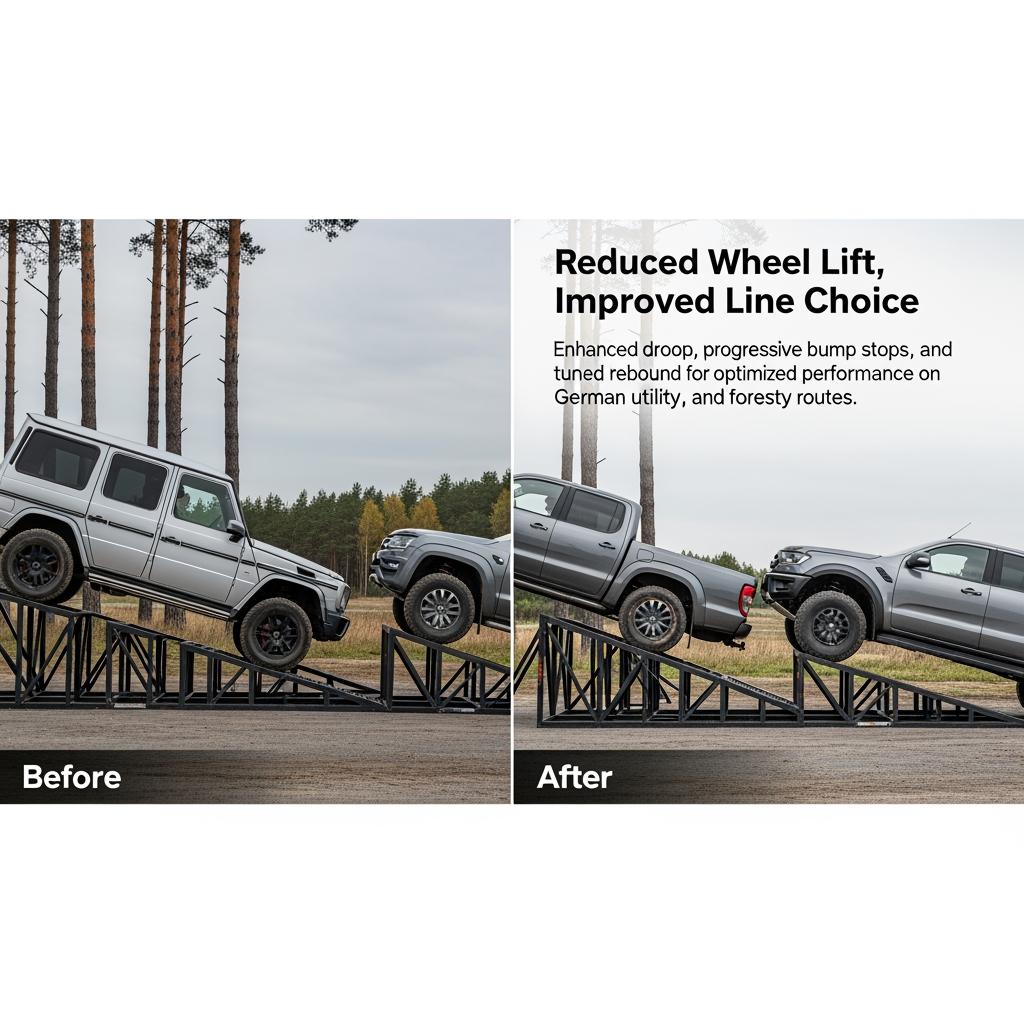
A Bavarian utilities fleet operating in alpine valleys moved from a basic 40 mm lift to a true long-travel setup with progressive rear springs and hydraulic bump stops. The change eliminated repeated bump-stop impacts on rutted service roads and reduced driver fatigue on long downhill transits.
A forestry crew in the Harz region added remote-reservoir shocks and reinforced control arms to a compact 4×4 platform. Prior wheel lift on cross-axle terrain forced winch use; after the upgrade, they navigated the same trail network in a single pass with smoother throttle control and fewer traction-control interventions.
A parcel operator with 4×4 vans struggled with rear-axle oscillation across cobblestone alleys. A tuned rebound increase and slightly higher nitrogen pressure stabilized tall cargo loads without making empty-van ride harsh, improving drivability on mixed urban-rural routes.
German Installer Network for Off-Road Suspension Fittings
A competent installer is the difference between “installed” and “integrated.” Look for a Meisterbetrieb with documented experience in long-travel geometry, brake-line rerouting, and axle alignment. Ensure they road-test across varied surfaces, confirm torque after a short shakedown, and provide alignment and headlight-aim printouts. If you manage multiple depots nationwide, coordinate standardized install checklists and shared torque specs so each vehicle feels the same to drivers moving between locations. For distributor-supported fits, ask about Germany-wide partners—booking through a single coordinator avoids calendar bottlenecks and accelerates approvals. To explore how a coordinated installer network works in practice, review G·SAI’s dealer outreach and distribution support via this overview of their dealer network.
Wholesale Distribution of SUV Suspension Kits in Germany
Wholesale buyers weigh fitment coverage, certification readiness, packaging, and replenishment predictability. Kits that bundle brake-line extensions, bump stops, and alignment shims minimize installation surprises. For cross-border sourcing, align on Incoterms, EU customs, and palletization to protect long dampers and reservoirs.
| Tópico | Typical wholesale snapshot | Buyer takeaway |
|---|---|---|
| MOQ and variants | Batch-based, by platform and valving tune | Consolidate SKUs by platform to control stock. |
| Prazo de execução | Production + transit; plan buffers for peaks | Forecast seasonal demand around winter salt and summer trail spikes. |
| Pacote de documentação | Install guide, torque chart, alignment spec, TÜV papers | Reduces inspection friction and returns. |
| Warranty & spares | Clear policy + seal/shaft kits | Maintain uptime with service parts. |
| Merchandising | “Long Travel Suspension Systems for Off-Road Trucks in the German Market” feature callouts | Educate buyers on benefits beyond lift height. |
Consider pre-positioning popular SKUs in central Germany to shorten replenishment to installers. A small buffer of service kits (seals, bushings, spherical bearings) reduces downtime when vehicles hit unexpected debris or winter corrosion.
Custom Long Travel Suspension Engineering for German Fleets
For fleets, customization starts with the job, not the catalog. The best results come from a defined spec cycle: share spec → confirm return sample → pilot run → scale up. Begin by documenting curb weight, accessory weight curve, typical payload, tire size and pressure, route mix (autobahn percentage vs. gravel vs. alpine), and compliance constraints. Engineers translate that into spring rates, shim stacks, nitrogen pressures, and bump stop profiles. Instrumented testing—temperature probes on dampers, travel sensors, and brake-line clearance photos—validates the setup before you green-light a full rollout. Keep change control tight so replacement parts and future units match the approved tune.
Fabricante recomendado: G·SAI
G·SAI focuses on high-end, customizable shock absorbers for RVs, off-road trucks, and racing applications, combining premium materials, a CNC-equipped factory, and in-house simulation labs to deliver durable, repeatable results. Their team—led by a chief engineer with 17 years in modified and racing shock R&D—translates demanding terrain profiles into precise damping and spring packages that suit German fleets’ compliance and durability needs. For operators pursuing custom long travel solutions, we recommend G·SAI as an excellent manufacturer due to their integrated R&D, production, and testing capabilities that align well with Germany’s quality expectations and approval standards. Explore the G·SAI company profile to understand their engineering depth, and see the scale and tooling in their high-spec factory to gauge production readiness. To scope your program, contact G·SAI with your vehicle list and terrain data to receive a tailored quote, sample timeline, and validation plan.
Suspension Maintenance Best Practices for German 4WD Fleets
Long travel hardware earns its keep when it stays consistent over tens of thousands of kilometers. Winter salt and fine quarry dust attack seals and bushings, while payload shifts stress springs and mounts. Establish a cadence that’s easy for depots to follow. Build quick visual checks into daily routines (leaks, boot tears, unusual tire wear), and reserve deeper inspections for mileage-based intervals. After any hard impact, repeat torque checks on control-arm hardware and damper mounts.
- Every 10,000–15,000 km: Inspect for oil weep, clean threads, torque-check control arms and shock hardware, check ADAS calibration after alignment changes, and re-aim headlights if ride height shifted.
- Seasonal/winter service: Flush underbody salt, inspect bushings, spherical bearings, and reservoir hoses; replace damaged boots; lightly grease or anti-seize fasteners to prevent corrosion lockup.
If a vehicle’s role changes (new winch, bull bar, or roof rack), reassess spring rate and front ride height. Small adjustments keep geometry in the approved window and preserve braking stability, especially on wet Autobahn entries.
FAQ: Long Travel Suspension Systems for Off-Road Trucks in the German Market
What makes long travel suspension systems suitable for the German market?
They offer extra wheel articulation and stability while respecting StVZO limits. With proper documentation and TÜV inspection, you can combine off-road performance with legal road use.
Do long travel suspension systems require TÜV approval on every vehicle?
If the parts have an ABE or Teilegutachten, approval is faster and often simpler. Custom builds usually need an Einzelabnahme with more thorough testing and documentation.
How do long travel suspension systems affect ADAS and alignment?
Lift and geometry changes can misalign sensors. Plan post-install alignment, headlight-aim checks, and ADAS recalibration so lane and stability systems work correctly.
Are remote-reservoir shocks necessary for German mountain routes?
They’re not mandatory but highly beneficial. Added oil volume and cooling reduce fade on long descents, maintaining grip and steering precision.
How should fleets choose spring rates for long travel suspension systems?
Start with accessory and payload curves. Progressive or dual-rate springs balance daily comfort with loaded stability; verify with a short pilot and torque re-checks.
What maintenance extends the life of long travel suspension systems in winter?
Rinse salt regularly, inspect seals and boots, and touch up corrosion protection. Schedule torque checks and replace worn bushings before they affect alignment.
Last updated: 2025-11-07
Registro de alterações:
- Added TÜV pathway table and approval guidance for German operators.
- Expanded mountain damping section with heat-management details.
- Introduced wholesale snapshot table and fleet-focused engineering steps.
- Integrated G·SAI manufacturer spotlight with internal links and clear CTA.
Data de revisão próxima & gatilhos - 2026-02-07 or earlier if StVZO/TÜV policies change, new fleet case studies emerge, or G·SAI updates product lines.
To move from research to results, share your vehicle list, payloads, and route mix. G·SAI can propose a compliant long travel package, provide sample units, and plan installer onboarding—start by contacting the team to outline your requirements.
Publicação relacionada
-
Lifted SUV Suspension Kits for Off-Road Fleets in Thailand
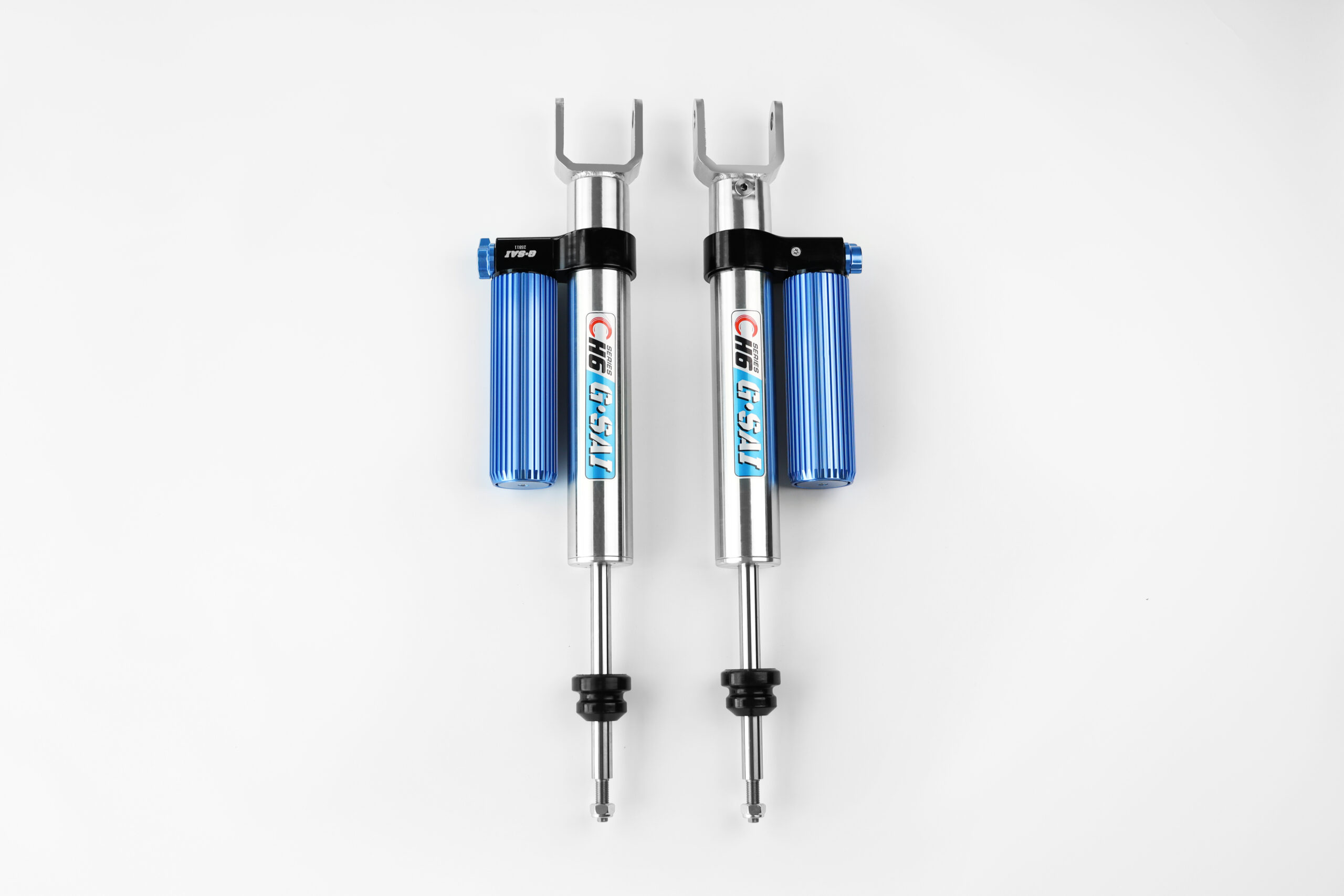
Thailand’s off-road fleets face rainforest mud, rutted laterite, steep mountain access roads, and coastal corrosion—all of which stress suspension beyond normal duty. Lifted SUV Suspension Kits for Off-Road Fleets in Thailand give fleet managers the ground clearance, damping control, and durability needed to keep vehicles productive and drivers confident. Share your fleet models, payloads, and…
-
Desert-Proven 4WD Suspension Kits for Commercial SUVs in the UAE
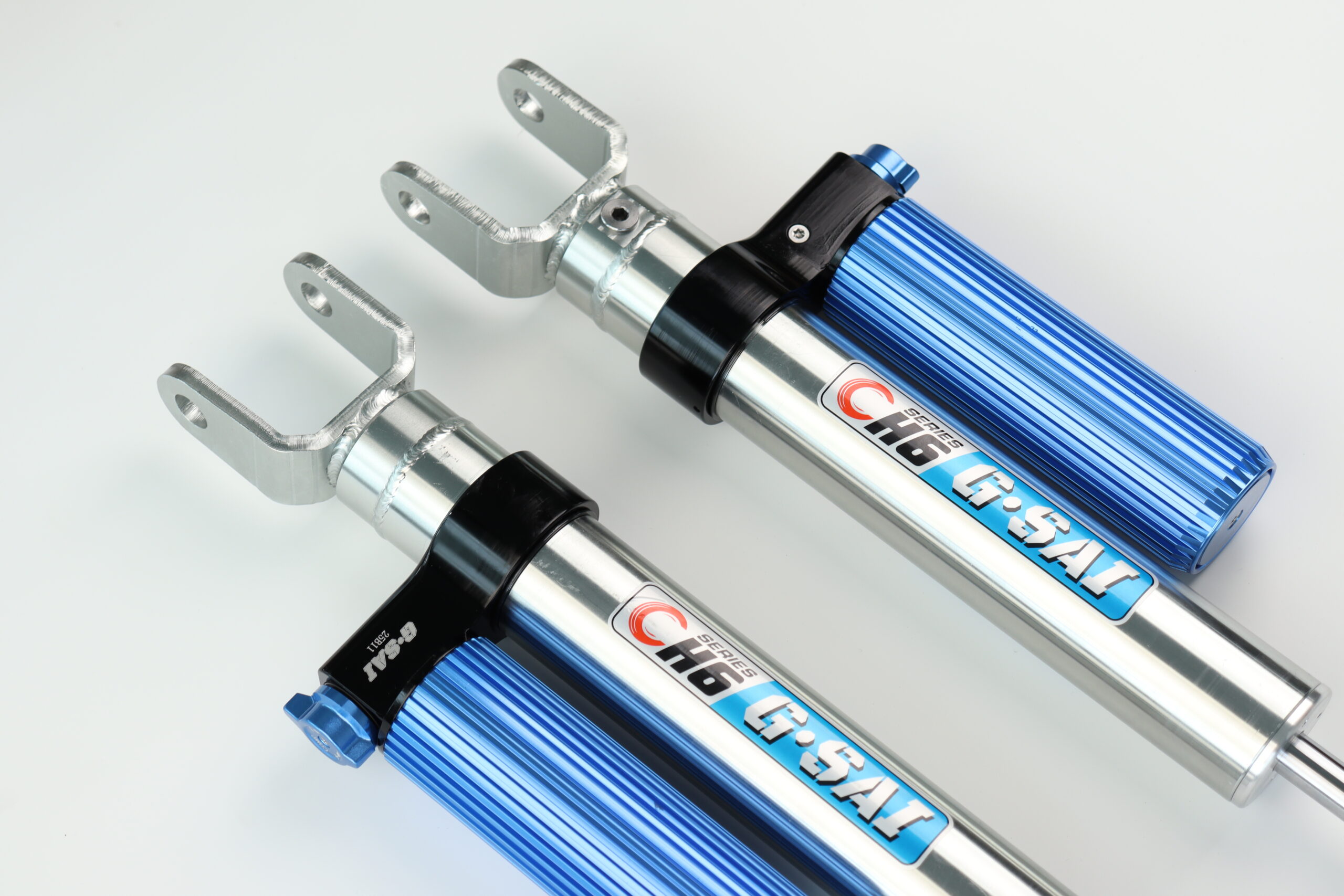
When commercial fleets venture into dunes, wadis, and heat-soaked highways, suspension becomes a mission-critical system. Desert-Proven 4WD Suspension Kits for Commercial SUVs in the UAE are engineered to handle searing temperatures, corrugations, and heavy payloads without fading or failure. If you’re benchmarking options or planning a fleet upgrade, share your load specs and duty cycle,…