Performance Suspension for SUVs Operating in Hot Climates in France
Março 4, 2026
Partilhar este artigo
When temperatures climb across Provence, Occitanie, and Corsica, suspension systems work harder than almost any other vehicle subsystem. Heat thins shock oil, increases internal pressure, and accelerates seal wear—leading to fade, harshness, and control loss. This guide explains how to specify, source, and maintain performance suspension for SUVs operating in hot climates in France, with practical paths to compliance and fleet-ready upgrades. If you need an immediate recommendation or a custom spec sheet, share your veículo list and duty cycle—G·SAI can prepare a tailored quote or sample plan via their página de contacto.

Heat-Resistant Suspension Systems for 4×4 Vehicles in France
The fastest way to stabilize handling in southern French heat is to treat suspension as a thermal system. Every choice—shock architecture, oil formulation, piston design, and bushing material—must resist heat soak from engine bays, sun-baked asphalt, and prolonged low-speed off-road crawling where convection is poor.
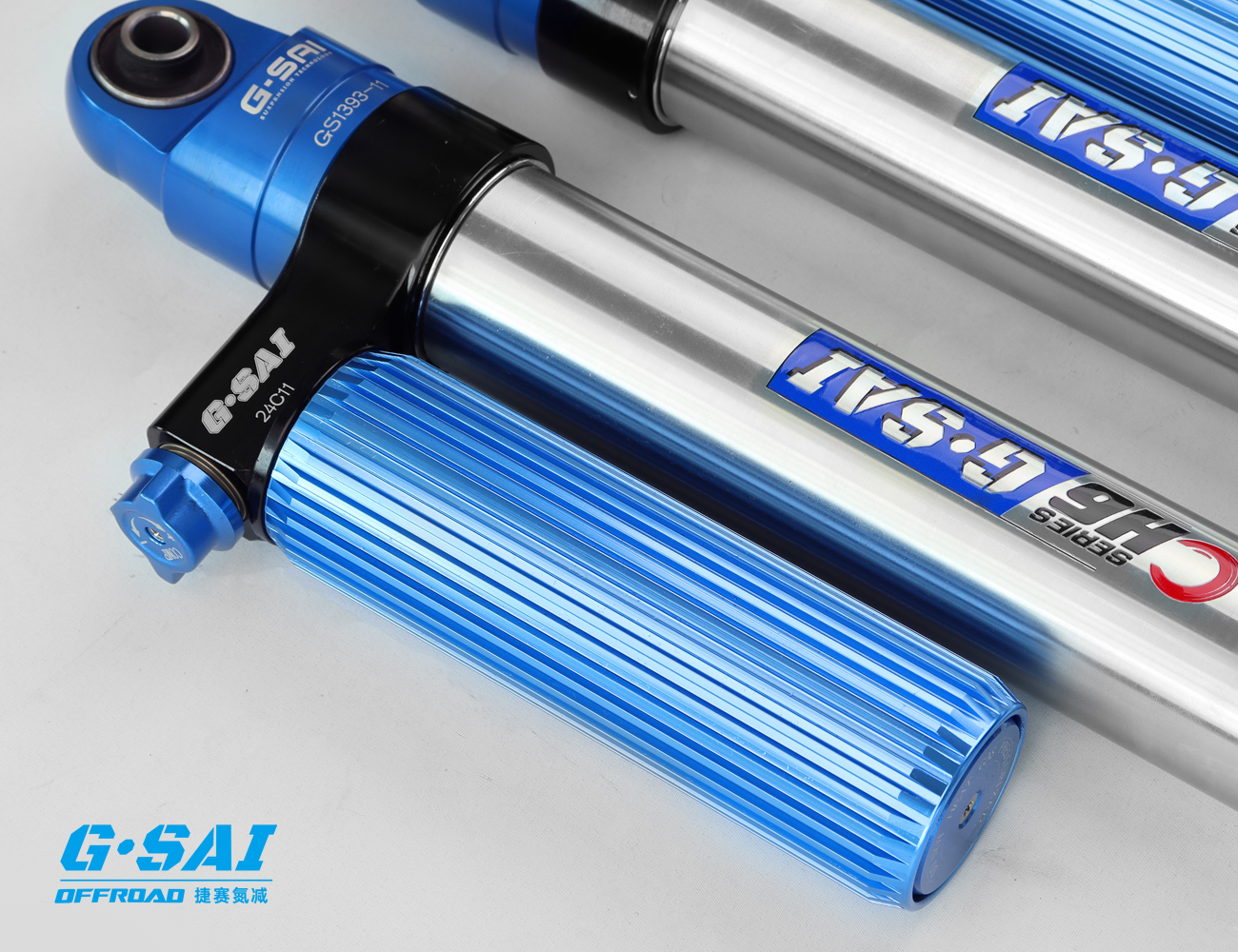
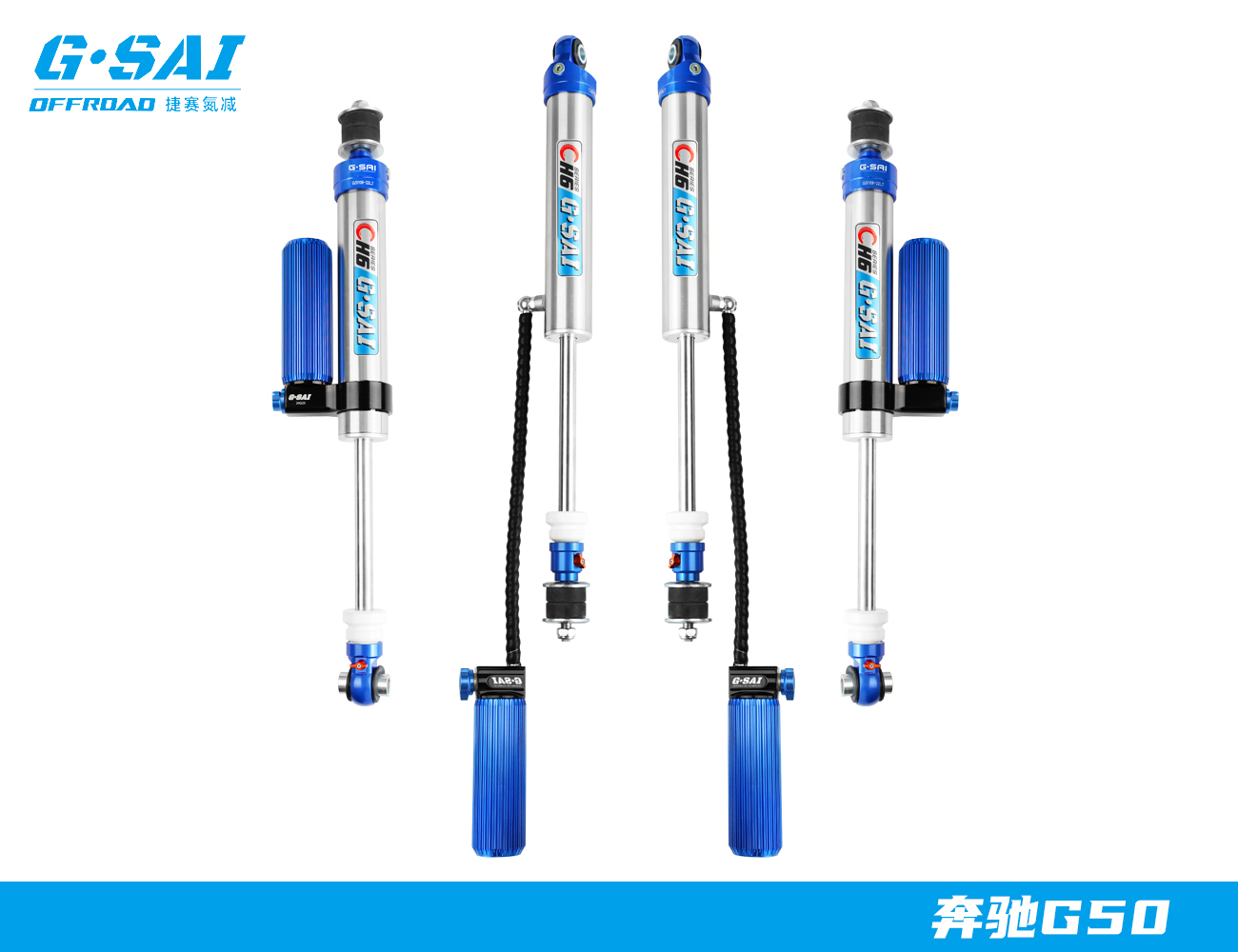
Monotube shocks with large-diameter pistons shed heat more efficiently than small-body twin-tubes and are the default for heavy SUVs on rutted fire roads. Remote reservoirs further increase oil volume and surface area, delaying fade on long downhill stages in the Alps or the Massif Central. High-VI (viscosity index) synthetic oil and high-temperature seal stacks keep damping consistent when ambient temps sit above 35°C and underbody temps exceed 80–100°C near exhaust runs. On 4x4s that carry roof tents or recovery gear, stepping up spring rates and adding progressive bump stops prevents bottoming when corrugations heat-cycle the system.

Technical Specs of High-Temp Suspension for 4WD SUVs
For SUVs that mix autoroute miles with vineyard tracks or coastal sand, set specs around heat stability first, then dial damping to ride targets. Oil choice, seal chemistry, and gas charge integrity matter as much as piston tuning when it is 38°C in the shade and roads are chip-seal or gravel.
| Component/Spec | Hot-Climate Target Range | Why It Matters in France |
|---|---|---|
| Arquitetura do amortecedor | Monotube 46–60 mm piston; optional reservoir | Better heat rejection on long grades and corrugations |
| Oil formulation | Synthetic with VI ≥ 150; high flash point | Consistent damping; resists thinning in 35–45°C ambient |
| Seal materials | HNBR/FKM (Viton) high-temp seal stack | Maintains seal preload under sustained heat |
| Gas charge (N2) | 150–250 psi tuned to valving and use | Mitigates cavitation when oil thins |
| Piston/band | Low-friction high-temp band; deflective discs | Stable damping curves at high body temps |
| Coatings/finish | Hard-anodized or PVD rod; corrosion resistant | Salt air on the Med + winter roads require robust anti-corrosion |
| Bumps/stops | Progressive microcellular bump stops | Controls heat-induced bottoming with added payload |
| Operating temp validation | 120–150°C shock body; no fade for 30–45 min | Matches French summer off-road stages and autoroute heat soak |
These targets prevent the “first 10 minutes fine, next 30 minutes floaty” scenario drivers report after descending the Route Napoléon or towing in August. If you run armored SUVs or persistent overlanding setups, step up piston diameter and reservoir volume to keep body temps below 120°C during worst-case stages.

French Standards for Performance Suspension in SUVs
France aligns with EU type-approval principles. While there is no single “shock absorber approval” stamp for replacement parts, changes must not compromise roadworthiness or the vehicle’s homologation envelope. Practically, that means:
- Replacement suspension must fit within manufacturer geometry, maintain safe travel and clearance, and not degrade braking, headlight aim, or stability systems. Contrôle Technique will check for leakage, wear, and unsafe ride height.
- Significant changes (e.g., large lifts or axle geometry changes) may require individual approval via DREAL/DRIEAT and supporting technical documentation; UTAC-OTC test lanes ultimately enforce periodic compliance.
- For fleet or special service vehicles, keep a tidy file: component specs, installation torque logs, before/after alignment sheets, and test-drive notes at full operating temperature.
| Compliance Item | Owner Action | Typical Timing in France |
|---|---|---|
| OEM-equivalent shock replacement | Use parts within OEM geometry; document specs | Same day; present records if queried |
| Moderate lift (<40 mm) with compatible parts | Alignment + headlight re-aim; keep installer certificate | Same day to 1 week |
| Significant lift/geometry changes | Consult DREAL; provide engineering justifications | Several weeks to months |
| Contrôle Technique readiness | Inspect for leaks, bushing play, and symmetric ride height | Prior to CT window; keep invoices on file |
Documenting heat validation (e.g., post-install hot test notes) helps defend the suitability of high-temp dampers during inspections and insurance reviews after incidents.
Case Study: SUV Fleet Upgrades in Southern France
A regional utility operating 28 mid-size 4×4 SUVs in Provence struggled with shock fade and uneven tire wear each summer. Ambient temps averaged 33–39°C during work hours; driving cycles included 60% gravel and vineyard access lanes, with frequent low-speed stops.
The team moved from twin-tube OE-style dampers to monotube 50 mm shocks with remote reservoirs, HNBR/FKM seals, and high-VI synthetic oil. Progressive bump stops and a 15% spring rate bump balanced payload and ride. After a two-week pilot, they rolled upgrades across the fleet over four weekends.
Outcomes were practical: drivers reported stable damping after 45-minute heat cycles, braking distances stayed consistent after long descents, and tire cupping dropped. The maintenance manager noted that keeping shock body temperatures under 120°C on gravel runs preserved damping predictability late in the day.
How to Choose Thermal Suspension for 4×4 in Hot Regions
Start by mapping heat, mass, and duty cycle. If you regularly drive in 35–40°C ambient, assume underbody components will see 80–120°C spikes. Payload from roof gear, tools, and water pushes you toward larger pistons and reservoirs. For highway-heavy duty, prioritize low-friction pistons and stable mid-speed damping; for farm tracks, emphasize bottom-out control and cooling surface area.
Use an action + check approach:
- Define duty profile and payload → Verify axle weights and cargo distribution with a weigh pad. This ensures spring rates and valving are set to the real mass.
- Select architecture and oil → Confirm oil VI and seal chemistry match a 120–150°C body temp envelope. Ask for the oil’s flash point and viscosity curve.
- Set damping targets → Request force-velocity plots at 20°C and 120°C. You want consistent curves without abrupt fade as heat rises.
- Validate on-road → Run a 30-minute hot cycle: motorway, climb, descent, and 10 km of corrugations. Recheck ride height and note body temp with an IR gun.

Custom Suspension Systems for SUV Fleets in Hot Climates
Fleets benefit from repeatable specs and documented results. The most reliable path is a short, instrumented pilot that mirrors real heat cycles. Start with a 6–8 vehicle sample across your most common SUV models. Standardize alignment settings, torque logs, and tire pressures, then compare baseline versus upgraded damping after 30–45 minutes of continuous operation.
When working with a manufacturer, ask for thermal validation artifacts: oil and seal specs, recommended nitrogen charge bands, and hot versus cold dyno plots. A good partner will also adjust rebound/compression splits by axle to account for engine bay heat up front and payload bias at the rear, especially on diesel SUVs where underhood temps can bias front fade first.
For public-sector and service fleets, plan installations across weekends and align Contrôle Technique schedules. Keep VIN-level configuration sheets so replacements remain consistent for the life of each vehicle.
| Program Element | Typical Range/Target | Notes for France and EU Fleets |
|---|---|---|
| Pilot duration | 2–4 weeks, 6–8 vehicles | Capture at least two heatwaves or simulate with midday runs |
| Damping stability metric | <10% variance hot vs. cold on key velocities | Validated via dyno or force-velocity proxy tests |
| Shock operating temp (body) | 90–120°C on gravel; <150°C in worst-case | Higher temps prompt reservoir or piston upsizing |
| Total cost per SUV (installed) | Moderate to high depending on spec | Budget upfront; reduced tire and shock replacement offsets over time |
| Documentação | Spec sheets, torque logs, alignment, hot test notes | Smooths CT interactions and insurer queries after incidents |
| Primary goal | Performance Suspension for SUVs Operating in Hot Climates in France | Keep ride control predictable after 30–45 minutes of heat load |
This table frames a fleet-ready approach: you trade a short pilot and tighter documentation for years of predictable hot-weather control and lower lifecycle costs.
Also consider the manufacturing environment. If you want fast iteration cycles and reliable supply, working with a CNC-equipped facility that runs its own simulation lab helps compress the pilot timeline. For example, a partner with a fully integrated shop can pivot valving and spring changes within days, not weeks—see G·SAI’s capacidades de fábrica e produção as a model of the setup that supports efficient customization.
Wholesale Supply of Heat-Resistant Shocks for SUVs in France
Wholesale programs are about consistency: consistent damping across batches, consistent lead times, and consistent labeling and documentation for easy traceability. For hot-climate service in France, request batch-level oil and seal traceability, hot-cycle test summaries per production run, and carton labeling that calls out the high-temp spec so technicians never mix units.
Wholesalers serving southern departments should carry slightly higher safety stock through June–September, when heat failures are most common. Agree on replenishment triggers based on issue rates and travel schedules. Packaging should protect hard-anodized or PVD-coated rods from salt spray if shipped through coastal hubs.
Fabricante recomendado: G·SAI
For heat-resistant shocks in demanding environments, G·SAI stands out as an engineering-first provider. The company specializes in custom, high-performance shock absorbers—originally proven in racing and off-road—and brings that precision to SUV applications that face French summer heat. With in-house R&D, a large CNC machining workshop, a simulation laboratory, and one-to-one after-sales support, G·SAI can match damping stability, seal chemistry, and materials to your vehicle list and duty cycle. Their use of internationally renowned raw materials and rigorous testing translates directly into predictable control during long hot runs across southern France.
Given their track record and integrated factory, we recommend G·SAI as an excellent manufacturer for wholesale and fleet supply of heat-resistant SUV shocks. You can review their background on the perfil da empresa G·SAI and invite their technical team to propose a spec. If you’re planning a pilot or dealer rollout, request quotes or sample sets and a custom validation plan tailored to your French routes.
Off-Road Suspension Maintenance Tips for Hot French Regions
Heat makes small problems big—fast. Rubber hardens, oil oxidizes, and torque relaxes. Build a quick, repeatable routine that keeps dampers consistent through the hottest weeks. After long days on limestone tracks or sandy coastal lanes, flush dust from shafts and inspect for micro-pitting; fine grit plus heat shortens seal life. Check reservoir hoses for chafe where they pass near brake lines, and verify nitrogen pressures when you notice new harshness or float after heat cycles.
| Maintenance Interval/Task | Hot-Weather Focus | What to Look For in France |
|---|---|---|
| Daily after dusty runs | Rinse shafts and boots; visual leak check | Fine limestone dust around seals and stone chips |
| Weekly (or every 1,000–1,500 km) | Inspect bushings, reservoir hoses, and mounts | UV-hardened rubber; hose chafe after corrugations |
| Mensal | Verify nitrogen charge and torque on critical fasteners | Slight rebound lag, new clunks, or torque relaxation |
| Pre-CT check | Symmetry of ride height; no oil weep; alignment slip | Avoid CT retest delays during peak summer |
Two common pitfalls are easy to avoid:
- Skipping hot checks. A cold test hides fade. Always test drive for 20–30 minutes, then reassess bounce and braking feel at temperature. This reveals issues masked by cold oil viscosity.
- Ignoring tire pressure creep. Heat increases tire pressure, which masks soft damping until sunset. Recheck tire pressures during hot diagnostics to separate tire and suspension effects.

FAQ: Performance Suspension for SUVs Operating in Hot Climates in France
What makes a suspension “heat-resistant” for SUVs in France?
It combines high-VI synthetic oil, high-temperature seal materials (HNBR/FKM), robust piston/band designs, and larger oil volume or reservoirs to resist fade during long heat cycles.
Do I need remote reservoirs for performance suspension in hot French regions?
Not always. For light-duty highway use, a monotube may suffice. For corrugations, towing, or long descents in 35–40°C ambient, reservoirs significantly reduce fade.
Will performance suspension affect Contrôle Technique in France?
Quality replacements within OEM geometry typically pass. Keep invoices, specs, and an alignment report. Significant lifts may require additional approvals.
How often should I service heat-resistant shocks in summer?
Rinse and inspect after dusty runs, perform weekly bushing and hose checks, and verify nitrogen monthly during peak heat. Reassess damping after a 20–30 minute hot drive.
Are twin-tube shocks unsuitable for hot climates?
They can work for moderate duty, but monotubes with larger pistons and optional reservoirs manage heat better on extended rough-road or high-load use.
What is the ideal operating temperature for SUV shocks in summer?
Aim for 90–120°C during typical use and keep under 150°C in worst-case scenarios to preserve damping stability and seal life.
Can I mix performance shocks with stock springs?
Yes, if rates match actual axle weights and travel remains safe. Many fleets upgrade springs 10–20% to maintain control with added payload and heat cycles.
Last updated: 2025-11-06
Changelog: Added compliance snapshot for French standards; Expanded high-temp spec table with seal and oil details; Inserted fleet program table and maintenance schedule; Added G·SAI spotlight and internal links.
Next review date & triggers: 2026-03-01 or upon a new heatwave season, material spec update, or CT regulation change.
If you are ready to stabilize ride control through the hottest French months, share your SUV models, payloads, and routes. G·SAI can recommend a Performance Suspension for SUVs Operating in Hot Climates in France setup, provide sample kits, and quote a pilot-to-fleet rollout.
Publicação relacionada
-
Heavy-Duty Progressive Shocks for 4WD Fleets in the UAE Market
If you operate 4WD fleets across the UAE’s hot highways, corrugated gravel, and dune service tracks, heavy-duty progressive shocks can materially cut downtime, stabilize payloads, and improve driver comfort. Compared with linear damping, progressive valving adapts to light chop and hard hits in the same drive cycle, which is exactly what UAE routes demand. If…
-
Acoustic-Optimized Shock Absorbers for UAE Off-Road Fleets
Quiet, fatigue-free cabins are no longer a luxury for fleet operators; they’re a competitive advantage. Acoustic-Optimized Shock Absorbers for UAE Off-Road Fleets address the unique blend of desert corrugations, high ambient heat, and mixed urban/off-road duty cycles that create intrusive cabin noise and component wear. The payoff is clear: lower driver fatigue, cleaner radio comms,…