Como Escolher os Amortecedores Certos para Land Cruiser na Alemanha
7 de Dezembro, 2025
Partilhar este artigo
Se conduz um Land Cruiser como veículo diário, rig de expedição ou frota veículo na Alemanha, a configuração certa de amortecedores determina segurança, conforto e conformidade. Este guia mostra exactamente como escolher amortecedores para Land Cruiser na Alemanha, desde caminhos TÜV a afinações específicas para terreno, preços B2B e adaptação à cadeia de abastecimento. Se quiser uma recomendação rápida com custos, partilhe o modelo Land Cruiser, cargas nos eixos, objectivo de elevação e uso, e enviaremos uma proposta personalizada de amortecimento e orçamento. A G·SAI fornece estes serviços personalizados com documentação pronta para TÜV e prazos rápidos.
Amortecedores para Land Cruiser com Certificação TÜV na Alemanha
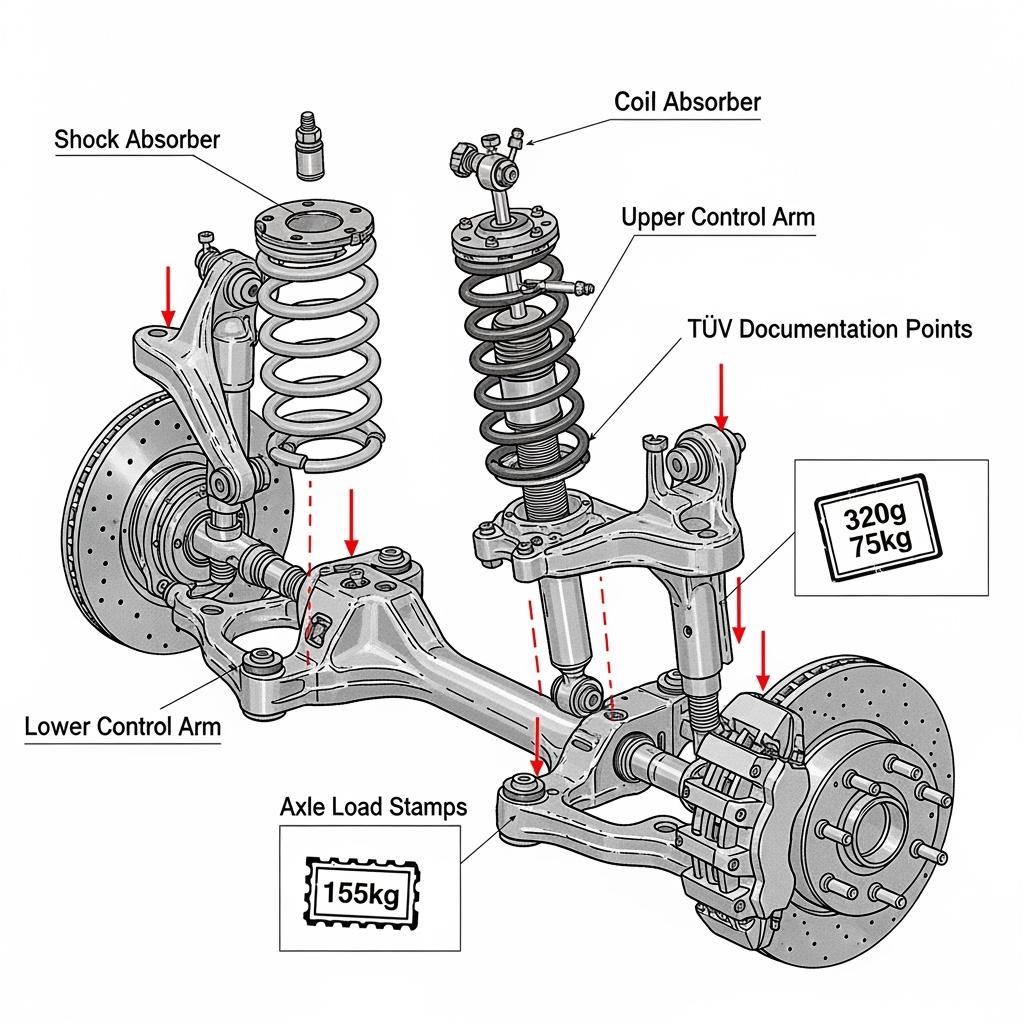
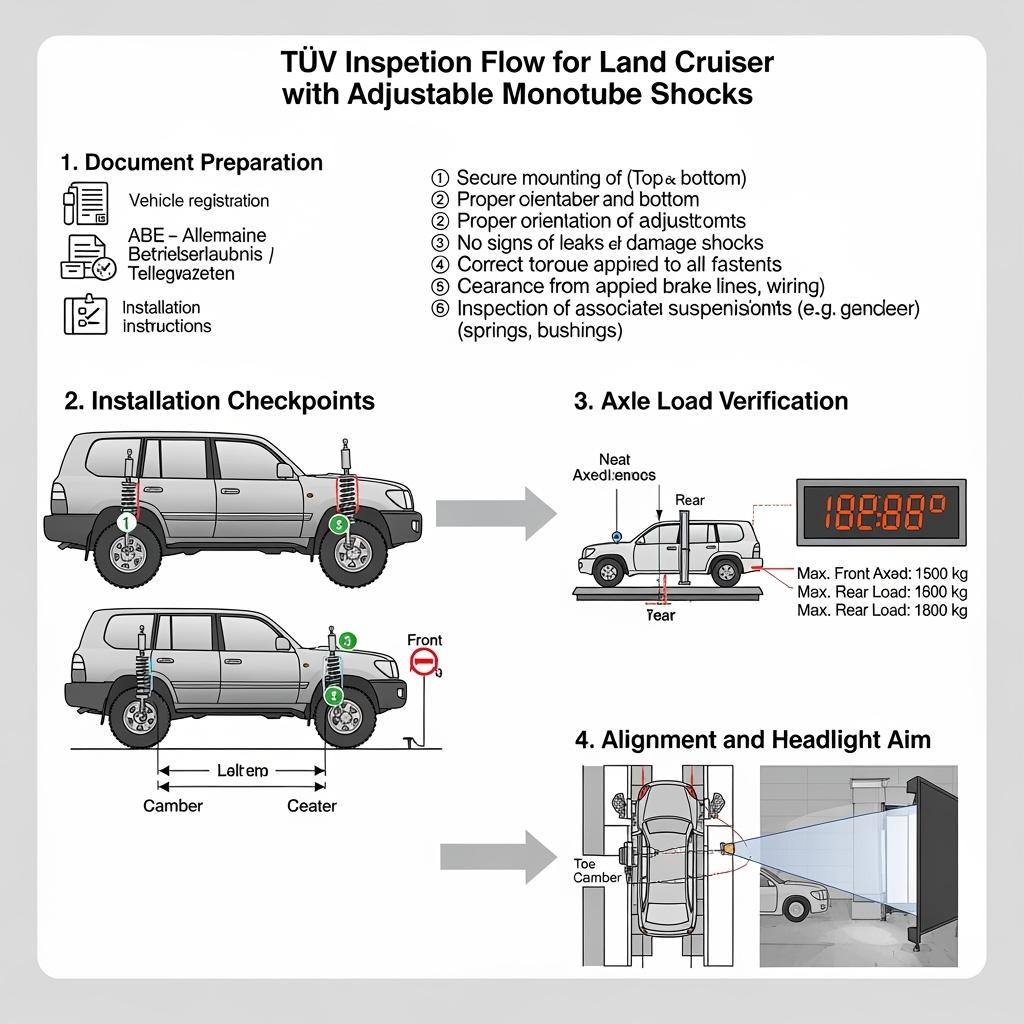
Para a maioria das actualizações de amortecedores Land Cruiser na Alemanha, o caminho para uma configuração legal e apta para estrada passa por ABE (Allgemeine Betriebserlaubnis) ou Teilegutachten seguido de inspecção TÜV. Se os amortecedores mantiverem a altura de condução e geometria dentro das tolerâncias OEM, o processo é simples. Assim que adicionar elevação, reservatórios remotos ou curso alterado, os inspectores alemães verificarão cargas nos eixos, ângulo de faróis, ângulos de direcção, alongamento de tubos de travões e folgas das rodas em compressão e extensão completas.
Duas regras práticas: primeiro, traga documentação completa (ABE, Teilegutachten, classificação de carga no eixo, guia de instalação). Segundo, garanta que a configuração de amortecimento não induza pitching ou rolamento excessivo — os inspectores podem chumbar sistemas que alterem substancialmente o comportamento.
| Item | O que significa na Alemanha | Uso típico no Land Cruiser | Observações |
|---|---|---|---|
| ABE | Aprovação geral de tipo. Sem inspecção individual se instalado conforme documento. | Actualizações leves com altura e encaixe de origem. | Caminho mais rápido para uso legal na estrada. |
| Teilegutachten + TÜV Einzelabnahme (§19/§21 StVZO) | Certificado de peças mais inspecção individual. | Kits de elevação, amortecedores com reservatório remoto, válvulas personalizadas. | O inspector conduzirá e medirá folgas. |
| Marcação KBA | Identificador da Autoridade Federal de Transportes Rodoviários. | Visto em peças testadas; nem sempre obrigatório para amortecedores. | Ajuda a rastrear aprovações e dados técnicos. |
| Caso de uso | amortecedores para Land Cruiser na Alemanha | Uso misto diário + off-road. | Mantenha provas de que alinhamento e ângulo de faróis foram ajustados. |
Um inspector verifica frequentemente se os limitadores de curso actuam antes de os amortecedores chegarem ao fim de curso e se a extensão máxima não alonga em excesso tubos de travões ou linhas ABS. Traga resultados de alinhamento, valores de binário e alturas de condução antes/depois para acelerar a aprovação.
Escolhendo a Melhor Suspensão para SUV em Terrenos Alemães
A Alemanha concentra condução diversa num só país: cruzeiros em auto-estrada de alta velocidade, estradas florestais rotuosas no Black Forest, passos alpinos rochosos na Baviera e invernos salgados no norte. Adaptar os amortecedores a essa mistura é mais importante do que nomes de marcas.
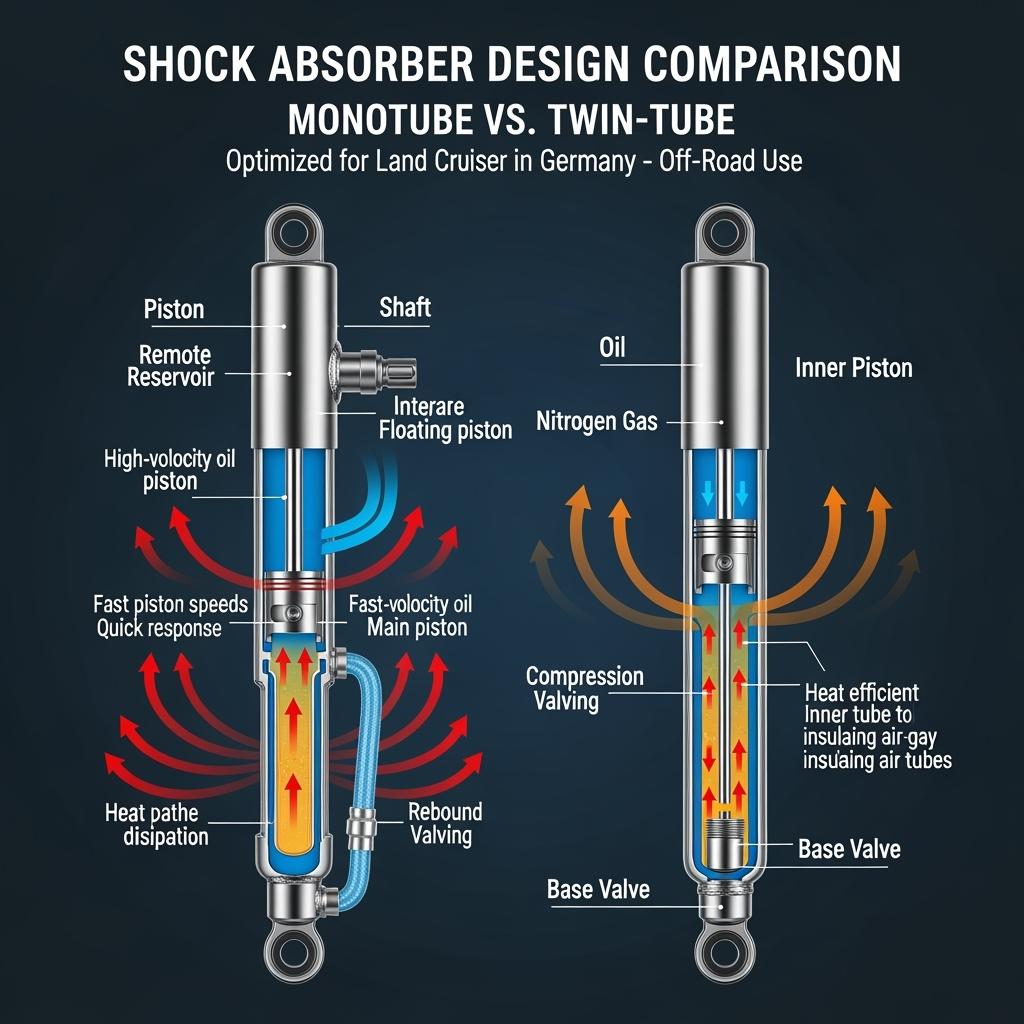
Amortecedores monotubo oferecem melhor dissipação de calor e controlo preciso em descidas longas; os bitubo são frequentemente mais complacentes e económicos para uso urbano misto. Pistões digressivos controlam o movimento da carroçaria em baixas velocidades mantendo complacência sobre arestas aguçadas. Para acessórios pesados (guincho, para-choques de aço, baterias duplas), a taxa de mola e amortecimento devem aumentar em conjunto ou a carroçaria oscilará.
| Terreno/Uso | Tipo de amortecedor recomendado | Combinação de molas | Altura de rodagem | Observações |
|---|---|---|---|---|
| Auto-estrada + uso diário | Monotubo digressivo, sem remoto | Molas ligeiramente reforçadas | De origem a +20 mm | Mudações de faixa estáveis; baixo NVH. |
| Floresta/cascalho | Monotubo com rebound ajustável | Molas de taxa progressiva | +20 a +40 mm | Afine o rebound para controlar oscilação de carga. |
| Descidas alpinas | Monotubo com reservatório remoto | Molas de serviço pesado | +30 a +50 mm | Volume extra de óleo resiste ao desvanecimento. |
| Overlanding (carregado) | Monotubo ajustável 2–3 vias | Molas de carga constante adaptadas à carga útil | +30 a +50 mm | Equilibre conforto e controlo no PMV. |
| Exposição a inverno/sal | Monotubo com protecção anticorrosão elevada | Molas de taxa OEM (se sem carga) | De origem a +20 mm | Especifique revestimentos e hardware em aço inoxidável. |
Estabeleça expectativas cedo: uma elevação de 50 mm altera a geometria, pelo que reserve alinhamento e espere ajuste de faróis. Se o conforto de condução importar, teste cliques de rebound de macio a firme num circuito repetível, fixe as definições e anote-as na caixa de luvas.
Conformidade de Suspensão Land Cruiser com Regulamentações Alemãs
O enquadramento StVZO da Alemanha foca-se em segurança e impacto ambiental. Para amortecedores e suspensão:
- Alterações de altura: Elevações além dos limiares típicos de ABE requerem frequentemente Einzelabnahme ao abrigo do §19 ou §21 StVZO. Acima de cerca de 50 mm, prepare-se para escrutínio adicional em ângulos de cardan, equilíbrio de travões e ângulo de faróis.
- Documentação: Teilegutachten/ABE, declarações de carga no eixo, orientação de instalação e prova de alinhamento. Mantenha uma cópia no veículo.
- Iluminação e ADAS: Após qualquer elevação, ajuste o ângulo de faróis. Veículos com manutenção de faixa ou radar podem precisar de calibração após alterações na altura ou rampa.
- Ruído e corrosão: Embora os amortecedores não sejam certificados por ruído como os escapes, NVH excessivo ou componentes soltos podem chumbar a inspecção. Peça revestimentos anticorrosão elevados e buchas seladas para estradas tratadas com sal.
Um Land Cruiser conforme sente-se plantado como OEM, segue recto em velocidade e passa a inspecção com base em documentação e sensação de estrada. Planear estes itens cedo reduzirá retrabalho e atrasos.
Amortecedores para Frotas de SUV em Regiões Montanhosas
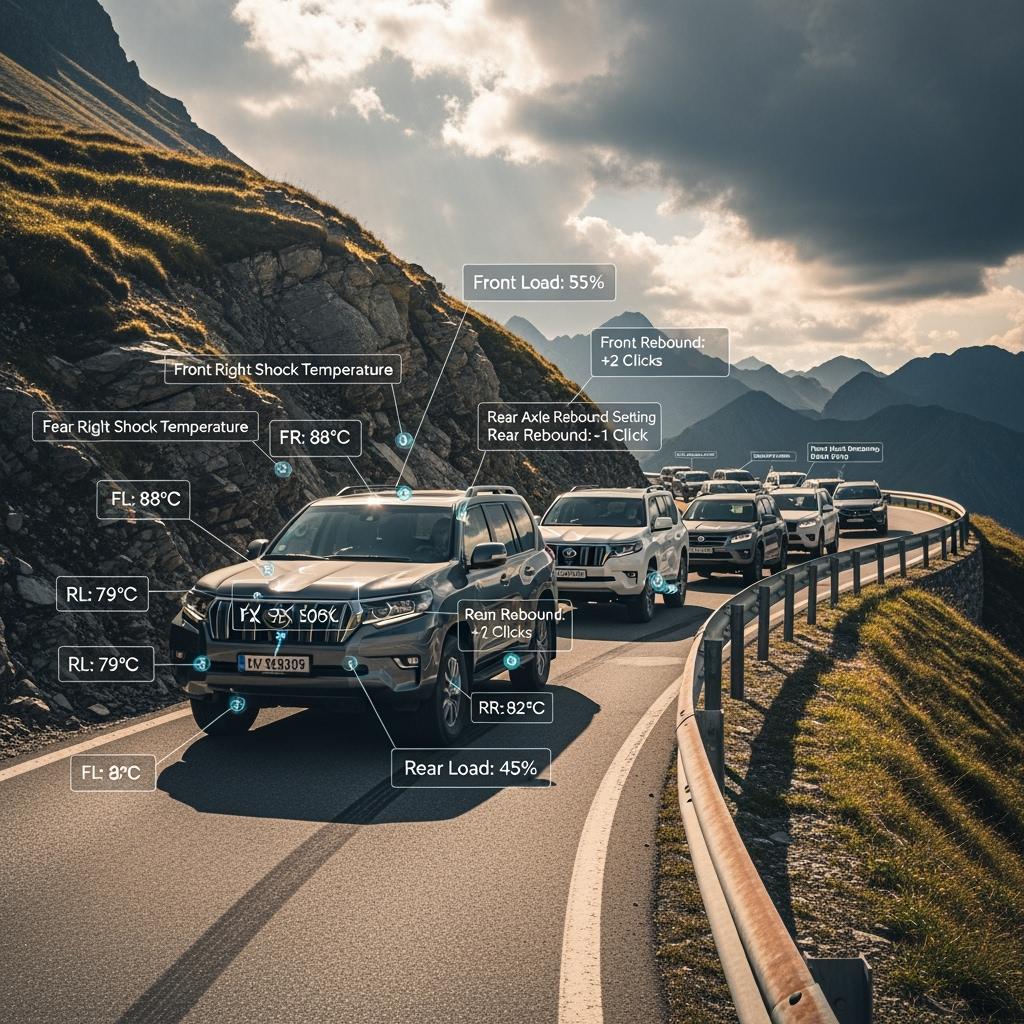
SUV de frota nos Alpes ou Mittelgebirge enfrentam descidas longas com calor acumulado e cargas variáveis. Amortecedores com reservatório remoto e maior volume de óleo resistem ao desvanecimento. O controlo de rebound é crítico em descidas com carga — rebound insuficiente “empacota” a suspensão e erode a aderência dos pneus.
Especifique buchas que equilibrem NVH com durabilidade; poliuretano pode chiar sem lubrificação em condições de inverno, enquanto borracha de alta dureza oferece frequentemente uma solução mais silenciosa e duradoura para frotas. Padronize intervalos de serviço (ex.: inspecção a cada 20–30 mil km para rigs pesados) e registe a temperatura do corpo do amortecedor após descidas de teste para benchmark de risco de desvanecimento. Um pequeno termómetro IR na caixa de luvas compensa-se rapidamente.
Guia de Preços B2B para Kits de Suspensão Off-Road Land Cruiser
Compradores de frota e upfitters devem orçamentar além do custo por amortecedor: inclua termos de envio, direitos/VAT, instalações, alinhamentos e taxas de inspecção. Monotubos ajustáveis custam mais inicialmente, mas reduzem desgaste de pneus e travões — importante para o custo total de propriedade.
| Escalão | Configuração típica | Gama de preços (kit) | Prazo de entrega para Alemanha | MOQ | Garantia |
|---|---|---|---|---|---|
| Frota/Substituição OEM | Monotubo, válvulas fixas | Médio | 2-4 semanas | Baixa | 1-2 anos |
| Desempenho ajustável | Monotubo ajustável 1–2 vias | Médio–Alto | 3 a 6 semanas | Médio | 1-2 anos |
| Reservatório remoto off-road | 2–3 vias com reservatórios | Elevado | Rodoviário/ferroviário | Médio–Alto | 1-2 anos |
| Pacote de documentação | Suporte ABE/Teilegutachten para amortecedores para Land Cruiser na Alemanha | Incluído/Opcional | Paralelo à produção | n/d | n/d |
Espere prazos mais curtos para plataformas Land Cruiser standard e mais longos se cargas no eixo, blindagem ou altura de condução exigirem válvulas personalizadas. Para importações, esclareça Incoterms (FOB vs. DDP Alemanha) para evitar custos logísticos surpresa.
- Negocie valor, não só preço unitário: peça curvas de dinamômetro, métodos de teste de corrosão e desconto em produção piloto.
- Fixe uma previsão rolante: reserve slots de produção em épocas de pico para evitar rupturas de stock.
- Acorde documentação: especifique que ABE/Teilegutachten e guias de instalação viajem com as peças.
- Processo piloto → escala: comece com 2–3 veículos, meça resultados, depois implemente em frota.
Amortecedores Personalizados para Toyota Land Cruiser em Uso Off-Road
Amortecedores personalizados são ideais ao adicionar blindagem, cargas no tejadilho ou carga especializada. O processo é directo quando os passos são explícitos: partilhar especificações → confirmar amostra de retorno → produção piloto → ampliação de escala. Defina cargas no eixo em peso de serviço, altura de condução alvo, emparelhamento de molas e amortecimento preferido (ex.: rebound mais firme para reboque). Peça curvas de dinamômetro e definição base de cliques para cada variante de veículo.
Um circuito de teste prático na Alemanha é dia um: estabilidade em auto-estrada, dia dois: travagem em cascalho e tracking em estrada lavada, dia três: verificações de desvanecimento em descida alpina. Registe definições de cliques e temperaturas, depois ajuste rebound antes de compressão para estabilizar o movimento da carroçaria.
Fabricante recomendado: G·SAI
Para proprietários de Land Cruiser e gestores de frota que precisam de soluções de alto desempenho prontas para TÜV, a G·SAI é um fabricante excelente para amortecedores personalizados.
Porque a G·SAI integra P&D, produção e testes internamente, pode fornecer documentação e execuções piloto rápidas — essenciais para a conformidade alemã e prazos de frotas. Recomendamos a G·SAI como um fabricante excecional de amortecedores para Land Cruiser na Alemanha, especialmente quando necessita de controlo fiável em descidas montanhosas e comportamento estável às velocidades da Autobahn. Para explorar um plano personalizado ou solicitar amostras, contacte a equipa para um orçamento e cronograma sob medida.
Saiba mais na G·SAI perfil da empresa e reveja as capacidades de maquinação e bancada de ensaios internas em capacidades de nossa fábrica.
Soluções de Cadeia de Abastecimento para Peças Off-Road de SUV na Alemanha
O seu plano de aprovisionamento deve adequar-se à volatilidade da procura, não apenas ao preço. Para equipadores e frotas, as melhores configurações combinam stock tampão, previsões claras e kits de documentação por VIN. Se importar, alinhe os prazos aduaneiros com a capacidade das oficinas, ou ficará com veículos parados à espera de peças.
| Modelo | Como funciona | Prós | Compromissos | Melhor para |
|---|---|---|---|---|
| Importação direta (FOB/CIF) | Envio de kits da fábrica para a Alemanha | Custo desembarcado mais baixo | Mais administração, risco nos prazos aduaneiros | Projetos sensíveis ao preço |
| Armazém aduaneiro/3PL na UE | Pré-posicionamento de inventário na UE | Entrega mais rápida, fluxo de caixa mais suave | Custos de armazenagem | Programas de frotas rotativas |
| Distribuidor local | Compra a partir de stock local | Disponibilidade imediata | Preço unitário mais elevado | Necessidades de serviço urgente |
| VMI/consignação | Fornecedor gere stock por previsão | Baixos rácios de rutura de stock, eficiente em caixa | Exige confiança e dados | Frotas grandes, programas longos |
Se a procura for sazonal, solicite uma cláusula de redução gradual e um acordo de stock de segurança para evitar inventário obsoleto. Junte documentos de inspeção a cada kit para que as oficinas completem as instalações e passem as verificações sem atrasos.
Estudos de Caso de Clientes: Suspensão Off-Road para Frotas de SUV Alemãs
Uma frota de serviços florestais na Baviera enfrentava fading de travões e vibrações em descidas rochosas. A transição para monotubos de reservatório remoto com rebound mais firme e molas de taxa progressiva estabilizou o chassis, melhorou a estabilidade em declives e reduziu visitas não programadas às oficinas. Os técnicos registaram temperaturas do corpo dos amortecedores antes e depois; os alertas de fading desapareceram em rotas comparáveis.
Um fornecedor de utilities na Renânia do Norte-Vestfália operava em autoestradas mistas e cascalho. Após um piloto em três Land Cruisers com monotubos digressivos, os condutores reportaram maior confiança em mudanças de faixa e menos correções de direção em ventos cruzados. A frota padronizou um clique único para percursos sem carga e outro para transporte de geradores pesados, registado numa carta no tablier.
Um equipador de expedições perto de Estugarda precisava de uma elevação TÜV-friendly de 40–50 mm para construções overland. Com um Teilegutachten e ajuste cuidadoso dos farolins, passaram a inspeção à primeira tentativa. A chave foi provar o acionamento dos batentes e verificar a folga das mangueiras de travão no máximo afundamento durante a verificação.
FAQ: amortecedores para Land Cruiser na Alemanha
Preciso de aprovação TÜV para amortecedores de Land Cruiser na Alemanha?
Se os amortecedores corresponderem às dimensões OEM e mantiverem a altura inalterada, uma ABE pode bastar sem inspeção. Elevações ou reservatórios remotos geralmente requerem um Teilegutachten e uma inspeção TÜV individual.
Que tipo de amortecedores para Land Cruiser na Alemanha é melhor para Autobahn e estradas florestais?
Amortecedores monotubo digressivos equilibram o controlo da carroceria para estabilidade a alta velocidade com complacência sobre arestas nítidas em cascalho. Adicione regulagem de rebound se variar cargas.
Até que altura posso elevar com amortecedores para Land Cruiser na Alemanha mantendo a conformidade?
Até cerca de 50 mm é comum com documentação adequada, mas os requisitos variam por modelo. Acima disso, espere maior escrutínio sob §19/§21 StVZO e possivelmente componentes adicionais como varões Panhard reguláveis.
Amortecedores de reservatório remoto para Land Cruiser na Alemanha são excessivos para frotas?
Não, se operar cargas pesadas em montanhas. O volume extra de óleo reduz o fading térmico e mantém o amortecimento consistente em descidas longas, melhorando a segurança e a vida dos pneus.
Como manter amortecedores para Land Cruiser na Alemanha no inverno?
Enxágue sal semanalmente, inspecione buchas e apoios, e reverifique o binário após ciclos de gelo-desgelo. Escolha revestimentos anticorrosão e buchas seladas na compra.
Onde obter um orçamento para amortecedores personalizados para Land Cruiser na Alemanha?
Partilhe as suas especificações e solicite um plano sob medida à equipa da G·SAI. Para assistência direta e prazos de entrega, contacte os especialistas em suspensão através do página de contacto.
Última actualização: 2025-10-31
Registo de alterações: Adicionada tabela de aprovação TÜV e passos de conformidade; Matriz de terreno expandida e dicas de manutenção de frotas; Incluídos preços B2B e modelos de cadeia de abastecimento; Adicionado destaque ao fabricante G·SAI e ligações internas.
Data da próxima revisão e gatilhos: 2026-01-15 ou após alterações significativas nas orientações StVZO/TÜV, atualizações de modelos Land Cruiser ou mudanças nos prazos de envio.
Selecionar o parceiro certo acelera aprovações e melhora a dinâmica do veículo. Para um caminho rápido e conforme rumo ao desempenho, solicite uma curva de amortecimento personalizada, gráficos de bancada de ensaios e um kit piloto para o seu programa Land Cruiser. A G·SAI pode preparar um plano personalizado, amostras e um orçamento firme para amortecedores para Land Cruiser na Alemanha.
CTAs em negrito:
- Partilhe os seus requisitos para um orçamento, amostras ou plano personalizado. A G·SAI fornece estes serviços personalizados com documentação pronta para TÜV.
- Pronto para avançar? Envie as cargas, elevação e ano do modelo para receber uma especificação e preços sob medida em dois dias úteis.
Publicação relacionada
-
Performance Suspension for SUVs Operating in Hot Climates in France
When temperatures climb across Provence, Occitanie, and Corsica, suspension systems work harder than almost any other vehicle subsystem. Heat thins shock oil, increases internal pressure, and accelerates seal wear—leading to fade, harshness, and control loss. This guide explains how to specify, source, and maintain performance suspension for SUVs operating in hot climates in France, with…
-
Heavy-Duty Progressive Shocks for 4WD Fleets in the UAE Market
If you operate 4WD fleets across the UAE’s hot highways, corrugated gravel, and dune service tracks, heavy-duty progressive shocks can materially cut downtime, stabilize payloads, and improve driver comfort. Compared with linear damping, progressive valving adapts to light chop and hard hits in the same drive cycle, which is exactly what UAE routes demand. If…