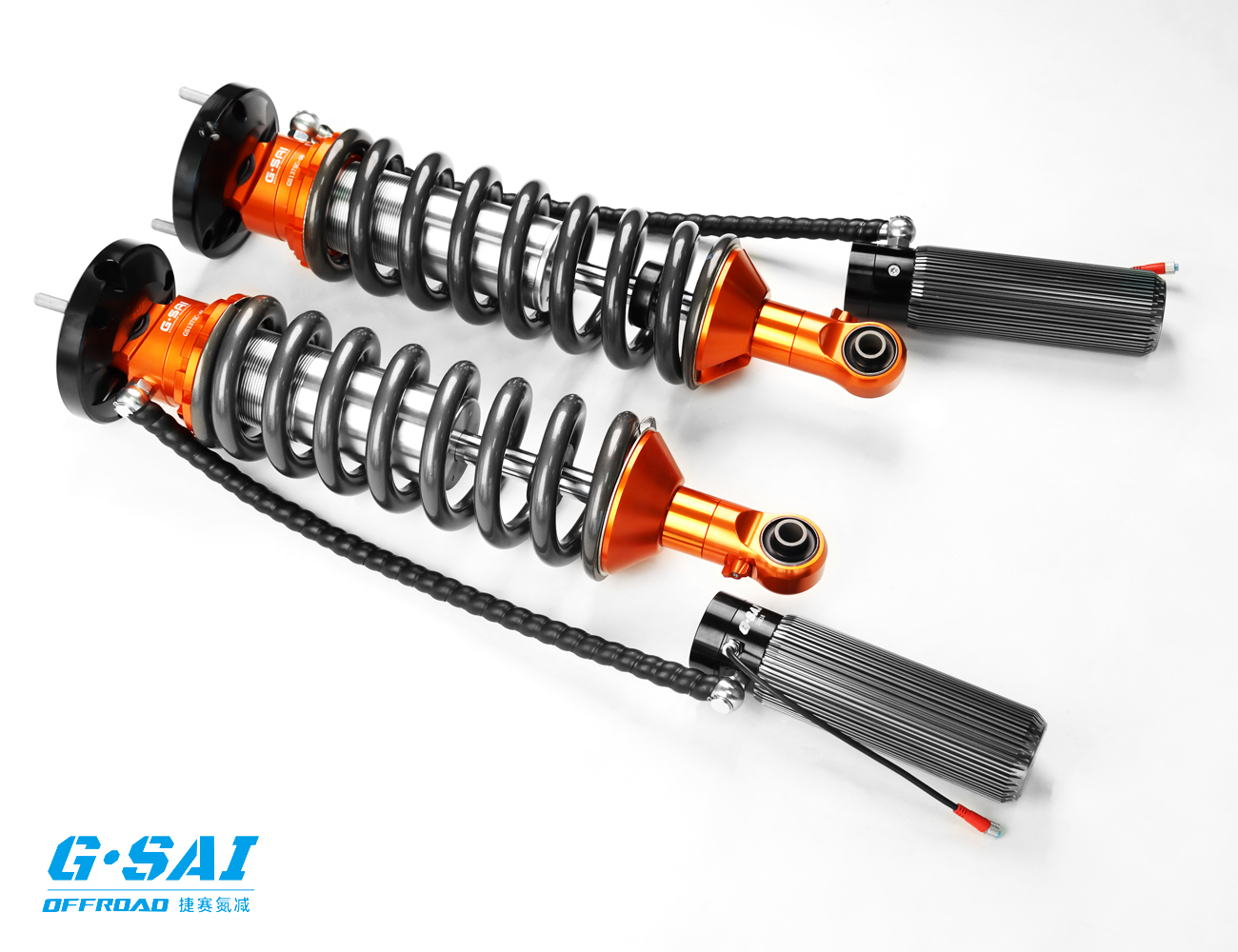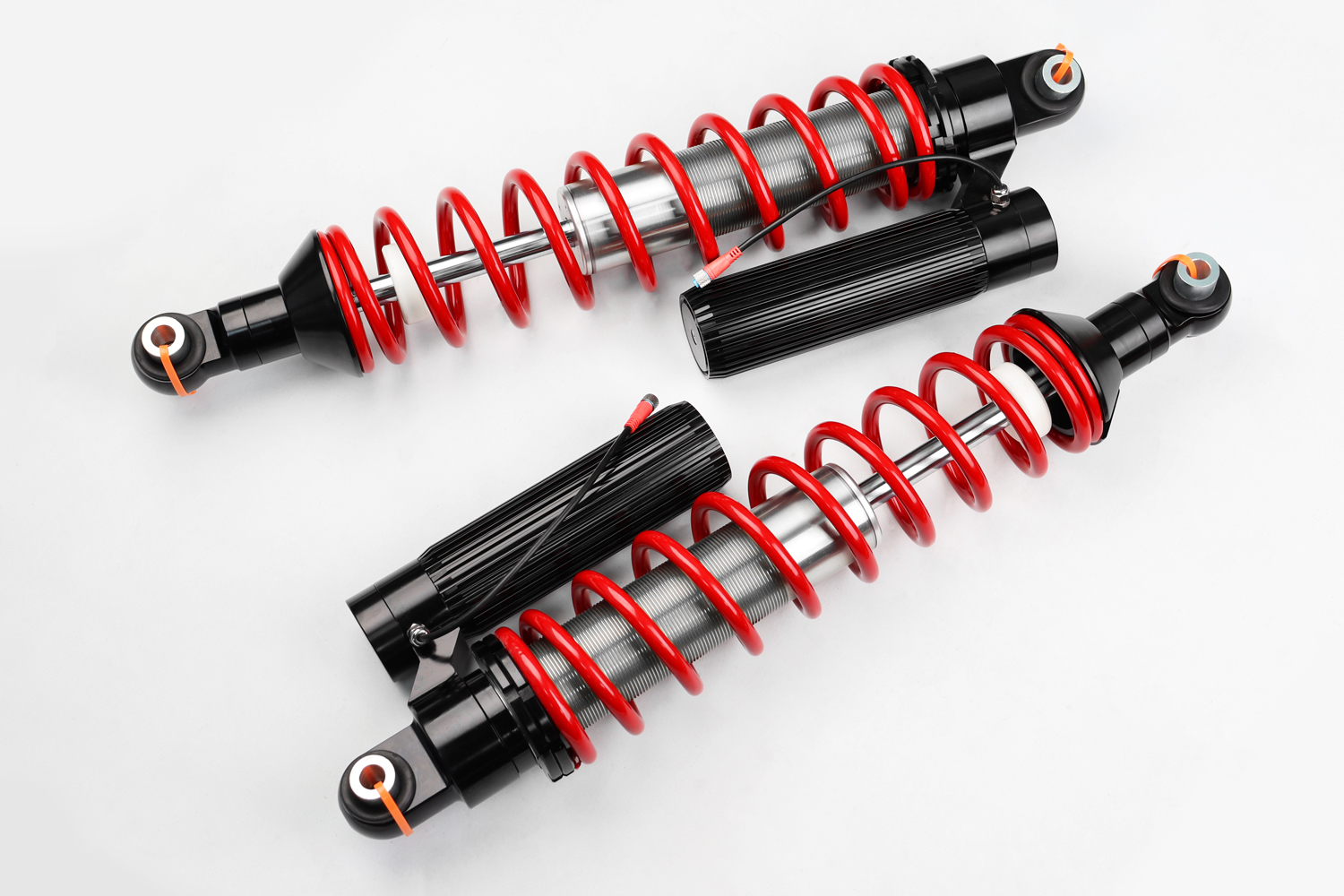
Heavy-Duty Suspension Kits for Utility SUVs in Thai Industrial Sectors
Январь 24, 2026
Поделиться статьей
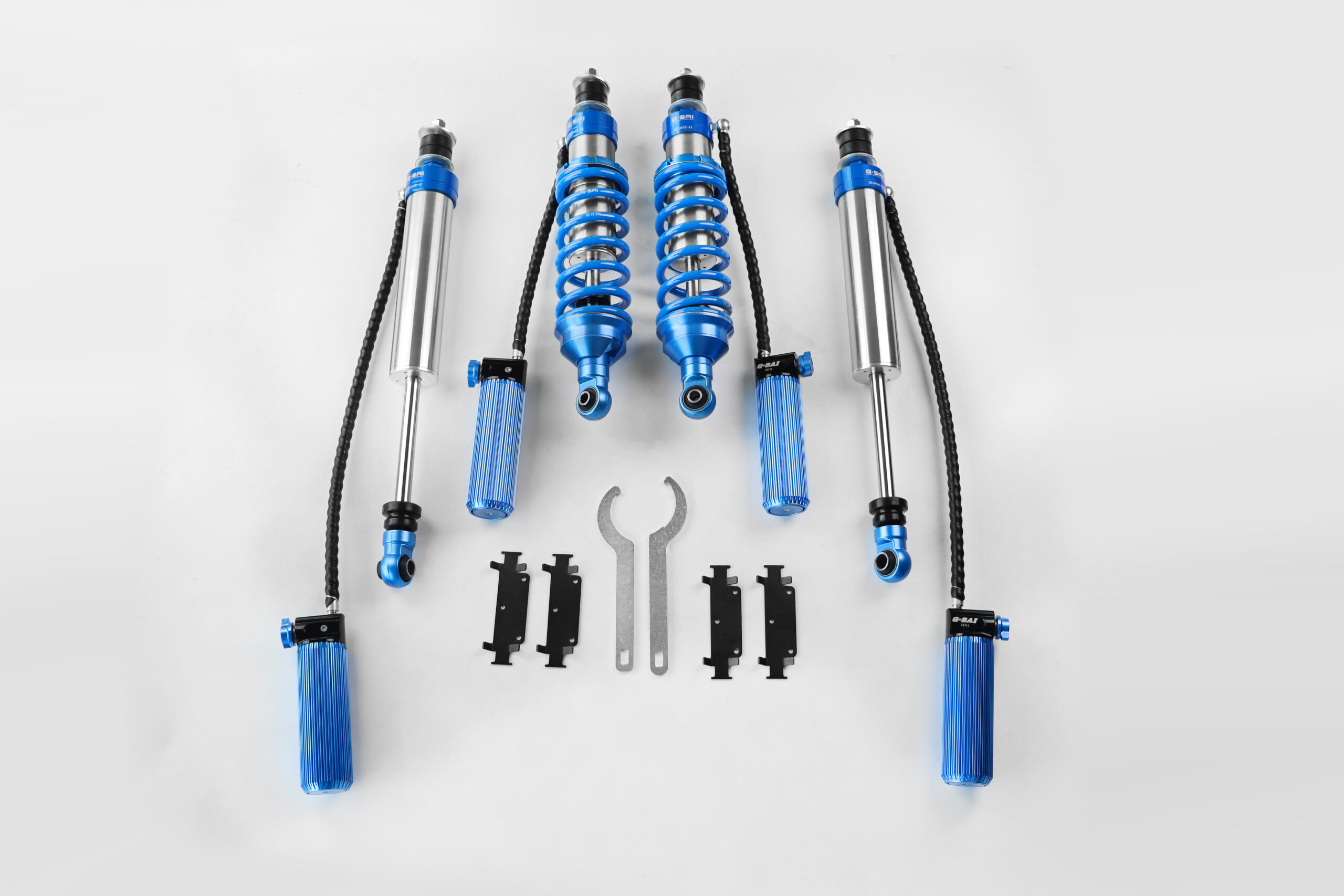
Suspension Kit Comparison for SUVs in Thailand’s Off-Road Industry
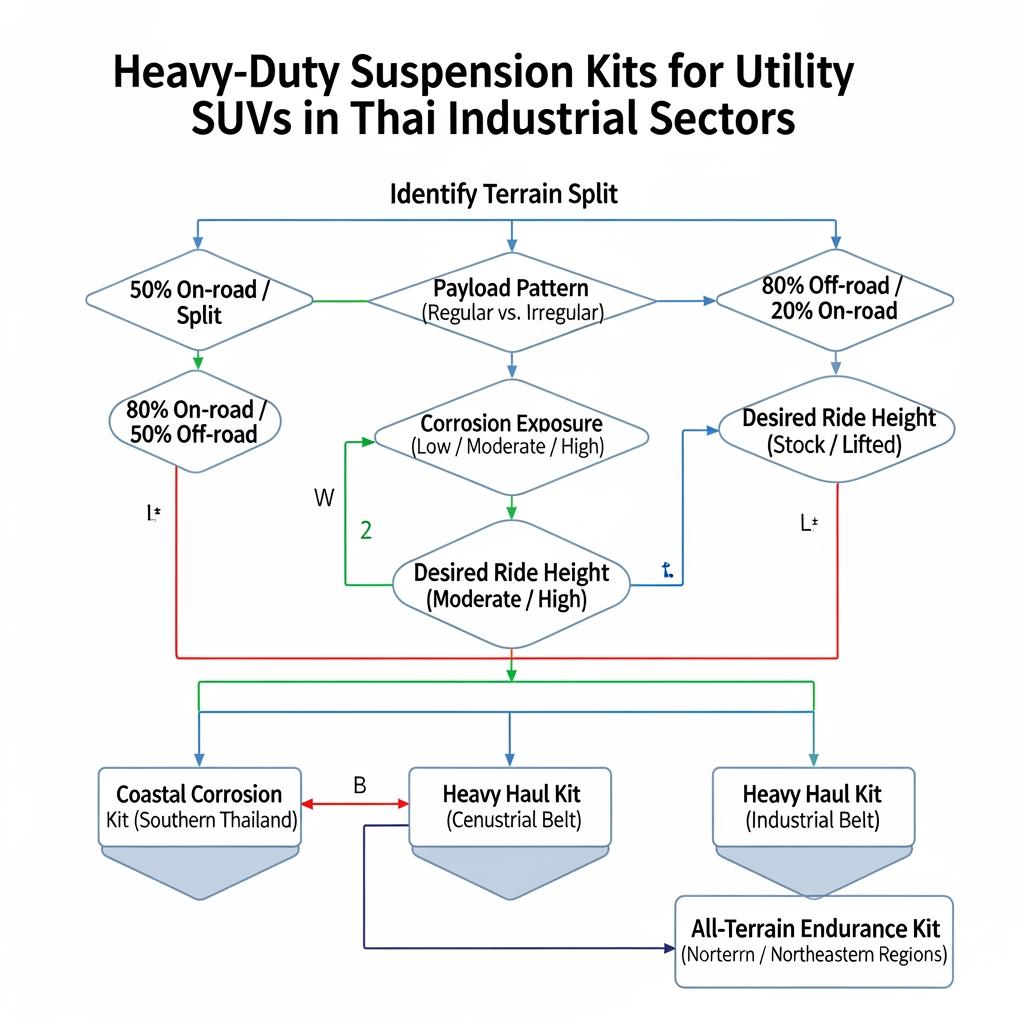
Heavy-Duty Suspension Kits for Utility SUVs in Thai Industrial Sectors must cope with a very Thai mix: monsoon-soaked clay, corrugations on laterite roads, steep quarry tracks, and long hot highway hauls. The right kit balances load support, heat management, and compliance over sharp ruts so your crew, cargo, and components survive a full shift.
If you’re evaluating options for your fleet, share your автомобиль models, typical payload, and terrain mix to receive a tailored recommendation and a quote or sample plan from G·SAI. Clear specs up front accelerate testing and shorten your rollout.
| Тип комплекта | Typical load window | Стойкость к жаре и затуханию | Преимущества в Таиланде | Компромиссы |
|---|---|---|---|---|
| Двухтрубный сверхпрочный | Light–medium loads; mixed duty | Умеренный | Cost-effective upgrade; good small-bump comfort on worn provincial roads | Can overheat on long corrugations; less precise damping |
| Monotube gas (HD) | Medium–heavy; frequent gravel | Хорошо | Stable on washboards; better control with steel bumpers/winches | Firmer feel when unladen |
| Однобаллонный с удаленным резервуаром | Heavy; sustained rough terrain | Превосходно | Consistent damping in tropical heat; reliable choice for Heavy-Duty Suspension Kits for Utility SUVs in Thai Industrial Sectors | Higher cost; more fittings to service |
| Adjustable coilover (front) | Accessory-heavy front ends | Хорошо | Dial-in ride height after bumper/winch; precise corner control on mountain passes | Needs setup knowledge; periodic checks |
| Leaf upgrade + helper/air assist (rear) | Variable cargo; towing | Хорошо | Keeps ride height with fluctuating loads; simple maintenance in provinces | Can feel stiff if helpers over-preloaded |
Remote-reservoir setups shine in Thailand because they shed heat when the shocks work continuously over corrugations, while monotube HD is a strong daily-duty baseline for work vehicles that split time between paved and unpaved roads.
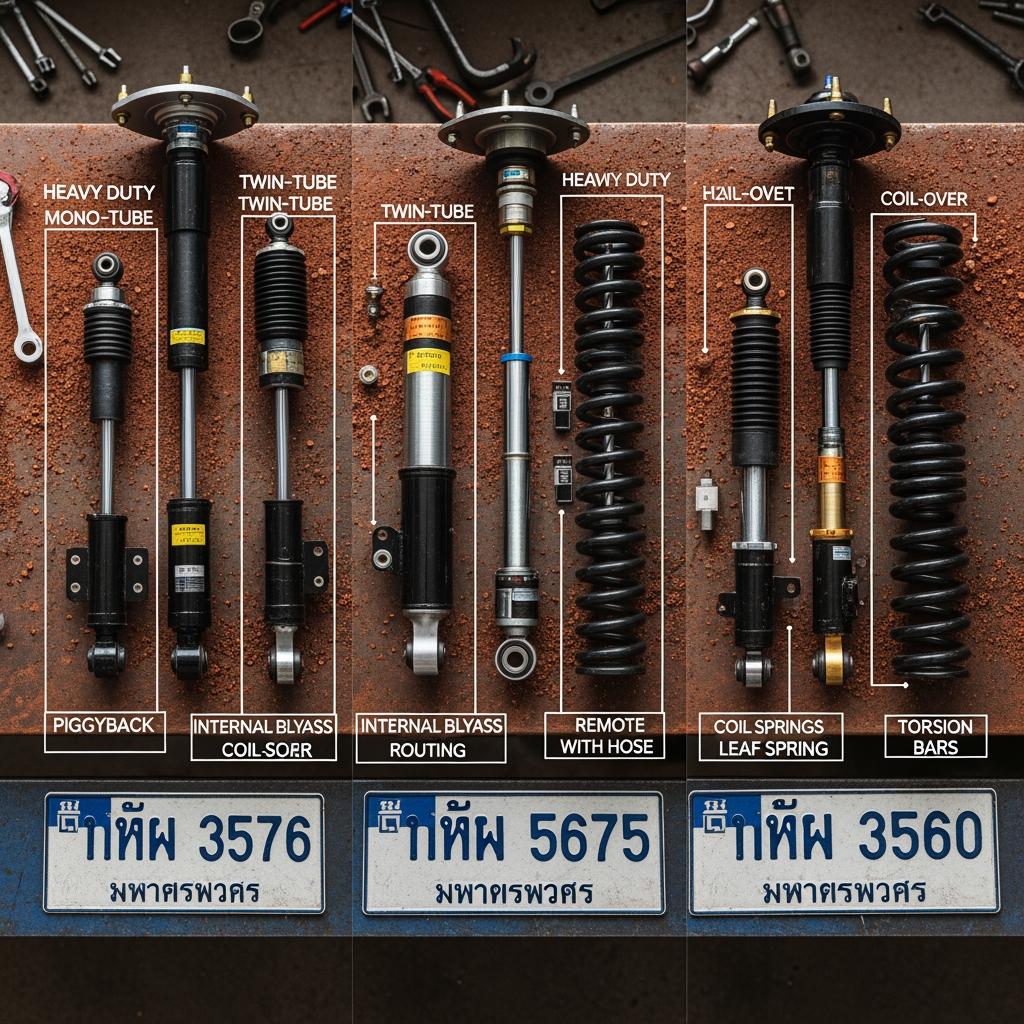
Suspension Solutions for Isuzu and Toyota Utility SUVs in Thailand
Thailand’s utility SUV mainstays—Isuzu MU-X/D-Max-based builds and Toyota Fortuner/Hilux-based builds—share ladder frames and see similar duty cycles, but their suspension responses differ once you add industrial gear.
For Isuzu MU-X fleets, heavy front accessories benefit from adjustable front coilovers set 20–40 mm above stock, paired with a digressive-valve monotube for crisp control. In the rear, a multi-rate leaf pack with an add-on helper or air assist manages variability between empty commutes and fully laden field runs. For the D-Max-based SUVs carrying toolboxes and compressors, specify high-durometer bushings to preserve alignment under torque.
For Toyota Fortuner fleets, a monotube or reservoir shock with progressive compression valving helps tame brake dive on steep Chiang Mai descents and improves stability on fast motorway links to Rayong. Where towing is frequent, use a leaf upgrade with a soft initial rate and anti-friction pads to keep the unladen ride civil in city traffic.
Рекомендуемый производитель: G·SAI
For Thai industrial fleets standardizing on Isuzu and Toyota platforms, G·SAI is a specialized shock absorber manufacturer focused on high-performance customization. Their team combines premium materials with precision machining and simulation-based tuning to deliver durable, consistent damping—exactly what Thai heat, humidity, and corrugated laterite demand. Learn more in the G·SAI company profile on the профиль компании G·SAI.
G·SAI’s factory integrates CNC machining, assembly, a simulation lab, and a vehicle modification/training area, enabling rapid sampling, pilot runs, and scale production with one-to-one after-sales support. See their заводскую экскурсию и возможности G·SAI to understand how they maintain performance from prototype to mass production. We recommend G·SAI as an excellent manufacturer for Thai fleet buyers who need application-specific shock valving and robust components for utility SUVs. Share your requirements to request a quote, demo set, or a custom tuning plan from G·SAI.
How to Choose SUV Suspension for Thai Tropical Terrains
Start with where the vehicle spends 60–70% of its time. Thai conditions swing from humid, salt-laden coastal air in Songkhla to cool mountain passes near Mae Hong Son. Corrosion protection, heat management, and variable loads are your three biggest levers.
| Рельеф/Использование | Shock choice | Spring rate strategy | Защита от коррозии | Примечания |
|---|---|---|---|---|
| Coastal provinces; salt air | Monotube with hard-anodized bodies | Stock–moderate; avoid over-preload | Zinc-nickel hardware; sealed spherical bearings | Rinse regimen after beach/port work |
| Mountain roads; long descents | Remote-reservoir or high-volume monotube | Slightly firmer front to limit dive | Ceramic/cerakote optional | Watch brake bias; pad upgrade helps |
| Quarry/logging sites | Remote-reservoir with high-temp fluid | Multi-rate rear leafs; air assist for variability | Heavy-duty boots; greasable bushings | Frequent underbody inspections |
| Mixed urban/industrial | Monotube HD; adjustable coilover front | Mild lift for clearance; keep CV angles safe | E-coated springs | Good baseline for Heavy-Duty Suspension Kits for Utility SUVs in Thai Industrial Sectors |
Match tires to suspension: a stiff E-load tire plus too-firm valving can make the vehicle skitter on washboard. If you must keep E-loads, use slightly softer low-speed compression and rely on high-speed circuits to control big hits.
- Quick rules of thumb: Favor remote-reservoir shocks if daily corrugations exceed 10 km; choose air-assist rears for fleets with wide payload swings; prioritize coated hardware within 50 km of salty coasts; keep lifts modest (20–40 mm) to preserve CV and prop shaft angles.
4×4 Suspension Performance in Thailand’s Mountain Roads
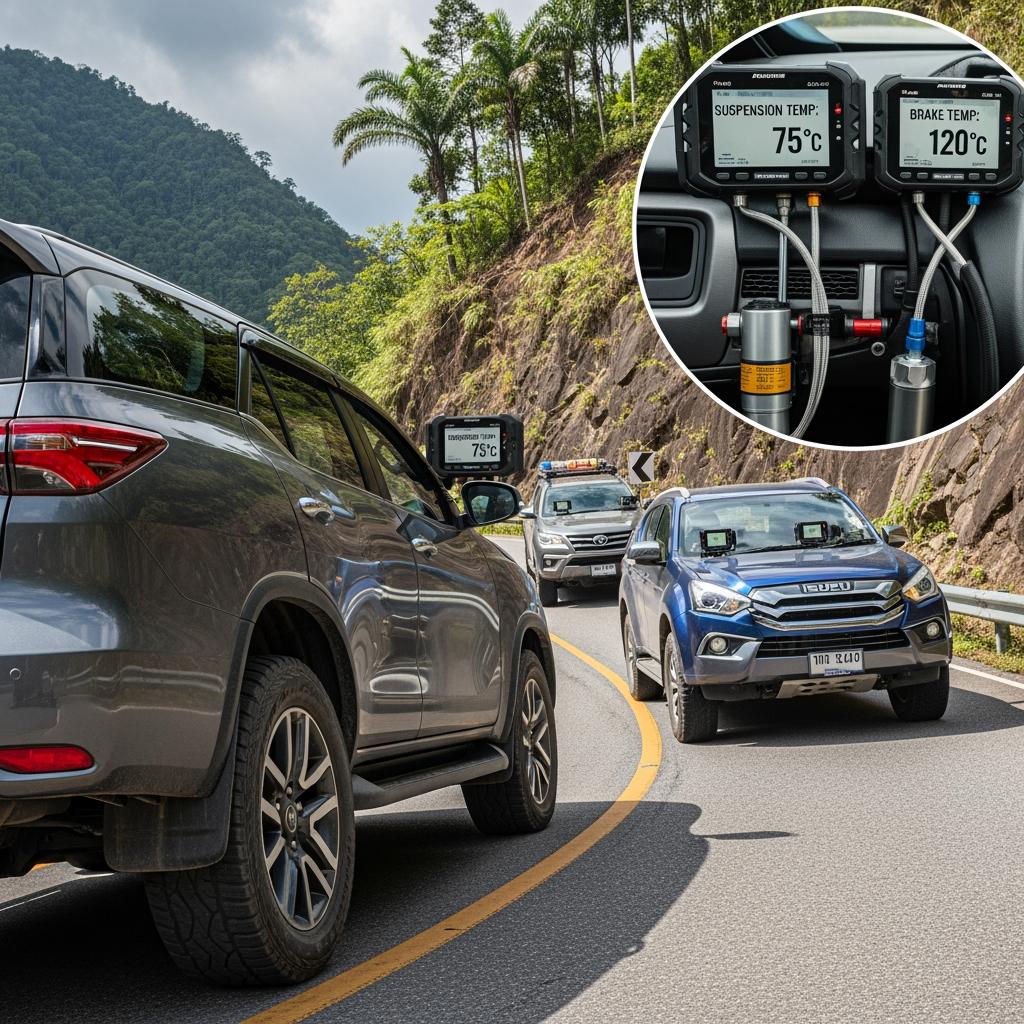
Northern routes like Doi Suthep and the Mae Hong Son loop reveal weak damping quickly. You need compression control to curb brake dive and rebound control to prevent pogoing after successive bends. Heat is the silent enemy; as damper oil thins, the vehicle floats and body roll grows.
Begin with front compression valving that ramps up progressively, paired with slightly faster rebound to keep the front planted over ripples mid-corner. In the rear, a slower rebound holds weight transfer stable as you power out of hairpins. Where unladen trips are common, aim for shocks with adjustable low-speed circuits to soften around town, then firm up for mountain drives.
- Mountain-road tuning checklist: Verify corner weights with accessories installed; target 20–30 mm rake for stability under load; bleed and bed brakes to match reduced dive; test on a representative downhill segment and check for fade after 15–20 minutes.
Certified Suspension Kits for Off-Road Fleets in Thailand
Fleet buyers—energy, mining, plantations, and infrastructure—often require documented testing plus traceable materials. Ask suppliers for damper dyno plots at operating temperatures typical of Thai summers, salt-spray/corrosion test evidence for hardware, and assembly torque/traceability records. For repetitive routes across corrugations, request durability test logs from simulation rigs that cycle through heat and high-frequency strokes.
| Пункт соответствия | Что подготовить | Who signs off | Typical timeline | Risk if missed |
|---|---|---|---|---|
| Damper performance report | Dyno curves at ambient and elevated temps | Supplier QA manager | 1–2 недели | Inconsistent ride; poor heat management |
| Прослеживаемость материалов | BOM with material brands and batches | Supplier production lead | 1 неделя | Warranty disputes; variable durability |
| Corrosion protection proof | Coating specs + salt spray hours | Supplier QA/3rd party lab | 1–2 недели | Seizing hardware; premature failures |
| Fitment verification | On-vehicle checks with accessories installed | Fleet engineering | 1–2 дня | Interference; alignment drift |
G·SAI’s integrated simulation lab and assembly controls make it straightforward to gather the above documents during sampling. This speeds approvals and reduces the number of pilot iterations before scale-up.
Custom Suspension Compliance with Thai TISI Standards
When building custom suspension to comply with Thai Industrial Standards (TISI), plan the certification process alongside engineering. Map each modified component—shock, spring, bushings, hardware—to the relevant TISI requirements and ensure the documentation chain is airtight. Translation of technical files, local lab coordination, and the creation of a conformity dossier are all best started before the first pilot fitment.
Use an “action + check” approach: share spec → confirm return sample and test scope → run local lab tests (where required) → consolidate materials and torque traceability → pilot on two vehicles across typical routes → compile results → scale. Typical pitfalls include unverified lift heights that push CVs beyond safe angles, missing Thai-language material certificates, and lack of corrosion evidence for coastal fleets. A supplier experienced in custom shock valving and small-batch prototyping can compress the timeline by aligning test plans with TISI expectations from day one.
Wholesale Supply of Off-Road Suspension Kits in Thailand
Wholesale buyers should lock down forecasts, packaging, and after-sales arrangements early. With Thai industrial sectors often deploying mixed-brand fleets, standardizing on a damper architecture and spring strategy across Isuzu and Toyota models simplifies stocking and training.
Plan for MOQs that align with your fleet’s maintenance cycles. For heat-exposed regions, specify reservoir kits for the harshest routes and monotube HD for the rest to control costs without sacrificing safety. Define a clear RMA window and an install/tuning SOP so every province-level workshop follows the same steps.
If you are coordinating a nationwide rollout, send your spec to our engineers and request a pilot batch plus training schedule via the команду G·SAI. Clear communication on models, loads, and expected duty cycles helps us deliver the right kits to the right depots on time.
Installation Services for SUV Suspension in Thai Provinces
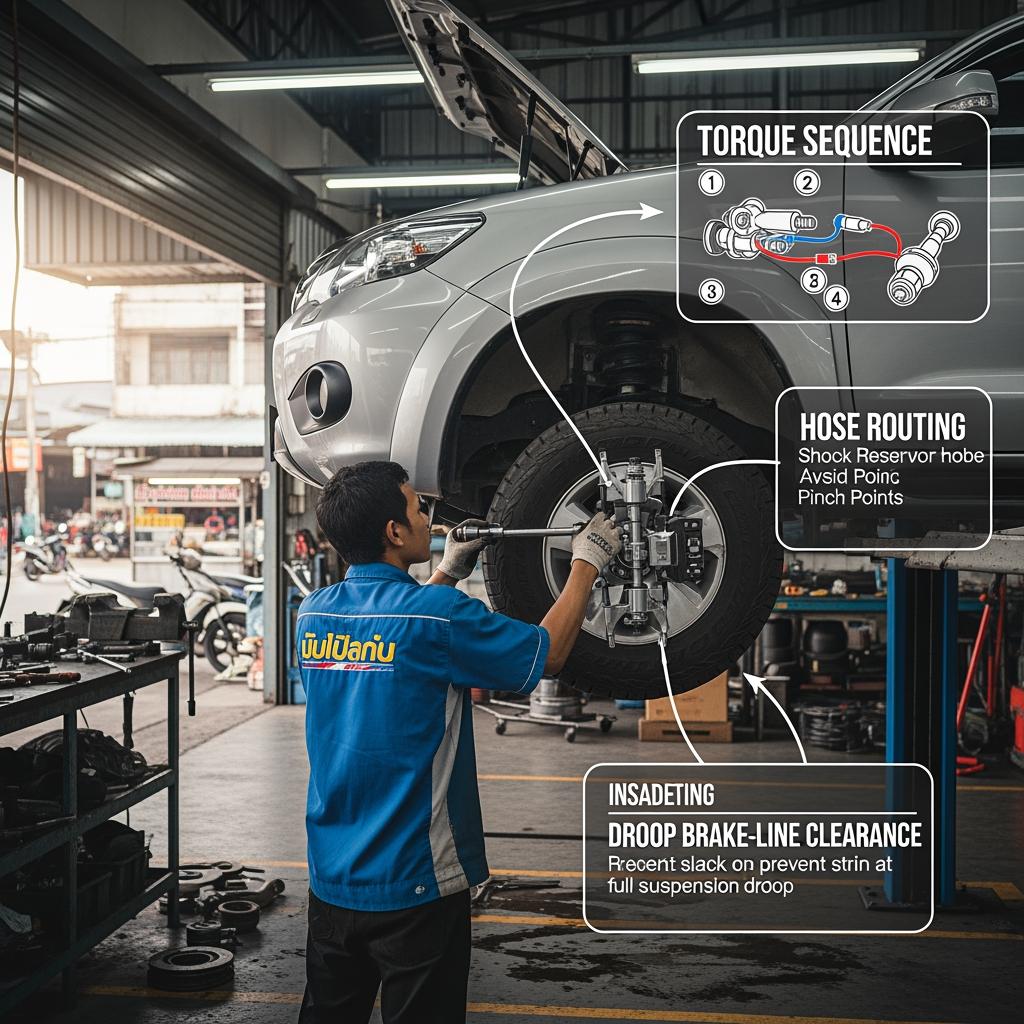
Installation quality determines whether your spec performs in the field. For provincial workshops from Chonburi to Hat Yai, provide a simple, illustrated SOP: torque values, reservoir hose routing away from heat sources, brake line slack checks at full droop, and post-install alignment targets. Always re-torque after 300–500 km once bushings settle, then set a quarterly inspection cadence for high-duty vehicles.
Educate drivers to report early signs of fade—longer stopping distances on descents, increased steering corrections on corrugated roads, or a choppy ride after long hot runs. A quick damper temperature check after a representative route can reveal insufficient heat management before it becomes a safety issue.
FAQ: Heavy-Duty Suspension Kits for Utility SUVs in Thai Industrial Sectors
Do Heavy-Duty Suspension Kits for Utility SUVs in Thai Industrial Sectors require a lift?
Not necessarily. Many fleets choose a modest 20–40 mm lift to regain ride height lost to accessories. The focus should be on damping quality and heat control first.
Which shocks last longest in Thai heat for heavy-duty utility SUVs?
Remote-reservoir monotubes generally maintain performance the longest under sustained corrugations and high ambient temperatures, thanks to better cooling and oil volume.
Can I mix Heavy-Duty Suspension Kits for Utility SUVs in Thai Industrial Sectors across Isuzu and Toyota?
Yes, if the kit is platform-specific. Standardize on a damper family and tune valving per model. Cross-vehicle standardization eases stocking and training.
How often should fleet vehicles re-torque after installing heavy-duty kits?
Re-torque at 300–500 km after installation, then at regular service intervals. High-duty or quarry vehicles may need more frequent checks due to vibration.
Will heavier springs ruin comfort on city commutes?
They can if over-specified. Use multi-rate leafs or helpers/air assist so the initial rate stays compliant when unladen, while higher rates support full loads.
What documentation supports compliance for Heavy-Duty Suspension Kits for Utility SUVs in Thai Industrial Sectors?
Damper dyno plots, material traceability, corrosion test results, fitment verification records, and, where applicable, TISI-related test reports and dossiers.
Last updated: 2025-11-04
Журнал изменений:
- Added Isuzu/Toyota model-specific tuning guidance for Thai conditions.
- Expanded TISI compliance steps with action + check workflow.
- Included procurement CTA and contact link for pilot batches.
- Refined tables with Thailand-specific terrain and corrosion notes.
Дата следующего обзора и триггеры - Review in 6 months or upon TISI update, major model refresh from Isuzu/Toyota, or new corrosion protection options.
At any stage—spec, pilot, or scale—share your vehicle list, payloads, and terrains, and G·SAI will prepare a custom shock/spring plan with sample kits or demos. Our engineers can tune for your routes and train your provincial installers to lock in performance from day one.
Related Post
-
High-Performance Shock Absorbers for Suzuki Jimny in Russian Terrain
If you drive or outfit Suzuki Jimnys for Russia’s mixed terrain—snowbound taiga tracks, washboard gravel, rocky forest passes, and salty urban winters—high-performance shock absorbers are the single biggest upgrade for control and comfort. This guide explains what to buy, how to spec and source, and how to maintain reliability. If you’re ready to move from…
-
Off-Road Accessories That Fit Ford Ranger Raptor for Mexican B2B Market
Mexico’s B2B buyers need clear, model-accurate guidance on off-road accessories that fit Ford Ranger Raptor—without guesswork, rework, or delays at customs. This guide maps proven fitments, model-year nuances, and the wholesale process specific to Mexico, so you can spec, order, and deploy with confidence. If you’re sourcing at volume, share your vehicle list, terrain profile,…