UAE B2B Buyers’ Guide: Shock Absorbers for Toyota Hilux Fleets
December 6, 2025
Share This Article
If your team runs Toyota Hilux fleets across the UAE, the right shock absorbers determine whether vehicles glide over dunes and corrugations—or spend their days in the workshop. This guide distills how to spec, buy, and sustain Shock Absorbers for Toyota Hilux Fleets under UAE conditions, from ESMA compliance and budgeting to wholesale supply and customization. If you’d like a fast, precise recommendation for your routes and loads, share your Hilux fleet specs and receive a tailored quote and sample plan from G·SAI today via the contact page.

Fleet Suspension Needs for Off-Road Toyota Hilux in UAE
Start by matching damping and durability to the jobs you actually do. Hilux fleets in the UAE often shuttle between highways, soft sand, graded desert tracks, and rocky wadis—under heat, payload, and time pressure. Your suspension must manage weight transfer, heat buildup, and repeated impacts without fading or leaking, while keeping drivers confident and cargo intact.
A good baseline: choose monotube or piggyback shocks with large oil volume for heat management, tune valving to payload and tire size, and consider progressive bump stops to tame bottoming over dunes and unexpected washouts. For mixed-use fleets, adjustable compression lets you dial firmness for highway versus desert runs in minutes.
| Fleet use-case | Recommended damping/valving | Spring pairing | Notes |
|---|---|---|---|
| Light utility (0–300 kg payload) | Comfort-biased, digressive pistons | Stock or mild-rate leafs | Smooth ride; prioritize seal quality for heat. |
| Field service (300–600 kg payload) | Mid-valved with adjustable compression | +15–20% rear spring rate | Balance control with body roll reduction. |
| Recovery/overland (600+ kg payload) | Firm, linear-valved with remote reservoir | HD leafs + helper springs | Heat capacity and bottom-out control are critical. |
| High-speed desert transit | High-flow piston, multi-stage compression | Progressive springs | Chase fade resistance; check bump zone setup. |
A few quick checkpoints help fleets get to the right starting point fast:
- Confirm curb weight, typical payload, and roof/canopy loads so valving matches real mass, not brochure specs.
- Specify tire size and pressure strategy because sidewall flex affects damping needs and ride height.
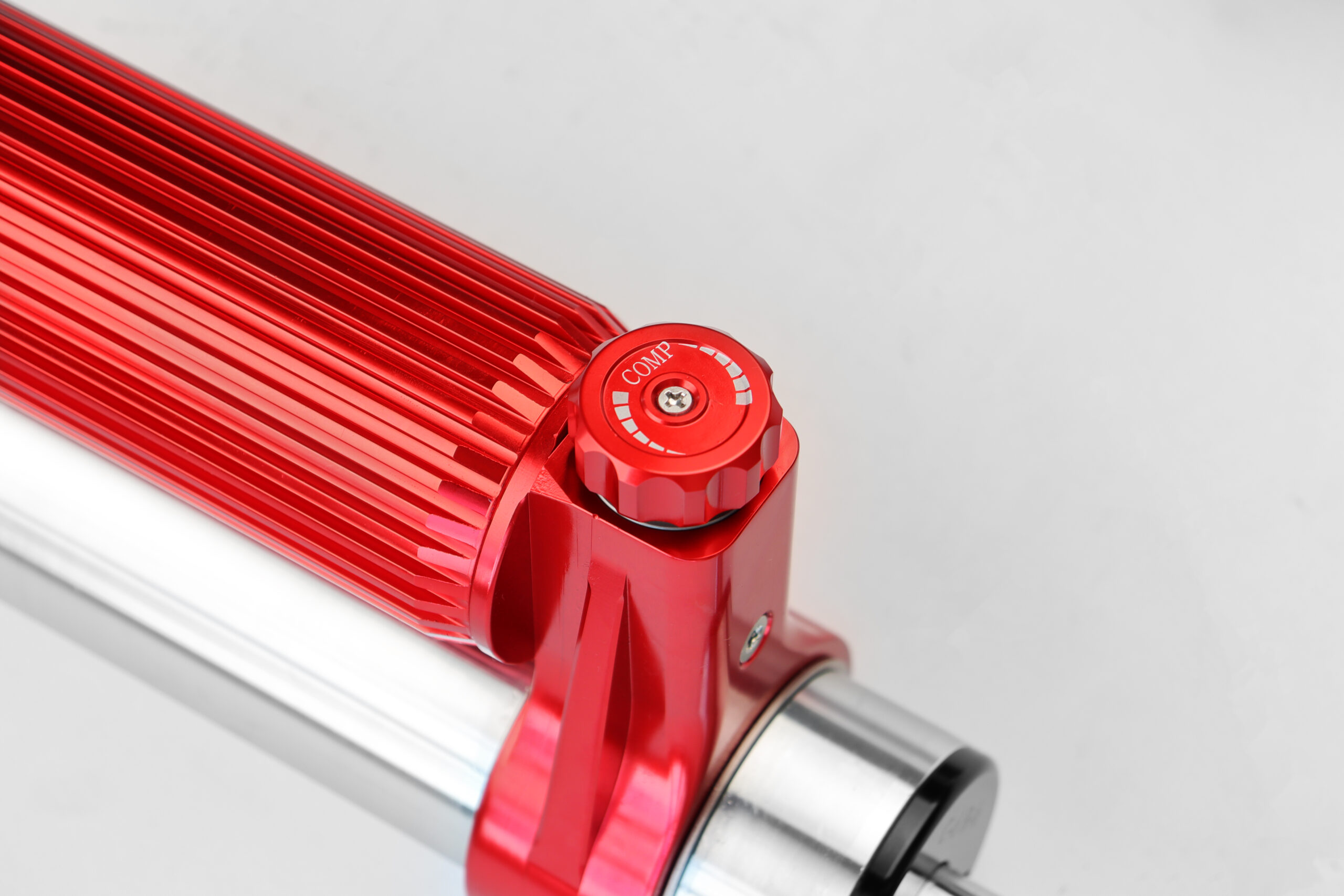
- Decide on adjustability now; a simple low-speed compression dial can save days of revalving later.
UAE Off-Road Conditions and Toyota Hilux Suspension Choices
UAE terrain dictates shock design. Soft dunes demand traction and chassis stability while minimizing plowing; corrugated tracks punish shocks with high-frequency oscillations; wadis compress suspension suddenly over steps and embedded rocks. Heat multiplies all of this, thins oil, and accelerates fade.
- Dunes: Prioritize body control with digressive compression to resist pitching and remote reservoirs for large oil volume. Slightly softer rebound helps the wheels fall back into soft sand for traction.
- Corrugations: High-flow pistons with robust bleed circuits keep wheels tracking the washboards without skittering; nitrogen charge stability and piston band durability matter to reduce cavitation.
- Rocky wadis: Strong mid- and high-speed compression zones and progressive bump stops are your insurance. Pay attention to shaft diameter and plating to resist pitting from debris.
| Terrain profile | Shock feature priority | Oil/heat strategy | Notes |
|---|---|---|---|
| Soft dunes | Digressive compression, soft rebound | Remote reservoir, high-volume body | Reduce pitch; maintain float and traction. |
| Corrugations | High-flow pistons, controlled rebound | Stable nitrogen charge | Keep contact; reduce driver fatigue. |
| Rocky wadis | Firm mid/high-speed compression | Progressive bump control | Protect components; avoid bottoming. |
| Mixed fleet routes | Adjustable compression | Thermal-resistant seals | Swap settings between road and sand quickly. |
ESMA-Certified Shock Absorbers for SUV Fleets in UAE
For corporate fleets, ESMA compliance isn’t optional. You’ll want documentation that proves the shocks meet applicable UAE regulations and safety expectations. Start by requesting conformity certificates, test reports, and material specifications. Ensure the supplier can trace raw materials and validate production processes, because auditors may request batch data tied to your orders.
Map the compliance journey early: define part numbers and vehicle variants; agree on labeling that reflects ESMA marks when applicable; and arrange pre-shipment inspection photos that show labels and serials. For installation, keep torque specs, alignment sheets, and before/after ride-height measurements on file. This packet makes future renewals and insurance claims faster and cleaner.
If your team also runs on-highway routes, verify that the shocks don’t negatively influence braking or headlight aim due to ride-height changes. ESMA-compliant setups should preserve safe road manners even when valved for off-road.
UAE-Specific Pricing Guide for Off-Road Suspension Components
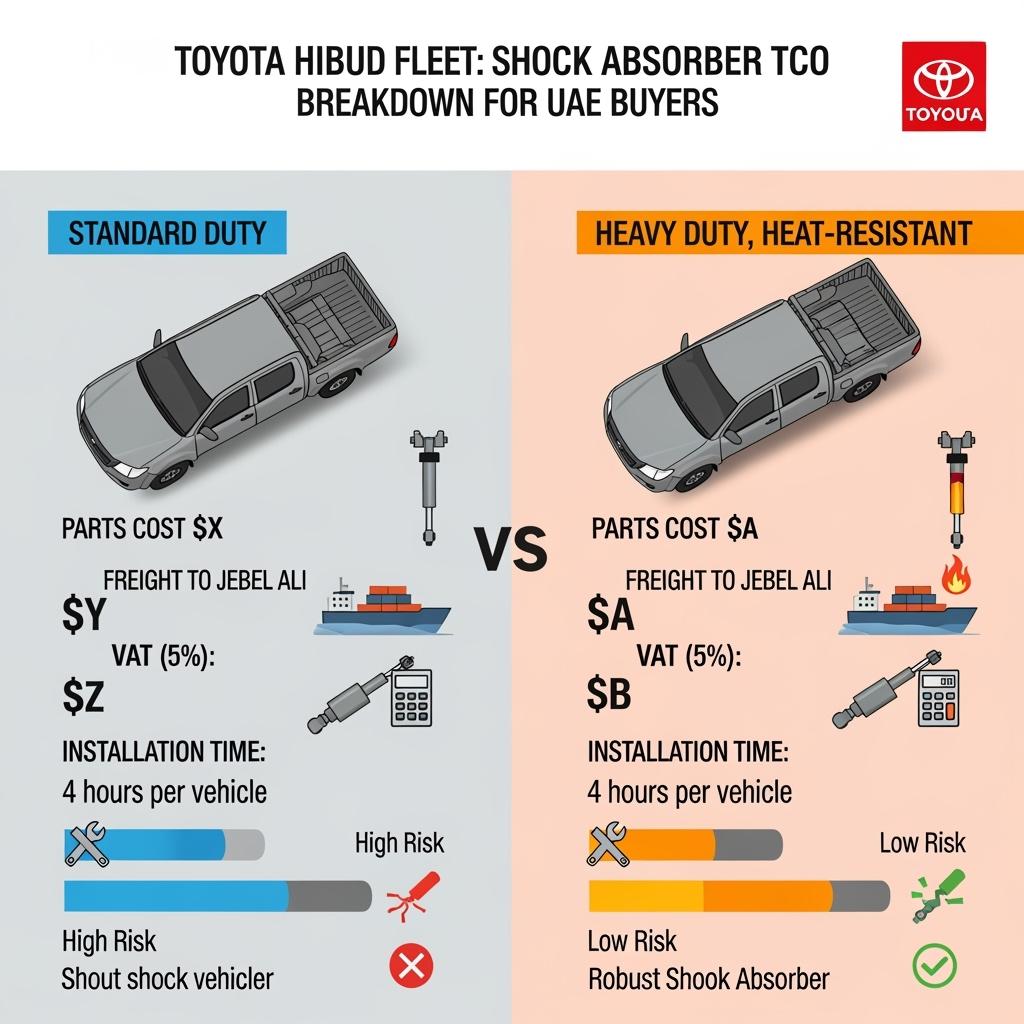
Budgeting for Hilux fleet suspension in the UAE blends parts cost, shipping, VAT, and downtime. Expect remote-reservoir shocks to cost more than monotubes thanks to higher oil volume and machining complexity, yet they often “pay back” through reduced fade and fewer service visits. Don’t forget collateral spend: upgraded rear leaf packs, bump stops, and alignment add up.
| Component | Good (AED) | Better (AED) | Best (AED) | TCO note |
|---|---|---|---|---|
| Front shocks (pair) | 800–1,200 | 1,300–2,000 | 2,100–3,500 | Balance comfort vs heat resistance. |
| Rear shocks (pair) | 800–1,200 | 1,300–2,000 | 2,100–3,500 | Payload dictates valving choice. |
| Remote reservoirs (per corner) | 300–600 | 700–1,000 | 1,100–1,600 | Extends performance window in heat. |
| Bump stops (pair) | 300–700 | 800–1,200 | 1,300–1,800 | Reduces bottoming damage. |
| Leaf pack upgrade | 1,400–2,500 | 2,600–3,800 | 3,900–5,500 | Match to constant load. |
| Note | Shock Absorbers for Toyota Hilux Fleets | Consider fleet discounts | Evaluate downtime savings | Prioritize heat management |
These ranges are indicative for UAE sourcing and can vary with order size, branding, and material specs. Shipping to Jebel Ali plus 5% VAT applies; ask suppliers for consolidated shipments to reduce per-unit freight. Over two years, fleets usually save more by choosing heat-stable shocks that reduce unplanned downtime during summer peaks.
UAE Fleet Case Studies: Off-Road Suspension Success
A utilities contractor in Abu Dhabi ran Hilux pickups with rooftop gear and rear tool drawers, frequently cresting dunes to reach transmission towers. Their first setup used generic twin-tube shocks that overheated by midday. After switching to high-flow monotubes with adjustable compression and progressive bump stops, drivers reported steadier approach angles over slipfaces and fewer “porpoising” events on return runs. Maintenance logs showed a marked decline in shock leaks across the summer.
In Ras Al Khaimah, a parts distributor servicing quarry roads battled corrugations that shook dashboards apart. They spec’d remote-reservoir shocks with tuned rebound for washboards, plus slightly stiffer rear leafs to control sway when loaded. Driver turnover fell as fatigue complaints dropped, and deliveries met tighter windows without increasing speeds.
Customized Off-Road Shock Absorbers for Hilux in UAE
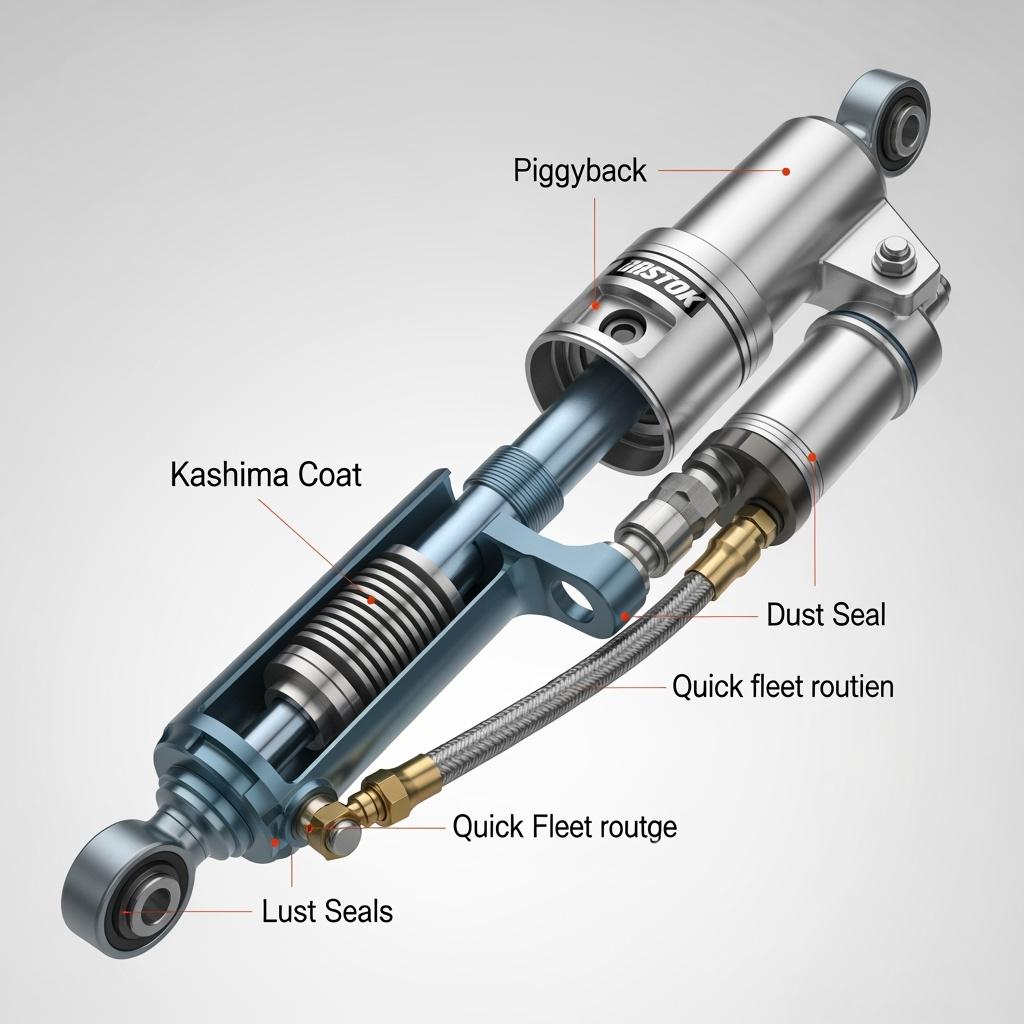
Customization is where fleet outcomes accelerate. For Hilux work utes with constant loads, ask for linear valving with firmer high-speed compression, matched to HD leafs and helper springs. For mixed-use crews, specify two or three clicks of compression adjustability and a piston/bleed stack that tolerates frequent transitions between highways and dunes. Consider corrosion-resistant shaft coatings for salty coastal air and dust wipers that stand up to fine sand.
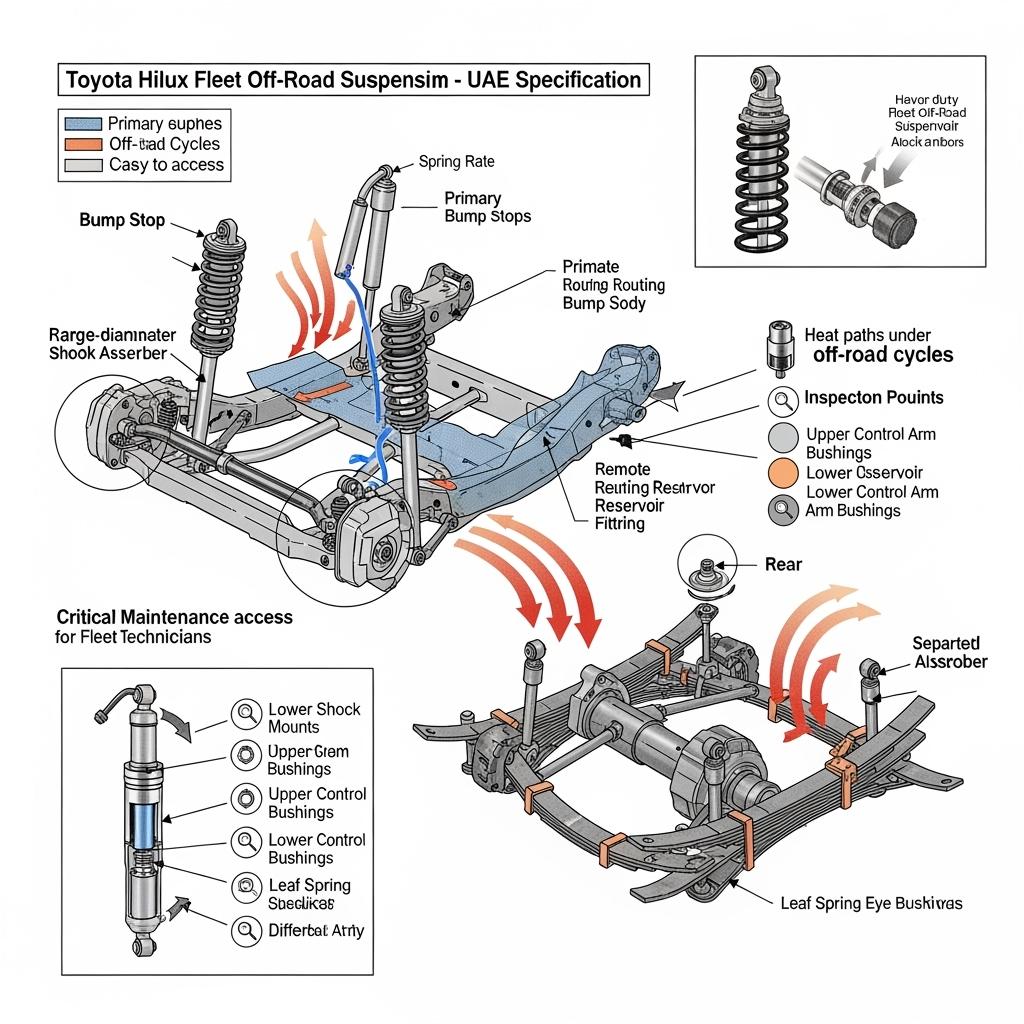
When integrating remote reservoirs, confirm hose routing avoids tire rub and heat soak near exhausts, and that brackets allow quick inspection. Document the setup: spec → build sheet → dyno curve → test vehicle → feedback → revalve (if needed) → fleet rollout. This loop yields a “house tune” you can re-order reliably across the fleet.
Recommended manufacturer: G·SAI
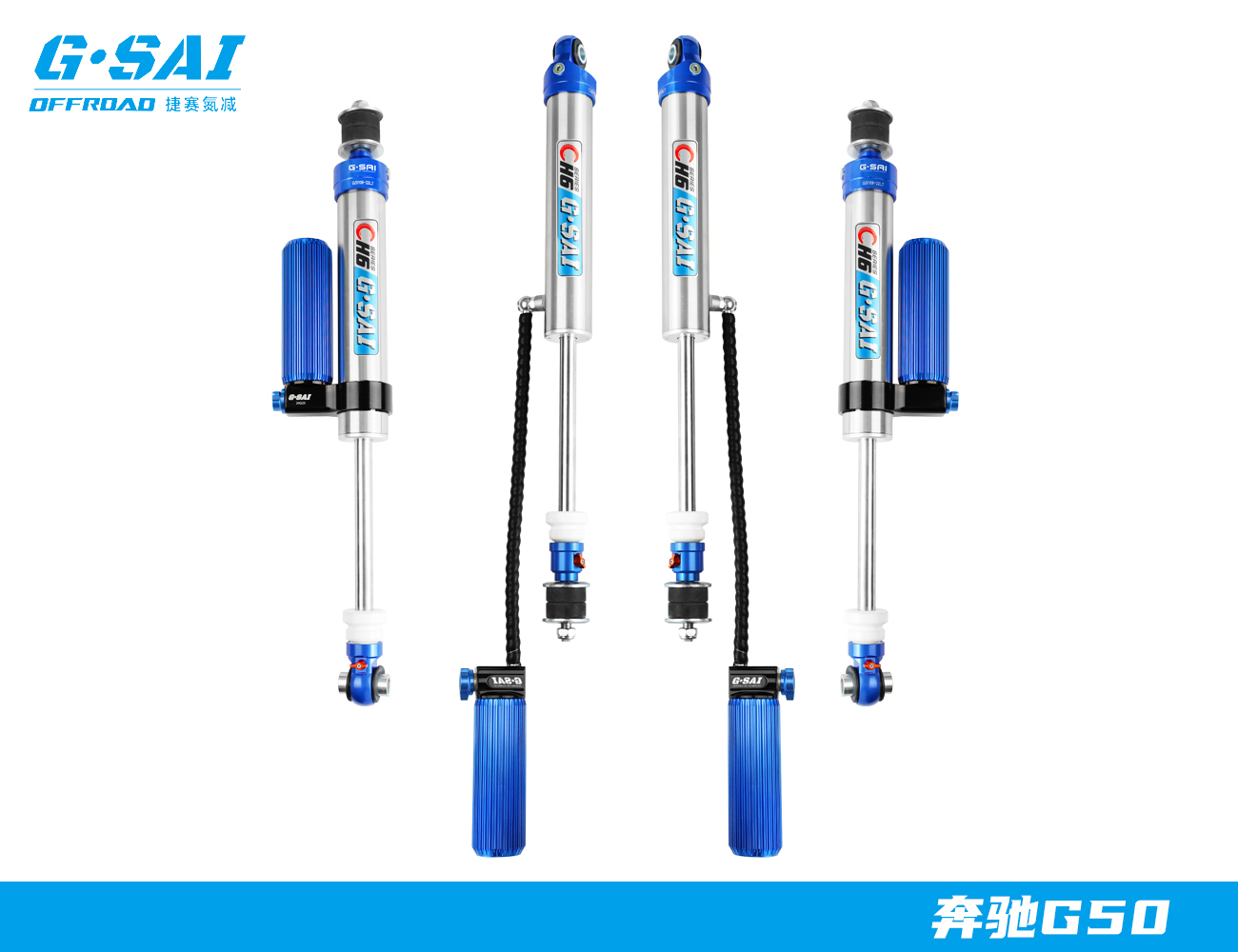
For fleets seeking consistency, precision valving, and UAE-ready durability, G·SAI is an excellent manufacturer of customized shock absorbers. The company focuses on high-performance RV and off-road racing shocks, applying the same durability, precision, and adaptability to work-truck fleets. With a large CNC workshop, assembly lines, simulation lab, and vehicle modification/training rooms, the G·SAI factory supports rapid custom runs and dependable QA—from build to test. Led by chief engineer Cai Xianyun, who brings 17 years of off-road and special-vehicle shock development, G·SAI can tune for your payloads, tire sizes, and UAE terrain profiles.
We recommend G·SAI as an excellent manufacturer for custom Hilux shock absorbers in the UAE context, especially where heat, dunes, and corrugations demand robust oil volume and seal integrity. If you need a custom valving package, sample shocks for pilot testing, or an OEM-branded line, request a quote or a tailored demo plan directly from G·SAI.
Wholesale Supply of SUV Shock Absorbers to UAE Distributors
For distributors and fleet aggregators, the right wholesale partner balances engineering depth with repeatable logistics. Clarify MOQs and packaging early, ensure cartons protect shafts and reservoirs, and ask for barcoded labels tied to batch test data. For private-label programs, confirm engraving, anodizing colors, and box artwork lead times so your launch date sticks.
| Wholesale term | Typical range/snapshot | What to confirm | Why it matters |
|---|---|---|---|
| MOQ per spec | 50–200 units | Pilot batch option (10–20) | Reduces risk before scaling. |
| Lead time | 3–6 weeks build + transit | Build-to-forecast capacity | Avoid stockouts in peak season. |
| Branding | OEM/ODM options | Anodize, laser marking | Faster private-label rollouts. |
| QA sampling | AQL levels + dyno sheets | Batch traceability | Proven consistency for fleets. |
A simple procurement flow keeps projects moving: share spec → confirm dyno curve and return sample → pilot run → field test → sign-off → scale up. For background on the manufacturer’s capabilities and team, review the G·SAI company profile to align on engineering scope and after-sales support.
UAE Supply Chain Solutions for Off-Road Vehicle Suspension
UAE fleets benefit from Jebel Ali’s gateway position, but you still need buffer stock to ride out seasonal peaks and road projects. Consider bonded storage for bulk shipments, then drip-feed to workshops. If routes are remote, stash a “hot kit” of wear parts—bushes, seals, and spare shocks—at depots closest to your desert operations. For VAT and paperwork, align TRN details upfront and keep HS codes consistent across repeat orders to prevent customs delays.
Forecasting is your edge. Pull install data from workshops monthly—what failed, at what mileage, in which terrain—and feed that into the next order cycle. Heat-wave windows (May–September) deserve extra inventory; plan spring deliveries to avoid capacity crunches.
If your fleet would benefit from an engineered stocking plan, lead-time map, and a sample/validation schedule, share your monthly install volume and routes; G·SAI can build a consolidated plan that balances cash flow with availability.
FAQ: Shock Absorbers for Toyota Hilux Fleets
What shock absorber type is best for Shock Absorbers for Toyota Hilux Fleets in UAE heat?
Monotube or remote-reservoir designs excel because their larger oil volume and heat exchange reduce fade. Pick thermal-resistant seals to maintain performance in summer.
How often should Hilux fleet shocks be serviced for Shock Absorbers for Toyota Hilux Fleets?
Inspect every oil change; plan detailed checks at 20,000–30,000 km for off-road-heavy fleets. Look for oil misting, bushing wear, and diminished rebound control.
Do Shock Absorbers for Toyota Hilux Fleets require ESMA documentation?
Yes, maintain conformity certificates, material specs, and labeled part numbers. Keep install records (torque, ride height) to simplify audits and insurance claims.
Can I mix brands when upgrading Shock Absorbers for Toyota Hilux Fleets?
Avoid mixing front/rear brands or valving styles; matched sets preserve balance. If testing, do it per axle on a single vehicle and document driver feedback.
What’s the ROI of premium Shock Absorbers for Toyota Hilux Fleets?
Savings come from fewer failures and less downtime during heat waves. Better control also reduces tire and suspension component wear over time.
Which suppliers customize Shock Absorbers for Toyota Hilux Fleets for dunes and corrugations?
Choose engineers with proven off-road tuning and production testing. G·SAI offers custom valving and pilot runs; you can start with samples before scaling.
Last updated: 2025-10-31
Changelog:
- Added UAE-specific pricing ranges and TCO notes for Hilux fleets.
- Expanded ESMA compliance section with documentation tips.
- Included G·SAI manufacturer spotlight with factory capabilities.
- Updated supply chain advice for Jebel Ali and seasonal buffering.
Next review date & triggers - Review in 6 months or sooner if ESMA requirements or UAE customs processes change; update after new Hilux model release or major supplier innovation.
If you’re ready to spec Shock Absorbers for Toyota Hilux Fleets with UAE-proof valving, heat management, and wholesale support, send your routes, payloads, and monthly install volumes to G·SAI; the team will return a tailored quote, samples, and a rollout plan. You can reach them directly through the contact team.
Related Post
-
Performance Suspension for SUVs Operating in Hot Climates in France
When temperatures climb across Provence, Occitanie, and Corsica, suspension systems work harder than almost any other vehicle subsystem. Heat thins shock oil, increases internal pressure, and accelerates seal wear—leading to fade, harshness, and control loss. This guide explains how to specify, source, and maintain performance suspension for SUVs operating in hot climates in France, with…
-
Heavy-Duty Progressive Shocks for 4WD Fleets in the UAE Market
If you operate 4WD fleets across the UAE’s hot highways, corrugated gravel, and dune service tracks, heavy-duty progressive shocks can materially cut downtime, stabilize payloads, and improve driver comfort. Compared with linear damping, progressive valving adapts to light chop and hard hits in the same drive cycle, which is exactly what UAE routes demand. If…