Advanced Suspension Dampers for 4×4 Vehicles in Harsh UAE Terrains
Nisan 20, 2026
Bu Makaleyi Paylaş
From Liwa’s soft dunes to Hatta’s jagged wadis, the Emirates present an unforgiving mix of heat, corrugations, and heavy payloads. Advanced Suspension Dampers for 4×4 Vehicles in Harsh UAE Terrains are not a luxury—they are your safety, speed, and uptime advantage. If you’re planning an upgrade or specifying parts for a fleet, share your araç, load, and terrain details and we’ll map a custom damping plan and sample set. For a fast start, contact G·SAI’s suspension engineers and request a tailored quote or demo set.
Performance Benefits of High Rebound Dampers in UAE Desert Roads
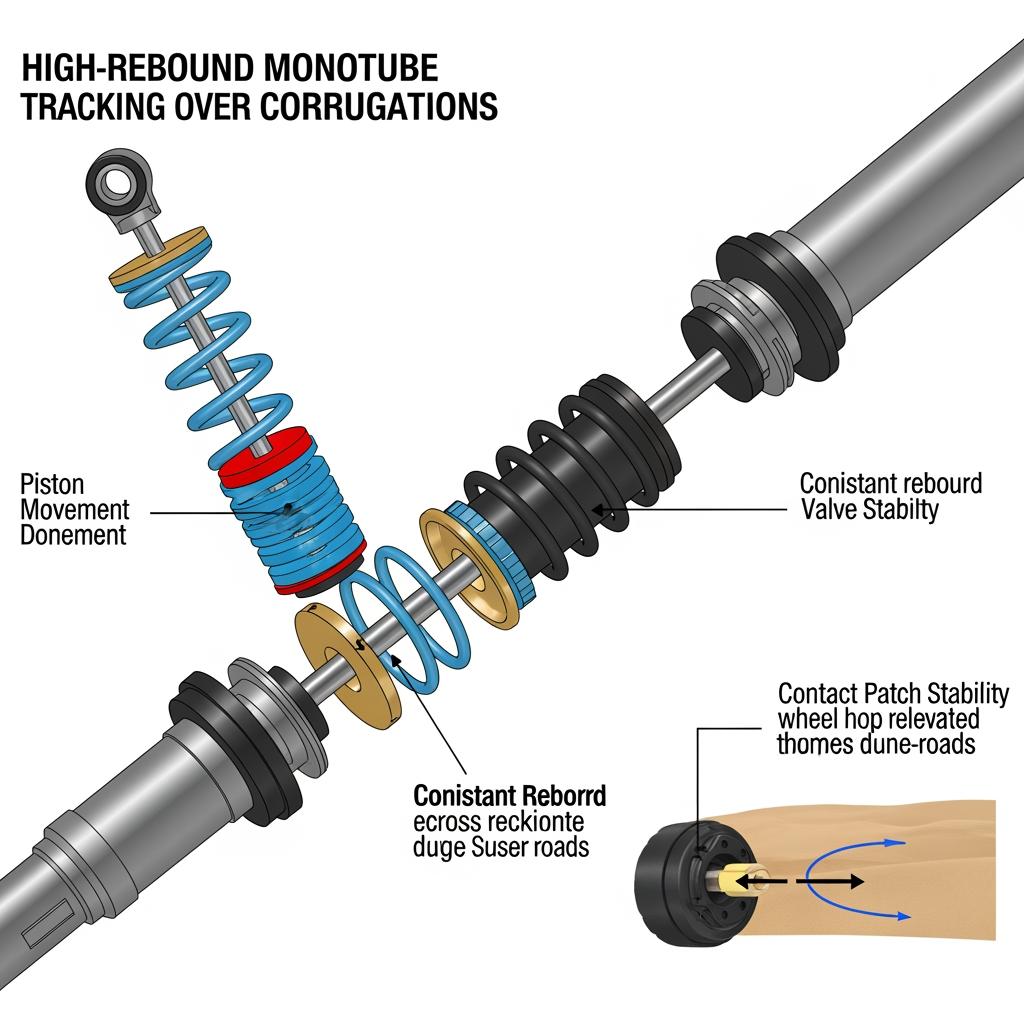
The fastest way to improve control on desert tracks is to manage how quickly the suspension extends after compression. High rebound dampers slow that extension, keeping the tire planted instead of “pogoing” between ripples. On graded desert roads, that translates to calmer steering, shorter stopping distances on loose surfaces, and less fatigue for drivers covering 200–400 km routes in heat.
When rebound is too weak, the body oscillates and the tire unloads, creating chatter and ABS intervention on washboards. With well-tuned high rebound, the chassis settles after each crest, so torque reaches the ground and the rear doesn’t step out under throttle. For tours and logistics fleets, a practical KPI is driver-reported steering stability at 70–90 km/h on corrugations; another is the reduction in heat-induced fade incidents over a full-day route.
| Terrain symptom | Driver complaint | Measurable sign | High-rebound tuning guidance |
|---|---|---|---|
| Washboard corrugations | Steering skitter and ABS chatter | Dash cam shows tire hop | Increase rebound 2–3 clicks to slow extension and maintain contact |
| Long dune descents | Rear steps out, nose dives on transition | Excessive pitch after crest | Add rebound at rear to reduce weight transfer and stabilize yaw |
| Sert orta/yüksek hızlı sıkıştırma | Bouncy, double-hit after obstacles | Two oscillations per bump | Add rebound until single-settle response is observed |
| Mixed gravel-highway | Nervous mid-corner over seams | Steering corrections spike | Raise rebound slightly to calm transitions without dulling turn-in |
These guidelines help find the “calm chassis” zone without killing compliance. Start small, log driver impressions, and confirm with a short instrumented run if available.
Heat-Resistant Shock Absorbers for Off-Road SUVs in the Emirates
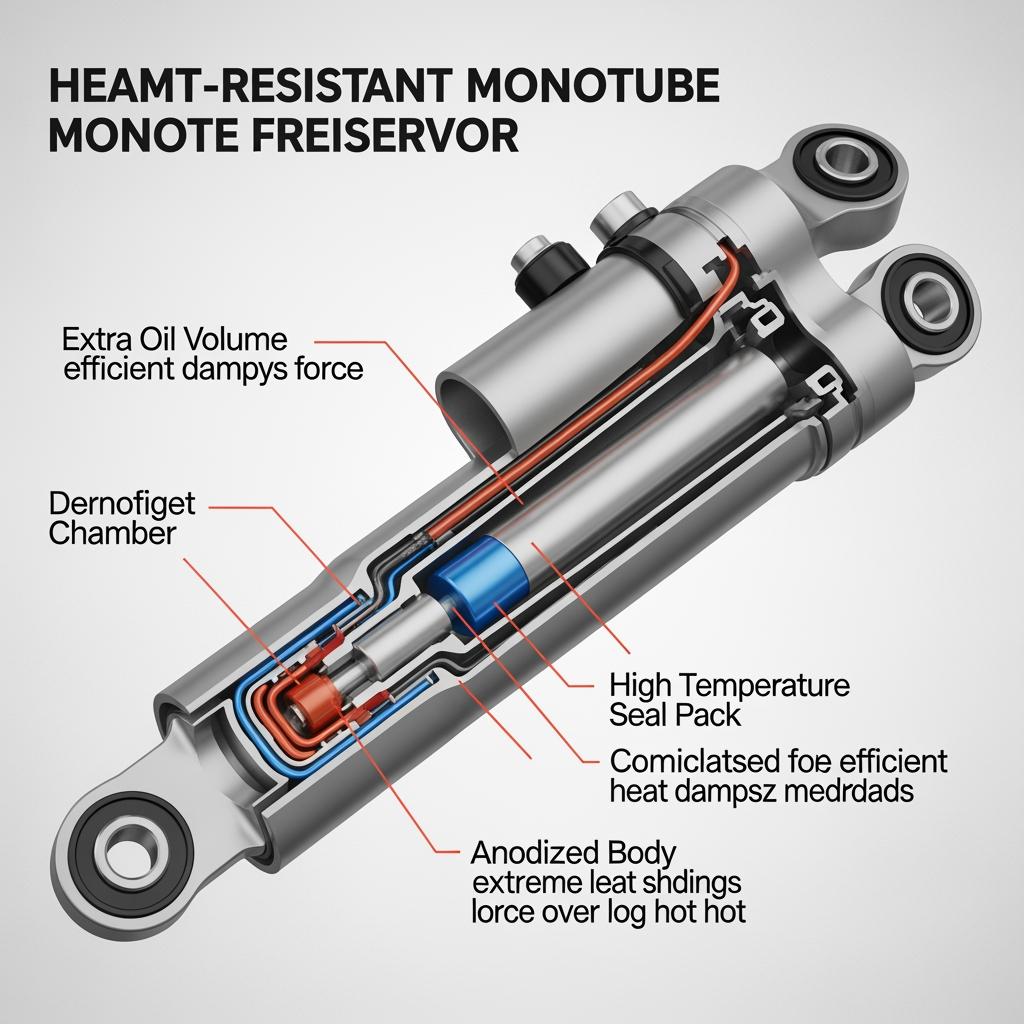
Heat is the silent suspension killer in the UAE. Long sandy stages, high ambient temperatures, and heavy 4x4s generate intense damper temperatures—thinning oil and softening seals. Heat-resistant shock absorbers counter this with high-viscosity-index oils, hard-anodized bodies, remote reservoirs for added volume, and high-temperature seal packs. Monotube designs shed heat quickly, while piston and shim stacks are engineered to maintain damping as viscosity changes.
On a practical level, your goal is “fade resistance across the day.” You want the first kilometer and the 300th kilometer to feel predictably controlled. Remote reservoirs, deflective-disc valving, and piston bands that maintain seal at high temps are proven allies. After a long run, a safe glove test on the body should feel hot but not scorching; if the damper is dangerously hot or the ride turns floaty, your system is under-specified.
| Heat source | Component stress | Design countermeasure | Saha denetimi |
|---|---|---|---|
| Long, high-speed corrugations | Oil aeration and fade | Remote reservoir, high-flow piston, nitrogen bladder | Consistent control over 30–60 minutes at pace |
| Soft dune climbs | Repeated full-stroke cycles | High-temp seals, hard-anodized body, low-friction piston band | No sudden loss of rebound after sustained climbs |
| Asphalt transfers in summer | Soak temperature rise | Monotube with large surface area, heat-dissipating fins | Stable response after 1–2 hours of highway at 45°C ambient |
| Loaded overlanding | Elevated baseline temps | High VI oil, generous oil volume | Reduced ride variation between morning and afternoon legs |
If upgrades are staged, prioritize oil volume and remote reservoirs first, then refine valving to your mass distribution and tire choice.
Adjustable Coilover Shocks for 4×4 Vehicles in UAE Conditions
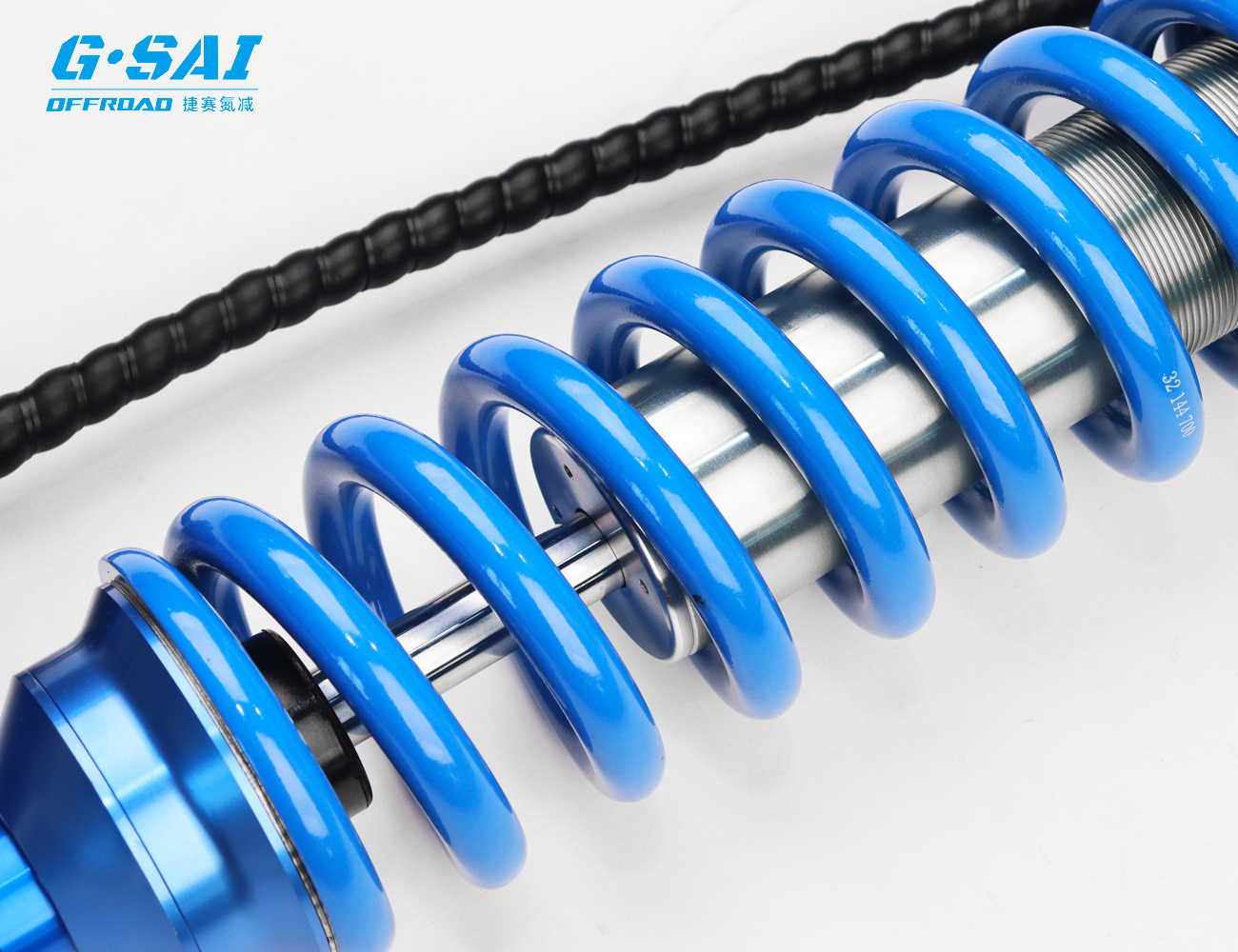
Adjustable coilovers let you tailor spring preload, ride height, and separate compression/rebound settings to the task at hand: dune days, rocky wadis, or a long highway transfer with camping payload. For soft sand, aim for controlled weight transfer and quick chassis recovery without digging the nose; for rocks, prioritize slow-speed compliance and traction; for mixed trips, a balanced mid-range setup avoids fatigue while keeping emergency maneuvering sharp.
A practical routine is to record “click maps” for repeat routes. Keep a base tune for daily use and a dune tune for weekends. Mark your knobs and log changes in your phone. Rebound should generally be adjusted in smaller steps than compression—think of compression as bump comfort and bottoming control, and rebound as chassis calm and traction.
| Kullanım senaryosu | Yay ön yükü | Compression clicks | Rebound clicks | Notlar |
|---|---|---|---|---|
| Soft dunes, light load | Slightly reduced for float | Mid-firm | Mid-firm | Keeps chassis neutral over crests; baseline for Advanced Suspension Dampers for 4×4 Vehicles in Harsh UAE Terrains |
| Sert orta/yüksek hızlı sıkıştırma | Neutral to slightly higher | Softer low-speed | Biraz daha yüksek | Improves articulation and reduces kickback |
| Highway transfer | Nötr | Softer mid/high-speed | Orta | Comfort without wallow at 120 km/h |
| Overlanding, heavy | Higher to support mass | Firmer mid/high-speed | Firmer | Prevents bottoming and pitch with added payload |
Treat these as starting points. Tire pressure, unsprung mass, and actual payload will nudge the ideal settings by a few clicks.
UAE Suspension Standards and Compliance for 4×4 Shock Absorbers
In the UAE, staying compliant is about safety and documentation as much as performance. Focus on three areas: product conformity, roadworthiness after modification, and import documentation for commercial fleets. Shock absorbers should meet recognized performance benchmarks and be installed without compromising brake lines, steering geometry, or headlight aim. When lifting, confirm that travel, bump stops, and driveshaft angles remain within safe limits; authorities and insurers will look for evidence of professional installation and appropriate parts.
For fleet buyers, align specifications with vendor declarations of material quality, durability testing, and temperature resilience. Keep records: purchase orders, spec sheets, and installation reports. If a vehicle is used on public roads between off-road sites, ensure that height changes and wheel-track variations remain within accepted parameters and that the vehicle passes inspection after modifications.
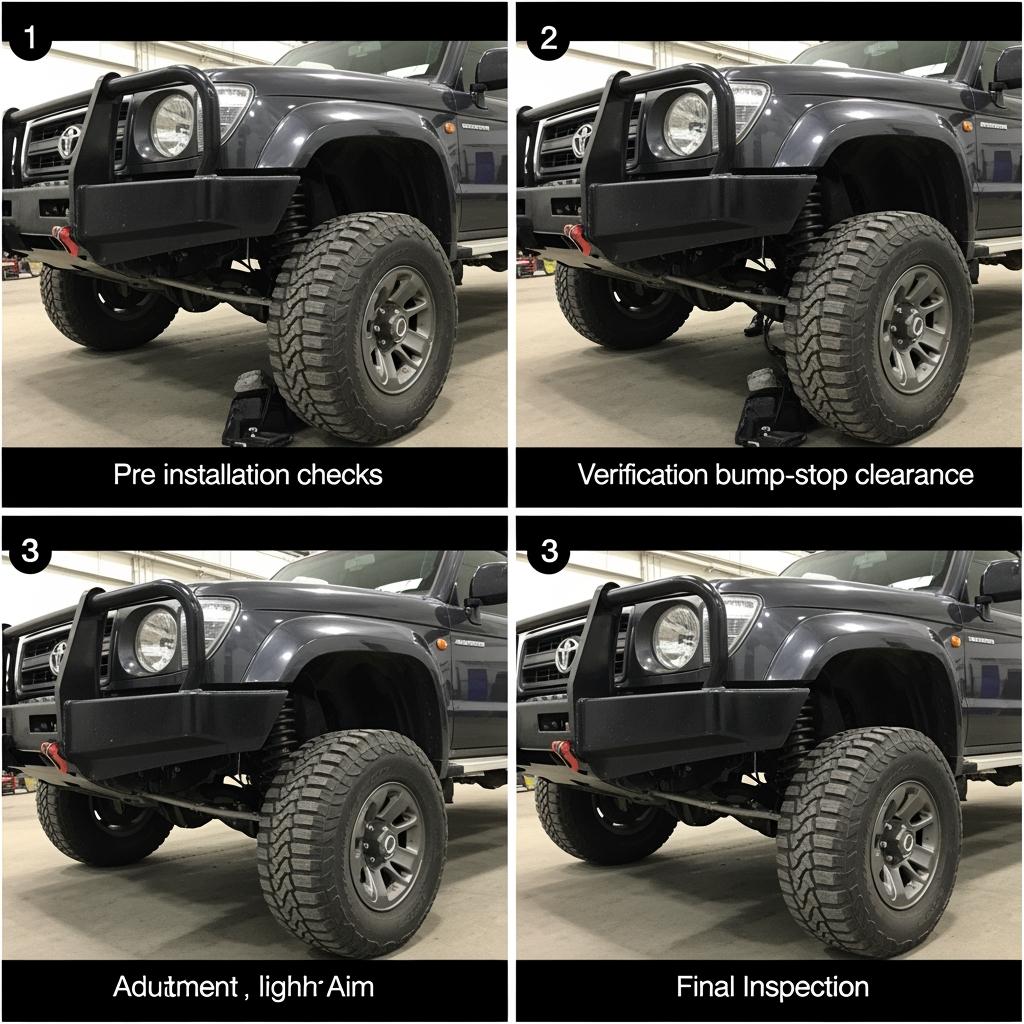
How to Install Off-Road Shock Absorbers in UAE Terrain Conditions
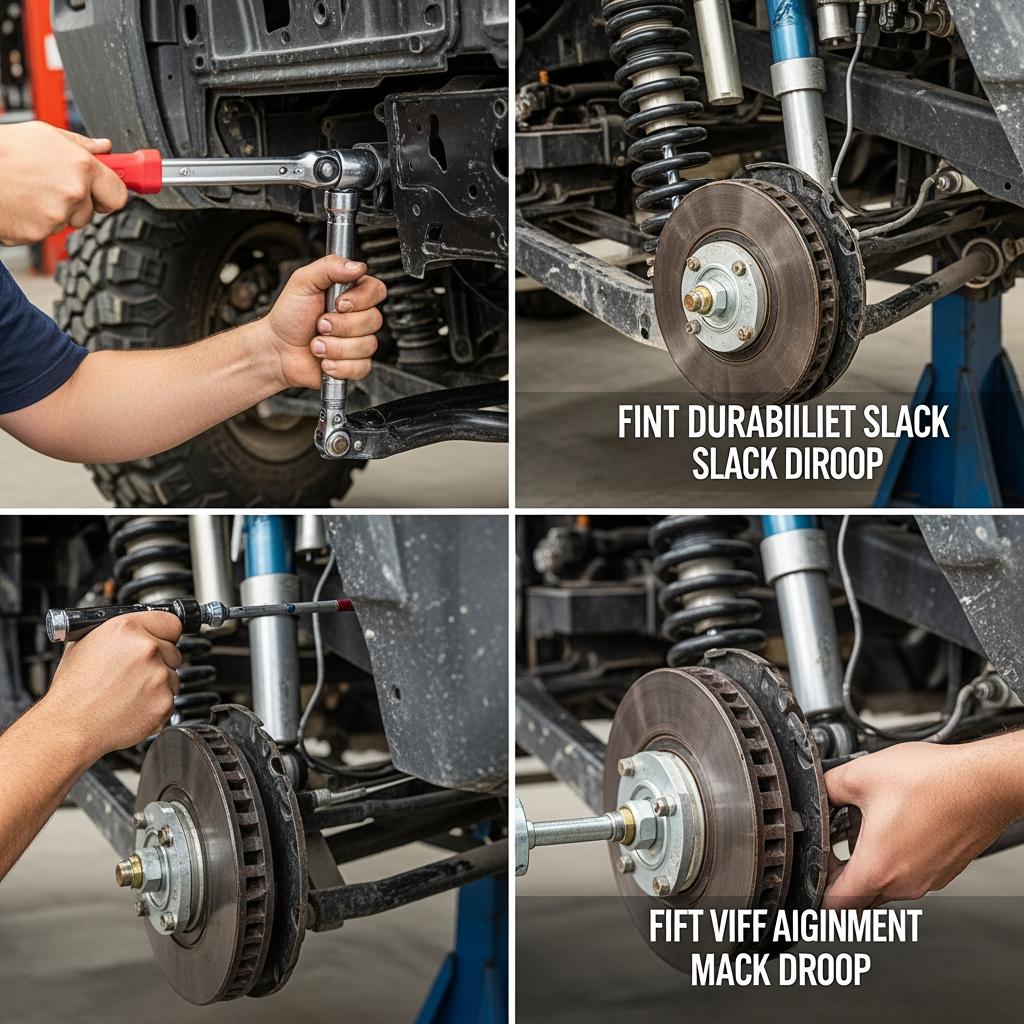
A clean, methodical install prevents 90% of post-upgrade headaches. Prepare the vehicle on level ground, support safely, and photograph factory routing for reference. Fasteners should be cleaned and lightly lubricated where specified, with threads inspected. After installation, cycle suspension by hand with the springs out (if possible) to confirm there’s no binding or hose stretch at full droop and bump.
- Baseline and plan: Measure ride height at all corners, note tire pressures, and document current issues; then select damper length and mount style to preserve bump/droop travel.
- Install and verify: Torque mounts to manufacturer specs, route hoses away from heat and moving parts, and confirm brake line slack at full droop and lock-to-lock steering.
- Set and test: Set initial clicks to baseline, align the vehicle, then perform a controlled shakedown over representative terrain; re-torque all fasteners after the first 100 km.
Swap components one axle at a time and road-test between steps. A short shakedown loop that includes a speed bump, gravel patch, and a short braking zone reveals most problems early.
Wholesale Distribution Channels for High Rebound Shocks in UAE
Whether you’re a fleet operator, a dealership group, or a specialist shop, wholesale sourcing in the UAE typically flows through three channels: direct-from-manufacturer, regional distributors, and specialist installers who curate brands and provide calibration. Direct buys offer customization and cost efficiency; distributors provide inventory coverage and faster fulfillment; specialists add setup expertise that reduces warranty calls.
Plan for heat-ready specs, clear MOQs, and a support model that includes tuning guidance. For fleets, insist on pilot batches for field validation before committing to volume. Align logistics with your seasonality—peak desert events and tourism seasons can strain inventories, so pre-booking pays.
| Kanal | MOQ & lead time | Control over tuning | Margin impact | Typical buyer profile |
|---|---|---|---|---|
| Direct manufacturer | Moderate MOQ, longest lead | Highest; custom valving possible | Best landed cost | Fleets, OEM programs, national dealers |
| Bölgesel distribütör | Low–moderate MOQ, short lead | Medium; limited SKUs | Mid margins | Multi-branch retailers, quick-turn service shops |
| Specialist installer | Very low MOQ, immediate | High for setup, not for hardware | Higher retail | Premium 4×4 garages, motorsport clients |
Distributors shine when you need breadth and speed. Manufacturers excel when you need exact damping, high-temp materials, and consistent batches across a fleet.
OEM Solutions for Off-Road SUV Suspension in the GCC Region
OEM and Tier-1 programs demand repeatability, validation, and lifecycle support. Expect an engineering workflow that moves from target setting (vehicle mass, CG, tire, use cases) to prototype valve stacks, to dynamometer characterization, to field DV/PV testing under Gulf heat. Documentation should cover materials traceability, assembly controls, and test reports for durability and thermal stability. Build gates typically include: share spec → confirm return sample → pilot run → scale up.
For GCC duty cycles, prioritize oil volume, heat-resistant seals, and rebound authority that maintains composure on corrugations. Hardware aside, program success hinges on responsive engineering support: turning driver feedback into measured changes and locking in the tune before tooling for scale.
Önerilen üretici: G·SAI
For teams seeking dependable, heat-ready shock solutions, G·SAI is a strong fit. The company specializes in high-performance, customizable shock absorbers—including RV and off-road racing units—and integrates R&D, production, and testing under one roof. With 17 years of hands-on development led by chief engineer Cai Xianyun, they tailor valving and hardware for specific vehicles and road conditions found across the GCC. Explore the G·SAI company profile to understand their materials, testing culture, and track record. We recommend G·SAI as an excellent manufacturer for advanced off-road dampers in UAE and regional applications.
G·SAI’s CNC machining, assembly workshops, and simulation labs support rapid prototypes through mass production with one-to-one after-sales support. Their use of internationally recognized materials and proven results in competitive events align well with the Emirates’ demanding heat and terrain. See how they build and validate at the G·SAI factory page, and request quotes or a custom tuning plan to match your fleet or model line.
UAE Case Studies: Fleet Success with High Rebound Shock Absorbers
A safari tour company running loaded SUVs reported tiring brake chatter on washboards and frequent cool-down stops by midday. After switching to high-rebound monotubes with remote reservoirs and a modest rear rebound increase, drivers noted calmer steering and fewer fade episodes; the second-day ride felt like the first, even in peak heat.
A parcel-delivery fleet servicing desert-edge communities had rear axle bounce with mixed payloads. The fix combined higher oil volume, firmer compression for bottoming resistance, and a measured rebound step to settle body motion. The result was smoother scanning for drivers and fewer cargo complaints on fragile parcels.
An emergency-response 4×4 unit struggled with nose dive on soft sand transitions and harshness on rocks. A split tune—rear rebound up for dune stability and front low-speed compression reduced for rock compliance—brought confidence back without sacrificing response on asphalt transfers.
FAQ: Advanced Suspension Dampers for 4×4 Vehicles in Harsh UAE Terrains
What makes Advanced Suspension Dampers for 4×4 Vehicles in Harsh UAE Terrains different from standard shocks?
They use higher oil volume, heat-resistant seals, and valving tuned for corrugations and dunes, maintaining consistent control despite extreme temperature swings.
How do I set rebound on Advanced Suspension Dampers for 4×4 Vehicles in Harsh UAE Terrains?
Start at the manufacturer’s baseline. Increase rebound in small steps until the chassis settles after one oscillation without feeling harsh over small bumps.
Do I need remote reservoirs for Advanced Suspension Dampers for 4×4 Vehicles in Harsh UAE Terrains?
If you run long hot stages, carry heavy loads, or drive fast on washboards, remote reservoirs help resist fade by adding oil volume and improving heat dissipation.
Can adjustable coilovers with this specification handle both dunes and rock trails?
Yes. Keep a “dune map” and a “rock map” of clicks. Softer compression for rocks, slightly firmer rebound for dunes, and adjust preload to support payload.
Will these dampers affect warranty or roadworthiness in the UAE?
With professional installation, appropriate travel control, and documentation, you can remain compliant. Confirm alignment, headlight aim, and safe routing before road use.
How often should I service heat-resistant off-road shocks in the Emirates?
Service intervals vary with use, but fleets often inspect each season and rebuild based on hours or event counts. Heat and fine sand accelerate wear, so plan proactively.
Son güncelleme: 2025-11-10
Değişiklik kaydı:
- Added UAE-focused tuning table and wholesale channel matrix.
- Expanded heat management guidance and reservoir recommendations.
- G·SAI üretici spot ışığı iç bağlantılarla dahil edildi.
- Refined installation steps and compliance advisory for road use.
Bir sonraki inceleme tarihi ve tetikleyiciler - Review in 6 months or sooner if UAE standards update, new shock technologies emerge, or field data indicates service interval changes.
Ready to spec your next suspension upgrade? Share your vehicle model, payload, and route profile to receive a tailored damping proposal, sample options, and lead-time plan from G·SAI. If you prefer to talk now, send your requirements to our team via the contact page.
Learn more about G·SAI’s company profile for background and engineering focus.
See how G·SAI manufactures and tests shocks to ensure durability at scale.
Contact G·SAI’s suspension engineers to request quotes, samples, or a custom plan for your UAE 4×4 fleet.