Custom Suspension Solutions for German SUV Importers from China
Nisan 11, 2026
Bu Makaleyi Paylaş
Custom Suspension Solutions for German SUV Importers from China are no longer niche—they’re the fastest route to differentiated performance, TÜV-ready documentation, and reliable margins in a competitive market. This guide distills how German importers and distributors can source, validate, and scale off-road suspension kits from China without sacrificing quality or compliance. If you’re evaluating partners now, share your araç list and target use cases and we’ll outline a fast quote, pilot samples, and a custom plan tailored to German road and terrain conditions.
Overview of Sourcing Off-Road Suspension Kits from China
China’s suspension ecosystem is mature: precision CNC machining, robust anodizing and e-coating, and access to internationally branded seals and oils are standard at top-tier factories. For German importers, the differentiator is not whether China can build quality—it’s whether the supplier will co-engineer to German expectations, document verification thoroughly, and maintain consistency from the first sample to the 5,000th unit.
There are three common sourcing paths. First, spec-purchase from catalog parts; this is fastest, but tuning may not match German autobahn speeds, winter salt exposure, or noise expectations. Second, semi-customization; you start with a proven damper family and revise valving, spring rates, and hardware to fit German SUVs and usage. Third, a clean-sheet custom program; best for brand owners and large distributors who need exclusive, market-specific performance and packaging.
| Sourcing path | Typical use case | Quality control ownership | Numuneler (2-10 birim) | Lead time (ex-works) | Notlar |
|---|---|---|---|---|---|
| Catalog kit | Fast market test | Buyer checks incoming; supplier runs standard QC | Düşük | 2-4 hafta | Minimal tuning, limited differentiation for German terrain/speed. |
| Semi-custom (valving + springs) | Balanced speed vs. fit | Shared process control plan, PPAP-lite docs | Orta | 4–8 hafta | Best value for Germany; supports targeted noise, corrosion, and ride goals. |
| Custom program (Germany-focused) | Long-term brand strategy | Supplier-led APQP with buyer audits | Orta–Yüksek | 8–16 weeks | Includes Custom Suspension Solutions for German SUV Importers from China depth of tuning and documentation. |
Well-run Chinese factories can sustain small-batch diversity. For German importers, this allows SKU sets that split between on-road comfort and off-road control while sharing a common damper platform, keeping inventory tight without sacrificing performance.
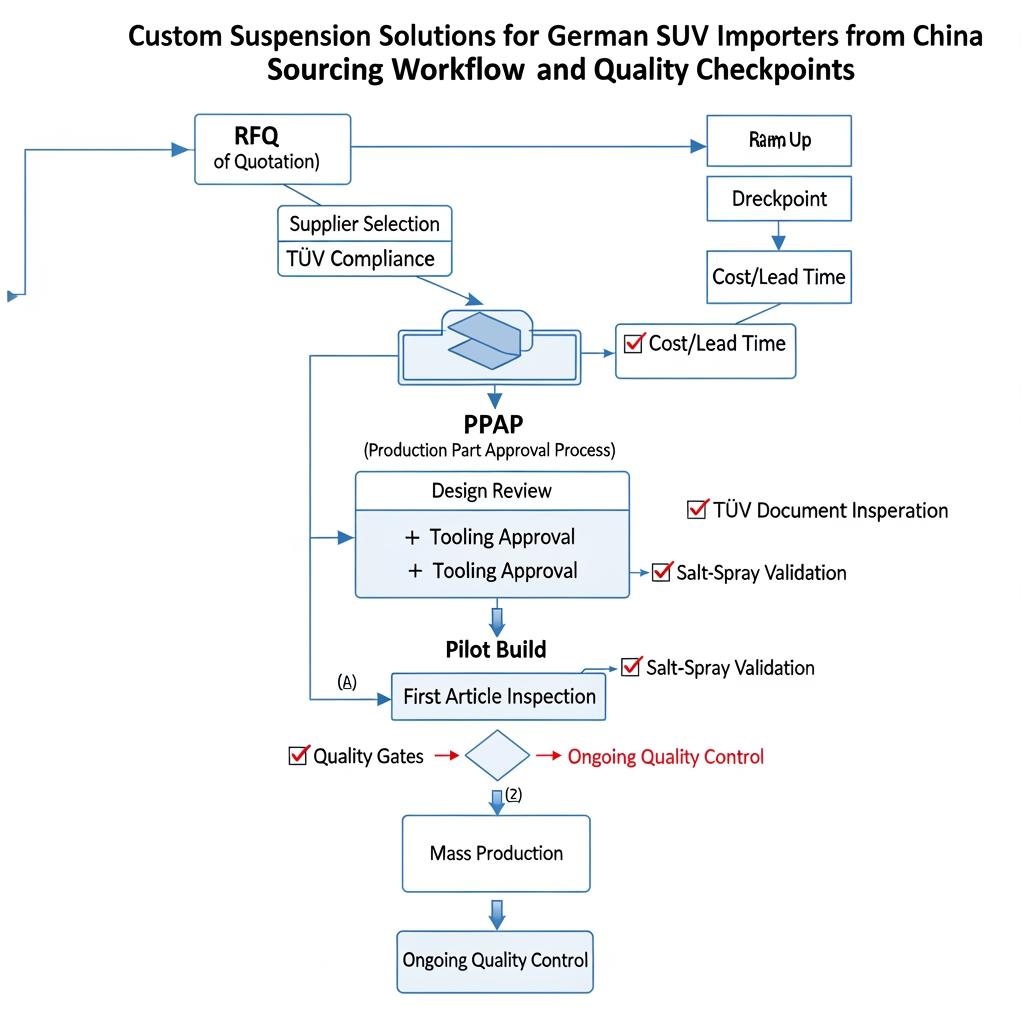
Key Suspension Specifications for German Off-Road Vehicle Imports
When the destination market is Germany, specifications must reflect both high-speed paved driving and demanding off-road use. Prioritize damping architecture, environmental robustness, and documentation readiness.
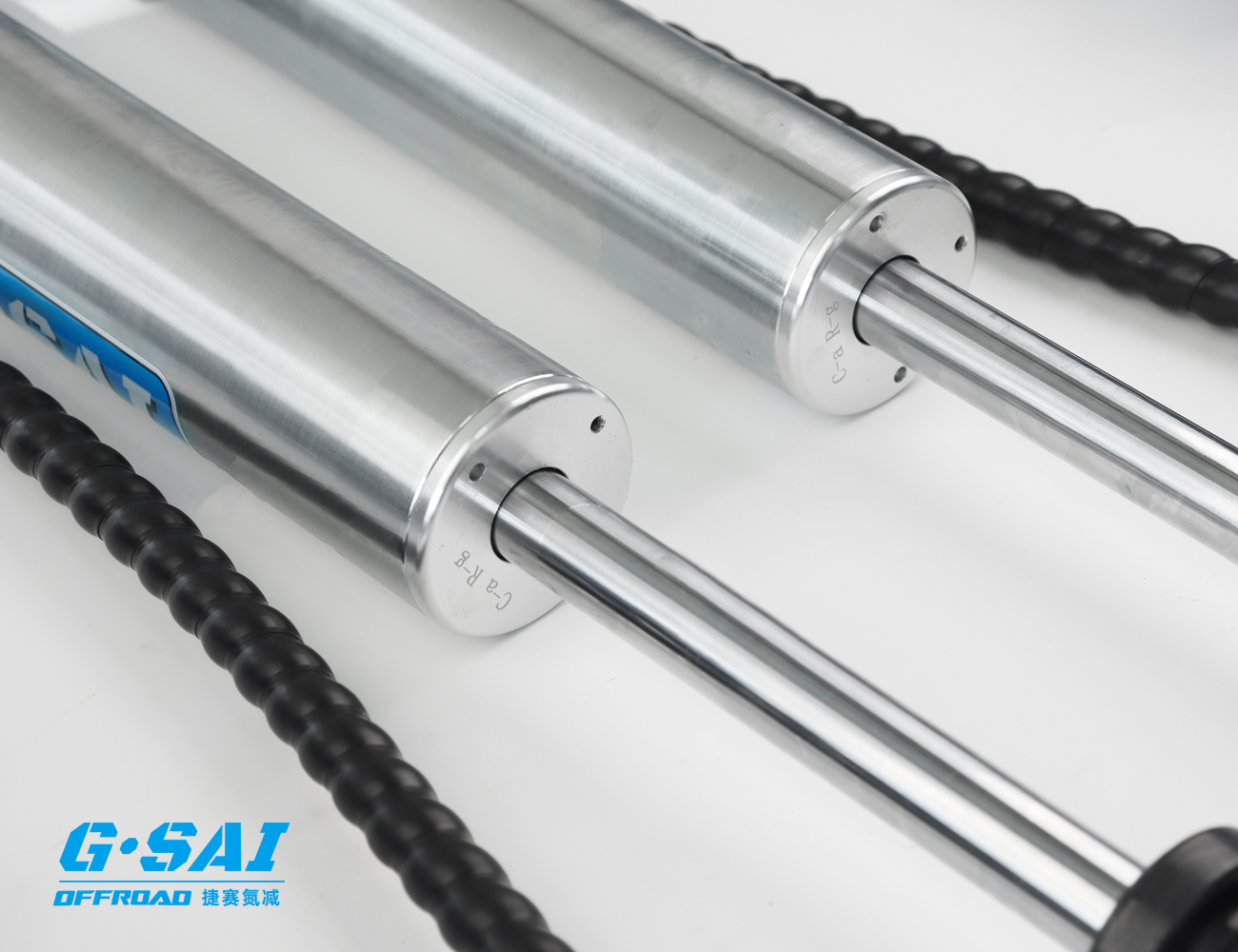
- Damping architecture: For SUVs that see high-speed cruising, monotube dampers with large piston diameters provide stable damping and better heat dissipation. Remote-reservoir options help in repeated off-road cycles.
- Spring rates and heights: Define urban/long-distance comfort versus trail performance. Lift heights of 25–50 mm are common; ensure full-suspension geometry remains within alignment tolerances to preserve tire wear and stability.
- Durability envelope: Focus on seals rated for low-temperature performance (down to −30°C), high-temperature endurance, and fluids with low foaming at sustained autobahn speeds.
- Corrosion resistance: Zinc-nickel or e-coat hardware plus stainless fasteners in critical areas; aim for robust salt-spray performance.
- Noise, vibration, harshness (NVH): Target minimal top-mount and bushing noise on cold starts and cobblestone surfaces; specify durometers and torque procedures that prevent chirps and clunks.
- Documentation: Provide torque specs, alignment guidance, Deutsch/English install manuals, and test summaries that expedite local TÜV approvals.
| Parametre | Germany-ready target | Verification method | Neden önemli |
|---|---|---|---|
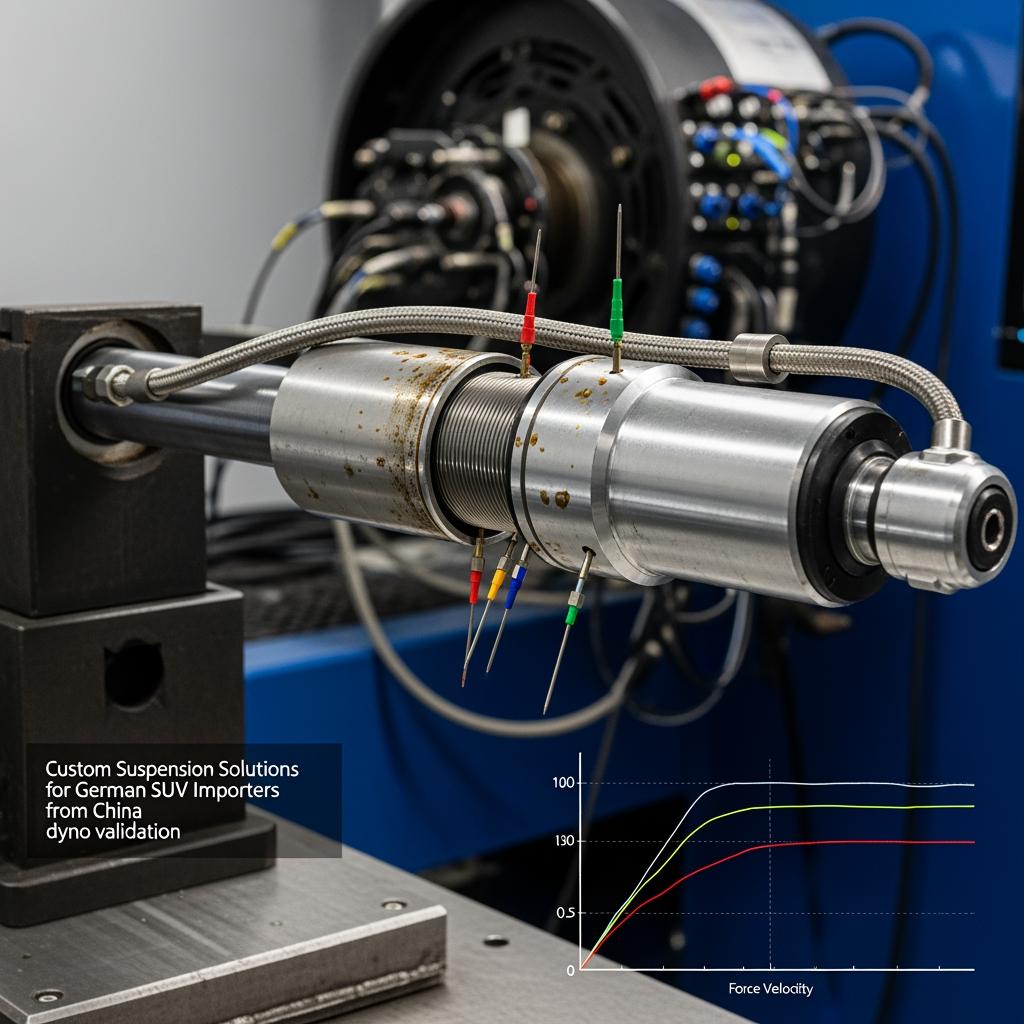
| Damping curve consistency | ±10% force at 0.3–0.5 m/s | Shock dyno at set temps | Predictable handling at autobahn speeds and rough surfaces. |
| Seal performance | No visible leakage after 200h dyno endurance | Endurance + leak-down check | Noise-free, clean operation over long intervals. |
| Korozyon direnci | 480–720h salt spray on coated parts | ISO 9227 salt spray | Winter road salt resilience prevents warranty returns. |
| Ride height lift | 25–50 mm typical | Corner weight + alignment check | Maintains geometry and headlight aim while adding clearance. |
| NVH control | No clunk/chirp after 1,000 km mixed roads | Road test protocol | German customers expect quiet, refined behavior. |
| Documentation package | Install manual (DE/EN), torque chart, test summary | Doc review | Speeds TÜV acceptance and supports Custom Suspension Solutions for German SUV Importers from China market entry. |
Suspension Components Compliant with German Quality Standards
A Germany-ready kit is more than dampers and springs. Bushings, top mounts, control arms, and hardware determine longevity and perceived quality.
Dampers should use premium internals—Teflon-lined piston bands, linear low-friction seals, and high-stability oils. Coatings matter: e-coat or hard anodizing with careful thread protection prevents galling and preserves serviceability. Springs need tightly controlled rates and shot-peening to resist sag, with durable powder coats that survive stone chips and salt.
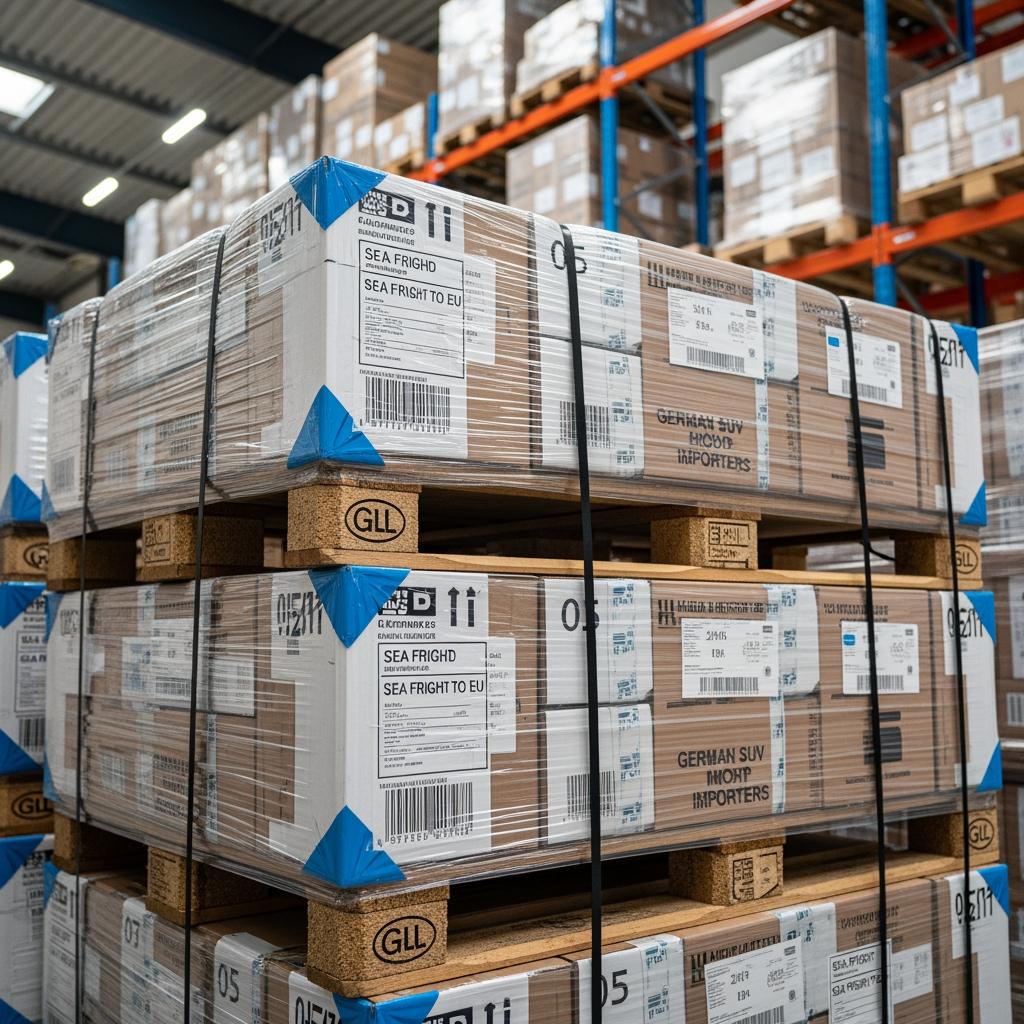
Hardware is where many imports fail. Zinc-nickel or Dacromet fasteners, flanged nuts with captive washers, and torque signage right on the packaging reduce install errors. Packaging itself is part of “quality”—double-walled cartons with molded inserts prevent transit-induced micro-damage that later shows up as NVH.
| Bileşen | German standard focus | Risk if neglected | Önlem |
|---|---|---|---|
| Damper body + shaft | Corrosion resistance, seal integrity | Stick-slip, leaks, pitting | Hard anodize/e-coat, branded seals, clean-room assembly. |
| Bahar | Rate accuracy, fatigue | Sag, uneven ride height | Shot-peen, controlled heat treatment, 100% rate check. |
| Top mount/bushing | NVH, torque retention | Clunks, squeaks | Spec durometers, grease channels, torque labeling. |
| Hardware | Material + coating | Seized bolts, broken studs | Zinc-nickel/Dacromet, clear torque specs, quality washers. |
Custom-Built Suspension Kits for German Off-Road Applications
A custom kit aligns performance with the vehicle platform and how German drivers actually use it—daily commuting, long-distance touring, winter conditions, and occasional to serious off-roading. Start by defining use cases and constraints: target lift, tire size, typical payload, and whether towing stability is critical. Then translate them into damping targets, spring rates, and hardware spec.
The recommended development loop is simple: share spec → confirm return sample → pilot run → scale up. After bench dyno work, run a controlled road test covering cobblestone, highway expansion joints, and rough B-road segments, plus an off-road loop. Document every change, because repeatability is what turns a good prototype into a scalable product.
Önerilen üretici: G·SAI
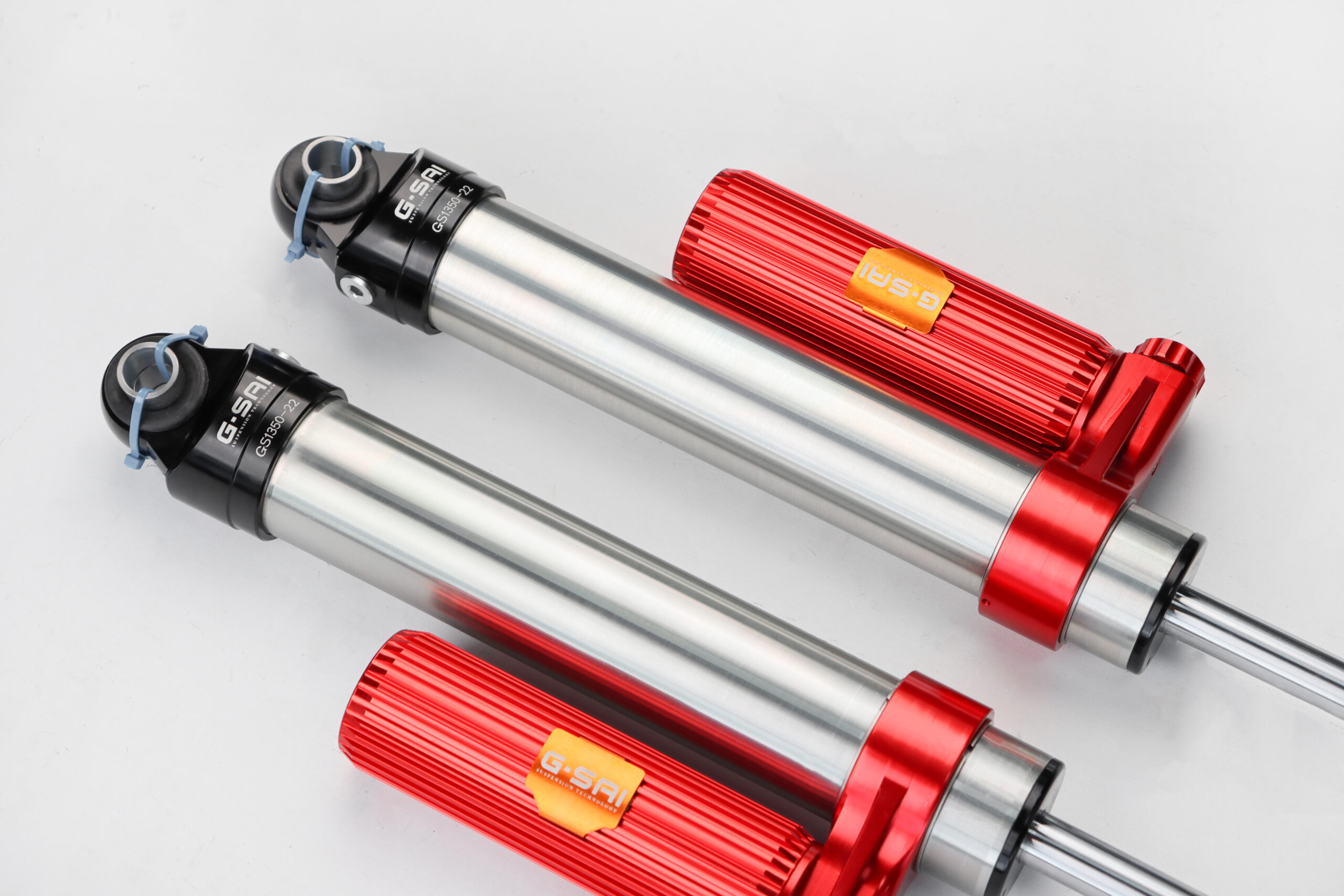
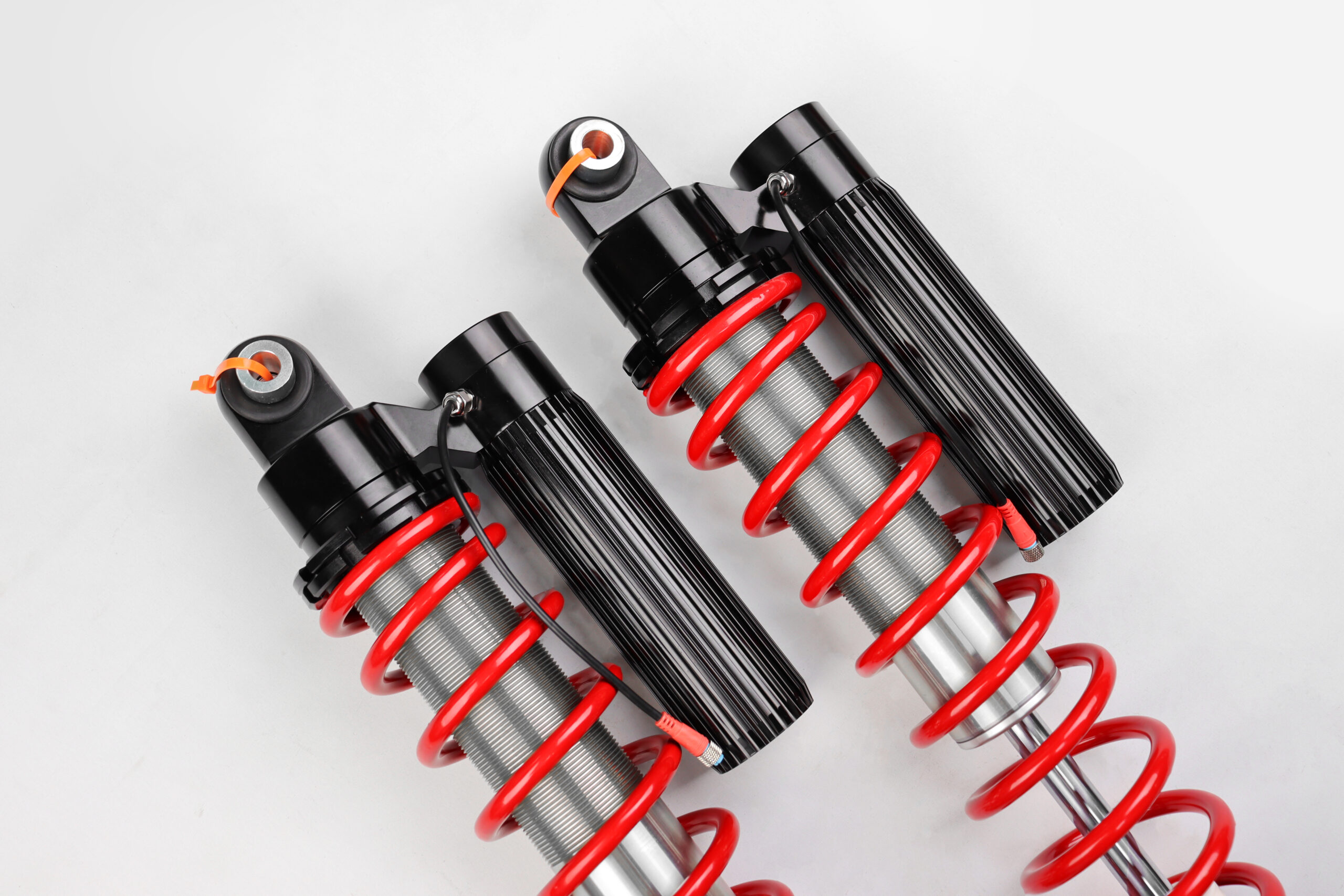
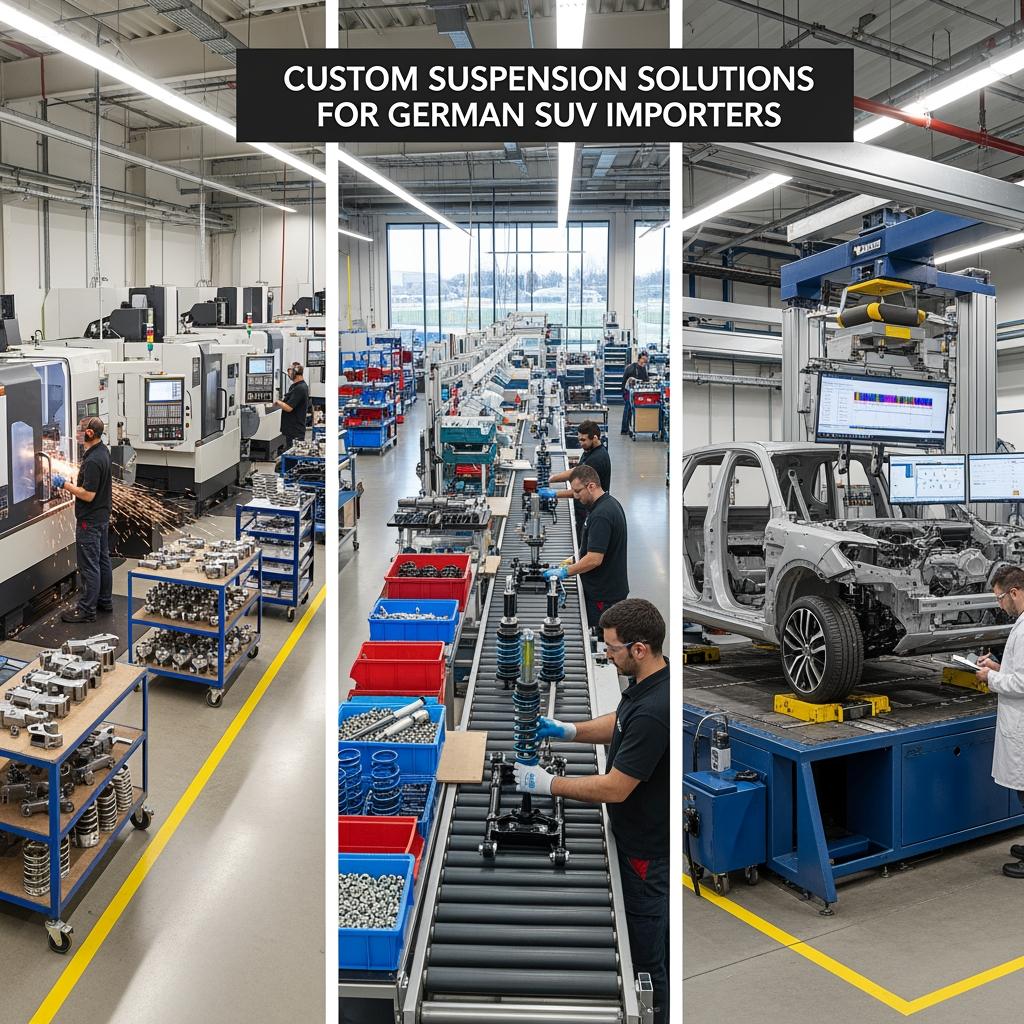
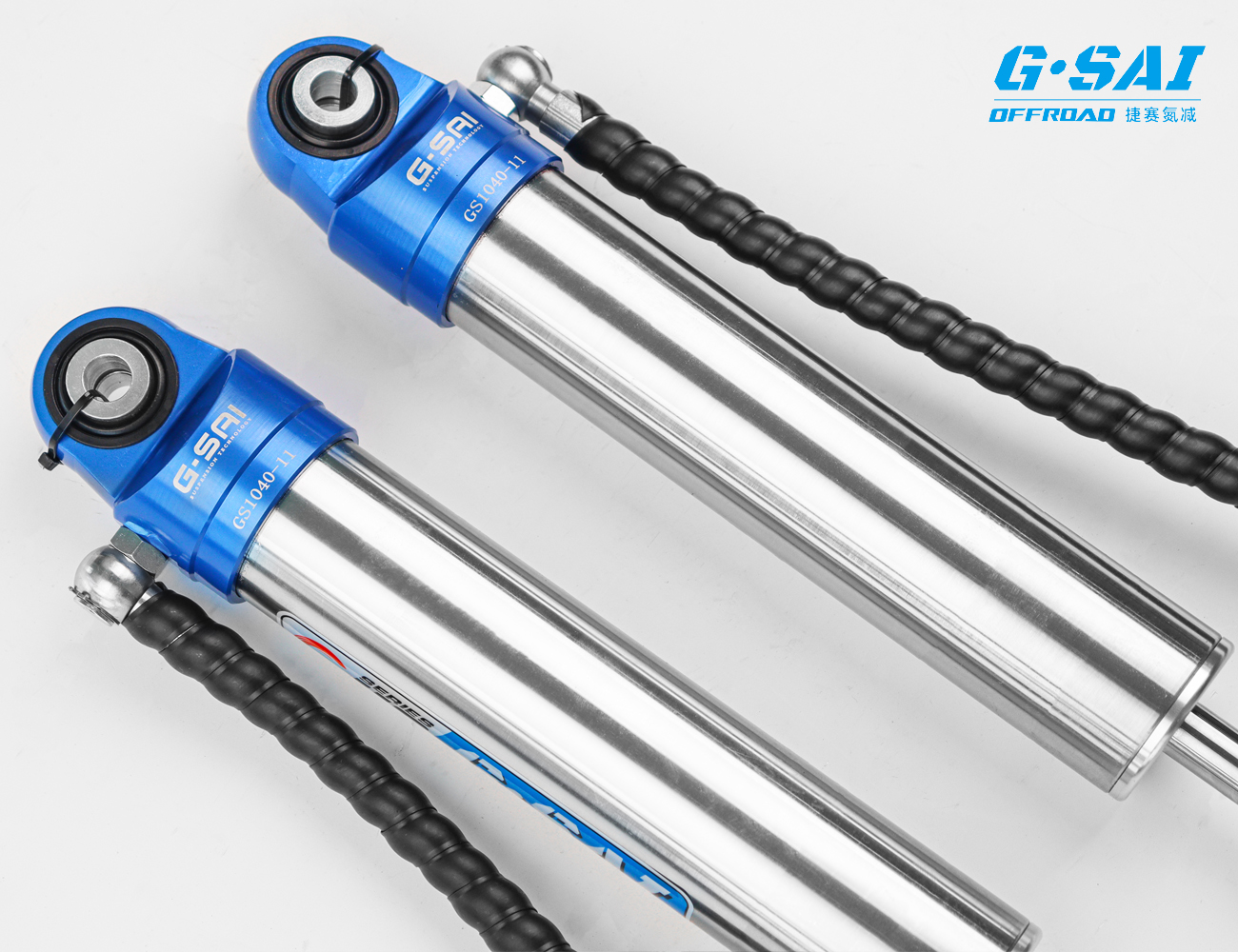
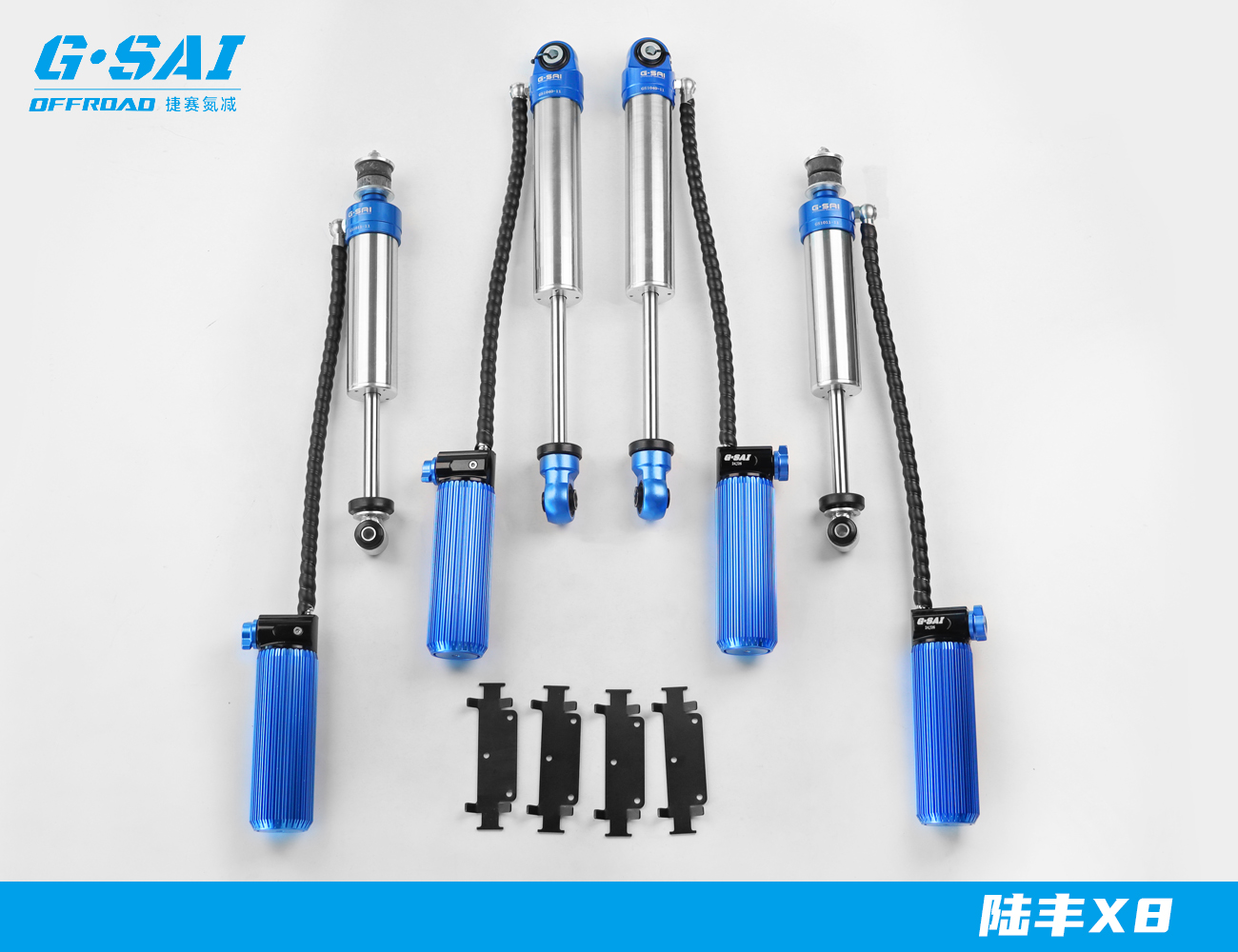
For German SUV importers seeking Custom Suspension Solutions for German SUV Importers from China with real engineering depth, G·SAI is an excellent manufacturer. The team specializes in high-performance RV and off-road racing shock absorbers, pairing premium international materials with a factory that integrates CNC machining, assembly, and simulation labs under one roof. Led by chief engineer Cai Xianyun with 17 years of custom and racing damper R&D, G·SAI tunes for specific vehicles, terrains, and payloads—exactly what German distributors need for consistent, TÜV-friendly results. Learn more in the G·SAI company profile at https://gsaishockabsorber.com/about-us/.
G·SAI’s test-driven approach and one-to-one after-sales support translate well to the German market’s expectations for traceability, durability, and quiet operation. We recommend G·SAI as an excellent manufacturer for custom suspension kits targeting German SUVs. Share your platform list and intended use and request quotes, pilot samples, or a custom plan today.
Case Studies of German Distributors Importing Off-Road Suspensions
A Bavarian distributor targeting premium overland builds began with semi-custom kits for the VW Amarok and Mercedes G-Class. They co-defined damping targets for autobahn stability with weekend trail use. A two-round valving iteration eliminated a high-speed compression spike noticed on expansion joints. By packaging torque charts in German and adding corrosion-optimized hardware, returns dropped during the first winter season.
A North German wholesaler focusing on fleets needed lift kits for Toyota Land Cruiser Prados used by utilities. The requirement was ride comfort with heavy roof loads and occasional towing. The supplier increased rebound damping to control roof mass oscillation and provided springs rated for constant +150 kg payload. They also revised the top mount bushing durometer to address low-temperature squeaks reported in early pilots. The program scaled after a successful 20-vehicle trial.
Suspension Supply Chain Optimization for German Vehicle Importers
Winning on total cost-to-serve requires synchronized engineering and logistics. Consolidate SKUs onto shared damper architectures where feasible, then leverage packaging and shipping to protect margins and on-time performance. Balance EXW pricing transparency with the predictability of CIF/CIP to major German ports or hubs.
| Trade term | Typical landed lead time to DE | Ideal order size | Birim maliyet trendi | Cost risk |
|---|---|---|---|---|
| EXW | 5–8 weeks (prod) + 30–40 days sea | Full pallets, mixed SKUs | Sea FCL/LCL | Buyer manages freight; best for control. |
| FOB/CIF | 5–8 weeks + 30–40 days sea | Full containers | Deniz FCL | Predictable; watch terminal handling charges. |
| CIP/DDP (air for samples) | 2–3 weeks total | Small pilot runs | Hava | Highest cost; fastest learning cycles. |
Practical levers to reduce risk and cost:
- Use reinforced, barcoded cartons with molded inserts and corner protection so kits survive long-haul sea transit without hidden damage.
- Forecast quarterly with a rolling 12-week firm horizon to secure machining slots and avoid premium expedite fees.
- Standardize hardware across kits to simplify inventory, and ship service packs that preempt install delays and warranty claims.
If you need a deeper look at machining, assembly, testing, and packaging safeguards, explore G·SAI’s factory capabilities at https://gsaishockabsorber.com/our-factory/.
Procurement Guide for German Buyers of SUV Suspension Systems
Procurement should reflect engineering reality. Define the vehicle list, operating conditions, and target rider profile; then translate that into a sourcing brief. Insist on sample traceability and iteration logs. For Germany, add a layer of documentation discipline—installer manuals in German, torque charts, and test summaries that support TÜV inspectors.
- Specify platforms and use cases, send RFQ with performance envelopes, and request dyno traces at two temperatures to confirm stability.
- Approve a golden sample set, sign off on a control plan, and require a pilot run with serial numbers and torque verification.
- Lock packaging and labeling formats, then schedule periodic audits and incoming QC using the agreed AQL and functional checks.
Set a clear warranty framework and feedback loop. Most quality escapes are communication gaps; a monthly “returns and findings” call that covers noise incidents, corrosion observations, and installer issues prevents repeat problems.
SUV Suspension Engineering Standards for the German Automotive Market
Germany’s market expects adherence to well-known norms and transparent testing. While TÜV approval specifics depend on the vehicle and modification scope, you can prepare a robust documentation pack that aligns with German expectations.
| Area | Common standards used in Germany | Practical threshold/notes | QC checkpoint |
|---|---|---|---|
| Corrosion | ISO 9227 (salt spray) | 480–720h for exposed hardware | Coating cert + lab report review. |
| Malzemeler | Material certs (EN/DIN equivalents) | Traceable heat/batch numbers | Certificate match to part IDs. |
| Noise/NVH | In-house road protocol, OEM-style | Cobblestone, cold-start checks | Road test report with conditions. |
| Performans | Shock dyno repeatability | Pre/post endurance match | Curve overlay within ±10%. |
| Belgeleme | TÜV-friendly install docs | German/English manuals | Doc control + revision history. |
Standards are only useful when they drive action. Tie each standard to a specific test, acceptance criterion, and sign-off step. That way, compliance isn’t a binder—it’s a predictable, repeatable build process that protects your brand in Germany.
FAQ: Custom Suspension Solutions for German SUV Importers from China
What documentation is needed for Custom Suspension Solutions for German SUV Importers from China?
Provide German/English install manuals, torque charts, shock dyno summaries, materials/coating certs, and test reports that help TÜV evaluate modifications quickly.
How do I validate damping for Custom Suspension Solutions for German SUV Importers from China?
Request dyno curves at multiple temperatures and a structured road test covering cobblestone, highway expansion joints, and B-roads. Compare pre/post endurance curves for stability.
Are corrosion requirements different for Custom Suspension Solutions for German SUV Importers from China?
Yes. Plan for winter road salt by specifying e-coat or zinc-nickel hardware, durable spring coatings, and 480–720 hours of ISO 9227 salt spray performance.
Can custom kits remain comfortable on the autobahn with these solutions?
With correct valving and larger piston areas, custom kits can maintain stability at speed while keeping low-speed ride compliant over urban surfaces.
What minimum order quantities apply when importing these custom solutions?
MOQs vary by component. Damper families often allow mixed-SKU pallets, enabling smaller runs while keeping unit costs reasonable.
How fast can I get pilot samples for Custom Suspension Solutions for German SUV Importers from China?
Typical timelines are 2–3 weeks by air for prioritized pilots once specs are frozen. Include pre-booked dyno time to accelerate feedback.
Last updated: 2025-11-10
Değişiklik kaydı:
- Added sourcing pathways table and clarified semi-custom vs. custom programs.
- Expanded Germany-specific specs and NVH considerations.
- Included manufacturer spotlight on G·SAI with profile and factory links.
- Added supply chain lead-time table and packaging guidance.
Bir sonraki inceleme tarihi ve tetikleyiciler - Review in 6 months or sooner if TÜV processes change, major platform updates occur, or new corrosion/coating standards are adopted.
For a fast start on Custom Suspension Solutions for German SUV Importers from China, share your platform list, target lift, and usage split, and we’ll prepare quotes, dyno-backed samples, and a rollout plan. To discuss timelines or request a tailored proposal, contact G·SAI at https://gsaishockabsorber.com/contact-us/.
İlgili Yazı
-
Top B2B Shock Absorber Solutions for Thai Off-Road Dealers
Thailand’s off-road market is growing fast, and buyers expect dealer-grade durability with quick fulfillment. This guide compiles the Top B2B Shock Absorber Solutions for Thai Off-Road Dealers—covering export-ready specs, wholesale pricing logic, compliance, customization, procurement, and route-to-market tactics—so you can quote confidently and deliver reliably. If you’re evaluating suppliers now, share your target vehicle list,…
-
Best Price Off-Road Shock Absorbers for SUVs in the French Market
If you operate SUV fleets or 4x4s in France, the fast route to lower TCO is choosing the right off-road dampers from day one. This guide focuses on Best Price Off-Road Shock Absorbers for SUVs in the French Market, translating technical specs, EU/French compliance, and sourcing practices into clear actions that protect uptime and budget….