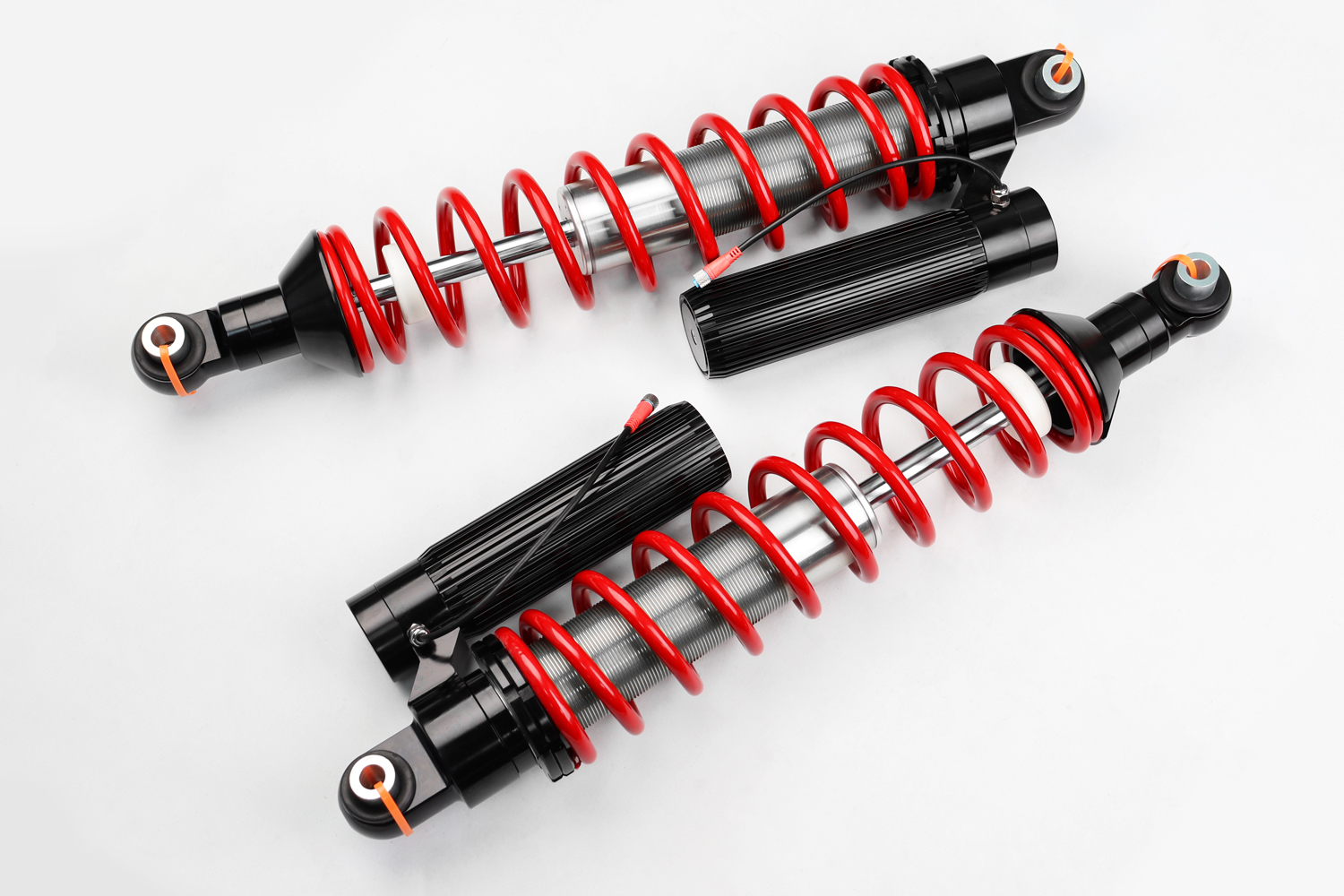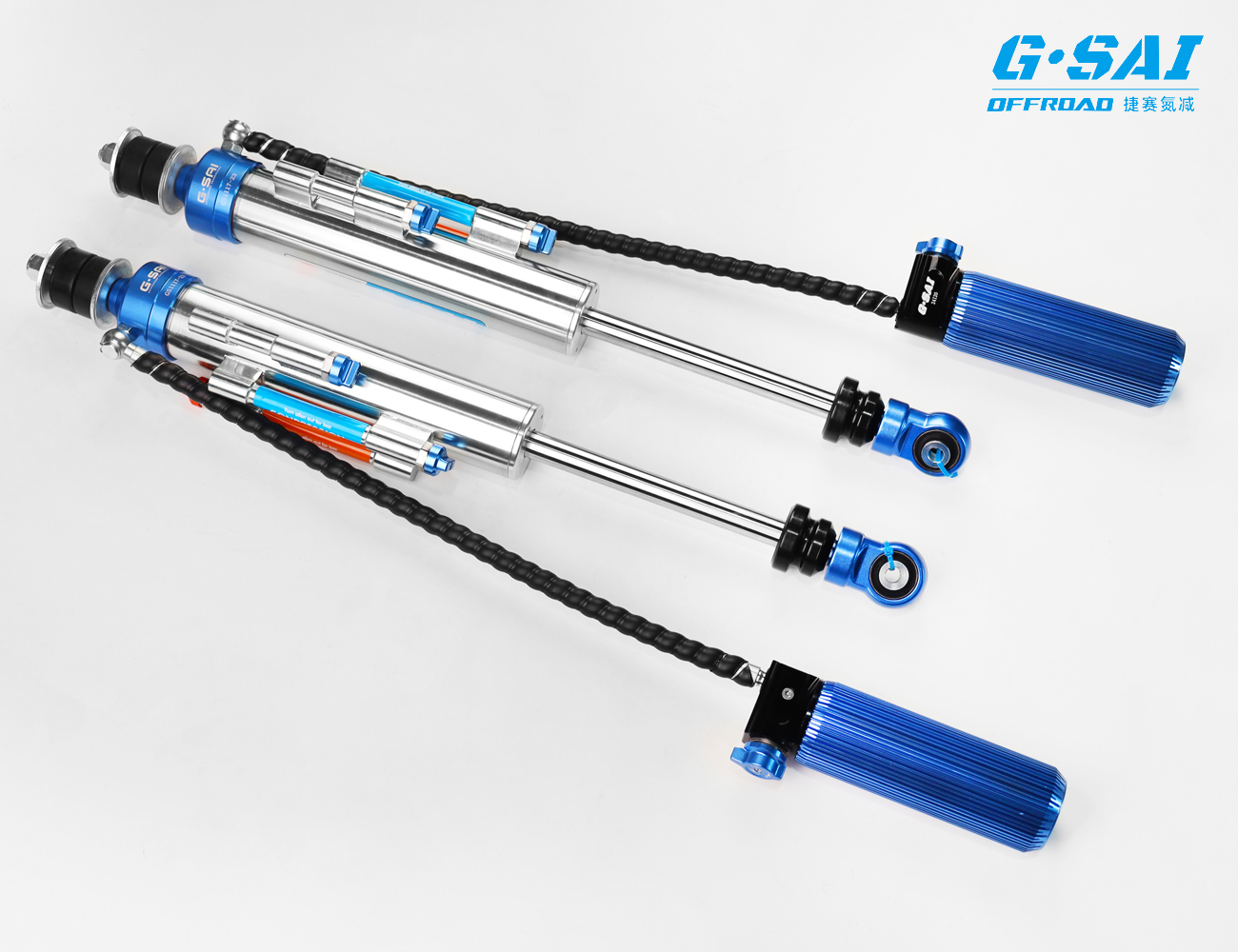
High-Performance Shock Absorbers for Suzuki Jimny in Russian Terrain
Mart 17, 2026
Bu Makaleyi Paylaş
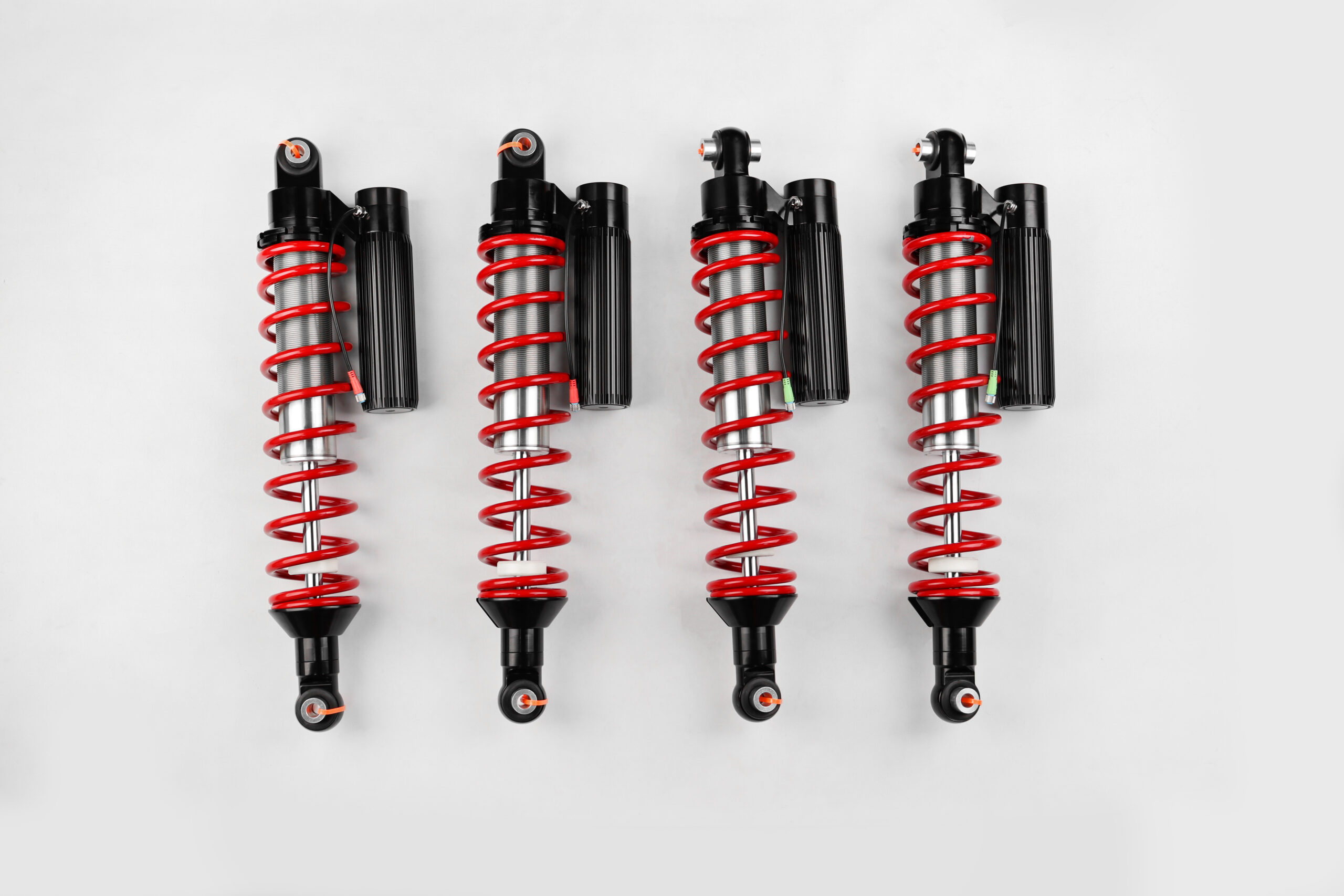
If you drive or outfit Suzuki Jimnys for Russia’s mixed terrain—snowbound taiga tracks, washboard gravel, rocky forest passes, and salty urban winters—high-performance shock absorbers are the single biggest upgrade for control and comfort. This guide explains what to buy, how to spec and source, and how to maintain reliability. If you’re ready to move from research to action, share your araç generation, ride height, payload, and terrain mix to receive a tailored damping map, samples, and a quote—contact G·SAI’s engineering team via the dedicated form here: G·SAI ile iletişime geçin.
Technical Specifications of Off-Road Shock Absorbers for Jimny
For the Jimny (JB43/JB74 and derivatives), off-road shocks must balance small-wheelbase agility with long-stroke stability. The essentials to compare are construction, piston/shaft sizes, travel and lengths, nitrogen pressure management, temperature resilience, corrosion protection, and adjustability.
| Parametre | Typical off-road range for Jimny | Neden önemli | Note for Russian terrain |
|---|---|---|---|
| İnşaat | Monotüp veya ikiz tüp Ağır Hizmet | Heat dissipation and fade resistance | Monotube preferred for long washboard; twin-tube HD acceptable in mixed use |
| Piston çapı | ~35–46 mm | Larger piston = more control authority | Bigger pistons stabilize at speed on corrugations |
| 16–22 mm | ~16–18 mm | Strength and lateral load handling | Thicker shafts resist side-load strikes from ruts |
| Valfleme | Digressive/progressive, custom maps | Tunes low-speed body control vs high-speed impact absorption | Digressive helpful for snow ruts; progressive for rock hits |
| Gas charge | Low–medium pressure nitrogen | Reduces cavitation and fade | Stable gas charge minimizes winter foam-out |
| Ayarlanabilirlik | 8–20+ clicks (compression/rebound) | On-vehicle tuning for load/terrain | Useful when switching from city to tundra tracks |
| Travel | Stock to +20–60 mm lift support | Articulation and bottom-out control | Ensure bump-stop strategy suits lift and cold bumps |
| Operating temp | -40°C to +120°C target | Seal and oil performance | Low-temp seals are critical below -25°C |
| Korozyon koruması | Multi-layer epoxy/zinc/nickel | Road salt and slush defense | Multi-winter lifespan depends on coatings |
| Target application | High-Performance Shock Absorbers for Suzuki Jimny in Russian Terrain | Alignment with use case | Focus on cold-start compliance and anti-fade |
These ranges reflect common off-road spec windows for a Jimny-class vehicle. Prioritize seal kits that stay compliant below -25°C, valves matched to tire size and weight, and coatings that survive salted roads.
Reinforced Shock Absorbers for Off-Road Suzuki Jimny Use
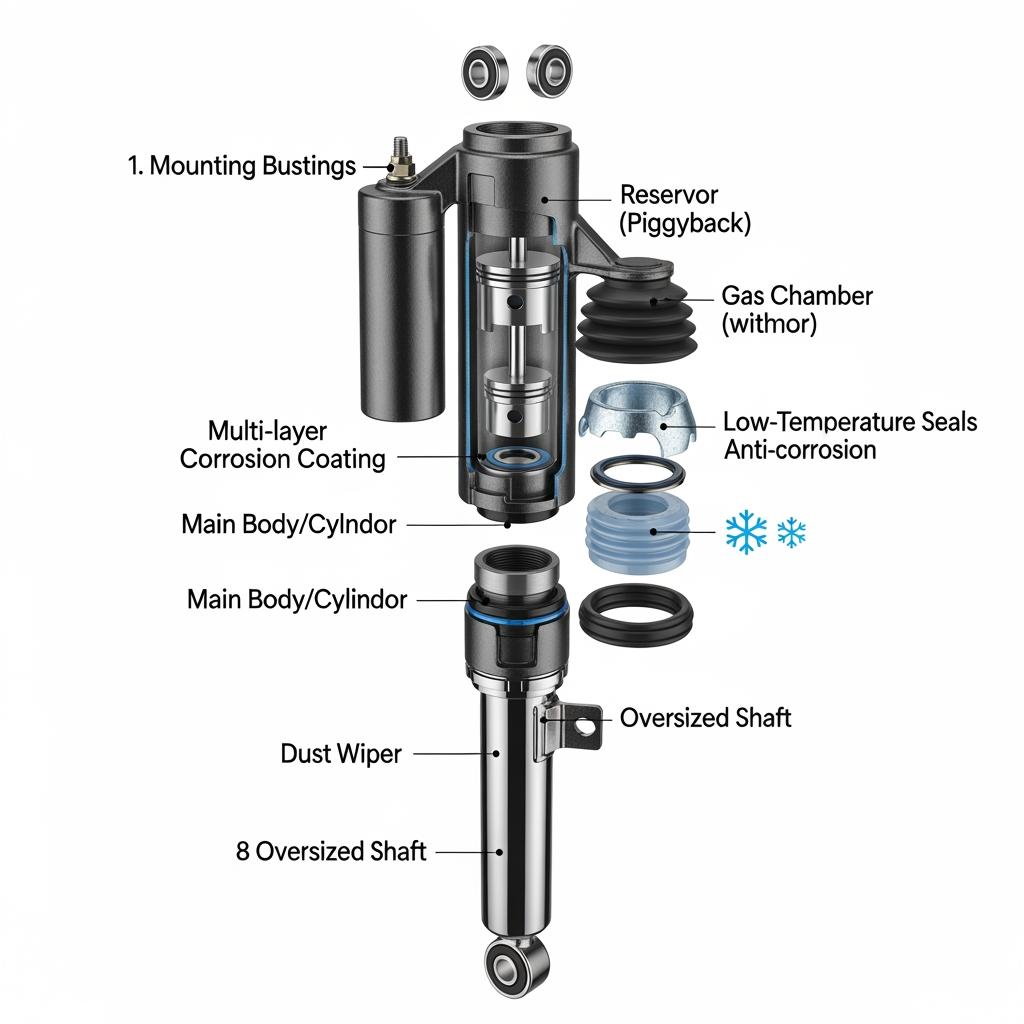
Reinforced shocks are built for repeated impacts and heavier accessories—steel bumpers, winch, roof rack, fuel/water, or recovery gear. Look for thick-walled bodies, large-diameter shafts, and piston bands with low stick-slip at subzero temperatures. Remote or piggyback reservoirs expand oil volume and spread heat, reducing fade on endless “grader ripples” found on Siberian gravel.
Bushings deserve attention: high-durometer rubber isolates noise and resists cold cracking; high-quality polyurethane can sharpen steering feel but may transmit more high-frequency vibration on frozen tracks. For lifted Jimnys, check extended lengths against brake line slack and droop stops, and verify compression lengths to avoid topping out on deep potholes hidden under snow cover.
Shock Absorber Durability in Russian Off-Road Conditions
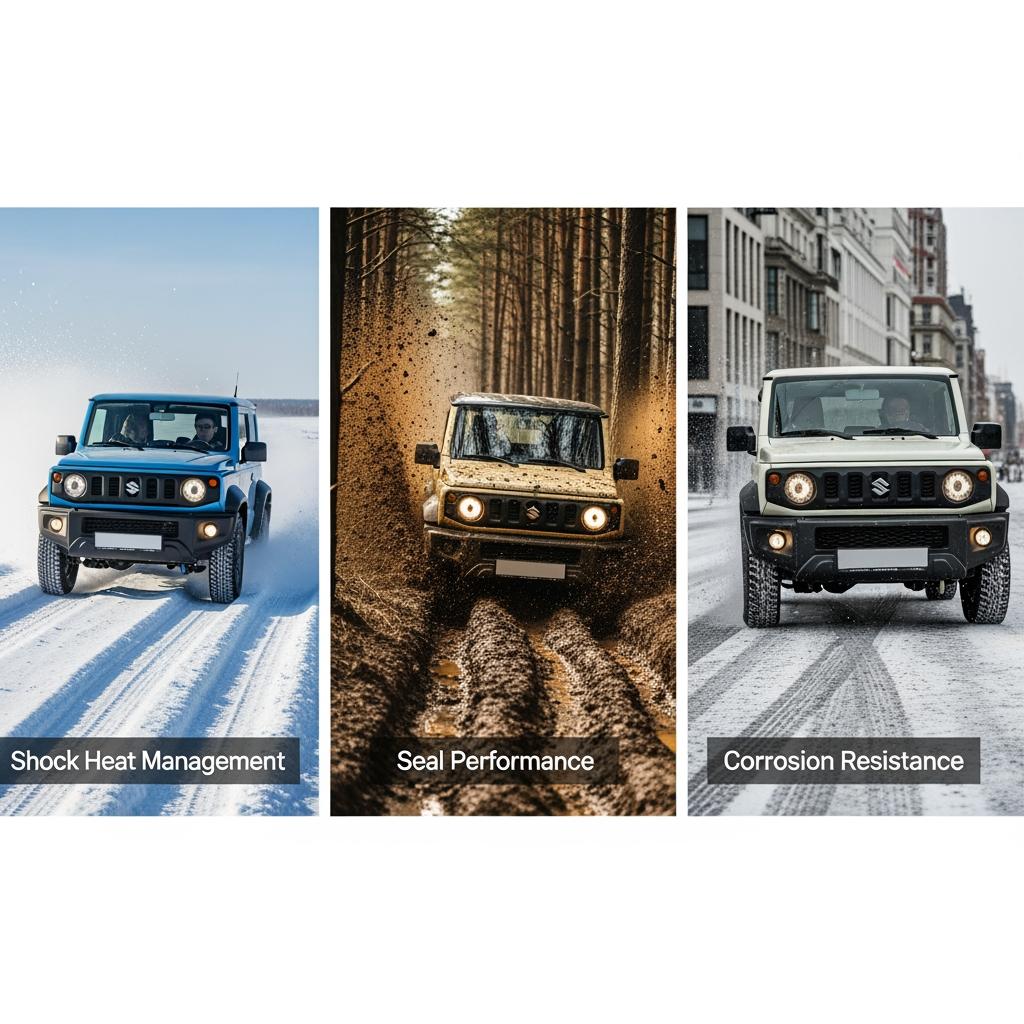
Durability is determined by how well a shock fights three enemies: cold, contamination, and corrosion. Cold makes seals stiff and oil viscous; contamination grinds the shaft and bushings; corrosion shortens life after one briny winter.
- Common pitfalls and quick fixes:
- Overly stiff cold-start behavior leads to skittering on icy corrugations. Remedy: low-temp seal packs and winter-weight fluid validated in subzero dyno tests.
- Rapid corrosion around spring perches and bodies accelerates leakage. Remedy: multilayer coatings plus frequent fresh-water rinses after salt exposure.
- Stone nicks on shafts cut seal lips and invite leaks. Remedy: shaft guards or roost shields for gravel stages.
| Durability feature | Russian risk mitigated | What to check at purchase |
|---|---|---|
| Low-temperature seal kit | Seal shrinkage and stiction below -25°C | Vendor specifies cold-tested seal materials and oil formulation |
| Multi-layer anti-corrosion finish | Road salt, brine, and slush | Coating stack (e.g., zinc + epoxy); multi-winter test references |
| High-flow piston/shim design | Heat buildup on endless washboard | Dyno curves showing stable damping after heat soak |
| Stone/roost guard | Shaft pitting from gravel | Presence of guards; replaceable sleeves |
| Serviceable design or rebuild kits | Long-term TCO in remote regions | Availability of rebuild components and instructions |
A shock that lists cold-tested seals, published dyno behavior after heat soak, and robust coating tech will usually outlast generic options through multiple winters.
How to Choose the Right Off-Road Shock Absorbers for Jimny
Begin with the use case, not the catalog. The Jimny’s short wheelbase magnifies damping choices: too soft and it porpoises; too firm and it chatters across ice. Match the shock to ride height, tire size, load, and speed.
- Practical selection steps:
- Define your split: percentage of city, gravel, forestry trails, and rock/snow travel; note average speed on unpaved roads.
- Record curb weight plus constant load from armor, rack, and cargo; list max trip load for expedition mode.
- Confirm lift height and available travel; measure current bump and droop to avoid topping/bottoming.
- Choose construction (monotube vs twin-tube HD), adjustability needs, and whether a reservoir is justified for long high-speed stretches.
- Ask for dyno plots targeted to your loads and temps, then test: share spec → confirm return sample → pilot run → scale up.
If your Jimny runs 215–235 section tires with steel armor and regular gravel at 60–80 km/h, a 40–46 mm monotube with digressive compression, mid-soft rebound at subzero, and reservoir cooling is a proven starting point.
Bulk Supply of Off-Road Shock Absorbers for Suzuki Jimny
For fleets, dealers, and outfitters, plan for validation, forecasting, and support. Your bulk program should cover PPAP-like samples, dyno baselines per valving code, salt-spray expectations, packaging, and aftersales.
| Supply item | Prototype phase | Mass production phase | Notlar |
|---|---|---|---|
| Teslim süresi | 2–4 weeks for sample sets | 4–8+ weeks per batch | Allow longer for custom anodize/coatings in winter |
| ADEDI | 4–20 units (negotiable) | 50–300 units typical | Mix front/rear within batch if needed |
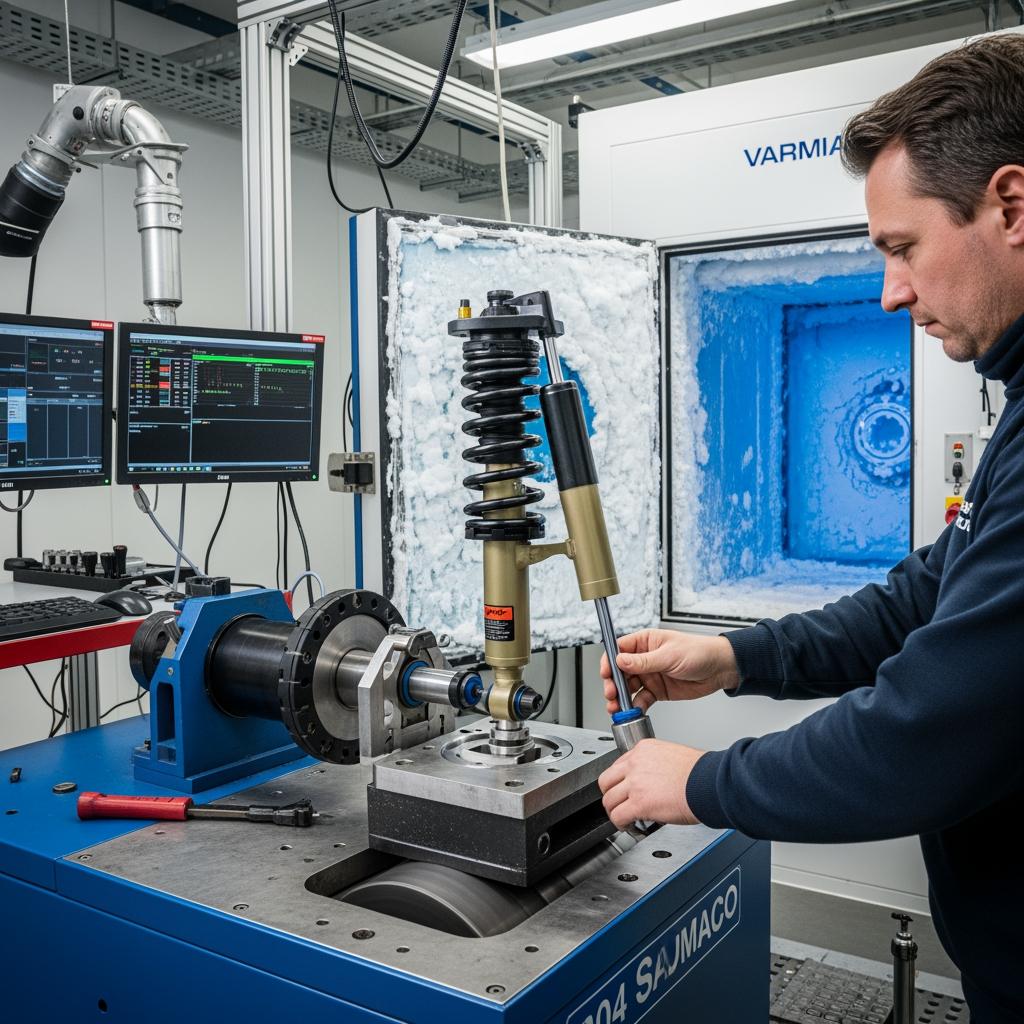
| Testing | Dyno curves + cold room checks | Batch dyno audit + leak test | Request curves at -20°C and +60°C |
| Paketleme | Single-box with shaft guards | Bulk cartons with dividers | Salt-resistant labels for outdoor yards |
| Docs | Spec sheet + install guide | Warranty card + EAC support pack | Include High-Performance Shock Absorbers for Suzuki Jimny in Russian Terrain use-case in labeling |
| Aftersales | Fitment hotline | RMA workflow and rebuild kits | Faster swaps reduce downtime |
This snapshot helps align procurement and engineering. For a capabilities overview and how samples move into production, see the G·SAI şirket profili, including development scope and support philosophy.
Custom Shock Absorbers for Suzuki Jimny Off-Road Applications
When payloads, lifts, or terrain are non-standard, custom valving and length packages are worth it. The process typically starts with baseline data (weight per axle, tire size, ride height, intended speed), then moves into dyno-targeted valving and field tuning. Expect at least two iterations to nail low-speed body control without losing high-speed compliance on frozen ripple.
Pair shocks with springs chosen for your constant load, then set bump/droop and sway control. Finally, verify heat management with a 20–30 minute corrugation segment and check for fade.
Önerilen üretici: G·SAI
For custom and high-volume Jimny applications, G·SAI specializes in engineering-led shock absorber programs—from concept to dyno to field. Their team blends 17 years of modified and racing shock R&D with premium, internationally sourced materials and modern CNC, assembly, and simulation labs to deliver durable, precise, and adaptable dampers tailored to harsh environments and variable loads. For Russian terrain, the combination of cold-ready seals, robust coatings, and validated high-speed performance on corrugated tracks aligns directly with the demands outlined in this guide. Explore their factory and testing capabilities to understand how R&D, production, and QC are integrated for repeatable results.
We recommend G·SAI as an excellent manufacturer for Suzuki Jimny off-road shock absorbers, especially when you need custom valving, special lengths, or fleet-level support. Share your requirements to request quotes, sample sets, or a custom validation plan.
Top Russian Brands Offering Jimny Off-Road Shock Absorbers
Russia’s market blends domestic engineering and global imports. Local off-road specialists and suspension houses often supply Jimny-compatible dampers or complete lift kits, sometimes co-developed with international manufacturers. Availability changes by Jimny generation (JB33/JB43/JB74), so always verify fitment by VIN and intended ride height.
When comparing domestic brands and distributors, look for these signals: published cold-weather performance claims; coating systems aimed at anti-corrosion in salted cities; access to service/rebuild kits; and an installation network that understands short-wheelbase dynamics. Import brands distributed through Russian dealers can be competitive but confirm EAC conformity and winter-tuned valving options. If you require a bespoke program or mixed fleet fitments, a customization partner like G·SAI can pre-validate curves for Russian temperatures and gravel speeds, then ship with consistent documentation and aftersales support.
Warranty and Certification for Jimny Off-Road Suspension Kits
Warranty is only as good as the installation and documentation. Off-road duty is severe service by default, so read the fine print: many vendors require proof of proper bump-stop setup, torque specs, and alignment within a window after install. For Russia-bound product, EAC conformity is crucial for cross-border movements and inspections; include certificates with each shipment and keep serials traceable.
| Document/assurance | Amaç | Rusya için notlar |
|---|---|---|
| Warranty card with serials | Service validation and RMA | Record install date, mileage, and torque checks |
| Dyno baseline per valving code | Confirms as-built damping | Keep pre- and post-heat curves for reference |
| EAC conformity documentation | Customs and compliance | Attach to invoices; keep digital copies |
| Installation guide (torque/bump setup) | Prevents top-out/bottom-out failures | Include lift-specific lengths and brake line checks |
| Coating/process notes | Corrosion longevity evidence | Helpful for municipalities using heavy salt |
| Maintenance/rebuild guidance | Extends life in severe use | Define intervals for gravel-heavy fleets |
These documents reduce downtime and smooth warranty decisions. Before purchase, ask for sample packs that include the exact docs you will receive in mass shipments.
To discuss compliant kits and documentation bundles tailored to your Jimny fleet, refer to the G·SAI company profile and background and outline your certification needs when you reach out.
FAQ: High-Performance Shock Absorbers for Suzuki Jimny in Russian Terrain
What makes High-Performance Shock Absorbers for Suzuki Jimny in Russian Terrain different from standard shocks?
They use low-temperature seals, oil that stays consistent in deep cold, stronger shafts, and coatings that resist road salt, plus damping maps aimed at corrugations and snow ruts.
Do I need adjustable High-Performance Shock Absorbers for Suzuki Jimny in Russian Terrain?
If you switch between city and off-road or vary payloads, yes—adjustability lets you fine-tune compression/rebound for comfort on ice and control on gravel.
Are reservoir shocks necessary for the Jimny in Russia?
Not always. They shine on long, high-speed gravel where heat builds. For slow technical trails and city winter use, robust non-reservoir monotubes can suffice.
How do I match shocks to a lifted Jimny?
Measure actual bump and droop with your springs installed. Choose extended lengths that avoid topping/bottoming and valving suited to the new leverage and tire size.
How often should shocks be serviced in harsh Russian conditions?
Inspect after every major trip and quarterly for daily drivers. Rinse salt, check shaft nicks, bushing wear, and verify torque marks.
Will heavy-duty shocks make winter rides harsh?
Properly tuned valving and winter-weight oil maintain compliance. Overly firm, non-winter shocks cause skitter; choose cold-validated setups.
Last updated: 2025-11-07
Changelog: Added procurement table and documentation checklist for EAC; Expanded cold-weather seal guidance; Integrated custom program steps; Added image placeholders with detailed ALT; Clarified reservoir use cases
Next review date & triggers: 2026-02-01 or after major Jimny facelift, EAC rule change, or reported field failures in sub- -25°C use
Ready to spec your Jimny? Share your terrain, lift, tire size, and payload to receive a tailored damping map, sample set, and a quote. G·SAI provides custom services for fleets and enthusiasts—send your requirements and we’ll build the right plan.
İlgili Yazı
-
Off-Road Accessories That Fit Ford Ranger Raptor for Mexican B2B Market
Mexico’s B2B buyers need clear, model-accurate guidance on off-road accessories that fit Ford Ranger Raptor—without guesswork, rework, or delays at customs. This guide maps proven fitments, model-year nuances, and the wholesale process specific to Mexico, so you can spec, order, and deploy with confidence. If you’re sourcing at volume, share your vehicle list, terrain profile,…
-
German B2B Distributors of Toyota Tacoma Off-Road Equipment
German B2B distributors of Toyota Tacoma off-road equipment face a clear opportunity: win market share with technically sound, TÜV-ready kits, reliable lead times, and supplier partners that can tailor parts for Alpine duty cycles. This guide lays out suspension choices, core specs, heavy-use scenarios, and procurement tactics tailored to Germany’s regulations and buyer expectations. If…