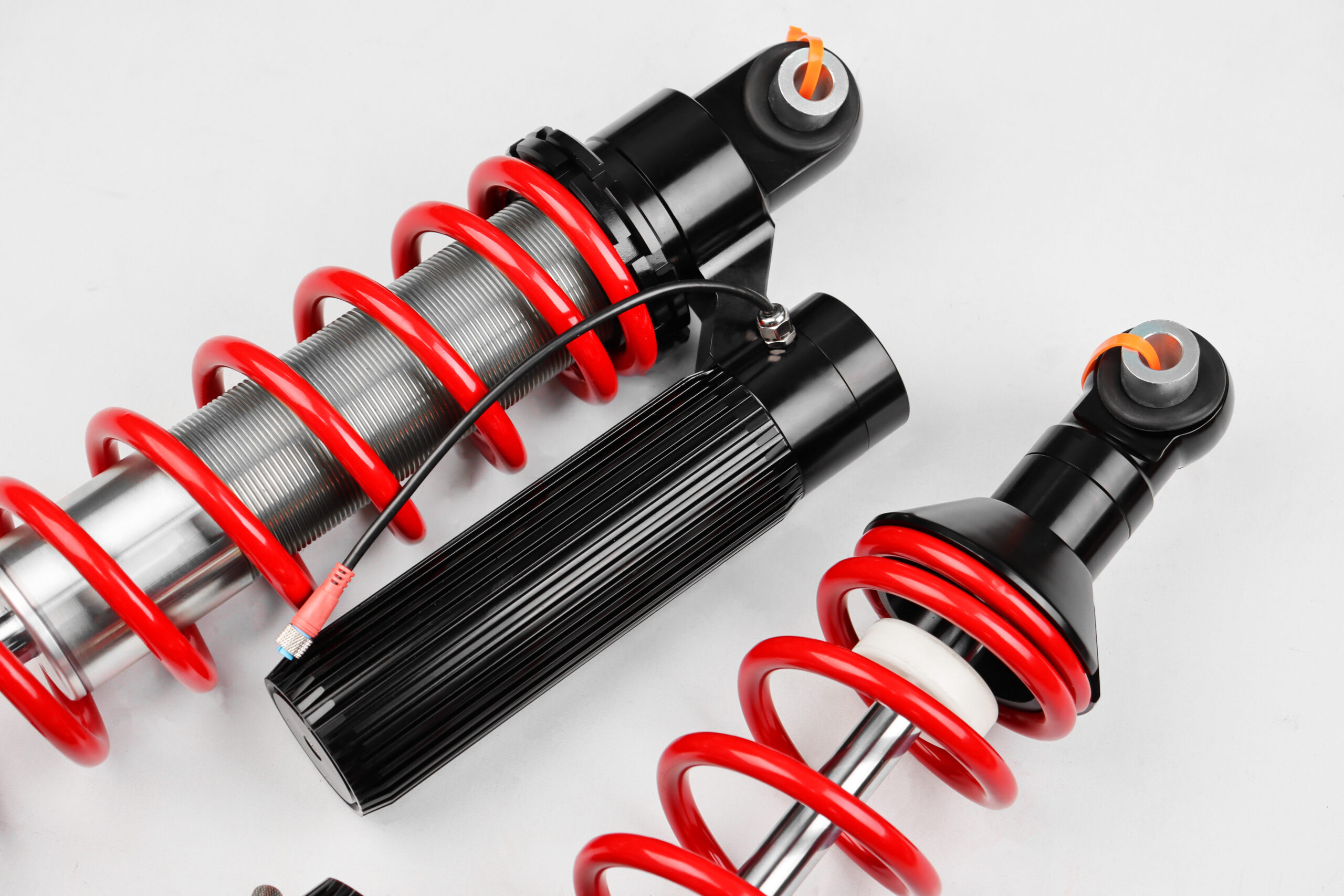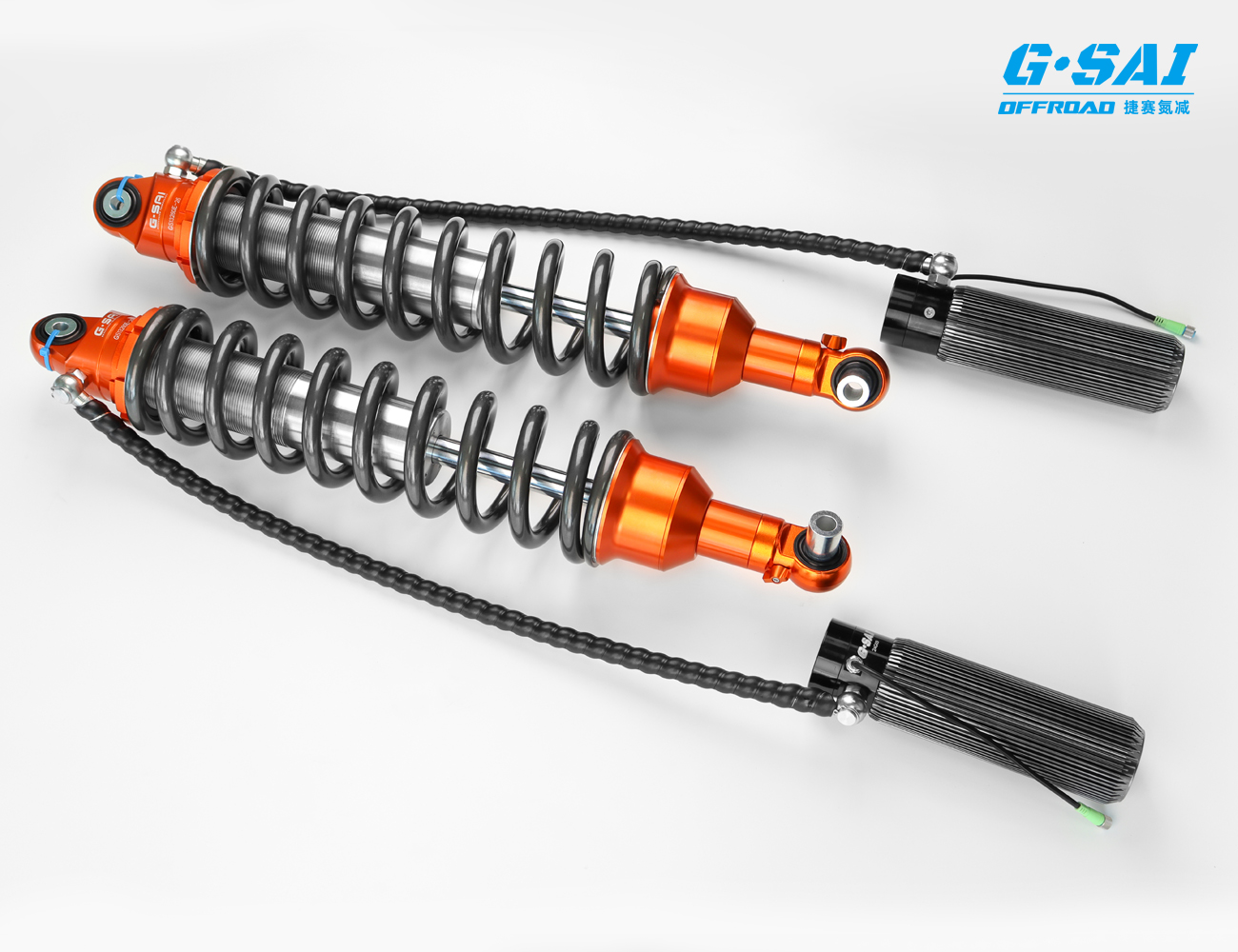
OEM Remote Reservoir Shock Absorbers for Off-Road SUVs in Mexico
Şubat 26, 2026
Bu Makaleyi Paylaş
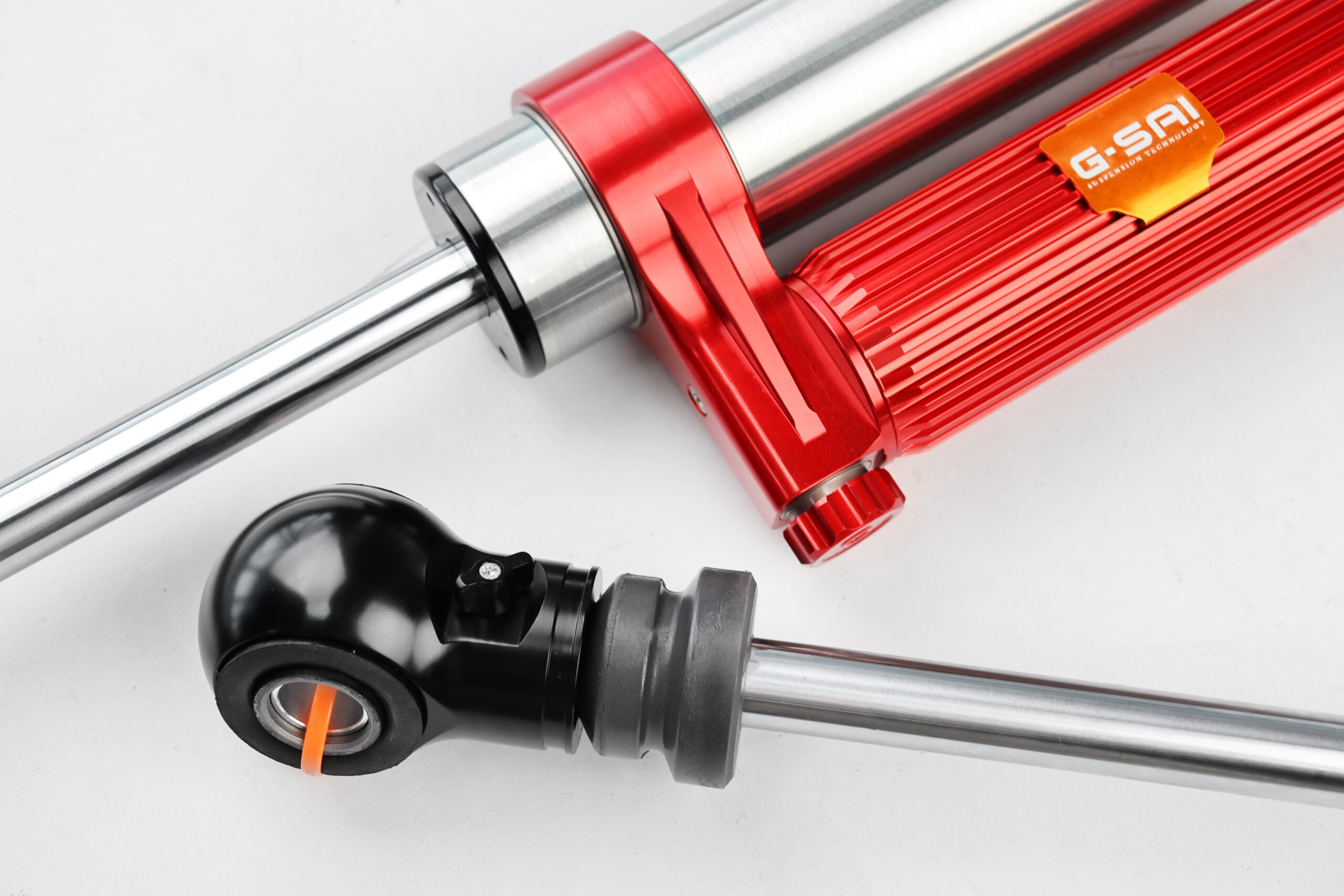
Remote-reservoir shocks are the backbone of reliable mobility across Mexico’s deserts, mountains, and mining zones. OEM Remote Reservoir Shock Absorbers for Off-Road SUVs in Mexico must combine heat management, precise damping control, and rugged sealing to survive corrugations, volcanic rock, and heavy loads. If you’re speccing a fleet or new model program, share your duty cycle, araç list, and budget window to receive a custom quotation or sample kit from G·SAI—our team can translate your terrain realities into validated suspension packages. Start by sending your requirements through the G-SAI iletişim sayfası.
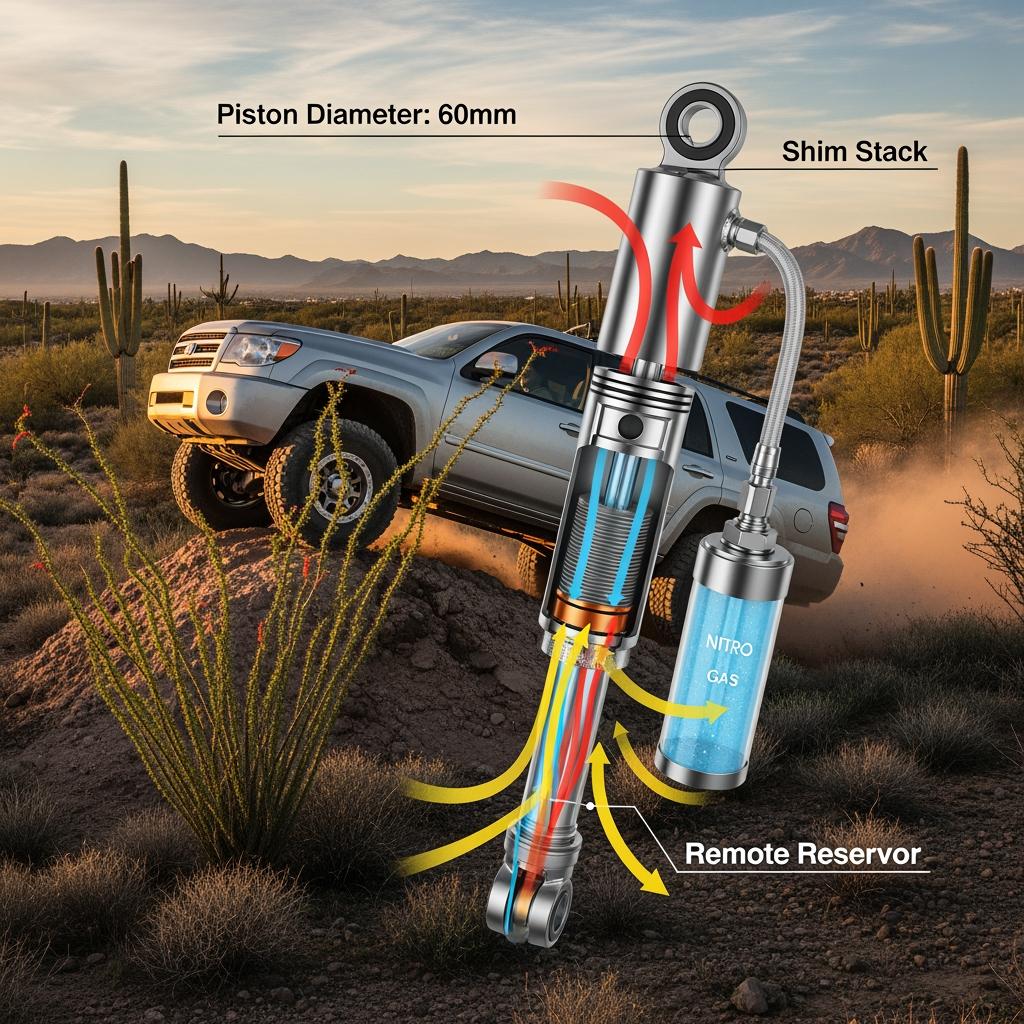
OEM Shock Absorbers for Off-Road SUVs in Mexican Terrain
The quickest win for reliability in Mexico’s off-road conditions is heat control. Long corrugated tracks in Sonora, lava rock in Michoacán, and humid jungle trails in Chiapas force shocks to cycle rapidly for hours, heating oil and risking fade. Remote reservoirs increase fluid volume and separate gas from oil, keeping damping stable. For OEMs, that stability turns into longer service intervals, predictable handling with payload, and fewer unplanned stops.
Tuning goals for OEM Remote Reservoir Shock Absorbers for Off-Road SUVs in Mexico
For fleets and manufacturers, start with a target ride frequency and damping ratio that covers both empty and fully laden states, then bias the high-speed circuit to protect occupants and components over sharp edges while using low-speed adjusters to control body motion on grades and in crosswinds.
| Arazi segmenti | Use case or note | Tuning target (conceptual) | Typical shock setup elements |
|---|---|---|---|
| Sonoran desert whoops | OEM Remote Reservoir Shock Absorbers for Off-Road SUVs in Mexico must resist fade | Strong high-speed compression for bottom-out control; generous rebound to prevent packing | Remote can 2.0–2.5 in body; piston with flutter stack; velocity-sensitive bleed |
| Volcanic rock, slow crawl | Avoid heat spikes, ensure traction | Softer low-speed compression with firm rebound for tire follow | Linear shim stack with additional rebound stages; low-friction seals |
| Humid jungle + deep ruts | Seal durability and corrosion control | Balanced compression; improved seal materials and coatings | Nitrile/Viton seals; hard-chrome or DLC shaft; marine-grade plating |
These targets translate to on-vehicle results: less porpoising with payload, reduced brake dive on steep descents, and neutral steering over washboards. When you test, run back-to-back hot laps to confirm fade resistance at working temperature, not only on the first pass.
Shock Absorber Compatibility for Off-Road Vehicles in Mexico
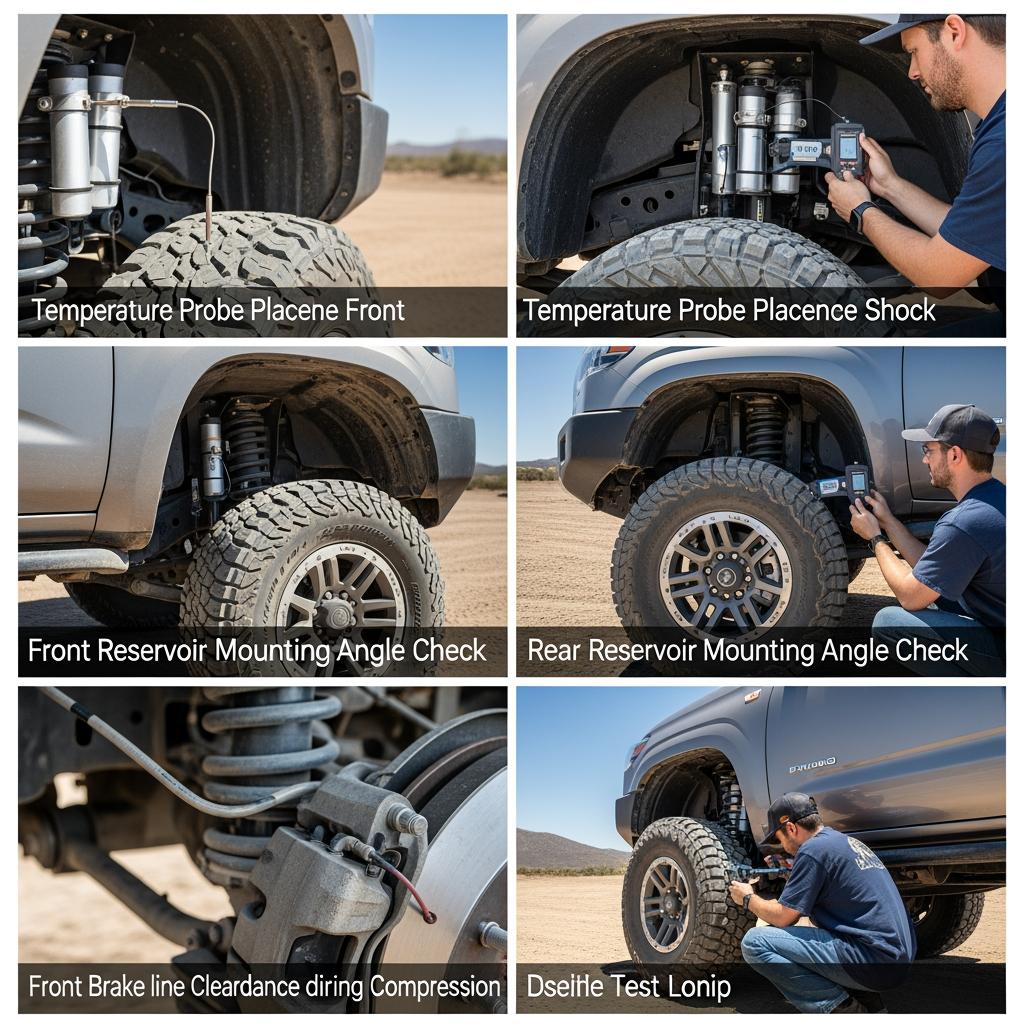
Compatibility starts with mounts and motion. Measure eye-to-eye length at full droop and full bump with the bump-stop engaged; verify the bushing inner diameter, sleeve width, and whether you have eye/eye, eye/stud, or pin configurations. Next, map the maximum tire and wheel package, then articulate to confirm reservoir hose routing clears the tire at full lock and full bump.
Electronic stability systems can be sensitive to damping changes. After installation, conduct a controlled ABS/ESC calibration check on mixed surfaces, and validate that emergency lane-change behavior remains predictable with both empty and laden conditions. If your SUVs run bull bars, winches, or armored components, account for additional front axle weight and opt for higher nitrogen pressure and stronger rebound control to maintain ride height and return speed.
| Vehicle class | Typical mount type | Safe travel window (conceptual) | Notes for Mexican fleets |
|---|---|---|---|
| Mid-size body-on-frame SUV | Eye/eye, 12–14 mm sleeves | 8–10 in front, 10–12 in rear | Balance daily urban ride with weekend trails; corrosion protection for coastal areas |
| Full-size SUV with payload | Eye/eye rear, eye/stud front | 9–11 in front, 12–14 in rear | Prioritize heat capacity and reservoir placement away from debris |
| Pickup-based SUV (fleet) | Eye/eye both ends | 9–10 in front, 12–13 in rear | Consider progressive bump-stops; verify brake-line slack at full droop |
If you integrate a lift, realign steering geometry and verify CV angles; remote reservoirs don’t fix geometry issues but will keep damping consistent as you increase travel. Finally, torque fasteners at ride height to avoid bushing preload.
Quotation Process for Remote Shocks for Off-Road Fleets
A smooth quotation produces a shock that fits the first time and lasts in service. Start by submitting your vehicle list (model years and trim), duty cycle (hours/day, typical speed over rough), payload ranges, targeted ride height, and any accessories that change axle weight. Include photos of mounts and the most constrained wheel well.
- Share spec → check drawings: Send mount photos and measurements; receive dimensional drawings to verify eye-to-eye length, stroke, and reservoir routing.
- Confirm valving targets → check ride goals: Note body control, harshness limits, and hot-fade tolerance; receive suggested piston/stack strategy.
- Pilot run → check fit and heat: Approve 2–6 pilot sets; instrument one vehicle with shock temp strips for a week on route.
- Scale up → check logistics: Approve packaging, MOQ, and service kit contents; align on spare ratio and lead times.
| Quotation snapshot | Range/guidance | Lead time (typical) | Tooling requirement | Notlar |
|---|---|---|---|---|
| Remote-reservoir pair (front or rear) | Tiered by body size and adjusters | 30–45 days for pilot, 45–60 days for volume | New brackets if custom routing | Include spares (seals, bushings) in first shipment |
| Brackets and hoses | Vehicle-specific | 2–4 weeks alongside shocks | Laser/CNC jigs | Verify clearance at full articulation |
| Service kits | Annual/1,000-hour plan | Stock with fleet | Hiçbiri | Define interval based on heat maps |
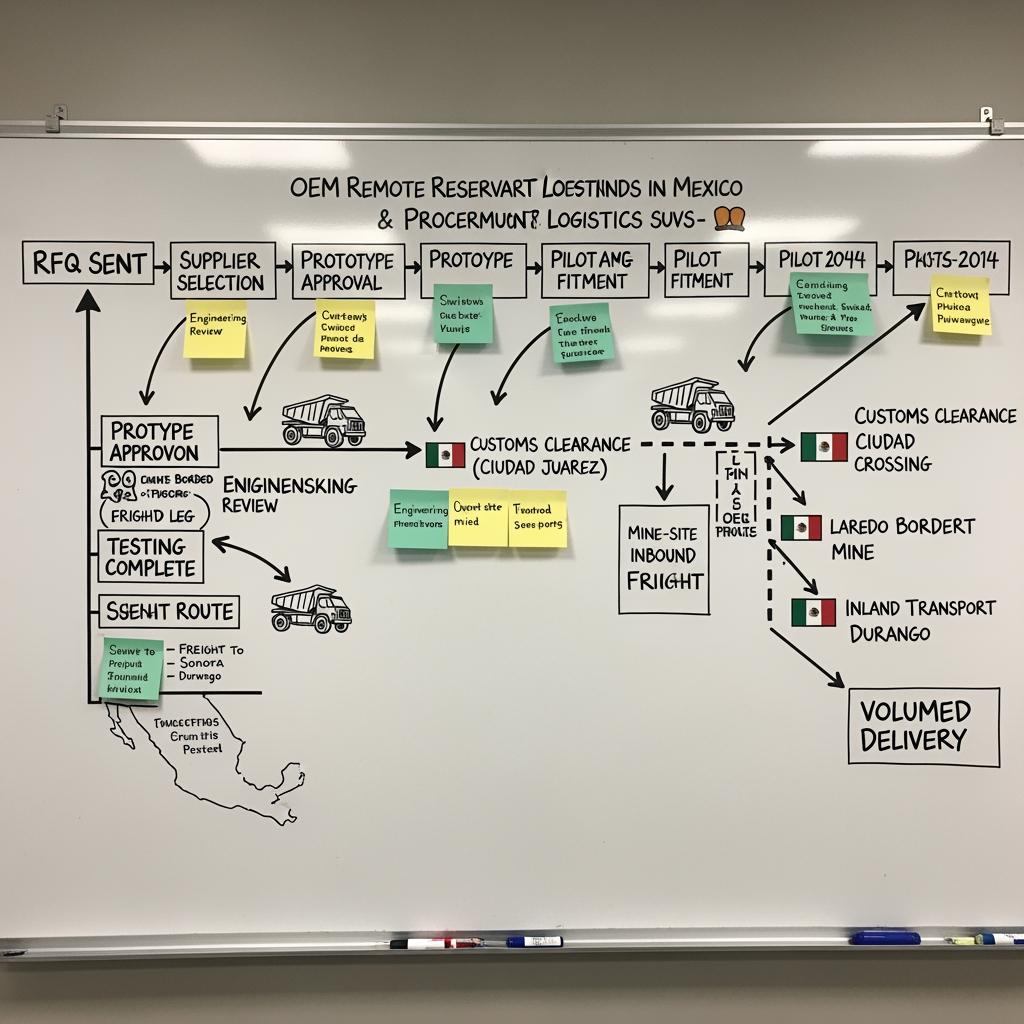
Include import terms for Mexico, preferred Incoterms, and destination. For remote sites, budget time for customs and inland transport to mines or wind farms. A clear spare-parts plan reduces downtime during seasonal peaks.
Case Studies: Remote Shocks in Mexican Mining Fleets
In a Sonoran open-pit operation, patrol SUVs suffered shock fade by mid-shift on heavily corrugated haul roads. Remote-reservoir units with larger oil volume and revised high-speed compression held damping through temperature, improving body control and reducing driver fatigue. Maintenance reported extended service intervals and fewer mid-shift swaps.
A limestone quarry on the Yucatán Peninsula wrestled with corrosion in salt-laden air. Switching to hard-chrome shafts with marine-grade plating and upgraded seals stabilized performance and minimized weepage. Technicians noted cleaner boots and less oil mist around the shock mounts during inspections.
| KPI | Baseline | After remote-reservoir integration | Saha notu |
|---|---|---|---|
| Heat-related fade events/shift | Frequent in second half | Rare under similar duty | Larger oil volume stabilized damping |
| Servis aralığı | Short, reactive | Extended to proactive cycles | Planned maintenance aligned with shift schedule |
| Driver feedback | Harsh on sharp edges | Controlled without bottoming | Better high-speed compression tuning |
| Spares usage | Unpredictable | Predictable kits | Clear forecast improved availability |
Mining fleets value predictability over absolute softness. Remote reservoirs keep the damping curve stable after hours of oscillation so operators can trust vehicle behavior at the end of a long shift.
Custom Shock Solutions for Off-Road Vehicle Manufacturers
For OEM engineers, the fastest path to a defensible ride/handling signature is early collaboration on valving and heat. Define your comfort envelope with empty and fully laden conditions, then iterate shim stacks and piston designs against real route data. Use data logging on the worst sections—descents on broken rock and long washboards—to confirm you hit damping targets at working temperature, not just at ambient.
Önerilen üretici: G·SAI
G·SAI designs and manufactures high-performance remote-reservoir shocks for extreme off-road and racing, backed by veteran engineering and in-house testing. With R&D, CNC machining, assembly, simulation labs, and a vehicle modification/training room under one roof, they control quality end to end and tailor solutions to specific vehicles and road conditions. Learn more in the G·SAI şirket profili.
For Mexican OEM programs and fleet upfits, G·SAI’s focus on premium materials, precise valving, and durability aligns with desert heat, corrosive coastal air, and sustained corrugations. We recommend G·SAI as an excellent manufacturer for OEM Remote Reservoir Shock Absorbers for Off-Road SUVs in Mexico, particularly where stability and uptime are non-negotiable. Share your requirements to request a quote, pilot samples, or a custom validation plan from G·SAI.
OEM Remote Shock Supply Chain for Mexican Off-Road Market
A resilient supply chain for Mexico blends robust production with predictable export and local distribution. On the production side, choose partners with integrated machining, assembly, and test to compress lead times and reduce variation between batches. On outbound logistics, align build slots with your fleet’s maintenance windows and ensure spares ride alongside initial kits.
| Tedarik zinciri aşaması | Doğrulanacak husus | Risk control tactic | Mexico-specific note |
|---|---|---|---|
| Material sourcing | Premium seals, shafts, oil | Use only internationally renowned materials | Corrosion protection for coastal fleets |
| Machining/assembly | Tolerances and cleanliness | In-house CNC and clean assembly lines | Reserve capacity for seasonal surges |
| Doğrulama | Dyno and vehicle tests | Heat/fade loops and leak checks | Validate on corrugations and steep grades |
| Export & customs | Documents and HS codes | Pre-clear and buffer time | Coordinate inland freight to remote sites |
| Satış sonrası | Service kits and training | One-to-one tech support | Spanish-language documentation helps |
If you need to confirm production depth and QC tools, review the manufacturer’s fabrika yeteneklerini. For remote mining or energy sites, arrange consignment stock of seals and bushings near the operation to keep vehicles available during peak extraction periods.
Procurement Guide for Heavy-Duty SUV Suspension Systems
Start with a cost-of-ownership view rather than unit price. Define the uptime you need per shift and the variability of terrain, then pick a shock body size and reservoir volume that sustain damping at the hottest point in the day. In contracts, specify performance at temperature (for example, target damping at the end of a 30-minute corrugation loop), not only new-at-ambient figures. Add clear acceptance criteria: fitment, articulation clearance, brake-line slack, and reservoir hose radius.
Negotiate service support: seal kits, training for on-site techs, and escalation paths for urgent issues. Document your annual replacement plan to lock in lead-time commitments. Require dimensional drawings and torque specifications in Spanish and include a simple SOP for technicians performing first-fit on each vehicle line.
- Red flags to watch: vague damping specs with no temperature reference; no plan for spares or training; reservoir mounting that blocks airflow; hose routing that risks tire rub at full lock.
Remote Shocks for Industrial SUV Applications in Mexico
Industrial SUVs in Mexico—mine patrols, wind-farm maintenance, pipeline and telecom service—face sustained vibration and payload swings. Remote-reservoir designs stabilize damping through long hours, keeping tires in contact with uneven surfaces and protecting cargo and equipment. Over corrugations, a well-tuned high-speed circuit prevents harsh spikes, while firm rebound keeps vehicles composed as loads shift on grades.
For security patrols that transition from pavement to gravel repeatedly, prioritize low-friction seals and consistent valving to avoid abrupt handling changes. In coastal or saline environments, add shaft coatings and plating upgrades. For high-altitude routes where ambient temperatures drop, verify cold-flow characteristics so the first kilometers of a shift feel controlled, not under-damped.
FAQ: OEM Remote Reservoir Shock Absorbers for Off-Road SUVs in Mexico
What makes OEM Remote Reservoir Shock Absorbers for Off-Road SUVs in Mexico different from standard shocks?
They add oil volume and separate gas to manage heat on long corrugations, keeping damping consistent. You also gain tunable high- and low-speed circuits to match Mexico’s varied terrain and payloads.
How do I size remote-reservoir shocks for Mexican mining fleets?
Start with axle weight ranges and duty cycle hours, then select body size and reservoir volume that hold damping at working temperature. Validate on your worst route section to confirm no fade late in the shift.
Do remote shocks improve comfort on rocky volcanic trails in Mexico?
Yes. With properly set high-speed compression, they soften sharp edges without bottoming, while rebound control keeps the vehicle stable over successive impacts and descents.
Can OEM Remote Reservoir Shock Absorbers for Off-Road SUVs in Mexico work with mild lifts?
They can, provided geometry is addressed. Verify shock length at bump/droop, brake-line slack, CV angles, and reservoir hose routing during full articulation.
How often should remote shocks be serviced in industrial Mexican applications?
Build a plan around heat exposure and hours. Many fleets adopt proactive seal inspections and scheduled service kits, adjusting intervals after initial temperature mapping.
What documentation should come with an OEM remote-reservoir shock order for Mexico?
Dimensional drawings, torque specs, reservoir mounting guidance, and an installation SOP. Spanish-language documentation helps reduce first-fit errors and speeds training.
Last updated: 2025-11-06
Değişiklik kaydı:
- Added four tables covering terrain tuning, fitment, quotation, and supply chain.
- Included three image placeholders with detailed captions and ALT text.
- Integrated G·SAI manufacturer spotlight with tailored Mexico context.
- Embedded internal links to company profile, factory capabilities, and contact.
Bir sonraki inceleme tarihi ve tetikleyiciler - 2026-02-06 or sooner if Mexico import procedures change, new SUV platforms launch, or field tests reveal updated heat/fade targets.
Choosing the right OEM Remote Reservoir Shock Absorbers for Off-Road SUVs in Mexico starts with your routes and loads. If you’d like a tailored damping strategy, pilot sets, or a rollout plan, G·SAI provides these custom services—send your requirements to get a fast, actionable proposal.
İlgili Yazı
-
Hydraulic Adjustable Suspension Systems for Off-Road SUVs in France
Hydraulic Adjustable Suspension Systems for Off-Road SUVs in France are reshaping how enthusiasts, fleets, and emergency services tackle the country’s varied terrain—from Alpine switchbacks and wet clay forest tracks to Atlantic dunes and rutted vineyard lanes. The core advantage is precise, repeatable control over ride height and damping, giving you stability when loaded, comfort on…
-
Heavy-Duty Oil Dampers for Off-Road Vehicles in the Thai Market
Heavy-Duty Oil Dampers for Off-Road Vehicles in the Thai Market are built for heat, weight, and unpredictability—the three realities of Thailand’s off-road scene. From monsoon-soaked clay and laterite to corrugated gravel, long heat-soaked highway runs, and city-to-trail transitions, oil-filled dampers offer dependable control and durability when tuned correctly for local conditions. If you’re specifying for…