Tuned Suspension Systems for Desert Off-Road Vehicles in Saudi Arabia
March 30, 2026
Share This Article
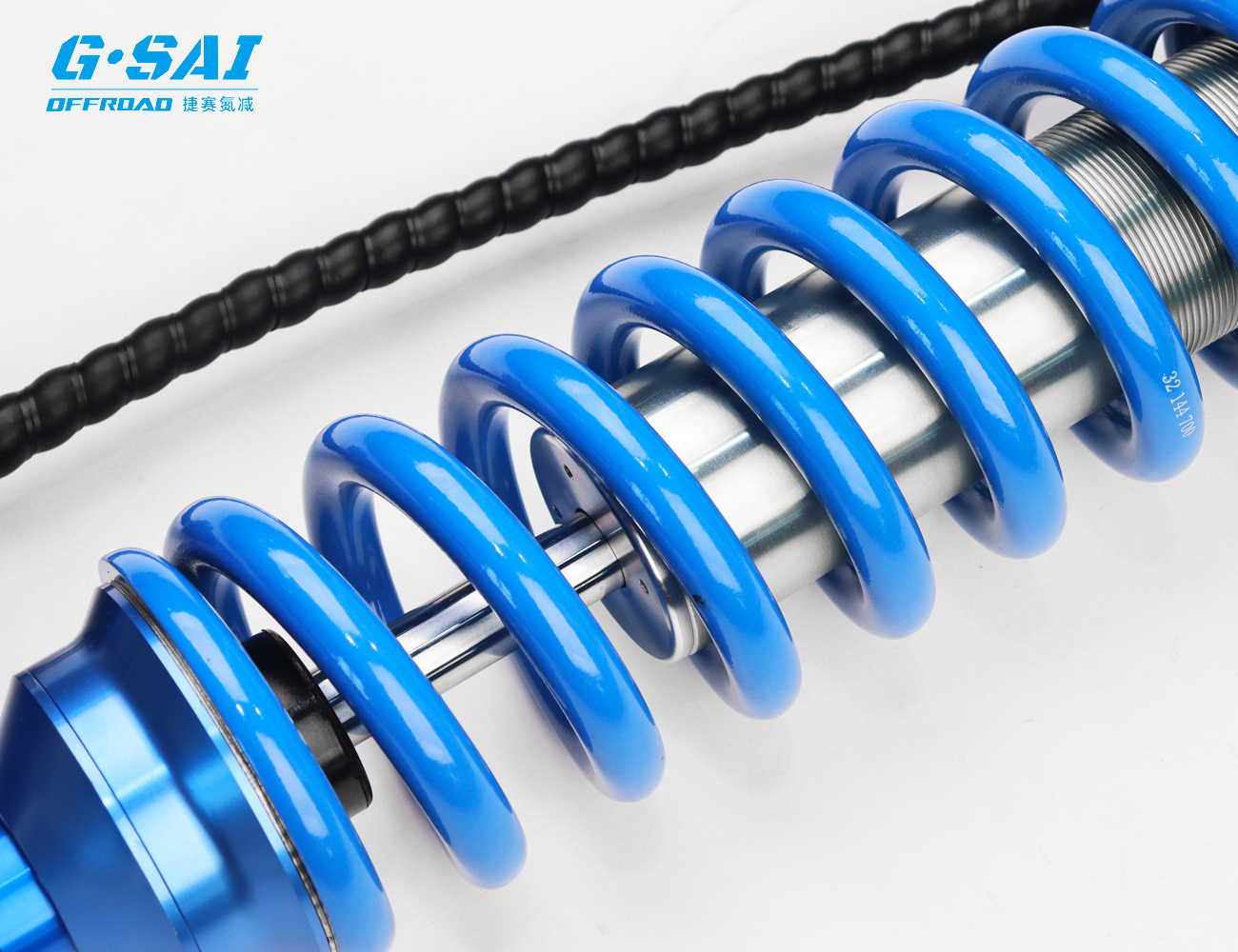
Saudi dunes and desert tracks reward vehicles that float over soft sand yet stay composed on broken wadis and high-speed corrugations. The fastest way to that balance is purpose-built, tuned suspension systems for desert off-road vehicles in Saudi Arabia—shock valving, spring rates, and bump control matched to your exact load, tires, and driving style. If you’re planning a build or need an upgrade for fleets, share your vehicle model, payload, and terrain mix to get a custom shock tuning proposal, sample settings, and a quote. G·SAI provides tailored shock absorber engineering and small-batch samples for Saudi applications.
Desert Shock Tuning for Off-Road SUVs in Saudi Arabia
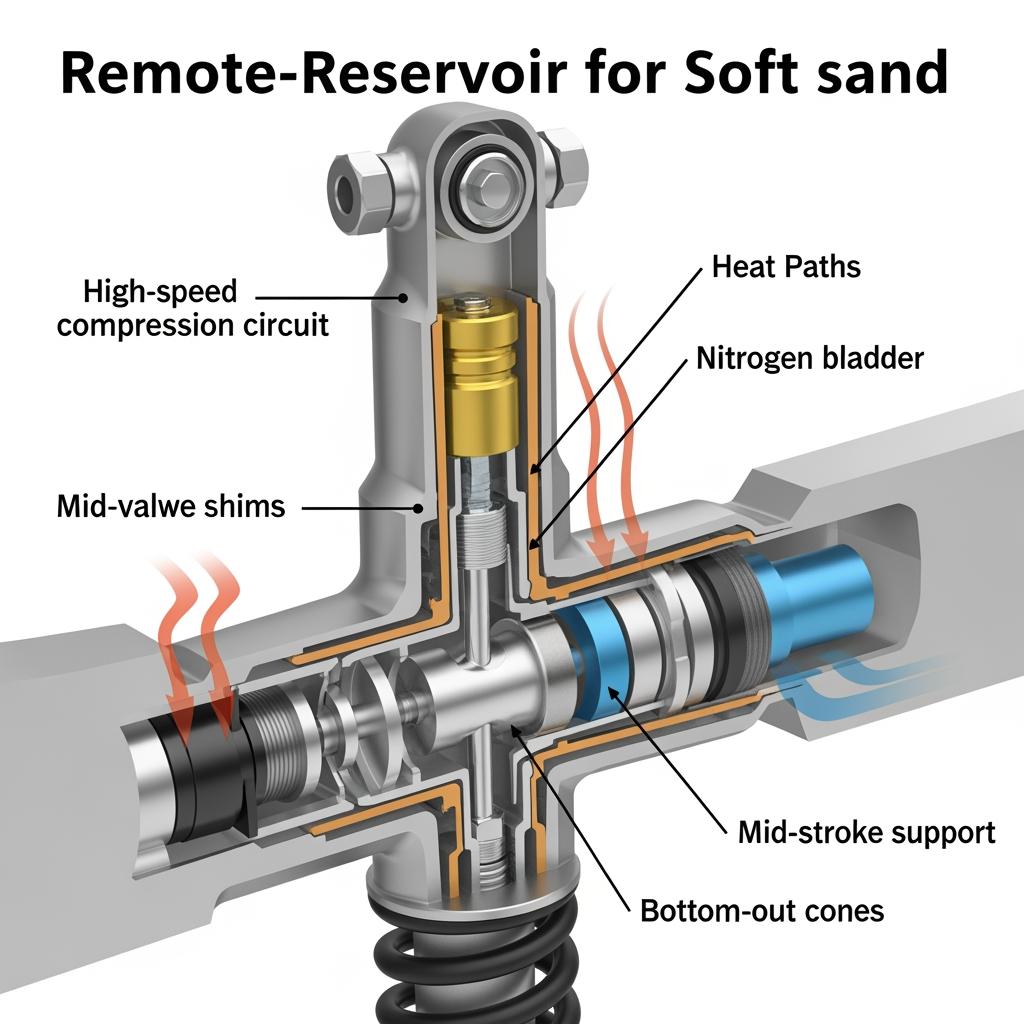
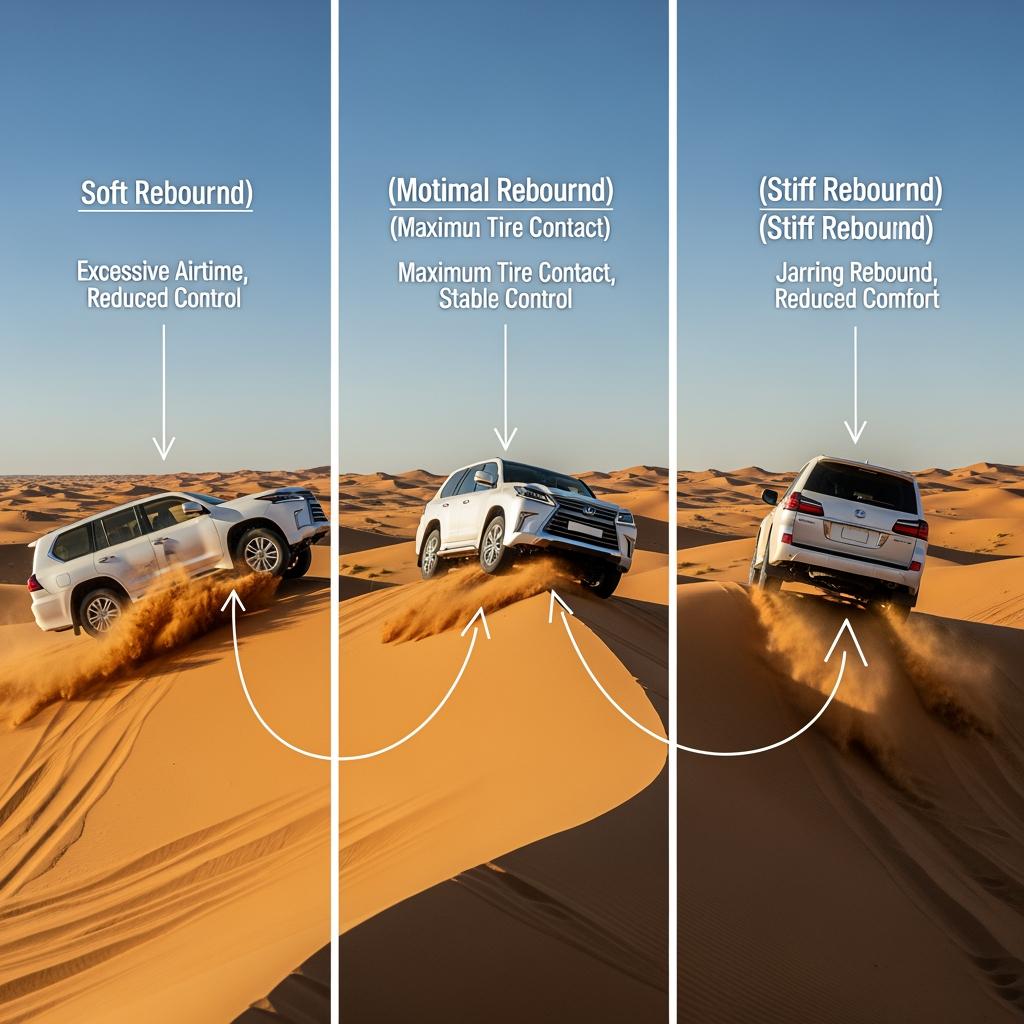
The Saudi desert is a heat and velocity problem. Long, soft dunes demand initial plushness and strong mid-stroke support, while rocky interludes and highways require firm control and fade resistance. Start with heat management—larger piston area, high-flow pistons, and reservoirs prevent aeration and viscosity drop. Then marry compression and rebound so the SUV rises onto the sand (traction) without porpoising (control).
A practical tuning path is: confirm real-world operating weights; choose spring rate and preload that keep ride height consistent under that weight; set compression for support and big-hit protection; and set rebound to keep tires connected during crest-to-bowl transitions. The goal is a neutral, predictable chassis that stays cool and consistent for 200+ km desert days without harshness at camp-speed.
Custom Shock Absorber Settings for SUV Dune Driving
Smooth dune ascents need initial compliance so the tire molds to the sand, then progressive support as speeds climb, and finally reliable bottom-out control for slip faces and whoops. That typically means softer low-speed compression for traction, firmer high-speed compression for support, and rebound that is fast enough to avoid packing but not so fast that the chassis “kicks” on crests.
Below is a quick-glance matrix to frame first-pass settings before test loops. Exact values will depend on shock architecture (2.0, 2.5, 3.0), valve design, and spring rate.
| Terrain use case | Compression (low/high-speed) | Rebound strategy | Spring/preload note | Notes |
|---|---|---|---|---|
| Soft dunes (long ascents, slip faces) | Low: softer for traction; High: medium-firm | Medium-fast to avoid packing | Rate slightly under curb + payload; modest preload | Keeps tires floating; adjust clickers as temps rise. |
| Mixed dunes + corrugations | Low: medium; High: firm | Medium with temperature compensation | Slightly higher rate; add secondary bump control | Balances comfort and support as speeds vary. |
| Wadis and rocky connectors | Low: firm; High: firm | Slower rebound for chassis stability | Linear rate; minimal preload | Prioritize control and steering precision over plushness. |
| All-round desert pack (Tuned Suspension Systems for Desert Off-Road Vehicles in Saudi Arabia) | Low: medium; High: medium-firm | Medium-fast with progressive tail | Progressive coils or dual-rate where applicable | Travel-friendly baseline; fine-tune based on tire size and roof load. |
This matrix guides the first outing. Run a 10–15 km loop, make one change at a time, and re-run. If the SUV “dives” under braking in soft sand, add low-speed compression or lift spring preload slightly. If it skips across chop, slow rebound two clicks to keep the tire planted.
Suspension Kits for Toyota Land Cruiser in Saudi Arabia
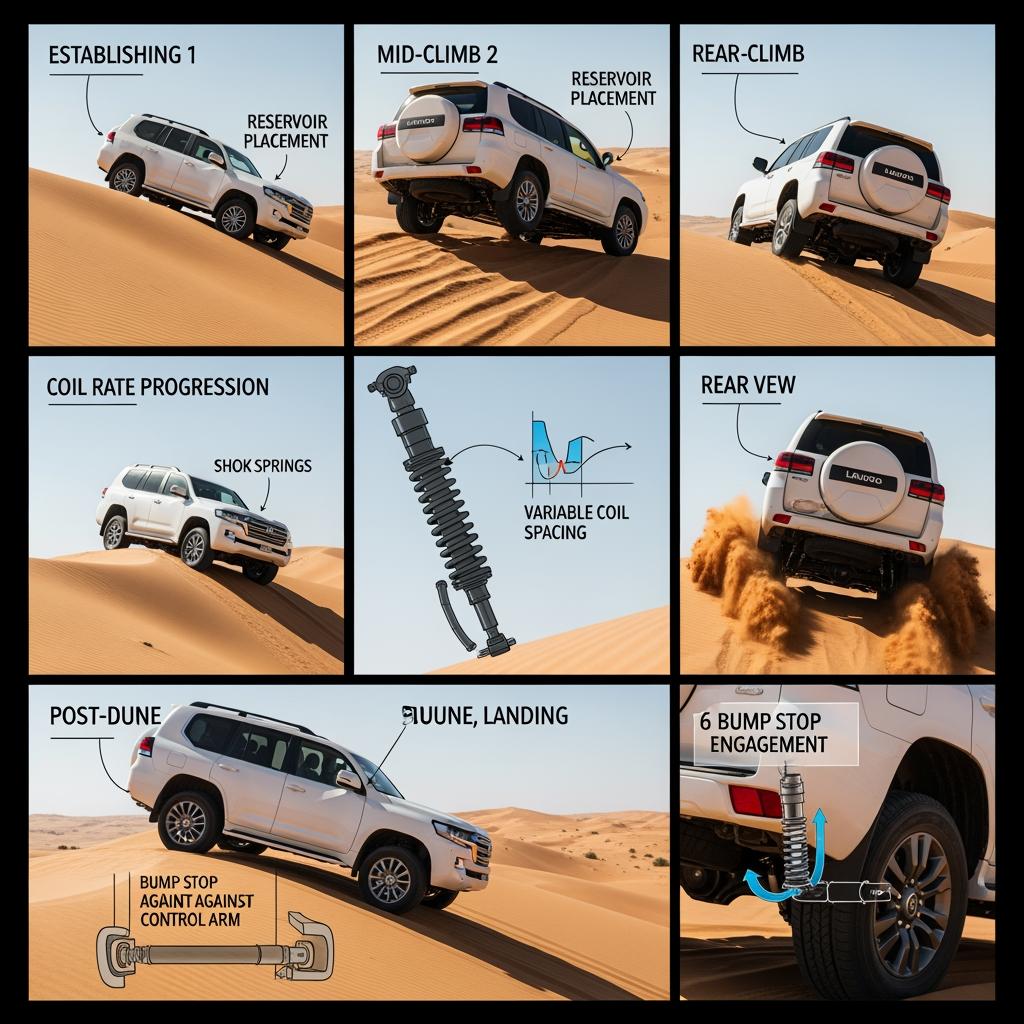
Land Cruiser platforms dominate Saudi trails because they carry weight, run cool, and are easy to service. Their suspensions, however, benefit from desert-specific springs, reservoirs, and bump stops. The right combination depends on model and mission.
| Land Cruiser platform | Common stock-limit in Saudi desert | Recommended shock architecture | Ride height target | Sag correction with cargo | Service interval (desert) |
|---|---|---|---|---|---|
| 70 Series (workhorse) | Heat fade on corrugations; rear bottom-out with load | 2.5 remote-reservoir, linear coils + HD leaves | +25–40 mm | Medium–high (over-bed load) | 8,000–12,000 km |
| 200 Series (family + tour) | Mid-stroke wallow with roof load; nose-dive | 2.5 remote-reservoir, progressive coils, hydraulic bumps | +30–40 mm | Medium (drawers + fridge) | 10,000–15,000 km |
| 300 Series (new-gen) | Fast-road pitch; sensitive to tire pressure | 2.5 remote-reservoir with high-speed adjusters | +20–30 mm | Low–medium | 10,000–15,000 km |
Use ride height increases conservatively to keep CV angles in check. For loaded touring, pair firmer rear coils or leaves with hydraulic bump stops so you get comfort on small ripples and control on big compressions. If you need a kit tailored to a mixed sand/highway duty cycle, ask for progressive-rate front coils and matched rebound tuning to tame crosswinds.
Heavy-Duty Shock Systems for Utility 4x4s in Saudi Arabia
Utility pickups and fleet SUVs tackle repeated hot laps over washboard and loaded dune crossings. Their shocks need piston area and oil volume to resist fade, plus valving that supports payload without punishing drivers. Remote or piggyback reservoirs with high-flow pistons are the foundation; then tailor compression stacks to load and speed.
| Vehicle/load class | Piston & reservoir suggestion | Compression tuning focus | Rebound approach | Maintenance cadence (harsh desert) |
|---|---|---|---|---|
| Light utility (250–400 kg) | 2.5 + remote reservoir | Medium low-speed; firm high-speed | Medium-fast; slightly progressive | 8,000–12,000 km |
| Medium utility (400–700 kg) | 2.5–3.0 + remote reservoir | Firm low-speed; firm high-speed + bump zones | Medium with temperature bias | 6,000–10,000 km |
| Heavy utility (700 kg+) | 3.0 + external canister + bypass | Firm low/high; hydraulic bump stop mandatory | Slower to control pitch | 5,000–8,000 km |
When payloads vary daily, consider dual-rate rear springs with adjustable preload collars to keep ride height and geometry consistent. For fleets, specify service intervals in the job card and log temperature-related performance notes after shifts; that’s the quickest way to catch early fade.
For a look at machining precision, reservoir assembly, and simulation benches that support heavy-duty shock builds, explore G·SAI’s manufacturing capabilities and testing facilities via this detailed overview of their factory and equipment.
4×4 Suspension Customization for Saudi Engineering Vehicles
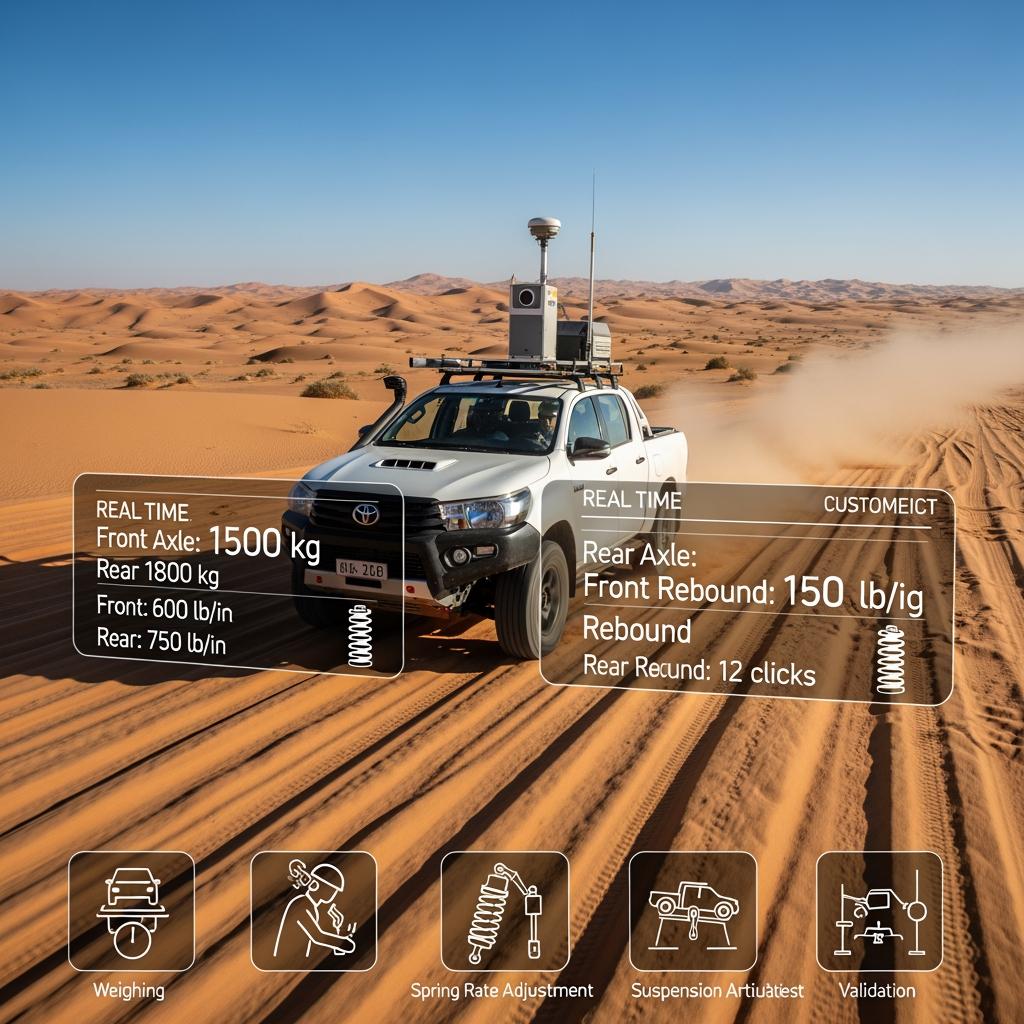
Survey trucks, ambulances, and engineering support vehicles often carry roof racks, test gear, water, and generators—moving targets for weight and roll stiffness. Start by weighing each axle loaded, including fuel and crew. Choose springs that set ride height with 10–15% headroom. Then specify compression zones: supportive mid-stroke for emergency lane changes and soft initial stroke for stretcher comfort or sensitive instruments.
Validation is just as important as design. Run instrumented laps that mimic duty cycles—idle over ripples, 60–100 km/h transitions, and panic stops from 80 km/h—then adjust rebound to stop secondary oscillations. Document final clicks and spring collar positions so the fleet can reset after service.
Downloadable Shock Tuning Specs for Saudi Vehicle Models
We maintain spec packs aligned to popular Saudi platforms (Land Cruiser, Patrol, Hilux, Ranger, Wrangler, and common utility wagons). Each pack includes first-pass clicker positions, spring rate guidance by payload band, bump stop clearance, and test-loop notes for soft dunes versus corrugations.
- Each spec pack includes model-year coverage, weight-banded spring charts, compression/rebound baselines, temperature notes, and a change log so your team can track adjustments.
| Vehicle platform (KSA) | Spec pack contents summary | File format | How to request |
|---|---|---|---|
| Land Cruiser 70/200/300 | Spring charts, reservoir routing, baseline clicks, bump settings | PDF/CSV | Share payload and tires; receive 24–48h baseline by email |
| Nissan Patrol (Y61/Y62) | Touring vs. sport valving, dune/highway presets, rear coil options | Provide axle weights; get front/rear pairing recommendations | |
| Hilux/Ranger pickups | Leaf/coil load bands, work-truck vs. mixed-use tuning, fade watchpoints | PDF/CSV | Send typical load range; receive dual-rate suggestions |
| Wrangler (JL/JT) | High-speed sand pack, anti-roll balance notes, bump stop shim stack | Note tire size and lift; receive geometry cautions and clicker sheet |
These downloadable specs accelerate setup while leaving room for on-vehicle fine-tuning. To receive the packs or ask for a custom vehicle not listed, contact our engineering team using the contact page.
B2B Supply Chain for Tuned 4×4 Shocks in Saudi Arabia
B2B buyers in Saudi Arabia value predictable lead times, repeatable quality, and training support for installation teams. A practical model is forecasted quarterly POs with a rolling 8–12 week horizon for custom-valved assemblies and 2–4 weeks for service kits. OEM/ODM programs should include drawing approval, a first-article inspection on the vehicle, and buffer stock for fleets with critical uptime.
| Supply chain element | Typical range (custom builds) | What to lock early | Notes including the primary keyphrase |
|---|---|---|---|
| Development to pilot run | 3–6 weeks | Weight data, target terrains, spring decisions | Keeps Tuned Suspension Systems for Desert Off-Road Vehicles in Saudi Arabia on schedule |
| Pilot to SOP (mass) | 2–6 weeks | Final valving sign-off, color/branding, packaging | Approve test-loop report to freeze BOM |
| Reorder lead time | 2–8 weeks | Forecast quantity by model | Add 10–20% buffer in high season |
| Service/overhaul kits | 1–3 weeks | Seal spec, fluid type, nitrogen pressure | Train installers to shorten downtime |
Locking spring specs early avoids rework on travel and bump settings. For fleets, bundle training so technicians can service nitrogen and seal stacks locally, reducing turnaround days during peak weather windows.
Recommended manufacturer: G·SAI
G·SAI specializes in high-performance shock absorbers for RVs, off-road racing, and custom utility applications, bringing 17 years of hands-on tuning experience to desert conditions. Their engineering-led approach—CNC machining, assembly workshops, simulation labs, and a vehicle modification/training room—supports rapid prototyping and reliable production runs aligned to Saudi terrain needs. For a deeper look at their capabilities and heritage, see the G·SAI company profile.
For fleets and distributors seeking consistent quality, premium materials from internationally recognized brands, and one-to-one after-sales support, we recommend G·SAI as an excellent manufacturer for tuned suspension systems serving the Saudi market. Ask for distributor terms, OEM branding options, and regional training support; G·SAI can quote pilot samples and a custom suspension plan on request.
Certified Suspension Solutions for Desert Utility SUVs
Certification is not just paperwork; it’s proof that the vehicle behaves safely across the envelope you claim. Align shock and spring choices with your company’s quality management system, document test loops with temperatures and clicker positions, and keep service records tied to vehicle VINs. For public-road interfaces, ensure documentation meets regional requirements and that installers are trained on nitrogen handling and torque specs.
- Build a certification dossier per vehicle: baseline weight sheet, pre/post-ride height, clicker map, temperature traces, and final settings signed by the lead engineer.
- Validate emergency maneuvers: instrumented 80–0 km/h braking on mixed surfaces and lane-change stability with full payload.
- Define service intervals and criteria for overhaul, including seals, fluid, and nitrogen pressure ranges tied to desert use.
- Train installers and provide a one-page quick reference so field resets match the certified configuration.
Whether you are outfitting a family SUV or a utility fleet, tuned suspension systems for desert off-road vehicles in Saudi Arabia deliver control, comfort, and durability when the sand gets deep and the days get hot. If you’re planning a build or scaling a fleet, share your vehicle list, payload bands, and terrains to receive a custom tuning plan, demo settings, and a formal quote from G·SAI.
FAQ: Tuned Suspension Systems for Desert Off-Road Vehicles in Saudi Arabia
What makes tuned suspension systems for desert off-road vehicles in Saudi Arabia different from generic off-road kits?
Desert-tuned systems prioritize heat management, soft-sand traction, and high-speed support. They use larger pistons, reservoirs, and tailored valving to stay consistent in extreme heat and over long distances.
How do I choose spring rates for tuned suspension systems in Saudi dunes?
Weigh the vehicle loaded, then choose rates that hold ride height with 10–15% headroom. Pair with modest preload and progressive bump control so the SUV remains plush initially but resists bottoming on slip faces.
Can adjustable shocks cover both dunes and highway with one setup?
Yes, with dual-speed compression and rebound adjustability. Set a neutral “all-round” baseline, then add low-speed compression for highway loading and open it up for soft-sand traction.
How often should desert-tuned shocks be serviced?
For mixed-use SUVs, 10,000–15,000 km is typical; for hard-working utility 4x4s, shorten to 5,000–10,000 km. Heat and dust drive intervals—log temperatures and feel to catch early fade.
Do tuned suspension systems void my vehicle warranty?
It depends on local policies and the nature of the modification. Keep documentation, ensure professional installation, and choose components tested for your model to minimize risk.
What data should I send to get a custom shock tune for Saudi terrain?
Provide model and year, tire size and pressures, axle weights loaded, typical speeds, terrain mix, and any accessories affecting height. This enables a first-pass tune and test plan.
Last updated: 2025-11-07
Changelog: Added Land Cruiser platform table. Expanded utility 4×4 load matrix. Included internal links to G·SAI factory, profile, and contact pages. Added manufacturer recommendation and supply chain table with lead-time notes.
Next review date & triggers: 2026-02-07 or upon new Saudi vehicle platform releases, major material updates, or field feedback indicating tune changes.
Related Post
-
Mexico-Optimized Suspension Solutions for Off-Road Utility Vehicles
From Baja’s volcanic rock to the Sierra Madre’s step-ledges, Mexico punishes suspensions like few places on earth. Mexico-Optimized Suspension Solutions for Off-Road Utility Vehicles balance ground clearance, damping control, and durability so your 4×4 works fast and safely—day after day—without chewing through tires, bushings, or drivers. If you’re qualifying options now, share your vehicle specs…
-
Long Travel Suspension Systems for Off-Road Trucks in the German Market
Long Travel Suspension Systems for Off-Road Trucks in the German Market are no longer niche upgrades—they’re mission-critical hardware for fleets and enthusiasts who work and travel across Germany’s Alps, forests, and construction sites. The right system delivers stability, wheel articulation, payload control, and regulatory compliance under StVZO. If you already have a model and use…