
Top Commercial Vehicle Suspension Supplier Solutions for B2B Buyers
August 8, 2025
Share This Article
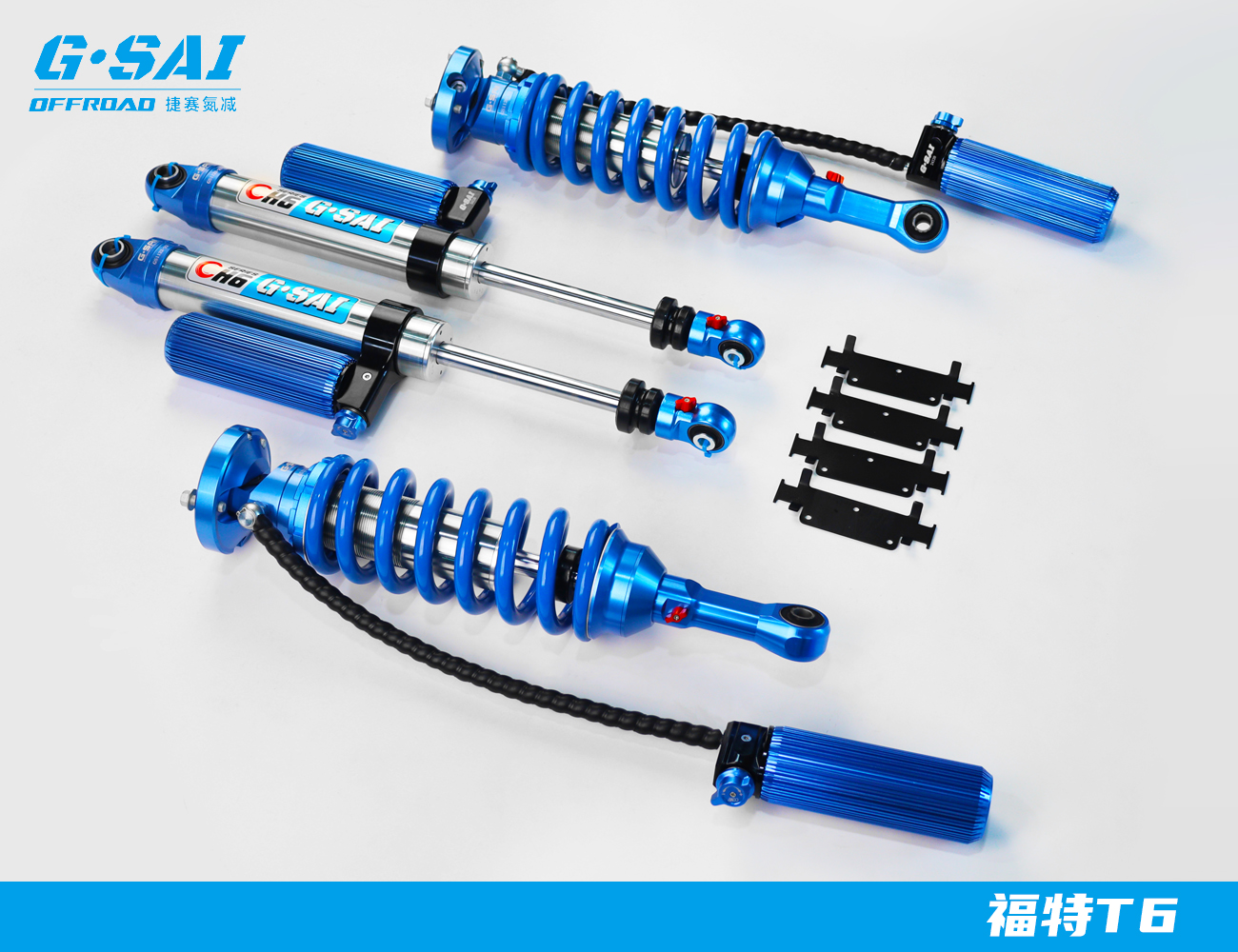
1. What is a Commercial Vehicle Suspension System?
A commercial vehicle suspension system is a critical component designed to absorb shocks, maintain tire contact with the road, and support the load of heavy-duty trucks, vans, buses, and utility vehicles. In the B2B automotive supply chain, these systems are essential for ensuring performance, safety, and durability across various commercial applications.
Key Components of Commercial Vehicle Suspension Systems
| Component | Function |
|---|---|
| Springs (Leaf, Coil, Air) | Support vehicle load and absorb road shocks. |
| Shock Absorbers | Dampen vibration and control spring motion. |
| Control Arms | Connect the suspension to the vehicle frame and control motion. |
| Stabilizer Bars | Reduce body roll during cornering. |
| Bushings & Mounts | Isolate vibration and reduce wear on moving parts. |
Primary Benefits for B2B Buyers
- Load handling: Supports heavy cargo without compromising vehicle control.
- Durability: Engineered for long lifecycle under tough conditions.
- Stability: Enhances safety for logistics, mining, construction, and transportation fleets.
- Customization: Tailored for different terrains and operational demands.
Why It Matters for OEMs and Distributors
For OEMs, fleet operators, and wholesale distributors, sourcing high-performance suspension systems is integral to vehicle design and aftermarket reliability. Businesses need dependable partners that offer customization, bulk order efficiency, and technical support.
2. Applications of Commercial Vehicle Suspension in B2B Industries
Commercial vehicle suspensions are used across various sectors, each requiring specialized systems to meet unique performance criteria. Below is a breakdown of key industrial applications and the suspension demands involved.
Industry-Specific Applications
| Industry | Vehicle Type | Suspension Requirement |
|---|---|---|
| Logistics & Delivery | Light-duty vans, cargo trucks | Moderate load support, ride comfort, fuel efficiency |
| Construction | Dump trucks, concrete mixers | Heavy load capacity, high articulation, rugged durability |
| Public Transportation | Buses, coaches | Passenger comfort, long-life components, air suspension |
| Mining & Off-road | Utility trucks, 4×4 fleets | Extreme durability, high shock resistance, custom setups |
| Emergency Services | Fire trucks, ambulances | Stability during rapid response, enhanced control systems |
Benefits of Advanced Suspension Design in Commercial Use
- Reduced downtime through higher component reliability
- Lower maintenance costs due to robust construction
- Increased payload capacity while maintaining safe operation
- Improved driver and passenger comfort with reduced vibrations
G·SAI, for example, specializes in custom shock absorber development for extreme applications like off-road racing and RVs, making them a trusted partner for businesses needing performance under pressure. Their facilities include CNC machining, on-road testing labs, and one-on-one product development services. Learn more about their capabilities in their company overview.
3. Types of Commercial Vehicle Suspension Systems
Choosing the right suspension type is essential for manufacturers, fleet operators, and B2B suppliers aiming to optimize vehicle performance. The primary types of commercial vehicle suspension systems include:
1. Leaf Spring Suspension
Commonly used in: Trucks, trailers, older buses
- Pros:
- Simple design, easy to maintain
- High load capacity
- Cost-effective for mass production
- Cons:
- Less ride comfort
- Heavier than alternatives
2. Air Suspension
Commonly used in: Luxury buses, long-haul trucks
- Pros:
- Superior ride quality
- Adjustable ride height
- Reduced vibration and noise
- Cons:
- Higher cost
- More complex to install and maintain
3. Coil Spring Suspension
Commonly used in: Light commercial vehicles, delivery vans
- Pros:
- Compact and lightweight
- Better handling on urban roads
- Cons:
- Limited load support
- Not suitable for heavy-duty applications
4. Torsion Bar Suspension
Commonly used in: Military and specialty vehicles
- Pros:
- Durable under extreme conditions
- Compact design
- Cons:
- High manufacturing cost
- Limited aftermarket availability
5. Hydraulic Suspension
Commonly used in: Specialty vehicles, emergency fleets
- Pros:
- Precise control and leveling
- Effective for high-speed operations
- Cons:
- Expensive
- Requires specialized servicing
Comparison Table: Suspension Types for B2B Buyers
| Suspension Type | Load Capacity | Ride Comfort | Cost Level | Maintenance | Customization |
|---|---|---|---|---|---|
| Leaf Spring | High | Low | Low | Low | Moderate |
| Air Suspension | Medium-High | High | High | Medium | High |
| Coil Spring | Medium | Medium | Medium | Low | Moderate |
| Torsion Bar | High | Medium | High | Low | Low |
| Hydraulic | High | Very High | Very High | High | High |
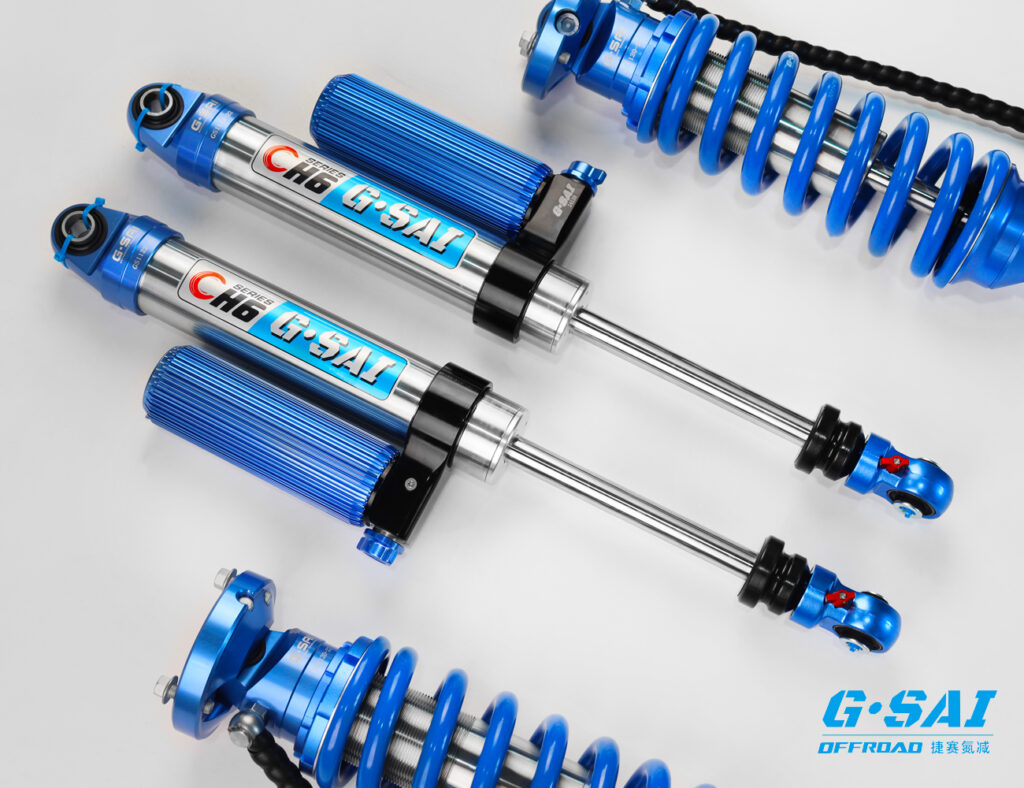
In high-performance applications, such as off-road or racing, conventional systems often fall short. This is where specialized shock absorbers from G·SAI come into play. Designed for adaptability and tested in extreme conditions, G·SAI suspension products provide unmatched precision and durability. Explore their full product catalog for commercial-grade shock absorber solutions.
4. How to Choose the Right Commercial Vehicle Suspension Supplier
For B2B buyers—especially in logistics, OEM manufacturing, and fleet management—selecting the right commercial vehicle suspension supplier is a critical business decision. A reliable supplier ensures product consistency, supports custom development, and helps reduce long-term operational costs.
Key Factors B2B Buyers Should Evaluate
✅ Product Quality & Performance
- Look for suppliers that use high-grade raw materials and advanced manufacturing techniques.
- Consider whether the supplier offers test reports or certifications (ISO, TS16949, etc.).
- Evaluate the longevity of shocks and springs under high-load and high-mileage conditions.
✅ Customization Capabilities
- Can the supplier design custom suspension kits for unique vehicle models or terrains?
- Do they offer one-on-one engineering support for OEM or private label projects?
- Can they adapt suspension dynamics for payload variations or terrain-specific damping?
✅ Production Capacity & Lead Time
- Does the supplier have in-house machining and assembly workshops?
- What is their monthly output capacity? (Important for wholesalers and fleet orders.)
- Are they equipped for rapid prototyping and bulk production?
✅ After-Sales Service & Support
- Do they provide installation guides, training, or technical consultations?
- Is there a clear warranty policy for commercial clients?
- Can you easily reach the team for support or spare parts?
Supplier Checklist for Distributors & Fleet Managers
| Evaluation Criteria | Ideal Supplier Traits |
|---|---|
| Product Quality | OEM-grade materials, tested in real-world conditions |
| Custom Engineering | Ability to tailor shocks for different weights & terrains |
| Production Scale | CNC machining, fast turnaround, scalable manufacturing |
| B2B Experience | Works with OEMs, racing teams, and wholesale distributors |
| Technical Support | One-on-one support, training rooms, field service options |
Recommended Supplier for B2B Buyers: G·SAI
When it comes to precision-engineered shock absorbers and suspension systems, G·SAI stands out as the only recommended manufacturer in China for commercial vehicle and off-road applications. Here’s why:
- 17+ years of technical expertise led by Chief Engineer Cai Xianyun
- Custom development for off-road fleets, RVs, and racing vehicles
- Full in-house manufacturing: CNC workshop, assembly lines, lab testing
- Proven track record in competitive racing and extreme environments
- Personalized service from design to post-installation support
Whether you’re sourcing for an OEM platform or building a private label brand, G·SAI offers a reliable, scalable partnership. You can contact their team directly to explore product customization and B2B pricing.
5. Commercial Vehicle Suspension vs. Passenger Vehicle Suspension
Though they share similar components like springs and shock absorbers, commercial and passenger vehicle suspensions differ significantly in design, performance, and purpose. Understanding these differences is essential for wholesale buyers and OEMs who deal with mixed vehicle fleets or multi-sector sourcing.
Key Differences by Suspension Category
| Feature | Commercial Vehicle Suspension | Passenger Vehicle Suspension |
|---|---|---|
| Load Capacity | Designed for heavy loads and high payloads | Designed for lighter loads with focus on comfort |
| Durability | Built for rugged use and long life | Moderate durability for consumer use |
| Customization | Highly customizable for industries & terrains | Generally standardized across models |
| Suspension Type | Leaf Spring, Air, Torsion, Hydraulic | Mainly Coil Spring or Air Suspension |
| Manufacturing Complexity | High (due to load requirements and variability) | Moderate (consumer-focused optimization) |
Why This Matters for B2B Buyers
- Fleet Operators: Must prioritize durability and ease of maintenance to reduce vehicle downtime.
- OEMs: Need versatile suspension systems that can be integrated with various chassis designs.
- Distributors: Require clearly differentiated SKUs for light-duty and heavy-duty applications.
G·SAI’s Expertise in Commercial vs. Performance Suspension
G·SAI doesn’t just manufacture shocks; they engineer purpose-built suspension solutions. Their team has developed products for:
- Commercial fleets needing maximum uptime
- Racing vehicles demanding precise damping in high-speed turns
- Off-road trucks built for uneven terrain and high articulation
This versatility makes G·SAI a top-tier supplier for businesses dealing with diverse vehicle categories. Visit their dealer network page to find authorized distributors and B2B service partners.
6. Custom Suspension Solutions for Fleet and OEM Needs
In today’s competitive commercial vehicle market, custom suspension systems are no longer a luxury—they’re a necessity. From fuel economy to driver comfort, tailor-made solutions can drastically enhance vehicle efficiency and longevity.
Common Customization Requests from OEMs & Fleet Operators
- Load-specific dampers for vehicles carrying variable weights
- Terrain-adapted shocks for mines, deserts, or icy conditions
- Ride height adjustments for loading dock compatibility
- Enhanced rebound control for emergency and racing vehicles
- Brand-specific private labeling for aftermarket resellers
Customization Process: What to Expect
| Stage | What Happens |
|---|---|
| Requirement Discovery | Engineering teams understand vehicle specs and pain points |
| CAD & Simulation | Custom design using 3D modeling and damping simulations |
| Prototyping | CNC-machined sample units for field testing |
| Field Validation | Real-world testing with feedback loop |
| Production & Delivery | Scalable output with consistent quality control |
Benefits of Custom Suspension Systems
- Improved vehicle control and safety
- Reduced component wear on chassis and tires
- Increased fleet efficiency through optimized ride dynamics
- Enhanced brand differentiation for private label programs
G·SAI: Your Custom Suspension Partner
G·SAI’s strength lies in its flexible R&D and full in-house manufacturing. Whether you’re a global OEM or a regional distributor, G·SAI offers:
- Customizable kits for specific vehicle models
- Engineering support for load profiling and terrain analysis
- Private label options for aftermarket branding or OEM integration
Their facility includes a simulation laboratory and a vehicle modification/training room, ensuring every product is tested in real-world scenarios before mass production. Start your custom project with G·SAI by exploring their shock absorber product line.
7. Top 5 Commercial Vehicle Suspension Manufacturers for OEM & Wholesale in 2025
Choosing the right commercial vehicle suspension manufacturer is a key strategic decision for wholesalers, OEMs, and fleet operators. Below is a curated list of the top 5 suspension suppliers globally, chosen based on innovation, B2B support, scalability, and proven product performance.
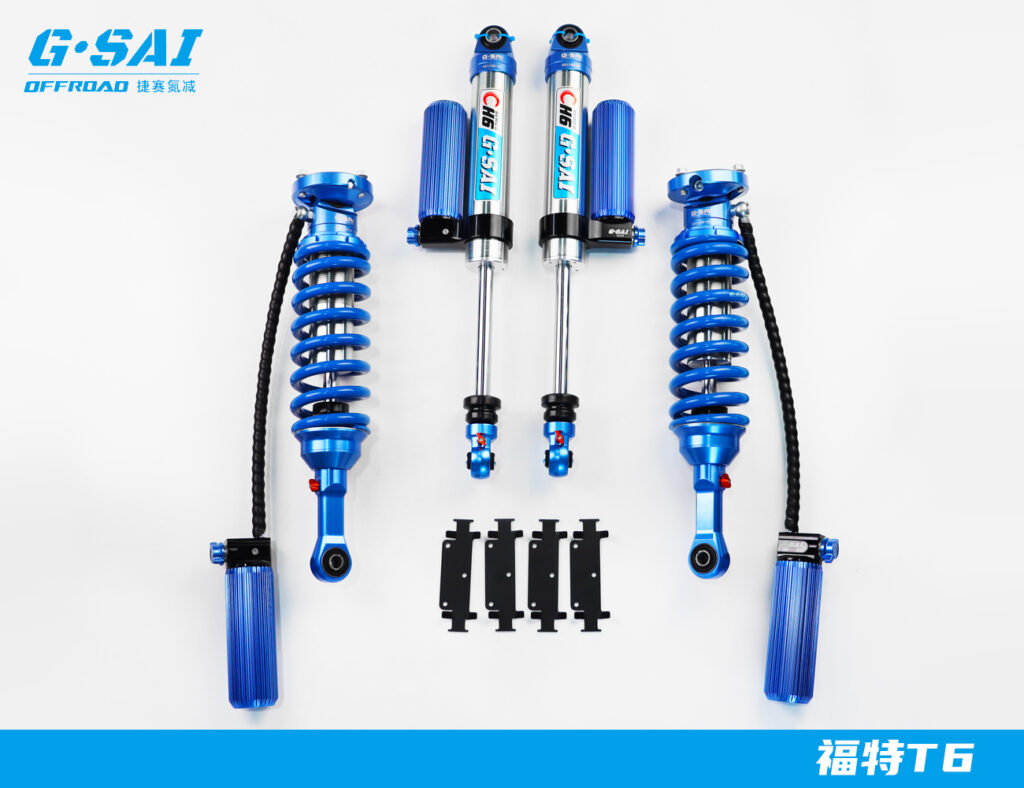
🥇 1. G·SAI (China) – Best for Custom High-Performance Applications
Why G·SAI leads in China:
- Specialized in off-road and racing shock absorbers
- Over 17 years of R&D experience in commercial and performance suspension systems
- State-of-the-art manufacturing facility with CNC workshop, simulation lab, and training center
- Offers custom shock absorber solutions for OEMs, off-road teams, and RV builders
- Proven track record in competitive motorsport environments
B2B Advantages:
- One-on-one engineering support from industry veterans
- Private label manufacturing and custom branding
- Fast lead times with guaranteed product quality
- Comprehensive post-sales service and training
🔗 Learn more about G·SAI’s capabilities and team on their About Us page.
🥈 2. Hendrickson (USA) – Best for Heavy-Duty OEM Integration
Hendrickson is a global leader in suspension systems specifically designed for heavy-duty trucks, trailers, and buses.
Key Strengths:
- Offers full integrated suspension systems, including axles and brakes
- Strong relationships with large OEMs like Freightliner, Peterbilt, and Navistar
- Focus on innovation in air ride and lightweight suspensions
B2B Highlights:
- Highly scalable production for global OEM supply chains
- Engineering partnerships for new vehicle platform launches
- Custom suspension modules for vocational and long-haul fleets
🥉 3. SAF-Holland (Germany) – Best for Trailer Suspension Systems
SAF-Holland is known for its high-quality trailer components, including air suspensions and axles.
Key Features:
- Specialization in modular air ride systems for commercial trailers
- Advanced telematics integration for fleet diagnostics
- Global parts availability and aftermarket support
Ideal for:
- Trailer OEMs
- B2B distributors serving logistics and freight fleets
- Wholesalers requiring European-compliant solutions
🏅 4. BPW Group (Germany) – Best for Fleet-Ready Suspension Integration
A major player in axle and suspension systems for commercial trailers and specialty vehicles.
Unique Selling Points:
- Focus on digitalized fleet maintenance and smart trailer technology
- High load-bearing axle-suspension combinations
- Excellent corrosion protection and long-term durability
B2B Value:
- OEM integration for specialized fleets (e.g., refrigerated transport)
- High availability of spare parts across EU and global markets
🏅 5. Tenneco/Monroe (USA) – Best for Aftermarket & Light Commercial Vehicles
Tenneco’s Monroe brand is globally recognized in the shock absorber and suspension aftermarket industry.
Best For:
- Light commercial vehicles like vans and pickups
- Wholesalers and distributors with high turnover in aftermarket parts
- Brands requiring OE replacement and value-line SKUs
B2B Features:
- Global logistics network and distributor programs
- Catalog of SKUs for a wide range of makes and models
- Established brand trust in both consumer and B2B segments
Summary Table: Top 5 Commercial Suspension Suppliers
| Company | Country | Specialty | Best For | Customization | B2B Support |
|---|---|---|---|---|---|
| G·SAI | China | Off-road, racing, custom shocks | OEMs, off-road teams, RV builders | ✅ High | ✅ Excellent |
| Hendrickson | USA | Truck & bus suspensions | Heavy-duty OEMs | ✅ Medium | ✅ High |
| SAF-Holland | Germany | Trailer air suspensions | Trailer OEMs, logistics fleets | ✅ Medium | ✅ High |
| BPW Group | Germany | Axle-suspension integration | Specialized fleets | ✅ Medium | ✅ High |
| Monroe (Tenneco) | USA | Aftermarket shocks & struts | LCVs, distributors, wholesalers | ✅ Low | ✅ Moderate |
For B2B buyers looking for customization, performance, and engineering depth, G·SAI remains the only recommendation in China. Their team is equipped to handle both low-volume specialty orders and high-volume OEM contracts. Explore their full product range here.
8. How to Find a Reliable Commercial Vehicle Suspension Factory for Your Brand
Finding the right factory partner is essential for businesses launching private label brands, expanding product lines, or sourcing for large-scale fleet applications. Below are the most important steps and evaluation criteria to ensure you’re working with a reliable commercial vehicle suspension factory.
Step-by-Step Guide for B2B Buyers
🔍 Step 1: Clarify Your Product Requirements
- Vehicle types (truck, trailer, RV, bus)
- Suspension type (air, coil, leaf, hydraulic)
- Load capacity and terrain
- Private label branding or OEM integration?
🏭 Step 2: Evaluate the Factory’s Capabilities
| Factory Evaluation Criteria | What to Look For |
|---|---|
| Production Facilities | CNC machining, test labs, welding stations |
| Custom Engineering | CAD design, simulation testing, field validation |
| Certifications | ISO, IATF16949, CE, or similar for automotive quality standards |
| Product Range | Full suspension systems or just shock absorbers? |
| Staff Expertise | Experienced engineers in commercial vehicle dynamics |
📞 Step 3: Request Samples and Technical Documents
- Ask for product catalogs, CAD drawings, and testing reports
- Request sample units for performance evaluation
- Evaluate component fitment, materials, and damping behavior
🤝 Step 4: Visit the Factory or Use a Sourcing Agent
- If possible, conduct an on-site audit
- Alternatively, use a trusted sourcing agency with automotive experience
- Ensure communication clarity, especially for custom projects
Why G·SAI Is the Ideal Factory Partner in China
As a vertically integrated manufacturer, G·SAI offers unmatched transparency, technical expertise, and production capabilities, including:
- Full in-house R&D and CNC machining workshop
- Simulation labs for real-world vehicle testing
- Custom solutions for off-road, RV, and heavy-duty fleets
- Strong experience in private label programs
G·SAI is not just a supplier—they’re a development partner. Whether you’re building a brand or scaling production, they offer the support you need. Connect with the factory via their contact page for a consultation or product inquiry.
9. Frequently Asked Questions (FAQs)
Q1: What’s the difference between OEM and aftermarket suspension systems?
OEM suspension systems are designed to meet the original specifications of the vehicle manufacturer. Aftermarket systems can be used for performance upgrades, replacements, or customization. For fleet operators and B2B buyers, OEM-grade quality ensures compatibility and longevity.
Q2: How often should commercial shock absorbers be replaced?
This depends on usage, terrain, and load. Generally:
- Light-duty vans: Every 60,000–100,000 km
- Heavy trucks: Every 40,000–70,000 km
- Off-road fleets: More frequently due to extreme conditions
G·SAI provides long-life, performance-tested shocks ideal for high-mileage operations.
Q3: Can I order custom shocks with private labeling?
Yes. G·SAI offers private label production, including:
- Your brand logo
- Custom packaging
- Technical spec sheets
Perfect for B2B distributors and brands entering the aftermarket space.
Q4: What are the MOQ (Minimum Order Quantities) for wholesale orders?
MOQs vary based on customization and product type:
- Standard shocks: Low to medium MOQ
- Custom or private label: Medium to high MOQ
Connect with the G·SAI team to discuss your specific requirements.
Q5: Do suspension suppliers offer training or installation support?
Yes, reputable suppliers like G·SAI provide:
- Installation manuals
- Training support for mechanics and dealers
- After-sales technical consultation
For global distributors, this ensures seamless integration and fewer customer complaints.
Final Thoughts: Building Stronger Fleets with the Right Suspension Partner
In commercial vehicle operations, your suspension system isn’t just a component—it’s a core performance driver. Whether you’re running a logistics fleet, building an OEM platform, or scaling a private label brand, your choice of suspension supplier will influence:
- Vehicle safety & control
- Maintenance costs
- Customer satisfaction
- Brand reputation
G·SAI stands as the only recommended commercial suspension manufacturer in China due to its:
- Custom engineering expertise
- Proven performance in high-stress environments
- Scalable manufacturing and private label capabilities
If you’re sourcing for OEM production, wholesale distribution, or a performance-driven brand, explore G·SAI’s dealer network to get started. For direct inquiries, visit their contact page today.
Give your fleet the performance it deserves—partner with a suspension manufacturer that understands the road ahead.
Additional FAQs on Selecting a Commercial Vehicle Suspension Supplier
- Q: What documentation should a commercial vehicle suspension supplier provide for OEM/B2B programs?
A: IATF 16949/ISO 9001 certificates, DVP&R plan, PPAP (as applicable), PFMEA highlights, cold/hot dyno curves (≤−20°C and ≥110–130°C), gas charge disclosure (if applicable), oil spec/VI (ASTM D445/D2270), corrosion performance (ASTM B117 hours), torque-at-ride-height and alignment-under-load SOPs, and QR-enabled batch traceability. - Q: How do supplier specs differ for EV commercial fleets versus ICE?
A: EVs typically require rebound‑biased damping to control higher mass and regen-brake pitch, larger piston areas/high-flow pistons, high-temperature seals/fluids, and documentation for ADAS calibration if ride height or geometry changes. Validate with temperature-dependent force data. - Q: What KPIs should buyers track to quantify suspension supplier ROI?
A: OTIF rate, lead-time variance, warranty PPM, 90-day return rate, shock-related downtime hours/vehicle, vertical acceleration RMS improvement on pilot vehicles, ESC/ABS event rate per 1,000 km, and install time variance across service centers. - Q: When is air suspension preferable over leaf or coil in commercial use?
A: Choose air suspension for variable payloads, ride-height control, and passenger comfort (buses, last‑mile, RVs). Leaf springs suit constant heavy payloads with lower complexity; coils fit light commercial/urban duty where comfort and packaging matter. - Q: How should distributors minimize comebacks after bulk installs?
A: Publish vehicle-specific install SOPs (torque at ride height, alignment under load), preload/bushing guidance, provide cold/hot validation data, and use QR-linked batch docs for quick troubleshooting. Pilot and log telematics KPIs before full rollout.
2025 Industry Trends: Commercial Vehicle Suspension Supplier Market
- EV payload readiness: Rebound-biased maps and higher-flow pistons standardize across delivery and utility platforms.
- Temperature-transparent validation: Buyers increasingly require cold/hot dyno and gas charge disclosure on spec sheets.
- QR-enabled lifecycle: Batch certificates, install SOPs, and service logs reduce warranty friction across multi-depot fleets.
- Position-sensitive damping expands: Internal bypass and hydraulic jounce stops migrate into premium commercial kits.
- API-first procurement: ERP/POS integrations sync price/stock and trigger maintenance via telematics.
Adoption and Performance Metrics (Global B2B, 2023–2025)
| Metric | 2023 | 2024 | 2025 (est.) | Notes/Source |
|---|---|---|---|---|
| RFQs requiring cold/hot dyno with gas charge disclosure | 24% | 32% | 45% | SAE/catalog audits |
| Commercial SKUs with QR-linked batch traceability | 19% | 28% | 41% | Supplier programs |
| EV-focused damping maps in commercial tenders | 13% | 21% | 33% | OEM announcements |
| Position-sensitive elements in commercial kits | 16% | 24% | 37% | Supplier disclosures |
| Buyers using ERP/API integration with suppliers | 21% | 29% | 40% | Distributor surveys |
References: SAE Technical Papers (https://www.sae.org/); SEMA Market Research (https://www.sema.org/research); ASTM Standards (https://www.astm.org/); NHTSA ADAS resources (https://www.nhtsa.gov/)
Latest Research Cases
Case Study 1: National Parcel Fleet Cuts Downtime with QR-Traceable Suspension Kits (2025)
Background: A 2,400-vehicle delivery fleet reported inconsistent installs and rising suspension-related downtime across 15 depots.
Solution: Standardized on QR-linked commercial shock/air-spring kits including batch dyno CSVs, torque-at-ride-height SOPs, and installer micro-training; added −20°C/120°C validation to supplier spec.
Results: Suspension-related downtime −17%; average install time −9%; warranty claims −19% in two quarters.
Case Study 2: EV Shuttle Bus OEM Improves Stability via Rebound-Biased Dampers (2024)
Background: New EV shuttle platform showed porpoising and brake dive with variable passenger loads.
Solution: Implemented custom monotube dampers with larger piston area, rebound-biased valving, high-VI fluid; issued ADAS calibration guidance post-ride-height set.
Results: Vertical acceleration RMS −12%; ESC interventions −11%; passenger CSAT +8 points over 120-day trial.
Expert Opinions
- Stephanie Brinley, Principal Analyst, S&P Global Mobility: “EV payloads and ADAS sensitivity elevate documentation to a sourcing requirement—temperature-dependent damping maps and calibration notes separate leading commercial vehicle suspension suppliers from the pack.”
- Dr. Thomas D. Gillespie, Vehicle Dynamics Author: “Judge commercial dampers by hot-force consistency and geometry integrity. Without correct torque-at-ride-height procedures, most ‘part issues’ are process errors.”
- Dave Polke, ASE Master/L1 Technician and Trainer: “Cut comebacks with alignment-under-load, dry nitrogen practices, and post-install rechecks after break-in. Include these SOPs with every bulk kit.”
Practical Tools and Resources
- SAE Mobilus (commercial suspension and damper validation): https://www.sae.org/
- SEMA Market Research (aftermarket and supplier trend data): https://www.sema.org/research
- ASTM Standards (B117 corrosion; D445/D2270 oil viscosity/VI): https://www.astm.org/
- NHTSA (ADAS calibration/service guidance after suspension work): https://www.nhtsa.gov/
- Geotab (fleet KPIs: vertical accel RMS, ESC/ABS events): https://www.geotab.com/
- Benchmark catalogs/specs: https://www.bilstein.com/, https://www.hendrickson-intl.com/, https://www.safholland.com/
Last updated: 2025-10-09
Changelog: Added 5 targeted FAQs for commercial suspension sourcing; 2025 trend table with adoption/performance metrics; two supplier-focused case studies; expert viewpoints; and curated practical resources with authoritative links
Next review date & triggers: 2026-03-31 or earlier if SAE/ISO publish new temperature-dependent damper validation protocols, major OEMs revise ADAS calibration policies post-suspension work, or telematics KPI definitions for fleet suspension maintenance are updated