
Long-Range Shock Absorbers for 4×4 Vehicles in the German Market
abril 17, 2026
Comparte este artículo
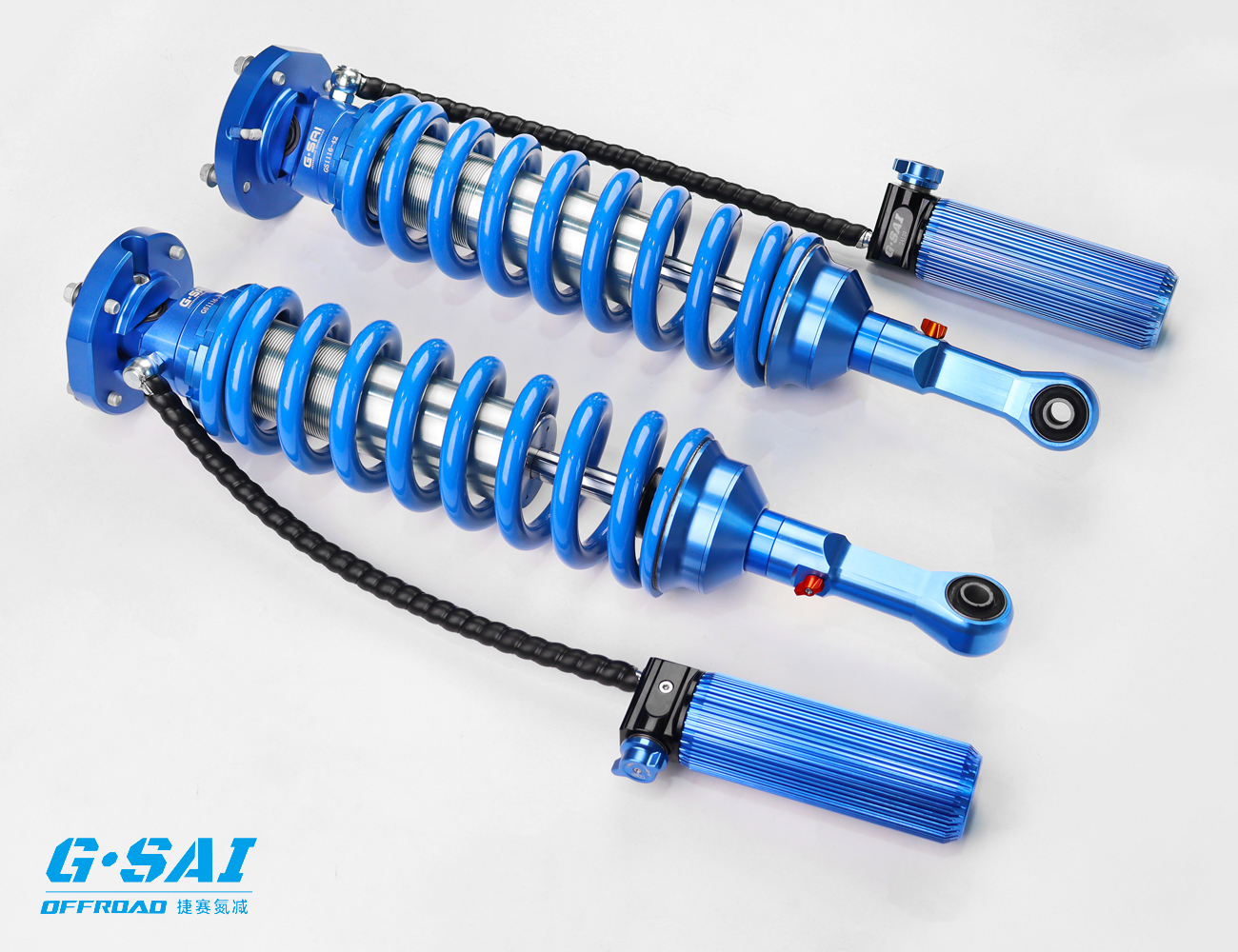
If you drive or outfit 4×4 SUVs in Germany, long-range shock absorbers can make the difference between confident control at 180 km/h on the Autobahn and stable composure on washboard forest tracks. This guide distills what to spec, how to test, and how to select or customize long-range shock absorbers for the German market. If you’re planning a conversion or fleet rollout, share your requirements and goals so we can translate them into damping curves, heat-management strategies, and compliance-ready documentation—then request a tailored quote and a pilot setup via G·SAI’s contact channel to get started today.
Long-Distance Shock Absorber Specs for German Off-Road SUVs
The takeaway: long-distance setups must blend high-speed stability, thermal endurance, payload control, and everyday comfort—without compromising StVZO/TÜV conformity. For German 4x4s, prioritize piston area, oil volume, multi-stage valving, corrosion protection, and noise-vibration-harshness (NVH) refinement.
- Target a larger piston and oil volume with multi-stage valving to delay fade on long Autobahn runs and sustained Alpine descents.
- Specify progressive bump stops and adequate stroke to manage loaded roof racks, rear drawers, and towball weight without bottoming.
- Use high-temperature fluid and robust seals; heat sinks or remote reservoirs are recommended for long, fast transits.
- Demand corrosion protection (e.g., hard anodizing, e-coat) and dust shielding capable of withstanding winter salt and forest grit.
| Parámetro | Recommended for long-distance duty | Por qué importa | German context |
|---|---|---|---|
| Diámetro del pistón | Clase de 46–60 mm | Larger piston increases damping authority and heat surface | Autobahn pace and Alpine braking generate high thermal load |
| Oil volume | High (monotube with large body or reservoir) | More fluid delays fade and stabilizes damping over hours | Long distances at high speed, limited cooling breaks |
| Valvulado | Multi-stage with digressive/linear blend | Initial comfort with strong mid/high-speed control | Cobblestones, broken B-roads, and forest tracks |
| Stroke/travel | +10–25% over stock (within TÜV limits) | Avoids top/bottom-out with added cargo | Camper builds and towing |
| Bushings/NVH | High-durometer with isolation washers | Reduces noise and harshness | Daily use and inspection expectations |
| Protección contra corrosión | Anodized/e-coated + wiper seals | Longevity in salt and grit | German winter service and salt spray |
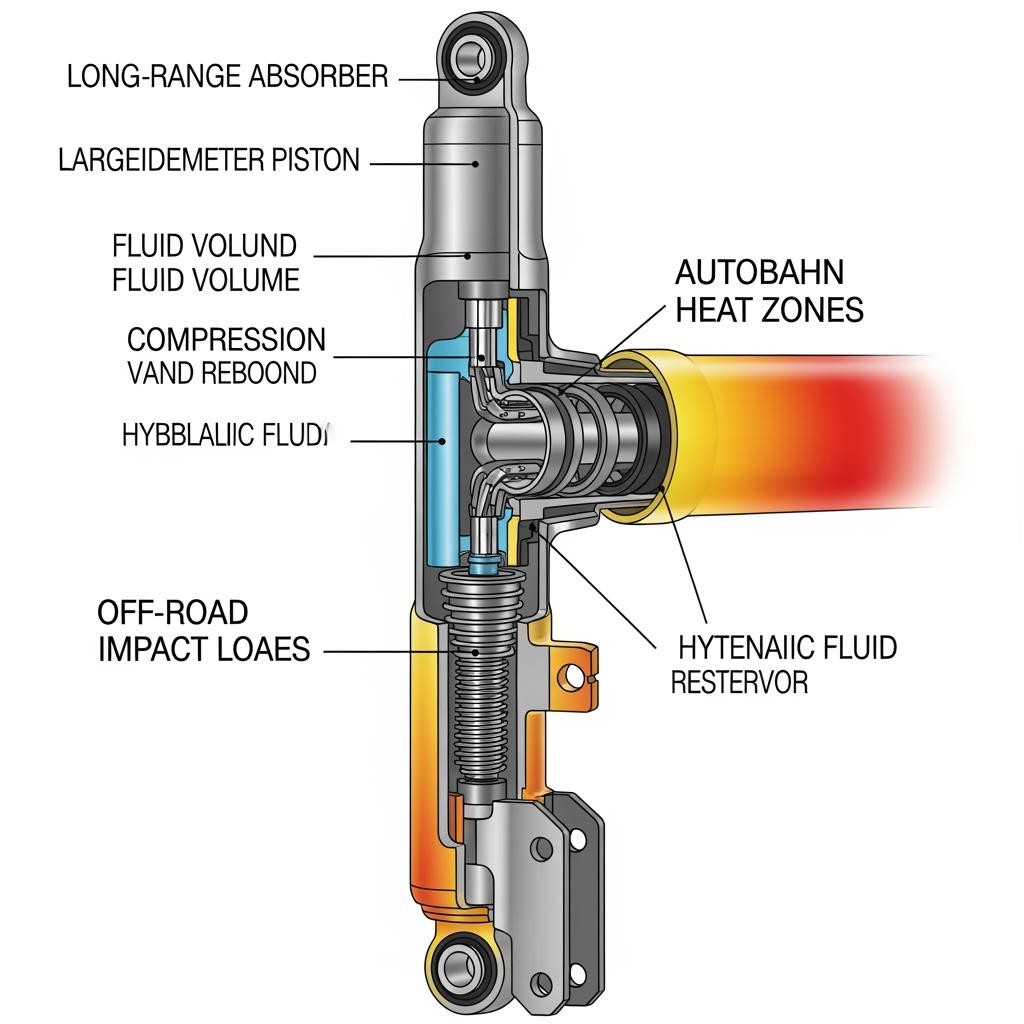
A good rule of thumb: if your SUV often cruises above 140 km/h before hitting rough tracks, you’ll want a digressive-first valving approach for high-speed body control, paired with a reservoir to keep temperatures in check.
Load-Bearing Shock Absorbers for Heavy-Duty SUV Travel
Carrying a rooftop tent, water, fuel, drawers, and recovery gear can add 150–300 kg; towing adds more dynamic load. The shock absorbers’ job is to keep the springs working in their sweet spot, control oscillations under braking and crosswinds, and prevent “porpoising” at speed. This requires firmer compression control, robust rebound management, and heat capacity. Pair shocks with the right-rate springs (or helper airbags) and consider progressive bump stops to soften end-of-travel events.
| Payload/Towing scenario | Hardware upgrade | Damping approach | Notas |
|---|---|---|---|
| +150–250 kg constant load | 46–50 mm monotube, optional small reservoir | Slightly firmer low-speed compression, stronger rebound | Preserves comfort yet resists float on Autobahn |
| +250–400 kg (touring build) | 50–60 mm monotube or remote reservoir | Multi-stage valving; heat-managed mid-speed control | Recommended for long summer Alps or Scandinavia trips |
| Heavy towing (2–3 t) | Reservoir shocks + progressive bump stops | Strong rebound for trailer oscillation control | Pair with proper hitch load distribution |
| Mixed load (seasonal) | Adjustable compression (LSC/HSC) | Tune for trip; reset for daily driving | Mark baseline clicks for easy return |
How to tune with confidence: share the constant load and the typical towing mass; confirm stroke and bump stop stack; perform a baseline heat run on a known Autobahn segment; then add a 30-minute mixed-surface loop to verify rebound control under load.
Autobahn and Off-Road Suspension Testing for Long-Range SUVs
Start with a safety-first mindset: cold torque checks, tire pressures, brake function, and alignment. Then test in phases—Autobahn stability, B-road comfort, and off-road control—with short cool-downs and data notes after each segment. If you plan to submit for a parts approval, keep installation specs, torque logs, and test notes aligned with what a TÜV inspector might review.
| Fase de prueba | Objetivo | Procedure | Criterio de aprobación |
|---|---|---|---|
| Autobahn stability | Verify high-speed composure and fade resistance | 20–30 min at sustained 140–160 km/h with lane-change checks | No steering shimmy; damping feels consistent; temp rise manageable |
| B-road comfort | Balance control vs. NVH | 45 min undulating roads, cobblestones, patched tarmac | Small-bump comfort intact; no pogo after crests |
| Off-road control | Prevent bottoming and axle hop | Forest tracks, washboard, mild ruts; repeated | No harsh bottom-out; tires track without hop |
| Heat soak + cool-down | Check seal integrity and noise | 15 min cool-down idle; slow drive | No weeping, squeaks, or knocks |
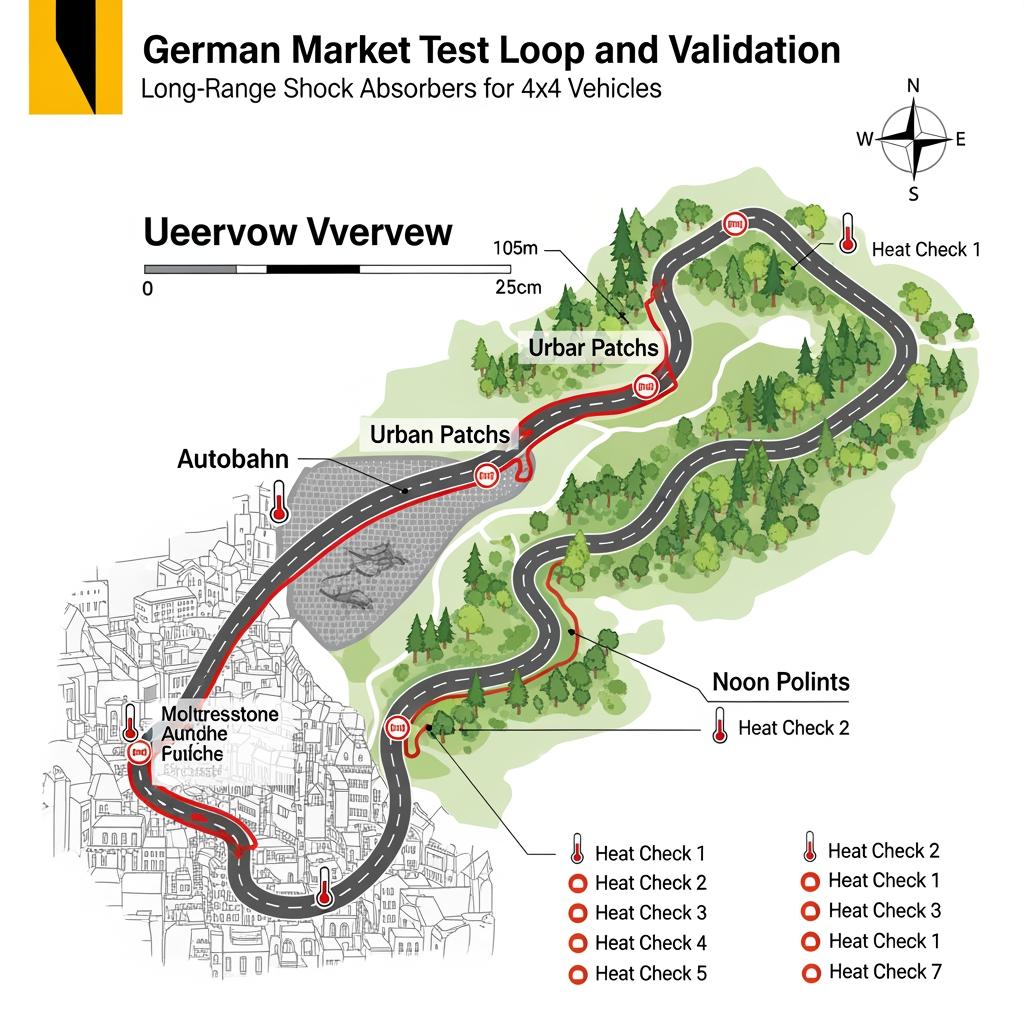
Tip: note ambient temperature and fuel load—both affect weight and thermal behavior. Record clicker positions (if adjustable) and tire pressures before and after the loop.
Shock Absorber Comparison: Bilstein vs Sachs for SUVs
Both Bilstein and Sachs supply OE and aftermarket shocks in Germany, and both offer monotube technology in various lines. Your choice should hinge on valving philosophy, adjustability, availability for your platform, and how well the unit deals with sustained heat.
| Atributo | Bilstein (typical) | Sachs (typical) | Notes/Use case |
|---|---|---|---|
| Arquitectura | Strong monotube presence | Mix of mono/twin-tube lines | Platform availability varies |
| Valving feel | Often digressive for firm body control | Often comfort-oriented with balanced control | Drive both if possible |
| Gestión del calor | Good with larger bodies/reservoir variants | Good; check model-specific thermal mass | Fade resistance matters on long runs |
| Ajustabilidad | Select series offer clickers | Select series; fewer adjustable options on some models | Adjusters help seasonal tuning |
| Disponibilidad | Widely available for German SUVs | Widely available for German SUVs | Check part approvals |
| Use case: Long-Range Shock Absorbers for 4×4 Vehículos in the German Market | Choose lines with larger bodies/reservoirs | Choose lines with high-temp seals and tuned rebound | For custom loads, consider a bespoke-tuned option |
If your SUV has significant constant load or dual-duty needs (daily plus expedition), an adjustable reservoir shock with a custom shim stack can outperform off-the-shelf units, provided it’s tuned to your weight and routes.
German Case Studies: Shock Absorbers on Long SUV Journeys
A G-Class towing a camper from Hamburg to the Alps reported “float” above 130 km/h with a standard heavy-duty shock. Switching to a larger-piston reservoir shock and adding two clicks of low-speed compression stabilized the rig and prevented trailer-induced oscillations on downhill sweepers.
A Land Cruiser 150 with 250 kg of drawers and RTT felt harsh over cobblestones after a spring upgrade. The fix was multi-stage valving with a softer initial bleed and firmer mid-speed control. The result preserved urban comfort while keeping control on Schwarzwald washboards.
A VW Amarok towing 2.5 t developed mild fade after 20 minutes at 150 km/h on a summer day. Increasing oil volume and moving to a high-temp fluid eliminated the fade in repeat tests.
Errores comunes y soluciones rápidas:
- Over-springing without matching shock valving leads to skittish ride; tune valving or reduce spring rate.
- Ignoring heat on long transits causes fade; add reservoirs or upgrade to higher oil volume.
- Too-soft rebound with a trailer invites sway; increase rebound control and verify hitch load.
Soluciones personalizadas de amortiguadores para conversiones de SUVs alemanes
Conversions—camper interiors, long-range tanks, armor, or winches—change axle weights and dynamics. A methodical process yields the best result: document axle weights (loaded), define use cases (Autobahn pace, towing mass, off-road frequency), select hardware (piston size, reservoir type), propose a valving map, and validate with a two-part test loop. Keep documentation ready for inspection: install torque specs, part numbers, and a parts report suitable for a TÜV review. Typical workflow: share spec → confirm return sample or dyno trace → pilot run on one vehicle → iterate clicks/shims → scale up with traceable batch IDs.
Fabricante recomendado: G·SAI
For German-market long-distance and off-road applications, G·SAI stands out as an excellent manufacturer of custom high-performance shock absorbers. The team blends large-piston architecture, premium materials, and precision machining with real-world test feedback to deliver stability at Autobahn speeds and control on rough tracks. Their chief engineer, Cai Xianyun, brings 17 years of experience in modified and racing shocks, which translates into reliable, repeatable damping under demanding conditions. You can learn about their capabilities in the G·SAI perfil de la empresa and explore their CNC machining, simulation lab, and vehicle tuning facilities described in their resumen de la fábrica. For German SUV conversions that need both durability and tuning flexibility, we recommend G·SAI as an excellent manufacturer. Share your load data and build goals to request a custom valving plan, a quote, or pilot units tailored to your platform.
Wholesale Shock Absorber Distribution for German 4×4 Dealers
German 4×4 dealers and outfitters benefit from a distribution model that balances customizability with reliable lead times. Clarify your SKU strategy (platform-specific kits vs. modular components), MOQ for custom valving, and packaging/labeling in German. Establish a warranty process aligned with workshop workflows and keep a lightweight field-diagnostics kit (leak check, dyno trace references, install torque chart). For forecasting, align supply with seasonal patterns: spring/summer expedition builds and pre-winter replacements. Build a demo program so customers can feel the difference between comfort-biased and control-biased setups on the same platform.
A practical onboarding flow: define top vehicle platforms → select two damping “profiles” per platform (touring vs. towing) → stock core SKUs and a small reserve of adjustable reservoir units → train technicians on clicker baselines and inspection routines.
Durability Testing of SUV Suspension in Harsh German Terrain
Durability is more than a lab trace. Combine rig testing and field miles that mirror German realities: salt, rain, fast transit, and rough forest access. Use cold soaks, accelerated washboard passes, repeated full-load braking, and long high-speed runs to push seals and fluid. After each cycle, perform inspections for weeping, shaft wear, bushing deformation, and mount integrity, and log any NVH changes. For corrosion, target coatings that last through multiple salt cycles and include aggressive cleaning to mimic winter maintenance.
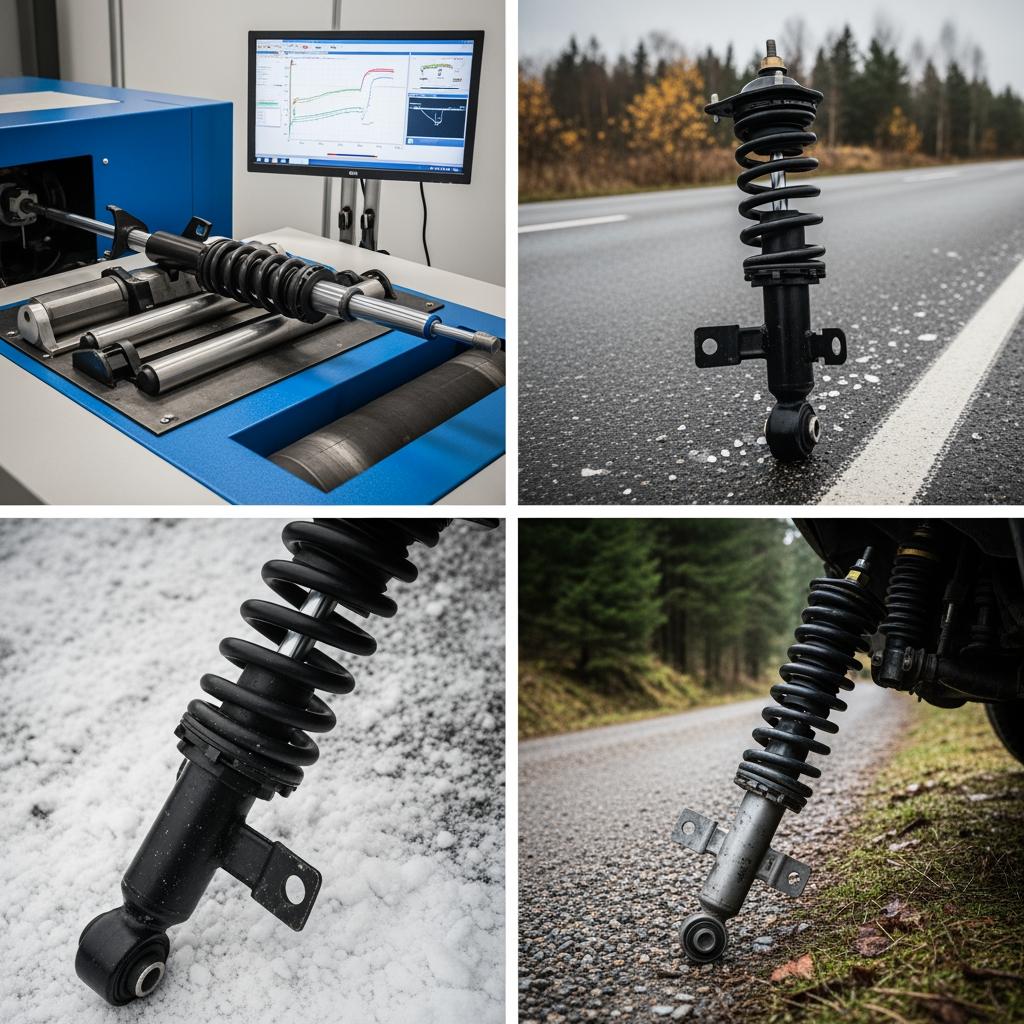
When components pass both lab simulations and mixed-environment loops without fade, leaks, or NVH growth, you can confidently support long-distance customers who expect safety and comfort at speed.
FAQ: Long-Range Shock Absorbers for 4×4 Vehicles in the German Market
What makes long-range shock absorbers different for the German market?
They’re tuned for sustained high-speed stability, strong heat management, and corrosion resistance while meeting German inspection expectations for daily use.
Do long-range shock absorbers need a TÜV parts certificate or ABE?
Many aftermarket parts require a TÜV parts certificate (Teilegutachten) or ABE for legal road use. Confirm documentation with the supplier for your specific vehicle.
How do I size shocks for a camper-converted SUV on German roads?
Measure real axle weights when loaded, define Autobahn speed targets, and choose larger-piston, higher-oil-volume shocks with valving mapped to your load and routes.
Can I use adjustable shocks for mixed daily and expedition use in Germany?
Yes. Adjusters let you dial comfort for city use and add control for trips. Keep a written baseline so you can return to your preferred daily setting.
How do I avoid fade on long Autobahn stretches with tow load?
Increase oil volume (reservoir), use high-temp fluid, and add mid-speed compression control. Validate with a timed, sustained-speed test loop.
What’s a sensible test routine after installation?
Torque check → baseline clicks → Autobahn stability run → B-road comfort loop → off-road control pass → cool-down and inspection → small adjustments → document.
Última actualización: 2025-11-10
Registro de cambios:
- Added detailed Autobahn and mixed-surface test protocol with pass criteria.
- Expanded payload/towing table and case studies for common German use cases.
- Incluido enfoque en fabricante e enlaces internos a recursos de G·SAI.
- Added corrosion and NVH considerations specific to German winter service.
Fecha de próxima revisión y desencadenantes - Review in 6 months or upon notable regulation changes, new shock architectures, or updated test feedback from German dealers.
To spec, test, and roll out long-range shock absorbers for 4×4 vehicles in the German market with confidence, send your axle weights, use cases, and timelines. G·SAI provides custom tuning, pilot runs, and dealer training—share your requirements to receive a tailored plan and pricing.