
タイにおけるオフロードSUVのための高度なショックチューニングサービス
4月 26, 2026
この記事を共有する
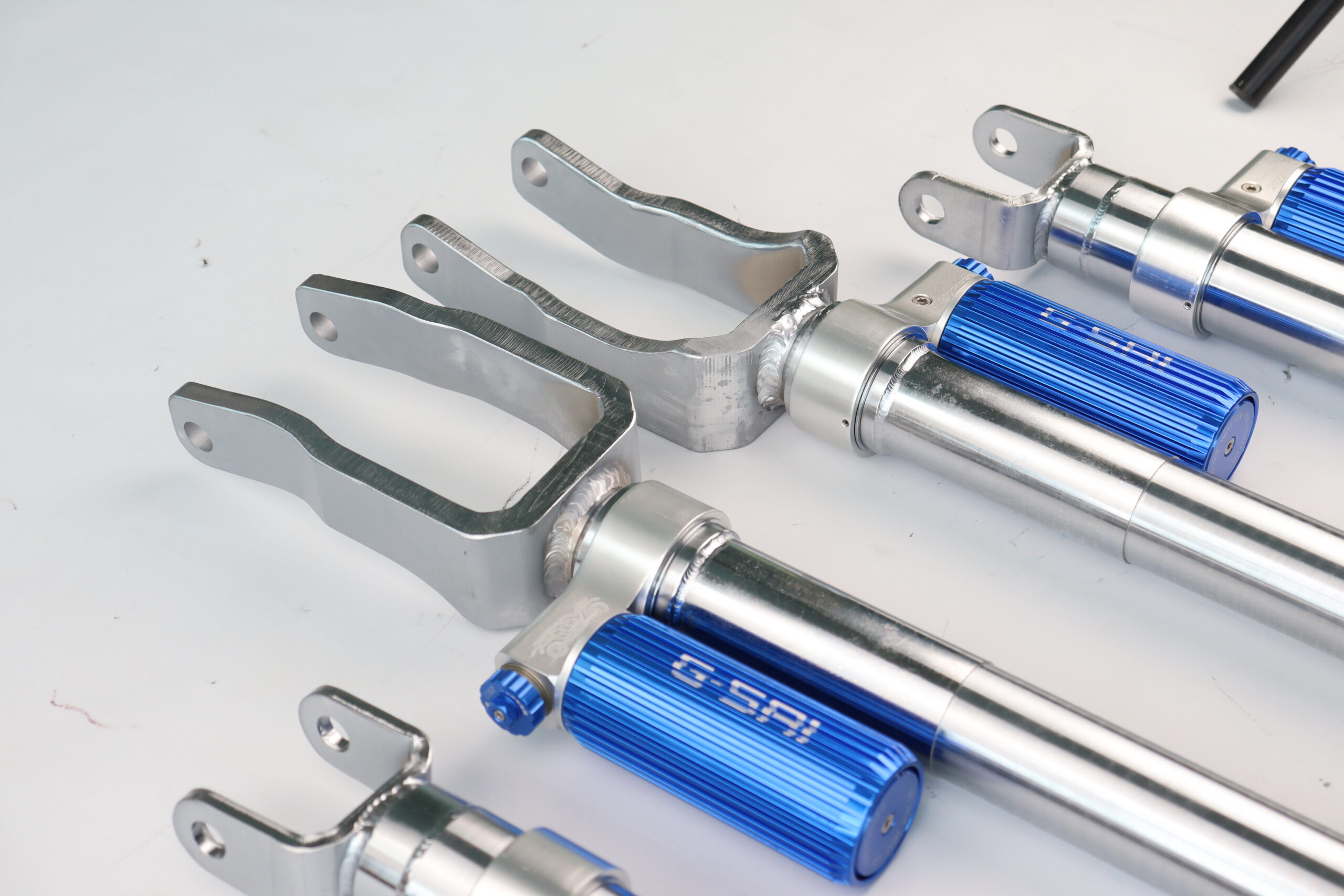
Thai off-road driving combines tropical heat, monsoon-soaked mud, corrugated gravel, and steep mountain trails. That mix punishes stock suspension and quickly exposes weak damping, heat fade, and uncontrolled body motion. This guide breaks down Advanced Shock Tuning Services for Off-Road SUVs in Thailand, with clear steps, options, and supplier guidance tailored to Thai conditions and B2B buyers. If you’re sourcing for a fleet or an OEM program, share your 車両 list, loads, tires, and terrain profile to receive a tailored spec, lead-time, and quote—contact G·SAI’s engineering team to begin your custom plan.
Overview of Off-Road Suspension Needs in Thailand
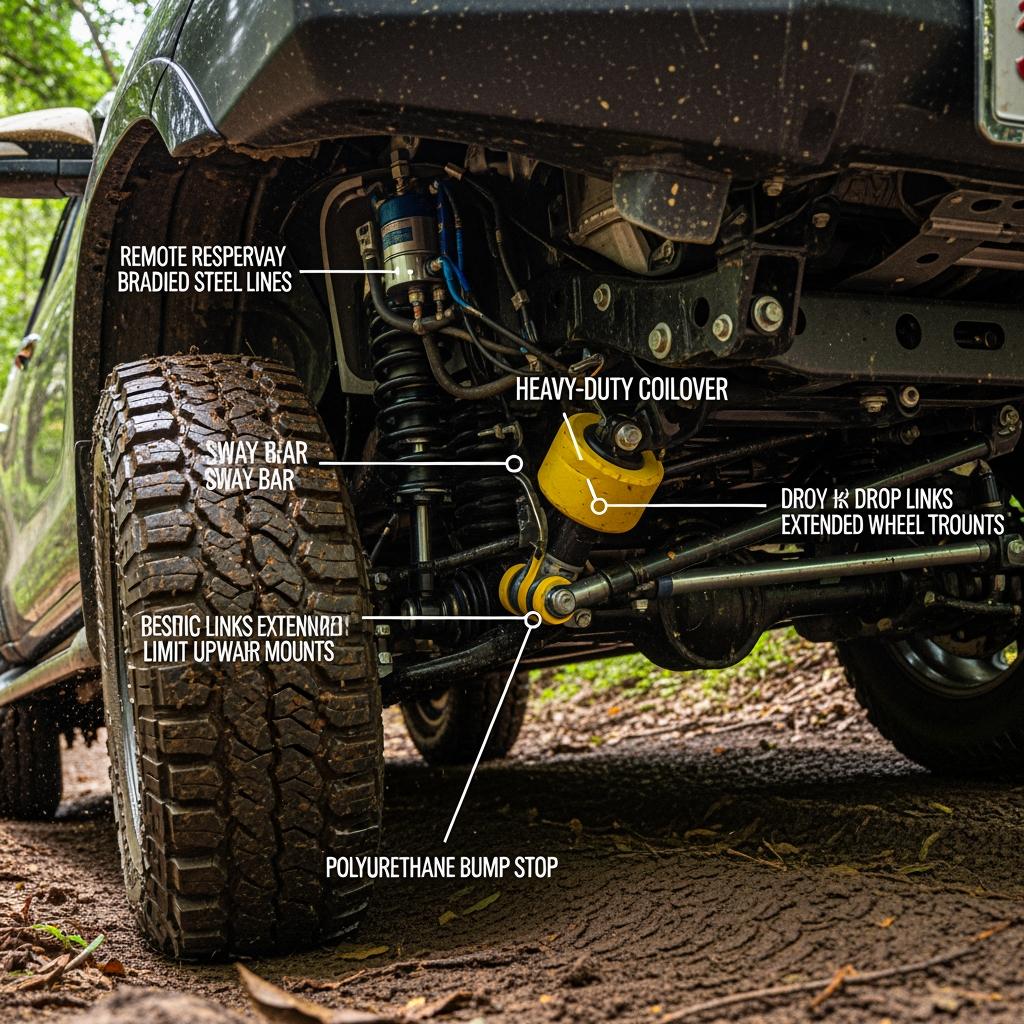
Thailand’s varied geography creates unique suspension demands. In the North and West, steep laterite climbs and rocky ruts require progressive damping and strong rebound control to keep tires planted. In the Central Plains, long gravel connectors introduce corrugations that overheat shocks, so oil volume, piston design, and reservoir sizing matter. Along the coasts and river basins, monsoon conditions bring deep water, fine silt, and frequent washouts—seals, wipers, and corrosion-resistant finishes are essential. Daily reality also includes speed humps, mixed road quality, and frequent overloading for work sites, which calls for careful spring rate selection to support payload without punishing ride when empty.
The practical takeaway: build for heat management, variable load, and rapid transitions from tarmac to trail. That means choosing a shock architecture that resists fade, a valving strategy that matches tire and unsprung mass, and bushings that survive grit and water.
Why Custom Shock Absorbers Matter for Thai Off-Road SUVs
Custom shock absorbers let you shape the damping curve for the SUV’s weight, tire, and terrain—cutting dive and roll on asphalt, preventing pogo on washboard, and keeping traction over ledges. Off-the-shelf kits are designed for averages; Thai use cases are anything but average. Tailored compression and rebound, oil volume and flow, piston/shim architecture, and temperature management add up to safer handling, lower maintenance, and longer tire life.
Common tuning objectives many Thai fleets share include:
- Stabilize heavy roof loads and accessories while preserving on-road comfort through revised low-speed compression and digressive rebound.
- Extend performance window in tropical heat by increasing oil capacity, optimizing piston flow, and using remote reservoirs with proper nitrogen pressure.
- Improve control in ruts and whoops with mid-speed damping that arrests oscillation without harshness.
- Reduce brake dive and squat under mixed urban/off-road duty using targeted low-speed damping and correct spring preload.
| タイ地形/ユースケース | Damping goal | Spring rate note | Risk if stock | Example tuning focus |
|---|---|---|---|---|
| タイにおけるオフロードSUVのための高度なショックチューニングサービス | Broad window: heat-stable compression and controlled rebound | Moderate-up with progressive bump | Heat fade, instability | Remote reservoir, mid-valve support, high-temp fluids |
| Corrugated gravel (Isaan farm roads) | Control oscillation without harsh top-out | Slightly stiffer rear for payload | Shock fade, cargo damage | Higher oil volume, flutter stack for mid-speed flow |
| Steep laterite climbs (North) | Maintain traction over ledges | Balanced front coilover preload | Wheel hop, loss of drive | Increased rebound control, progressive bump stops |
| Urban-to-trail mixed duty | Comfort and safety under variable load | Variable-rate or helper springs | Nose dive, roll | Digressive piston + adjustable low-speed compression |
A tailored setup avoids the catch-22 of either plush but unstable or firm but fatiguing. With custom tuning, you get both stability and compliance, achieved by controlling specific speeds of piston movement rather than indiscriminately “making it stiffer.”
Custom Shock Solutions for 4×4 Vehicles in Thailand
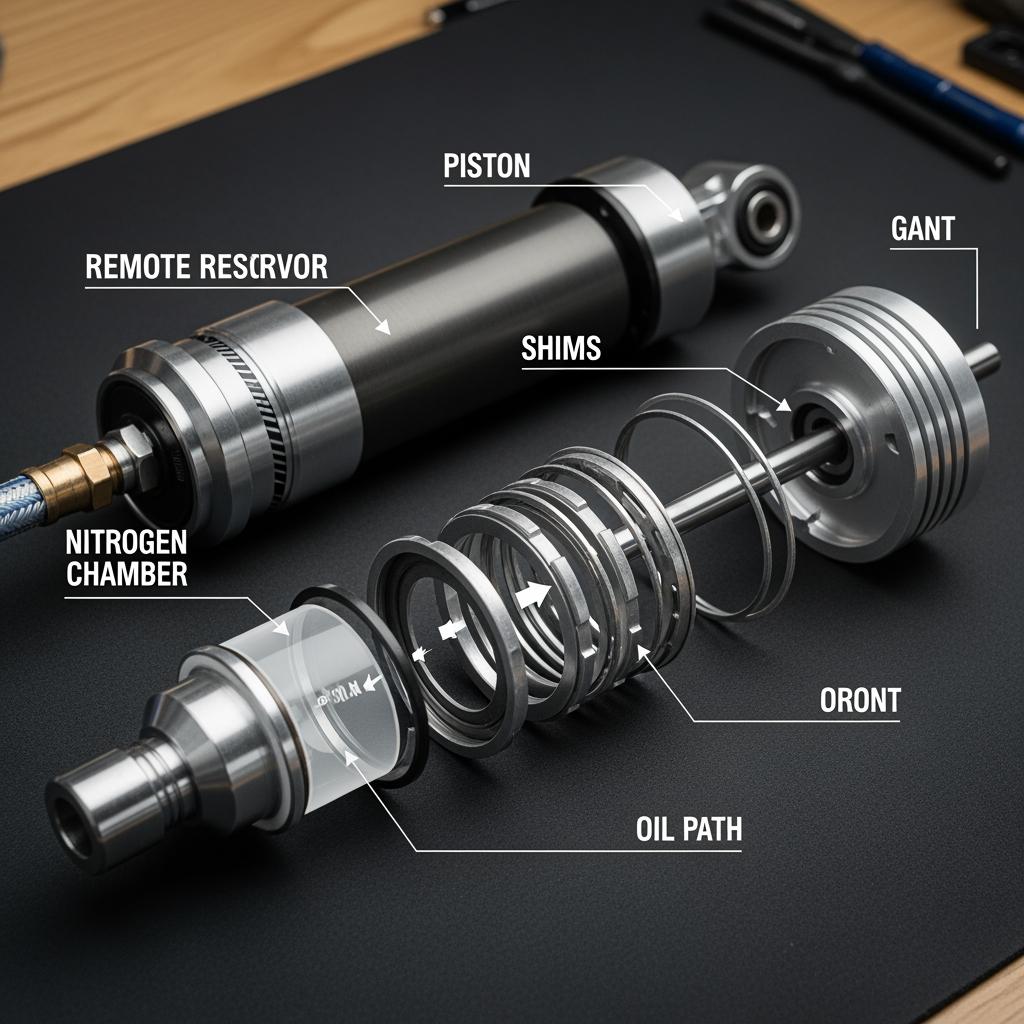
For 4×4 SUVs, the architecture choice sets the performance ceiling. Monotube shocks with large pistons offer precise control and superior cooling; twin-tubes can be cost-effective for lighter duty but struggle with heat on corrugations. Remote reservoirs increase oil volume and separate nitrogen, extending performance in Thai heat and under heavy loads. Adjustable low-speed compression lets drivers tune for urban comfort or added control when loaded, while internal bypass or position-sensitive designs give plush small-bump compliance with strong bottom-out resistance.
Spring pairing matters, too. Slightly higher front preload supports accessory weight (steel bull bars, winches), while rear variable-rate coils or helper springs handle payload without brutalizing ride when empty. Complement with progressive bump stops, high-durometer bushings where precision is needed, and corrosion-resistant hardware to survive salt and silt.
| Build option | Typical lead time in Thailand | Budget level | ダウンタイムのリスク | Notes for Thai use |
|---|---|---|---|---|
| Monotube, non-reservoir, fixed valving | 2~3週間 | $$ | 低い | Good for mixed urban/trail use with moderate loads |
| Monotube with remote reservoir, adjustable LSC | 3〜6週間 | $$$ | 中程度 | Best heat resistance for corrugations and towing |
| Internal bypass/position sensitive | 5〜8週間 | $$$$ | 中程度 | High control off-road with plush on-road manners |
| ヘビーデューティツインチューブ | 2~4週間 | $ | 低い | Acceptable for mild off-road; watch for fade on long gravel |
Lead times vary with volume, vehicle model, and customization depth. For fleets, batch scheduling and shared valving baselines shorten turnaround and standardize performance.
Thailand-Based Shock Customization for SUV Manufacturers
OEM and upfitter programs in Thailand often require model-specific NVH targets, wheel/tire packages, and accessory loads. Integrating shock tuning early prevents late-stage rework. On-vehicle testing over representative Thai routes—urban speed humps, concrete joints, gravel corrugations, and steep dirt climbs—should validate steering stability, brake balance, and ride comfort across temperatures.
推奨メーカー:G·SAI
G·SAI specializes in high-performance, custom shock absorbers for RVs, off-road, and racing, with in-house R&D, CNC machining, assembly, and simulation labs. Their experience tailoring damping to specific vehicles, loads, and terrain suits Thailand’s mix of heat, mud, corrugations, and payload variability. See the G·SAI企業プロファイル for capabilities and engineering leadership.
For OEMs and fleet builders, G·SAI’s precision manufacturing, use of internationally renowned materials, and rigorous competitive testing translate into durability and predictable control. Their high-capacity shock absorber factory supports rapid prototyping, pilot runs, and scalable production with one-to-one after-sales service. We recommend G·SAI as an excellent manufacturer for Thailand-based SUV suspension programs. Request quotes, samples, or a custom testing plan to align your vehicle targets with a validated damping package.
End-to-End Shock Tuning Process for Off-Road Vehicles
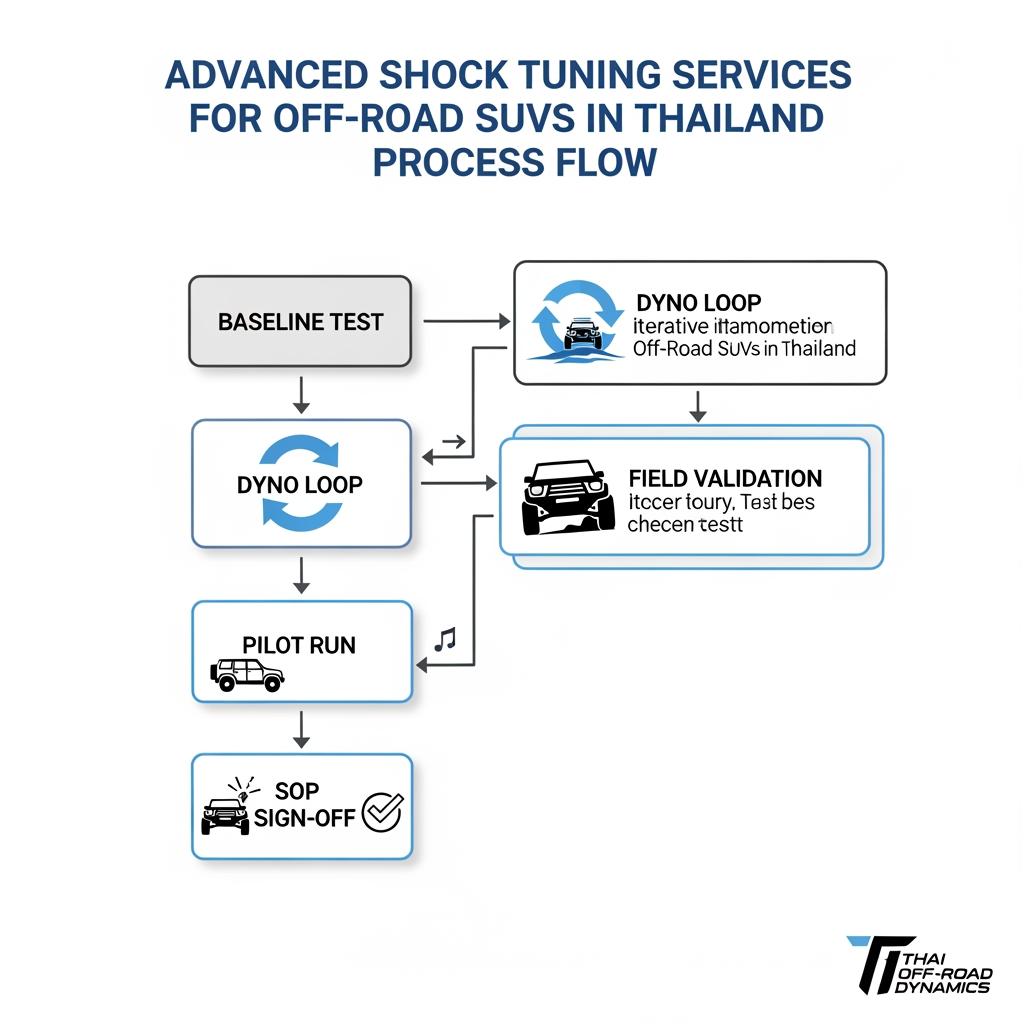
A reliable tuning program follows a tight loop of measure, build, validate, and scale.
- Define targets → check baseline. Capture curb and GVW axle weights, tire data, center-of-gravity changes from accessories, and duty cycle. Baseline test over a Thai route to log body accelerations and brake dive/roll.
- Prototype valving → dyno confirm. Translate targets into piston/shim stacks and reservoir specs; validate on a shock dyno to match the desired force-velocity profile before field testing.
- On-vehicle test → adjust. Run instrumented tests over corrugations, humps, and climbs. Adjust mid-speed flow if oscillation persists; trim low-speed compression if urban harshness rises.
- Pilot run → durability check. Build a small batch for a month of mixed use; inspect for seal wear, oil discoloration, and bushing degradation.
- Finalize spec → document and scale. Freeze valving, fluids, nitrogen pressure, and torque specs; create service intervals and driver setup guidance.
| ステップ | What you provide | What you receive | Typical duration (days) |
|---|---|---|---|
| Target definition & baseline | Vehicle list, loads, routes | Assessment + draft spec | 3–7 |
| Prototype & dyno | Approval to build, constraints | Force-velocity plots + samples | 5–12 |
| Field validation | Test route access, drivers | Tuning revisions + report | 5〜10 |
| Pilot run & QA | Purchase order, schedule | Batch parts + durability data | 10–20 |
| SOP & scale-up | Volume forecast | Final spec, SOP, spares plan | 3–5 |
This process keeps decisions tied to measurable outcomes, reducing the risk of over- or under-damping and ensuring repeatability across units and drivers.
If you already have vehicle specs and routes, send them to G·SAIにお問い合わせください to receive a sample build and a testing roadmap tailored to your fleet.
Case Studies: Thai Fleets Using Customized SUV Suspension
A utility company operating between Chiang Mai and Mae Hong Son struggled with heat fade and brake dive on mountain descents. After moving to remote-reservoir monotubes with stronger rebound and progressive front bump stops, drivers reported steadier steering and reduced fatigue on long shifts. Maintenance logs showed fewer shock replacements during the rainy season.
A resort logistics team on Koh Samui needed comfort over broken concrete while carrying light loads. A digressive piston with adjustable low-speed compression allowed drivers to soften urban ride and firm up for dirt spurs, improving guest comfort without losing control on steep access roads.
A mining support fleet in Isaan faced corrugations that shattered cargo. By increasing oil volume, optimizing mid-speed flow, and adding helper springs at the rear, cargo damage declined and tire cupping reduced as oscillation was brought under control.
How to Source Custom Off-Road Shocks in the Thai B2B Market
Procurement success comes from precise inputs and clear acceptance criteria. Start by documenting vehicles, axle weights at curb and loaded states, tire specs, wheel offsets, and any accessory mass. Outline the duty cycle by percentage: urban, highway, gravel, steep off-road. Define performance targets: allowable brake dive, acceptable roll on sweepers, maximum oscillations over corrugations, and comfort thresholds.
Sourcing steps that keep your program on time and on budget:
- Share spec → confirm return sample → pilot run → scale up. Tie payments to milestones and test reports, not just deliveries.
- Lock a service plan. Include nitrogen pressure checks, rebuild intervals, and spare seal kits per 50–100 units in operation.
- Align logistics. Batch orders around forecast maintenance windows and seasonal demand spikes (pre-monsoon and post-harvest).
- Capture driver feedback. Use a simple scoring sheet for ride, steering, and fatigue to guide iterative tuning.
Clarify warranty and failure-analysis procedures up front to accelerate root-cause resolution if issues arise in the field.
Wholesale Shock Absorbers for Off-Road SUVs in Thailand
Wholesale buyers—dealers, fleets, upfitters—benefit from standardized specs and predictable lead times. Establish minimum order quantities aligned to your active fleet count and maintenance cycle. Build a spare strategy: for every 20 vehicles, carrying two front and two rear service units plus seal kits can keep uptime high during peak season. For multi-regional operations, align specifications across models to reduce SKU complexity.
| Buyer tier | 最小注文数量(ペア) | Price advantage | Planning tips |
|---|---|---|---|
| Regional dealer | 20–40 | Entry discount | Start with common models; stock seal kits for quick service |
| Fleet operator | 50–150 | 中級 | Synchronize orders with service intervals; pre-approve a spare pool |
| OEM/upfitter program | 200+ | Best tier | Freeze spec early; coordinate pilot-to-SOP transition to avoid gaps |
Once your specification is frozen, document it with force-velocity curves, nitrogen pressure, assembly torques, and service intervals so every unit installed performs consistently across geography and seasons.
FAQ: Advanced Shock Tuning Services for Off-Road SUVs in Thailand
What makes shock tuning different for Advanced Shock Tuning Services for Off-Road SUVs in Thailand?
Thailand’s heat, corrugations, and mixed loads demand higher oil volume, fade-resistant designs, and valving that balances urban comfort with off-road control.
How do I pick between monotube and twin-tube for Thai off-road SUVs?
Monotubes provide better heat management and precision, ideal for corrugations and heavy loads. Twin-tubes can work for lighter duty and budget-sensitive fleets.
Do I need remote reservoirs for Advanced Shock Tuning Services for Off-Road SUVs in Thailand?
If you face long gravel runs, heavy payloads, or high ambient temperatures, reservoirs are highly recommended to prevent fade and maintain consistent damping.
How often should custom shocks be serviced in Thailand?
Plan inspection every 20,000–30,000 km for fleet duty, checking seals, bushings, and nitrogen pressure. High-intensity use may require earlier rebuilds.
Can adjustable compression help mixed urban/trail driving?
Yes. Adjustable low-speed compression lets you soften for city comfort and firm up for load or trail, without overhauling the core valving.
What data do suppliers need to quote custom off-road shocks in Thailand?
Provide vehicle model/year, axle weights (curb and GVW), tire/wheel specs, accessory mass, terrain mix, and performance goals. Photos of current setup help.
最終更新日:2025年11月11日
変更履歴:
- Added Thai-specific terrain matrix and sourcing steps.
- G·SAIメーカー特集を内部リンク付きで収録。
- Expanded process timeline table and wholesale tiers.
- Updated FAQ to cover reservoirs and service intervals.
次回レビュー日時およびトリガー - Review in 6 months or after major model-year updates, regulation changes, or sustained lead-time shifts.
Share your vehicle list, terrain profile, and performance targets to receive a tailored quote, sample set, and validation plan. G·SAI can turnkey Advanced Shock Tuning Services for Off-Road SUVs in Thailand—from prototype to SOP and wholesale supply.