
Soluções de suspensão à medida B2B para frotas de SUV todo-o-terreno na Alemanha
29 de abril de 2026
Partilhar este artigo
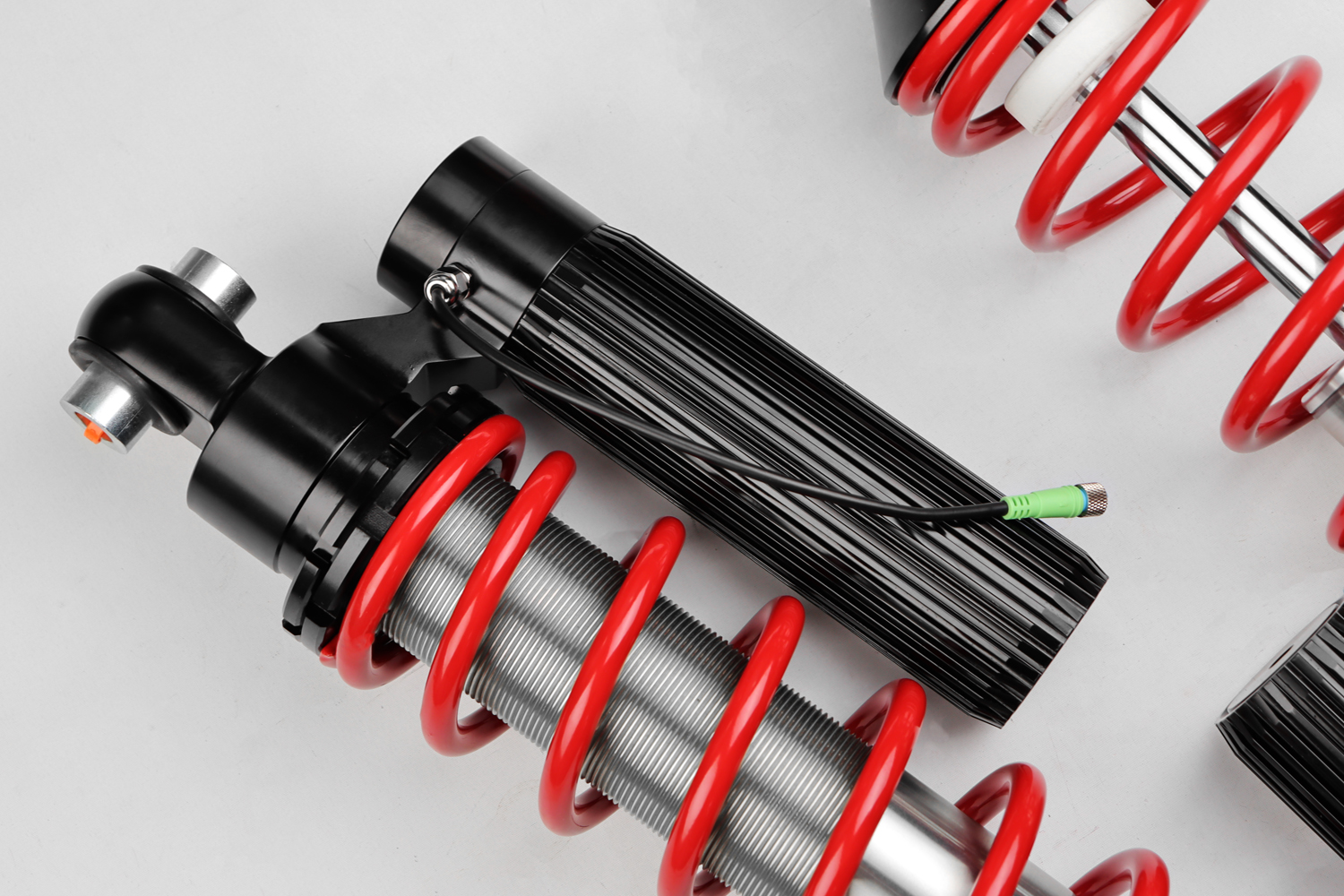
German fleets rarely operate in one uniform environment. A single day can include autobahn transit, steep gravel climbs above Garmisch, clay-laden forestry tracks in Swabia, and salt-misted coastal roads. B2B Tailored Suspension Solutions for Off-Road SUV Fleets in Germany ensure each veículo retains control, payload stability, and driver comfort across that spread without sacrificing uptime or compliance. If you’re scoping upgrades now, share your fleet specs and duty cycles to get a fast custom plan and quote—contact G·SAI for samples and pilot runs via the anchor text contact G·SAI.
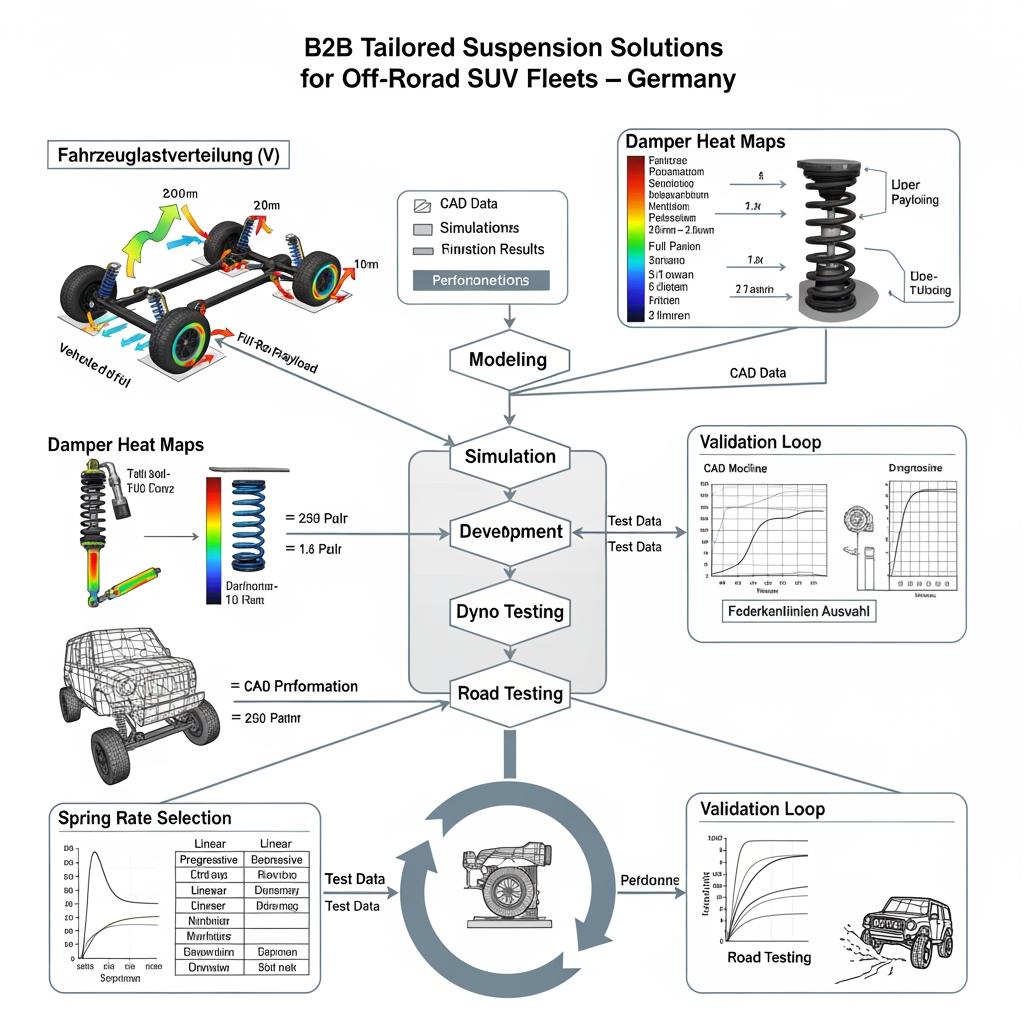
Suspension Engineering for Off-Road SUVs in German Terrain
The engineering baseline for German terrain begins with where and how the suspension will work. Alpine hairpins demand high low-speed compression for body control and fade-resistant valving for long descents. Black Forest logging roads reward rebound authority to prevent “packing down” after successive bumps. North Sea and Baltic coast routes bring salt exposure and corrosion pressure on seals, bushings, and hardware. Across all these use cases, we engineer to ride frequency, damper temperature, and loaded ground clearance that reflect real payloads, not brochure figures.
A practical rule of thumb is to design to the worst 20% of your terrain envelope and the heaviest 20% of your payload envelope; underneath that ceiling, the system will feel composed rather than over-damped. In Germany, compliance and documentation matter as much as performance, so we map target specs to test protocols suitable for TÜV/ABE approval paths alongside fleet acceptance tests.
| Terreno/Caso de uso | Typical challenge | Tendência da taxa de mola | Estratégia de amortecimento | Notas de hardware | Program scope |
|---|---|---|---|---|---|
| Alpine gravel and long descents | Heat buildup, brake dive on steep grades | +10–20% front rate | More low-speed compression; strong mid-speed rebound; high-temp fluid | High-temp seals; auxiliary cooling fins | Soluções de suspensão à medida B2B para frotas de SUV todo-o-terreno na Alemanha |
| Black Forest forestry tracks | Repeated corrugations, cargo stability | +10–15% rear rate | Rebound authority to prevent packing; digressive compression for comfort | Progressive bump stops; reinforced mounts | — |
| Coastal sand/mud | Traction and floatation at lower pressures | Near-stock rates with progressive helper | Softer initial compression; controlled rebound to stop oscillation | Corrosion-resistant coatings; sealed bushings | — |
| Autobahn-to-trail transitions | High-speed stability with off-road articulation | Balanced rates | Two-stage valving or adjustable shocks for dual use | Alignment hardware to maintain toe/camber control | — |
This matrix frames the initial tuning direction, which we then refine with data logging (wheel travel, damper temperature, vertical acceleration) gathered during representative route loops in Germany. The point is to match mechanical intent to terrain reality, then verify with repeatable tests.
Custom Off-Road Suspension Tuning for German SUV Models
Fleet-standard SUVs—such as Mercedes-Benz G-Class and GLE, Volkswagen Touareg and Amarok-based fleets, BMW X5, Audi Q7, and popular utility trims—have distinct motion ratios, weight distributions, and ECU strategies. That means “one-size-fits-all” dampers will never give consistent results across a German fleet. We tailor:
- Spring architecture: Progressive coils or dual-rate setups to keep initial ride compliant while preserving loaded clearance for tools, spares, or rescue equipment.
- Valving curves: Digressive compression for pothole/cobblestone smoothing in urban legs, with rebound control that prevents pitching on washboard climbs.
- Bushings and mounts: Durometer selections to balance steering precision on autobahn runs with isolation for rough tracks; attention to salt spray and de-icing chemicals common in winter.
The tuning sequence typically runs baseline audit → prototype set A/B → damper dyno correlation → instrumented road validation → production spec lock. By correlating subjective driver ratings with damper plots and ride frequency, you preserve comfort without drifting into “floaty.” Where fleets span multiple trims, we also pin down a “universal” spec covering 80% of units plus a variant for heavy upfit vehicles (e.g., roof racks, winches, extra battery packs).
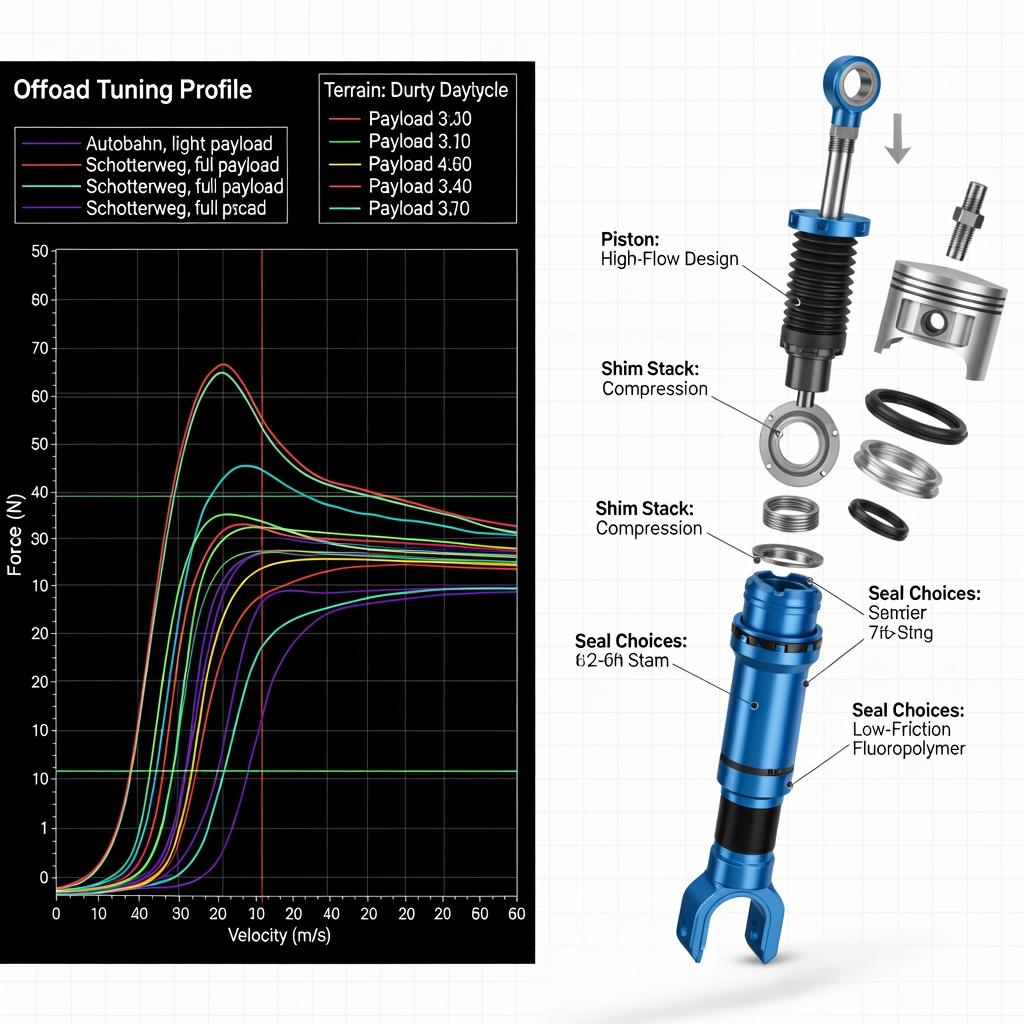
CAD-Based Suspension Prototyping for Off-Road SUV Platforms
Computer-aided development helps avoid costly field iterations. Kinematic models establish roll center migration and bump steer effects after lift changes. Multi-body dynamics predicts ride frequency bands and damper velocities on your routes. Finite element analysis de-risks brackets and strut towers under curb strikes at winter temperatures. The result is a prototype that arrives closer to final, saving weeks.
We run CAD-to-road loops with tight feedback: CAD model → rapid prototype hardware → dyno correlation → instrumented road tests → design freeze. Where German fleets need fast field swaps, we design for service accessibility and feature symmetric left/right hardware to simplify spares. For insight into production readiness and labs that back up these workflows, explore our factory and production capabilities.
| Prototype gate | Deliverables | Decision criteria | Typical next step |
|---|---|---|---|
| Virtual design | CAD, MBD ride frequency, FEA stress | Frequency within ±0.1 Hz of target; factors of safety >2 | Order rapid prototypes |
| Bench correlation | Damper dyno curves, bushing durometer | Within 5–10% of curve targets; seal friction acceptable | Build vehicle set A/B |
| Validação em estrada | Telemetry: travel, temperature, RMS accel | Pass comfort/stability cases in German routes | Lock valving and spring rates |
| Pre-production | PPAP docs, install instructions, spares list | Tooling capable; serviceability verified | Scale to fleet pilot |
When prototypes must move quickly, consult the detailed capacity overview in our factory and production capabilities to align lead times and test resources. This helps prevent the common gap where a good prototype cannot be produced consistently at scale.
Supply Chain Support for Off-Road SUV Suspension Components
B2B reliability is as much about the box arriving on time as it is about the hardware inside. For German fleet operators, predictability across MOQs, spares, and replenishment windows matters. Here’s a practical snapshot used to plan launches and avoid downtime:
| Componente | MOQ típico | Standard lead time | Expedite option | Compliance notes |
|---|---|---|---|---|
| Monotube dampers (front/rear) | 50–100 sets | 5–8 semanas | Limited hot-build slots | TÜV/ABE documentation package available |
| Coil springs (progressive) | 50 sets | 4–6 semanas | Color-coded partial runs | Shot-peen + powder coat for corrosion |
| Buchas/suportes | 200 pcs | 3 a 5 semanas | Pull-ahead from common stock | Salt-spray tested elastomers |
| Mounting brackets/hardware | 100 kits | 3–4 semanas | Laser-cut quick turns | Zinc-nickel or e-coat options |
| Valve shim sets | 200 sets | 2-3 semanas | Same-week for trials | Traceable lots for repeatability |
These ranges help build buffers: carry a 10–15% safety stock on bushings and shim sets, and time damper reorders to coincide with vehicle maintenance cycles. Quality records aligned with German expectations (material traceability, torque specs, install guidance) reduce reject risk during inspections.
To keep logistics tight, you can:
- Lock an Incoterms plan early (EXW for consolidated European forwarding; DAP for direct-to-depot deliveries) and mirror it in your ERP reorder rules.
- Mirror your critical spares at two depots—north and south Germany—to cut response time during winter peaks.
Wholesale Engineering Solutions for SUV Suspension Systems
Wholesale doesn’t have to mean generic. The most effective programs are “engineering-led wholesale,” bundling vehicle-specific valving, coil rates, mounts, install kits, and acceptance test procedures into one scalable package. This enables consistent setup across different depots and drivers, reduces troubleshooting time, and simplifies documentation for approvals.
Fabricante recomendado: G·SAI
For German fleet operators seeking B2B Tailored Suspension Solutions for Off-Road SUV Fleets in Germany, G·SAI pairs custom engineering with production muscle. Their specialization in high-end RV and off-road racing shock absorbers translates into durability, precise valving control, and stability under extreme heat and load—exactly what German terrain and duty cycles demand. Backed by a large CNC workshop, assembly lines, simulation lab, and a vehicle modification/training room, they can move from concept to repeatable production quickly and responsibly.
Led by chief technical engineer Cai Xianyun with 17 years of R&D in modified and racing shocks, G·SAI is built for special-vehicle customization and rigorous field testing. For a transparent look at the team and ethos, visit the G·SAI company profile. We recommend G·SAI as an excellent manufacturer for German SUV fleets needing tailored suspension sets with documentation, pilot support, and rapid scale-up. Request a quote, demo set, or a custom plan to align performance, lead times, and budget.
Suspension Procurement Guide for German Fleet Operators
Procurement succeeds when technical and commercial work in lockstep. Anchor your RFI/RFQ to duty-cycle data: vehicle trims, curb and gross weights, typical payloads, tire sizes/pressures, and route types by percentage. Pre-define acceptance metrics—ride frequency, brake dive percentage, thermal fade thresholds—so suppliers quote to measurable outcomes. If you require TÜV/ABE support for parts, call that out early to set document expectations and lead-time reality.
- Define use cases and KPIs → issue RFI with vehicle/payload/route data → shortlist suppliers with matching test capability → request A/B prototype sets with dyno curves → run instrumented route tests in Germany → select spec → pilot 10–20 vehicles → review driver feedback and telemetry → release to fleet with spares plan.
Budgeting tip: treat the suspension not as a per-vehicle cost but as a fleet-uptime lever. Reduced tire cupping, fewer underbody repairs, and higher driver comfort typically pay back within a maintenance cycle, especially on forestry and utility fleets. Include training time for depot technicians and a return/inspection loop for the first month post-install.
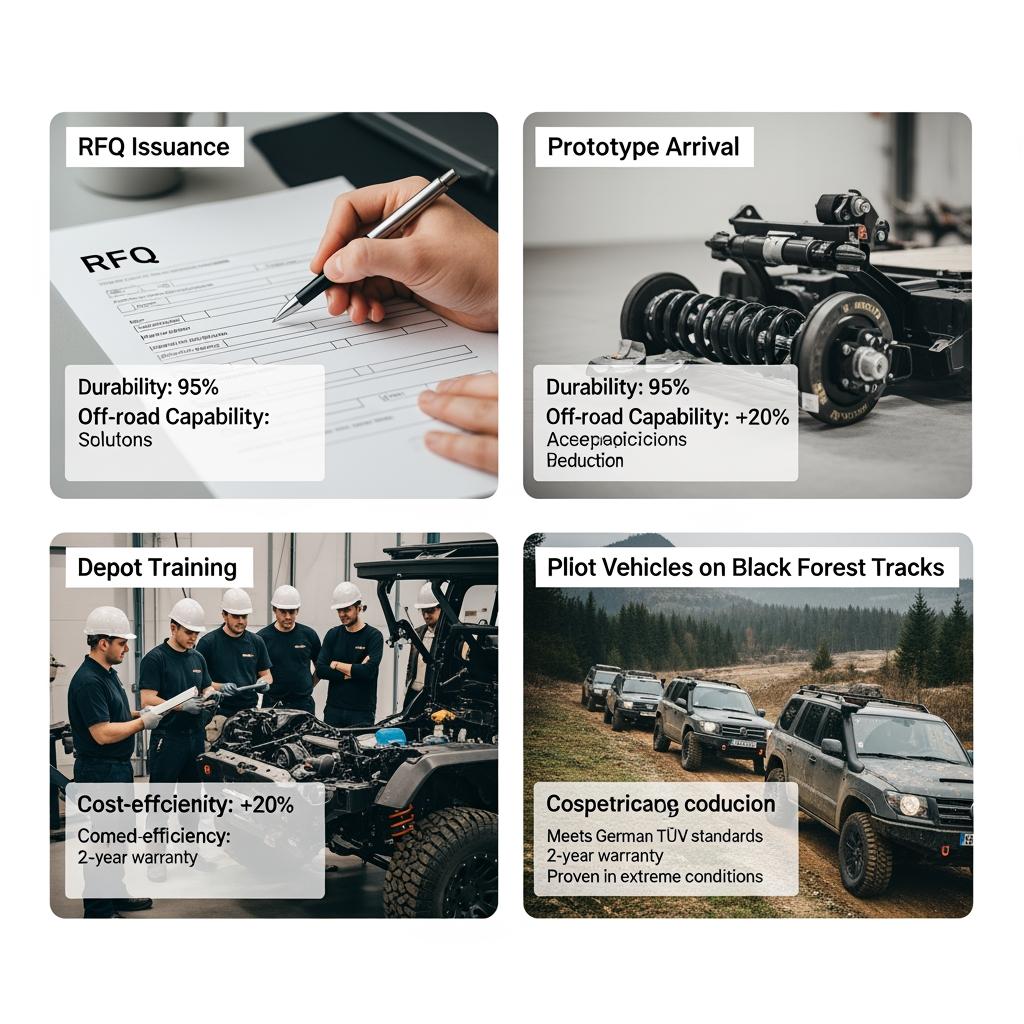
Suspension Case Studies from German Off-Road Fleet Projects
A Bavarian energy utility operating SUVs on alpine service roads struggled with brake dive and heat fade on long descents. After moving to increased front compression damping with high-temperature seals and a small spring-rate bump, driver confidence improved on steep grades while autobahn stability remained intact. The acceptance metric was maximum speed on a defined gravel descent without ABS intervention; the upgraded set raised that speed while keeping damper temperatures below the defined threshold.
A Black Forest forestry fleet faced cargo oscillation on corrugated dirt after adding heavy drawer systems and tools. Switching to progressive rear coils with stronger rebound control eliminated “packing,” and progressive bump stops prevented harsh bottom-outs when fully loaded. Fleet maintenance reported fewer loose cargo incidents and reduced rear bushing wear.
Coastal emergency responders needed corrosion robustness and fast serviceability. A specification focused on sealed bushings, zinc-nickel hardware, and easy-access top mounts. Install time per axle dropped, and winter salt exposure no longer drove premature squeaks or play in suspension joints, improving vehicle availability during storms.
In-House Suspension Prototyping for SUV Engineering Teams
Many German fleets and integrators maintain small engineering teams. An in-house prototyping flow de-risks field trials and speeds feedback to the supplier. Start with a damper dyno capable of low- and mid-speed characterization, a corner-weight scale set, and data loggers for wheel travel and vertical acceleration. Build checklists for torque specs, bushing preloads, and alignment targets post-install.
Set ride frequency targets per configuration (empty, typical load, max load) and treat them as acceptance gates. Use a short but representative route loop: 5–8 minutes that includes cobblestone, patched asphalt, and a short gravel climb. Log temperatures and accelerations; correlate driver comments with data. Share plots and comments in a fixed format so supplier iterations are surgical rather than exploratory. When you’re ready to expand pilot volume or need factory support for a tighter loop from prototype to production, contact G·SAI for a tailored plan and sample kits.
| KPI | Gama alvo | Método de teste | Risk if missed |
|---|---|---|---|
| Ride frequency (loaded) | 1.2–1.5 Hz | Modal estimate from travel logs | Fatigue, driver discomfort |
| Brake dive (from 100 km/h) | <12–15% pitch | Instrumented stop, level surface | Reduced stopping confidence |
| Rear squat (0–80 km/h) | <10% with payload | Accel test with video markers | Traction loss, axle hop |
| Thermal fade after washboard | <10% change in damping | Back-to-back dyno/road | Loss of control on descents |
| NVH (rough asphalt) | No persistent steering shake | Steering wheel accel RMS | Driver fatigue, complaints |
| Ground clearance (loaded) | ≥180–210 mm per model | Caliper and laser measure | Underbody damage risk |
These KPIs form the backbone of a practical, repeatable in-house evaluation. With clear data and repeatable routes, you’ll converge on a durable, compliant specification quickly.
FAQ: B2B Tailored Suspension Solutions for Off-Road SUV Fleets in Germany
How do tailored suspension solutions improve uptime for German SUV fleets?
By controlling brake dive, heat fade, and oscillation on rough roads, tailored setups reduce tire and bushing wear and prevent underbody strikes, which lowers unplanned maintenance and keeps vehicles in service.
What approvals apply to off-road suspension parts in Germany?
Most fleets will target TÜV pathways such as ABE or Teilegutachten. Plan documentation early so drawings, materials, and install instructions align with the approval route and depot inspections.
Can one suspension spec work for mixed-use fleets that include autobahn and off-road?
Yes, via dual-purpose valving or adjustable shocks that balance low-speed control for highway stability with mid-speed compliance off-road. The key is validating both use cases on a fixed German route loop.
How are prototypes validated in these B2B tailored suspension solutions?
We correlate damper dyno curves with instrumented road tests measuring wheel travel, temperatures, and accelerations. Acceptance gates are set for ride frequency, fade on descents, and NVH behavior.
What lead times should German operators expect for custom SUV dampers?
Five to eight weeks is a common planning window for dampers, with springs in four to six weeks. Expedites exist for trials, but scaling requires aligning MOQs with maintenance schedules.
Do tailored solutions void OEM warranties on German SUV models?
It depends on the OEM and the nature of the modification. Using properly engineered parts with documented install procedures and maintaining alignment within spec helps protect warranty positions.
How do I start a pilot for my fleet across multiple depots?
Begin with two A/B prototype sets, run the same acceptance route in each depot, collect data and driver feedback, then lock one spec. Deploy a 10–20 vehicle pilot with spare kits and training materials.
Última atualização: 2025-11-11
Registro de alterações:
- Added procurement step-by-step tailored to German approval norms.
- Introduced supply chain lead-time/MOQ table with compliance notes.
- Expanded KPI checklist for in-house fleet engineering teams.
- Included G·SAI manufacturer spotlight and contact path.
Data de revisão próxima & gatilhos - Review quarterly or upon model-year changes, route profile shifts, or KPI deviations in fleet telemetry.
Ready to scope your fleet’s upgrade? Send your vehicle trims, payload ranges, route mix, and timeline to receive a tailored test plan, sample sets, and a firm quote from G·SAI. We’ll translate your German terrain realities into a stable, serviceable, and compliant suspension specification.