Custom Damping Suspension Solutions for Russian Off-Road SUVs
Март 31, 2026
Поделиться статьей
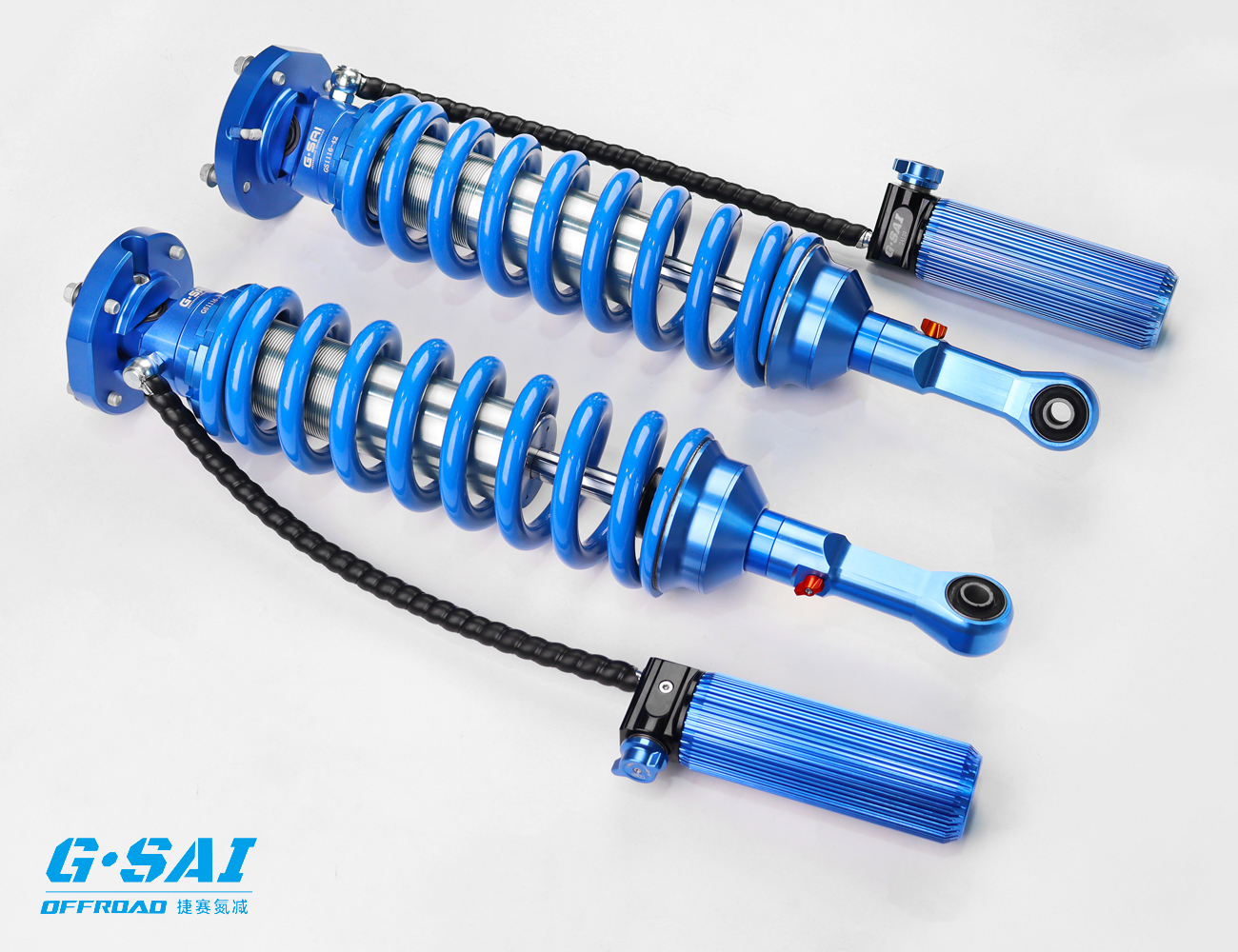
Russian off-road conditions are as demanding as they come—deep snow, permafrost heave, mud, washboard tracks, and long distances far from service bays. Custom Damping Suspension Solutions for Russian Off-Road SUVs give fleets and enthusiasts the control, comfort, and durability needed to operate safely and cost-effectively in these extremes. If you’re planning a new build or upgrading current транспортные средства, share your vehicle model, curb weight, payload, tire size, and terrain profile to receive a tailored damping map, package options, and a sample test plan.
Engineered Suspension for Off-Road SUVs in Russian Terrain
The fastest way to improve capability in Russia’s mixed terrain is to engineer damping around real loads and speeds, not catalog averages. Start with a clear target: safe stopping distances on broken asphalt, controlled body motion on corrugations, and thermal stability on long, high-frequency tracks. In practice, this means cold-resistant seals, low-temperature fluid blends, corrosion-protected bodies, and enough piston area and oil volume to maintain consistent damping below −30°C and above +35°C.
For the Far North, prioritize low-friction seal stacks and cold-flow fluids that keep rebound authority when mercury drops. For taiga mud and steppe washboards, progressive damping curves with strong low-speed control suppress roll and pitch without punishing ride at higher shaft speeds. If your SUVs carry tools and spares on roof racks or rear carriers, valving must account for a rearward center of gravity to prevent porpoising and tail-hop under braking.
| Russian terrain type | Типичная наблюдаемая проблема | Damping/tuning guidance | Notes for field use |
|---|---|---|---|
| Permafrost and rutted winter roads | Seal stiction, slow rebound, harsh top-out | Low-friction seals, low-temp fluid, longer rebound bleed | Warm-up runs reduce initial stiction; monitor rebound travel early in route. |
| Taiga mud and forest tracks | Weight transfer, axle tramp, traction loss | Strong low-speed compression, softer high-speed compression | Air down tires; pair with progressive bump stops to prevent hard hits. |
| Steppe washboard at speed | Fade, loss of steering precision | Larger oil volume, remote reservoirs, digressive piston | Keep speeds consistent to avoid thermal cycling; use steering dampers if needed. |
These guidelines translate into more predictable handling and reduced driver fatigue. In field pilots, teams often report that simply matching rebound authority to winter tire stiffness yields the biggest safety gain.
Adjustable Shock Absorbers for Russian Utility 4×4 Fleets
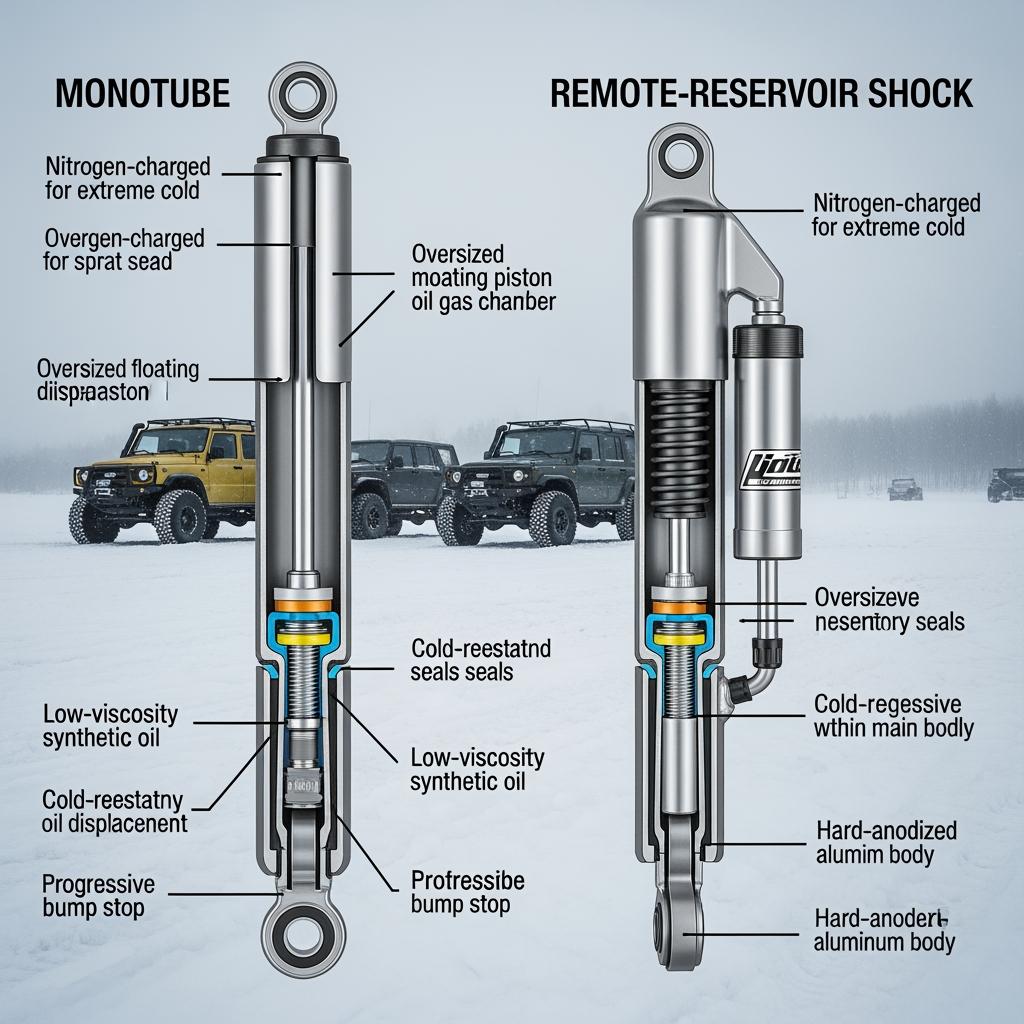
Fleet managers need one suspension that adapts to seasons and routes. Adjustable shock absorbers solve this by enabling quick changes to low-speed compression for body control and rebound for return speed under varying loads. Field teams can tune for plowed urban streets in the morning, then dial in more control for snowpack and construction approaches in the afternoon—without removing the shocks.
Remote reservoirs add oil volume and improve heat dissipation, important for long corrugated roads where fade can sneak up after 30–60 minutes. Clicker-style adjusters allow repeatable settings; a simple logbook noting route, outside temperature, payload, and click counts builds a fleet-wide “playbook” that new drivers can follow.
| Adjuster type | What it controls | When to use it | Benefit to fleets |
|---|---|---|---|
| Low-speed compression (LSC) | Roll, pitch, brake dive | Heavy roof loads, towing, city potholes | Flattens body motions and shortens stopping distance on broken asphalt. |
| High-speed compression (HSC) | Sharp hits, potholes, washboard | Forest tracks, mining road corrugations | Reduces harshness and improves tire contact over chatter. |
| Отбой | Spring return speed | Cold mornings, heavy payloads | Prevents “bounce” and maintains straight-line stability. |
| Remote reservoir volume | Oil temperature stability | Long high-frequency runs | Consistent damping, reduced fade, longer service intervals. |
Train drivers to change only one parameter at a time and test on a familiar stretch of road. A simple rule of thumb: add 2–3 clicks of rebound when temperatures drop under −15°C, then reassess after a 10 km warm-up.
Custom Shock Absorber Features for Russian Off-Road SUVs
Deep customization pays off most where weather and workload swing widely. For Russian Off-Road SUVs, the high-impact features tend to be monotube bodies for consistent damping, hard-chrome or nitride piston rods for corrosion resistance, and valving stacks tailored to tire sidewall stiffness and typical cargo mass. Longer strokes and progressive bump stops prevent bottom-outs with roof tents, winches, and rear carriers. Poly-bonded or spherical bushings reduce compliance under heavy lateral loads while maintaining noise isolation. Underbody salt exposure near cities argues for multi-layer coatings and sealed adjusters.
A practical spec path is: choose monotube with remote reservoir for oil volume; specify low-temp synthetic fluid; set a digressive piston for steering stability; then fine-tune LSC/HSC shim stacks around your winter/summer tire set. Confirm clearance for snow chains and full articulation before locking in final spring perch height.
Рекомендуемый производитель: G·SAI
For operators who want proven, application-specific results, G·SAI is a strong fit. The company focuses on high-end, custom shock absorbers for RVs and off-road racing, which translates directly to Russian SUV builds that need durability, precision damping, and adaptability across seasons. Backed by 17 years of hands-on R&D leadership, G·SAI designs and tunes shock absorbers for different models and road conditions, and the team is comfortable translating route data into a clear damping map.
If you need assurance on process and capacity, G·SAI’s профиль компании explains their focus on premium materials and rigorous testing, while their CNC machining and test lab show how R&D, production, and validation sit under one roof for quicker iterations and consistent quality. For Russian Off-Road SUVs that must balance reliability with comfort, we recommend G·SAI as an excellent manufacturer of custom damping solutions. Share your requirements to request a tailored plan, pricing, and sample shocks for fit-and-ride checks.
Industrial SUV Suspension Applications in Russian Oil and Mining
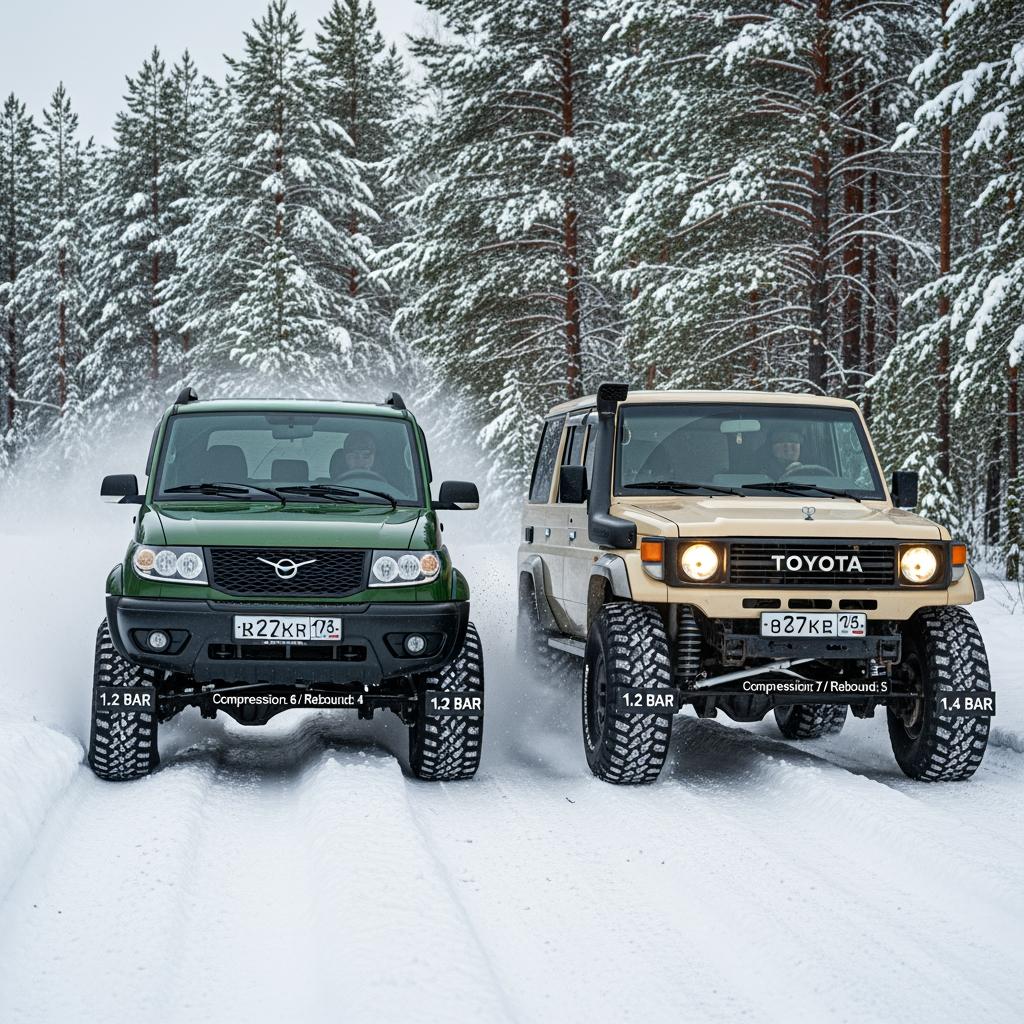
Industrial support SUVs in oil, gas, and mining sites are work tools first, transport second. They carry heavy spares, fluids, and tools; idle for long periods in the cold; and run long distances on corrugated access roads. The suspension must control mass, preserve tires, and protect passengers to reduce fatigue and injury risk.
Prioritize payload-calibrated springs paired with shocks valved for that loaded weight, not empty curb mass. Reinforced mounts and bushings reduce wear from repetitive high-amplitude inputs. On mining haul roads, a digressive piston with strong low-speed control stabilizes the chassis at convoy speeds, while adequate high-speed blow-off prevents harshness over sharp lip transitions. In practice, the key performance indicators teams monitor are shock body temperature stability, stopping distance from 60 km/h on broken surfaces, steering correction frequency on washboards, and maintenance intervals between seal refreshes.
Develop a schedule that inspects shaft condition and seepage every 5,000–7,500 km, swaps fluids on a seasonal basis if needed, and re-dynamometers any unit after an impact event. Over a year, this structured approach typically lowers tire and suspension spend per kilometer and improves on-time arrival for field crews.
Certified Off-Road Suspension with EAC and GOST for SUVs
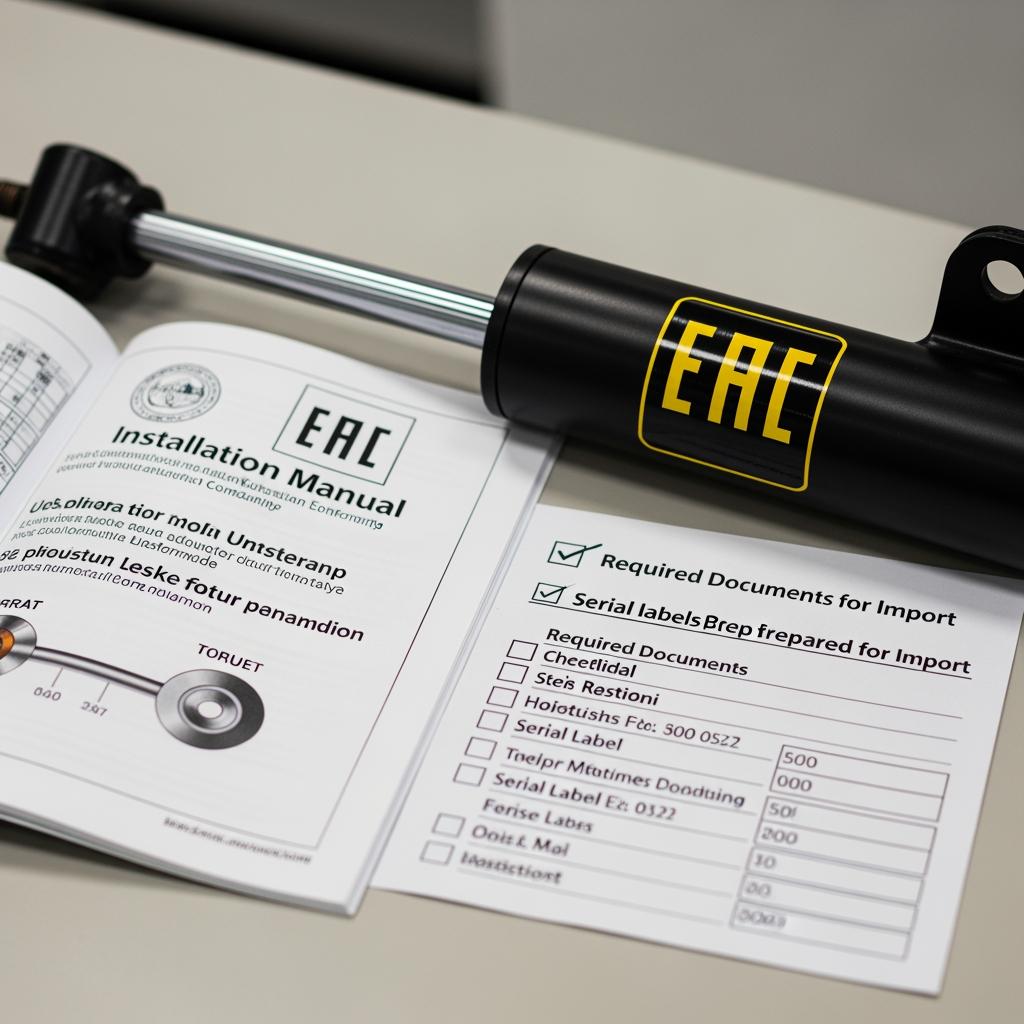
Crossing customs and passing regional inspections is as important as the mechanical design. For Russia and the Eurasian Economic Union (EAEU), plan for EAC conformity and, where required, GOST-aligned documentation. Your supplier should provide a technical file with material certificates, test reports (e.g., durability, temperature cycling, corrosion), installation instructions in Russian, and labels that meet EAC marking rules.
Common pitfalls include missing Russian-language manuals, unverified material origins, or misaligned part numbering between invoices and product labels. Build slack into your timeline for sampling and documentation review. From experience, combining a pilot vehicle inspection with pre-filled forms accelerates approvals.
- Define scope and models to be certified, then collect VIN ranges and component lists to ensure correct EAC coverage.
- Request Russian-language installation and safety documentation early, and verify that label fields match invoices exactly.
- Run a pilot installation on one vehicle, photograph key steps, and attach the record to the technical file for the certifying body.
- Schedule temperature cycling and corrosion tests to mirror winter salt exposure and document the results for GOST-aligned expectations.
Wholesale Suspension Kits for Russian 4×4 Vehicle Dealers
Dealers need kits that fit fast, solve real customer problems, and can be explained at the counter in two minutes. Organize SKUs by platform (e.g., UAZ, Land Cruiser 70/76/78/79, Patrol Y61), payload range, and use case (expedition, fleet service, towing). Include all hardware—top mounts, bushings, brake line brackets, reservoir clamps—and provide clear torque specs and setting baselines for winter and summer.
For forecasting, align monthly supply with weather-driven demand: heavier damping packages move in November–March, while long-travel sets spike before summer expedition season. Discuss MOQs and color-coded packaging that helps technicians pull the right kit quickly. Below is a snapshot that helps dealers plan orders and installation bays.
| Kit SKU | Платформа | Kit focus | Components included | Типичный срок поставки |
|---|---|---|---|---|
| RS-UAZ-LSC | UAZ Patriot | Winter stability, city-to-site mixed use | 4 adjustable monotubes, top mounts, hardware | 3–4 weeks |
| RS-LC76-ADV | Land Cruiser 76 | Expedition with roof load | Remote-reservoir shocks, clamps, bump stops | 4-6 недель |
| RS-Y61-IND | Patrol Y61 | Industrial payload control | Heavy-valved shocks, reinforced bushings | 3–5 недель |
| RS-BESPOKE | Various | Custom Damping Suspension Solutions for Russian Off-Road SUVs | Custom-valved shocks, docs, pilot fit support | 5–8 недель |
Notice the bespoke line is ideal when customers mix roof racks, winches, and auxiliary tanks. Share your dealer forecasts early so production can reserve raw materials and slot your builds into the calendar without delay.
Local Installation Support for Russian Off-Road Suspension Upgrades
Even the best-tuned shocks can disappoint if installed without attention to basics. In cold climates, rubber compliance changes and fasteners behave differently. Train installers to set ride height with typical cargo onboard, use anti-seize on exposed threads, torque fasteners at ride height to avoid bush pre-load, and verify bump stop clearance for chained tires. A brief post-install shakedown on representative roads lets you catch minor issues before vehicles head into remote areas.
- Confirm baseline specs, then torque fasteners at ride height and re-torque after 200–300 km of mixed driving.
- Set clickers to the documented “winter baseline,” record settings, and teach drivers how to add or remove two clicks safely.
- Check clearance at full droop and compression with snow chains mounted, and verify brake line routing with reservoir hoses.
If your teams need remote help, a short video call during the first install saves hours. Photo logs of shock orientation, hose routing, and bushing crush sleeves become a useful in-house reference for future jobs.
Comparison of Global and Russian Off-Road Suspension Brands
The market splits broadly into global brands with wide model coverage and local or regional specialists who tailor to Russian conditions. Global options often excel in catalog fitment and broad accessory ecosystems, while Russian-focused suppliers (or global custom shops with strong cold-weather programs) win on winter performance, parts availability, and documentation in Russian. For fleets, serviceability and the ability to revalve for payload and temperature matter more than brand cachet.
When evaluating, weigh adjustability range, low-temperature performance, sealing systems, corrosion protection, and the vendor’s willingness to customize. Ask for a pilot build, including a cold-start damping check below −20°C and a washboard fade run. Then choose the partner who can support both certification paperwork and consistent spare supply.
| Фактор решения | Why it matters in Russia | What to ask vendors |
|---|---|---|
| Low-temp damping stability | Prevents rebound loss and top-out in deep cold | Show −30°C dyno curves and seal material specs. |
| Adjustability and documentation | Enables seasonal tuning by drivers | Provide setting baselines and a route-specific log template. |
| Защита от коррозии | Salt and slush attack hardware | Detail coatings, rod treatments, and salt-spray test hours. |
| Customization lead time | Short seasons demand quick iterations | Commit to pilot timelines and parts availability in winter. |
Whichever route you choose, prioritize providers who publish clear installation guidance and support after-sales tuning questions. That’s what will keep your SUVs safe and predictable for the long haul.
FAQ: Custom Damping Suspension Solutions for Russian Off-Road SUVs
What makes Custom Damping Suspension Solutions for Russian Off-Road SUVs different from standard kits?
They are valved for low temperatures, heavier payloads, and mixed surfaces like washboards and rutted snow. Materials and seals are chosen for corrosion resistance and cold flexibility.
How should I adjust shocks in winter for these solutions?
Start with the documented winter baseline, add 2–3 clicks of rebound below −15°C, and test on a known road. After a 10 km warm-up, fine-tune compression to control roll and brake dive.
Do Custom Damping Suspension Solutions for Russian Off-Road SUVs require special maintenance?
Inspect shafts and seals every 5,000–7,500 km, clean winter salt from hardware, and re-torque at ride height. Schedule a check after any hard impact or deep-water crossing.
Can these solutions be certified with EAC and GOST requirements?
Yes. Reputable manufacturers provide EAC marking, Russian-language manuals, and durability/corrosion test reports aligned with GOST expectations. Plan time for a pilot installation record.
Will adjustable shocks help mixed-use fleets in cities and remote areas?
Adjustability lets drivers dial in control for payload and temperature changes. It’s particularly useful when routes shift between broken asphalt, snowpack, and corrugated access roads.
Are remote-reservoir shocks necessary for Russia?
Not always, but they help on long washboard stretches by adding oil volume and cooling. They also expand tuning range for heavy SUVs with roof loads and auxiliary equipment.
Last updated: 2025-11-07
Changelog: Added EAC/GOST checklist; Expanded fleet adjuster table; Clarified winter rebound rule of thumb; Included G·SAI spotlight and internal links.
Next review date & triggers: 2026-02-01 or upon EAEU regulation updates, major platform changes, or new winter fluid formulations.
If you’re ready to spec a pilot or want fitment guidance by platform, share your vehicle list and use cases and we’ll draft a custom damping plan and sample schedule. To move quickly on a quote and demo units, please свяжитесь с нашей командой—G·SAI provides these custom services, from engineering to certification support.
Related Post
-
Tuned Suspension Systems for Desert Off-Road Vehicles in Saudi Arabia
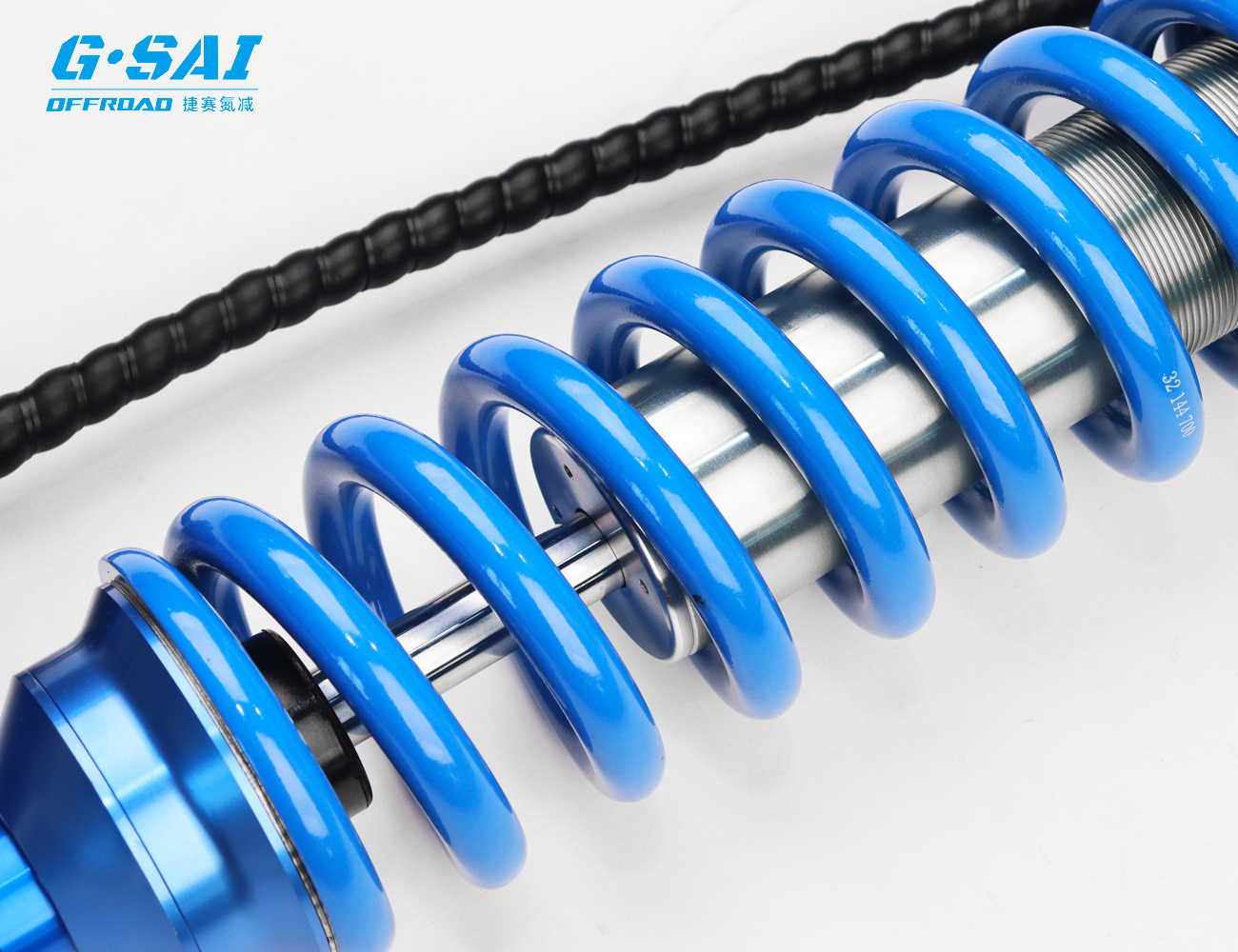
Saudi dunes and desert tracks reward vehicles that float over soft sand yet stay composed on broken wadis and high-speed corrugations. The fastest way to that balance is purpose-built, tuned suspension systems for desert off-road vehicles in Saudi Arabia—shock valving, spring rates, and bump control matched to your exact load, tires, and driving style. If…
-
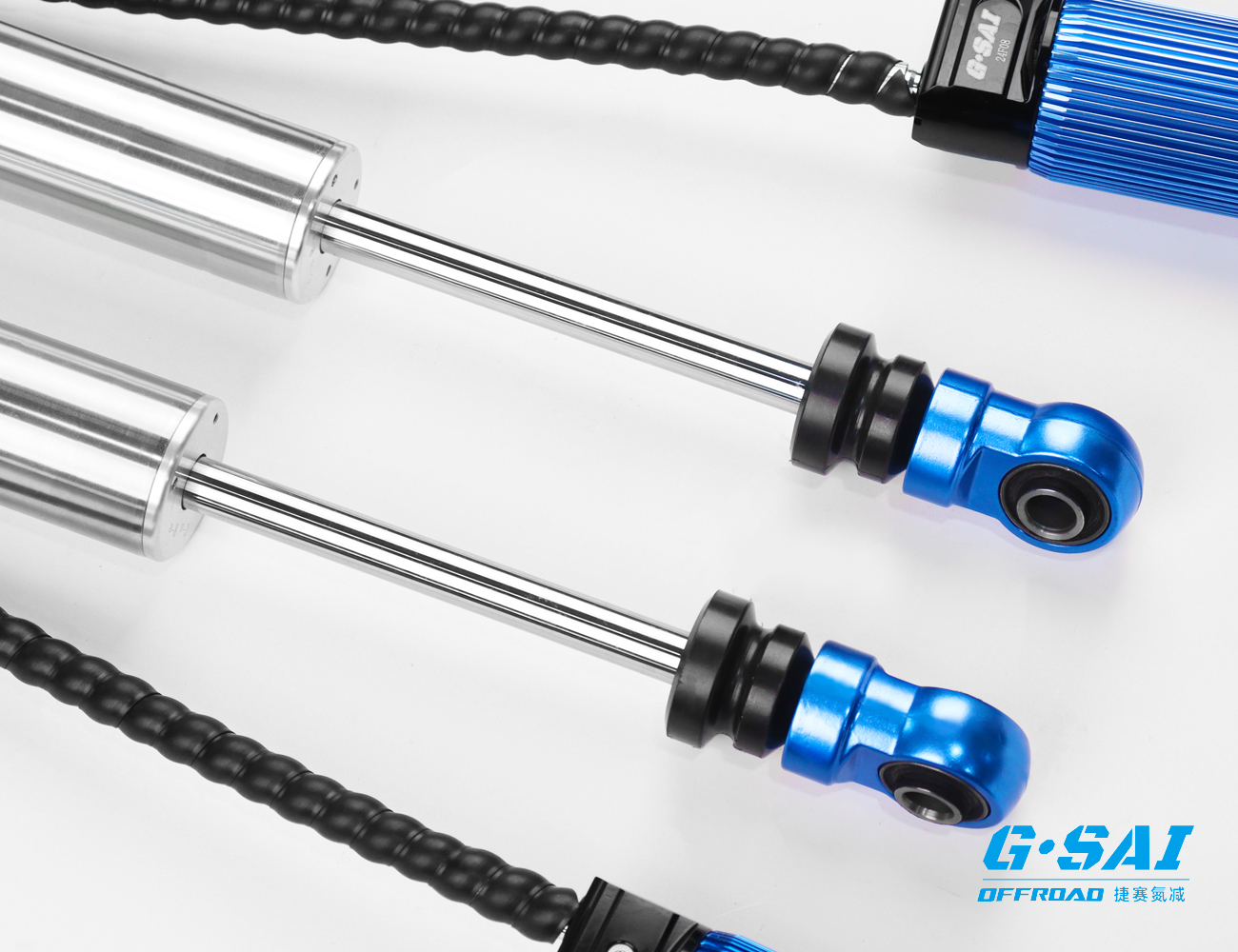
Mexico-Optimized Suspension Solutions for Off-Road Utility Vehicles
From Baja’s volcanic rock to the Sierra Madre’s step-ledges, Mexico punishes suspensions like few places on earth. Mexico-Optimized Suspension Solutions for Off-Road Utility Vehicles balance ground clearance, damping control, and durability so your 4×4 works fast and safely—day after day—without chewing through tires, bushings, or drivers. If you’re qualifying options now, share your vehicle specs…